Homeless youth in EDC to benefit from state group

Each year, the Child Support Directors Association of California raises funds to help support a nonprofit selected by the CSDA president. Next year’s funds will support El Dorado County students identified as homeless by the McKinney-Vento Act through a charity called the Homeless Children Matter Fund.

Don Semon, director of El Dorado County’s Child Support Services, is the incoming director of the state association.

The money will help students throughout the county.

Fundraising activities will begin this month and continue until the CSDA annual training conference in May. Historically, these fundraising activities have raised more than $25,000 annually for the selected charity.

The McKinney-Vento Homeless Assistance Act ensures that children identified as homeless (defined as lacking a fixed, regular, and adequate nighttime residence) receive access to all school programs and services for which they are eligible. These services include academic support, school nutrition, and transportation to the school where they were enrolled when permanently housed. In El Dorado County nearly 1,000 enrolled students have been identified by McKinney-Vento as homeless.

For more information or to arrange a donation, contact Ginger Harms at 530.642.7238 or at ginger.harms@edcgov.us


Road Beat: Another great choice in luxury

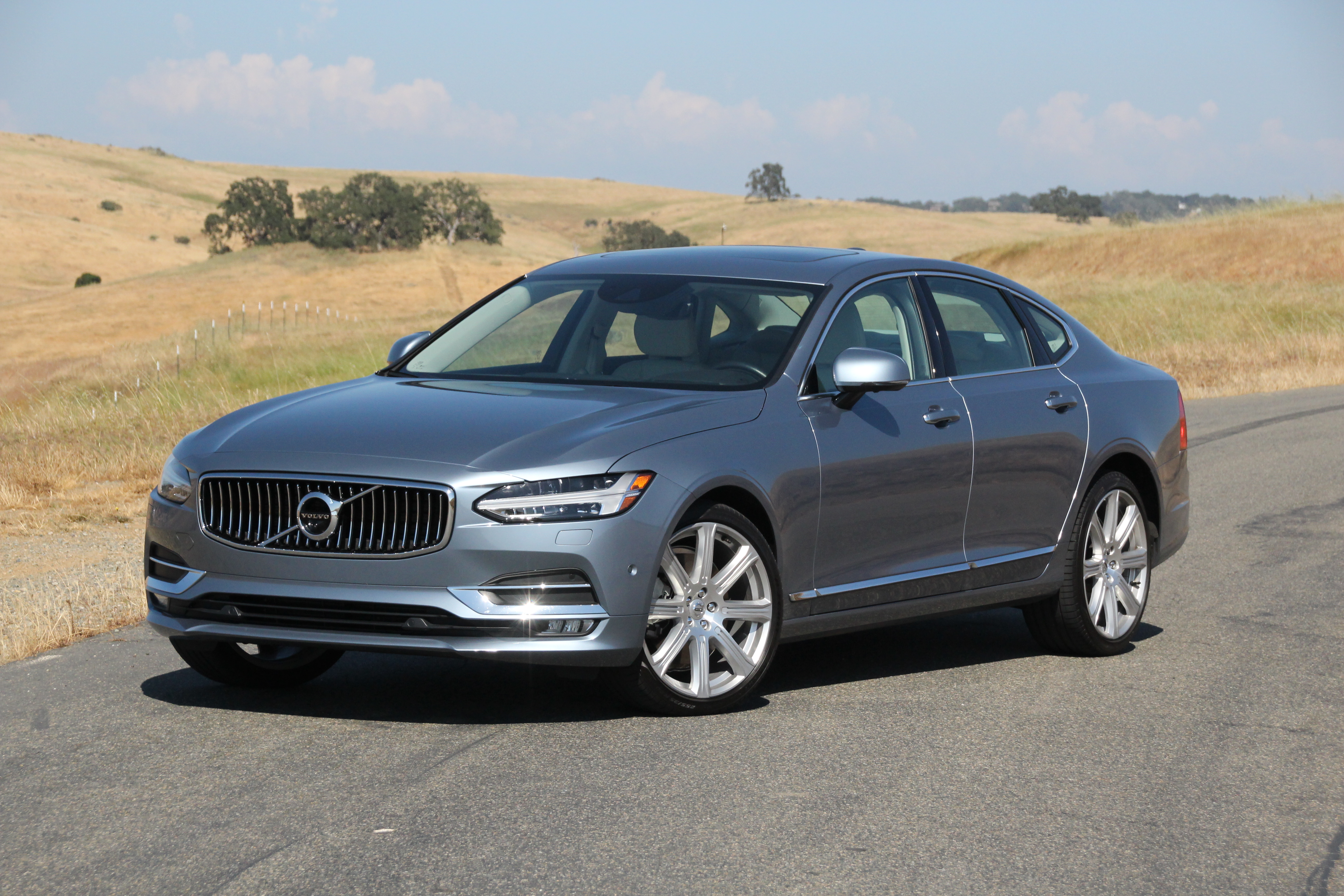
The 2017 Volvo S90 T6 AWD Inscription is worth a test drive. Photos/Larry Weitzman

By Larry Weitzman

Volvo’s been kind of quiet lately. Facing financial difficulty after being discarded by Ford, Volvo received a stability infusion from the Chinese automaker Geely (it bought Volvo from Ford) and Volvo is on the way back, big time. The new S90 is an example of the new modern, high performance Volvos.

Instead of the slope back design of a 1947 Chrysler as in the P544, then to the three box 140 series of the late 1960s and ’70s, Volvos evolved, now making extremely stylish cars; witness the new S90. Even the S80 introduced almost 15 years ago was a handsome ride. But the new S90 is a giant leap forward.

However, careful study of its new body looks as if it was melded from the prior generation of the Kia Cadenza and an Audi A6. Nothing wrong with that, but the resemblance is strong in the grille, window line and cut off rear end. The bottom line is that the new S90 improves on those designs, while adding a few touches of its own with its subtle character line and hood treatment to bring us a very handsome body and face. It is a great looking ride but maybe the Volvo nameplate in the grille is a bit too large.

Size-wise it is a large midsize with outside dimensions of 195 x 74 x 57 inches. Its slickness is confirmed by a drag coefficient of 0.28. The rear seat feels like a limo and the trunk is huge at nearly 18 cubic feet.

With the AWD system comes Volvo’s T6 2.0L turbo and supercharged inline four-cylinder engine. The T5 in the FWD is a turbo only version of the same engine and makes 66 less hp and about 40 pounds less twist. At a relatively low peak hp rpm of 5,700 rpm, this mini-mite unit cranks out 316 hp and 295 pounds of twist at anywhere from 2,200 rpm-5,400 rpm which is basically the full power range of this engine. The comparison demonstrates the power gained from the mechanical supercharger. Understand that whether the supercharging is done by a mechanical device connected to the engine or by a turbo supercharger driven by exhaust It is still supercharging which is the principle of shoving more air and fuel into each cylinder under pressure.

Specifications
Price
$53,945 to $66,015
Engine (AWD)
2.0LDOHC 16valave direct injected, turbo and supercharged inline four cylinder
316 hp @ 5,700rpm
295 lb.-ft. of torque @ 2,200-5,400 rpm
Transmission
Eight-speed torque automatic
Configuration
Transverse front engine/front wheel drive/all wheel drive
Dimensions
Wheelbase 115.8 inches
Length 195.4 inches
Width 74.0 inches
Height 56.8 inches
Ground clearance 6.0 inches
Track (f/r 20-inch wheel) 63.7/63.7 inches
Weight 4,080 pounds
Furl capacity 15.9 gallons
Trunk volume 17.7 cubic feet
Trailer capacity 4,600 pounds
Wheels 20 inch alloys
Tires 255/35X20
Turning circle (wall to wall) 38.7 feet
Co-efficient of drag 0.28
Performance
0-60 mph 5.84 seconds
50-70 mph 2.96 seconds
50-70 mph uphill 4.10 seconds
Toip speed 130 mph governor limited
Fuel economy
EPA rated at 22/31/25 mpg city/highway/combined. Expect 25 mpg in mixed driving and 34 mpg on a level highway at legal speeds.

Performance of the new S90 is world class as 0-60 mph comes up in just 5.84 seconds. It backs up that quick off the line acceleration with a 50-70 mph simulated pass in just 2.96 seconds and the same run up a steep grade only slows that time by about a second to 4.10 seconds. Those are the times of a world class sedan. While there is no turbo lag because of the supercharger, there seems to be a disconnect in the fly by wire throttle system as there is a lag time between mashing the throttle and the engine lighting off to full tilt boogie. More on this disconnect later.

Fuel economy is EPA rated at 22/31/25 mpg city/highway/combined but the big Volvo does a bit better with a constant 70 mph on a level highway returning 34.3 mpg average. In my run from Placerville on Highway 50 to Carson City and back it averaged 28.4 mpg and overall it averaged 25 mpg with almost no time spent on the highway, substantial stop and go and all performance testing.

Suspension is double wishbone up front and an integral axle in the rear. Although 19 inch alloys are standard, my tester had the optional 20 inch alloys shod with monster 255/35 rubber. Steering is a quick electric power rack that guides the Volvo’s wide track of 63.7 front and rear. The whole system can be adjusted from the cockpit from comfort to dynamic with positions for ECO in which you lose the tach or you can custom tune your settings to your liking. Dynamic felt too disconnected and artificial. In comfort the steering felt more natural and that is where most Volvo drivers will operate. Also in dynamic, the engine and tranny are remapped, holding the car in the lower gears too long, an annoyance. If you need power the eight-speed auto cog swapper will do the job for you without the engine racing along.

While there is some body roll, the Volvo has amazing grip. But the handling is still a bit disconnected meaning if attacking the twisties you will have to guide it; however, you can make some good speed at the twisty tango. Not bad for a 4,100-pound car. Turning circle is 38 feet.

Ride quality is firm maybe enhanced by the super low profile tires. In freeway cruising it is quite solid and there is little cush. In top gear the engine spins just 1,900 rpm at 70 mph and the Volvo is quiet.

Safety is Volvo amazing with about every electronic intervention, including Volvo’s pilot assist, semi-autonomous driving which I let operate at close guard. It works, but I prefer human intervention. Brakes (four-wheel discs) are huge and powerful and the headlights are fantastic. I am sure the Volvo designed body will protect you like an Abrams tank, but I wasn’t about to put the slightest scratch in is gorgeous flawless extra cost ($560) light Mussel Blue metallic paint. It is a fabulous color.

 Inside is a Nappa leather interior and in Volvo tradition the seats, all except perhaps the middle rear are sublime. Instrumentation is complete, Speedo, tach and ancillary gauges. With a trip info gauge pop up in the lower tach area and the center counsel is made up primarily of a huge vertical color screen with more functions than most computers. You can even bring up the owner’s manual or a fuel economy analysis. It wasn’t that hard to learn, 10 minutes of dual and your good to go. The only issue were the fingerprints. Volvo comes with a special cloth to clean it when it begins to look like a crime scene investigator’s nirvana.

With the Inscription, there is plenty of real linear walnut inlays and the materials covering the dash and door panels are leather. This is a luxurious ride.

Volvo is out for your business. This All Wheel Drive Inscription stickers for $56,250 plus $995 for the boat from Gothenburg, Sweden. What and you thought it was made in Shanghai? My tester had more options including the 20-inch wheels ($750) as 19 inch are standard, a Bowers and Wilkins Sound system ($2,650), the vision package which includes a 360-degree surround camera ($1,950) and more bringing up the price of admission to $66,105. It is less than the comparable competition, but it’s your decision. You should check out the fit. It could be your glove.

Larry Weitzman has been into cars since he was 5 years old. At 8 he could recite from memory the hp of every car made in the U.S. He has put in thousands of laps on racetracks all over the Western United States.


Reno-Northstar to share renowned cycling trade show

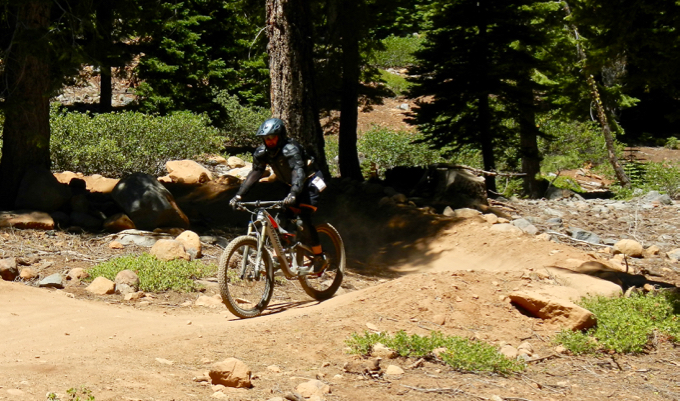
Northstar will be an integral part of the the Interbike trade-show starting in 2018. Photo/LTN file

By Bicycle Retailer and Industry News

Interbike announced today that its 2018 show will be in Reno.

The three-day trade show in Reno will be preceded by a two-day consumer festival at Northstar, followed by a day-and-a-half-long trade demo event at Northstar before moving inside for the trade-only show at the Reno-Sparks Convention Center. Interbike has contracted the convention center through 2022. The full event is being called Interbike Marketweek.

“We’re extremely excited about this move for a multitude of reasons,” said Pat Hus, the vice president of Interbike. “For the first time in a very long time, we’ve been able to hit the reset button on Interbike and OutDoor Demo and give the industry something new and fresh that we couldn’t do in our previous locations. With the support and investment from the city of Reno we are going to be able to truly create a one-of-a-kind, weeklong celebration and experience around cycling. We also recognize that this is a critical time in our industry and that we need to provide a more cost-effective approach to exhibiting at the show, and we are now able to provide that.”

Read the whole story


Defensible space critical for wildfire prevention

Local fire districts are reminding people now is the time to remove trees to create defensible space.

The term “defensible space” refers to the area between a house and an oncoming wildfire where the vegetation has been managed to reduce the wildfire threat.

Contact your fire protection agency for permitting and a complete defensible space evaluation. The Living with Fire Guide for the Lake Tahoe Basin is the authoritative guide for vegetation management and wildfire preparedness on properties in the Tahoe basin.

Structures located within the city of South Lake Tahoe follow the Tahoe Regional Planning Agency’s tree removal permit process. A homeowner may apply for a tree removal permit online. The application can also be obtained at the TRPA front counter, or by calling 775.588.4547. A $53 non-refundable filing fee is due with the application. A TRPA forester will visit the property to assess the trees and issue a permit for any marked trees.

No permit is needed for trees with a diameter of 14 inches or less.


Snippets about Lake Tahoe

·      Stella restaurant at Cedar Sport Hotel in Truckee is having a multi-course dinner as a fundraiser for Project MANA, to help the hungry in the area. The dinner will be Aug. 15, 6-9pm. Tickets are available online.

·      In the Guitar Plaza at Lake Tahoe Hard Rock tribute bands play for free every Saturday from 8-10pm.

·      Tahoe Yacht Club Water Ski Carnival 1953-1967 will be the subject of a talk by Warren Fallatt, Mary Jo Shepard, and Randy Walker on Aug. 21. The free talk begins at 5pm at the Tahoe Maritime Museum in Tahoe City.

·      The Incline Village Mountain Golf Course will host the Parent/Child Tournament on Aug. 13 from 2-6pm. Adults will team up with their child or grandchild, ages 17 and under. Go online to register.

·      Shlump is the headliner at Blu Nightclub in Stateline on Aug. 12. Guests will be Benjah Ninjah, SubDocta and Subrootz, plus Tahoe Fire Dancers. Must be 21 to attend. Doors open at 9pm.


Ranchers, loggers sue feds over frog protection

By Dale Kasler, Carolyn Wilke and Ryan Sabalow, Sacramento Bee

Tiny frogs and toads used to swarm over the Sierra Nevada. Now, the government says nearly 2 million acres of land needs to be preserved to prevent them from going extinct.

California ranchers and logging groups say those protections are hurting their ability to make a living. So another conflict over the Endangered Species Act is going to court.

The California Farm Bureau and two ranchers’ associations sued the U.S. Fish and Wildlife Service on Monday, challenging a year-old decision to designate more than 1.8 million acres of rural California as “critical habitat” for three species of frogs and toads that are protected by the Endangered Species Act.

The case affects a wide swath of the Sierra Nevada region, from Lassen to Inyo counties. It includes portions of Placer and El Dorado counties. Most of the land is owned by the government and is in designated wilderness areas, where the “highest level of conservation protection” on federal land is required, according to the Fish and Wildlife Service.

Read the whole story


SLT affordable housing eliminated for tourist units

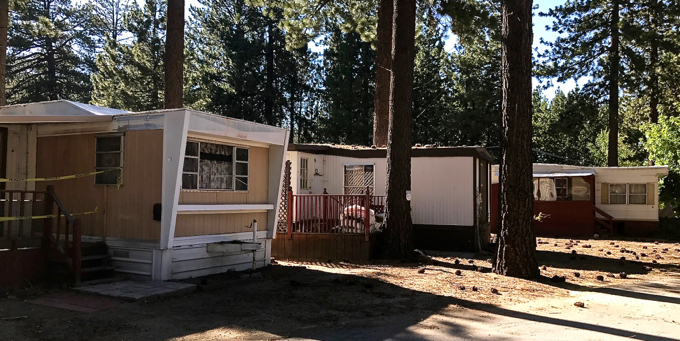
A few empty trailers still occupy the parcel behind Hotel Azure. Photo/LTN

Publisher’s note: This is one in a series of stories about affordable housing in the Lake Tahoe-Truckee region. All articles may be accessed via the home page under Special Projects, 2017 Affordable Housing.

By Kathryn Reed

A few dozen South Lake Tahoe residents have been removed from their affordable housing units so more tourist accommodation units can be erected for a project that isn’t even permitted.

The owners of Hotel Azure, who live in San Francisco, also own the mobile home park behind that property along Rufus Allen Boulevard. Today it is a skeleton of what was once a low key housing area. The trailer park has been vacant for about four months.

“There were only about six tenants left prior to closing. All were bought out at fair market value and agreed to sell,” Rich Bodine, director of operations for the hotel, told Lake Tahoe News.

Where they went is unknown.

The people living in the trailers were renting space from Azure, which used to be called Inn by the Lake.

The plan is to put tiny houses on that land. But instead of them being available for residents, they will be a variation on hotel lodging. They come premade and will be placed on a concrete slab.

“It will give them a sense of renting a home, but still have amenities of a hotel,” Bodine said. The company wants to compete with the Airbnbs of the world.

Bodine predicted everything will be in place by 2019. First up, he said, is getting the infrastructure in place.

Really, the first step is getting the permits.

According to Tom Lotshaw with the Tahoe Regional Planning Agency, “… in 2013 the owners of the mobile home park submitted an application to subdivide the existing mobile home unit spaced, but that application had issues and has been on hold ever since.”

The city doesn’t even know about these plans.

“The Development Services Department is not aware of the project and there is no pending application proposing such a project,” South Lake Tahoe planner John Hitchcock told Lake Tahoe News.

With no project even being considered by the regulatory agencies, that 2019 date could be farfetched, and it means local residents could have still been in their homes.


Opinion: Calif. housing crisis spreads across the West

By Joe Mathews

Sorry, Utah.

California’s epidemic shortage of housing hasn’t just sickened our own state—driving up prices, forcing residents into rentals, and putting a $140 billion annual drag on our economy. The disease is spreading to our neighbors, too.

Today, Western cities are experiencing minor league versions of the California housing crisis. Shortages are severe in Seattle, Portland and Eugene, Ore.. Even in Boise, prices are increasing at nearly 10 percent annually.

Joe Mathews

California’s housing crisis and those of its neighbors share some causes: lack of water sources, shortages of skilled construction workers, and the rising price of scarce land near job centers. But our Western neighbors face an additional challenge: the influx of Californians unable to find housing in their own state.

I witnessed the California epidemic’s spread recently in Utah. For the first time since the 1970s, Utah, growing via births and arriving jobseekers, is adding more households than housing units. So homeownership rates are falling, homelessness is rising, and the Salt Lake City council has declared an affordable housing emergency.

Facing these challenges, some Utahans are seeking lessons from California’s mistakes. “California’s housing market can shed some light on our own,” said a recent assessment by Envision Utah, a nonprofit organization focused on civic engagement and planning. “Faced with rapid growth, many California communities, and even the state, imposed ever-more-stringent regulations designed to curb development, believing that if they slowed development it would put the brakes on growth.”

But, said Envision Utah, “California’s constraints didn’t slow growth, so demand for housing stayed high. Instead, those regulations simply diminished the supply, and we know what happens next.”

Comparisons with Utah also hold lessons for California. Yes, the Golden State has 13 times as many people, but the states have two of America’s most diversified economies, young populations, and relatively high incomes.

Most intriguingly, Utah and California are distinguished by their lack of housing. California is ranked 49th in the country in the number of housing units per person. Utah is 50th. But Utah, for its housing struggles, hasn’t had a shortage as deep or long-lasting as ours, or prices that exceed the national average by 2½ times. Why?

One part of the answer might sound obvious: Utah doesn’t need as many housing units because it has the country’s largest families and households, a product of the prevalence of the Church of Latter-day Saints. That suggests one wildly impractical solution to the housing crisis—California embracing Mormonism as its state religion. But it’s no more farfetched than the 50-plus bills in our state Legislature that offer minor or counter-productive changes to California’s housing markets.

Putting religion aside, the most serious difference between Utah and California housing involves local government. Utah is a place where state government defers to local government, and local communities retain control over their destiny. California is not.

It’s hard to exaggerate how little control California communities have over their fate. For 40 years, California government has been the site of a war between a state government that centralizes power at the expense of locals, discouraging housing. State environmental regulations make it slow and costly to build housing. State limits on local taxes, especially Proposition 13, create incentives that encourage retail and commercial development, not housing.  

This state of affairs fuels NIMBYism. With their local representatives having relatively little power, local communities cling to the power they do have: saying no to change in their communities.

Utah, a strait-laced place, has almost none of California’s restrictions on growth and local control. It takes years, even decades, for brave developers to navigate California’s anti-housing regime and build something. In Utah, housing comes together in a matter of months.

“We don’t have the problem you have with widespread anti-growth sentiment,” says Utah economist Robert Spendlove, a member of the state Legislature.

That culture has made it easier for Utah to respond to its housing problems. There’s momentum to lift limits on housing density and streamline permitting processes. Utah builders are also increasing production of more moderately priced homes.

In California, the response is very different. Gov. Jerry Brown and leading legislators want to impose even more rules on local governments, with the goal of forcing the construction of more housing. But local governments are already weary of state mandates. Might new housing ones only encourage more defiance and NIMBYism?

Of course, reforming California’s system of local government to restore local control and eliminate anti-housing incentives would be extremely difficult. But how easy is it to live under a miserable housing shortage that exports our people—and our housing challenges—to states like Utah?

Failing to address our housing crisis is bad for California. And it isn’t very neighborly.

Joe Mathews writes the Connecting California column for Zócalo Public Square.


Delving into why dogs are so friendly

By James Gorman, New York Times

Tail-wagging, face-licking, jump-in-your-lap friendliness is what dog lovers adore and cat people scorn. But like it or not, the incredible sociability of many — although not all — dogs is universally recognized. It sets dogs apart from their wild relatives.

Even the most socialized, friendly wolf is cold company compared with a Labrador retriever in full face-licking mode.

But what produces this social exuberance? A team of researchers reported in the journal Science Advances that the friendliness of dogs may share a genetic basis with a human disease called Williams-Beuren syndrome.

Read the whole story


Snippets about Lake Tahoe

·      The South Lake Tahoe Library will be hosting an art program for children ages 8-13 on Aug. 19 from 10-11am. Children will learn how to make a silk painting with local artists Walt Stevenson and Barbara Gustafson. Space is limited. Sign up at the library or call 530.573.3185 to reserve a spot. Fabric dyes will be used so wear old clothes.

·      Primus, which just released its first new song in seven years from the album “The Desaturating Seven” to be released in September, will be outside at Hard Rock Lake Tahoe on Aug. 17 at 6pm. Opening will be Clutch. Tickets are available online.

·      Greg Stanton is now officially El Dorado County’s director of environmental management — again.

·       Potential pet owners can have adoption fees sponsored at the Scott Corridan Design Adoption Days Aug. 17-19 at the Humane Society of Truckee-Tahoe. For more info, call 530.587.5948.

·       On Aug. 7, Randy Walker and Mary Jo Shepherd will discuss racing family runabouts on Lake Tahoe. The free talk will begin at 5pm at the Tahoe Maritime Museum in Tahoe City.