Collecting trash on the country’s longest trails

By Elgin Stallard, Outside

Two young men set off last year on an unthinkable task: pick up, haul out, and dispose of every single piece of trash they saw on the 2,650-mile Pacific Crest Trail.

It’s a Herculean job when you consider that people leave everything from used toilet paper and diapers to spent batteries and box springs on trails across the country, and that much of the PCT wends through wilderness and large stretches are inaccessible to roads and motorized vehicles.

The final weight of junk the two men pulled off the trail: 720 pounds. Among the highlights: a mattress, a 35-pound metal-and-broken-glass television stand, children’s toys, and 26 Mylar balloons.

Read the whole story


Sand Harbor drowning victim identified

The man who drowned last weekend at Sand Harbor has been identified as Jose Partida, 27, of Sparks.

The official cause of death was accidental drowning.

Partida was swimming around the a rocks in the late afternoon of July 29.

He was brought to shore but unable to be revived.

— Lake Tahoe News staff report


Dolores Clark — 1934-2017

Dolores Clark

Former Alpine County clerk, Dolores Clark, died June 28, 2017. She was 82.

Dolores Genevieve Luiz was born in Napa Valley on Oct. 12., 1934. She was of Portuguese decent; something she was always very proud of.

She married Norman Gentry in 1956; soon to follow were their two children.

Dolores was a banker for many years.

She reconnected with Jim Clark, who she knew from high school. They married on Christmas Eve 1971. Together they moved from Napa to Markleeville, where they ran a husband and wife team for a small branch of Bank of America.

Dolores became the treasurer and tax collector of the county of Alpine; a job she thoroughly enjoyed.

Dolores and Jim were able to retire and travel extensively and enjoyed every minute of it. She lost Jim on Jan. 28, 2015.

She is survived by her children Elaine Marriott (Larry) and Walter Gentry; grandchildren Dawn Marriott, Joshua Marriott (Teresa), Sara Vaccaro (Anthony), Kaitlyn Gentry and Haley Marriott; great-grandchildren Makala Schroder, Izzabelle Marriott, Madison and Khloe Vaccaro, Skyler Londo and Olive Kluever; two sisters, many nieces, nephews, and countless friends.


Composting stations can be attractive, convenient

By Melinda Myers

Make recycling green debris into compost convenient and attractive. Create a space you and your neighbors will appreciate. And locate composting in a convenient area that is easy to access and manage so you are more likely to do it.

You’ll quickly recoup your initial investment of time and money by spending less time hauling the materials to the recycling center and on soil amendments.

Most important, you’ll boost the health and beauty of your landscape while helping the environment. 

Start by looking for spaces in the landscape or garden where compostable materials can easily be moved into the bin, pile turned, and the finished compost harvested and transported into the garden where it is needed. You found a place to stow the trash cans without ruining the beauty of your landscape or offending your neighbors, so do the same with your compost area.

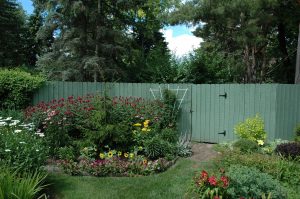
Decorative fences are an effective way to hide composting stations conveniently tucked behind gardens in the landscape. Photo/Melinda Myers LLC

Purchase or build a compost bin that matches your landscape style. Some bins are built to be an attractive addition to the landscape while others are designed to fade into the garden and go unnoticed. Try using materials similar to your fence, shed or other structures. Situate the bin so it appears to be an extension of these or an additional garden feature.

Speed up the composting process by creating a pile at least three feet tall and wide. Use only insect- and disease-free materials. Do not include meat, fat, bones, or dairy products that can attract rodents or weeds and invasive plants that can survive most composting and end up back in your garden.

Mix nitrogen rich green materials such as vegetable scraps, and herbicide-free grass clippings and carbon rich browns such as cornstalks, evergreen needles and tree leaves. Top this 8- to 10-inch layer with compost and sprinkle three cups of a low nitrogen slow release fertilizer over this layer. The organic nitrogen helps feed the microorganisms that break down the raw materials into compost. Continue layering with plant debris, compost and fertilizer until the pile is at least 3-feet high.

Use plants to screen the compost process. Place a simple wire bin in the middle of the garden. It’s convenient; since this is the place you generate garden debris and use much of the finished product. The surrounding plantings will hide the bin.

Or place your bin behind a garden border of tall grasses, shrubs or other permanent plantings. Make sure your neighbors’ view is equally as nice. Leave sufficient room for adding materials to compost, turning the pile if needed and harvesting the compost.

Team up with your neighbors to create more gardening and composting space. Design a shared garden and compost area across the lot line. Use steppers for easy access and beautify both yards with attractive plantings. You’ll each enjoy the extra garden space and valuable compost you create.

Up the ornamental appeal a bit more by installing a decorative fence as a backdrop for one of your garden beds. Design the screen to run parallel to a fence or hedge along the lot line. Leave enough space between the two structures for composting, storing mulch, shredded leaves, garden stakes and more. Include a gate or entryway along the side for easy access.

Once you start exploring options, your creativity will help you build a composting space suited to your needs. Then get ready to enjoy the increased beauty and productivity that the compost will provide in your gardens and containers.

Gardening expert Melinda Myers has more than 30 years of horticulture experience and has written more than 20 gardening books, including “Small Space Gardening” and the “Midwest Gardener’s Handbook.” She hosts The Great Courses “How to Grow Anything: Food Gardening For Everyone” DVD set and the nationally syndicated “Melinda’s Garden Moment” TV and radio segments.


Grand jury critical of STPUD-Alpine County deal

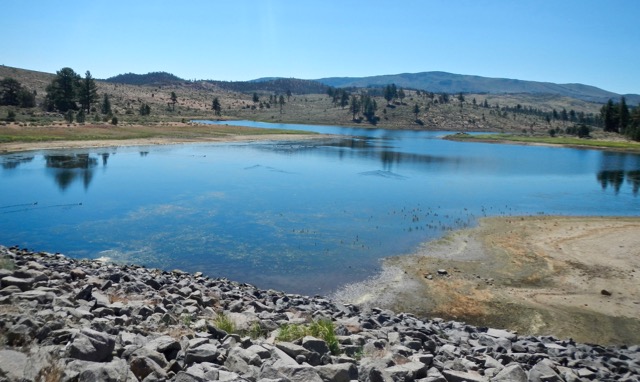
South Tahoe PUD’s wastewater ends up in the Harvey Place Reservoir in Alpine County. Photo/LTN file

By Kathryn Reed

The validity of a contract between Alpine County and South Tahoe Public Utility District as well as the amount of money involved in the document were the subject of a grand jury investigation in the last year.

The 2016-17 Alpine County Grand Jury report that came out this summer concluded that the consolidated agreement from 2002 is not valid because only two members of the Board of Supervisors voted on it. This would be a violation of the Government Code.

The other main concern is the amount of money South Tahoe PUD pays the county for the right to discharge treated wastewater in the county. The $100,000 annual fee does not rise with inflation. It has gone up to about $117,000 based on additional hookups in the district, with the assumption more water is being discharged.

STPUD General Manager Richard Solbrig on Aug. 3 gave a brief update on the report to his board. The district does not have to respond to the report.

The county does have to respond. The report is expected to be a topic on the supervisors’ Aug. 15 agenda.

“Even if the current consolidated contract is not valid, the previous agreements are still valid,” Supervisor Don Jardine told Lake Tahoe News.

The original document was signed in 1967 and there have been six amendments since then. The consolidated document was to bring all of those previous agreements into one contract.

STPUD per federal law, which is the same for all sewer districts in the Lake Tahoe Basin, must export the treated wastewater. This is to protect Lake Tahoe. Nevada law does not allow wastewater from another state on its lands. This is why all the wastewater from STPUD goes to Alpine County.

It was easier and more cost-effective to pump it over Luther Pass than to go over Echo Summit.

Jardine, who has been a supervisor for 30 years, said none of his colleagues has brought up the contract in recent memory.

“I have not been approached by other board members to increase fees,” Jardine said. He is the chair of the board.

The grand jury report says, “It is recommended the BOS request to have annual adjustments for inflation added to the agreement. Alpine County would be receiving about $248,000 if the 1983 figure had been adjusted for inflation. The 1995 Alpine Grand Jury made this exact same recommendation which was never acted upon. If the 1995 recommendation had been acted upon, Alpine County would be receiving about $185,000 annually if the annual adjustment for inflation took effect in January of 1996.”

Jardine and Solbrig were part of a meeting earlier this week in which the grand jury report was discussed. They are on an advisory commission to the Alpine County Board of Supervisors. No one from the public or grand jury was at that meeting.

What was discussed more in depth was what might be in that wastewater; of particular concern was whether pharmaceuticals or chemicals from personal care products might be leaching into the soil or groundwater. This has been an issue in other parts of the country.

“The USGS has been in the basin sampling for those contaminants,” Solbrig said Thursday. “There have been no findings in Lake Tahoe or through exports of water.”

At the commission’s November meeting, it meets quarterly, it’s possible there could be a recommendation for some of the money STPUD gives Alpine County to be used on testing for contaminants. This will ultimately be up to the supervisors.


Opinion: August times in Lake Tahoe

By Garry Bowen

The title today is to introduce a bit of a word game, but timed to coincide with several Tahoe items, not to mention the beginning of our calendar’s eighth month, August. The word august is not used as much as it once was, meaning as it does: respected, impressive, or inspiring reverence or admiration.

Therefore, the word offers both a time line, along with some timely admonitions, to introduce   yet another acronym into Tahoe’s life, that of AFP, standing for “activities feigning progress.”

Garry Bowen

When this writer worked with media for the last two Amgen events here, the slogan they used both times for their race T-shirts was If You See Something, Say Something. So the use of admonitions can be thought of as following-through on that, for both future and local reasons.

Recently, there were side-by-side columns by Steve Teshara and Carl Ribaudo, both of which offered stark AFP reminders: Teshara announcing a chamber endorsement of the proposed one-half percent sales tax increase, purportedly to create a designated fund to fix our roads and potholes, while Ribaudo opined on our tourism status, at the same time serving notice on the “broader direction of  sustainability, which involves, at least on the local level, the need to think beyond separating trash, doing away with plastic bags, and reusing hotel towels (used) for more than a day.” His is a correct implication, as there is indeed way more to sustainability than that, as inferred by TERC’s current state-of-the-lake conclusion that Tahoe’s waters are warming 14 times faster than usual, so the need exists to reconcile what the current meaning of progress really means.

Somewhere in Teshara’s chamber endorsement is mentioned “an adopted vision and principles (that) include a commitment to physical infrastructure that supports business and community” as that half percent funding increase will create $2.5 million designated only for road repair. While in August, we are also starting with the demolition of Knight’s Inn after protracted discussions on the environmental and fiscal benefits of yet another grocery store, including the inevitable struggle between resource agencies versus development – too much activity left unexplained.

What’s being revealed is contrary to professed support for city and regional improvements, and the Knight’s Inn situation offers the easiest route to explain why: having heard the arguments about a lack of environmental improvements (Knight’s Inn, aka Ramada, aka Tahoe Sands, was built on one of Tahoe’s 60-plus watersheds in the 1950s), the supposed lack of enough watershed improvement caused the California Tahoe Conservancy’s financial support to be withdrawn, so true-to-form, business-as-usual (BAU) prevailed.

As Knight’s Inn has over 100 units, the idea of demolition was never questioned, as a lot of cities across the nation have embraced deconstruction, which in this instance would have allowed the city to begin making headway on the housing affordability issue, thanks to California’s newly-passed “granny flat” laws, which suspend some permitting requirements to allow those who want and need an extra $500-600/month in revenue to offer simple housing.

In addition, the mediation for the city, the Conservancy, and the developer could have been abated in more positive directions for all had there been a second look. Very recently, the highly successful Clif (power) Bar company built themselves a 300,000-square-foot, $90,000,000 LEED platinum manufacturing plant in Idaho. But before they took possession they had the building assessed by a well-known firm devoted to biophilic design, found several things to be improved upon before moving in. A great move considering that food is subject to sanitation issues, along with energy savings, daylighting on their production lines, etc.

Idaho doesn’t have a Lake Tahoe to continually correct, so this was indeed the type of value-added approach not yet present in any “adopted vision and principles (that) include a commitment to physical infrastructure that supports business and community” in accomplishing a green and secure future for Lake Tahoe.

Ribaudo’s comment, on the other hand, shifted immediately into managing a “system of tourism” when it is already known that those tourists are becoming very much attracted to those “places that take care of themselves,” including steps beyond another coat of paint, and beyond those behaviors not usually seen, such as separating trash, doing away with plastic bags (still ubiquitous) or replacing the linens every other day. Green is quite often the deciding factor precisely because of a deeper trust in dedication to preserving what is valuable to a place.

Yet another indication of what now can be seen in AFP terms is that most of the new home subdivisions: Gondola Vista (40-plus), the Sierra Colina project (40-plus) are effectively stripped of earlier requirements toward affordable housing, meaning that some domiciles will stay unattainable as preferences stay unaffordable.

This, of course, in is direct opposition to current municipal planning protocols, except for Tahoe.

Lastly, the city signed on to the idea of “100% Renewable Energy”, but any mention of a missing link in not moving squarely in these directions does not mean progress, but rather that older modes of thinking are being “grandfathered in” as “100% Renewable Energy” is already being compromised via multiple projects that don’t yet appear to be contemporary in thought.

Contemporary is increasingly green, and of strong conservation measures, but need we be reminded of Tahoe’s fragile and vulnerable beauty, not merely an image impressive to “picture-postcard mentalities” expressed in multi-million dollar sales brochures.

Vast amounts of taxpayer money go into supporting Tahoe’s beauty, but that may become problematic (and most certainly declining) unless sustainable development standards are met. Ribaudo’s “stay tuned” advice is, as suggested, incomplete, as is Tahoe’s, in comprehending its own managed future.

The idea that California’s population went unnoticed at 40,000,000 is not unnoticed globally, as we now add two California’s per year to the world’s population, in a world changing so fast, we can no longer rely on just money as the only needed commodity to assure a future; we will leave too much of that money on-the-table absent the efficiency and effectiveness needed to fortify our communities.

Activities Feigning Progress is not just a measure; it is a filter and lens with which to determine how much progress is being made, and as well to understand what constitutes success on longer time-spans – not someone’s choice-of-color glasses with a myopic prescription: ill-informed, inconvenient, or not really thought through.

The idea of creating oversight committees is itself inadequate these days, as the heightening of standards now necessary makes the issue of making sure bills have been paid (on-time) ludicrous, as it is vitally important to now know what the money is being spent on, especially if there are toxicities that don’t contribute to either citizen’s health or that of Lake Tahoe Basin itself.

Tahoe’s LEED platinum TERC building is a great example, being rated No. 4 out of 60 rigorously tested around the world. It operates at about 10 percent of energy required for a building that size.

My next cultural piece will be to introduce the SQ factor, designed to offer ways to get more of us on the ‘page’ we’ll need, not just to suffice, but to thrive, in our extenuated world. My work is global, so I’m familiar with the issues on a reality scale, as the changes mentioned are now “before our eyes.”  

Garry Bowen has more than a 50-year connection to the South Shore, with an immediate past devoted to global sustainability, on most of its current fronts: green building, energy and water efficiencies, and public health.

Doctors: Trump change could lead to more teen pregnancies

By Lizzie Johnson, San Francisco Chronicle

High school students toting both textbooks and newborns are becoming increasingly rare. But a Trump administration proposal to rewrite federal birth control mandates could soon change that, some medical experts fear.

The teenage birth rate in the United States has hit an all-time low after nearly three decades of decreases, data from the Centers for Disease Control and Prevention show. The number of 15- to 19-year-olds who gave birth in 2016 was down 9 percent from the year before, to 20.3 births per 1,000 women. Since 1991, the rate has plummeted by 67 percent, the biggest drop since the CDC began tracking the data nearly eight decades ago.

More than half of teens have had sex by age 18, the CDC found — a rate that’s down a bit from the early 1990s, but not nearly as sharply as the number of births. Medical professionals and policy experts say increased contraception use has contributed to the decline in teenage motherhood.

Read the whole story


Ranch Fire deemed to be human caused

The Ranch Fire that burned more than 140 acres in El Dorado County’s wine country was human caused.

According to CalFire, a person was cited and educated after it was determined he was grinding metal near dry grass, which sparked the blaze.

The fire, which is 100 percent contained, started July 26 on Ranch Camp Road near Mt. Aukum and Somerset.

— Lake Tahoe News staff report


Work to preserve Independence Lake continues

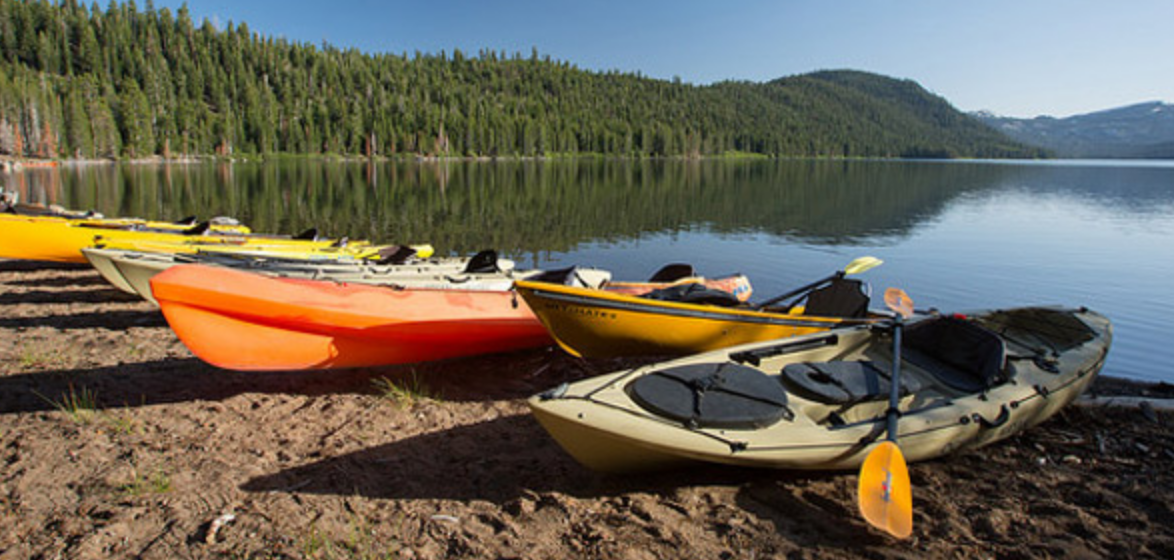
The Nature Conservancy is a key player in the preservation of Independence Lake. Photo/Nature Conservancy

By Paul Nelson, KTVN-TV

About a half-hour north of Truckee, down a rough, dirt road, you will find Independence Lake. It has been described as a small version of what Lake Tahoe looked like 100 years ago, with very little development.  The Nature Conservancy is trying to keep it that way.  It paid $15 million for 2,300 acres around most of the lake, in 2010. 

“By buying the land, we could protect the habitat, the watershed of the lake,” Chris Fichtel, Independence Lake Project Manager with the Nature Conservancy said.

Its goal is to conduct forest restoration, prevent aquatic invasive species, and maintain native fish populations.

“It has the full compliment of native fish that it always had, and in particular, it had one, the Lahontan Cutthroat Trout,” Fichtel said. “This is only one of two lake populations of that trout remaining. The other is Summit Lake, Nevada.”

Read the whole story


2 skydivers die at Minden airport

Two people died Thursday morning in a sky diving accident at the Minden airport.

Guide Ashlie Caceras, 43, of Lodi and David Becker, 21, of Sankt Martin, Germany, were tandem skydiving.

Douglas County sheriff’s Deputy Jim Halsey told Lake Tahoe News the cause of accident is under investigation. His department and the FAA are involved.

When emergency personnel arrived at the airport about 10:15 Aug. 3 the two were deceased just outside the airport boundaries, with the parachute deployed. They had been with Skydive Lake Tahoe, a company that operates out of the Minden airport.

— Lake Tahoe News staff report