Nominations sought for Blue Ribbon Awards

Lake Tahoe South Shore Chamber of Commerce is seeking nominations for the 11th annual Blue Ribbon Awards.

The Blue Ribbon Awards will be Nov. 8 at MontBleu in Stateline. The nomination period is open until Oct. 5.

This awards program is the community’s opportunity to recognize South Shore businesses, organizations and individuals for achievements, community contributions, and milestones.

Categories include: experience, entrepreneur, tourism, geotourism, customer service business, and customer service public agency.

Go online to nominate.


K’s Kitchen: Turning corn into salsa

By Kathryn Reed

Fresh corn is something I could probably eat every day. It has seemed so incredibly sweet this summer.

Eating it right off the cob is my first choice, but sometimes I like to cut off the kernels and transform into something more.

The recipe below is quite simple and satisfying. I used the mixture as a salsa with tortilla chips. This broke up what can be a monotony with tomato salsa. I added the last bit of it to an enchilada mixture.

I would think it would be great as a topping for fish, maybe even pork.

The corn can be boiled or barbecued or cooked in a skillet. Obviously the cooking method will change the flavor.

Corn Salsa

3 ears of corn, cooked

2 medium tomatoes, chopped

½ tsp salt

1½ tsp hot sauce

1 C cilantro, chopped

Take the kernels off the corn. Place in medium bowl. Add rest of ingredients. Stir. Refrigerate for at least an hour to let flavors meld.


Snippets about Lake Tahoe

·      MontBleu in Stateline is hosting an extreme midget wrestling event on Sept. 1 at 8pm. Doors open at 7pm. Must be 21 to attend. Tickets start at $20.

·      The American Century Championship telecasts on NBC and NBCSN reached more than 5.7 million unique viewers July 13-15, a 16 percent increase from 2017

·      There will be a South Lake Tahoe PCE community meeting on Aug. 8 at 6pm at Lake Tahoe Airport.

·      Heavenly Mountain Resort this summer is replacing the two-seater Galaxy lift with a three-person chairlift.

·      Now Highway 50 across Nevada is also officially U.S. Bicycle Route 50.


Calif.’s longer, hotter summers spark deadly, destructive fire season

By Cheri Carlson, Ventura County Star

California wildfires tore through mountains and foothills and into neighborhoods this week as record-breaking heat combined with increasingly dry conditions in the Golden State.

On Friday, fires burned out of control, stretching resources thin in areas and forcing thousands to leave their homes.

“We have a number of big destructive wildfires burning in very different parts of the state,” said Daniel Swain, a climate scientist at UCLA. “There’s a lot going on right now in a very active fire season.” 

Read the whole story


Verizon wanting to upgrade service in S. Tahoe

The South Lake Tahoe Planning Commission on Aug. 9 will consider allowing Verizon Wireless to at upgrade cell service in the area.

The company wants to install 12 small cell antennas to existing utility poles and supporting equipment within the city’s right of way.

The proposed locations are at 3551 Ralph Drive, 1020 Wildwood Ave., 3857 Pentagon Road, 3565 Needle Peak Road, 1200 Wildwood Ave., 791 Modesto Ave., 1091 Aspenwald Ave., 3663 Needle Peak Road, 3674 Woodbine Road, 783 Roger Drive, 2180 Lake Tahoe Blvd., and 2265 Idaho Ave.

The meeting starts at 3pm at Lake Tahoe Airport.

— Lake Tahoe News staff report


Road Beat: Toyota 86 — a bona fide sports car

The Toyota 86, a traditional true sports car, computerized. Photos/Larry Weitzman

By Larry Weitzman

Still in its first generation and a joint project of Subaru and Toyota, Toyota 86, which was initially identified as a Scion FR-S front engine), rear drive, sports, has been with us for five years either as a Scion FRS, Subie BRZ and now Toyota 86 since Toyota folded the Scion tent into Toyota.

Since its intro in 2012 not much has changed, except for squeezing out five more hp and pounds of twist. Sales have remained fairly constant with 2013 year bring home the bacon at over 18,000 units now sliding downward to a 2017 total of slightly less than 7,000 units. These are Toyota numbers only.

Those numbers are understandable at the “86” (named after the rear wheel drive Toyota AE86) is a bona fide sports car in the truest sense of the definition. This is not a take your granny to church on Sunday type of car unless your granny is the “Little old lady from Pasadena” made famous by Jan and Dean. This is a car for strafing the corners, any corners, tights, sweepers, off camber, up hill or downhill, it doesn’t matter, 86 begs for changes in direction. And with MacPherson strut up front and a trick double wishbone set up in the rear plus super quick 2.48 turns lock to lock EPS rack steering it has all the creds. My 86 had gorgeous 17 x 7 inch alloys shod with 215/45 rubber.

Motive force is by a Subie designed 2.0L flat DOHC, 16 valve square four (not an Ariel, square in bore and stroke dimensions) that now makes 205 hp at 7,000 rpm and torque peaks at 156 pounds at 6,400 rpm. The longitudinally mounted front engine drives the rear wheels via a six-speed manual or auto cog-swapper, with the manny having shorter gearing. My tester was the bicep/triceps enriching version.

Performance is right where most of the buffs found it with 0-60 mph arriving in 6.79 seconds and passing times supporting that number with a 50-70 mph third gear pass arriving in 3.92 and up a six-seven percent grade slowing things down to 5.67 seconds. These numbers are virtually identical to the numbers I achieved three years ago (6.81, 3.82 and 5.79 seconds).

Specifications
Engine
Horizontally opposed 2.0L, DOHC, 16 valve four cylinder 200 hp @ 7,000 rpm
151 lb.-ft of torque @ 6,400 rpm
Transmission
Six-speed manual
Six-speed torque converter automatic
Configuration
Longitudinal front engine/rear wheel drive
Dimensions
Wheelbase 101.2 inches
Length 166.7 inches
Width 69.9 in inches
Height 60.6 inches
Track (f/r) 59.8/60.6 inches
Ground clearance 4.9 inches
Turning circle 36.1 feet
Steering lock to lock 2.48 turns
Fuel capacity 13.2 gallons
Trunk capacity
Seats 4?
Weight (m/t/a//t) 2,758//2,806 pounds
Wheels 17X7 inch alloys
Tires 215/45X17 Michelin Primacy HP summer
Co-efficient of drag 0.27
Performance
0-60 mph 6.79 seconds
50-70 mph 3.92 seconds
50-70 mph up 6 percent grade 5.67 seconds
Top Speed Plenty fast (130 mph plus plus)
Fuel economy (MT//AT) EPA rated 21/28/24//24/32/27 mpg. With the M/T expect 30-32 mpg in rural county driving and 37-39 mpg on the highway at legal speeds.

While most 86 buyers could care less about fuel economy, especially since many 86er’s also love drifting like the original 86, its actually remarkably good even with an engine that spins 3,200 rpm at 70 mph. EPA says expect 21/28/24 mpg city/highway/combined fuel economy, but my tester averaged 39.1 at a steady 70 mph on a level highway. In a 350-mile round trip to San Jose and through the Delta in moderate to heavy traffic at times averaged 34.1 mpg. Overall for 500 miles of trashing the 86 averaged better than 32 mpg. The auto cog-swapper with much taller gearing has EPA numbers of 24/32/27 mpg and should also do way better. Fuel capacity is listed at 13.2 gallons, but I am not sure most humans will last a full tank drain in one sitting, certainly not rear seaters, if one could even get in the back seat, never mind extricate oneself from it.

Toyota 86 flat out handles. Water through a hose, unless you want to get the rear end out with some throttle and drift your way around corners wearing out a set of rear tires in a week. 86 will do it.

Ride quality of the other hand is smooth on smooth roads. It is stiff and transmitting on lesser roads. Not quite jarring but as to a long trip it still can be a bit less than pleasant as the noise will drowned out the quality of the sound system. While there is no wind noise, you couldn’t hear it anyway over the tires and engine. Did I mention it sounds a bit like an old “Vdub?” Remember they were both powered by flat fours.

86 comes with Star Safety Sense which is your basics like ABS, vehicle dynamics control (defeatable) and your other basic acronyms. But don’t be looking for lane keep assist or departure warning, you won’t find them. Headlights are very good and large four wheel ventilated (front and rear) are super strong, anticipating your times at the track.

Inside are comfortable front chairs, but to call this a two plus two is a miscalculation, it’s more like two plus two quarters. Perhaps rear seating is a model for new a new sardine packaging system. This ride is just 167 inches long on a 101-inch wheelbase and just 77 cubic feet of passenger volume.

Instrumentation is excellent with a digital speedo contained in the center tach. The smaller analog speedo to the left is superfluous and hard to read anyway. The sound system is way too complicated.

Pricing is reasonable as my no optioned 86 GT Monroney totaled $29,280, including $805 for the boat from Ota, Japan. If you like changing directions, the 86 can do it better, quicker and slicker than any politician.

Larry Weitzman has been into cars since he was 5 years old. At 8 he could recite from memory the hp of every car made in the U.S. He has put in thousands of laps on racetracks all over the Western United States.


Caltrans to work on Highway 50 in EDC

Caltrans has begun work to improve 41 lane miles of Highway 50 from the Sawmill Road undercrossing to the South Fork American River Bridge in El Dorado County.

Money to pay for it comes from Senate Bill 1, the Road Repair and Accountability Act of 2017. The $7.1 million pavement project was awarded to Lamon Construction of Yuba City. Crews will be working weeknights from 9pm to 6am. Plan for delays.

The project involves overlaying the existing roadway with rubberized hot mix asphalt, which will provide a quieter ride and improve traction.

“Highway 50 endures a lot of wear and tear due to the weather elements in the upper elevations,” Caltrans Director Laurie Berman said in a press release. “It’s critical that we preserve the drivability of the highway.”

On average more than 21,000 motorists and 700 truckers per day use this section of Highway 50.


Protect yourself from opioid misuse

By Matthew Wonnacott

Everyone seems to be talking about opioids lately. The news is alarming: more than 40 Americans die every day from overdoses involving prescription opioids.

It’s an issue for people of all ages and backgrounds. Anyone who takes too much of an opioid is at risk. If your doctor prescribes an opioid pain medicine, here’s how to avoid a tragic mistake:

Matthew Wonnacott

What are opioids?

Prescription opioids are used to treat moderate to severe pain. They may be taken after an injury or surgery, or for a health condition such as cancer. Examples include:

·       Hydrocodone (such as Vicodin)

·       Morphine

·       Oxycodone (such as OxyContin)

Opioids can cause side effects, such as constipation, nausea, sleepiness, and confusion. In addition, overuse of opioids could potentially lead to addiction or overdose.

Ask about alternatives

If your doctor prescribes an opioid, talk about the risks and benefits. Ask if there are any alternatives for treating your pain. Options may include other medicines such as prescription-strength ibuprofen or over-the-counter medications, physiatry, physical therapy, or exercise. In some cases, these options can work better than opioids— with less risk.

Avoid taking too much

If you do take an opioid, follow these safety tips:

·       Use your medicine exactly as directed. Never take it in larger amounts or more often than prescribed.

·       Tell your doctor about any other medicines you’re taking. Don’t forget over-the-counter and herbal products.

·       It can be dangerous to mix opioids with certain drugs, particularly ones that cause drowsiness.

·       Have one doctor oversee your opioid treatment. When multiple doctors are writing your prescriptions, the risk of an overdose rises.

·       Fill all your prescriptions at one pharmacy, if possible. Your pharmacist can help watch for risky drug interactions.

More than 1,000 Americans end up in emergency rooms every day due to misuse of prescription opioids. A few small steps can have a big impact on your health and safety.

Matthew Wonnacott is a physician and the medical director at Barton Community Health Center, which provides a variety of care practices including behavioral health services.


TDFPD wants to build pier on USFS land

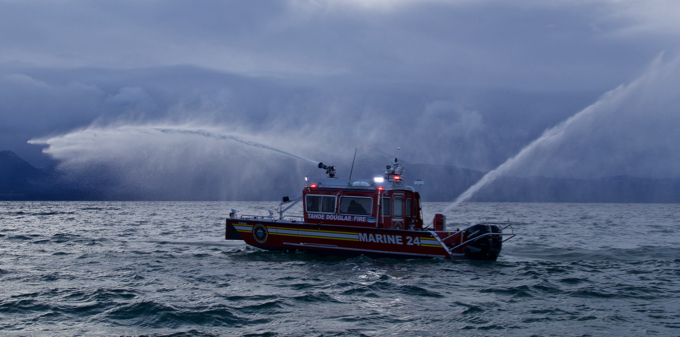
Tahoe Douglas Fire wants to dock its boat at a yet to be built pier at Zephyr Shoals. Photo/LTN file

By Kathryn Reed

A prime piece of South Shore real estate may be back in the limelight.

Tahoe Douglas Fire Protection District would like to build a pier at the Dreyfus estate that would be used only by public agencies, but not the boating or recreating public. The U.S. Forest Service owns this land. No pier currently exists at the property.

“We are discussing and assessing options. We have not approved anything. We’re evaluating Tahoe Douglas Fire Protection District’s request for a safety pier. We’re actively looking at locations for opportunities, considering all options at this time,” Heather Noel, spokeswoman for the Lake Tahoe Basin Management Unit, told Lake Tahoe News. “NEPA (National Environmental Policy Act) is used to disclose any environmental impacts to the public. So if we plan to do new construction on the Dreyfus site, or any site, we would scope the public.”

In other words, the public will have an opportunity to comment on any proposal. 

When the public will be brought into the discussions remains to be seen. There have already been meetings between the fire department, Forest Service and Tahoe Regional Planning Agency.

Tahoe Douglas currently keeps its fire boat at Zephyr Cove Resort, which is operated by Aramark under a concession agreement with the USFS, which also owns that land. The Dreyfus estate sits adjacent to Zephyr Cove Resort. Zephyr Shoals is how the USFS now refers to the Dreyfus estate.

Under the shoreline plan the Tahoe Regional Planning Agency Governing Board is expected to approve later this year it allows for new piers to be built, including specifically for the use of public agencies. Most law enforcement agencies, as well as some of the fire departments in the basin have boats, as do TRPA and U.S. Coast Guard.

The current plan would not allow a pier to be built at Zephyr Shoals because of fish habitat concerns. The new plan has updated science which says such concerns are unwarranted.

Still, it would take USFS, TRPA, Army Corp of Engineers and Nevada Department of Wildlife approval for the pier to be built.

Eric Guevin with Tahoe Douglas Fire said his agency is the lead, but that it will be a partnership. He told Lake Tahoe News the cash to pay for it will come from “grant money and donations, not tax dollars at this time. (We’re) not sure of the cost, still working numbers.” He said a rough minimum is $500,000.

He said the pier will be at Zephyr Shoals or Round Hill Pines, which is also owned by the USFS. Publically, the Forest Service has not committed to either location.

“We effect and have a negative impact on the long-term commerce. Plus, there is conflict with public use and public access. The improvements needed would be onerous,” Guevin said.

Today all public agencies use docks/piers where the public recreates. Guevin contends tourists don’t want to see medical emergencies at the dock. Of course they have to see trauma on ski slopes and there are car accidents every day, so trying to protect people from the reality of life would be difficult. He also said a dedicated pier would speed up the rescue efforts because the public would not be in their way.

The Forest Service hasn’t done much with the Zephyr Shoals property since it acquired it in 1997.

That year the feds entered a land swap valued at $38 million with the land-brokerage firm Olympic Group for it to acquire public land around Las Vegas in exchange for the Dreyfus estate.

The 46-acre parcel in Zephyr Cove had been owned by New York mutual fund tycoon Jack Dreyfus. Dreyfus built the 10,000-square-foot nine-bedroom estate in 1984, spending only two weeks a summer there. He had acquired the land from the Whittell estate and in that same purchase bought the Thunderbird Lodge along the East Shore.

There are reports that the Forest Service allowed the Olympic Group to sell the buildings to Park Cattle, now Edgewood Companies. Their plan was to turn it into a convention center. The price: $300,000, two memberships to Edgewood Tahoe Golf Course, and seven weeks’ exclusive use of the mansion annually for 20 years.

A special use permit was needed from the Forest Service for Park to use the buildings. The company withdrew the application when the U.S. Department of Agriculture’s Office of the Inspector General began a criminal investigation into the financial deal. No wrong-doing was found, but Park never used the buildings.

The Forest Service in summer 2002 had open houses to gauge what the public would like to do with the property. Those discussions didn’t go anywhere. There was a time when the USFS was set on tearing down the structures. Today there are user created trails on the property and people use the beach. The Forest Service has no plans for making this property more accessible to the public.

There are some who have told LTN off the record that a plan for the entire site should be in place before a decision about the pier is made, especially since the original purpose for acquiring the parcel was for recreation.


Opinion: Put public safety above high-speed rail

By Ted Gaines

The unbelievable devastation wrought by the Northern California fires of 2017 has given way to an inspiring rebirth. Santa Rosa, ground zero for the damage, is alive with the sound of skill saws and the constant rapping of hammers, as homeowners – by the thousands – rebuild their lives and homes. 

Those fires are mercifully out, but their effects will be far reaching and spread across the entire state. In their aftermath, another set of problems is smoldering in Sacramento, challenging utility ratepayers, the insured, and taxpayers for years to come.

Ted Gaines

The Legislature has established a committee to look at a bill offering solutions to our wildfire problem and the costs and liabilities for fire damages. That sounds good until you remember this is the same Legislature that didn’t invest in adequate forest management, even as the state’s general fund grew by tens of billions of dollars in the past six years. That sounds good until you remember that this legislature is fixated on plastic straw banning and a thousand other trivialities. That sounds good until you remember that Gov. Jerry Brown, who will ultimately sign any committee-generated legislation, is more concerned with preventing 0.0001 degree fluctuations in global temperature 100 years from now and European popularity than he is with the actual pressing issues affecting Californians.

With that in mind, here’s one easy prediction from the committee: Your costs are going up.

You will pay, one way or another. Your electricity rates – already about 60-percent higher than the rest of the nation – will go up, as the state lets the utility responsible for the fires pass costs along to you.

Your insurance rates – already skyrocketing for rural homeowners looking for fire hazard insurance – will shoot even higher to cover increased costs pushed on them by the state.

Your taxes, already the highest in the nation, will only push higher as the committee and Governor decide that what has really been fueling our fire epidemic is taxpayers keeping too much of their money. Look for some surcharge or other way to milk taxpayers as a “solution” to California wildfires. Maybe even a reintroduction and expansion of the illegal fire tax that was supposed to help with wildfires in the first place (how did that work out?).

In California, every problem is an opportunity to put more fees, charges, and other costs on the backs of the people working harder than ever but falling farther behind. 

This state took in billions of extra, unanticipated revenue this year alone. Gov. Brown has an obsession with the high-speed rail, which will burn billions of taxpayer dollars in perpetuity. That’s real money that could do good if it isn’t wasted by irresponsible Sacramento politicians.  So here’s a novel idea: Put our existing resources where they will actually count.

Instead of high-speed rail, how about high-speed public safety? Gov. Brown and the committee members should commit to providing CalFire every resource it needs to quickly implement the California Fire Plan, a ready-to-go, comprehensive roadmap to slashing California’s fire risk for fall of 2018. This plan shows that CalFire already knows what to do, it just doesn’t have the resources to do it. This project should be paid for with existing money, to protect every Californian from the infernos that too-often wreck property and steal lives.

We will never stop lightning strikes and sparks, and every hot, dry area with trees will have fires. But we can do a far better job than we have done at managing our forests and cutting down risks, all without burning taxpayers and ratepayers in the process. Let’s hope Gov. Brown and the committee members agree.

State Sen. Ted Gaines represents the 1st Senate District, which includes all or parts of Alpine, El Dorado, Lassen, Modoc, Nevada, Placer, Plumas, Sacramento, Shasta, Sierra and Siskiyou counties.