Money Matters: What to do post-Equifax breach

By Nic Abelow

This month, one of the big four credit reporting agencies, Equifax, announced it experienced a security breach resulting in criminals accessing personal information of approximately 143 million Americans between May and July. The compromised information included names, addresses, Social Security numbers, and dates of birth. In some instances, driver’s license numbers, credit card and credit dispute information were also compromised. This information is nearly everything that is needed to open an account in your name. 

Nic Abelow

While my office does not have a direct relationship with Equifax, due to the sheer size of the breach, I felt it important to reach out and let you know what you can do to protect yourself.   

·       First, visit the Equifax breach website to determine whether you have been impacted. Keep in mind that the full impact of this breach may not be known yet, so consider revisiting the site periodically for the next few weeks.

·       If you are impacted, consider placing a freeze on your credit with all of the following credit reporting agencies. Freezing your credit is the only way to prevent those with your personal information from opening accounts in your name. 

o   Equifax

o   Transunion

o   Innovis

o   Experian

·       Consider obtaining credit monitoring services. Equifax is offering free credit monitoring to all Americans, whether impacted by the breach or not. Several companies also offer similar services for a fee. Please note that credit monitoring does not prevent ID theft; it simply alerts you when events occur that may impact your credit.

·       If you believe your information has been compromised, contact your financial institutions to discuss options to further protect your accounts. Ask if you can place restrictions on your account(s) that will prevent anyone from being able to effect transactions or withdrawals without our office’s awareness and approval.

·       Be on high alert for impersonators or phishing attempts by fraudsters. Be on the lookout for emails that appear to be from these companies, telling you that you’ve been impacted, or otherwise creating a sense of urgency, and to “click here” for more information.  When in doubt, do not click the link. Any legitimate company will have another way for you to contact them to be sure the email is safe.

Nic Abelow is a LPL financial advisor with Abelow, Pratt & Associates Financial Advisors and Wealth Management in Lake Tahoe.




Spartan Race World Championship returns to Squaw

The Reebok Spartan Race World Championship at Squaw Valley will be Sept. 30-Oct. 1.

Elite athletes representing nearly 50 countries will put their skills and endurance to the test in individual and team competitions.

Athletes will compete for more than $100,000 in cash and prizes in the culminating event of the 2017 obstacle racing season at one of the most challenging courses in the world.

In addition to the World Team Championship, which will take place that Sunday, the weekend will feature Beast, Super and Sprint competitions, as well as a Kids Race, for ages 4-13. The event is the culmination of the 2017 Spartan Race Season, following the Global Elite Point Series.

Obstacle Course Racing fans are invited to take in all the action, including viewing access to select obstacles as well as the start and finish line, live music and entertainment, panel discussions, raffles, spectator challenges, vendor tents, and more. The event itself is free to the public, with a VIP spectator package available at $40. Tickets for a dinner with athletes are $40 for adults and $20 for children (13 and under). 

For more details on Spartan World Championship events throughout the weekend, go online.


Successfully transition houseplants indoors for winter

By Melinda Myers

Help your houseplants make a smooth transition from their outdoor summer home back inside for winter. The lower light and humidity indoors along with any insects that hitched a ride indoors make it difficult to keep these plants looking their best.

Give them a shower before they move indoors.  A gentle blast of water washes dust and dirt off the leaves and dislodges aphids and mites that might be feeding on the plants.                             

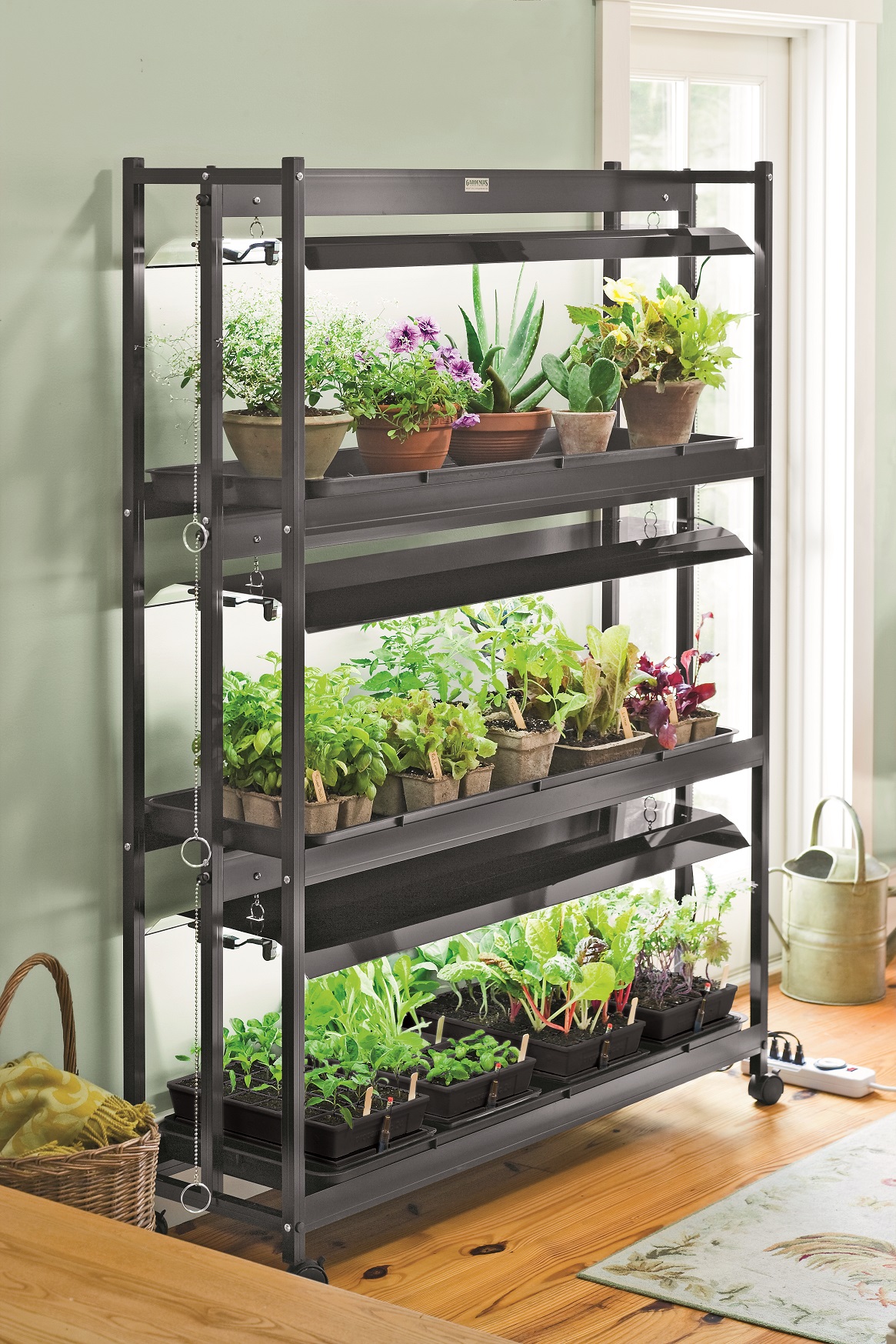
Using a combination of artificial and natural light helps plants better tolerate the less-than-ideal indoor growing environment. Photo/Gardener’s Supply Company

Gradually prepare the plants for the lower light conditions indoor. Start by placing plants in the sunniest south- or west-facing window available or grow them under artificial lights. Leave them here for several weeks if the final destination receives less light.

Next, move them to an east-facing or well-lit north facing window. Again, leave them here for several weeks. Gradually decrease the amount of light the plants receive until they reach their final location. This gradual acclimation helps the plants develop more shade tolerant leaves. Foregoing this process results in yellow leaves and massive leaf drop. This is stressful on the plant and its caretaker.

Skip this step, reduce the stress on your plants and keep them looking their best throughout the winter by growing them under artificial lights. Using a combination of natural and artificial light helps plants better tolerate the less-than-ideal indoor growing environment.

Isolate these plants from your indoor houseplant collection until you are sure no insects tagged along. Check under the leaves and along the stems for aphids, mites, scale and white flies. Use an eco-friendly product to prevent these pests from moving onto the rest of your indoor garden. A highly refined mineral oil suffocates the insects, doesn’t poison them, and is approved for organic gardening.

Continue monitoring for pests over the next few weeks. Reapply the organic insecticide every two weeks as needed. Always read and follow label directions when using any organic, natural or synthetic chemical.

Increase the humidity by grouping plants together. As one plant loses moisture from its leaves, or transpires, it increases the humidity around its neighboring plants.

Further increase the humidity and decrease your workload by placing the plants on a gravel tray. Place pebbles in the bottom of the saucer or other shallow container. Set the pot on top of the pebbles. Allow excess water to collect in the pebbles below the pot. As this water evaporates, it increases the humidity around the plants.

You’ll also eliminate the amount of time spent and mess made when pouring off the excess water that collects in the saucer. Plus, you’ll avoid root rot and other diseases caused by plants sitting in a water-filled saucer.

Give your plants a bit of TLC as you tuck them into their winter lodgings. Your efforts will be rewarded with healthier, pest-free and better-looking plants to enjoy all winter long.

Gardening expert Melinda Myers has written more than 20 gardening books, including “Small Space Gardening” and “Midwest Gardener’s Handbook.” She hosts the Great Courses “How to Grow Anything: Food Gardening For Everyone” DVD set and the nationally syndicated “Melinda’s Garden Moment” TV and radio segments.


Foodies sample their way through Sierra edibles

Patrick Harrity with Cold Water Brewery preps his dessert plate at Sample the Sierra. Photo/Kathryn Reed

By Kathryn Reed

Beer with bread pudding. Chickpeas as a main ingredient in the entrée round of the chefs’ challenge. Wine that wouldn’t stop flowing.

This and a whole lot more is what Sample the Sierra is all about.

The eighth annual food pairing was a celebration of local restaurants, regional foods and adult libations, interspersed with artisans. Bijou Community Park in South Lake Tahoe was full of people enjoying themselves Sept. 16 – what with the event selling out.

This culinary extravaganza showcases food grown in the region, local chefs cooking with it and El Dorado County adult beverage makers.

“It’s like Costco, but better. There is no pressure to buy,” said Danielle Cvitanich of South Lake Tahoe. “It’s great. We get to try all of these local vendors.”

This was the first year she and her husband, Joel, have been to Sample the Sierra.

They were partial to MoonHouse BrewHouse’s Cuban with its lemon-limey flavors that was paired with a rum sampler.

West Shore Cafe in Homewood on Sept. 16 was serving house made herb crisp crackers topped with roasted eggplant and garlic puree that was provided by Mountain Bounty Produce. Photo/Kathryn Reed

Kari Koutnik of Christmas Valley was also a first-timer to Saturday’s event. She loves to cook and eat good food.

“This is a friendly event that isn’t intimidating,” she said.

Some of the lines at first seemed intimidating, but they moved fairly fast.

Most vendors had an ample serving of food and alcohol.

The Brewery at Tahoe created a watermelon, strawberry arugula salad with ingredients from Mama Earth Farms & Perez Farms that was worth visiting more than once. The Paramount Porter from Stateline Brewery was a fabulous pairing.

Chef Anthony Schiavone’s vegetarian rice concoction was being talked about by many patrons.

In the middle of the event was the annual chef’s showdown. This year it was structured like the Food Network’s “Chopped” show where chefs have to use a mystery box of food to come up with an appetizer, entrée and dessert in a certain amount of time, and with one chef being eliminated after each course.

Sample the Sierra is Lake Tahoe South Shore Chamber of Commerce’s annual event showcasing local chefs, regional food and area libation creators. Photo/Kathryn Reed

Starting the competition were Stephen Gill of Cherry Bomb Catering, Kristina Forsberg with Hard Rock Lake Tahoe, Anthony Schiavone of Bespoke Private Chef Services, and Patrick Harrity with Cold Water Brewery.

They were judged on cooking, plating and creativity. They had 30 minutes to create each dish.

In the appetizer round they had to use quail, pop rocks, cashews and sun dried tomatoes. It was Schiavone who was sent home first.

They had a pantry of sorts – though not to the extent of the TV show – to work with. Items ranged from butter to cilantro to corn to eggs to rice vinegar.

The entrée had to consist of pork chops, chickpeas, yellow curry and major grey chutney.

“The chutney is the hardest. I don’t know what to do with it,” Gill told Lake Tahoe News.

For Harrity, he was most worried about the chickpeas. He didn’t let that bother him too much, and instead wowed the judges with his smoked pork.

Forsberg wasn’t fazed at all by the ingredients in round two.

“I think they are all really good together. It makes sense,” she told Lake Tahoe News. “When I saw the box, I knew what I was going to do.”

It paid off. It was down to Forsberg and Harrity in the final dessert round.

They had to create something out of mascarpone, English peas, almonds and white chocolate.

Debbie Brown, who owns Cold Water Brewery, was a nervous wreck. After all, a chef of hers had won the competition twice before. Harrity, who has been with the South Lake Tahoe establishment since January, was being put to the test. He was also performing in front of family members.

The pressure, while intense, didn’t rattle him. His fritter over white chocolate and cranberry mascarpone with a sweet pea caramel put him over the top.

Asked by LTN if he would be making this at the restaurant anytime soon, he resoundingly said, “Absolutely not.”

A capacity crowd meanders through Bijou Community Park at Sample the Sierra on Sept. 16. Photo/Kathryn Reed

The dessert round was the hardest for Harrity; saying the peas challenged him the most.

While Brown was a vision of nervousness as time went on, she is a staunch proponent of the competition, and said so long before the final decision was made. She encourages all restaurants to participate, saying it helps chefs grow and builds camaraderie among the staff.

For Harrity it meant practicing ahead of time – working on technique, memorizing what to do with ingredients. Ultimately, though, it was his creativity and ingenuity that paid off — peas et al.


Opinion: A Calif. residency program for the undocumented

By Joe Mathews

MEMO

To: Acting U.S. Secretary of Homeland Security Elaine Duke and Attorney General Jeff Sessions

From: The Golden State

Re: An alternative to mass deportation of Californians

This is a legal proposal, so let’s start with a stipulation.

You are monsters.

Joe Mathews

You are rapidly deporting undocumented Californians, many of whom are crucial members of our communities, workplaces, and families. In removing parents, you routinely orphan children who are U.S. citizens, and in the next breath say you are for “America First.” Your next targets for removal are the 800,000 young people known as “Dreamers,” people who were brought to the United States as children by their undocumented immigrant parents.

Tragically, my people can’t stop you, since immigration enforcement is the province of the federal government. But we are slowing you down. While we provide legal aid and drivers’ licenses to support undocumented immigrants, we deluge you with litigation, target you with protests, and work politically with like-minded people in other states to undermine the very legitimacy of your government.

This ever-escalating conflict is dangerous—which may be what you want. The president’s political advisor Roger Stone has called for a new Civil War, and, as the Charlottesville aftermath made clear, President Trump is keen on refighting the last one.

But if civil war is not your intention, let’s make a deal that would protect Californians and perhaps de-escalate the conflict, at least over immigration.

Under this deal, Congress and your administration would grant California an exemption from federal immigration law, just as the U.S. government has granted me exemptions to fight air pollution.  

In effect, I, California, would win the power to designate certain people— undocumented folks who meet standards that my elected officials determine—as California residents who would have a legal right to live and work here even if they are not U.S. citizens or legal residents of the United States.

The federal government could still deport people, but with a couple of conditions. If a California resident were detained for immigration enforcement in another part of the country, he or she would have to be deported not overseas but back to California. And if the federal government decided to go ahead and deport a California resident out of the country, it would—under the contract I’m proposing—pay all the costs of that deportation.

In my view, you, the federal government, should cover the legal expenses of any California resident that you deport, and the costs of providing care, income and schooling for children and other family members that deported people leave behind.

To do this, California would need to create standards and a process for granting residency. Dave Marin, the research and policy director for the California Freedom Coalition, which works for greater California autonomy, points out that state legislation appropriating money for legal aid to the undocumented already offers a list of people that Californians consider to be our own. These include those with family members who are U.S. citizens or legal permanent residents; veterans of the U.S. military and their spouses; asylum seekers; the “Dreamers”; and just about anyone without a violent felony conviction.

Such a concept of California residency is not new. In 2002, the state’s reform body, the Little Hoover Commission, suggested creating a “Golden State Residency Program” to accelerate the integration of immigrants, including the undocumented, into California society. Little Hoover suggested that anyone who was participating in their local community should be considered a resident, with the rights and responsibilities that entails.      

Residency is not ideal; it still leaves a sub-class of people who have full rights only in California. But it’s the best that can be done until the day when a federal administration fully legalizes undocumented people. And residency is principled in one fundamental way: Californians should get to decide who gets to live and work in our state—not a faraway federal administration that routinely slanders us.

Will you, the Trump administration, do this deal? I suspect not. Your strategy so far has been to undermine the American institutions that produce compromise. And you prefer to lie and scapegoat diverse California—you think it fires up your racist base—rather than learn from our long experience with immigration.

One of America’s most notable traditions is our federalist system—letting states choose their own paths and then seeing how things work out. California is confident that being a haven that integrates immigrants into our society will produce far more greatness than your approach of removing millions of people and breaking up families in the process. 

So what will it be? Will you make a deal that respects California’s sovereignty? Or are you dead-set on waging war against your country’s largest state?

Joe Mathews writes the Connecting California column for Zócalo Public Square.


Oldest cooking method now the hottest trend

By Julia Kramer

My winter smelled of smoke. Night after night, I caught a whiff of burning logs, of fat dripping onto coals, of sourdough toasting and rib eyes charring and knobby carrots blackening over jumpy flames. This scent welcomed me to North Yarmouth, Maine, where chef Krista Kern Desjarlais bakes crackly Montreal-style bagels in a woodburning oven built into the side of her 544-square-foot cottage, the Purple House.

The aroma hit me when I walked onto the patio of Vicia in St. Louis and (unsurprisingly) into a hipster hangout named Campfire in Carlsbad. It recurred as a motif among four of the most talked about recent openings in Chicago, whether the cuisine was Argentine (El Che Bar), American (Elske), Mexican (Leña Brava), or Mediterranean (Publican Anker). And it—smoke—was visible through the kitchen window at the start of a $293-per-person tasting menu at Single Thread in Healdsburg, emanating from a pile of local almond wood.

It’s funny to call this return to cooking with fire a trend. If it is, it’s certainly the oldest trend in the book. And yet there is no arguing that the burning hearth has of late gripped the restaurant world, seeming to bestow the imprimatur of “serious chef” on anyone who embraces it.

Read the whole story


Road Beat: Acura TLX V-6 AWD A-Spec purrs

The Acura TLX V-6 AWD A-Spec is near perfect. Photos/Larry Weitzman

By Larry Weitzman

Not very often does a car come along that performs so well in all aspects of what a car is supposed to do that you want one for yourself. The new Acura TLX V-6 AWD A-Spec is that car. It does everything so well, that is astounds the mind; how can they (Acura/Honda) do this?

Do what you might ask? Well here’s what: 0-60 mph in 5.43 seconds; 36.8 mpg at 70 mph on a level highway (two-way run); overall fuel economy of 27.1 mpg in aggressive driving for 400 miles; corner like a cat or water in a hose; ride with sublime quiet (something new from Acura/Honda) and smoothness; roar like a real muscle car when you get your foot into it (best sounding V-6 ever); coddle you with superb comfort and purposeful luxury; all in a perfect mid-size package priced at a very reasonable $45,000.

I could stop right here and tell you that you would be a fool not to check out this perfect ride if you are on the market for a mid-size near luxo ride, or even an upscaled mid-size sedan. You would be.

But first there has to be that physical attraction, and Acura design needs to be loved, and I am not sure that it will be everyone’s Mona Lisa. Honda has been on a design roll lately, especially with the new Civic, new Accord, CR-V, Pilot and Ridgeline, all superb designs or much improved. Acura style over the 2017 has been tweaked especially in the front end with the new mesh grille, displacing the eagle beak. Much improved, as is the rest of the more aggressive front end. I like it. It could lose the huge Acura badge on the front grille. 

Two character lines highlight the sleekness of its shape and give it some muscle as well. But the window line ends a little pointy, but beggars can’t be choosers, and I am begging for this ride. Overall, I would call it and 8+ on a 10 scale. It’s good looking enough for me and because of its other attributes, it’s a car I want in my garage.

Specifications
Price $31,900 to about $45,000
Engines
2.4L DOHC, 16 valve, VTEC inline four 206 hp @ 6,800 rpm
182 lb.-ft. of torque @ 4,500 rpm
3.5L DOHC, 24 valve VTEC V-6 290 hp @ 6,200 rpm
267 lb.-ft. of torque @ 4,500 rpm
Transmissions
Eight-speed DCT (I-4)
Nine-speed torque converter automatic (V-6)
Configuration
Transverse mounted front engine/FWD/AWD (V-6 only)
Dimensions
Wheelbase 109.3 inches
Length 191.5 inches
Width 73.0 inches
Height 57.0 inches
Track (f/r) 62.8/63.1 inches
Weight 3,838 pounds
Weight Distribution (% f/r) 60/40
Fuel capacity 17.2 gallons
Passenger volume 93.3 cubic feet
Trunk capacity 14.3 cubic feet
Turning circle 39.5 feet
Wheels 19X8 inch alloys
Tires 245/40X19 inches (high performance, all season)
Performance
0-60 mph 5.43 seconds
50-70 mph 3.00 seconds
50-70 mph uphill 4.09 seconds
Top speed Way beyond sanity
Fuel economy EPA rated 20/29/23 mpg city/highway/combined. Expect 27-28 mpg in rural county driving with some stop and go, 36.8 mpg on the highway at legal speeds.

My prior TLX, which also received rave reviews from me, had a 2.4L DOHC, 16 valve four banger of 206 hp at 6,800 rpm and 182 pounds of twist at 4,500 rpm. The outstanding 3.5L V-6, 24 valve, SOHC motor turns out 290 hp at 6,200 rpm and 267 pounds of twist at 4,500 rpm. Quite the injection of steroids. It certainly pumped up this Acura, helped by a nine-speed auto cog-swapper found in other Acuras and the upscale Pilot. Zero-60 mph happened in just 5.43 seconds while a 50-70 mph level pass was three seconds flat and the same run up a steep grade only stretched that time by a second to 4.09 seconds. All world class numbers. And this is not a light car tipping the scales at 3,838 pounds. The standard four banger TLX had times of 6.88, 3.65. and 5.53 seconds, excellent times in their own right and enough to satisfy 98 percent of drivers, but the V-6 is a road burner.

And when you get into even half throttle this Acura makes music that I never heard from a V-6 before, a solid, classic hard rock sound that would make a muscle car blush. I still don’t know how they did that.

It gets even better. Yeah, sure, the EPA rates the Acura at 20/29/23 mpg city/highway/combined, but as with the four-banger review and test, expect the V-6 to do much better, in about the exact same increments as the four-banger. Overall the Acura averaged 27.1 mpg in 400 miles of aggressive driving with little time on the highway. On a level highway, it posted a two-way average at 70 mph of 36.8 mpg and in my 210-mile round trip to Carson City the TLX V-6 averaged 30.2 mpg. That’s 4-8 mpg better that the EPA numbers and I expect with less dipping into that delicious throttle, my numbers would improve by 1-2 mpg. With 17.2 gallons onboard, range will be well over a bladder busting 500 miles at my numbers, possibly 600 miles. Awesome.

Next is the Acura’s exemplary handling, like the proverbial water in a hose. All the credentials are present, especially with the A-Spec which tightens up the already state of the art suspension and steering, adds wider, taller 19X8 inch alloys shod with wide 245/40 series rubber. The result is what appears to be unlimited grip, a flat attitude and the point and shoot demeanor of a real sports car. It is well balanced and inspires perhaps too much confidence. While turn in is very crisp and dead nuts on, steering, in tighter corners attention must be paid to help unwind the steering wheel. I love the way it handles. About the only negative is the 39.5 foot turning circle, it could be tighter, but when you have wide wheels and AWD, sometimes it suffers by a foot or two in all super high-performance automobiles.

Ride quality is also perfect at least for this backside. Absolutely a magic carpet on smooth roads, the supple suspenders absorb the bumps in a solid fashion with the body feeling like its carved out of an ingot of steel. And then there is the quiet, something Acura is not known for. But you can fuhgeddaboudit. Wind, road and tire noise is gone. Zero, zip, nada.  And one of the reasons fuel economy is so good is that in 9th gear at 70 mph, the engine is literally just off idle at 1,550 rpm, one of the lowest engines speeds ever recorded by the Road Beat in about 1,000 road tests. That’s about where a late generation Corvette runs.

Safety is there in spades with all the acronyms present including lane keep assist, collision mitigation braking and forward collision warning. LED headlights are amazing and the four-wheel discs are huge at over a foot in diameter.

Now to the best part, the interior, a solid 10. Seating not only looks spectacular, they sit even better. Done in leather with Alcantara inserts, they are heated and ventilated. The instrument panel binnacle has all the right gauges, big speedo and tach plus an excellent trip computer. Easy to use. The center stack is improving and becoming more user friendly and was much easier to use. No issues there anymore. Of course, the overall quality is top of the line.

Rear seating is excellent for two and three if necessary. Trunk is a reasonable 14 plus cubes.

Pricing  starts and ends for Acura TLX AWD A-Spec at $45,750 including $950 for the train ride from Marysville, Ohio assembly plant. It is 2/3 American in parts content as well. And the warranty is a six year/70,000 mile on the powertrain and four years/50,000 miles over the whole car. It’s like a stick of Doublemint gum, for $45K you get double the pleasure.

Larry Weitzman has been into cars since he was 5 years old. At 8 he could recite from memory the hp of every car made in the U.S. He has put in thousands of laps on racetracks all over the Western United States.


USFS fire hoses in California get a second life

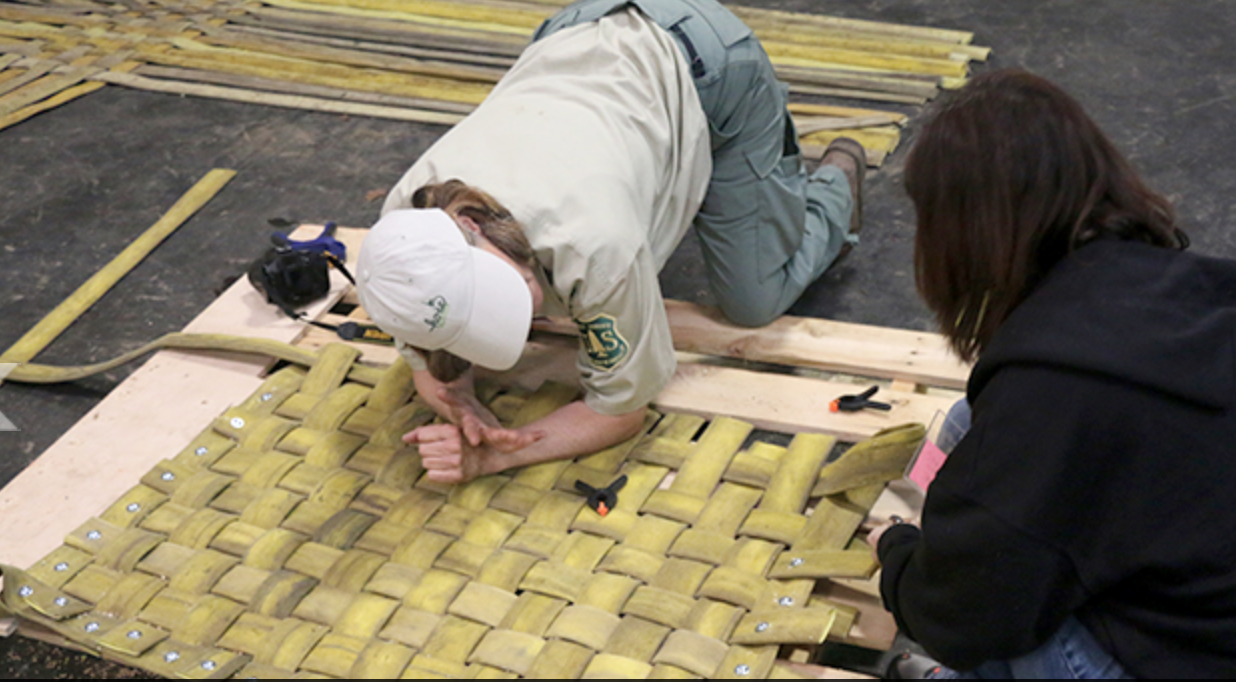
Lisa Ussery, left, with the USFS, assists Sharon Clay, animal keeper for the Turtle Bay Exploration Park in Redding, with a platform bed made using repurposed U.S. Forest Service fire hose. Photo Kerry Greene/USFS

By Kerry Greene

On average an estimated 15 tons of waste is generated annually by fire suppression efforts in the northern zone of the U.S. Forest Service’s Pacific Southwest Region, which covers as far south as Sacramento to the border with Oregon.

As of 2015 over 13 tons (or 87 percent) of that waste was disposed into landfills each year. In an effort to become a net zero waste facility, per a Forest Service initiative, the North Zone Fire Cache (NZFC), located in Redding conducted a waste audit to find out what kinds of materials were going into the trash.

Audit findings inspired one worker to look for a second life for fire hoses and other materials. Now as part of NZFCs recycling effort, scrap fire hoses are collected by the nonprofit group Hose2Habitat, based out of Maryland. Hose2Habitat connects zoos and animal sanctuaries with donations of materials that can be diverted from landfills and safely used for animal enrichment.

The mission of the U.S. Forest Service is to sustain the health, diversity, and productivity of the nation’s forests and grasslands for present and future generations. While the numbers are still being tracked and reported, so far in 2017 the NZFC has diverted a little over 10 tons of material from entering landfills. Almost 9,000 pounds, or 40 percent, of that material was fire hoses.

Hose2Habitat is an American Association of Zoo Keepers conservation partner and, according to its website, the only organization in the world whose mission is to improve the physical and psychological well-being of captive wild animals by providing and enhancing habitat enrichment through the donation of recycled and other materials, free workshops, programs and services. Hose2Habitat, who has been around since 2014, is a 100 percent volunteer-run organization. It serves zoos, sanctuaries research and conservation projects.

The NZFC is one of 14 National Support Caches located throughout the United States with a combined inventory valued at over $170 million. The role of the Fire Cache is to provide logistical support to all requesting state and federal agencies. Support is primarily directed toward wildland fire suppression activities. Local and interagency efforts are also supported in cases of natural disasters and large projects such as prescribed burning.

In March the Forest Service hosted a Hose2Habitat animal enrichment workshop at the Forest Service’s Northern Operations Service Center in Redding. Animal caretakers came from far and wide to learn from Hose2Habitat volunteers the techniques for creating enrichment items, such as crafting hammocks, cubes, feeders and climbing ladders out of fire hoses. This was the first ever West Coast workshop of this kind.

“The fire hose is just one piece of the puzzle,” said Lisa Ussery, materials handler with NZFC, who has been working hard to find ways to divert materials from the landfill. “The overall vision is to find ways to repurpose or recycle all the materials we have here, once they’ve reached the end of their useful life.”

North Zone employees are currently networking with other fire caches and partners to divert scrap Nomex, plastics, tents, sleeping bags, cargo nets and other materials from the landfill.

Kerry Greene works for the USFS Pacific Southwest Region.


Snippets about Lake Tahoe

·      El Dorado County Board of Supervisors is scheduled on Sept. 19 to approve the 2017-18 $569 million operating budget.

·      The 55th annual North Tahoe PTO Ski Swap & Pumpkin Festival returns to Homewood Mountain Resort on Oct. 21 from 11am-4pm.

·      Placer County Board of Supervisors will consider adoption of the county’s 2017-18 final budget at the Sept. 19 meeting in Auburn.

·      Here are the El Dorado-Tahoe and Sierra roadwork schedules from Caltrans for the next week.

·      The Alpine Aspen Festival is a celebration of the beauty and vital role of aspen groves in providing clean water to millions of Californians and Nevadans. This year’s festival will include educational hikes, artist workshops, conservation projects, music, and more. It will be Oct. 7-8, 9am-4pm on Blue Lakes Road off Highway 88.


Scammers claiming to be NDOT reps

The Nevada Department of Transportation says scam artists are attempting to purchase computer equipment under NDOT’s name.

Using a fake @nevadaddot.com email address, scammers have attempted to purchase computer equipment without an official state purchase request or vendor solicitation. The scammers then attempt to get the equipment delivered to an out-of-state location.

Multiple companies have contacted NDOT directly to verify what turned out to be illegitimate purchase requests. One vendor shipped computer equipment without verification.

Official NDOT email addresses end with @dot.nv.gov.