Tahoe Tails — Adoptable Pets in South Lake Tahoe

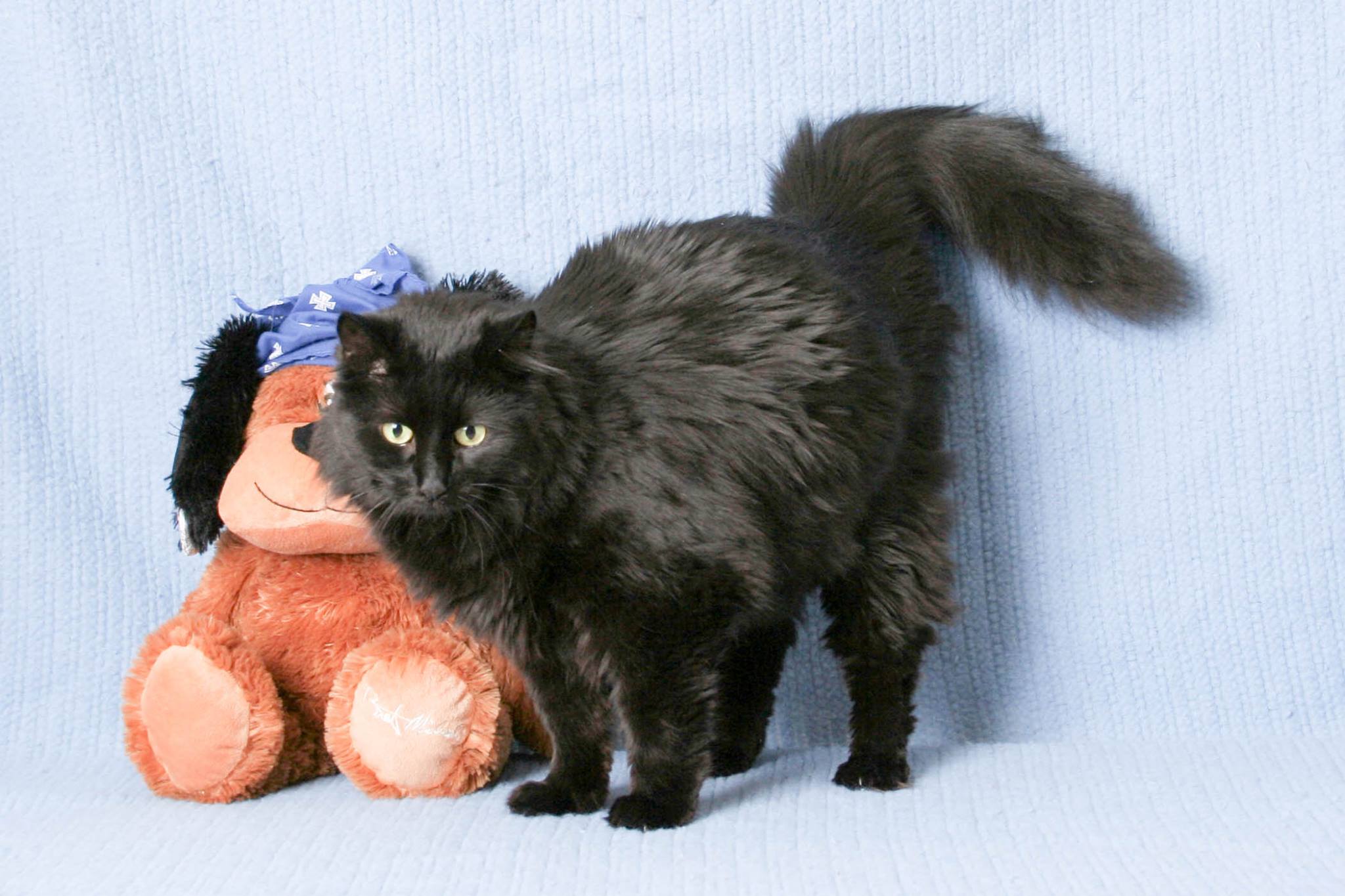
Talie

Tali is a 5-year-old talkative girl who does well with other cats but cannot go to a home with a dog. Her adoption fee and those of all other adult cats have been paid by a kind donor. Tali is very affectionate and likes to sit on laps and be petted.

Tali is spayed, microchipped, tested for FIV, and vaccinated. She is at the El Dorado County Animal Services shelter in Meyers, along with many other dogs and cats who are waiting for their new homes. Go to the Tahoe animal shelter’s Facebook page to see photos and descriptions of all pets at the shelter.

Call 530.573.7925 for directions, hours, and other information on adopting a pet.

For spay-neuter assistance for South Tahoe residents, go online or call the animal shelter. Vouchers are available there also; bring $25 and a copy of a photo ID and a local utility bill.

— Karen Kuentz


Winter still wreaking havoc on Tahoe power grid

By Kathryn Reed

Power outages are normal, but this hasn’t been a normal summer.

Liberty Utilities is still dealing with the aftermath of last year’s winter. Relying on NV Energy is also impacting customers.

Liberty provides electric service to the California side of the Lake Tahoe Basin, as well as to Truckee, Alpine County and other regional locations. Liberty has been doing so since 2011 when its parent company bought NV’s California territory.

Normally the top four reasons for outages are:

·      Car vs. pole accidents

·      Weather, such as snow, wind, lightning, or trees falling on wires

·      Critters (like squirrels) getting into equipment

·      Equipment failure.

This summer has been different.

“Unfortunately, we’re still feeling the impact of the extreme weather experienced this last winter which really stressed the infrastructure (poles, wires, transformers, etc.) with snow loads and lots and lots of water in equipment (such as underground vaults) that had never been exposed to that much water/snow before,” Travis Johnson, Liberty’s vice president of electric operations, told Lake Tahoe News. “Many of these weak points aren’t readily visible, so the crews can’t proactively go out and fix; they have to wait until a circuit goes out and then track the problem down.”

Liberty is also at the mercy of NV Energy. When something goes wrong across the state line, it can have a ripple effect. An example of this was on Aug. 28 when NV Energy’s Round Hill substation had a fire and cut the power to customers in Nevada and California. The substation is still out of service.

“Liberty has picked up additional load to help them continue to serve their customers until this substation can be repaired. Picking up this load causes greater circuit exposure to the elements because the lines are switched in a way that makes them longer – for example there is more opportunity to have a lightning strike or car v. pole –  and being in fire mode means we have to send someone out to patrol the line before we can restore service,” Johnson said. “The same is true for NV Energy customers—carrying additional, temporary load for Liberty results in greater exposure for their customers.”

Johnson pointed out that while the companies are separate in so many ways, they are relying on a lot of the same old equipment. They have interties to send electricity between service areas. That’s why outages can affect both states at the same time.

Much like the agreements between the local water districts where they can help the other if need be, Liberty and NV have a similar mutual aid agreement.

Outages are usually short-lived. When it’s not fire season the lines automatically recharge. It’s still fire season, so when the energy stops flowing on a line crews have to go find it. It isn’t like there is some circuit board in some office pointing to where the problem is, or that a flick of switch can solve it. It takes manpower out in the field to resolve the problem.


Opinion: Living online, will anyone know when you die?

By Emma Jones

I suspected that something was wrong on the Sunday morning when I saw the beginning of a Facebook post in my newsfeed sidebar that said, in French, “Our dear AJ has given up …. ” I was unable to read the rest because it was removed as I looked at it, but I was concerned that it might actually mean that AJ was hurt or in trouble.

It could have said something like, “AJ has given up his studies,” because the French wording is similar for all scenarios. That particular formulation is most often used in reference to death, true. But on this quiet Sunday morning, when I was about to go grocery shopping, I found the concept outrageous: AJ was simply too real to me to turn up dead online.

AJ loved the LA Zoo, Donald Duck orange juice, and cats. He often held his arms close to his chest, like a T-Rex. He was sarcastic. He could play the guitar, and would sometimes play mine, but he didn’t sing. He was very much alive in my mind.

I texted Fergus, a mutual friend from high school: “AJ is fine, right? He didn’t kill himself or anything.” Fergus texted back: “I don’t think he killed himself. Nico got a Snapchat from him the other day.” The text-tone was mocking. I didn’t text AJ for this very reason, I was so sure that he was alive that I thought he, like Fergus, would make fun of me for being worried that he was dead.

So now all was presumably well. We had Facebook, we had Snapchat, we knew what was going on! I responded with “OK yay, glad AJ is still alive!” and Fergus and I continued to debate whether pancakes or waffles were tastier. Something significant and heart-wrenching had happened, but it quickly disappeared, lost in the way social media collapses all distinction between the trivial and the profound.

I met AJ sometime in the fifth grade. At first we weren’t friends. In fact, I hated him for a good portion of the sixth and seventh grades in that irrational way that children sometimes hate one another. Eventually I no longer found him an awful person to be around, and we were good friends throughout high school. When we went off to college we carried on our friendship online—the way my friends and I do almost everything. But an unforeseen hazard of living life online is that it confers a kind of immortality that doesn’t square with real life—and certainly not real death.

Around 11pm that same Sunday, I was cooking chicken-less chicken nuggets for a group of friends in my New York apartment when I went to my bedroom to grab my phone. There was a text: “Emma, AJ did kill himself. I’m sorry if you wake up to this.” Fergus had just gotten off the phone with AJ’s mother. Later, I would find out that he had died two days earlier after overdosing on heroin. I would learn that he was an addict and had overdosed once before. I would remember that he’d dabbled in drugs while we were in high school. But the moment that I read those words, the only thought that came to mind was being 16, out past curfew, parked somewhere in the Hollywood Hills, and as I collapsed in the hallway of my apartment, weeping, I kept repeating: “Oh my god, I kissed him in the back of a truck and now he’s dead.”

I had some previous experience with death: the passing of a great uncle. The sensations that I was having now, though, were new and horrible. This death made me frantic. Finding out that a close friend has died without any human contact, not even the sound of another person’s voice, is disorienting. For me there was no ritual to delineate when he had died and when he had lived—no sheet pulled over the face, no pennies on the eyelids, no pronouncement and silence.

That night everyone who knew him was bewildered. We exchanged shocked online messages. Was this real? Could these texts be trusted? Because that’s all anyone was getting: texts. The mother of a friend of mine was waiting to tell her children until she had “more evidence.”

But in the end, it didn’t matter, because there wasn’t any. There were only those same words sent over and over again from person to person: “AJ is dead.”

My relationship with AJ was always somewhere between friendly and flirtatious, and it reached an apex the summer before we became seniors in high school when we watched a lot of movies, kissed in a truck; I even had dinner with his parents. Maybe for a second we almost were, and then we weren’t. But that was OK; our relationship had always been fluid and easy. I trusted AJ. Even though I knew he liked drugs, and would often do them at parties, I never worried that he’d take things too far. He once told me that he would never do heroin “because I know I’d like it too much.”

But of course that wasn’t what happened. Fifty thousand Americans died from drug overdoses in 2016, and AJ was one of them. As soon as Fergus texted me the news I wanted to call him to find out how AJ had gotten involved with opioids. I wanted to know whether everybody else was aware of his drug problem and I was just in the dark. I wanted to understand how in the world this could have happened.

But Fergus lived in Canada and didn’t have a phone plan. It would cost him a fortune to talk on the telephone. I realize how irrational that sounds—your friend died and you were concerned with phone plans? Or: What about Skype? Maybe it was also easier not to call. Maybe I appreciated the distance that technology gave us. I knew that a call would reflect my own shock and sadness back at me, and I didn’t want to stare at someone through a screen who I knew felt as hollow as I did.

And calling would also have made it real, as though I’d killed him. He wasn’t really dead yet. Not if I let the Internet stand between me and his death.

After he died, I was alone in Manhattan, texting people and reading Facebook messages filled with condolences. I found out about the date of his funeral in a Facebook post from his mom. So while all of this public grief was unfolding online, each of us was experiencing it alone, tucked away in our separate corners of the world.

Later I got a message that AJ had “liked” one of my photos, but in fact his mother had taken over his Facebook page and it was no longer him, though it seemed to be. I still get the occasional notification that AJ has posted something on his wall or that he is online. This always feels existentially wrong, a dead person spending time making Facebook posts.

The first time I felt genuinely better after his death was when I flew home to LA for the funeral. I spent the whole weekend in a cluster of friends, and was alone for no more than two hours the entire time. We really “shared” memories and stories. We held one another. We cried. We also went go-cart racing and ate garlic fries. We existed together in a way that was impossible over social media. We couldn’t plan what to say or how to express ourselves, as you can in online forums, and I think we suffered less because of it. We got to experience the honesty and relief of laying our grief bare to one another.

And, perhaps most important, we could all see, plainly, that AJ was not there.

Emma Electra Jones, a senior summer fellow at Zócalo Public Square, is a senior at Barnard College, Columbia University.


U.N. aviation agency to call for global drone registry

By Allison Lampert, Reuters

The United Nations’ aviation agency is backing the creation of a single global drone registry, as part of broader efforts to come up with common rules for flying and tracking unmanned aircraft.

While the International Civil Aviation Organization cannot impose regulations on countries, ICAO has proposed formation of the registry during a Montreal symposium this month to make data accessible in real time, said Stephen Creamer, director of ICAO’s air navigation bureau.

The single registry would eschew multiple databases in favor of a one-stop-shop that would allow law enforcement to remotely identify and track unmanned aircraft, along with their operator and owner.

Read the whole story


Wildfire burning on West Slope 20% contained

Updated 9:47pm:

More than 120 acres have burned in a remote area of the West Slope, with containment at 20 percent.

The fire started Sunday afternoon in Shingle Springs.

Called the French Fire because it is burning off French Creek Road, it is challenging firefighters because it is difficult to get to.

No structures as of the evening of Sept. 17 had been threatened.

The cause of the fire is under investigation.

— Lake Tahoe News staff report


Nevada Supreme Court to settle marijuana distribution fight

By Sean Whaley, Las Vegas Review-Journal
 
CARSON CITY — The legal saga of who can transport recreational marijuana to the state’s pot shops continues, with the Nevada Supreme Court issuing a temporary injunction prohibiting the state Department of Taxation from licensing marijuana businesses as distributors.

The Supreme Court, in an order dated Thursday, denied a request by the Tax Department to reject the temporary injunction sought by alcohol distributors. The request for the injunction was filed by the Independent Alcohol Distributors of Nevada. The court also rejected the agency request to dismiss the case.

The court has ordered oral arguments in the dispute over who should be able to distribute recreational pot for Oct. 3 at the Boyd School of Law at UNLV.

Read the whole story


Adventure travel has a long history in the region

By Meghan Herbst, Moonshine Ink

In 2016, Truckee launched its new slogan, “Base Camp for a Big Life.” While it was chosen to epitomize Truckee’s location as a jumping-off point for mountain experiences, there are a number of local expedition companies that have been making Tahoe/Truckee a hub for adventures in the Sierra Nevada and abroad for decades.

Whether its rafting down a rough rapid in Chile, taking the whole family out for a day of rock climbing on Donner Summit, or traveling to a faraway land to learn about different cultures, these award-winning outfitters are ready to take you on a journey.

Read the whole story


Nev. developing global renown for drone research

By Mick Akers, Las Vegas Sun

After the Federal Aviation Administration designated Nevada one of six unmanned aircraft (UAS) research sites in 2013, the state has been capitalizing on the rare opportunity and cultivating an international reputation in the drone industry.

“The (designation) … provides a superhighway to jobs and businesses to develop,” said Chris Walach, director of the Nevada Institute of Autonomous Systems, speaking at the Nevada Economic Development Conference on Wednesday. “The question is what can we do together as a state to develop that superhighway?”

Nevada has been on the forefront on various drone breakthroughs.

Read the whole story


Kings Beach event center deal nearly done

North Tahoe Public Utility District board of directors will have a special meeting Sept. 18 at 5:30pm meeting at the North Tahoe Event Center in Kings Beach to consider the final draft for the lease agreement for the center.

The board intends to enter a partnership with Laulima Kings Beach Event Center LLC to operate and maintain the facility.

If the resolution is approved, the clock starts on a variety of required actions for the district and Laulima as outlined in the lease. Laulima’s responsibilities include providing information to the district to verify financial ability within 60 days and submitting renovation design concepts within 30 days. 


Decline in inmates hampers fire fight

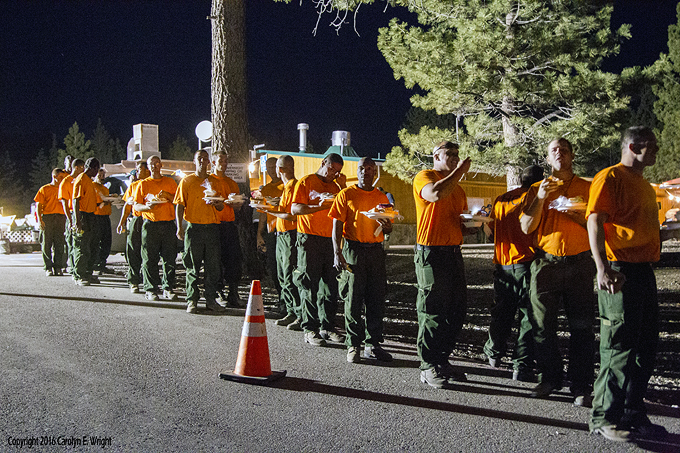
Inmates were used on the Washington Fire near Markleeville in 2015. Photo/Carolyn E. Wright/Copyright 2017

By Lizzie Johnson, San Francisco Chronicle

Thomas Rohl adjusted the 30-pound pack strapped to his back and hopped into a nearby fire rig. He was in a remote part of Solano County, on his way to help put out a grass fire smoldering a few miles to the west.

It’s backbreaking, dangerous work. But it beats prison.

Rohl and minimum-security inmates like him are a firefighting force the state counts on every year when the hills dry up and the weather gets hot. But there’s a problem: Thanks to changes that have redirected many low-risk offenders who used to crowd the state’s lockups, California is heading into the height of this year’s fire season with a reduced number of what one official called “the Marines” of wildfire fighters.

Read the whole story