Protesters walk out of McClintock’s town hall

By Angela Hart, Sacramento Bee

A group of about 40 protesters quietly and abruptly walked out of Republican Rep. Tom McClintock’s town hall in the city of Angels Camp Wednesday night.

“We’re going to take our district back,” said Kate Hege, 38, of nearby Amador City. “We have been to a half dozen town halls, we have made thousands of calls, we have talked with his staffers…to be heard. The only response that he has is to slander us as the radical left. We are his constituents, and he owes us representation…yet he doesn’t do anything for this district. This is about switching gears.”

Many outside the meeting said they don’t feel heard by McClintock, a conservative Republican who has represented California’s deep-red, largely rural 4th Congressional District, which includes Lake Tahoe, since 2009.

Read the whole story


Experts weigh in on administrative bloat in Nevada’s higher ed system

By Natalie Bruzda, Las Vegas Review-Journal

Can too many administrators spoil the classroom? That’s a question a Board of Regents member seemed to ask the Nevada System of Higher Education.

At a June board meeting, Regent Trevor Hayes questioned the necessity of hiring a seventh vice chancellor — with a $175,000 annual salary.

NSHE Chancellor Thom Reilly, hired in June, said he wants to ensure system priorities are where they should be. An October board retreat will examine system priorities and aim to ensure that NSHE and its schools are meeting goals such as improving access to higher education and overall degree completion.

Read the whole story


Suspect sought in Kings Beach thefts

Police are looking for this person. Photo/Provided

Placer County sheriff’s detectives are looking for a man they believe stole a vehicle from the parking lot at Bank of the West in Kings Beach on Sept. 8.

The vehicle was found the next day in Truckee.

Investigators believe the suspect is also responsible for additional thefts in the area.

The male suspect has red or light brown hair, a goatee (which might have been shaved off), is approximately 5-feet-10-inches to 6-feet tall, weighing between 170 and 190 pounds, and last seen wearing a blue “Norway” sweat shirt, grey pants, and blue shoes.

Anyone with information is asked to call 530.581.6320; to remain anonymous, call Placer County Crime Stoppers at 800.923.8191.

— Lake Tahoe News staff report


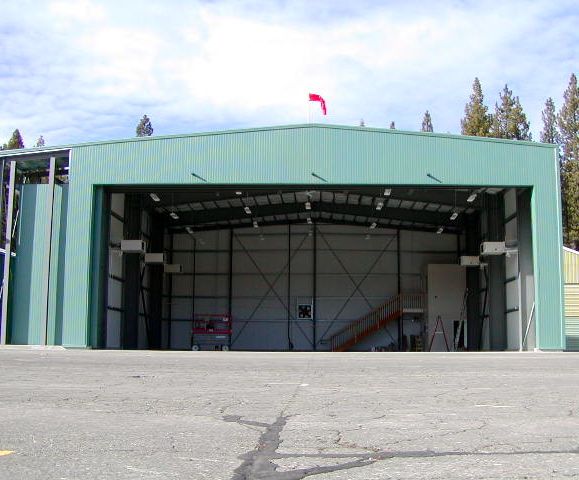
Lake Tahoe Airport may become solar site

The executive hangar at Lake Tahoe Airport and others could have solar panels as soon as next summer. Photo/Provided

By Kathryn Reed

South Lake Tahoe could save about $1.28 million in electric bills over the course of 25 years if solar panels were installed at Lake Tahoe Airport.

That is the projection by Bay Area-based Staten Solar. Representatives from the company gave the City Council an overview on Sept. 19 of what a solar field at the airport would mean.

The firm would install all of the equipment and maintain it for the life of the contract, and would secure all the permits.

Scott DuBois with Staten Solar said of the sun here “it’s raining free energy on us” and now is the time to take advantage of it.

Solar systems have been installed in other mountain regions, so snow load factors as well as the time it takes for the snow to melt on panels have all been studied. Panels have also been installed at airports, so this is something the FAA is familiar with signing off on.

There would be no outlay of cash from the city. The only expense might be if more insurance is required on the hangars.

The use of solar is part of the recently adopted airport master plan. Going forward with this would also help the city attain its goal of using 100 percent renewable energy by 2032.

The local system is proposed to be a 300 kilowatt unit.

Instead of the city buying power from Liberty it would be buying it from Staten.

The savings stated are projected by Staten and have not been independently analyzed by city staff. The company used the city’s current bill, which is about $50,000 a year at the airport, with projected rate increases from Liberty and then what it projects the cost of its service will be.

So, there is no guarantee of these cost savings.

The estimate is 90 percent of the airport’s electrical needs could be provided by the solar.

City Councilman Tom Davis was concerned about having equipment for so long when technology is always changing. DuBois said the most substantive changes lately are to software, which will be updated as needed.

DuBois said his firm has had positive conversations with Liberty Utilities.

Liberty Utilities did not respond to Lake Tahoe News’ questions about this proposal.

Staten wants to work with South Lake Tahoe to potentially put solar in on other city owned buildings, like the fire stations. It is talking to other businesses in town, like Heavenly Mountain Resort and Tahoe Mountain Lab.

Tuesday’s presentation was just that and not an action item. However, the council members expressed interest in having more serious talks with Staten to put solar on the airport hangars.


Opinion: Value of parks, monuments is more than money

By Jerry Nickelsburg

The United States has an extensive system of amazing parks.  From the Shenandoah National Park, close to where I grew up, to Sequoia National Park, where I am a trustee for Lost Soldier’s Cave, our national parks connect Americans to our remarkable landscapes and wilderness areas.

I have annual passes to the U.S. and the California Parks and Recreational Areas. So when someone asks what we need in terms of parks, my visceral answer is always: More! But others view the National Monument and National Park systems differently. Right now, the Trump administration is re-evaluating them with an eye toward shrinking some and opening up others to mining and development.

The economist in me wants to ask: What are the trade-offs of making such changes in our parks? And how are such changes valued?

Let’s start by acknowledging there is always a trade-off between economic activity and the environment. Everything we do—from sheltering and feeding ourselves, to going to movies and ball games—changes the natural environment around us. And this is not new. Pre-Columbian hunter-gatherers altered the environment as they burned Great Plains grasses in their quest for buffalo burgers.

What are the costs of such alteration? For a long time, planners have sought to ascertain the value of urban open space. A recent study by Harvard lecturer Linda Bilmes and Colorado State University Professor John Loomis tried to estimate the value of the National Park Service system. It is a big number, $92 billion. But even then, they admit that many aspects of the park system are undervalued because putting any price on them would be speculative at best.

Among these difficult-to-price aspects are the health and psychological benefits to those who use the parks—and to those who don’t use the parks, but who benefit from changed behavior by those who do. Their analysis also does not consider the opportunity cost of the parks—in other words the money that might be made were they not parks, but were privatized for housing, mining, logging, or commercialized recreation.

The Trump administration’s current evaluation is focused on those parks that are designated as national monuments under the Antiquities Act of 1906.  While there are huge challenges in conducting a cost-benefit analysis of the national monuments, it is still a worthwhile exercise to think about the values that can be pinned down.

Let’s begin with an easy example. The Statue of Liberty is a national monument. It sits in New York Harbor on Liberty Island; prime real estate. In 2016 there were over 4.5 million visitors.  They paid about $27 each to visit, which includes the boat ride to and from, and admission tickets to all or part of the monument. If we compare this to Manhattan skyscrapers that have an average age of over 60 years, then over the same amount of time visitors will have spent more than $7 billion at the monument.

Again, we don’t count those who benefit because others have been inspired by their visit to the Statue of Liberty, nor the value of connecting us to our heritage. It is undeniable that these are significant.

An alternative to the statue would be a skyscraper. The island would be prime real estate for building exclusive condos with views of the city and the harbor. The value would be diminished by the fact that domestic and maintenance workers would have to be paid more to get over to the island, and that access to the city would require a boat ride. So perhaps the comparable development is the Kushner family’s 666 Fifth Ave. office tower, another prime property.

The Kushners paid $1.8 billion for it, and the New York Times reports that they expect to spend $3.3 billion to renovate it.  When you add this up—$5.1 billion—it is clear that the Statue of Liberty Monument (with a value of $7 billion-plus) is worth more than the alternative condo skyscraper occupying the same land.

And this is just the pure economic cost-benefit analysis. It leaves out the non-pecuniary value of being inspired by Lady Liberty, of connecting us to our heritage, and of reminding Americans that we were all once immigrants yearning to breathe free.

So it’s clear why no one, as far as I know, is contemplating selling or leasing parts or all of Liberty Island. But what about Bears Ears National Monument, the first target of Interior Secretary Ryan Zinke’s effort to shrink national monuments and open them up for development?

I’m betting that, at least until recently, you never had heard of it. Bears Ears is in a remote part of southern Utah.

But as an example, Bears Ears is instructive—and the economics are a bit more complicated. First of all, Bears Ears, like many monuments, is free to visit. So we don’t have admissions revenue to look at. Plus, the remoteness of the park means it will not have the same level of visitor traffic as the Statue of Liberty National Monument. Of course, luxury condos are not an alternative in such a remote place. But you can make the case that mining is an alternative use.

Now let’s consider the full value of Bears Ears. It spans an area with a fossil record from the age of the dinosaurs, one of the most complete records we have. The value in studying this record is that we may obtain a better understanding of the fossils from this time spanning the Triassic and Jurassic periods. Also, Bears Ears is home to more than 1,000 archaeological sites dating from when early Native Americans lived in the area. This civilization vanished and new knowledge on how climactic changes seemed to have decimated their civilization is going to be useful for our grandchildren (or maybe even ourselves). The monument also has other values—to the visitors who make the trek there, and to Native Americans who still live in the area and have a spiritual and heritage connection to many parts of it.

What are we giving up by protecting this potentially useful historical, cultural, and scientific research site? Uranium. The Daneros Mine in Red Canyon is an existing uranium mining operation in the Bears Ears area that was purposely left out of the monument. But the monument effectively prevents further exploration and mining inside its boundary. 

Here is the context. Uranium prices have been falling since they peaked in 2007, and economics teaches us that this happens when demand falls or supply increases. So if other parts of Bears Ears were not great places to mine before the monument was declared, they certainly are not now.   

The counter to that point is: uranium prices may change someday. How and when is hard to predict. But uranium ore is important, and could be critically important to our national security. Still, this is unlikely. The U.S. demand for uranium is not likely to increase anytime soon, as reactors like San Onofre in California close and other reactors—such as two to be built in Jenkinsville, S.C.—are abandoned in mid-construction. Indeed, there is so little demand that most of the uranium now mined from southwest Utah is exported. 

In such a case, where we are dealing with “might-be’s” instead of quantifiable benefits, we can turn to optimal decision theory to help us make wiser choices.  

The optimal decision is the one that provides at least as good an outcome as all other available decision options. So if the costs of the “might-be’s” are not immediate, they receive little weight. In the case of Bears Ears, the optimal decision now is to leave well enough alone and to keep an eye on the “might-be’s” just in case.

In other words, if we don’t need to make a decision, the optimal action is to make contingency plans for the time when a decision must be made.

A secondary argument for opening Bears Ears to mining is that it takes time to open a mine and begin ore production. So if we need uranium for national security, we could be behind the production power curve. The answer to this is quite easy. If quick access to uranium is valuable, then instead of exporting it from the Daneros Mine to South Korea, the federal government should purchase and stockpile it. The reason why this is superior is that uranium seams play out, and if they are opened today they still might not be available when a national crisis requires them. Thus the uncertainty of the need for the strategic ore drives the decision to preserve Bears Ears.

There is also the issue of jobs. According to the Salt Lake Tribune, this amounts to less than 40 jobs. In an economy of 147 million jobs in the United States and 1.5 million in Utah, this is no more than spit in the ocean. So the strategic metal arguments are the ones to consider seriously, and they point to economic alternatives superior to doing nothing with Bears Ears at the moment.

My guess is that other national monuments would end up with a similar cost/benefit calculus. There may be legitimate arguments about future needs, either by those who will benefit from maintaining the park in perpetuity, or by those who see a national interest in exploiting resources from the park at some point in time. But the absolute wrong economic decision would be to change a “might-be” to a “must,” thereby creating a cost in the loss of the park.

That brings me back to my personal interests in parks and monuments. Of course, I don’t want to see even one-tenth of one acre given over to mining or development. But the point that should drive decision-making is not personal preference, but analysis of costs and benefits to society as a whole. And it’s clear that careful study and a willingness to admit what we don’t know can lead to a better solution for such places than short-term changes in policy to satisfy exploitation interests.

And if we don’t take care to respect the analysis, you might find yourself booking a tour of the unique architecture of Liberty Island Condos in the middle of Upper New York Bay some day.

Jerry Nickelsburg, an economist at UCLA Anderson School of Management, writes the Pacific Economist column for Zocalo Public Square.



Buffets a huge culprit of food waste

By Linda Himelstein, New York Times

Lawrence Eells, the executive chef at the Hyatt Regency Orlando, in Florida, would like his kitchen, or at least its operations, to be as lean as his roast beef. So in April, he welcomed a team of researchers looking at ways to reduce food waste, especially around the abundant all-you-can-eat buffets.

Experts from Ideo, the global design firm known for such creations as Apple’s first mouse and Ikea’s kitchen of the future, studied all facets of the buffet, from food preparation and presentation to the eating patterns of guests. The idea was to try to measure exactly how much food was consumed or repurposed, versus thrown away. They also aimed to pinpoint areas where innovations might help cut waste.

Their initial finding — that guests ate just over half of the food put out — surprised almost everyone. Perhaps even more striking was that only 10 to 15 percent of the leftovers could be donated or repurposed because of food safety regulations, while the rest ended up in the garbage. The sizable waste generated by coffee, juices and other liquids added to the conundrum.

Read the whole story


Snippets about Lake Tahoe

·      South Lake Tahoe City Council reset meeting dates for the rest of the year. Oct. 3 will be a special meeting with the focus on vacation rentals. The following are regular meetings: Oct. 17, Nov. 7 and Dec. 12.

·      Caltrans is closing Highway 4 for pavement repair work on Sept. 27. The closure will be in effect from gate No. 2 (east of Lake Alpine) to Highland Lake Road from 7am-4pm.There is no local detour available. Motorists should consider highways 88 or 108 as alternate routes.

·      South Lake Tahoe is offering an American Red Cross certified lifeguard training course in October. For more info, go online.

·      California Assembly Speaker Anthony Rendon appointed Adam Acosta to fill the public member seat vacated by John Hooper on the California Tahoe Conservancy board.

·      The Minden Library will be closed Oct. 2-7 for an upgrade to the collection.


Assessed property values increasing in EDC

The assessed value of property in El Dorado County went up 6 percent this year compared to a year ago.

The numbers were released this week.

The $31.5 billion property tax roll, which reflects the assessed value as of Jan. 1, is approximately $1.7 billion above last year’s assessed value of $29.8 billion.

This equates to about $315 million in property taxes every year.

”The same factors that increased last year’s values by over 5 percent continued to influence property values this year,” Assessor Karl Weiland said in a press release. “The recovering real estate market led to properties selling for more than the assessed value. This is especially true in the west end of the county, which showed higher sales volume and pricing than more rural areas of the county.”

El Dorado County has approximately 95,000 real property parcels; almost 67,000 are single family residences. There are also nearly 39,000 timeshare vacation parcels in South Lake Tahoe. In addition to homes and parcels, Weiland assesses approximately 12,000 businesses, boats, mining claims, possessory interests and aircraft.


Calif. pensioners: Your COLAs are safe, for now

By Adam Ashton, Sacramento Bee

The state’s largest pension fund on Tuesday shot down a pitch from a Republican lawmaker who wants it to study how much money it could save by cutting benefits for retired public workers.

Sen. John Moorlach of Orange County in July wrote letters to CalPERS board members – Richard Costigan and Dana Hollinger – making two touchy requests for the pension fund.

In one, Moorlach wanted CalPERS to estimate how much money it could save by temporarily suspending cost-of-living adjustments for retirees. CalPERS has different retirement plans that allow cost-of-living adjustments of 2 to 5 percent for its pensioners.

In the other, Moorlach asked CalPERS to look at reducing benefits for current workers and retirees by moving them into the less generous plans public agencies began offering in 2013, after Gov. Jerry Brown signed a pension reform law.

Read the whole story


Artists to showcase work at LTCC

Three are exhibits will launch at Lake Tahoe Community College on Sept. 28

Free artist receptions will occur simultaneously from 5-7pm. This will provide an opportunity for people to meet the artists whose work will be on display.

In the Haldan Art Gallery located in the library building will be Frances Melhop’s “Comstock Portrait Project, 2013-2017.” Melhop will deliver an artist’s talk about her photographs at 5:30pm. Since moving to Nevada, Melhop has worked with people from frontier mining towns like Silver City, Gold Hill and Virginia City, capturing these small time capsules of the old American Wild West.

In the main building on campus, award-winning artwork by LTCC’s students in the 2017 Student Winners Exhibition will be on display. The artwork featured in this exhibit took home awards at the annual Student Art Exhibition last spring.

In the LTCC Foyer Gallery located in the Fine Arts Building will be a collection of photographs in the exhibit, “Jessica Heath: Left Behind.” Heath is a photographer based in South Lake Tahoe whose work showcases a strong sense of composition, focusing on abstract shapes, close-ups, textures, lines, and shadows

All of these exhibits will remain open through Dec. 1. The Haldan Art Gallery hours are Tuesdays, Wednesdays and Thursdays from 11am-5:30pm and Fridays from 11am-2:30pm. The Foyer Gallery and Student Gallery can be accessed Monday through Friday, 8am-8pm and Saturdays, 8am-4pm.