Nevada has money for OHV projects

Approximately $1.2 million in grants is available for off-highway vehicle (OHV) projects in Nevada.

The money is generated by the registration of OHVs in the state.

Grants are available for OHV projects relating to: (1) studies or planning for OHV trails and facilities; (2) mapping and signing of OHV trails and facilities; (3) the acquisition of land for OHV trails and facilities; (4) the enhancement or maintenance of OHV trails or facilities; (5) the construction of OHV trails or facilities; (6) restoration of areas that have been damaged by the use of OHVs; (7) construction of trail features to minimize OHV impacts to environmentally sensitive areas; (8) OHV safety training and education; and (9) OHV compliance and enforcement.

Applications are due by 4pm on Nov. 1. The Nevada Commission on Off-Highway Vehicles will award the OHV grants in December.

OHV grants may be used for OHV projects by federal, state, and local governments, Native American tribes, special government districts, profit or nonprofit organizations, and private individuals.

Application packages are available online.


Tahoe Tails — Adoptable Pets in South Lake Tahoe

Patches

Patches is a 5-year-old Rat Terrier mix who likes other dogs. Patches is a happy boy, he is very confident and though he isn’t a barky dog he would make a good watch dog. He weighs about 8 pounds.

Patches is neutered, microchipped, tested for FIV, and vaccinated. He is at the El Dorado County Animal Services shelter in Meyers, along with many other dogs and cats who are waiting for their new homes. Go to the Tahoe animal shelter’s Facebook page to see photos and descriptions of all pets at the shelter.

Call 530.573.7925 for directions, hours, and other information on adopting a pet.

For spay-neuter assistance for South Tahoe residents, go to online or call the animal shelter. Vouchers are available there also: bring $25 and a copy of a photo ID and a local utility bill.

— Karen Kuentz


Stinging reality about yellowjackets

By Linda Fine Conaboy

INCLINE VILLAGE – Who knew yellow jackets could be so fascinating? But spending time with Lynn Kimsey one blustery evening last week at Sierra Nevada College and listening as she revealed some of the secrets of these pesky critters was almost as entertaining as sitting around a campfire swapping stories.

At best, Kimsey knows her bugs and doesn’t hesitate to share her scientist’s look into the mysterious world of yellow jacket wasps, commonly referred to by some as the scourge of the Sierra.

Lynn Kimsey

Although they can be easily angered and have the potential to inflict painful stings if their nests are threatened, they also help to keep other insect populations in control, as well as serving as a food source for area bears.

There are about 10 species of yellow jacket, but only two are considered pests—the Western Yellow Jacket being one; the Bald-faced Hornet the other. Their ravenous appetites lead them to collect everything they can find including human food, garbage and road kill, along with myriad insects that keep the colony well fed.

“These two pest species are doing very well,” Kimsey said, “because we humans ‘feed the beast’ so to speak by providing lots of avenues and places to find food.”

Although there are thousands of wasps, the yellow jackets are social wasps, like bees, but unlike bees, they do not pollinate. “They collect nectar for their own needs. The nectar can be considered their jet fuel; it allows them to fly.”

Unlike the Bald-faced Hornet that make aerial nests and are not particularly aggressive, the Western Yellow Jacket can be nasty and choose to construct their homes in cavities, such as hollow trees or rodent burrows.

“Yellow jackets sting for two reasons—defense and killing. Their venom is a cocktail of chemicals and they will sting as long as they’ve got venom left—they are good for up to three stings.”

Stings cause pain, irritation or swelling and can be dangerous if allergic, which can lead to organ failure. “If you get stung and your throat becomes scratchy or swollen or if you have trouble breathing, call 911 at once,” she said. “At the very least you need an Epipen and Benadryl.”

Normally, a sting can be soothed by applying ice and an antihistamine, with pain lasting a few days depending on pre-exposure. “My advice is don’t put your hands and feet anywhere you can’t see into.”

The summer of 2017 saw a decrease in the number of yellow jackets in the Sierra, although Kimsey said she had her first invasion at her home in Davis this summer.

“My understanding is that the numbers are down in the Sierra, but in the Sacramento Valley they’re up. The populations depend on the weather in the previous months.”

She said colonies last about nine months, but the health of the colony depends on the queen surviving the winter alone after mating. She remains fairly dormant during the cold months, finally reviving herself in the spring. Instinctively, she knows it’s her responsibility to find a suitable place to establish a new colony where she is responsible for the initial population of the new group. After this initial flurry of birth, the workers take over. One queen can produce up to 5,000 wasps.

Historically, wasps live a cyclical life; however, a constantly warming climate seems to be causing some colonies to become perennial, resulting in huge numbers of inhabitants within a nest—up to three million workers. Hawaii, with its moderate year-round climate has perennial wasp colonies, a phenomenon that seems to be filtering now to the Mainland and other places.

Kimsey treats the subject of bugs humorously, delivering her vast knowledge in easy-to-understand terms. Her expertise has led her to a professorship at UC Davis in the Department of Entomology and Nematology, where she also serves as director of the Bohart Museum of Entomology located on the UC Davis campus.



Opinion: How we risked losing the West

By Jon Christensen, High Country News

Longtime readers of High Country News are familiar with the long debate over grasslands and public-lands grazing in the West.

Former Publisher Ed Marston came to see these controversies as key to the heart and health of our changing rural communities and landscapes. He guided many of us through tense stories about the sometimes-violent eruptions of the Sagebrush Rebellion in the 1980s and ’90s, along with surprising accounts of the unexpected alliances forming between ranchers and environmentalists. At the same time, he gave us an intimate look at the lives of ranching families anxious about their uncertain future.

All of these stories were ultimately concerned with theories of how the land works and how knowledge of the land is gained. So many questions seem to come down to who knows what, on what authority do they rely, and exactly what does that knowledge and authority empower them to do.

Read the whole story


Overtreatment is common, doctors say

By Nicholas Bakalar, New York Times

Most physicians in the United States believe that overtreatment is harmful, wasteful and common.

Researchers surveyed 2,106 physicians in various specialties regarding their beliefs about unnecessary medical care. On average, the doctors believed that 20.6 percent of all medical care was unnecessary, including 22 percent of prescriptions, 24.9 percent of tests and 11.1 percent of procedures. The study is in PLOS One.

Nearly 85 percent said the reason for overtreatment was fear of malpractice suits, but that fear is probably exaggerated, the authors say. Only 2 to 3 percent of patients pursue litigation, and paid claims have declined sharply in recent decades.

Read the whole story


Sharing the beauty of Carpenter Valley

By Priya Hutner, Tahoe Weekly
 
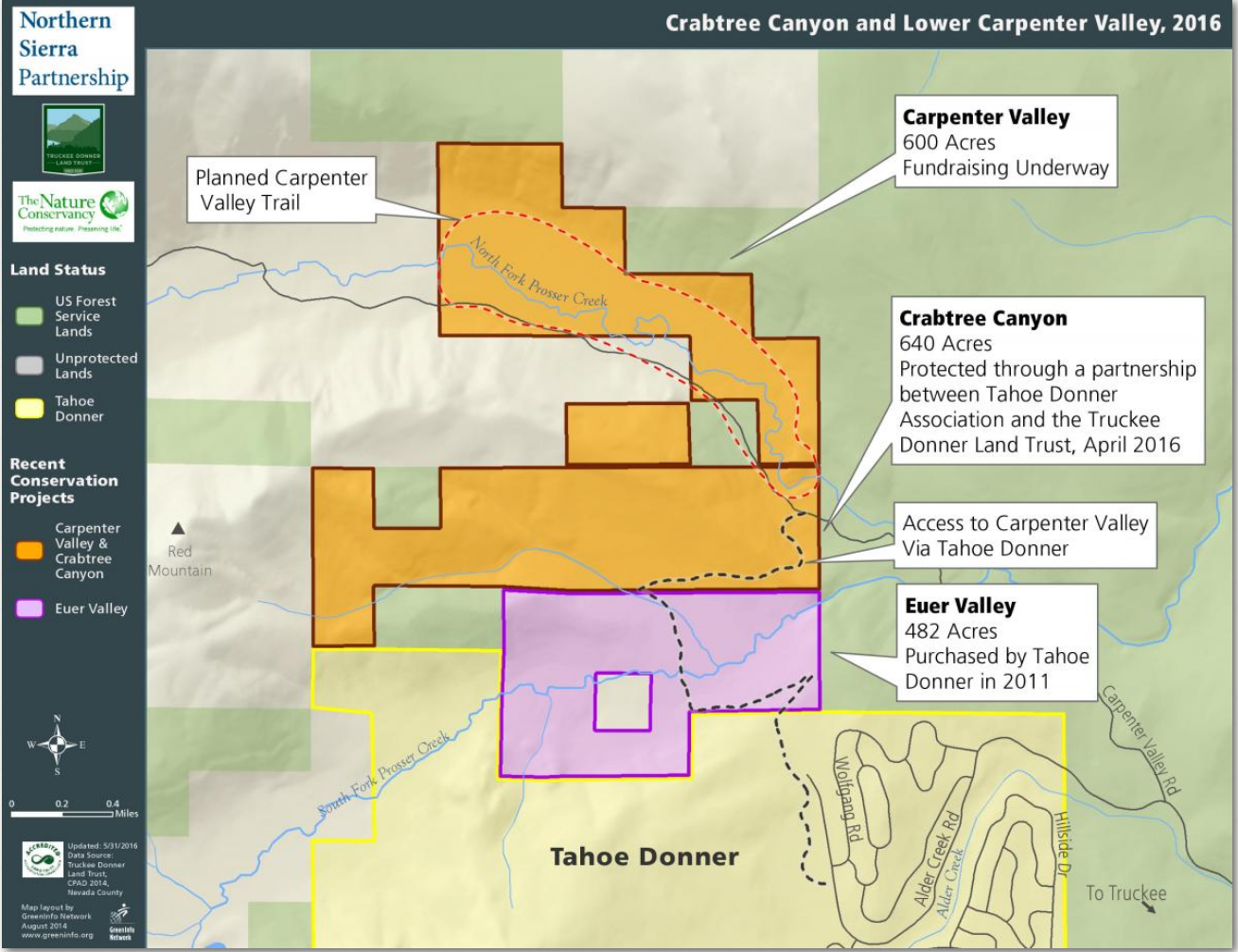
The 600 acres of Carpenter Valley were purchased in July, and the Truckee Donner Land Trust is offering docent-led hikes so people can experience the beauty and ecology of this newly acquired gem.

There was a crowd of 40 people gathered around volunteer docents Andrew Terry and Bob Bowles when I joined a recent guided hike to the valley. Leslie Benson, also one of the docents, was the sweep on this tour and trailed behind the group.

The wildflowers were mostly finished blooming, but aster, Indian paintbrush and goldenrod dotted the area.

Working with the Nature Conservancy and the Northern Sierra Partnership, the Truckee Donner Land Trust’s mission is to protect the area’s ecological gems.

Read the whole story


Letter: Sunbeam Blinds helps at B&B

To the community,

Bread & Broth would like to thank Kurt and Laura Rasmussen, owners of Sunbeam Blind Company, for their Monday Meal sponsorship on Sept. 18.  

Laura Rasmussen shared her concern for those who experience hunger and hardship: “Food insecurity is a big problem for some people. We are always happy to help with Bread & Broth.” 

True to her word, the couple has been sponsoring Adopt A Day of Nourishments for several years and serving on sponsor crews when the Lake Tahoe Windjammers Yacht Club is hosting an AAD dinner. These two very active members of the Lake Tahoe South Shore community are representative of the concern shown by the many AAD sponsors and crew members who come on Monday evenings to assist the B&B volunteers in serving up to 120 meals weekly to folks struggling to make ends meet.

Joining the Rasmussens were their good friends Debbie Strahm and John Borsi. These four enthusiastic volunteers arrived at 3pm at Grace Hall ready to help and make the dinner guests feel welcomed and cared for. 

“This wonderful organization makes a positive difference for so many grateful folks who come to St. Theresa’s for a nutritious meal,” said Rasmussen. “We’ll be back again!  Thanks for this opportunity to share with our community.”   

B&B always looks forward to seeing a Sunbeam Blind Company team hosting an AAD dinner

Carol Gerard, Bread & Broth


Truckee woman send bikes to hurricane victims

Meg Kiihne loads abandoned bikes into a U-haul on the Playa. Photo/Provided

By Ally Gravina, Moonshine Ink

Every year, thousands of bikes are left scattered throughout the post-Burning Man Playa. This year, however, the number of abandoned bikes was more than double the usual numbers, with an estimated 4,000 left behind. Typically, the process of distributing these bikes to various nonprofit organizations is streamlined and organized. However, with the massive amount of bikes left on the Playa this year, event organizers entered crisis mode and photos of piles of abandoned bikes ended up on social media.

Truckee resident Meg Kiihne saw the viral photos of an event that has “leave no trace” as one of its 10 principals. Thanks to a unique set of skills and an established community of friends in the Turks and Caicos, she knew that she could leverage her talents and the surpluses of abandoned bikes in Black Rock City for disaster rebuilding efforts on the small British territory. The Turks and Caicos were hit by Hurricane Irma, a Category 5, on Sept. 7 with gusts up to 150 miles per hour. Hurricane Maria then hit.

Read the whole story


Tahoe’s assemblyman to lead Nev. GOP caucus

By Colton Lochhead, Las Vegas Review-Journal

Nevada Assembly Republican Leader Paul Anderson’s decision to step down from the state Legislature will have ripple effects as the party gears up for the 2018 elections.

Anderson resigned his Assembly seat on Friday to take a position with the Governor’s Office of Economic Development. Anderson will eventually replace GOED director Steve Hill, who is a candidate for an executive position with the Las Vegas Convention and Visitors Authority.

Gardnerville Assemblyman Jim Wheeler, who represents Lake Tahoe, was elected as Anderson’s replacement as the caucus leader. Wheeler served as the Assembly GOP co-deputy floor leader last session.

Read the whole story


Snippets about Lake Tahoe

·      The parks bond that will go before California voters in June, assuming Gov. Jerry Brown signs off on it, would bring $27 million to the California Tahoe Conservancy.

·      The Meyers Area Plan meeting has been changed to Oct. 25 at 9:30am at the Stateline office of the Tahoe Regional Planning Agency. TRPA’s Regional Plan Implementation Committee will get an update. Public comments are still due Oct. 6.

·      Chris Smallcomb, warning coordination meteorologist, and Tim Bardsley, senior hydrologist, both at the National Weather Service in Reno, will give a talk about what to expect weather-wise this winter. It will be Oct. 26 from 5:30-7pm at the Tahoe Center for Environmental Sciences in Incline Village. Cost is $5.

·      The annual Boys and Girls Club of Lake Tahoe Golf Classic will be Oct. 16 at Edgewood Tahoe. For more info, go online.

·      Ice shelves create epishelf lakes, a rare lake system when freshwater overlies seawater. Alex Forrest will present on his usage of autonomous robotics to explore the remote Canadian Arctic and discuss how these water bodies and ice shelves are rapidly melting. The talk will be Nov. 9 from 5:30-7pm at Tahoe Center for Environmental Sciences in Incline Village. Cost is $5.