Letter: LTUSD stood by and did nothing

To the community,

I want to thank all of the parents and students that supported our efforts to have Mark Salmon removed as the girls soccer coach from the South Tahoe High School program. This was very upsetting for all of us that attended, testified and provided or even attempted to provide information to the school district. It appears that the school district does not care about the best interests of the students, violating laws or even common decency.

I will in this letter provide to you, the people of Lake Tahoe, the facts as were provided to the school and let you make your decision. I will start with the least objectionable information provided and go to the most disturbing.

First, I would like to say that my family and I moved from Lake Tahoe due to the school’s and especially the school board’s lack of concern over all of these events. I had spent over 35 years in the legal community, representing families and minors in the system. I even had to represent a high school student that the school suspended for smelling of tobacco and nothing more.

My wife and I were supporters of the soccer program run by Mark Salmon. We attended all of the games, both home and away. After each away game where there was a sleep over the parents and team would go to dinner and after that we would usually congregate in coach Salmon’s room. Alcohol was always consumed by the adults. We did not know this was strictly against school policy. We did not learn this until some time later when we had a meeting with Pat Harnett, the athletic director of the high school. The fact that drinking occurred was of course denied by both Salmon and specifically the assistant coach Brian Hogan. Mark even received a bottle of alcohol and shot glasses from the team at the awards ceremony attended by Harnett.

The next concern was that it became apparent that there was a tremendous amount of bullying going on within the team and it was, what we as well as many other parents perceived as those who Mark played against each other to get in his good graces. The bullying became both verbal and physical and was addressed by the parents over the span of several years. In fact some of the girls quit the team due to this practice. One set of parents filed a complaint with the school district a year prior to our complaint about Mark bullying and being abusive toward their daughter and to the best of their knowledge it was never heard, nor were they ever consulted about it despite repeated requests. This parent also confronted both the school board and Superintendent Jim Tarwater requesting action. This parent also as will be addressed, told the school board that their child admitted to being one of several the girls that ate the controlled substances on the soccer team trip to the regional championships in Winnemucca, a fact that Coach Salmon and his staff tried to and did cover up.

After the bullying got so extreme, I notified the school district as well as Salmon. Our daughter was dreading going to school and was becoming physically ill due to this abuse. While on the teams internet site, she was playing a game with another soccer player, Mark sent her a GIF file saying, “Go shoot yourself in the head with a large caliber bullet, cheers.”

We were appalled that with all of the issues being raised over bullying and improper use of the internet that this conduct would be accepted by Dr. Tarwater and the school board. Coach Salmon might have had an excuse for that one but how did he get around the message that was sent to others “F— you f— all of you Coach Mark.” These were printed out and provided to the school district as well as their investigator Bob Grant. There were also texts and information that was provided where Coach Salmon, in response to girls saying they wanted to quit his club team, that his response in writing was, “You will never play soccer in this town again.” This was the tip oft he iceberg.

After complaining to the school board in an open meeting about the bullying, his daughter posted a very long article about myself and our family. It accuses me of suing everyone and our daughter of doing drugs in large bold print. I immediately had evidence to show that not only was
this not true but it was presented to the school board and Dr. Tarwater. That evening I received a telephone call from Bob Grant stating he spoke to the Salmons and they stood by what their daughter posted. When this was brought to the school board’s attention they said we could not discuss it in an open board meeting because the information was about their employee, yet it’s clearly OK for him and his family to post false information about his ex-player. This was not the first or last time he has made false representations about drug use by players who quit his team. Other parents have made this same complaint against Coach Salmon to the district.

After the regional games in Winnemucca I learned that four or five of the girls ate marijuana brownies on the bus ride and Mark was aware of this. He held a team meeting that night where the girls admitted to the team they made a mistake and the team was sworn to secrecy. The punishment under Nevada Interstate Athletic Association rules is a six-week suspension from team sports.

They were allowed to play the very next game. They did miss the first game but other than that no consequences. The fifth girl that ate the brownies suffered no consequences as she snitched off the other four. After I learned of this I went to meet with Justin Zunino,the assistant principal and assistant athletic director. He seemed appalled and told me he would investigate it and get back to me. I waited about a month and never heard from him. It wasn’t until our daughter was asked by another teammate to join her in filing a complaint against Salmon for bullying that I approached Harnett. We met for over an hour with myself, my wife and daughter. He said he had never heard of the allegations of the drug cover up or abuse.

I even suggested that the team be given a drug test, but this was declined.

After that we went to the school board and filed a formal complaint, knowing the cover up was in place. We met with Bob Grant the investigator. We were one of several parents and students that met with him. He never met with many of the complaining parents, even the one whose daughter admitted eating the marijuana brownies and had filed a previous complaint for bullying. He just flat out failed to do his job. He said he was informed by an adult that that student just wanted to get it behind her so he never spoke to her. Her parents never told Grant any such information and wanted to speak to him.

Many parents went to speak to him, signed in and never received a call or interview. We met with Dr. Tarwater and gave him the video clips, text messages and names of the girls that ate the brownies. He did absolutely nothing.

At the last of three school board meetings we attended, I volunteered to provide my daughter’s test results, offered to pay for Salmon and his family as well as other soccer girls to be drug tested. They refused the offer. Wonder why? Do they know what the results would be? Maybe they don’t care. My offer still stands. Under NIAA the team is subject to drug and alcohol testing as well as not to consume tobacco. At that board meeting, Coach Hogan said since I was a criminal attorney I twist the truth; it was not marijuana brownies it was edibles , marijuana gummies. Guess that makes it OK. The other coach told the board that the coaches made some mistakes and could have handled things better; even this fell on deaf ears.

I know this is a long letter, but it’s just a brief summary of the lack of concern on behalf of the district. So let’s raise our glasses and toast the school board, Dr. Tarwater, Bob Grant, Coach Salmon and Hogan for the wonderful cover up and experience they provide in teaching the next generation how to act.

Well, one thing I do know is that this school board and district should be embarrassed and ashamed of the way they accept this conduct by one of their employees. They send a clear message, bullying, drugs and alcohol are all OK if you are a student athlete.

Paul Palant, Hawaii



Literacy was key ingredient for culinary revolution

By Helen Zoe Veit

The first edition of the “Boston Cooking-School Cook Book”—now known as “The Fannie Farmer Cookbook”—reads like a road map for 20th-century American cuisine. Published in 1896, it was filled with recipes for such familiar 19th-century dishes as Potted Pigeons, Creamed Vegetables, and Mock Turtle Soup. But it added a forward-looking bent to older kitchen wisdom, casting ingredients such as cheese, chocolate, and ground beef—all bit players in 19th-century U.S. kitchens—in starring roles. It introduced cooks to recipes like Hamburg Steaks and French Fried Potatoes, early prototypes of hamburgers and fries, and Fruit Sandwiches, peanuts sprinkled on fig paste that were a clear precursor to peanut butter and jelly.

Americans went nuts for the 567-page volume, buying “The Boston Cooking-School Cook Book” in numbers the publishing industry had never seen—about 360,000 copies by the time author Fannie Farmer died in 1915. Home cooks in the United States loved the tastiness and inventiveness of Farmer’s recipes. They also appreciated her methodical approach to cooking, which spoke to the unique conditions they faced. Farmer’s recipes were gratifyingly precise, and unprecedentedly replicable, perfect for Americans with newfangled gadgets like standardized cup and spoon measures, who worked in relative isolation from the friends and family who had passed along cooking knowledge in generations past. Farmer’s book popularized the modern recipe format, and it was a fitting guide to food and home life in a modernizing country.

Recipes today serve many purposes, from documenting cooking techniques, to showing off a creator’s skills, to serving up leisure reading for the food-obsessed. But their most important goal is replicability. A good recipe imparts enough information to let a cook reproduce a dish, in more or less the same form, in the future.

The earliest surviving recipes, which give instructions for a series of meaty stews, are inscribed on cuneiform tablets from ancient Mesopotamia. Recipes also survive from ancient Egypt, Greece, China, and Persia. For millennia, however, most people weren’t literate and never wrote down cooking instructions. New cooks picked up knowledge by watching more experienced friends and family at work, in the kitchen or around the fire, through looking, listening, and tasting.

Recipes, as a format and genre, only really began coming of age in the 18th century, as widespread literacy emerged.  This was around the same time, of course, that the United States came into its own as a country. The first American cookbook, “American Cookery,” was published in 1796. Author Amelia Simmons copied some of her text from an English cookbook but also wrote sections that were wholly new, using native North American ingredients like “pompkins,” “cramberries,” and “Indian corn.” Simmons’s audience was mainly middle-class and elite women, who were more likely to be able to read and who could afford luxuries like a printed book in the first place.

The reach of both handwritten recipes and cookbooks would expand steadily in the coming decades, and rising literacy was only one reason. Nineteenth-century Americans were prodigiously mobile. Some had emigrated from other countries, some relocated from farms to cities, and others moved from settled urban areas to the Western frontier. Young Americans regularly found themselves living far from friends and relatives who otherwise might have offered help with cooking questions. In response, mid-19th-century cookbooks attempted to offer comprehensive household advice, giving instructions not just on cooking but on everything from patching old clothes to caring for the sick to disciplining children. American authors routinely styled their cookbooks as “friends” or “teachers”—that is, as companions that could provide advice and instruction to struggling cooks in the most isolated of spots.

Americans’ mobility also demonstrated how easily a dish—or even a cuisine—could be lost if recipes weren’t written down. The upheaval wrought by the Civil War singlehandedly tore a hole in one of the most important bodies of unwritten American culinary knowledge: prewar plantation cookery. After the war, millions of formerly enslaved people fled the households where they had been compelled to live, taking their expertise with them. Upper-class Southern whites often had no idea how to light a stove, much less how to produce the dozens of complicated dishes they had enjoyed eating, and the same people who had worked to keep enslaved people illiterate now rued the dearth of written recipes. For decades after the war, there was a boom in cookbooks, often written by white women, attempting to approximate antebellum recipes.

Standardization of weights and measures, driven by industrial innovation, also fueled the rise of the modern American recipe. For most of the 19th century, recipes usually consisted of only a few sentences giving approximate ingredients and explaining basic procedure, with little in the way of an ingredient list and with nothing resembling precise guidance on quantities, heat, or timing. The reason for such imprecision was simple: There were no thermometers on ovens, few timepieces in American homes, and scant tools available to ordinary people to tell exactly how much of an ingredient they were adding.

Recipe writers in the mid-19th century struggled to express ingredient quantity, pointing to familiar objects to estimate how much of a certain item a dish needed. One common approximation, for instance, was “the weight of six eggs in sugar.” They also struggled to give instructions on temperature, sometimes advising readers to gauge an oven’s heat by putting a hand inside and counting the seconds they could stand to hold it there. Sometimes they hardly gave instructions at all. A typically vague recipe from 1864 for “Rusks,” a dried bread, read in its entirety: “One pound of flour, small piece of butter big as an egg, one egg, quarter pound white sugar, gill of milk, two great spoonfuls of yeast.”

By the very end of the 19th century, American home economics reformers, inspired by figures like Catharine Beecher, had begun arguing that housekeeping in general, and cooking in particular, should be more methodical and scientific, and they embraced motion studies and standardization measures that were redefining industrial production in this era. And that was where Fannie Merritt Farmer, who started working on “The Boston Cooking-School Cook Book” in the 1890s, entered the picture.

Farmer was an unlikely candidate to transform American cookery. As a teenager in Boston in the 1870s, she suffered a sudden attack of paralysis in her legs, and she was 30 years old before she regained enough mobility to begin taking classes at the nearby Boston Cooking School. Always a lover of food, Farmer proved to be an indomitable student with a knack for sharing knowledge with others. The school hired her as a teacher after she graduated. Within a few years, by the early 1890s, she was its principal.

Farmer started tinkering with a book published by her predecessor a few years earlier, “Mrs. Lincoln’s Boston Cook Book.” Farmer had come to believe that rigorous precision made cooking more satisfying and food more delicious, and her tinkering soon turned into wholesale revision.

She called for home cooks to obtain standardized teaspoons, tablespoons, and cups, and her recipes called for ultra-precise ingredient amounts such as seven-eighths of a teaspoon of salt, and four and two-thirds cups of flour. Also, crucially, Farmer insisted that all quantities be measured level across the top of the cup or spoon, not rounded in a changeable dome, as American cooks had done for generations.

This attention to detail, advocated by home economists and given life by Farmer’s enthusiasm, made American recipes more precise and reliable than they ever had been, and the wild popularity of Farmer’s book showed how eager home cooks were for such guidance. By the start of the 20th century, instead of offering a few prosy sentences that gestured vaguely toward ingredient amounts, American recipes increasingly began with a list of ingredients in precise, numerical quantities: teaspoons, ounces, cups.

In more than a century since, it’s a format that has hardly changed. American cooks today might be reading recipes online and trying out metric scales, but the American recipe format itself remains extraordinarily durable. Designed as a teaching tool for a mobile society, the modern recipe is grounded in principles of clarity, precision, and replicability that emerge clearly from the conditions of early American life. They are principles that continue to guide and empower cooks in America and around the world today.

Helen Zoe Veit is an associate professor of history at Michigan State University. She is the author of “Modern Food, Moral Food: Self-Control, Science, and the Rise of Modern American Eating” and the editor of “Food in the American Gilded Age.” She directs the What America Ate website. She wrote this for What It Means to Be an American, a project of the Smithsonian and Zócalo Public Square.


1,741 Calif. districts violated drinking water rules in 2016

By Nathaniel Levine, Sacramento Bee

Public drinking water systems in California violated state and federal regulations more than 4,700 times in 2016. This database contains every violation from that year.

Most of the violations occurred at small systems serving fewer than 300 people, but you might consume their water even if the district doesn’t serve your home. Many of the smallest systems serve non-residential users at schools, workplaces, campgrounds, parks or ski resorts. The violations are tracked by the California State Water Resources Control Board.

Several South Lake Tahoe locations were flagged.

Read the whole story


Winter weather to be topic of discussion

2017 has been a year of extremes. It was the hottest summer on record (or close to it for many locations) after the 2016-17 winter with flooding, blizzards, historic snowpack, and crazy winds.

What will this winter bring?

Join Chris Smallcomb, warning coordination meteorologist and Tim Bardsley, senior hydrologist from the National Weather Service in Reno, for an in-depth look at potential impacts and predictability.

Registration for this event is required. The program will begin at 6pm Oct. 26 on the campus of Sierra Nevada College.

Seating is open at 5:30pm to guests who have preregistered, open seating starts at 5:50pm, and the program begins at 6pm. A $5 suggested donation will be collected at the door.


Hunters being urged to be fire safe

The Humboldt-Toiyabe National Forest is reminding people that human-caused wildfires are still a major concern heading into hunting season.

Here are tips for a wildfire-safe hunting experience:

Know before you go: When planning any outdoor adventure, people are encouraged to call ahead to check on location conditions and current restrictions.

Be careful with all fires: Whether a campfire, gas lantern, cook stove, barbecue, etc., all can quickly start fires. Be certain your campfire is completely out before you go to bed or leave the area. Pour water on the fire and douse the site thoroughly. Stir the campfire until there are no embers and the ashes are cold to the touch. Remember, if it is too hot to touch, it is too hot to leave.

Be careful with all motorized equipment: Parking vehicles on dry grass can ignite fires. Chain saws, generators and other machines with gas engines can also start fires.

Be on the lookout for fires: If you spot a wildfire, report it immediately by calling 911. Hunters may want to carry a shovel and water jug in their vehicle and put out any campfires they see left unattended.

Avoid burned areas: The land is still recovering from an extreme fire season. Burned areas can be hazardous in many ways, including falling trees, holes, loose rocks, etc. They also are not much fun to hunt. Give them a rest and let the land recover.


Security, political anxiety part of ’18 Winter Games

By Susan Wood

PARK CITY, Utah – Despite a war of words between the United States and North Korea, U.S. Olympic officials and winter athletes all but shrugged off the danger of a nuclear threat affecting the Games in South Korea in February.

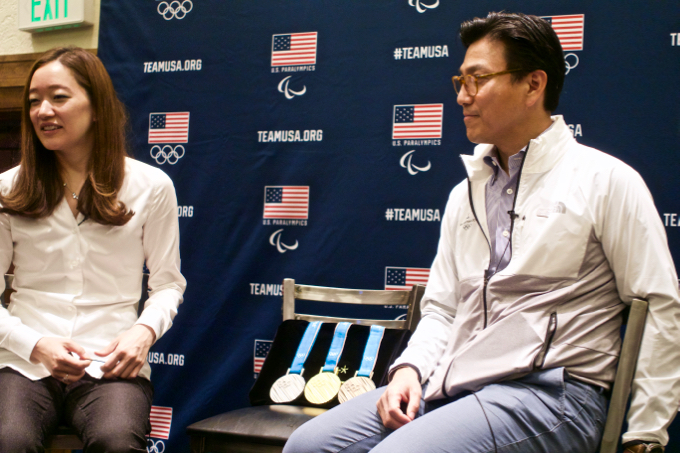
Team USA and representatives from the PyeongChang Games on Sept. 25 discussed the current matter among other issues during the media summit at Park City.

After all, the Olympics is an event born as a symbol of unity and goodness in humankind.

Missile- and Twitter-launching threats between President Donald Trump and North Korea leader Kim Jong-un, with its southern neighbors caught in between, have led to questions about whether the Games would be safe.

This is not the first time the Olympic Games have felt the effects of international relations gone awry.

In 1972, the Summer Olympics in Munich experienced a massacre when 11 Israeli Olympic team members were taken hostage and eventually killed at the hands of a Palestinian terrorist group called Black September.

On the domestic front, the Games in Atlanta in 1996 were marked by an explosion of a bomb in Centennial Park, killing two and injuring more than 100 others.

USOC Chairman Larry Probst and USOC CEO Scott Blackmun talk about security for the 2018 Winter Games on Sept. 25. Photo/Kathryn Reed

A strong resolve and heavy hand in security are expected to protect the upcoming Games. Still, a sports minister in France has a large enough concern to question whether the nation would pull out, the Los Angeles Times reported days ago.

To that, U.S. Olympic Committee Chief Executive Officer Scott Blackmun told Lake Tahoe News at a filled press conference “the statement was taken out of context.” He pledged diligence from Olympic officials to lock down the Games to danger with a constant reliability on law enforcement and wisdom of the International Olympic Committee.

“Should the unthinkable happen, it’s the issue of the IOC,” he said.

USOC Chairman Larry Probst countered the qualified suggestion of danger a quasi whim from the French official. He declared it would be “highly unlikely (France) would pull out.”

When asked whether athletes approached the USOC about the matter, officials quickly responded with “not one.”

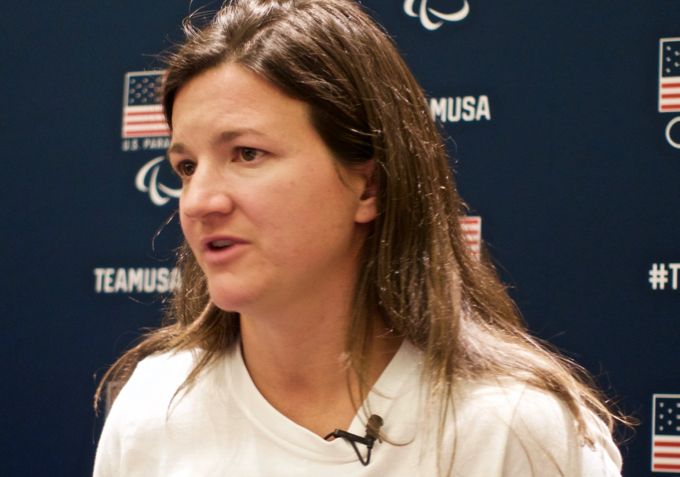
U.S. halfpipe snowboarder Kelly Clark, a veteran of four Olympics, seemed undeterred by the perceived threat. She remembered competing in her first Olympic Games in Salt Lake City five months after 9/11.

“Based on my experience, the United States makes the right decisions to make the athletes safe,” she told Lake Tahoe News. “I saw the power of sport and what it can do – especially the Olympics. It brings the world together. People put their differences aside and celebrate sport.”

South Korea would be her fifth Olympics. She has experienced a variety of security protocols but “has always felt safe.”

PyeonChang Olympic spokeswoman Nancy Park and POCOG Executive Vice President Jaeyoul Kim are confident athletes, spectators and others will be safe during the Games. Photo/Kathryn Reed

U.S. bobsled competitor Aja Evans also shared her faith in officials to keep her protected.

She was joined by Olympian Mikaela Shiffrin who insisted she plans to concentrate on her sport.

“Right now it doesn’t look like the political tensions are going to have an effect on the Olympics. I’m thankful because I want to compete on that stage,” Shiffrin said.

But U.S. biathlete Susan Dunklee appeared more skeptical of international relations running smoothly.

“I think we’re not able to see the whole situation, and it could change at any time,” Dunklee told LTN. She added the spectrum of possibilities could even accelerate to the point the United States “may not even go.”

Alpine skier Julia Mancuso, an Olympic veteran who hails from the slopes of Squaw Valley, provided the perspective that every Olympics has the potential of some kind of threat. In visiting South Korea for a test run on the courses with the other athletes, Mancuso compared the Asian nation to Russia.

“I felt really safe at South Korea,” she mentioned, further commending organizers for essentially seeming prepared. The Games in Sochi had a less secure feel that she had to overcome.

This could be music to the ears of PyeongChang 2018 Games officials.

“We appreciate the confidence the USOC has in us delivering a great Games,” POCOG Executive Vice President Jaeyoul Kim said. He pledged to LTN during the summit that South Korea has “taken all the necessary precautions to deliver a safe and secure Games.”

Raising the bar, Kim went on to insist POCOG and IOC officials are working diligently with military police and international security teams to avert any disaster. And they’re all about sharing information – the power of knowing. He noticed the potential of enhanced “intel sharing” at the Rio Summer Games in 2016.

In these circumstances, a beefed up evacuation plan would be in order. Kim said his government has complied.

POCOG spokeswoman Nancy Park noted “everybody has the same concerns.”

Park clarified security has always been important.

“It’s just that it’s never been out in the forefront (until now),” she said.

Nonetheless, this tension at some level must have escalated to at least a heightened awareness. The name of the location has been altered for the Olympics. Local leaders were apparently afraid international visitors would confuse Pyeonchang, a county in eastern South Korea, with Pyongyang, the capital of North Korea, NBC reported. That’s why the spelling has been changed to PyeonChang.

Apparently, the Unforgotten War isn’t all forgotten. In 1953, the Korean War ended with not a peace treaty but a truce – a temporary pause in fighting. Back then, North Korea invaded South Korea with the blessing of the Soviet Union and China. The United States served to support the south.

Trouble on the home front

Adding to the tension of present-day politics at home, Trump has fueled the fire of civil discourse with provocative tweets to North Korea.  

Policies out of the White House have prompted far-reaching peaceful protests – in particular among national athletes. From the NBA champions Golden State Warriors declining a traditional visit to the latest surge in National Football League players taking a knee as a gesture of disapproval, U.S. protests became a topic at the media summit.

Kelly Clark of Mammoth trusts officials to provide the requisite security for athletes. Photo/Kathryn Reed

“One of the proudest parts of being an American is freedom of speech. I’m proud of athletes who stand up for what they believe in,” Mancuso said.  

She further clarified though it may be more appropriate for athletes who compete every week such as the NFL players to carry on such a gesture rather than Olympic athletes who may take a stand only to wait four years to continue to take another.

And as icons of their country, athletes may see these issues as multi-dimensional in which aspects of solidarity can be agreed upon.

Alpine skier Laurenne Ross demonstrated the complexity of the issue when asked if she would visit the White House, an invite her fellow athlete Clark would certainly accept again.

“I would go. It doesn’t mean I love what is going on there,” Ross said.

She believes people have the right to freedom of expression, and that’s one of the great things about the country she’s representing.

But the Olympics has a code of conduct. Rule 50 of the Olympic Charter states: “No kind of demonstration or political, religious or racial propaganda is permitted in any Olympic sites, venues or other areas.”


Snippets about Lake Tahoe

·      Sierra-at-Tahoe is giving out 417 passes to students in Lake Tahoe Unified School District who got straight A’s.

·      A two-CD set featuring Elvis Presley will be released in October. The May 25-26, 1974, recording was live at the Sahara Tahoe (now Hard Rock) in Stateline.

·      The Humboldt-Toiyabe National Forest’s Carson Ranger District will lift its temporary shooting restriction on Oct. 1.

·      Friends of Squaw Valley want to know via this survey what people think of the ski resort’s plans to build a coaster on the mountain near the base.

·      Oktoberfest at Camp Richardson will be Oct. 7-8, 10am-5pm each day.

·      Here’s the El Dorado-Tahoe roadwork schedule from Caltrans for the week.


Study: Wildfires increase sediment in watersheds

By Alastair Bland, Water Deeply

Around California, the country and the world, reservoirs are silently filling with sediment, and only a few people are thinking about it. Among them is Tim Randle, a civil engineer with the United States Bureau of Reclamation’s Sedimentation and River Hydraulics Group.

“We used to be gaining water storage capacity with dam building,” said Randle, who is based in Denver. “Now, around the world, the pace is slowing down as sediment builds up. This is true in the U.S., too.”

According to new research from the U.S. Geological Survey, in many regions erosion rates are now accelerating thanks to wildfires and climate change. The Western U.S., which relies on reservoirs for vital water storage and flood control, will be particularly impacted.

Joel Sankey, a coauthor of the study and a USGS research geologist, says portions of the Cascade Range in Washington, Oregon and California, as well as parts of the Sierra Nevada, are likely to experience particularly dramatic increases in fire damage and subsequent erosion.

Read the whole story


EDC auditor candidate using false information

By Kathryn Reed

Mike Owen is back on the campaign trail in an attempt to unseat El Dorado County Auditor Joe Harn in 2018.

Owen lost to Harn in 2014.

Mike Owen is claiming to be an active CPA.

A requirement to be a county auditor in California is to be an active certified public account in good standing with the California Board of Accountancy. Owen doesn’t meet this qualification, Harn does.

A complaint has been filed with the state board. It says, “Mr. Owen’s license status is delinquent, but he is representing himself as a CPA. His website indicates that he is a CPA. His campaign business card indicates he is a CPA.”

According to the state board, Owen’s license expired Feb. 28, 2016. It was first issued in 1993.

The state Professions and Business Code says, “The holder of an inactive license issued by the board pursuant to Section 462, when lawfully using the title ‘certified public accountant,’ the CPA designation, or any other reference that would suggest that the person is licensed by the board on materials such as correspondence, Internet Web sites, business cards, nameplates, or name plaques, shall place the term ‘inactive’ immediately after that designation.”

Owen is not using the word “inactive” to describe his CPA status.

Owen did not respond to an inquiry from Lake Tahoe News.


Various aspects of Alzheimer’s subject of talks

The October El Dorado County aging and care-giving series will focus on Alzheimer’s.

All talks are free. They are from 1-3pm at Lake Tahoe Resort Hotel in South Lake Tahoe.

Topics include:

·      Oct. 16: Speakers from the Alzheimer’s Association will about research in the areas of diet and nutrition, exercise, cognitive activity and social engagement, and use hands-on tools to help people incorporate these recommendations into a plan for healthy aging.

·      Oct. 23: Candace Stewart, author of “Welcome to Planet Alzheimer’s,” will discuss how to successfully communicate with the person in your life who has Alzheimer’s disease or a related dementia.

·      Oct. 30: Volunteers and staff from the sheriff’s department will discuss in-home safety for Alzheimer’s patients, emergency evacuation planning for caregivers and what to do when a dementia patient goes missing.

·