U.S. climate change policy: Made in California

By Hiroko Tabuchi, New York Times

SACRAMENTO — The Trump administration may appear to control climate policy in Washington, but the nation’s most dynamic environmental regulator is here in California.

Mary D. Nichols, California’s electric-car-driving, hoodie-wearing, 72-year-old air quality regulator, is pressing ahead with a far-reaching agenda of environmental and climate actions. She says she will not let the Trump administration stand in her way.

As chairwoman of the California Air Resources Board, or CARB, Nichols is the de facto enforcer of the single biggest step the United States has taken to combat the effects of climate change: standards adopted under the Obama administration that mandate a deep cut in emissions from the 190 million passenger cars on America’s roads. Together, those vehicles regularly emit more earth-warming gases than the country’s power plants.

Read the whole story


STHS girls tennis team wins local division

From left: Lyndsey Allen, Theresa Sandborn, coach Gina Tarwater, coach Suzy Allione, Allyson Cromwell, Gabbi Fisher, and Abby Burns. Photo/Rebecca Schwartz

South Tahoe High School girls tennis team is headed to the regional championships this week, with the hopes of competing in the state championships in Las Vegas on Oct. 19-21. The girls won their division this season.

The top two finishers from each team will go to state.

The boys and girls teams play Oct. 5 at home starting at noon and 3pm, respectively.

“Our star doubles team of Abby Burns and Gabbi Fisher were nearly undefeated in the regular season, having lost only the one line to Truckee’s No. 1 team,” coach Suzy Allione told Lake Tahoe News. “The entire team demonstrates sportsmanship and support like no other team in the league.”

— Lake Tahoe News staff report


Snippets about Lake Tahoe

·      South Lake Tahoe’s pool will be closed Oct. 3 for maintenance and to put the bubble up.

·      On Oct. 21 Mojo Green, the seven-piece horn driven soul funk band, comes to Hard Rock Lake Tahoe’s Vinyl showroom. Show starts at 9pm. Tickets are $10. The full ticket price will go to support Pinktober to fight breast cancer.

·      Placer County supervisors on Oct. 3 are expected to take action on a proposed zoning text amendment for secondary dwelling units. The goal is to help increase housing options for Placer residents. The meeting is in Auburn.

·      Sugar Pine Foundation supporters climbed 12 sugar pines and one Western white pines to collect about 20 pounds of seed. Half of the seeds go to the U.S. Forest Service for reforestation and half to the nonprofit.

·      Here are the Sierra and El Dorado-Tahoe roadwork schedules for the week.


Gov’t jobs sprouting as legal pot looms in Calif.

By Michael R. Blood, AP

Scientists. Tax collectors. Typists. Analysts. Lawyers. And more scientists.

Recreational marijuana use becomes legal in California in 2018, and one of the things to blossom in the emerging industry isn’t green and leafy – it’s government jobs.

The state is on a hiring binge to fill what eventually will be hundreds of new government positions by 2019 intended to bring order to the legal pot economy, from keeping watch on what’s seeping into streams near cannabis grows to running background checks on storefront sellers who want government licenses. Thousands of additional jobs are expected to be added by local governments.

Read the whole story


Liberty hosting meeting to discuss reliability

Liberty Utilities will host two workshops this week to provide information about reliability issues within its service territory and, plans and progress made to improve service reliability.

The meetings are:

  • Oct. 3, 10-11am, North Tahoe Event Center, Kings Beach
  • Oct. 6, 1:30-2:30pm, Walker Community Center, Coleville.

These meetings are similar to the ones conducted earlier this year.

The California Public Utilities Commission requires investor-owned utilities like Liberty Utilities to annually post the two worst-performing circuits as measured by the industry standard System Average Interruption Duration Index (SAIDI).

For 2016, the two worst-performing circuits were:

  • Topaz 1261 at 1,338 customer outage minutes (serves the Coleville and Walker communities)
  • Squaw Valley 7201 at 1,030 customer outage minutes (serves the North Tahoe area).


15 projects singled out as Best in Basin

The Tahoe Regional Planning Agency recognized 15 projects completed in 2016 with Best in Basin awards.

Now in its 27th year, the program each year showcases projects around the lake that demonstrate exceptional planning, implementation, and compatibility with Tahoe’s natural environment and communities.

This year’s winners are:

  • Kingsbury Stinger Trail: The U.S. Forest Service and nonprofit Tahoe Area Mountain Biking Association partnered to build this multi-use trail that runs from the Andria Drive trailhead in upper Kingsbury to the Tahoe Rim Trail and ends at Terrace View Street in Lower Kingsbury, connecting with a class 1 bike path there. The project restored a steep and heavily-eroding old trail alignment. More than 100 people contributed to the project with 1,500 hours of volunteer work. Project partners: American Conservation Experience, Nevada Recreational Trails Program.
  • Burke Creek Highway 50 Crossing and Realignment, Phase 1: Nevada Tahoe Conservation District daylighted a portion of Burke Creek in Stateline that was previously in an underground culvert, creating 200 feet of new stream channel, functioning floodplains, and installing a new, more appropriately sized stream crossing under Highway 50. Project partners: Balance Hydrologics, Wood Rodgers, Burdick Excavating, Nevada Department of Transportation, Nevada Division of State Lands, Douglas County, U.S. Forest Service.
  • Edgewood Lodge and Golf Course improvement project: Edgewood Companies made major improvements to its golf course water features, which receive stormwater from surrounding areas and function as the final treatment area before they discharge into Edgewood Creek and Lake Tahoe. The project renewed storage capacity of ponds, created new wetlands and 32,766 square feet of new stream environment zone, and significantly reduces fine sediment, nitrogen, and phosphorus pollution into Lake Tahoe. Project partners: Nichols Consulting Engineers, Sierra Nevada Construction, Soil Tech, SMC Construction.
  • Tahoe Mountain Lab: Cristi and Bernard Creegan and Jamie and David Orr overhauled the former Tahoe Daily Tribune building in South Lake Tahoe, turning it into a unique co-working space for startup businesses and entrepreneurs and a gathering place for the community. The project improved the building’s energy efficiency by 34 percent; built upon the success of the recent Harrison Avenue upgrades; and breathed new life and vitality into an aging and under-utilized building. Project partners: Creegan Builders, Joe Ward, Gabbart and Woods, Tahoe Daily Tribune.
  • Sierra Tract Erosion Control Project Phases 3-4: The city of South Lake Tahoe upgraded several hundred acres of the Sierra Tract neighborhood to reduce nuisance flooding and stormwater pollution into the Upper Truckee River. The project installed curb and gutter on neighborhood roads, above- and below-ground infiltration basins and treatment facilities, and protection for road shoulders. Project partners: CDM Smith Inc.; Western Botanical Services, Burdick Excavating.
  • Lake Tahoe Unified School District energy upgrades: The district secured a $763,000 grant through the California Clean Energy Jobs Act Proposition 39 K-12 Program to update aging and energy inefficient facilities. The project installed building automation systems, upgraded 7,287 interior and exterior lights to more efficient LED lighting, installed a high-efficiency HVAC system at the district office, installed smart irrigation systems district-wide, and installed high-efficiency windows at the middle school. Investment totaled $2.7 million, with potential lifecycle savings of more than $6 million. Project partners: Climatec, Lake Tahoe Sustainability Collaborative.
  • Silliman slope stabilization: Property owners stabilized 145 feet of heavily eroding slope between Fallen Leaf Lake Road and Fallen Leaf Lake with rip-rap, boulders, and vegetation to protect the lake from erosion and improve public safety on the narrow road. Project partners: John and Rich Silliman, John Larsen, Randy M. Klitsch/TECS, Tahoe Outdoor Living.
  • Camp Richardson BMP retrofit: The U.S. Forest Service and Camp Richardson Resort Inc. partnered to upgrade the popular Camp Richardson tent and RV campgrounds with paved roadways and parking areas to reduce dust, best management practices and infiltration basins to reduce stormwater pollution, new restrooms and a check-in kiosk, and bear-proof food lockers at campsites. The project reduced impervious coverage in stream environment zones and reduced overall coverage by 20 percent.
  • Lake Valley wood roof replacement program: Shortly after the Angora Fire, Lake Valley Fire Protection District secured a federal grant that has helped nearly 400 homeowners replace hazardous wood-shake roofs with non-combustible roofing materials and create defensible space on their properties, improving community resilience to wildfires and helping create fire-adapted communities at Lake Tahoe. Project partners: California Office of Emergency Services, Federal Emergency Management Agency, local roofing contractors, and city of South Lake Tahoe and El Dorado County building officials.
  • Cave Rock tunnel extension: Nevada Department of Transportation built a 60-foot-long, 27-foot-tall tunnel extension carefully blended into the surrounding landscape to protect the traveling public from falling rocks at Cave Rock. The project included measures to improve scenery, lighting upgrades, road repaving, and improved signage to alert motorists of icy conditions and bicyclists in the tunnel. The project also included water quality improvements along nearly four miles of Highway 50 to reduce stormwater pollution into Lake Tahoe. Project partners: Washoe Tribe of Nevada and California, Q&D Construction, CA Group Inc., TRPA, South Shore Transportation Management Association, Tahoe Transportation District, Lake Tahoe South Shore Chamber of Commerce, Lake Tahoe Visitors Authority, Hi-Tech Rockfall Construction, Nevada Highway Patrol, Titan Electrical, Drill Tech Drilling & Shoring, CMC Steel.
  • Northwood Boulevard fuel reduction: Property owner James Hite, North Lake Tahoe Fire Protection District, and Healthy Trees, Inc. partnered to thin 15 acres of dangerously overgrown forest in Incline Village, reducing wildfire risk and improving forest health and resilience. Project partner: Nevada Division of Forestry.
  • Somers Loop water quality improvement: Nevada Pacific Development Corporation, David and Cheryl Duffield, and a team of partners restored the former Stack Estate, a 6.4-acre lakefront site in Crystal Bay. Working in steep and rugged terrain with near-surgical precision, the project removed seven dilapidated structures, removed five abandoned septic systems and 20 drums of hazardous household waste, restored 12,769 square feet of native vegetation, and removed 540 cubic yards of soil and rock contaminated with diesel fuel, motor oil, kerosene, or lead to achieve a clean close for the site from Nevada Division of Environmental Protection. Project partners: Midkiff & Associates, Inc.; Marlette Environmental Consulting, LLC; Resource Concepts, Inc.; Tri-State Surveying, Ltd.; Walden West Design; Olsen Engineering; Wise Consulting & Training; Cruz Construction Company, Inc.; Clean Harbors Environmental Services; Kelley Erosion Control, Inc.; Alpha Analytical, Inc.; Advance Installations, Inc.; Nelson Electric Company; High Sierra Blasting; Luke Landscape Contractors, LLC.
  • Tahoe Beachfront Residences: Todd Davidson and partners razed an old, lakefront hotel on Highway 28 in Kings Beach to build this new residential project, marking the first significant private investment after the Kings Beach Commercial Core Improvement Project. The project reduced the number of units on site and vehicle miles traveled, reduced impervious coverage at the site by 11 percent, installed best management practices to improve water quality, improved scenic qualities from the lake and highway, and established a new node of vibrancy in a Kings Beach community ripe for investment and revitalization. Project partners: GLAMorris, Dale Cox Architecture, Bill Johnson, Arnett & Associates, PR Design and Engineering, Inc.
  • Homewood Bike and Pedestrian Trail: Tahoe City Public Utility District and partners completed this 1-mile “missing link” in the West Shore Bike Trail, which runs from Tahoe City to Sugar Pine State Park. The trail runs between Cherry Street and Fern Street in Homewood, improving on a popular community and recreation amenity, increasing safety and recreation opportunities, and helping people travel the West Shore without a motor vehicle. Project partners: Auerbach Engineering, Dokken Engineering, Vinciguerra Construction, Caltrans, Homewood Mountain Resort, Placer County, North Lake Tahoe Resort Association, California Tahoe Conservancy, California Natural Resources Agency, Tahoe Fund, Placer County Parks.
  • Lake Tahoe info website: This website launched by TRPA and other partners in the Lake Tahoe Environmental Improvement Program (EIP) is a clearinghouse for information on all EIP projects, which entities funded them, when and where they were completed, and what they accomplished. The website puts the full story of the EIP at the fingertips of anyone with a computer, no small feat for a program with more than 50 public and private partners that have invested more than $2 billion over two decades in projects to conserve and restore Lake Tahoe’s environment. Project partners: U.S. EPA, TRPA, Sitka Technology Group, Environmental Incentives.


Letter: Women’s Fund gives thanks

To the community,

The Tahoe Women’s Community Fund would like to thank all the community members who came out last Wednesday for the “Modern Family” premiere in support of local families. With a fun-filled evening of raffle prizes, popcorn, and good company, 150 locals raised almost $6,000 for local families. These funds will go into the 2018 grant cycle  of the TWCF and will be open for any eligible nonprofit to apply for.

This evening was made possible thanks to the hard work of the TWCF cabinet, Lake Tahoe Resort Hotel, and of course, the very popular TV show “Modern Family.” 

A special thank you Tiffany Zabaglo at LTRH, Kathleen Dodge of EDC, and Sally Young and her staff at “Modern Family.”

Lastly, thank you to all the generous businesses who donated raffle prizes for our event: BlueZone Sports, Barton Health, Azul restaurant, South Shore Bikes, Outdoor Gear Lab, Epic Tahoe Adventure, Wendy and Kerry David, LTVA, “Modern Family,” El Dorado County Film Department, Casia Hancock, and the Tides Project.

Our community is an amazing place, and I am proud to be a part of it. If you are interested in joining the TWCF and giving back more to our community in a collective giving process, check out our website  and become a member today, or buy your ticket to join us for our membership celebration on Nov. 2, 6-9pm at Harvey’s and learn more about this wonderful philanthropic organization. Thank you everyone.

Kathy Haven, Tahoe Women’s Community Fund


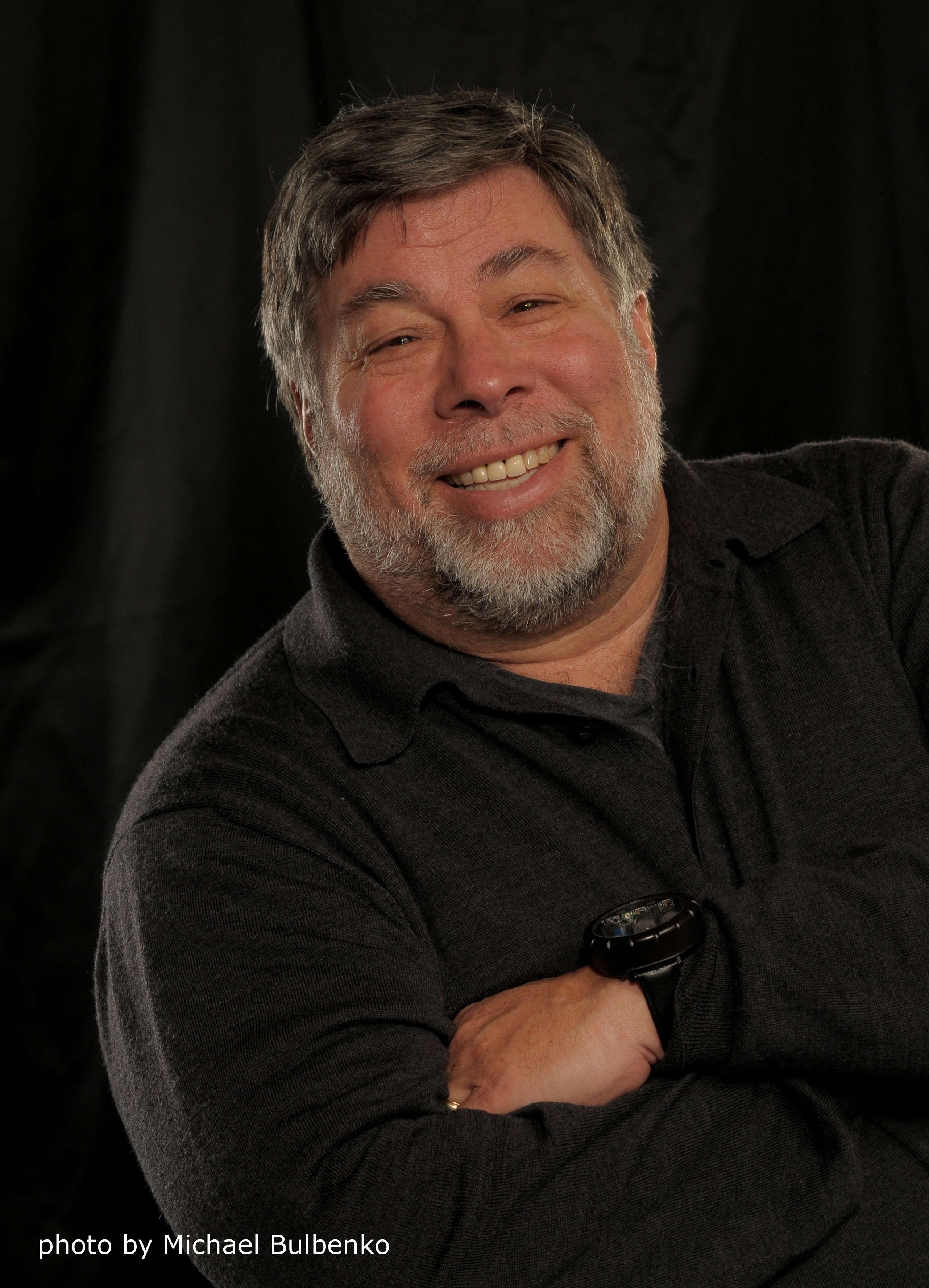
Computer-guru Wozniak shares his story in Tahoe

By Linda Fine Conaboy

INCLINE VILLAGE – At least a thousand people sat shivering inside a huge tent under a brilliant icy blue Lake Tahoe sky, all captivated by Steve Wozniak as he talked about the beginnings of his company Apple Computer, Steve Jobs, his life as a teen in Silicon Valley, life at Hewlett-Packard, where he worked as an engineer although he had no college degree, and an assortment of topics in between.

A natural entertainer, The Woz, as many know him, never lacked for words during the interview-style discussion last week at Sierra Nevada College, where he headlined the Siebens-Binz SNC Tahoe Forum and was introduced by Nancy Siebens-Binz, a long-time benefactor of the college.
Steve Wozniak speaks to a sold-out group at Sierra Nevada College in September. Photo/Provided

Siebens-Binz, in her 80s, thawed the audience with her witty introduction of Wozniak, making her a perfect warm-up act, but she also let it be known that the Harold Walter Siebens Chair in Entrepreneurship at SNC, named for her father, is extremely important to her.

Wozniak, 67, the son of an electrical engineer at Lockheed and a homemaker, described himself as a fantastic inventor, a fact which he has proven many times. He was into electronics even as a kid, making things from kits or from his own designs. He said he loved being a ham radio operator as a youngster.

His science fair projects won top prizes. He built a system to show movies in hotels and sold it for 5 cents a pop. He designed and built his own computer, way before computers became a way of life.

Although he was extremely bright, school bored him. He attended the University of Colorado and flunked out. When he decided to enroll at UC Berkeley in 1971, he failed to graduate, but he did then return to Hewlett-Packard, a company to which he was extremely loyal.

As a teen he met Steve Jobs, whom he describes as an exceptionally effective marketer. Jobs, who worked for Atari, and Wozniak designed a spin-off of Pong, the popular Atari electronic game, which earned them $750, although Wozniak later learned that their game garnered much more than the paltry $750. He only saw half of that figure, he said. 

Working at night after returning home from his day job at H-P, The Woz built a viable computer. In fact, he said, he gave out the design for free. “I wanted to start a computer revolution,” he said, even though HP wasn’t interested in getting into the market and was even less interested in his design. The company was betting heavily on handheld calculators.

Jobs, however, saw the possibilities of this new machine and envisioned a computer company selling Woz-designed computers, one that he and Wozniak would start. Jobs wasn’t able to convince him to leave H-P. But it didn’t take long for them to form a partnership and to dive into the world of business, even though neither one of them had any money. What they did have was a computer and plenty of youthful enthusiasm.

“Steve Jobs saw what Apple could do. I just wanted to be an engineer.”

With a $50,000 order in hand and a loan to carry them through production, Apple was in business—Jobs and Wozniak each owning 45 percent of the company. The other 10 percent was held by an investor who eventually sold out.

By the end of 1978, Apple sales increased tenfold, making Apple one of the fastest growing companies in the United States. Around this time, Wozniak crashed his airplane, nearly killing himself as well as the others, including his future wife. He developed amnesia, from which he took several years to recover—it seems that this was the time he started to re-evaluate his life.

He returned to Cal Berkeley for the second time and again, failed to graduate, but received a degree later in the 1980s. He said he is very interested in the psychology of education and he taught school for several years after leaving Apple. He said he sees the big divide that computers close when it comes to kids and learning. “Computers help kids excel in school,” he told his audience.

He said he likes to surround himself with independent thinkers. “I run into entrepreneurs everywhere. They spin off new products from the various companies they work for then they start their own companies.”

And of course, the Apple story is the epitome of the entrepreneurial spirit. “Apple cared about making products easier. We made easy computers because human needs are important. I decided I wanted to do things the human way.”

The Woz said he’s in love with Siri, the built-in “intelligent assistant” that enables users of Apple iPhone 4S and later and newer iPad and iPod Touch devices to speak natural language voice commands in order to operate the mobile device and its apps.

“Siri was the greatest app ever done,” he said. “Apple bought Siri, but it’s not intelligence, it’s all algorithms.”

A discussion of Siri led to computer intelligence and the worry that maybe computers will one day replace humans in most jobs. “There is no computer that thinks. They don’t say, ‘What shall I do today?’ They have to be programmed by humans. Computers don’t have a personality. They aren’t human yet. But computers are faster than humans.”

As an example, he talked about the business of buying and selling stocks and said a computer program can consummate stock trades in nano seconds, compared to the time it takes a human.

Computers, he said, are all about assisting humans, not causing them problems. “But I don’t think self-driving cars will be viable for another 10-20 years.There are too many unusual situations for self-driving cars to control.”

He’s devoted to two concepts—honesty and happiness, saying he felt it imperative that he remain loyal to H-P even though he spent his nights working on the Apple computer and operating on very little sleep. “Engineering represents the greatest honesty in the world.”

About happiness, he said he wants to be the person who laughs at jokes. Ever the computer techie, he said the emotions of happiness are smiles and frowns.

“Pursue the stuff that makes you happy. You don’t have to win an argument. Be glad for who you are. If my car gets scratched, I don’t worry about it.

“I put on music festivals. Happiness equals food, fun and friends. Oh, and there might be a fourth F,” he laughed.


Opinion: 1918 flu pandemic revolutionized public health

By Laura Spinney

Nearly 100 years ago, in 1918, the world experienced the greatest tidal wave of death since the Black Death, possibly in the whole of human history. We call that tidal wave the Spanish flu, and many things changed in the wake of it. One of the most profound revolutions took place in the domain of public health.

The world was a very different place in the first decades of the 20th century. Notably, there was no real joined-up thinking when it came to healthcare. Throughout the industrialized world, most doctors either worked for themselves or were funded by charities or religious institutions, and many people had no access to them at all.

Public health policies—like immigration policies—were colored by eugenics. It was common for privileged elites to look down on workers and the poor as inferior categories of human being, whose natural degeneracy predisposed them to disease and deformity. It didn’t occur to those elites to look for the causes of illness in the often abject living conditions of the lower classes: crowded tenements, long working hours, poor diet. If they sickened and died from typhus, cholera and other killer diseases, the eugenicists argued, then it was their own fault, because they lacked the drive to achieve a better quality of life. In the context of an epidemic, public health generally referred to a suite of measures designed to protect those elites from the contaminating influence of the disease-ridden rabble.

The first wave of the Spanish flu struck in the spring of 1918. There was nothing particularly Spanish about it. It attracted that name, unfairly, because the press in neutral Spain tracked its progress in that country, unlike newspapers in warring nations that were censored. But it was flu, and flu as we know is transmitted on the breath—by coughs and sneezes. It is highly contagious and spreads most easily when people are packed together at high densities—in favelas, for example, or trenches. Hence it is sometimes referred to as a “crowd disease.”

That first wave was relatively mild, not much worse than seasonal flu, but when the second and most deadly phase of the pandemic erupted in the autumn of 1918, people could hardly believe that it was the same disease. An alarmingly high proportion of patients died—25 times as many as in previous flu pandemics. Though initially they reported the classic symptoms of flu—fever, sore throat, headache—soon they were turning blue in the face, having difficulty breathing, even bleeding from their noses and mouths. If blue turned to black, they were unlikely to recover. Their congested lungs were simply too full of fluid to process air, and death usually followed within hours or days. The second wave receded toward the end of the year, but there was a third and final wave—intermediate in virulence between the other two—in early 1919.

Flu is caused by a virus, but virus was a novel concept in 1918, and most of the world’s doctors assumed they were dealing with a bacterial disease. This meant that they were almost completely helpless against the Spanish flu. They had no flu vaccine, no antiviral drugs, not even any antibiotics, which might have been effective against the secondary bacterial infections that killed most of its victims (in the form of pneumonia). Public health measures such as quarantine or the closing of public meeting places could be effective, but even when they were imposed this often happened too late, because influenza was not a reportable disease in 1918. This meant that doctors weren’t obliged to report cases to the authorities, which in turn meant that those authorities failed to see the pandemic coming.

The disease claimed between 50 million and 100 million lives, according to current estimates, or between 2.5 and 5 percent of the global population. To put those numbers in perspective, World War I killed about 18 million people, World War II about 60 million. Rates of sickness and death varied dramatically across the globe, for a host of complex reasons that epidemiologists have been studying ever since. In general, the less well-off suffered worst—though not for the reasons eugenicists proposed—but the elites were by no means spared.

The lesson that health authorities took away from the catastrophe was that it was no longer reasonable to blame an individual for catching an infectious disease, nor to treat him or her in isolation. The 1920s saw many governments embracing the concept of socialized medicine—healthcare for all, delivered free at the point of delivery. Russia was the first country to put in place a centralized public healthcare system, which it funded via a state-run insurance scheme, and others in Western Europe followed suit. The United States took a different route, preferring employer-based insurance schemes, but it also took measures to consolidate healthcare in the post-flu years.

In 1924, the Soviet government laid out its vision of the physician of the future, who would have “the ability to study the occupational and social conditions which give rise to illness and not only to cure the illness but to suggest ways to prevent it.” This vision was gradually adopted across the world: the new medicine would be not only biological and experimental, but also sociological. Public health started to look more like it does today.

The cornerstone of public health is epidemiology—the study of patterns, causes and effects in disease—and this now received full recognition as a science. Epidemiology requires data, and the gathering of health data became more systematic. By 1925, for example, all U.S. states were participating in a national disease reporting system, and the early warning apparatus that had been so lamentably lacking in 1918 began to take shape. Ten years later, reflecting the authorities’ new interest in the population’s “baseline” health, U.S. citizens were subjected to the first national health survey.

Many countries created or revamped health ministries in the 1920s. This was a direct result of the pandemic, during which public health leaders had been either left out of cabinet meetings entirely, or reduced to pleading for funds and powers from other departments. But there was also recognition of the need to coordinate public health at the international level, since clearly, contagious diseases didn’t respect borders. The year 1919 saw the opening, in Vienna, Austria, of an international bureau for fighting epidemics—a forerunner of today’s World Health Organization.

By the time the WHO came into existence, in 1946, eugenics had been disgraced and the new organization’s constitution enshrined a thoroughly egalitarian approach to health. It stated that, “The enjoyment of the highest attainable standard of health is one of the fundamental rights of every human being without distinction of race, religion, political belief, economic or social condition.” That philosophy wouldn’t eliminate the threat of flu pandemics—the WHO has known three in its lifetime, and will surely know more—but it would transform the way human beings confronted them. And it was born of an understanding that pandemics are a social, not an individual problem.

Laura Spinney is a science journalist and novelist based in Paris.


Cities facing fiscal mess plead with CalPERS

By Steven Greenhut, California Policy Center

If you ask the union-controlled California Public Employees’ Retirement System about the state’s looming pension crisis, you’re likely to get this answer: What pension crisis?

But the story was much different at CalPERS’ own Finance and Administration Committee meeting Sept. 19. City officials from across California warned CalPERS board members about the dire fiscal situation their cities face because the pension debt is consuming larger portions of local budgets. The energetic discussion included 18 speakers, many of them local officials who trekked to Sacramento.

“In Hayward, 68 percent of our unfunded pension cost is retiree benefits,” said Hayward City Council member Sara Lamnin, who pointed out that “this means the promises of the past weren’t paid for, frankly.” Hayward’s future is really troubling. She said that “over the next three fiscal years, the city of Hayward’s revenue is projected to grow 1.4 percent, but our cost for PERS is going to go up 30.5 percent.” Lamnin wasn’t asking for someone to rescue Hayward. Officials just want to know how bad the damage will be. “We ask you for data,” she said.

Read the whole story