Snippets about Lake Tahoe

  • South Lake Tahoe Fire Rescue is having its annual open house at all stations on Oct. 14 from 10am-2pm.
  • There will be a community meeting in the student union at South Tahoe High School on Oct. 4 at 5:30pm to envision student-centered learning and qualities of Viking graduates.
  • The left turns at 5 Mile Road and the first two Carson Road exits will be closed from 10am-3pm the weekends of 7-8, 14-15, 21-22 and 28-29 to deal with Apple Hill traffic on the West Slope of El Dorado County.
  • The Minden Library’s Spooktacular Halloween Party will be 30 from 3:30 to 5:30pm.The event is for children ages 4-11. It will include games, stories, and snacks. Wear a Halloween costume.
  • The Business Council awarded Edgewood Tahoe the tourism and hospitality Spotlight Award, while Alpen Sierra Coffee earned the entrepreneur award.


Events bring awareness to domestic violence

Live Violence Free is going purple month in recognition of October being Domestic Violence Awareness month.

There will be a purple parade on Oct. 12. Decorate yourself, bike or skateboard. Meet at the corner of Highway 50 and Ski Run Boulevard at 5:30pm. The parade begins at 6pm. It will end at McP’s near Stateline, where there will be a purple party.

The party begins at 6:30pm. Even non-parade participants are welcome. Cost is $15. Purple drinks will be served.


Festival to celebrate the fish of Lake Tahoe

The Fall Fish Festival will take place at the Taylor Creek Visitor Center on the South Shore on Oct. 7-8. 

Hosted by the U.S. Forest Service Lake Tahoe Basin Management Unit in collaboration with the Tahoe Heritage Foundation, the festival is an opportunity to learn about the variety of fish species that live in Lake Tahoe and its streams including the federally threatened Lahontan cutthroat trout.

The festival is from 10am-4pm each day. On Saturday, the U.S. Fish and Wildlife Service’s giant inflatable fish will serve as the gateway to fun activity stations for kids. Saturday and Sunday festival mascots Lulu the Lahontan Cutthroat Trout and Sandy and Rocky Salmon will make appearances and there will be special appearances by Smokey Bear. 

New this year is an iNaturalist booth and bioblitzes, which are open to anyone and family-friendly.  Bring smartphones with the iNaturalist app already downloaded to help catalog the natural wonders of Taylor Creek. 

Festival events also include children’s activities, food vendors, educational booths, streamside information and Kokanee Trail Runs on Sunday sponsored by the Tahoe Mountain Milers. 

The Forest Service encourages attendees to bike, walk or take public transportation to the event.

For more information, go online.


Ski patrollers have ambulances on their backs

By Heather Hansman, Ski

Breckenridge ski patroller Hunter Mortensen says it never fails. The instant patrol responds to someone seriously sick or injured on the hill, a doctor skis by. “They want to help but they’re used to perfect light and perfect conditions,” Mortensen says. “Then they see me on my hands and knees managing an airway and they ski away.”

And, luckily for the on-slope patient, Mortensen has what he likes to call “an ambulance in his backpack.” He’s used to starting IVs, stabilizing vitals, and initiating other invasive medical procedures that were formerly restricted to emergency rooms—on the side of a ski run.

Mortensen is part of a bigger movement, mostly invisible to happily oblivious skiers, to raise the level of on-hill medical care.

Read the whole story


Volunteers sought to plant sugar pines

Volunteers with the Sugar Pine Foundation this fall will be planting more than 4,000 sugar pine seedlings, progeny of blister rust resistant parent trees.

Help is needed on the following days:

Oct. 15, 11am-1pm — Truckee River Day planting at Waddle Ranch
Oct. 21, 10am-noon — SOS kids and Southwest Gas employee planting in Tahoe Vista
Oct. 28 10am -1pm — Community planting in the Little Valley Burn Scar in Reno
Oct. 29, 10am-noon — Tahoe City Rotary planting at Granlibakken
Nov. 5, 10am-noon — Tahoe Douglas Rotary planting at Glenbrook with a special guest talk from the Tahoe Institute of Natural Science.

Seedlings are $10 for people wanting to plant their own. For more info, go online.


Letter: Councilman a ‘yes’ for Measure C

To the community,

When I ran for City Council, I ran on a platform of repairing and maintaining our local roads in South Lake Tahoe. I knew our community needed a solution to fix the dangerous potholes and cracks that endanger drivers, cyclists and pedestrians. After much planning and thought, I voted yes to place Measure C, a half-cent sales tax measure, on the Nov. 7, 2017, ballot to fix our roads once and for all.

Tom Davis

Those of you know who me, know that I am no supporter of taxes. What I do support, however, is a smart, comprehensive plan to fix a serious problem in our community. Measure C will do just that by establishing dedicated funding to repair our deteriorating roads.

Measure C will fix potholes, repave streets and bring our roads up to the standards that our community deserves. No Measure C funding can ever be used for any purpose but road repairs, and strict fiscal accountability measures make sure every dollar is spent as required by law. It is a criminal offense to spend Measure C funding on anything but our roads in South Lake Tahoe.

Improved roads will raise our property values and improve safety for all South Lake Tahoe residents. Best of all, Measure C is the only solution that will ensure tourists and visitors pay their fair share for their impact on our roads. Many essential items and services that residents buy, including groceries and medicine, are exempt from the cost. We need Measure C now – the longer we wait the more expensive our road problems will become.

When I vote yes on Measure C in November, I will do so knowing that passing this measure will fix potholes and make the repairs our neglected roads desperately need. I encourage you to join me in supporting this important measure for our city’s future.

Tom Davis, South Lake Tahoe council member


Tahoe Tails — Adoptable Pets in South Lake Tahoe

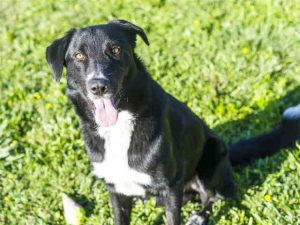
Apollo

Apollo is an 18-month-old, bigger German shepherd-Labrador mix. He is a very sweet, mellow boy (especially for being only 18 months old) who is quite tall. He needs to put on maybe 10 pounds to fill out his big body. He is house trained and likes children.

Apollo is neutered, microchipped, and vaccinated. He is at the El Dorado County Animal Services shelter in Meyers, along with many other dogs and cats who are waiting for their new homes. Go to the Tahoe animal shelter’s Facebook page to see photos and descriptions of all pets at the shelter.

Call 530.573.7925 for directions, hours, and other information on adopting a pet.

For spay-neuter assistance for South Tahoe residents, go online or call the animal shelter. Vouchers are available there while funds last: bring $25 and a copy of a photo ID and a local utility bill.

— Karen Kuentz


Editorial: Vote no on South Tahoe’s Measure C

By Lake Tahoe News Editorial Board

“Don’t tell me what you value, show me your budget, and I’ll tell you what you value.”  — Joe Biden

That sentiment needs to be applied to the city of South Lake Tahoe and all other public agencies.

When looking at the city’s budget for this fiscal year, which began Sunday, there are zero dollars for roads. If the former vice president of the United States is correct, that shows the five elected members of the City Council who last month approved this budget and the staff who presented it don’t value roads.

Shame on all of you.

For months, even years, people associated with the city of South Lake Tahoe have touted how important roads are. They say what we drive our cars and ride our bikes on are in disrepair. They say something needs to be done. We agree.

But what are they doing?

Not a single road was paved in 2000, 2002, 2004, 2005, 2011 and 2016.

Still, from 1995 to today the city has spent $11,792,473.10 on pavement rehabilitation. That is an average of $512,7616.22 per year in each of the last 23 years. So, clearly, the city has money for roads when it wants to. At least some councils saw it as a priority.

This money was solely for paving.

Measure C on the November ballot is projected to bring in $2.5 million annually. The proposal would have money going toward complete streets – meaning more than an overlay. It would include curbs, gutters and striping for bike lanes where appropriate.

We believe safe roads is one of the basic fundamentals government is supposed to provide. Clearly, based on this council’s budget priorities, the five disagree.

This current group has neglected its duty to be fiscally prudent, cut costs, increase revenue and provide the basics for their constituents. They, instead, want people to pay a higher sales tax to fix the roads.

Measure C on the November ballot asks the residents of South Lake Tahoe to raise the sales tax from 7.75 percent to 8.25 percent.

While advocates say 75 percent of the local sales tax is paid by people who don’t live in the city limits, they have not provided any proof to substantiate that fact. Even if tourists, and not just our neighbors in El Dorado and Douglas counties, were paying the bulk of the tax, that should not be a reason to say yes.

At some point the people we elect and nearly 200 workers employed by the city need to make roads a priority. It is their job to work within the budget to provide all of us with safe roads. It is not the taxpayers job to come to the rescue every time they want something.

Higher taxes for the extras in life are one thing – like an increased hotel tax for recreation amenities or property taxes for improved K-12 facilities – are logical. Another tax for the basics, like roads, is ludicrous.

Come on city officials, do your job – make roads a priority by funding them out of the General Fund.

And voters, do your job – vote no on Measure C on Nov. 7.


Brown signs California affordable housing laws

By Angela Hart, Sacramento Bee

Gov. Jerry Brown on Friday signed a robust package of housing legislation aimed at addressing California’s unprecedented affordability crisis.

“These new laws will help cut red tape and encourage more affordable housing, including shelter for the growing number of homeless in California,” Brown said in a statement.

The housing bills provide new funding for low-income housing development, seek to lower the cost of construction, fast-track building, and restrict the ability of cities and counties to block new development.

Read the whole story


Road Beat: The case against electric vehicles

By Larry Weitzman

It appears that the demise of the gasoline and diesel-powered car is near, perhaps in less than 20 years. Will that demise be caused by a lack of fuel, competition and market forces or will it result from some other reason besides market forces? That poses a very important question.

History tells us the best products are developed by market forces and innovation, not by government decree or intervention. When market forces ruled, electric cars were 38 percent of the car market in 1900, but by 1905 EVs’ share of the marketplace dropped to 7 percent and by 1912 after the invention of the electric starter by Charles Kettering (first offered on the Cadillac), electric cars were sold next to the buggy whips. Cars powered by the internal combustion (I/C) engine had taken over the market place, not by government decree but because they were simply a better motive force and the fuel system offered significantly greater flexibility and utility. And the marketplace decided that, not some government bozo(s).

Larry Weitzman

If EVs were so great and were a better source of personal transportation, then without question, EVs would rule the market place. But they don’t. Even with EVs like the Tesla, Volt, Leaf and more, EVs sales are less than one percent of the marketplace and that’s with significant government incentives and subsidies. First, is that EVs are very expensive. The main component, the battery, is extremely expensive still allegedly costing about $270 a kilowatt hour (kWh) of energy storage. The rule of thumb for EV range is from 3-4 miles per kWh, meaning for an EV with a 200-mile range (about a 60-kWh battery), the cost for the battery alone will be $16,200. And that is just for the part, with no installation and markup.

In today’s market, there are several compact cars that achieve 40 mpg that sell for a transaction price below that number and there many subcompact cars that can be had for 10-20 percent less than that number. And the car types that are mentioned also have a fuel operating expense less than an EV. In other words, in many parts of California, for the same $5 of energy, the compact (I/C) car will be able to travel farther than the EV.

If you don’t think government subsidies have anything to do currently with the meager sales of EVs we have an actual example, Hong Kong. Tesla was doing a brisk sales business in Hong Kong with its EV. Recently Hong Kong stopped all subsidies and Tesla sales have all but dried up. What do you think would happen here if all subsidies were terminated?

The powertrain for the compact car costs about $3,500, for an EV with a 60-kWh battery it’s about $20,000. And the average compact car has a range of 400 miles and a highway range of 500 or more miles, not the miniscule 200-mile range of a 60 kWh EV. The refueling time for the compact car will be about two minutes and for the EV on a 220 Volt charger it will take a minimum of four hours (eight hours or more on a 110 Volt outlet). Even a supercharger (called CHAdeMO) it will take nearly an hour and potentially shorten battery life. And then there is an issue no one talks about, cold weather. Batteries do not perform well in cold and hot weather and in winter time EVs will not have the promised range. When temps approach 32 degrees, it will significantly degrade EV range, depending on how cold; published reports show a 57 percent range loss at minus 20f. East Coasters beware. At temperatures above 95 degrees, range can drop by about 35 percent. Batteries work best in moderate climes.

Even in today’s market of saving the world mantras (a fallacy), EVs have only one percent of the market, even with huge government subsidies. Chevy’s remarkable Volt EV with a solid 200-mile range and a fictitious base price of about $35,000 (less than $30,000 with tax credits, with high income earners getting the most benefit here) is not selling all that well, with Chevy intentionally slowing production because of slow sales. A benefit for GM as they lose money on every Volt, anyway. And then there is Tesla, which without government subsidies has lost significant money in every quarter since its inception. Even with government subsidies of about $1 billion, Tesla has lost significant money in 18 of the last 20 quarters, (now totaling $2.4 billion).

So how are electric cars going to take over the market and push conventional I/C cars out of existence? By government decree and mandates, that’s how. Not by consumer demand, not by making a better mousetrap, not by fuel becoming expensive (oil reserves are growing, not shrinking), not by price, but by government fiat (not by the Fiat 500 EV). That’s how it will happen.

China, which is about 30 percent of global auto sales recently announced in one fashion or another that the government will end conventional I/C car sales within about 20 years. The governments of the Netherlands and Norway said it would end I/C car sales by 2025, India said it would end I/C car sales by 2030.

The governments of France and Britain said I/C sales would end by 2040 and Germany has hinted it will follow suit.

Hybrids might be allowed under these new fiats and mandates which will mean 90 percent of the motive power will come from an I/C, so then the mandate is just hot air, but the bottom line is that EVs cannot compete in any fashion with conventional I/C vehicles. The only way they can is by a government mandate which bans I/C engines. The marketplace does not want EVs but governments do and it has nothing to do with the environment and everything to do with controlling and limiting the freedom of its governed. The global warming argument is a red herring as most electrical power will still be made by CO2 emitting plants, anyway. And of course, the empirical data continues to point that human induced global warming (AGW), climate change or whatever the nom de jour may be is nothing more than a political movement and has nothing to do with the environment. The data is clear that AGW is an insignificant issue.

EVs might become practical, affordable transportation, possibly when the element known as “Unobtainium” is discovered, but it will never happen by government fiat and its discovery appears highly unlikely.

Larry Weitzman has been into cars since he was 5 years old. At 8 he could recite from memory the hp of every car made in the U.S. He has put in thousands of laps on racetracks all over the Western United States.