Improving sales topic of chamber workshop

Lake Tahoe South Shore Chamber of Commerce is putting on a workshop titled sales secrets.

The goal is to improve sales skills to drive higher revenue.

The cost for the Level Up Workshop is $10 for chamber members and $20 for others.

The event is Oct. 18 from noon-1:30pm at the chamber office in Stateline.


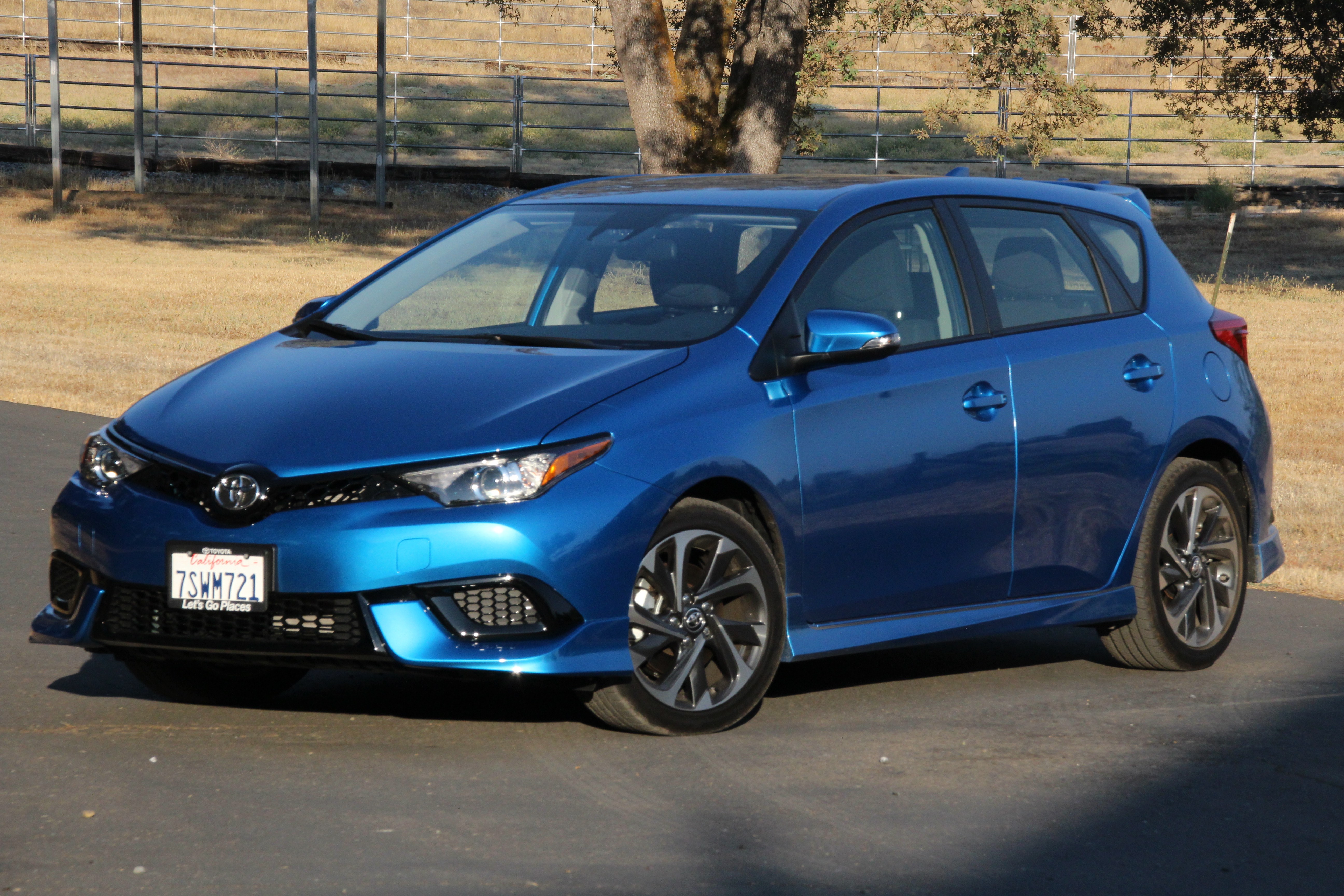
Road Beat: Toyota Corolla iM, new name, same great car

The Toyota Corolla iM handles great and is comfortable. Photos/Larry Weitzman

By Larry Weitzman

Two years ago, I tested the iM is a press preview in the Santa Cruz mountains, spending 100 miles behind the wheel and couldn’t praise it enough. Of the carryover Scion brands, (the iA and iM), the iM is the one to buy. And the praise of my first test holds true two years later.

If the new iM design looks a bit familiar, don’t think you are hallucinating, it does and that vehicle is the RAV4. If you study the iM’s shape, it has an almost identical window line, roof line, shoulder and character line, tail lights, and a nearly identical front end. It’s as if the RAV4 was squished a bit, leaving the iM looking sleeker (co-efficient of drag is a very low 0.30) and sportier while offering utility and fuel economy with a good level of performance and handling.  

Dimensions are sub-compact, with a length of 172 inches a width of 67 inches and standing just 59 inches tall, which is a little taller than most sub-compacts making the iM a bit of a crossover genre.

Powering the iM is a powerful 1.8L 16 valve, DOHC inline four-cylinder engine of 137 hp at 6,100 rpm and 126 pounds of twist at 4,000 rpm. It drives the front wheels through a seven speed CVT automatic. While its gear rations are infinite, under full throttle you can detect it acting like a seven-speed geared tranny as it accelerates up to its peak hp rpm and drops to about 5,000 rpm and then doing it all over again as if it upshifted through the “gears.” A CVT will normally accelerate to near peak hp rpm and then remain there as tranny ratios infinitely numerically lower themselves as the vehicle accelerates. In sport mode, the iM will shift through seven distinct ratios manually.

In my prior review, I predicted 0-60 mph to be in the high eights. My seat of the pants number was exact as under the stop watch it averaged 8.87 seconds. Not bad, but even better is the responsive feel the CVT returns. It actually feels more powerful. Passing times are decent as well with a 50-70 mph simulated passing run taking 4.67 seconds on the level and 9.38 seconds up a seven percent grade.

Specifications
Engine
1.8L DOHC, 16 valve inline four cylinder 137 hp @ 6,100 rpm
126 lb-ft of torque @ 4,000 rpm
Transmission
Six speed manual
Seven speed CVT
Configuration
Transverse front engine/front wheel drive
Dimensions
Wheelbase 102.4 inches
Length 170.5 inches
Width 69.3 inches
Height 55.3 inches
Ground clearance 5.5 inches
Track (f/r) 59.6/59.3 inches
Passenger volume 90.4 cubic feet
Cargo capacity 20.8 cubic feet
Fuel capacity 14 gallons
Weight (m/a) 2,943/3,031 pounds
Steering lock to lock 2.59 turns
Turning circle 35.4
Tires 225/45X17 inches
Co-efficient of drag 0.30
Performance
0-60 mph 8.87 seconds
50-70 mph 4.67 seconds
50—70 mph uphill 9.38 seconds
Top speed over 129 mph
Fuel economy 28/36/31 mpg city/highway/combined. Expect 31-32 mpg in aggressive overall driving and 40-41 mpg on the highway at legal speeds.

EPA rates the new iM at 27/35/30 for the six-speed manual and 28/36/31 for the CVT. In my 100-mile road trip of aggressive hilly driving with more than half a dozen full throttle passes the iM averaged 32.0 mpg. In my 150 miles run to South Lake Tahoe and back to Rescue the iM averaged a solid 33.5 mpg and it included 16 full throttle passes and some otherwise very aggressive driving. No slow in my right foot. In a two-way level highway run at 70 mph, the iM averaged 40.6 mpg. Overall the iM averaged 31.3 mpg with the engine spinning just 2,000 rpm at 70 mph, highway fuel economy might be a bit better than advertised. Fuel tank is a larger than average 14 gallons.

Scion has put some high-tech quality features in this small compact like double wishbone rear suspension along with the MacPherson front struts. Wheels and tires are big and beautiful 17 x 7 inch alloys shod with super wide (for this class) 225/45 series tires. They are not just calling it sporty, the data says it is. Besides having an extremely refined overall drive (very quiet and smooth), it also has oodles of cornering power.

You want more? Steering is radically quick at 2.59 turns lock to lock. I can see a new class of SCCA type of race car here. It even comes standard with stabilizer bars front and rear.

Even with a weight of 3,031 pounds, turn in is very crisp and changing directions is just a flick of the wheel. Transitions are very smooth; body roll is well controlled and the grip is amazing. Turning circle is a tight 35 feet.

Ride quality was excellent as this Scion is dialed in just right, plenty of sport without the punishment. And with the engine turning just 2,000 on the highway, there is little noise intrusion. It is quiet for a small car and doesn’t beat you up.

Inside is another quality interior. If I liked and praised the seats in the iA, the iM cloth seats are even better for the same reasons, they hold you in place during aggressive driving and are soft in all the right places and providing support where you need it. And they are large enough for 95 percent of drivers. They feel like they were custom design for my backside.  Materials are mostly soft touch.

It does have a real two holer dash with a big speedo and tach. For a sub-compact vehicle, it has a huge amount of volume with 90 cubes in the passenger area and 21 cubes in the cargo area. That is the volume of a midsize sedan.

Pricing is $19,490 for the automatic ($740 less for the manual) plus $865 for the boat ride from Aichi, Japan. There were a few minor PIO options, like floor mats, a film paint protector, wheel locks, a rear wind deflector, etc. totaling just under a $1,000 bringing the total to $21,498 all in. Your choice then becomes paint color and transmission. Get the auto and then pick a color (Electric Storm Blue as was my tester). Most everything else is standard, right down to the heated power mirrors with LED turn signals and back up camera. Also, standard here plus a driver knee airbag. Both vehicles do have some other dealer installed systems such as NAV and there is a body kit for the iM to make it even sportier. iM a lot of car for the money.

Larry Weitzman has been into cars since he was 5 years old. At 8 he could recite from memory the hp of every car made in the U.S. He has put in thousands of laps on racetracks all over the Western United States.


Housing costs make Calif. the poorest state

By Matt Levin, San Francisco Chronicle

 A sign advertising apartments for rent is displayed in front of an apartment complex in San Francisco.
California leads the nation once again in a statistic no state wants to boast about. When the cost of living is factored in, the Golden State has the highest poverty rate in the country.

More than 20 percent of its residents struggle to make ends meet, according to recently released census figures. That’s nearly 8 million people.

Unfortunately for Californians, this year’s poverty numbers are not an aberration. The census began releasing state-by-state results for its “supplemental poverty measure” in 2011, in an attempt to improve upon the outdated and heavily criticized official poverty statistics.

Read the whole story


Opinion: Exchanging insults will have no winner

By Kenneth L. Shropshire

President Trump did not say, “Yo’ mama!” in front of a partisan Huntsville, Ala., audience. But he might as well have because that is what athletes heard directed at them.

Perhaps without even realizing it, the president had engaged in an age-old tradition of playing the dozens, the term for an African American game involving the exchange of insults before an audience. Or did he just think he’s playing the politics of distraction-as-usual, and playing to his base?

Whether he knew it or not, the bully, Trump, went after one group that has spent their lives beating bullies: black male athletes. And, in this new-age mix of politics and sports, these men also possess a pulpit as powerful as the president’s and a combined Twitter following that far exceeds his. Had he met his match?

It remains an open question whether Trump understood the game he had started to play. For one thing, his tone was off. On playgrounds you rarely hear as circuitous an insult as “son of a bitch,” the phrase Trump used when urging NFL owners to fire players who protested during the national anthem.

No, the dozens are more direct.

“Your mother is a bitch” is what a truly street-hardened president would have said to the players, as he anticipated the return blow and stood ready to dish out more. But Trump has clearly stumbled into this unfamiliar territory. He was just using the so-called genuine language that has brought him political success.

Meanwhile, the athletes’ response to Trump on social media was massive and direct. None that I saw took the traditional path of going after his mama, but sometimes that phase is skipped, in favor of going straight to the source spewing the dozens, delivering a punch in the face. In that vein, Buffalo Bills running back LeSean McCoy just tweeted the unambiguous: “asshole.” LeBron James of the NBA’s “u bum” tweet at Trump was viewed by more people than any single tweet by the president himself.

Among the many ironies of this exchange is the unity it has brought, if only momentarily, between professional players and team owners, between player unions and the leagues. The moment goes beyond football. Basketball players have been brought together by Trump’s decision to rescind his invitation to the NBA champion Golden State Warriors to visit the White House. Baseball players have joined the protests, and golfers, tennis players (including the icon Billie Jean King), and even the NASCAR driver Dale Earnhardt Jr.  have tweeted in favor of the right for peaceful protest.

Although it’s new for a president to engage (consciously or not) in the dozens, athletes are also facing new expectations and responsibilities. We are witnessing many of our athletes coming of age to fulfill a new requirement of contemplation and intellectualism from our players. They need an opinion, whether they choose to express it or not. They need to know what they are going to do or not do.

LeBron James has been the leader in this new era; he spoke out during the Trayvon Martin homicide back in 2012. But today, the political decisions facing athletes are more complicated, and the expectations for fast and meaningful responses have been raised.

The difficulties of navigating this athletic-political minefield were exemplified by two players on the same team. When the Pittsburgh Steelers decided to stay in the locker room during the national anthem, an offensive lineman and former Army ranger, Alejandro Villanueva, chose to come out alone and salute the flag. Ben Roethlisberger, the team’s star quarterback, stayed in the locker room with the team. They both later expressed regret for making their decisions separately, which suggested a lack of unity. Politics, like football, is a team sport.

Political pressure also falls on the team owners, who were the other group targeted in the Alabama speech, as the president told them how to run their businesses. This is the rich person’s equivalent of the dozens, and no doubt the thought bubbles arising from this group of football billionaires and millionaires said, “This guy was one of us, and not even as rich as me, and he’s getting in our business?”

The New England Patriots owner, Robert Kraft, who befriended Trump and backed his campaign, said he was “deeply disappointed” at Trump’s comments, and clearly by his lack of reciprocity. He wasn’t the only owner who experienced presidential betrayal.

Trump’s attacks were news, and not just because Trump is always news. Most of the time, sports are about the games themselves. Political protest has been a lesser concern, usually a one-off when it touches sports—a boycott, an arm band, or a political punch added to a hall of fame speech. When sport has been invoked in politics it’s rarely been about whether athletes are pulling the nation apart, but instead it’s generally been related to the need for national healing. (An exception is the fist-extended protests of John Carlos and Tommie Smith on the medal stand at the 1968 Olympics).

One of the most understudied exchanges between sports and politics took place between then-President Franklin D. Roosevelt and Commissioner of Baseball Kenesaw Mountain Landis in 1942. In what has come to be known as the “green light” letter, Roosevelt advised Landis that the games should be played during World War II. The president’s logic was that in time of war, the American workers “ought to have a chance for recreation and for taking their minds off their work even more than before.” Landis followed the presidential advice, and Major League Baseball was played throughout the war.

In a similar spirit, the NFL decided to play their Sunday games two days after the assassination of President John F. Kennedy in 1963, although the NFL commissioner, Pete Rozelle, would call it one of his biggest regrets. (In retrospect, he might have listened to one owner, who sought a court order to stop play).

When the Gulf War began, 10 days before the 25th anniversary Super Bowl in Tampa in 1991, it made for a memorable juxtaposition of football and military display. That created a charged atmosphere for Whitney Houston’s famously stirring rendition of the national anthem, which concluded with a flyover by four F-16 fighter jets.

But sometimes sports gives way. After the Sept. 11 attacks in 2001, the NFL postponed the games that were scheduled to be played on the following Sunday. For a brief period all planes were still grounded in the United States and the players, like all other Americans, had mixed feelings about travel even when flights resumed.

Even after real tragedies, moments of national unity are short-lived. Today’s Trump-inspired unity won’t last long. The athletes and the owners will soon head back to their respective corners, at least until another unifying “your mama” moment brings them together again. 

Maybe it will be Trump, the distractor in chief, who provides that new moment, as he blasts away at others to take our attention away from the racism and political problems that surround him. As LeBron James observed recently, the president doesn’t seem to recognize how he might bring people together, if he so chooses. “He doesn’t understand the power that he has for being the leader of this beautiful country,” tweeted James. “He doesn’t understand how many kids, no matter their race, look up to the president….”

In this upside-down world of politics and sports, maybe Trump will own up to his own productive divisiveness. He could channel the great basketball player Charles Barkley, who famously declared in a TV commercial, “I am not a role model.”

Kenneth L. Shropshire is the adidas distinguished professor of global sport and CEO of the Global Sport Institute at Arizona State University and a professor emeritus at the Wharton School at the University of Pennsylvania. He wrote this for Zócalo Public Square.

Regular health screenings can save lives

By Lisa Carbonell

One important component to living a long and healthy life is to get preventive health screening for serious diseases. If your doctor finds a disease early, it’s often easier to treat and may cause less damage.

Lisa Carbonell

In addition to celebrating milestone birthdays as celebrations, consider them reminders for important health checks. Here’s a timeline for health screenings through the decades:

  • Cervical cancer. The American Congress of Obstetricians and Gynecologists (ACOG) recommends screening every three to five years for women who have always had normal PAP tests, starting at age 21. If you have had a history of abnormal PAP tests, you may have a different schedule.
  • Cholesterol. Baseline testing in your 20s is recommended to screen for inherited cholesterol disorders. The U.S. Preventive Services Task Force (USPSTF) recommends that average-risk women resume screening by age 45 and women at higher risk resume screening by age 30.
  • Breast cancer. This screening uses imaging to detect breast cancer when it may be too small to find in a clinical breast exam. The ACOG recommends starting clinical breast exams at age 25. Average-risk women should start getting annual mammograms at age 40, no later than age 50. Talk with your doctor about frequency, as well as other possible testing if you have a family history of breast cancer.
  • Diabetes. The American Diabetes Association (ADA) suggests that average-risk women be screened for diabetes by age 45. Consider starting at a younger age if you’re overweight and/or have other factors that put you at risk for diabetes, such as family history, high cholesterol, or high blood pressure.
  • Colorectal cancer. The American Cancer Society (ACS) suggests that women be screened for colorectal cancer starting at age 50. The gold standard diagnostic test is the colonoscopy. If no precancerous polyps are found, you may only need this test once every 10 years.
  • Osteoporosis. The USPSTF suggests that women be screened for osteoporosis starting at age 65. Your doctor might advise you to start earlier if you are at high risk for bone loss or have had a broken bone.

Screening tests are just one step you can take to prevent disease later in life. Other crucial steps include:

  • Scheduling annual physical exams
  • Avoiding tobacco and illicit drug use
  • Maintaining a healthy weight
  • Eating a healthy diet rich in fruits, vegetables, whole grains, and fat-free or low-fat dairy
  • Getting at least 30 minutes of moderate physical activity on most days of the week
  • If you drink alcohol, drink in moderation.

Lisa Carbonell is an OB-GYN at Barton Women’s Health. Join clinicians from Barton Women’s Health and Barton Medical Imaging on Oct. 4 at 6pm for a free wellness lecture to learn how Barton Health’s new 3D tomosynthesis mammogram machine is taking mammography screenings to the next level.


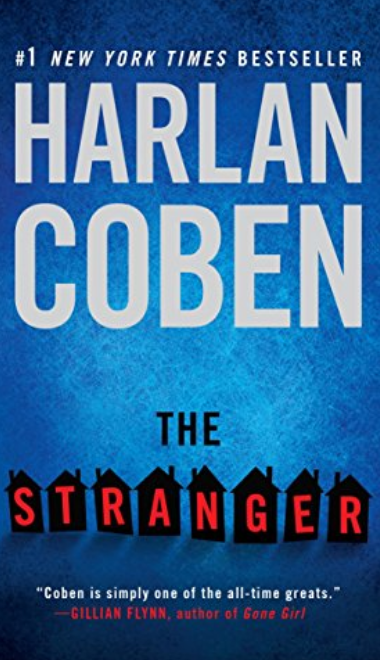
Book review: ‘The Stranger’ disappoints Coben fans

By Kathryn Reed

If you want a fast read that has an interesting cyber-crimes premise, “The Stranger” by Harlan Coben is it. If a book that has undeveloped characters and leaves lots of questions is not to your liking, skip it.

My book club read the “The Stranger” (Dutton 2015) in September. While some liked it, most found it mediocre at best.

Those who have read Coben before said this was definitely one of his worst books, and were surprised because they’ve liked his previous works.

Secrets – that’s the common theme in the book. Who gets to keep them and who gets to reveal them, and the consequences take center stage. This aspect of the book generated some interesting dialogue at book club. Would we pay to have a secret kept? None of us thought we had interesting enough lives that anyone would blackmail us in that way.

What was so disappointing was the story lines that were introduced and then went nowhere. Actions by characters seemed so unbelievable. All the superfluous characters were hard to remember especially when setting the book down for a few days.

What kept me wanting to read it was hoping there might be more depth on the next page, and trying to figure out how Coben could tie everything together.


S. Lake Tahoe on path to limit number of VHRs

By Kathryn Reed

Before the end of the year, South Lake Tahoe will have a moratorium in place regarding vacation home rentals.

The council on Tuesday agreed to limit the number of VHRs as well as create density criteria. Council member Tom Davis recused himself because of his involvement in the industry.

While no actual vote was taken, the four gave direction to staff to come back with an ordinance that will dramatically change things.

Today there are 1,368 VHRs in the non-tourist core area. As of Dec. 8, the limit will be 1,400. The first reading of the new ordinance will be at the next regular meeting on Oct. 17, with the second reading scheduled for Nov. 7. The ordinance then takes effect 30 days later.

Quality of life for full-time residents was the main reason for these changes.

The new ordinance means no new permits will be given out if there is a VHR within 150 feet of the applicant. There are currently about 110 pending applications. They will have the first opportunity to fill the spots.

Ultimately, the density issue will actually bring the number of these short-term rentals to 1,288, according to city staff. This will be through attrition and could take a number of years.

According to City Manager Nancy Kerry’s presentation to council on Oct. 3, the minimum distance standard would:

·      Improve residents’ quality life, health and well-being by reducing areas highly saturated by VHRs;

·      Minimize impacts of VHRs among residents;

·      Help restore community character;

·      Reduce calls for service for police department personnel.

Most of the council members acknowledged they did not want to decimate the VHR industry, but at the same time they seek to bring some peace to residents who have been burdened by unruly guests who have little respect for their temporary neighbors.

Homeowners associations will not be subject to these rules, but instead may create their own regulations. For now, this pertains to the Tahoe Keys and Tahoe Tyrol. About 17 percent of Tahoe Keys homes are used as a short-term rental. Their major concerns were bear boxes and density.

In the new ordinance also expect these following changes/additions:

·      Maximum occupancy will be two people per bedroom, plus two additional guests.

·      Camping in a tent or RV will not be allowed at a VHR.

·      Parking must be on a paved surface.

·      Bear boxes will be mandatory by July 2018, with regulations based on square footage of the rental.

·      Warnings for VHR owners will be eliminated.

·      If an owner receives three violations within 24 months, the permit will be revoked.

·      VHR owners who stay in their own dwelling must adhere to the VHR rules, though permits for parties and the like can be requested.

·      Three people will be hired to boost the VHR compliance department to six. This will be paid for with an additional annual fee of another $300 per property. (This was after Police Chief Brian Uhler admitted the temporary added enforcement last winter did not have much of an impact.)

One item to still be decided will be setting a minimum number of days people have to rent their place. This is to deter people from obtaining a permit with the sole purpose of keeping someone else from securing one.

It’s also possible other changes could occur in the next two weeks, and that not all the council members will support the final ordinance.

A software program like Host Compliance will be on a future agenda for the council to decide if that or another platform is something the council wants to go forward with. The principal of the company made a presentation earlier this fall. The software is designed to ferret out scofflaws, plus Host Compliance in particular has other offerings such as a complaint hot line.

Thirty-five people spoke at the meeting Tuesday, with the views covering a wide spectrum. Some threatened taking the VHR issue to the ballot if constraints were not put into place, others spoke of the financial impact restrictions will have, some want the free to market dictate the number of VHRs, others want this to be a property rights issue, a few worry the tourist core area will be impacted with people displacing residents in a desire to have a VHR.

The new ordinance only pertains to units outside the tourist core, and only to full house rentals, not to those renting a room while they are on the premise.


3 in SLT accused of selling alcohol to minors

Three people in South Lake Tahoe were cited Saturday for allegedly selling alcohol to minors.

On Sept. 28 police officers conducted a minor decoy operation in which minors under the direct supervision of officers, attempted to purchase alcohol from 19 businesses in the city.

Police officers cited threes clerks: Yenifer Rodriguez Olivas, 31, from Mi Pueblo Market; Nicholas Nance, 35, from RiteAid; and Peter Tyson, 27, of Safeway. If convicted, they face a minimum fine of $250, and/or 24 to 32 hours of community service for a first violation. 

In addition, ABC will take administrative action against the alcoholic beverage license of the business. That may include a fine, a suspension of the license, or the permanent revocation of the license.

The South Lake Tahoe Police Department used a $95,000 grant from the California Alcoholic Beverage Control in part to crackdown on these types of sales. The funds will also be used to reduce the number of alcoholic beverage sales to minors, obviously intoxicated patrons, illegal solicitations of alcohol, and other criminal activities such as the sale and possession of illegal drugs.

— Lake Tahoe News staff report


Pollock Pines man ID’d in fatal motorcycle crash

A 19-year-old Pollock Pines man has been identified as the motorcyclist who died Saturday on Spooner Summit.

Justin A. Breese lost control of his bike and was ejected, according to the Nevada Highway Patrol. Investigators said speed may have been a factor.

The crash occurred Sept. 30 at 11:54am about one mile east of Spooner. He we going east on the highway.

— Lake Tahoe News staff report


Education theme of annual Women’s Fund dinner

The Tahoe Women’s Community Fund’s annual membership celebration dinner will be Nov. 2 from 6-9pm at Harveys.

Tickets are $35 and are available online. This is open to non-members.

The theme of this year’s dinner is: The Power of Education in our Community. Former Lake Tahoe Community College President Guy Lease will be the keynote speaker.

The inaugural woman of distinction award will be presented to Karin Holmes, principal at Sierra House Elementary School.

In 2017, the Tahoe Women’s Community Fund granted $29,000 to various nonprofit organizations in the South Shore. This year, through a $100,000 gift from Lisa Maloff, the group will be matching membership money dollar for dollar.