2 fires burning in Eldorado National Forest

A fire started Tuesday afternoon two miles west of Ice House and White Meadows roads in the Eldorado National Forest.

The Ice Fire is separate from the Table Fire that has been burning for more than a month.

The newer fire has burned 25 acres. While voluntary evacuations were initially called for, they have since been lifted.

The cause is under investigation.

Forward progress has been stopped on the 40-acre Table Fire. Lightning ignited this remote fire that is three miles northeast of Ice House Reservoir. The U.S. Forest Service had let it burn as a controlled fire, but then winds this week whipped it up. Smoke from it has been visible in the Lake Tahoe Basin.

— Lake Tahoe News staff report


Emergency alert system failed many in Sonoma, Napa

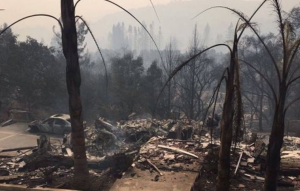
Charred debris near Highway 128 and Bennet Lane in Calistoga. Photo/Calfire

By Paige St. John, Dakota Smith, Hailey Branson-Potts and Joy Resmovits, Los Angeles Times
 
The distress calls crackled over the Napa County sheriff’s dispatch radio in a rapid staccato late Sunday as flames sped toward residents on Atlas Peak Road.

“Parents trapped in garage,” an officer called in to the central dispatcher. Then: “The fire is moving quickly through here.”

Two minutes later, the dispatcher sent someone to another house on the same road: “Two people trapped.”

The dispatch calls, which began pouring out after 10:30pm, less than an hour after the fire was first reported, provide a harrowing narrative of the frantic, confusing efforts to rescue people from the Atlas Peak fire, which by Tuesday had burned 25,000 acres and destroyed more than 100 structures.

Read the whole story


Squaw-Alpine invest $4M for avalanche control

By Kathryn Reed

Combined, Squaw Valley and Alpine Meadows ski resorts are getting $4 million worth of safety improvements that will be used starting this season. All are centered on avalanche control.

A variety of tools have been added. For the first time a helicopter will be enlisted. The resort is leasing an ASTAR AS-350B3 from Minden’s Skydance Helicopters. Squaw-Alpine are the only resorts in California using a helicopter for this type of work, though Alta, Snowbird, Telluride and Whistler Blackcomb use one.

Using the helicopter would help get the mountains open sooner.

“The helicopter enables us to assess snow conditions around the mountain, using test explosives, in under 30 minutes. We can use it to drop explosives onto the terrain below and transport our teams up onto the mountain to complete their avalanche control routes on the ground,” Will Paden, Squaw Valley ski patrol director, said in a statement.

Skydance pilots will fly the bird, with specifically trained ski patrol employees launching the devices.

The helicopter will be stationed near the Far East building and chairlift in the high season, with the ability to have them fly in from Minden at other times.

“All of these investments were voluntary. Our first priority as a company has always been safety, and that priority is evident not only in this season’s expansion, but the millions that we have invested in snow safety over the years,” Liesl Hepburn, spokeswoman for the resorts, told Lake Tahoe News.

She said the upgrades are not a reaction to the January death of ski patroller Joseph Zuiches at Squaw Valley. CalOSHA found infractions at the ski resort and fined Squaw $11,250 for “failing to correct an identified unsafe working condition by implementing a procedure for protection against the workplace hazards associated with hang cord entanglement during hang cord blasting operations.” The second fine of $9,000 was for “failing to ensure that all crew members maintained visual contact or awareness of physical location of crew members at all times during avalanche control activities.” Squaw is appealing the decision, saying the state’s findings are not accurate and the fines not justified.

With the 728 inches of snow last season, it meant avalanche control was needed almost every third day. In all, 56 days of avalanche control were required.

Another tool that will be available this season is the avalauncher, which can send an explosive more than a mile. Alpine has been using them and will get two additional ones. Squaw used them in the past; and now will have two.

They allow ski patrollers to trigger avalanches from a distance and control the snowpack prior to the resort opening. They are compressed-nitrogen cannons that fire an explosive projectile.

Dragons are another resource for snow safety. It’s something Squaw has been using since 2015. A combination of propane gas and oxygen are used to create a concussive blast to trigger an avalanche. The discharge is done remotely. Thirteen have been added to the arsenal.

Several will be placed along Alpine Meadows Road. This is always a precarious location. Last year debris from an avalanche impacted several houses.

Ski patrol at both resorts is rather significant, with 34 pro patrollers at Alpine Meadows, 70 at Squaw Valley. Nearly two thirds of Squaw Valley and Alpine Meadows ski patrollers have more than 10 years of patrol experience. If national ski patrollers are trained and licensed to perform avalanche control, then they may help out.

“The goal is to have as many patrollers as possible trained on these tools, but with newer ones like the helicopter it will take more time to develop those groups,” Hepburn said.


Opinion: The idea of ‘Main Street’ in America

By Miles Orvell

In the United States, Main Street has always been two things—a place and an idea. As both, Main Street has embodied the contradictions of the country itself. 

It is the self-consciousness of the idea of Main Street – from its origins in a Nathaniel Hawthorne sketch of New England, to Walt Disney’s construction of a Main Street USA, to the establishment of ersatz Main Streets in today’s urban malls—that makes it so essentially American. Main Street has been used in myriad ways to describe many different things—from the crushing power of convention to the thrill of new entertainment, from the small town to new big city neighborhoods.

Main Street’s meaning could change quickly. In the 1920s, to invoke Main Street was to call up an image of the dullness of provincial life. By the 1930s, Main Street represented the bedrock of America’s embattled democracy. For decades, Main Street stood for the local; today it’s an importable model of planning and development that can be set up almost anywhere.

Main Street bears double political meanings that in turn raise complicated questions about whether the United States lives up to its ideals.

As public space, the American Main Street has always represented an ideal of community, where persons from different surrounding neighborhoods and social classes come together as rough equals. But Main Street also has a history of discriminatory practice going back more than a hundred years. Northern “sundown towns” in the late 19th century and first half of the 20th century policed their Main Streets by warning and expelling anyone who didn’t “belong” after the sun went down. And historically Main Street usually has been defined by the ruling class of the area, with outsiders—by class, ethnicity, religion, color—not particularly welcome.

So even as we celebrate the ideal of Main Street as a space of democratic equality, we should remember—and rue—the reality.

Part of the reality is this: America’s small towns and their Main Streets have died a thousand deaths, but Main Streets also live on and multiply now as never before, as we recreate them in wealthy suburbs and big cities. Over the past 20 years, America has seen the growth of ersatz Main Streets, facsimiles of the real thing, in private shopping places everywhere.

As the malls of America have become deserted, those shopping centers still clinging to life have strived to emulate the amenities of what they had rendered obsolete: Main Street. They have installed benches, street lamps, grassy areas, and even band stands, providing the feel of public space in the open air, the feel of a community. These facsimiles of Main Street, creations of commercial landscape architects, can be more successful than actual Main Streets, since the national retail brands in ersatz Main Street attract shoppers in the massive numbers needed to make a public space seem genuinely “public.”

If we prefer the authentic to the ersatz, then this new Main Street poses a challenge to the original article. What’s the best response to such a challenge? To do what the ersatz Main Street can’t: provide the individualized shops and restaurants that you won’t find in the ersatz space. The real Main Street also must work harder to draw in people from outside the community, with street fairs and festivals, art galleries, craft shops, and other one-of-a-kind attractions.

Meanwhile, the ersatz Main Street carries its own double meaning: it represents a corporate usurpation of the idea of Main Street—and also an expansion of the idea. Indeed, since the Great Recession of 2008 and 2009, Main Street has taken on a broader meaning and wider constituency than it ever before possessed. It is not just small businesses that Main Street represents. The phrase has become a substitute for what we all share, the American commons. We are either Main Street or its opposite, Wall Street. In this polarized time, we belong to one pole or the other.

One paradox is that the public space of Main Street, regulated spaces that must be open to all, may be harder to police than the ersatz Main Streets, which are private spaces where certain standards of decorum can be swiftly enforced. We don’t usually notice the limitations on our behavior in private spaces, but they exist, often in a sign posted as you enter the space.

Is it possible that the private space of the ersatz Main Street, which welcomes shoppers of all religions and colors, is a more hospitable space than the public space of Main Street? Is the private Main Street more tolerant of difference (as long as you keep your shirt on and wear shoes) than the public space of warring statues and demonstrators armed with torches or guns, where intimidation can be masked as self-defense? If this is the case, it argues for the democracy of the marketplace, which embraces anyone, regardless of creed or color, who has the money to make a purchase.

Today, Main Street faces what some see as an existential threat: e-commerce, which has made any physical shopping space increasingly a luxury. The real Main Street has a future in this digitally dominated marketplace—it is not competing with ecommerce—but the ersatz Main Streets of malls may have more to worry about. Will they evolve as hybrid showrooms where consumers can touch the merchandise before buying it cheaper online? Or as places to pick up merchandise ordered in advance and delivered locally? Or will e-commerce fall victim to its own success and be defeated by Main Street—the infinity of choices and merchandise reviews consuming so much of the shopper’s time that it’s simpler to just go shopping in a store with limited, pre-selected, merchandise?

If Main Street means anything today, it signifies an idealized space where American society can practice its highest values, which include civility, tolerance, and yes, commerce. And Main Street’s endurance, as an idea, demonstrates the authority of myth to nurture a sense of community, even in a society as fragmented as ours.

Miles Orvell is professor of English and American Studies at Temple University and the author of “The Real Thing: Imitation and Authenticity in American Culture, 1880-1940 “(John  Hope Franklin Prize); “The Death and Life of Main Street: Small Towns in American Memory, Space, and Community” (Zocalo Public Square Book Prize Finalist. He wrote What It Means to Be American, a project of the Smithsonian and Zócalo Public Square.

With workers scarce, hiring criteria loosen

By Paul Davidson, USA Today

No degree? No experience?

No problem.

With employers struggling to find workers in an ever-tightening labor market, many are hiring job candidates for both white- and blue-collar jobs who lack skills or experience deemed essential just a few years ago.

“Companies aren’t going for 100 percent of the job description,” says Paul McDonald, senior executive director of staffing firm Robert Half. “They’re going for approximately 70 to 75 percent of the job description but they’re going with individuals who have high potential and are a good cultural fit.”

Read the whole story


First meeting of Douglas sewer board set

Douglas County Lake Tahoe Sewer Authority will meet for the first time on Oct. 11.

One of the board’s first tasks will be to appoint a fifth member, who is supposed to represent the Stateline business community.

The four sitting members are county Commissioner Nancy McDermid, Round Hill General Improvement District trustee Wesley Rice, Kingsbury GID trustee Darya Vogt and Tahoe-Douglas Sewer District trustee Grant Thompson.

This board was created by the Nevada Legislature after the Douglas County Sewer District No. 1 was forced to disband because the former board violated the Nevada election and open meeting laws.

— Lake Tahoe News staff report


Vegas shooting could create push for Nev. gun legislation

By Sean Whaley and Ben Botkin, Las Vegas Review-Journal

Just as the Sandy Hook school shooting prompted efforts to regulate gun policies in Nevada in 2013, the mass shooting in Las Vegas on Oct. 1 will likely result in a new push when the Legislature convenes in 2019.

As one lawmaker described it, the gun lobby will be on steroids in the 2019 session.

But even in the wake of the worst mass shooting in modern U.S. history, it remains to be seen whether the Oct. 1 attack that killed 58 people and wounded 489 more prompts changes in Nevada law.

Read the whole story


Free bus rides this year for LTCC students

Free transit is being provided to Lake Tahoe Community College students this year in a pilot program with Tahoe Transportation District.

The college is providing $36,000 to “mitigate administrative, operational, and capital costs associated with this pilot program.”

LTCC has heard from students that one of the barriers to attending is being able to get to the South Lake Tahoe campus. The cost and timing of buses have been issues.

For the 2017-18 academic year LTCC students can show their college ID card and ride for free.

The deal should be cemented this week at the TTD board meeting on Oct. 13.

The trial period will end June 30.

If students want to ride to commuter routes outside the Tahoe basin, they will be subject to the normal fare.

— Lake Tahoe News staff report


‘Vice mayor’ of Kings Beach community is focused

By Marianne M. Porter, Moonshine Ink

Emilio Vaca, 38, could have easily ended up in Modesto or Los Angeles, or even Winnemucca, where he was raised after being born in Reno. After high school, he attended Modesto Junior College where he graduated in 2002, and in 2005 he earned a degree from Sierra Nevada College in political science and international studies. For Vaca, three life-altering events kept him anchored in Kings Beach: his work with Latino parents and teens, meeting his wife Aline, and their community church.

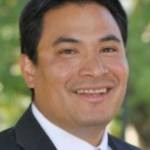
Emilio Vaca

Vaca traveled an impressive road on the way to Kings Beach. He currently owns his own business called Vaca Consulting. Since January 2017, he has been board president of the North Tahoe Business Association. Formerly, he was executive director of the North Tahoe Family Resource Center for four-and-a-half years. In 2011, he received the North Lake Tahoe Chamber of Commerce Citizen of the Year Award, presented by his friend Dave Ferrari, whom Vaca calls “the mayor of Kings Beach.” In turn, Ferrari calls Vaca his vice mayor.

A natural organizer and dedicated resident of the Kings Beach community, Vaca and his family thrive on staying actively involved in their children’s school, community church, area nonprofits, and his own neighborhood. Vaca says, “the greatest legacy we can leave for the next generation is the investment of our time.”

Read the whole story


Accident snarls traffic near Cave Rock

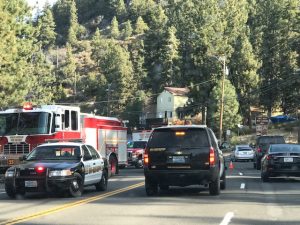
Emergency crews assess the damage Oct. 10 of a vehicle accident near Cave Rock. Photo/Natalie Yanish

Traffic was backed up near Cave Rock on Tuesday because of a vehicle collision.

A truck and Tahoe Transportation District bus were in an accident on Highway 50 the morning of Oct. 10.

According to the Nevada Highway Patrol, two people received non-life threatening injuries.

TTD did not respond to an inquiry. It’s not known how much damage either vehicle sustained or how the collision occurred.

— Lake Tahoe News staff report