Northstar, Squaw, Heavenly score with Ski readers

In the annual Ski magazine readers’ poll, Mammoth came out as the best overall California resort.

A slew of criteria is considered, from snow to food to family friendliness.

Deer Valley in Utah took top honors. It will be under new ownership this winter; the same folks who own Squaw Valley and Alpine Meadows.

The publication divides results between the coasts. Mammoth came in 18th for the West. Rounding out the top 30 were Northstar at 27, Squaw Valley at 28 and Heavenly at 30.

The listed strengths and weaknesses for the Tahoe area resorts included:

·      Northstar – strengths – grooming, kid friendly, service; weaknesses – snow, challenge, variety

·      Squaw – strengths – variety, challenge, dining; weaknesses – grooming, snow, service

·      Heavenly – strengths – dining, grooming, kid friendly; weaknesses – character, challenge, variety.

Results for individual categories:

·      Challenge – Kirkwood, No. 10

·      Grooming – Northstar, No. 6; Mammoth, No. 8

·      Variety – Squaw, No. 8; Mammoth, No. 9

·      Kid friendly – Northstar, No. 7

·      Snow – Kirkwood, No. 10

·      Dining – No California resorts

·      Character – No California resorts

·      Lodging – No California resorts.

— Lake Tahoe News staff report


Workshop for WordPress beginners

Lake Tahoe South Shore Chamber of Commerce is offering a workshop for people to learn how to manage and customize a website using WordPress.

The class will be Nov. 15 from noon-1:30pm at the chamber office in Stateline.

During this workshop attendees will be taught:

  • What happens during the WordPress installation process
  • How to manage a WordPress site
  • Best practices for content management
  • How to customize the site.

This workshop is for WordPress beginners.

Cost is $10.


Beauty of fall lingering throughout Tahoe area

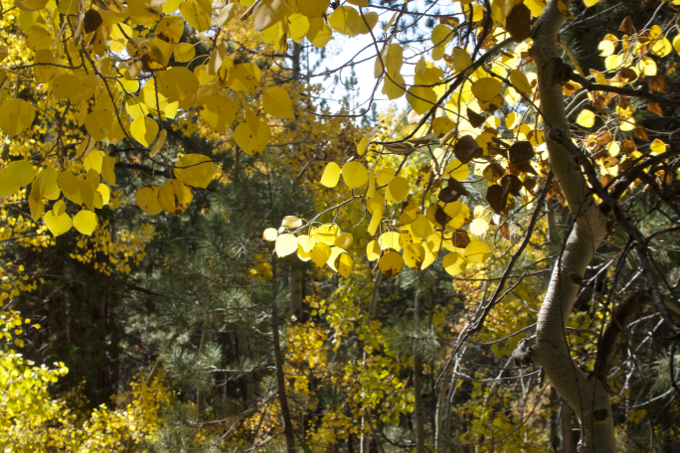
Aspen medallions dance in the breeze. Photo/Kathryn Reed

By Kathryn Reed

HOPE VALLEY – Vibrant. Dazzling. Stunning. The superlatives runneth over when it comes to describing the autumn colors throughout the Lake Tahoe Basin.

While the peak is over, Mother Nature isn’t quite done. There is still some beauty to captivate.

One of the benefits of such a moisture-heavy winter a year ago is the richness of this fall’s colors.

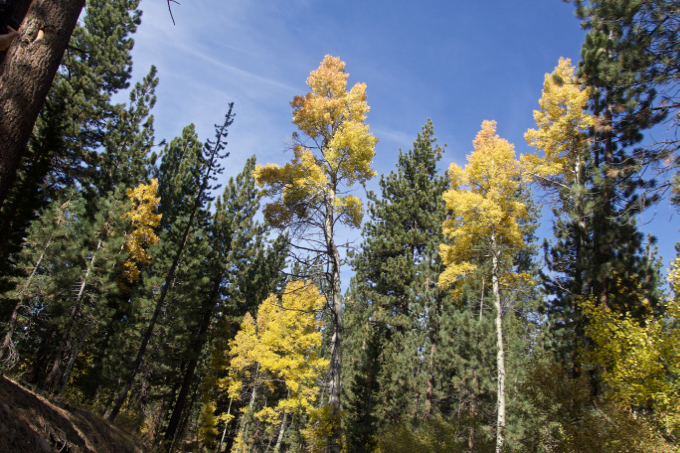
Last weekend driving into Hope Valley, going past Sorensen’s and hiking off Burnside Road it was a feast for the eyes. Bursts of orange and yellow were almost electrifying, especially as the branches seemed to want to scratch the cobalt blue sky.

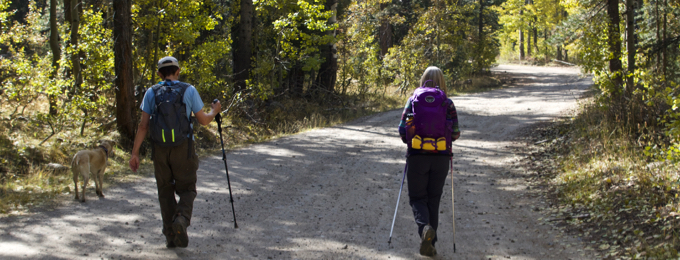
AJ, Rosemary and Carolyn along Burnside Road. Photo/Kathryn Reed

Burnside Road – that’s about all we had planned. We drove until Rosemary said she had enough. And from there we started exploring. We sauntered onto an offshoot from the main road that we thought looked pretty. It was, but the trail petered out.

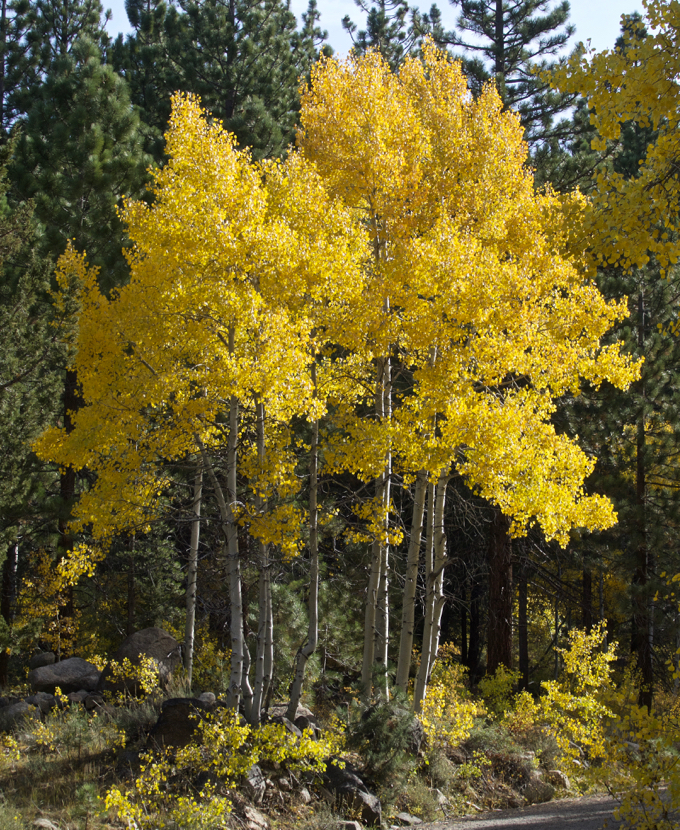
We continued on the main trail, which opened up onto some small, glorious groves of aspens. With how the sun was, it was even more magnificent on the trip back. The color was more majestic and worthy of stopping for photographs and to gawk at the splendor before us.

Aspens are super lush because of last winter’s moisture. Photo/Kathryn Reed

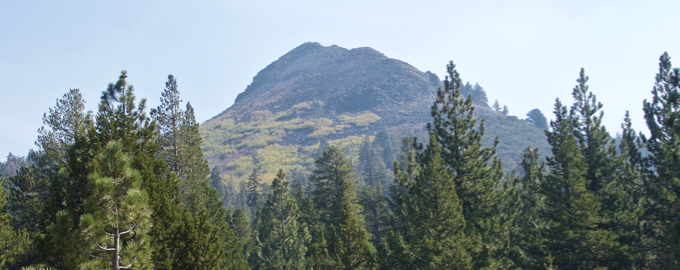
Going out we came across a sign that helped us decide if we were to keep wandering toward Burnside Lake or if a side route should be taken. Knowing we had no desire to put in the miles to get to the lake, we went onto Forest Service Road 31053 toward Pickett Peak (9,148 feet).

Good choice.

Red Lake Peak (10,063 feet) was the main mountain we saw on much of the trek. It still has a couple distinct splotches of snow left over from last winter.

Aspens dance toward the sky. Photo/Kathryn Reed

At various points we could look out into Hope Valley, with the mountainside on the other side of Highway 88 looking like a painter’s palette.

We got to the top, which gave us a wonderful view of Pickett Peak. Climbing the peak will be saved for another day.

Vehicles of different types were able to make it up the road. While four-wheel drive was not necessary, a rugged type vehicle would be recommended. Mountain bikers and dirt bike riders were also out.

In all, we did about 6½ miles. It was a steady climb up, but not strenuous. Coming down Rosemary and Carolyn had an easier time navigating the loose dirt because they had poles.

Pickett Peak is the focal point during a stop for lunch. Photo/Kathryn Reed

—–

Getting there:

From South Lake Tahoe, take Highway 50 west. Turn left onto Highway 89 in Meyers. At the intersection with Highway 88, go straight. That is Burnside Road. Drive however far you want. Vehicle access is not allowed in the winter.


Opinion: Wine Country triumph

By Joe Mathews

The deaths and damage of this year’s Wine County wildfires are a historic disaster. They are also the product of an epic California success.

That triumph is the wine industry, which has come to dominate our state’s land, culture and image. Indeed, it’s now outdated to refer to the burning stretches of Napa and Sonoma counties as California’s Wine Country. The truth is that the whole state is wine country. These awful fires—and the hotter ones to come via climate change—will only make it more so.

Joe Mathews

Californians fight over water, but we connect through wine. It’s a passion and pursuit that binds together rural and urban, business and labor, and rich and poor (we produce both $3,499.97 Screaming Eagle varietals and the $2.99 Charles Shaw wines they sell at Trader Joe’s). Wine defines us to the world (only three nations on earth—France, Italy and Spain—produce more wine than we do), and is our leading home remedy, the best available balm for a state that inspires the sweetest of dreams and the most bitter of disappointments.

California is a state of disaster, and where there is disaster, you will find wine close by. Over the past 40 years, wine has boomed not only in Northern California—from 25 Napa Valley wineries in 1975 to more than 400 in Napa and Sonoma counties—but also in the Central Coast, the Central Valley, the Sierra Foothills and even Southern California’s Inland Empire. Much of this growth has come at the edges of cities and towns, in the space between human development and our wilder lands.

These are the places are where California’s wildfires rage, and so the success of wine has lured many more people to live in riskier places. This era’s giant blazes have hit all our wine countries. In addition to the awful scale and human carnage of the Napa and Sonoma fires, multiple wildfires this summer did damage to the Central Coast, including its vineyards and wineries.

The history of wine in California is a century older than the state itself. California’s saint, Junipero Serra, had vineyards planted in his 18th-century missions. Los Angeles was originally a wine country (“The City of Vines” was an L.A. nickname of the 19th century), and the Napa Valley’s origins as a wine producer coincide with the Gold Rush.

By the late 19th century, wine was a major California export. While wine is often seen as an artisanal exception to California’s newer industries, it actually established the template for the culture and economy that produced aerospace, movies, and software: Bring people and ideas from around the world to California, and then spin them together into new products that are exported back to the world.

California has privileged wine to a degree that might embarrass your local aristocrat. Our state is famous for its high taxes, but makes an exception for wine. Our taxes on alcohol, a legacy of a powerful 20th-century liquor lobby, are so much lower here that Californians have gotten used to getting great wine at low prices—a bit of the Golden State’s largesse in every bottle.

In the aftermath of the fires, wine’s exalted status may come under pressure. Before the blazes, there had been conflict between wineries and their local governments and neighbors. Wineries often see housing development as encroaching on their land. Homeowners and local governments have complained about the traffic and noise that comes with the thousands of winery events and the 24 million tourists who visit the Northern California Wine County each year.

Perhaps the tragedy of the fires will inspire new collaborations and smart, resilient planning to buffer wineries and houses. But if the fires create more limits on where structures—be they wineries or houses—can be built, more conflict is inevitable. The wine industry could also see internal turmoil and ultimately consolidation, as newer or smaller players, facing the high costs of rebuilding and insurance, sell out to bigger players. But look for wine to emerge stronger and win most of the battles—Californians like their wine more than they like other people’s houses.

The Wine Country fires reflect the unpredictability and cruelty of nature—amplified by any number of human failings in managing our environment. The fires will rightfully force a reassessment of those failings, at least for a while.

But human beings can handle only so much misery, at least by themselves. Eventually, we gather with others and reach for the bottle. And then, as has been practice since an ancient supper described in the Gospel of Matthew, the wine “is poured out to forgive the sins of many.”
Spending at holidays expected to rise 6%

By Alexandra Stratton, Bloomberg

High-income shoppers will fuel holiday spending in the U.S. this year, even as less affluent consumers keep their purse strings tight.

That’s the finding of a survey released Tuesday by PricewaterhouseCoopers LLP. The firm expects Americans overall to increase spending by 6 percent this season, but those with household incomes below $60,000 will cut their outlays for both gifts and entertainment as they deal with stagnant wages.

“There’s both an intent and ability for the higher-end consumer to spend extra this holiday,” said Steve Barr, U.S. retail and consumer leader at PwC. There are times when shoppers with lower income levels are the growth engine in holiday spending, he said. “But under the current scenario it’s really not possible.”

Read the whole story


ABC giving free seminar in S. Lake Tahoe

The South Lake Tahoe Police Department and California Alcoholic Beverage Control are partnering to provide training for licensed businesses and their employees on the laws involving the sale and service of alcoholic beverages.

Training is designed to help businesses better understand their responsibilities and also provide them with the tools and knowledge they need to promote reasonable consumption and contribute to making communities safer.

The training is free and the curriculum is designed for licensees, managers and employees.

It will be Oct. 24 from 9am-1pm at Lake Tahoe Airport.

Register online.


Blue-green algae in Keys disappearing

By Kathryn Reed

The cautionary signs that have dotted the canals in the Tahoe Keys are coming down.

“As expected with the seasonal change, the shorter days (less sunlight) and cooler temperatures have helped control the cyanobacteria levels,” Mary Fiore-Wagner with Lahontan Regional Water Quality Control Board told Lake Tahoe News.

The most recent water samples taken Oct. 16 show “non-detectable levels for Anatoxin-a (this is the toxin that domestic pets-dogs) may be especially sensitive too due to increased exposure), and low (below 0.8 ug/L) or non-detect levels for microcystins. Additionally, the TKPOA area is no longer supporting the summer recreationalists entering the Tahoe Keys waterways for both contact and non-contact water recreation, so exposure potential to any cyanotoxins is minimized.”

These numbers are below the mark that necessitate a public advisory.

The blue-green algae was first detected in August. Warning signs were placed throughout the South Lake Tahoe neighborhood. People had been advised not to touch the water, allow dogs to drink it, or to eat the fish from it.

Cyanobacteria blooms can look like slicks of opaque, bright green paint, or “pea soup,” but closer inspection often reveals the grainy, sawdust-like appearance of individual colonies, according to the state Water Board.

Scientists don’t definitively know why-how it is created or how it goes away.

“We did recommend that TKPOA continue routine visual monitoring and one more sampling run within a month’s time to confirm that cyanotoxins have maintained at non-detect and/or insignificant levels that no longer pose a potential risk to human or animal health,” Fiore-Wagner said.


It’s snowmaking season at Lake Tahoe

By Benjamin Spillman, Reno Gazette-Journal
 
Your eyes aren’t deceiving you. Snow is piling up on the lower reaches of Mt. Rose Ski Tahoe.

Whether it will be enough to meet an ambitious Oct. 27 opening date for skiers and snowboarders remains to be seen.

The ski area started producing snow last week and will continue as conditions permit.

The resort needs a packed base that’s at least 10-inches deep in order to open, said marketing director Mike Pierce.

Read the whole story


Snippets about Lake Tahoe

·       Placer County’s draft update to its winery and farm brewery ordinance is available for public review and comment online.

·       South Lake Tahoe is conducting a survey to gauge if polystyrene should be banned in the city.

·      Douglas County libraries in Minden and Zephyr Cove will be closed Oct. 27-28 for the Nevada Day weekend. 

·      Sierra-at-Tahoe has hired Duane Stutzman to be director of snowsports school and Maria Aime as manager of Wild Mountain children’s program.

·      North Tahoe Public Utility District is offering rebates on water-saving appliances such as dishwashers and washing machines as well as “smart” irrigation controllers, toilets, faucets, and more.  


Tahoe author to talk about her first book

The Friends of the Library are hosting local author JoAnn Conner on Nov. 7 at 6pm.

Conner will share the experience of getting her first book published. “Heartwood” is a work of historical fiction set in 1867 Bridgeport The book tells the story of a young man who came west after the Civil War and stops in Bridgeport, where he buys an old ranch.

Historical tidbits are laced through the story, with facts about Virginia City, Bodie, Genoa, and Carson City helping to build the tension to a surprise twist at the end.

Books will be sold and signed at this free event at the library on Rufus Allen Boulevard in South Lake Tahoe.