Body pulled from Fallen Leaf Lake presumed to be missing woman, second unknown corpse recovered

By Kathryn Reed

El Dorado County sheriff’s officials believe one of the bodies recovered recently from Fallen Leaf Lake is that of a woman who took her life after her son drowned in the same lake.

David Ward was 21 when the boat he was fishing in capsized. His buddy made it to shore, but Ward’s body was never found. This was in 1996.

Five years later his mother left a suicide note saying she was “going to join her son,” according to the Reno Gazette-Journal.

The Wisconsin-based search company Bruce’s Legacy found the woman’s body this summer, but EDSO officials were keeping the discovery under wraps until they could put all the pieces together. However, a positive ID has still not been confirmed.

EDSO specifically asked the company to stay in town after they’d been on Lake Tahoe for another rescue to help find the mother and son. Only the woman’s body was located on that search in August.

“The body was recovered from the lake and sent to the Sacramento County Coroner for an autopsy. DNA samples were sent to the California Department of Justice Crime Lab for identification. There was no indication of foul play. We have not received the results of the DNA testing,” EDSO said in a Nov. 15 press release.

Bruce’s Legacy was back at Fallen Leaf last month in hopes of finding Ward. Instead, on Oct. 27 they found a man’s body with an anchor tied to one leg.

“The body looked to have been in the lake for many years. It was apparent that we had located a body that we had not known of prior to his recovery. This is an ongoing investigation and it is not known if this is a case of homicide or suicide,” the press release said.

That body was also sent to Sacramento for an autopsy, and DNA sample to the crime lab.

Ward’s body remains missing.

At its deepest, Fallen Leaf is 415 feet.

Bruce’s Legacy in August recovered the body of Pham Dan Vu Thanh just north of Emerald Bay. He had gone kayaking by himself on June 8 from D.L. Bliss State Park and was never heard from again. They also recovered the body of UNR football player Marc Ma in July, about one year after he went missing on the West Shore.

Keith Cormican and Beth Darth through the nonprofit Bruce’s Legacy travel the United States with a 22-foot Hewescraft boat in search of people who are presumed to have drowned.


Energy-efficient holiday lights available at TDPUD

Truckee Donner Public Utility District this season will again swap out old, incandescent holiday lights for free energy efficient LED holiday lights for its customers.

The LED holiday light exchange begins Nov. 20 at 8am and will continue while supplies last.

Customers are asked to bring in a copy of their current TDPUD electric bill along with up to three strands of old incandescent holiday lights. The TDPUD will replace them with your choice of up to 60 feet of warm white or multicolor LED lights.

These energy-efficient holiday lights can save between 80-98 percent on energy costs versus the old-style incandescent lights. They also look great.

For more information, call 530.587.3896.


No parole for man who killed son in Placerville

Parole was denied this month for a man convicted of murdering his 14-year-old stepson in 1985.

Robert Kaser shot his wife and two stepsons with a .45 Cal semi-automatic handgun at their home in Placerville.

Ehren died from his wounds three days after the Aug. 17 melee. Myles, age 12, and his mother, Priscilla, survived.

El Dorado County Assistant District Attorney Joe Alexander and the surviving victims and Ehren’s family appeared at the State Board of Prison Terms hearing. Alexander argued that Kaser had not adequately addressed his anger issues and that Kaser’s repeated claim that the shooting was the only act of violence he ever committed was untrue. Alexander presented the board with multiple examples of other acts of violence that Kaser committed prior to the murder, including proof of his threatening behavior toward co-workers and prior acts of violence directed at juveniles. The surviving victims and family of Ehren argued that Kaser was still a danger to them, and that he had never shown remorse or taken responsibility for the crime he committed. The board was also provided with more than 100 letters in opposition of his release.

The board denied Kaser’s request for parole, citing his lack of insight into the reasons why he committed the murder, as well as his lack of rehabilitative efforts in the area of anger management and domestic violence. Kaser will be reconsidered for parole in three years.

This was the eighth time he has been denied parole.

— Lake Tahoe News staff report


Money Matters: Managing medical expenses

By Rick Gross

Major medical expenses can carry a heavy financial toll. And the fact is, all of us are susceptible to an unforeseen medical event. If you experience an accident or injury, cost may be the least of your concerns initially. Yet, unexpected medical care has the potential to impact your financial situation in a big way. Before it does, take the time to prepare your strategy for dealing with surprise medical expenses. Here are several strategies to help you get started.
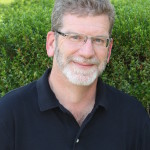
Rick Gross

Plan ahead with health insurance

Under today’s health insurance plans, you may face greater risk of sizable medical costs due to rising costs of health care, increasing deductibles and coverage changes year-to-year. These increasing costs can add up to thousands of dollars in out-of-pocket expenses. Review your insurance coverage to ensure you understand what services or prescriptions are covered, and what medical bills you may be responsible for. It’s worth reviewing how these basic but important policy components may apply to you:

·       Deductible – Your deductible is the amount you’re expected to pay each year for medical services covered by your health insurance plan. You are responsible for all expenses until you meet your deductible.  

·       Out-of-pocket maximum – Once your deductible is met, additional medical expenses will be applied to your out-of-pocket maximum. When you’ve incurred this amount, your insurance will pay all expenses covered by your plan for the rest of the year. Most insurance providers include your deductible in your out-of-pocket maximum. For example, say a person has a $3,000 deductible, a $5,000 limit on out-of-pocket expenses and incurs $10,000 in medical bills. If he or she has a major accident, the person would only incur $5,000, with insurance covering the other $5,000.

·       In-network – In general, medical expenses must be in-network, or part of your insurance company’s system of providers, for the bill to be applied to your deductible or out-of-pocket maximum. If you require out-of-network services, check with your insurance provider to see how the bill will be handled.

·       Co-pay and co-insurance – A co-pay is a set amount you pay each time you receive a service, such as a primary care physician visit or receiving a new prescription. Co-insurance is a set percentage of the expense you pay at the time of service. Co-pays and co-insurance may or may not apply to your deductible and out-of-pocket maximum.

Strategically use savings accounts

A key way to cope with unplanned medical costs is to have money already in the bank, prepared for such an event. Among the options to consider are:

·       Health Savings Accounts (HSAs) – These are tax-advantaged savings plans associated with high deductible health insurance policies. In 2018, individuals can save up to $3,450 ($3,400 in 2017) in an HSA while families can set aside as much as $6,900 ($6,750 in 2017). These are funds that can be used to pay out-of-pocket medical expenses this year or in future years.

·       Flexible Spending Accounts (FSAs) – An FSA allows you to use pre-tax dollars to pay for certain medical expenses. Typically, you must spend these funds within the same calendar year.

·       Savings accounts – If you don’t participate in either type of plan or want to have a larger financial cushion, make sure you have a sufficient emergency fund. Set aside enough funds to cover your out-of-pocket maximum, or three-to-six months’ worth of living expenses, whichever is greater.

Craft a bill-paying strategy

If you incur unexpected medical expenses, first work with your insurance company to understand how each bill is applied to your deductible or out-of-pocket maximum, noting co-pays and co-insurance where appropriate. Before paying each bill, make sure the amount matches the number calculated by your insurance company. In most cases, it’s easier to work through any discrepancies before you pay the bill.

Next, consider using the money you have available in your HSA, FSA or savings accounts dedicated to health care expenses. If you still have a balance remaining on your medical expenses, try to fit the costs into your budget. A medical expense may require you to trim spending in other areas in order to pay for these costs, either immediately or over a period of time.

Consider a health care directive

Lastly, have a conversation with your spouse or another trusted family member about your health care wishes and consider documenting your desires in a heath care directive. Directives allow you to designate one or more people to make health care decisions on your behalf if you’re unable to make them yourself. Your health care providers and attorney can help you get one started.

If you experience a major medical event, the least of your worries should be paying for it. Take time today to develop a strategy for how to cope with unexpected medical expenses.

Rick Gross is a financial advisor and private wealth advisor with Ameriprise Financial Services Inc. in South Lake Tahoe.


Skiers spending fewer days on the slopes

By Kathryn Reed

TRUCKEE – Money isn’t keeping people off the ski slopes. It’s that they have so many more options when it comes to how to spend their time.

That is something ski resort officials are trying to wrap their heads around.

Michael Reitzell, president of the California Ski Industry Association, said that while millennials are now the largest segment of skiers/snowboarders on the slopes, they are not participating as many days as baby boomers do. Baby boomers average 10 days a season on the mountain, while millennials are there half as many.

Nadia Guerriero, vice president and general manager of Northstar, talked about how people are looking for unique experiences. The runs themselves during a normal day are not always enough to keep people’s attention anymore.

Daily Champagne, opportunities for first tracks, special groomed runs — these are some of the ways Northstar is trying to add to the experience.

Reitzell and Guerriero were joined by Dave Rathbun from Sugar Bowl-Royal Gorge, and Casey Blann with Squaw Valley-Alpine Meadows, as the guest speakers at the Truckee Chamber of Commerce breakfast on Nov. 14.

Reitzell threw out the following stats from 2016-17:

·      7 million skier visits in California/Nevada; (In 2015-16 there were 7.3 million and 4.4 million in 2015-16.)

·      42 percent of visits were from season passholders

·      6 unscheduled closed days, which was double from the prior season

·      snowboarding is up from 34.2 percent to 34.7 percent

·      nationally, there were 54.7 skier visits, up 3.7 percent from 2015-16.

People waiting to have children and having fewer of them are contributing factors to a decline in young people learning the sport.

Guerriero said one trend is “the shift toward time being more scarce than money.”

To combat that sentiment, she said Northstar is “encouraging guests to come midweek for an easy, stress free experience.” This way people will have more time to actually ski because it’s less crowded.

Rathbun said Sugar Bowl is doing what it can to make the experience at the resort off Interstate 80 more pleasant this season. Simply adding more snow removal equipment to plow the road and parking lot will go a long way. The 795 inches the resort received last winter at times made it near impossible for skiers to get to the resort, let alone park once they got there.

Sugar Bowl tends to rely on day skiers from the Sacramento area. They aren’t taking public transit even if it were available.

Making the start of their day stress free is one of the ways to improve guest services.

Squaw Valley also recognizes it has a traffic issue, in particular on Highway 89 and then the road leading to the resort. Blann said a pilot program will start this season where a shuttle bus will have an exclusive lane. He said the resort is working with Placer County to improve the traffic quagmire.

Squaw also had a parking issue last season; to the point a snow melting mechanism was leased to get rid of the white stuff in the parking lot, and snow was also trucked out.

An issue that crosses generational lines is that people want to be connected on the slopes.

Sugar Bowl is working with Verizon to put in a transponder at one of the lodges. Reception at Alpine is near non-existent. They, too, are talking to Verizon. AT&T has talked about putting in a tower at Ward Peak. Northstar is in good shape, but is still looking to put in mono poles places.

Squaw and Northstar open Friday, with Sugar Bowl yet to set a date.


Opinion: Life after sexual assault

By Diana Nyad, New York Times

Here I was, a strong-willed young athlete. There he was, a charismatic pillar of the community. But I’m the one who, all these many years later, at the age of 68, no matter how happy and together I may be, continues to deal with the rage and the shame that comes with being silenced.

My particular case mirrors countless others. I was 14. A naïve 14, in 1964. I don’t think I could have given you a definition of intercourse.

My swimming coach was in many ways the father I had always yearned for. I met him when I was 10, and those first four years were marked by a strong mentor-student bond. He repeatedly told me I had all the talents to one day rock the world. I worshiped my coach. His word was The Word. I built a pedestal for him and gazed up at the center of my universe.

I was dead asleep in the master bedroom when it happened. Out of nowhere, he was on top of me.

Read the whole story


Calif. housing costs a barrier to college

By Nanette Asimov, San Francisco Chronicle

The problem with California’s public colleges and universities is not in the quality of their academic offerings — it’s that the schools don’t do enough to help students find affordable places to live, according to a new statewide survey about higher education.

That’s the view of a large majority of Californians — 85 percent — who participated in the Public Policy Institute of California’s annual survey of attitudes on the state’s public higher-education systems.

Most of the 1,703 residents who answered questions in English or Spanish by phone last month said they like the quality of education provided by community colleges, California State University and the University of California — more than 63 percent in each case.

Read the whole story


Health is a casualty of climate-fueled blazes

By Climate Central/Kaiser Health News
 
SANTA ROSA — As the deadliest fires in California history swept through leafy neighborhoods here, Kathleen Sarmento fled her home in the dark, drove to an evacuation center and began setting up a medical triage unit. Patients with burns and other severe injuries were dispatched to hospitals. She set about treating many people whose symptoms resulted from exposure to polluted air and heavy smoke.

“People were coming in with headaches. I had one. My eyes were burning,” said Sarmento, the director of nursing at Santa Rosa Community Health, which provides health care for those who cannot afford it. But respiratory problems – coughs and shortness of breath – were among the biggest risks. “We made sure everyone had a mask.”

More than half of the evacuees at the shelter that October night were elderly, some from nursing homes who needed oxygen 24/7. Sarmento scrambled to find regulators for oxygen tanks that were otherwise useless. It was a chaotic night – but what came to worry her most were the weeks and months ahead.

Read the whole story


South Shore class all about guest relations

Lake Tahoe South Shore Chamber of Commerce is putting on a customer service refresher workshop.

The cost for each Level Up workshop is $10 for chamber members and $20 for others.

The class is Dec. 6 from noon to 1:30pm at the chamber office in Stateline. Bring lunch.

For more info, email brittani@tahoechamber.org.


Letter: Kirkwood security helps at charity

To the community,

To volunteer to help others is a selfless act that is both humbling and uplifting. Thanks to Vail’s generous EpicPromise grant, Kirkwood Mountain Resort employees had the opportunity to volunteer at Bread & Broth’s Nov. 6 Monday meal through B&B’s Adopt A Day of Nourishment program.   

Kirkwood’s department security officers Mark DeSacia, Rick Hofheins and Charlie Noury and David McCullers, security manager, all volunteered their time and effort to make a difference in the lives of those attending the meal served at Grace Hall.

Every Monday, B&B serves full-course, nutritious meals, provides seconds for those interested and packs containers of the dinner’s leftovers to give to anyone who attends each dinner. In addition, funding from the AAD $250 donation is used to purchase fruits, vegetables and dairy products which are packed into ‘giveaway’ bags also filled with canned goods and breads/pastries donated by local stores and businesses. No guest who ever attends a B&B dinner ever goes away hungry or without food to use for later in the week.

The four were a fun group to work with and they did an outstanding job representing their security department and Kirkwood Mountain Resort. 

“Our team feels a great deal of love and support for our Tahoe community,’ commented McCullers.  It is our pleasure to volunteer our time for a place we love so much.” 

B&B would like to thank Kirkwood Mountain Resort and these four sponsor volunteers who so generously served the vulnerable members of our community.

Carol Gerard, Bread & Broth