Casting call in South Lake Tahoe
Tahoe Production House is looking for male and female hosts for instructional videos.
Applicants should be between late 20s and early 40s and Latina/Latino.
This is a paid position.
For more details, click here.
Tahoe Production House is looking for male and female hosts for instructional videos.
Applicants should be between late 20s and early 40s and Latina/Latino.
This is a paid position.
For more details, click here.
By Conor Dougherty, New York Times
Russel Lee and his wife spent the past few years going online to do the depressing math of how much less housing costs pretty much everywhere that isn’t California. They looked at Idaho, Arizona, North Carolina and Kentucky, but Lee, who was born in San Francisco and has lived in the Bay Area his entire life, could never quite make the move. Then the fires came.
In October, as the most destructive wildfire in state history swept through Northern California, Lee’s three-bedroom home in Santa Rosa was consumed by the flames. He lost everything. He used the insurance payment to buy a $150,000 home outside Knoxville, Tennessee, and will soon leave California for good.
For the half-century after World War II, California represented the epitome of middle-class America on the move. As people poured into the state in search of good weather and the lure of single-family homes with backyard orange trees, the state embarked on a vast natural engineering project that redirected northern water southward, creating the modern Southern California and making the state the most populous in the nation.
Those days are long gone.
Placer County has created a committee to provide input into how the lodging taxes collected at Lake Tahoe should be used.
Until now the North Lake Tahoe Resort Association filled that role. But the county wanted a broader voice because not everyone is a member of the NLTRA.
The Capital Projects Advisory Committee will be co-chaired by Placer County and the North Lake Tahoe Resort Association and comprised of 13 members representing the range of community interests in project investments in eastern Placer County.
Members of the new committee will be appointed by their represented organizations. Area business associations, special districts, the NLTRA and Placer County will each appoint two members, and two at-large members will be appointed jointly by Placer County and NLTRA. Three members will represent lodging providers, the Truckee North Tahoe Transportation Management Agency and Placer’s ski resorts. Terms for most members will be two years, with at-large members appointed for an initial three-year term and two-year terms to follow.
The committee will be responsible for recommending priorities for Placer County’s Tourism Master Plan and reviewing and recommending project applications for lodging tax funding to the Board of Supervisors for approval. They’ll also conduct public meetings to review proposed projects and continually seek feedback from the community on investment priorities.
Last year, Placer County collected about $18 million in guest lodging taxes in eastern Placer County.
— Lake Tahoe News staff report
To the community,
For the fifth year, the Lake Tahoe Visitors Authority and South Tahoe Refuse & Recycling teamed up to benefit Christmas Cheer All Year with a “drive and drop” at the LTVA’s California Visitors Center and curbside collection on regular pick-up days.
Once again we were overwhelmed by the generosity of our South Shore community.
Thank you to all the individuals and businesses who participated in making the holidays a little brighter for those in need.
With gratitude,
Anne Sutterfield, Lake Tahoe Visitors Authority
John Tillman, South Tahoe Refuse & Recycling
· Whittell High School’s National Honor Society will be wrapping gifts at the Round Hill Post Office on Dec. 16 from 10am-2pm. Donations will go toward the spring semester service project.
· According to the California Craft Brewers Association, there are now 900 breweries in the state – there were 300 in 2012; 90 percent of residents living within 10 miles of a brewery.
· California Repercussions will be playing at Sierra-at-Tahoe on Saturday, the same day as the snowboard and snowskate demo day.
· Homewood Mountain Resort opened Dec. 15 with limited terrain.
· Lake Tahoe South Shore Chamber of Commerce’s annual Connect for a Cause Charity Mixer will be Jan. 18, 5:30-8:30pm at Riva Grill in South Lake Tahoe. Proceeds from the event raffle will be donated to Bread & Broth. Cost is $20 for members, $30 for others.

Eric Schenck
By Benjy Egel, Sacramento Bee
A Placerville resident and El Dorado High School graduate serving in the Army was killed last week in South Korea.
Sgt. Eric Schenck, 33, was a non-commissioned officer stationed with the 35th Air Defense Artillery Brigade at Suwon Air Base.
On Dec. 7, Schenck was returning from a field training exercise when the Humvee ambulance in which he was riding was rear-ended just before midnight, military publication Stars and Stripes reported.
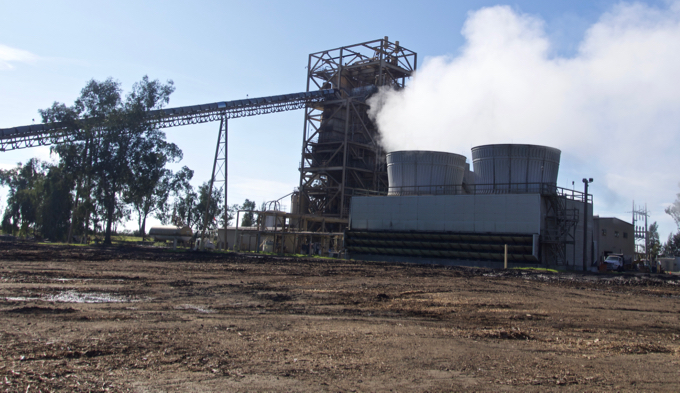
Biomass plants emit steam, with most byproducts able to be repurposed. Photo/Kathryn Reed
Publisher’s note: This is the first of two stories about California’s tree mortality and how biomass is one solution to the problem.
By Susan Wood
As California experiences what may be its worst wildfire year on record, a multi-agency working group has sparked new ways for the state to see the forest through the trees in fire hazard regions.
Since 2010 a record 129 million dead and dying trees on 8.9 million acres have been recorded. The crisis spurred by the cycle of drought stresses the trees – the majority in the Sierra Nevada – making them susceptible to bark beetle infestation.
When agencies like the U.S. Forest Service – which manages about 80 percent of the forest around the Lake Tahoe Basin – have them cut down when they can, the trees are often thrown in slash piles ready for burning. Otherwise, they become a fire risk.
The process of open burning to deal with the huge issue lacks expediency, economic benefits and ecological sense in terms of air pollution. Moreover, the sheer volume of tree mortality is overwhelming.
“Tree mortality at this magnitude takes ongoing cooperation between public, nonprofit and private entities,” said Ken Pimlott, CalFire director and state forester.
California, where declarations of disaster from wildfires have become about as common as our holidays, needs other solutions.
Gov. Jerry Brown two years ago declared a state of emergency as the state faced “the worst epidemic of tree mortality in its modern history.”
The following year, Brown signed Senate Bill 859 into law and in part designated a working group to bring suggestions to the California Resources Agency that would define measures of how to handle the massive tree die-off posing an increasingly greater fire risk and emitting greenhouse gases into the air.
And if there’s a new and improved industry as a result, the better the state of business here, according to advocates. The climate change bill allocating $900 million to reduce carbon emissions goes as far as to direct electricity retailers to enter into contracts with biomass facilities generating energy from wood harvested in these fire hazard areas. Biomass is defined as organic matter used as a fuel source.
The move won applause from the California Biomass Energy Alliance’s Executive Director Julee Malinowski-Ball, who commended Brown for having the vision to see the industry as part of “the state’s renewable energy portfolio standard.”
“How do we treat the forest so it doesn’t become a source of carbon emissions?” said Claire Jahns, assistant secretary of the California Natural Resources Agency – the lead organization in the nine-member working group. “The creation of biomass is a necessary outcome of doing active forest management.”
The Lake Tahoe Basin Management Unit agrees.
“Biomass is one tool that can be utilized to aid in hazardous fuels reduction,” LTBMU Fuels Management Officer Kyle Jacobson said.
Jacobson cited the ability of reducing smoke from burning the piles onsite as one significant reason to opt for the alternative method. Turning that tree debris into energy production is another.
The plan sounds like a win-win for the economy and environment, but it has limitations requiring “mechanical access” to the tree debris location, Jacobson pointed out.
It also commands a word of caution from the Sierra Club of California. The concern is that creating an industry built on tree cutting could lead to an overzealous nature of taking out alive-and-well-timber from the forest.
“At first glance, we assume there’s an endless supply of trees to build an infrastructure from. One thing to be cautious about is not every dying tree needs to be taken out,” Director Kathryn Phillips told Lake Tahoe News. “Snags left at the end of a forest fire have an ecological purpose and should be left alone.”
The Sierra Club worries the hazard zones may be drawn too large to accommodate this blossoming industry that could go on the offensive in seeking materials.
“All said, there are dead trees that have to be taken out. We just want sensible forest management,” Phillips said.
Bob Kingman, assistant executive officer for the Sierra Nevada Conservancy, understands the concern of making business the priority. He is also a member of the state working group. Kingman realizes his Lake Tahoe Basin homeland is inundated with clusters of trees ripe for out-of-control burning as well as other hazards. Kingman worked for years at the California Tahoe Conservancy.
“Yes, it could encourage tree cutting. But right now, our forest does need more tree cutting,” he said. Kingman referenced the Wine Country wildfires of October as a situation that “adds a whole new complexity” to the hazard.
It’s believed that no more than 15 percent of the dead and dying trees is removed as needed.
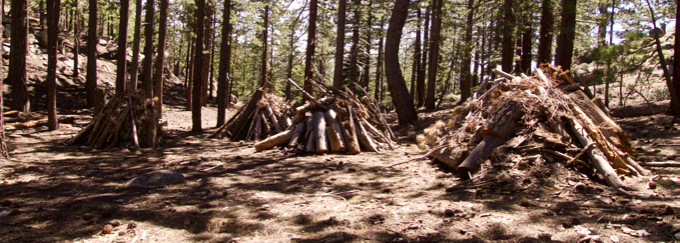
The least expensive way to dispose of wood is often to burn it on site. Photo/Kathryn Reed
A trio of goals in the report
The working group’s report released this fall was created with three aims in mind: Utilize the woody material pulled from high hazard zones identified by the state’s Tree Mortality Task Force; promote forest health and reduce carbon emissions from burning; and spawn rural economic development.
State Sen. Ted Gaines, R-El Dorado, is all over the latter idea, but if anything, would like to see more than $25 million dedicated to the effort and wants a wider area covered.
“I support the idea of a focused effort to better manage our forests and incorporating biomass as a way of doing that,” Gaines told Lake Tahoe News.
But in not necessarily supporting the cumbersome SB859 climate bill, he’s disappointed the allocated funds were directed to more concentrated high hazard zones instead of covering larger areas.
“This is our largest opportunity for management of the most acres,” said the senator who represents Tahoe.
Gaines reflected on the human tragedy by singling out fallen firefighter Michael Hallenbeck, who died two years ago when a tree struck him as he was fighting the Sierra blaze south of Echo Summit.
Turning tragedy into tree removal programs
The state study identifies four pilot programs to turn the tree debris into wood products or biomass.
First, retrofit old mill sites into biomass plants or wood manufacturing facilities.
Second, schedule a mass timber building competition that showcases how to slap together composite panel structures and use fabricated wood products.
Third, initiate a California Conservation Corps workforce training program to manage the transition from mass timber debris to viable wood product.
Fourth, convene a wood products summit featuring state and federal entities, entrepreneurs, community groups and industry partners.
“There is a critical need to bolster our biomass processing capacity and expand uses for wood products not only to handle dead trees in the short term but also to assist with ongoing forest management and restoration,” California Natural Resources Secretary John Laird said.
Even as convincing as the biomass idea is, the potentially burgeoning industry doesn’t come without challenges that go beyond the caution of turning a depleting resource into a state-sanctioned form of commerce.
For starters, the plants at this point are few and far between, as Caltrans program manager Lisa Worthington admits. The state agency must remove hazard trees along its highway system. Arranging for the trees to be taken through contractors to biomass facilities miles away can pose a big expense in transportation costs.
The hope is more plants get on board. Worthington counted 107,608 trees removed since just March 2016, so the need is great. As it stands today, there are about three times as many dormant biomass sites in the state as operational ones.
“The need is enormous,” Worthington said.
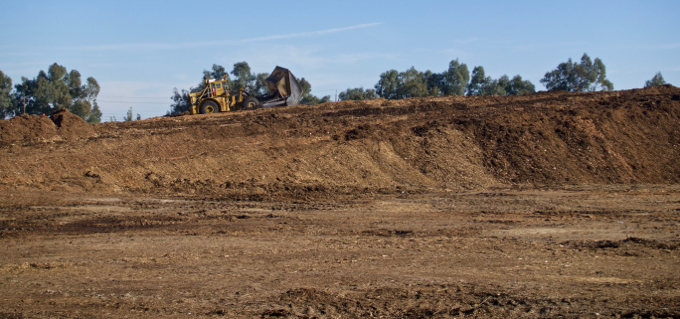
This material is refined wood product that the biomass plant will turn into electricity. Photo/Kathryn Reed
Specifics are on the way
The state resources report set into motion a breakdown of specific committees tasked with handling the goals and pilot programs associated with solutions like retrofitting more biomass plants. One such group will be tasked with removing barriers that hinder a convenient path to redevelop sites – as in the convoluted permitting process.
From there, an information clearinghouse would be formed to provide resources for developers of the wood products manufacturing industry.
Applied research like Humboldt State University’s “Waste to Wisdom” Biomass Research and Development Initiative studying converting forest residue into renewable fuel would be supported by the state.
Plus, the California Wood Innovations Small Grants Program would be created to reward funds to those with enlightening ideas.
Local jurisdictions could seize state grant money to fund a mass timber building competition similar to Oregon’s, where $200,000 was awarded to a developer using cross-laminated timber.
Big timber projects featuring buildings six stories or taller made with pre-engineered wood products have been erected all over. One proposal, called the Splinter, features a building 100 stories high in London. In Chicago, an 80-story structure has been designed. Those following the trends have coined the term “plyscrapers.” In some cases, hybrid buildings made from pre-engineered wood, concrete and steel are thought to be more rigid, according to architects working with the mixed use.
Governments at the state and federal level have been forced to look inward in coming up with solutions to getting rid of its wood debris.
Case in point, the wood on federal lands is prohibited from being exported overseas from the Western United States.
Through a little-known federal rule, U.S. Code 620, the export of federal timber west of the 100th meridian has been banned since 1973. Timber affected by the Forest Resources Conservation and Shortage Relief Act must be deemed a surplus species through a regulatory process involving the U.S. Department of Agriculture to waive the ban. The Forest Service has specifically declined to comment on the matter.
“The USFS does not comment on legislative activity or potential outcomes,” Washington spokeswoman Veronica Hinke told Lake Tahoe News.
U.S. House Republican Tom McClintock of Elk Grove is attempting to circumvent obstacles. The congressman introduced legislation – the Emergency Forest Restoration Act – with the intent of using the state governor’s emergency declaration to expedite the removal of dead and dying trees.
HR865 piggybacks off the Resilient Federal Forests Act, which simplifies environmental regulations and hastens the removal of trees associated with fire-killed timber.
“After 45 years of experience with these laws (under the National Environmental Policy Act), I think we’re entitled to ask: ‘How are the forests doing?’ The answer is damning,” McClintock said in remarks in support of HR2936.
With more than 58 million acres of national forest at high or very high risk of severe wildfires, the crisis demands an all hands on deck approach.
The Tree Mortality Task Force said 860,000 dead trees have been removed – over half by the Forest Service, the agency revealed this week.
To help with the woody-biomass solution, the USFS recently announced $9 million to be awarded to competitive wood products and energy distribution projects. Applications are due by Jan. 22.
Dear Santa,
I know most letters you get are from kids. So let me start by saying there is no toy that I need.
But there is something I want for Christmas—not for myself but for my state.
What does California really need? We’re a relatively rich place with nearly 40 million residents, which you might think would be more than enough people. Except that it’s not.

Joe Mathews
The statistics show that California faces shortages of the kinds of people its future requires: children, skilled workers, farmworkers, construction workers, doctors, teachers, entrepreneurs, engineers, and college graduates. (This is only a partial list. Still, check it twice.)
The fastest way to address these shortages is by attracting more immigrants. While more than one-quarter of Californians are foreign-born, we’ve had so little immigration over the last decade that we face a shortage of new immigrants, too.
And it’s getting harder to attract more. Even though California is nice to immigrants, our federal government naughtily spreads anti-immigrant bigotry, makes it harder for immigrants to enter the country, and deports as many current immigrants as possible.
Which is why I turn to you, St. Nick. With your high-volume delivery system and your ability to slip unnoticed past U.S. Customs and Border Protection, Santa Claus is our last, best hope for getting the immigrants California needs.
Can you send a million? Or 2 million?
I know you read in the papers that politicians blame our country’s economic problems on an excess of immigrants. But that’s fake news.
We actually need many more immigrants. Nationally, the number of job openings is at an all-time record. In California, some employers are so desperate for workers that they are considering moving out of state.
This is the nasty paradox of California’s success: Growth has made it hard for people to stay. The high cost of living has created a consistent out-migration of residents, with 50,000-plus more people leaving California each year than arriving from other states. This domestic out-migration is pronounced among the younger working-class people who should be the backbone of the state’s future.
The result: lack of workers. With immigration’s decline, most California construction firms report shortages of workers, which—in a vicious cycle—causes costly delays that make housing more expensive. The lack of immigrants has decimated the agricultural workforce, which consists primarily of foreign-born workers. And with so much of California’s entrepreneurial culture deriving from immigration (40 percent of L.A. business owners are foreign-born), it’s unsurprising that the state’s rate of business formation has slowed in the last decade.
Long term, the shortage of workers is most worrisome in healthcare; currently, there aren’t enough people to take care of California’s two fastest-growing demographics, the disabled and the old. All California regions except the Bay Area and Sacramento face doctor shortages, particularly in primary care. What looks like a medical shortage is really an immigrant shortage, since more than one-third of our doctors are foreign-born. The same dynamic holds in California’s science and engineering sectors, in which 42 percent of workers are immigrants.
The Public Policy Institute of California has estimated that by 2030 the state will have 1.1 million fewer college graduates than its economic needs will require. The current immigration levels aren’t high enough to make up the difference. “Much larger increases in international migration will be necessary for the supply of highly educated workers to meet the demand,” PPIC concluded.
If not for the immigrants we already have, these shortages would be much worse.
California’s most reliable method for producing more people—having more babies—isn’t working well. The birth rate in the state is now below the replacement rate, and major coastal counties have seen steep declines in their number of children. Attracting more immigrants would help reverse that.
Now, I know that Santa tries not to get involved in politics and policy. And yes, Californians need to invest more in our current residents. But that takes time and money, and the problems I’m talking about are in the here and now. And I’m sure you’ve seen these shortages firsthand. Everywhere I go in California this time of year, you’re there, talking to average people.
And I don’t have to remind you that you’re an immigrant yourself. (St. Nicholas started out as a 4th-century Greek saint in what is now southern Turkey).
Kris, I realize that your pack of gifts is already heavy, and that you don’t want to overtax your renewable fuel source, those eight tiny reindeer. But remember the story of Christmas. If you can find the magic to get the people our state needs on your sleigh, we should be able to make sure that there’s room for them at the Hotel California.
Feliz Navidad,
Joe Mathews
Joe Mathews writes the Connecting California column for Zócalo Public Square.
By Julie Cart, CalMatters
As Gov. Jerry Brown was making his way through Europe this fall, striking an evangelical tone about the global peril represented by climate change, California’s Air Resources Board released good news about emissions reported by companies covered under the state’s cap-and-trade system.
Its report showed greenhouse gas emissions reduced by almost 5 percent in 2016, propelling the state toward meeting its ambitious goals. And for that we can thank Mother Nature.
According to analyses from the air board and independent experts, last year’s emissions drops came about not because of technological breakthroughs or drastic pollution reductions from oil refineries or other industries, nor did the lauded cap-and-trade program make a significant difference.
It was the rain.
Record winter precipitation, especially in the northern part of the state, brought hydroelectric dams back into play and allowed utilities to rely less on gas-fired power. And the air board’s report credits electricity generation for the biggest cuts: Emissions from in-state electricity generation decreased more than 19 percent last year, and emissions from imported electricity dropped nearly 23 percent.
And California’s policy continues to add green power to the grid: Large-scale solar generation increased by 32 percent and wind generation increased by 11 percent.
That trend is in keeping with a report issued last month by the California Public Utilities Commission that found that the state’s major utilities have met or will soon exceed the target of 33 percent clean electric energy by 2020.
On the other hand, emissions from oil refineries, transportation fuels and cement plants increased slightly. In the case of the cement manufacturing, the air board attributed the increase to ramped up production.
The report does not take into account all the state’s greenhouse gas emissions in any given year; only those from entities covered under cap and trade are required to report. Much of the highly polluting transportation sector, for example, is not regulated.
The air board report did not attribute the emissions decrease to any one of the state’s myriad programs intended to reduce energy consumption and industrial pollution. But the world heard a different story from Brown’s during his trip to attend the U.N. Climate Change Conference in Bonn, Germany.
The governor was an enthusiastic salesman of the cap-and-trade program, in which certain industries are required to limit their emissions. If they operate under their caps, the companies may sell any carbon “credits” in an auction or on the private market.
When laying out the California environmental success story to the world last month, Brown most often mentioned cap and trade as the cornerstone of the the state’s policies. At one point, the governor met with Chinese officials in Bonn, and suggested the nation, as the planet’s largest polluter, join California’s carbon trading market, which already includes the Canadian province of Quebec.
The most recent auction results indicate why cap and trade is popular with some legislators, having raised nearly $5 billion since its inception. The end of November’s permit auction achieved record-high sales of $800 million, with every permit sold.
But it is not a prime mover of greenhouse gas reductions, and the air board considers it an adjunct program supporting California’s other policies. Brown, however, has made cap and trade a signature policy, and he’s its fiercest defender.
The governor expended enormous political capital pushing through legislation to extend cap and trade until 2030. At one point during this summer’s debate, he addressed a state Senate committee and told legislators, “This is the most important vote of your life.”
Given the emphasis he’s placed on the program, it seems to under-deliver on real carbon-cutting results. But in an interview with CalMatters, Brown denied he gives cap and trade primacy over other of the state’s carbon-cutting programs.
“That’s not true. I don’t talk only about it,” he said during the interview in Bonn. “I talk about solar, about electric cars. Energy efficiency. You want to say cap and trade is not that important (for greenhouse gas reduction). I know that. I’m Mr. ‘It Ain’t That Much.’ It isn’t that much. Everybody here is hype, hype to the skies.”
Researchers have reached the same conclusion. Analysts at Near Zero, a think tank affiliated with the Carnegie Institution for Science at Stanford University, presented an analysis of state climate policy at an Energy Seminar in October and found that the last economic recession is responsible for about half of observed greenhouse gas reductions since the passage of the law that instituted cap and trade.
This finding is consistent with a Legislative Analyst’s Office report from earlier this year.
For Democratic Assemblywoman Cristina Garcia of Bell Gardens, it’s time to recognize the other programs that are helping the state meet its emission-reduction goals.
“We definitely have a responsibility when we are out here on the world stage and saying to people, learn from us. One is making it clear that we have a portfolio of initiatives,” said Garcia, who was also attending the U.N. conference in Bonn. As example, she cited the state’s requirement to procure power from renewable resources, its clean air policy, and its push to electrify the transportation fleet. “Cap and trade is a piece of it,” she said, “but it’s not all of what we do.”
By Kristen Edwards, KRNV-TV
The Environmental Protection Agency added the Anaconda Mine in Nevada to a list of Superfund sites that require immediate action.
The Anaconda Mine site has groundwater contamination, waste rock areas, and contaminated process areas.
“Getting toxic land sites cleaned up and revitalized is of the utmost importance to the communities across the country that are affected by these sites,” EPA Administrator Scott Pruitt said in a statement.