Eldorado working on over-snow regulations

The Eldorado National Forest is seeking comments on the draft environmental impact statement for  the Over-Snow Vehicle Use Designation Project. 
 
The U.S. Forest Service proposes to designate OSV areas and trails for public use on the National Forest System lands within the Eldorado National Forest.  
 
Comments are due Aug. 6. The DEIS is available for review online.

For additional information, contact Jennifer Marsolais at  jennifermarsolais@fs.fed.us or 530.642.5187.


Road Beat: Honda Fit Sport, a near perfect ride

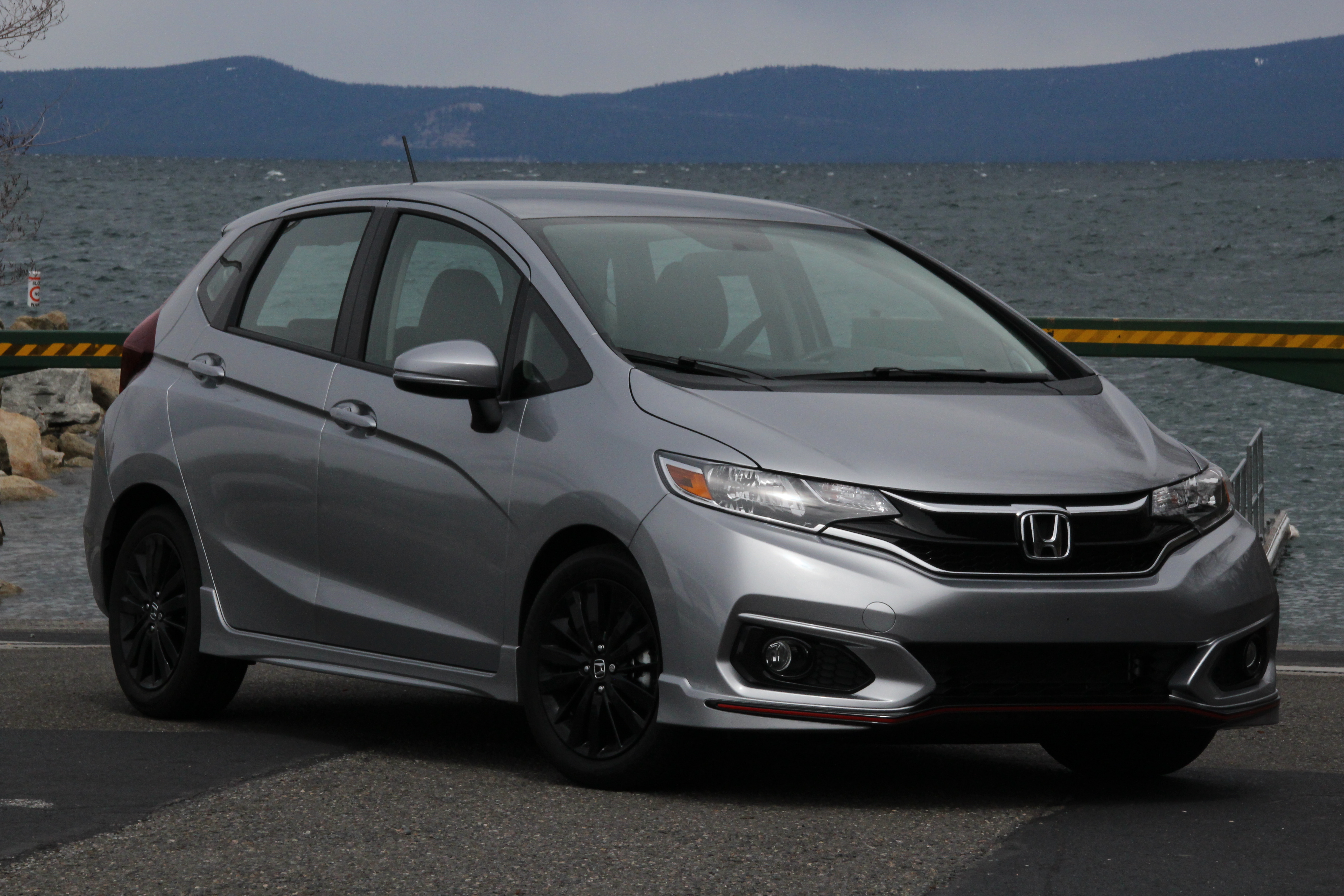
The 2018 Honda Fit Sport is economical and sporty. Photos/Larry Weitzman

By Larry Weitzman

When I first tested the Honda Fit almost 10 years ago, I found it to be a fantastic piece of transportation offering incredible utility in a subcompact size, with great ride and handling plus remarkable fuel economy. It was a perfect example of why hybrids don’t make economic sense as the Fit returned near hybrid fuel economy with better performance. Oh, all at a price well below $20 large

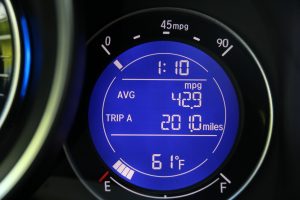
In a conversation with Honda product planners I remarked that a bit more performance would make the Fit a perfect car for so many drivers. Now with the new generation which was introduced in 2014, there is a more performance in an almost identically sized package that still returns hybrid like fuel economy. In a 65-mile trip from South Lake Tahoe to Placerville, the Fit averaged 52 mpg. Overall it returned 43.2 mpg in a 200-mile round trip between Placerville to Carson City.

Since my tester was a six-speed manual transmission, engine speed at 70 mph was a rather high 3,250 rpm and may have hurt highway fuel economy which “only” averaged 42 mpg, which is about 10 percent less than your average hybrid. Incidentally, the EPA fuel economy numbers are 29/36/31 mpg city/highway/combined. My Fit never returned less than 34.5 mpg and that was during my 50 miles of performance testing. If there is a negative, it’s the small 10.6-gallon fuel tank, bigger would be better.

Fit is cute. Its body is sleeker and significantly more interesting than Gen one and two. Its size and dimensions are virtually similar to the previous generations as most every dimension is within an inch or 2 from the prior generations which is a good thing as the trend has been to grow among all classes. Even the Mini Cooper has grown a half a foot or more. Fit Sport’s length is a diminutive 162 inches with a 100-inch wheelbase. Your average compact car is 180-inches long. Width is narrow at 67 inches and it stands five feet tall. Yet total interior volume is 112 cubic feet or that of an average mid-size sedan. How’s that for packaging?

Specifications
Price $18,300
Engine
1.5L DOHC 16 valve inline four 130 hp @ 6,600 rpm
114 lbs.-ft. of torque @ 4,800 rpm
Transmissions
Six-speed manual
CVT automatic
Configuration
Transverse mounted front engine/front wheel drive
Dimensions
Wheelbase 99.6 inches
Length 161.8 inches
Width 67.0 inches
Height 60.0 inches
Track (f/r) 58.1/57.7 inches
Weight 2,553 pounds
Weight distribution (f/r) 62/38 percent
Fuel capacity 10.6 gallons
Passenger volume 95.7 cubic feet
Cargo volume 16.6 cubic feet
Steering lock to lock 2.51 turns
Turning circle 35.07 feet
Wheels 16 x 6.5-inch alloys
Tries 185/55 x 16 H (good for 130 mph continuous for 24 hours) rated all season radials
Performance
0-60 mph 7.90 seconds
50-70 mph 4.92 seconds
50-70 mph uphill 7.92 seconds
Top speed easily into triple digits
Fuel economy 29/36/31 mpg city/highway/combined, but expect much better 37 mpg overall and 42 mpg on the highway at legal speeds.

Under the hood is Honda’s familiar 1.5L DOHC 16 valve inline four-cylinder engine, but now pumping out 130 hp at 6,600 rpm and 114 pounds of twist 4,600 rpm, an increase of 20 percent over the first gen and 10 percent over the second gen, although the engine size is identical. The performance is now quite sporty with a significant improve as the numbers indicate. Zero to 60 now arrives in 7.90 seconds and a sprint from 50-70 mph happens in 4.92 seconds and the same sprint up a 6-7 percent grade only slows that time by three seconds to 7.92 seconds. Gen two times were 9.59, 6.08 and 12.15 seconds, so you can quantify the Fit’s new and really improved performance without any real loss in fuel economy. Kudos to Honda.

While good looking 16-inch alloys are standard in the Sport, the tires are not exactly meaty at 185/55 series rubber, 195 or 205 series would be even more fun. Track is wide at 58 inches and the electric power steering rack is just 2.51 turns lock to lock. Even weight is just 2,553 pounds. Handling is strong with good feedback and tenacious grip. Cornering speeds were remarkably high with a real sports car like feel with crisp turn-in and accurate on and off-center steering.

Honda Fit is a good example of a smooth and quiet small car. The ride is taut but quite compliant as it admirably absorbs bumps.

Safety has all the basic acronyms including ABS, EBD and VSA (stability assist traction control). It also had an excellent rear back-up camera and display. But there is no blind spot detection or lane keep assist. No big deal. Headlights are halogens and are excellent in low and high beam. Front ventilated disc brakes are very strong.

Inside is an upgraded interior with comfortable manual seats, a huge rear seat with monstrous legroom and a lift back cargo bay with over 52 cubes of cargo volume that could hit your wallet hard at a Home Depot or Lowes, making the hit on your wallet at a gas station feel like a McDonald’s value menu.

Instrumentation is complete with a big speedo flanked by a smaller tach (larger would be better as this engine is very quick revving) on the left and ancillary gauges and info/trip computer screen on the right. On top of the center stack is a screen with a detailed fuel economy page that is fun to use with more detailed info and a fuel econ history page. Its standard sound system is easy to use and sounds great.

Now to the best part, the price of admission. My Sport stickers for a “miniscule” $17,500. Add about a grand for a CVT auto cog-swapper. Shipping from its assembly plant in Mexico adds $890. This car is a bargain at a few bucks over $18,000. Why spend thousands more for a hybrid. You get less performance and only slightly better fuel economy without the substantially more utility? This Fit is fantastic.

Larry Weitzman has been into cars since he was 5 years old. At 8 he could recite from memory the hp of every car made in the U.S. He has put in thousands of laps on racetracks all over the Western United States.


South Shore fireworks barge catches fire

The South Shore fireworks barge on fire July 5. Photo/TDFPD

Hours after the last firework was shot off July 4 on the South Shore, one of three barges caught fire.

The fire was reported at 12:27am July 5. The fireworks started at 9:45pm July 4 and were over less than 30 minutes later.

The crew on board was unable to extinguish the blaze. Tahoe Douglas firefighters responded with their fire boat and were able to suppress the flames in six minutes.

A boom was placed around the barge to keep any contaminants from floating into other areas of the lake. The barges are positioned just off Edgewood Tahoe in Stateline.

Along with Tahoe Douglas, the U.S. Coast Guard and Nevada Department of Wildlife will be involved in the investigation.

The extent of damage to the barge or things on it has not been reported. There were no injuries

— Lake Tahoe News staff report


Tahoe Tennis Classic no ordinary tournament

Winning is the obvious goal, but for those who don’t make it to the finals on tournament Sunday the Tahoe Tennis Classic really is a four-day party.

The deadline to sign up for the South Shore event is July 22. There are 16 divisions for the July 26-29 tennis tournament at Zephyr Cove Tennis Club. While this is an all-doubles tournament, the various events make it so all levels can compete.

More than 200 players are expected to descend about the region, with a regular contingent coming from Texas.

One thing that makes this tournament different from so many others is that every player is guaranteed two matches. The entry fee also includes a dinner that Friday night at MontBleu in Stateline, a T-shirt, hat and a cocktail party on Thursday at Casey’s in Round Hill.

The tournament, now in its 35th year, is the main fundraiser for the Zephyr Cove Tennis Club Foundation. At the dinner there are mystery bags, a raffle and silent auction to help raise funds that are used for court upkeep and programs. The foundation is responsible for everything tennis related at the Douglas County-owned park.

Cost is $80 for the first event, $40 for second. More information, as well as the registration form, is available on ZCTC’s website.


Classical musician returns to her mountain roots

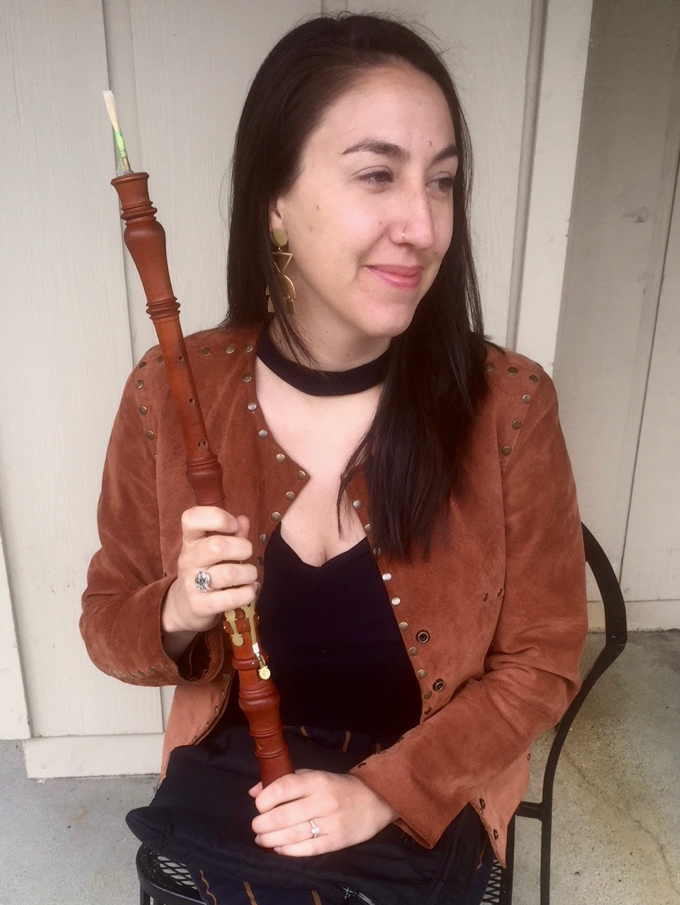
Musician Lindsay McIntosh comes full circle as her career brings her back to the Sierra. Photo/Susan Wood

By Susan Wood

INCLINE VILLAGE – “If I can make it there, I’ll make it anywhere” from “New York, New York” could have been classical musician Lindsay McIntosh’s theme.

Catapulted from her humble beginnings in the Truckee High School band, McIntosh did make it in the Big Apple as the song implies — and then some.

At a mere age 34, the Julliard-trained oboist takes a lifetime of achievement to return home with her craft. Now as deputy director of Classical Tahoe, she’s instrumental at staging the world-renowned summer music festival and institute to celebrate the arts for three weeks starting July 8 at Sierra Nevada College. 

Big endeavor? Yes. But from her early days playing in the Truckee High School band onto a full scholarship at the world’s premier music school, she’s never shied away from a challenge, hard work and the dream to make and curate classical music.

Case in point – delving into her professional life may result in being handed three or more business cards.

Five years ago, McIntosh hit the fast track. She used her second year at Julliard to enhance her desire to lead and create musical events by founding New Vintage Baroque, an ensemble dedicated to historical instruments used to perform a 21st century repertoire.

She produced 25 programs, took in more than $100,000 in fundraising, established a board of directors, commissioned 17 world premiere performances, collaborated on three opera productions, recorded an album of original works on the VIA label and played in 75 performances in New York, Connecticut, California and the Netherlands.
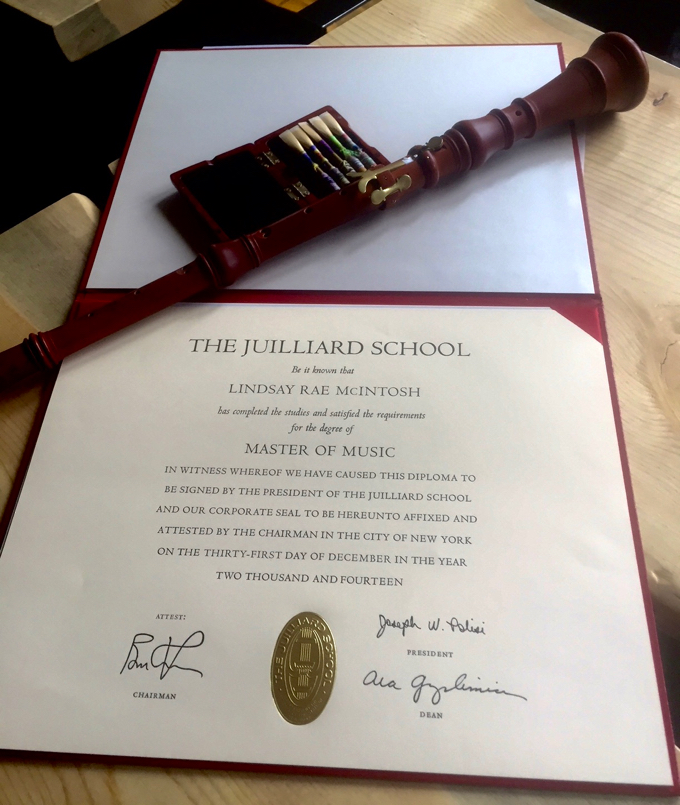
From Truckee High Lindsay McIntosh went on to Julliard. Photo/Susan Wood

Four years later, the oboist took her decade of expertise to launch Coburn Music – which staged pop-up concerts in Truckee. It’s SXSW in Austin meets the Sierra Nevada.

Her heavy involvement in the music world has given her a lot of insight, many contacts and much joy.

“My whole experience is rooted in hard work,” McIntosh told Lake Tahoe News over coffee at her hangout blocks from her new home – the I.V. Coffee Lab.

The sense of accomplishment leads to her happiness.

“When I’m sitting there with an orchestra, I’m being a part of something bigger than myself. I can’t create that without playing,” she said.

She recalled growing up trying out different woodwind instruments but wondered which one “would get me a job.” She was destined to play the oboe because, if anything, it required more than practice to perfect it. Oboists make their own reeds, adjusting their shapes to accommodate certain sounds.
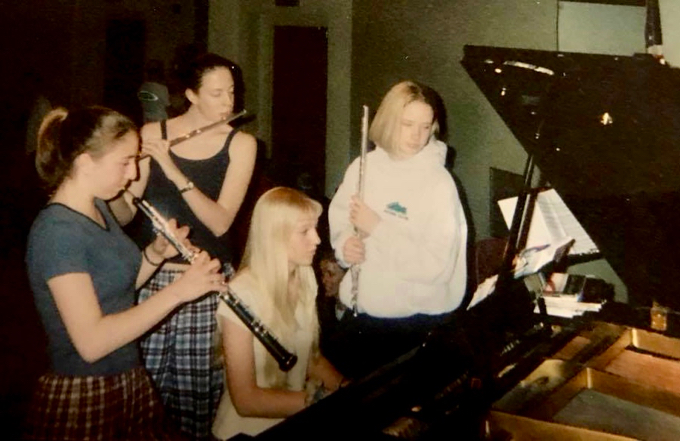
Lindsay McIntosh in 2000 during a band-a-thon in Truckee. Photo/Provided

“There’s a lot of back pressure in oboes. You can either play it or you can’t,” she said, displaying a few she’s constructed from a special cane produced in France. “You either sound like an angel from heaven or a squawking duck.”

This was her assessment as she advanced from high school to an undergraduate program in Turlock to Boston University to Julliard.

So why return to a sleepy, small mountain town versus the lights of the city “that never sleeps?”

For all her accomplishments, McIntosh has a humble side – crediting her operatic husband, mother, high school bandleader, best friend and fellow musician as well as the Truckee community for helping her make her mark on the music world.

Julliard teaches more than how to be the best musician. A student takes classes in how to be a whole person, immersed in one’s industry. There’s even a class on how to behave during receptions. 

“I never thought I’d leave New York. I was there for six years, but (the music scene) is oversaturated,” she said. “I was connected to the music world in New York, but I wanted to give back.”

It’s almost like she knew all along she’d eventually come home to her roots. With creating the weeklong Coburn Music festival on a trip home last summer, her transcontinental outreach prompted her to bring home a handful of accomplished musicians in their own right to play at various Truckee venues. The experience put her in touch with Classical Tahoe Executive Director Karen Craig. Both admired each other’s work from across the country.

When a job opening at Classical Tahoe came open on the day McIntosh was meeting with Craig’s associate in New York, it was nothing short of serendipity.

Today, McIntosh couldn’t imagine her professional life anywhere other than Classical Tahoe – where plans for making it a year-round venue are floating around.

“We went after each other. The bottom line is, either timing is everything or the stars were in line,” Craig said of landing McIntosh. The oboist describes the experience the same way.

“What intrigued me the most is she was raised here. She’s a total go-getter who earned a scholarship from the top music school,” she said.

Lindsay McIntosh at a Boston University recital. Photo/Provided

Craig added McIntosh’s notable charisma, gifted talent and intrepid characteristics that have helped her seize “uncharted waters.”

It’s a long way from those early days in Truckee when McIntosh labored over music theory and stayed after school to practice her scales with bandleader David Green, who’s now retired after 24 years.

“She’s dedicated to what she does and gives it 110 percent,” Green said of McIntosh. The teacher didn’t know she would be so successful because she “had trouble with her rhythms,” but “she worked really hard.”

Her best friend and fellow musician in high school, Brandon Dolph, noticed the same traits. The two musicians never dated when they were young (he dated her best friend), but they were always there for each other. (McIntosh was a bridesmaid at Dolph’s wedding.)

“Lindsay struggled. I helped her with her theory. This doesn’t come naturally to some kids,” said the trumpeter, who runs a Reno music shop. “She had to work harder. Because of that, she developed a work ethic that’s tenacious.”

One day, it all clicked. Then, McIntosh accelerated and “reached a level we can only dream of,” he added. “I’m super happy she’s home.”

He intends to attend McIntosh’s labor of love.

Classical Tahoe’s summer music festival features 350 terraced seats with a diverse lineup of iconic experiences honoring legendary composers like Beethoven and Mozart and performed by musicians from the Metropolitan Opera Orchestra and San Francisco Symphony to the Seattle Symphony and Los Angeles Philharmonic.

As majestic as the music sounds in idyllic natural surroundings, Craig portrays the setting as intimate – quite a departure from the usual symphonic metro venues seating thousands of people.

Opinion: New threats to El Dorado County

By Larry Weitzman

Sinister forces are attempting to “take over” El Dorado County. County government is the county’s largest employer and county employees on average are some of the highest paid employees in the county with a total payroll of $177 million and total employees of 2,151 for 2016, the last year reported by state auditors.

That employee number is inflated by new hires, retirees and part-timers making the average salary for total FTEs (full time employees of which there about 1,850) approaching $96,000 annually. Our county government is the largest employer in the county and one of the best paying employers as well. Dozens of county employees earn over $200,000 annually and hundreds earn over $100,000 a year. With the power to hire and fire department heads and the CAO, being a member of the EDC Board of Supervisors is a very powerful job.

Larry Weitzman

At the June 26 Board of Supervisors meeting, items were considered to change EDC’s Charter to do several things, two of which are extremely important. The first being removing term limits for members of the Board of Supervisors and in the alternative, allowing a member of the Board of Supervisors three consecutive terms or 12 straight years of power. Currently EDC has a term limit of two terms or eight years for political offices, similar to the president of the United States and for most of the political offices the state of California.

The other significant change to the El Dorado County Charter strikes right at the heart of the Charter (and its voters) and that is to make the current elected department heads appointed instead of elected by the citizens of the county. That would be a massive usurpation of power from the people to the Board of Supervisors.  One of the main reasons for EDC becoming a charter county is for the election of certain department heads beyond general law counties which only allow for the election of the sheriff, district attorney and (tax) assessor. While there are only 14 of 58 counties in California have their own charter (ours was voted in by the people in 1994), about 75 percent of the state’s population live in those 14 charter counties.

In El Dorado County, the charter provides that the tax collector/treasurer, the auditor/controller, the county recorder/clerk and the county surveyor are elected in addition to the sheriff, DA and the assessor. The purpose is to give the voters the power to hire and fire those elected department heads and to keep them independent from the Board of Supervisors. It is for the same reason we use independent auditors for public corporations. Auditors should never be owned by the folks they are auditing. The reasons are obvious and as to a public entity, EDC would certainly qualify as one, although some people in the county think our government is closed off to them.

As part of the board meeting the board will take up the issue of making these currently elected department heads appointed by the board. What a power grab that would be by the board from the voters in a two-prong attack, the first being to lengthen their terms to indefinite or at least 12 years and the second would be the power to appoint what are currently independently voter elected department heads, department heads that currently give voters a certain balance of power.

In describing a “benefit” of the idea of appointed department heads was a quote from page 19 of the “Summary Report to the Board of Supervisors” as follows “appointed positions require a rigorous process of recruiting and vetting applicants to ensure that the best possible appointment is made, whereas elected officials only need meet minimum education and/or certification qualifications.”

This should be correctly called the “spoils system” a term derived from what New York Sen. William Marcy said of Andrew Jackson’s 1828 election when he said, “To the victor go the spoils.” Marcy (actually said “to the victor belong the spoils”) was referring to the benefits and fruits of winning an election or military battle. The spoils system was the appointment power, i.e. judges and the bureaucracy (department heads in EDC’s case). Federal and state system appointments many times comes down to appointing of your friends and campaign donors, certainly people who agree with you. Rigorous vetting and qualifications? Yeah, sure.

Enlarging this spoils system for the appointment of our county auditor or treasurer (who makes the investment of county funds) would be a terrible decision. Those are positions that need to be picked by the ultimate arbiter, the citizens.

Both these potential charter changes would be disastrous and expensive for El Dorado County. The selection process would not be rigorous but would be part of an expanded spoils system. The auditor/controller is the county watchdog, the only individual that could be considered an independent “inspector general” of sorts. It is the one office that must always remain independent from the Board of Supervisors (and the bureaucracy) and never be beholden to the board.     

Now for the latest news. As this column was written before the Board voted on these proposals of disenfranchising the voters, the Board of Supervisors has voted 5-0 in an attempt to grow their power, to place both proposals on the ballot (which is the only way to amend the county Charter), asking voters to: 1. allow the members of the board to have three consecutive terms thereby reducing the effectiveness of terms limits and 2. Remove from the voter’s ability to elect the offices of auditor/controller, tax collector/treasurer, surveyor and the reorder/clerk. It will be a definitely blow to our already limited democracy and cause a huge expansion of the bureaucracy and cost taxpayers hundreds of thousands of dollars in higher salaries. Supervisors Mike Ranalli and Sue Novasel, who are up for re-election this November, both voted to increase their power and fiefdoms with their vote for placing these matters on the ballot. Remember this dastardly deed on both of them when voting next November. As Lord Acton said, “Power corrupts and absolutely power corrupts absolutely.” This quote now applies to every member of the EDC Board of Supervisors.

Larry Weitzman is a resident of Rescue.


Recreation redefining value of Western public lands

By Kate Schimel and Brooke Warren, High Country News

Once, the West’s public lands were valued primarily for the timber, minerals and fossil fuels they held, which were extracted and then sold around the world.

In the 1970s, more than two dozen Western counties relied on timber for at least a fifth of their revenue, while energy companies expanded onto public lands for coal and natural gas. Small communities swelled with loggers and miners and the businesses that supported them, providing an economy that helped preserve the West’s rural feel.

Today, though, natural resource economies are waning, and many of those towns are struggling. Public lands are increasingly used for fun and leisure, and the West has joined the Northeast as the two most urbanized regions in the country, according to U.S. Census data analyzed by Headwaters Economics.

Read the whole story


Calif. gas taxes: Where does your money actually go?

By Erin Baldassari, Bay Area News Group

With a measure to repeal California’s recently enacted gas taxes and registration fees heading to the November ballot, many drivers want to know, just where does all that money actually go?

“It’s extremely complicated,” said Asha Agrawal, the director of the National Transportation Finance Center at San Jose’s Mineta Transportation Institute.

It’s also a big campaign issue, with tax opponents arguing that politicians can’t be trusted to spend these new dollars on the road and rail improvements they’re promising.

Read the whole story


Snippets about Lake Tahoe

·       Tahoe Institute of Natural Science on July 15 is participating in the North American Butterfly Association’s Butterfly Count. For more information, contact Will at will@tinsweb.org or 775.298.0067.

·      Nevada Highway Patrol officers are working overtime now through July 13 to enforce speed limit laws.

·      Lake Tahoe Community College accounting/business instructor Jon Kingsbury, world languages instructor Catalina Goralski, and biological sciences instructor Sue Kloss are all being honored for their work in the classroom and their dedication to students. Kingsbury was chosen by his colleagues as the distinguished faculty award winner. Goralski was selected as distinguished adjunct instructor of the year. Kloss was selected by LTCC’s students for teacher of the year.

·      The Tahoe Daily Tribune is reducing its publication schedule to only on Fridays.


Rangers to lead hike at Sand Harbor Overlook

Park ranger will lead a guided hike to the famous Sand Harbor Overlook on the Tahoe Rim Trail on July 14.

The hike is a four-mile loop and offers breathtaking views of Sand Harbor. The hike is moderately difficult.

Bring water, lunch, sunscreen and sturdy hiking boots.

Meet at Spooner Lake State Park parking lot at 9:30am. Rangers will drive participants to the Marlette Peak Campground to start the hike. Expect to finish about 4pm.

Reservations are required and space is limited to 12. Sign up by calling 775.749.5980 or emailing spooner.ranger@gmail.com.