S. Lake Tahoe warm room to open Dec. 24

The Tahoe Coalition for the Homeless will open the warm room on Christmas Eve at 7pm at the Lake Tahoe Community Presbyterian Church in South Lake Tahoe.

The Presbyterian Church is partnering with the Tahoe Coalition for the Homeless to provide a safe and warm place for homeless individuals Christmas week.

From Jan. 1-April 1, the warm room is expected to operate at was Unity Church. That property is owned by the city of South Lake Tahoe. The lease is still being negotiated.


Opinion: IVGID explains unbuildable lot issue

By Jason Guinasso

In 2009, Incline Village General Improvement District’s board of trustees adopted a Policy 16.1.1 entitled Recreation Roll which discussed unbuildable parcels and the process for how these parcels come back onto the Recreation Roll.

In 2012, Incline Village General Improvement District was approached by the Washoe County treasurer to see if they were interested in acquiring approximately 87 unbuildable parcels and do so under NRS 361.603. The Incline Village General Improvement District responded yes they were interested and the process was completed. It should be noted that the part of the process included going before both the Washoe County Commissioners and the Incline Village General Improvement District board of trustees; both bodies approved the transaction.

Between 2014 and 2015, three unbuildable parcels were sold to private parties in accordance with Policy 16.1.1 specifically paragraph 5. which reads as follows:

“An unbuildable parcel that has been removed from the Recreation Roll by petition can be restored to the Recreation Roll, and thereby have recreation privileges restored by first paying the total amount of recreation and, if applicable beach fees that had been levied since the parcel was taken off the Recreation Roll, plus any fees or penalties permitted by the state of Nevada as defined in Nevada Revised Statute (NRS) 99.040(1).”

Using one parcel as an example at the time of acquisition (2012), the amounts owed was $11,059.42, of which $10,148 was due to the Incline Village General Improvement District in past due recreation fees and $911.42 was due to Washoe County in past due property taxes. Washoe County waived its claim for the past due property taxes as defined in Nevada Revised Statutes 361.603 and did so at a public meeting which was unanimously passed.

When the sale was finalized, the Incline Village General Improvement District followed its policy and the sale price totaled all of the back Recreation Roll fees owed on the parcel up to the date of sale. While the ownership of the parcel changed, the identification of the parcel did not and has not up to today. The parcel remains unbuildable and the good news is that the parcel is now collecting the full Recreation Roll fees and Washoe County is collecting property taxes it assesses.

Incline Village General Improvement District completely halted the sales of these parcels following these three sales in order to reflect on the process and contemplate an updated policy. It is anticipated that an updated policy will become a part of the Incline Village General Improvement District code which is forecasted to be presented to the Incline Village General Improvement District board of trustees in February 2018.

IVGID has not violated any law or acted in any way to harm the public. The Bitterbrush properties were legally acquired. Thereafter, three of the Bitterbrush properties acquired were sold. The Washoe County assessor label of unbuildable associated with the Bitterbrush properties will remain preserved in perpetuity because the properties in question are unbuildable and have no other value other than the recreation and beach privileges associated with them. In addition to the stated public purpose being preserved, IVGID continues to have the ability to serve the important public purpose of recovering delinquent fees and reinstating these properties onto the Recreation Roll. It has been three years since the last property was sold because IVGID has placed a moratorium on the sale of the properties until a process and procedure for sales is adopted by the goard. Accordingly, IVGID will not sell any of the Bitterbrush properties until an updated policy can be prepared, considered, and approved, in an open publicly noticed meeting, by the IVGID board of trustees.

While it is unfortunate that all the forgoing factual information has not been considered by some of IVGID’s public and was not otherwise included in the media reports, IVGID maintains its commitment to transparency in government. IVGID welcomes any and all questions from the public which can be sent to IVGID at info@ivgid.org or directly to your IVGID district General Manager Steve Pinkerton at sjp@ivgid.org.

Jason Guinasso is IVGID’s general counsel.


Wildfire recovery legislation aims to protect Californians

By Michael Livingston, Los Angeles Times
 
As one of California’s largest wildfires in modern history stretches into its third week, state Sen. Ricardo Lara, D-Bell Gardens, has introduced legislation to protect residents from canceled insurance policies.

Lara announced the Wildfire Safety and Recovery Act on Wednesday morning. The senator said he hopes that, after going through the legislative process, his proposal could become law by 2019.

The act would require companies to offer mitigation discounts to homeowners who invested in fire-resistant materials and seek approval from the Department of Insurance before reducing policies in high-risk areas.

Read the whole story


Resolution of Bijou commercial property still elusive

The legal proceedings involving Patty Olson’s ability to retain ownership of the commercial strip of land at the Bijou Center in South Lake Tahoe continues to weave an indirect path to resolution.

Olson has retained another attorney in the case; now Craig Demetras of Reno is representing her.

A judge has postponed the status conference on the pending appeal on the bankruptcy decision to Jan. 23.

The judge is allowing Cody Bass’ attorney to conduct discovery and depose Olson in regards to the case in El Dorado County Superior Court. Bass is a tenant of Olson’s; he operates the Tahoe Well Cooperative. They are battling over his lease agreement, which is also an issue with the city of South Lake Tahoe.

Also part of the legal proceedings is U.S. Bank.

— Lake Tahoe News staff report


Squaw Valley Park to be open in winter

Squaw Valley Park in Olympic Valley will remain open this winter to offer a free snow play option.

The park’s parking area will be plowed all winter, creating a free and convenient place to park and play.

For the backcountry enthusiast, the park offers access to a spur trail that leads up a steep ascent to the Western States Trail, providing backcountry skiing and snowshoeing opportunities.

The Squaw Valley Trailhead is also located at Squaw Valley Park, connecting the park to the Village at Squaw Valley with a nearly 3-mile stretch of paved, multi-use trail.

A partnership with Squaw Valley Public Service District will ensure the paved trail will be plowed.

Squaw Valley Park, located at the intersection of Highway 89 and Squaw Valley Road, is just across the road from the Olympic torches.

Keeping the park open during the winter season is in response to feedback provided through the Placer County Park and Trail Master Plan surveys and focus groups.


Money Matters: Retirement savings strategy for each decade

By Rick Gross

Whether you can still count the days since you started your first job or you are nearing the end of your career, saving for retirement should be a top financial priority. You have the potential to spend decades in retirement, so it’s worth committing to saving today. Here are some fundamental strategies to think about at different ages as you seek to maximize your retirement savings:

In your 20s – get started

Rick Gross

You are in the early years of your working life, likely facing tradeoffs as you decide how to allocate your salary. You want to prioritize key financial goals such as buying a new home or paying off student loans, while also maintaining a healthy sum to enjoy life today and tomorrow. Although retirement seems a long way off, time is truly on your side if you begin saving for it now.

The earlier you can begin setting money aside for retirement, the more growth you can potentially achieve. An individual saving $200 per month from age 25 to age 65, earning an average return of 7 percent per year, would accumulate $512,663 in that time. By waiting until age 35 to begin a comparable savings plan, your savings would build to only $242,575. The sooner you start saving even a modest amount, the more likely you are to have enough money to last what could be decades in retirement.

In your 30s – keep up the momentum

You are still in the early stages of saving for retirement but it’s important to stay committed to it. If you haven’t started yet, don’t delay. Many people in this age group see their income increase due to experience or promotions, which can make it easier to allocate more to retirement. However, you could be presented with new competing goals like starting a family or saving for a child’s education.

Therefore, do what you can to stay on track with your retirement plan. Take full advantage of your workplace retirement plan, at least to the extent that you can earn a matching contribution from your employer. Many employers offer to match the equivalent of 3 percent or more of your income if you defer a comparable amount into a retirement plan. If you can, consider setting aside 10 percent or more of your income toward retirement.

In your 40s – maximize and diversify

At this stage in life, you hopefully have a solid retirement foundation and are starting to see glimpses of how you might like to spend your retirement. If you have any thoughts about trying to retire early (say, in your late 50s or early 60s), a commitment to significant retirement saving at this point is critical.

Take the time to assess your retirement savings, to ensure they are on track and well-diversified. Along with pre-tax contributions to your workplace savings plan, consider saving after-tax dollars in a tax-advantaged way. Investing in a Roth IRA or, if available, a Roth 401(k) or similar employer’s plan allows you to build savings that may qualify for tax-free withdrawals in retirement. This can provide you with important flexibility later in life as you begin to draw income from your savings.

In your 50s – align your saving with your goals

At this point, your children may be moving out of the house and income is reaching its peak, potentially allowing for more dollars to allocate to your retirement fund. Savings may be balanced with caring for an aging parent, or working to pay off your mortgage.

Now is the time to make your retirement dreams more specific. How do you want to spend your retirement days? Honestly answer that question, discuss with your spouse or significant other, and compare the cost of your planned activities with your savings. If there’s a gap, calculate how much more you need. Once you reach age 50, you can take advantage of “catch-up” contribution rules. This allows you to invest an extra $1,000 per year in an IRA (up to $6,500 under current rules) and another $6,000 in a workplace savings plan (up to $24,000).

In your 60s and beyond – prepare to reach your goals

As long as you continue to work, you can still set aside money in retirement plans. Even if you’ve met your savings goal, you can continue to benefit from the tax advantages of workplace savings plans and IRAs. More important is to begin to adjust your portfolio mix. Your investment time horizon is beginning to narrow, and you want to protect your nest egg from potential market volatility.

Another consideration at this stage in life is deciding how to draw down your assets. For example, you may decide to use a portion of your savings to meet the initial years of expenses, while continuing to invest for your later years. A key part of this strategy is determining when to take Social Security. If you are still working, waiting as long as you can to first claim Social Security may be wise, as it will allow you to earn the highest monthly benefit.

Retirement saving is personal

Remember, there’s no one-size-fits-all strategy for retirement. The information provided here offers general guidelines for retirement savers at various ages. Your specific circumstances and spending needs will determine how much you have to save, and how much you’ll need to save for the retirement you want. No matter your age, consider discussing your goals and needs with a financial advisor who can help you develop a personalized retirement savings strategy.

Rick Gross is a financial advisor and private wealth advisor with Ameriprise Financial Services Inc. in South Lake Tahoe.


Truckee going from 2 to 5 grocery stores

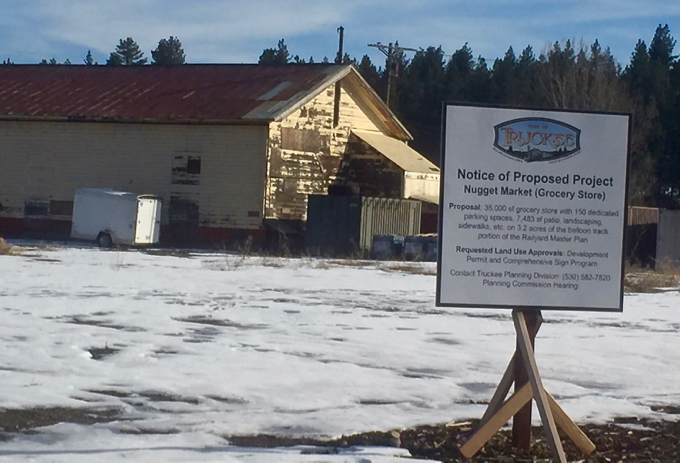
The Nugget grocery store plan received land-use approval from Truckee Planning Commission this week. Photo/Susan Wood

By Susan Wood

TRUCKEE – The number of grocery stores in Truckee is going to mushroom in the near future.

Plans are under way for the town to add three stores to the existing Safeway on Donner Pass Road and Save Mart on Deerfield Drive. From land use and landscaping to architecture and traffic, Truckee is chipping away at the planning intricacies involved with the additions.

In the coming months, the Truckee Planning Commission will bring proposals for a Raley’s to the airport area, a grocer like Whole Foods or Grocery Outlet across from Safeway, and a Nugget Market to the massive downtown Railyard Master Plan that has been in the works for decades.

The Planning Commission this week approved the development permit with revised and added conditions to construct the 34,483-square-foot Nugget Market on a 3.2-acre site where the railyard is located next to downtown. Union Pacific owns the property.

Part of the land use proposal calls for 149 parking spaces built by the Nugget and a 7,500-square-foot plaza to be maintained by the store. The plaza is intended to serve as a gathering place, a growing trend in the supermarket world.

Supplementary improvements include additional pay-to-park spaces agreed to by Truckee Development Associates as well as landscaping, sidewalk and street improvements. The project will even change Donner Pass Road in that area to a new street – Truckee Way.

Phase 1, located on the western side of the Railyard Master Plan, has already been approved.

“This is a big task to do for something requiring a lot of infrastructure to happen to get the project rolling,” town planner Denyelle Nishimori told commissioners Tuesday night.

Phase 2 of the project also lists an extension of Church Street. Concerns, issues, revisions and added changes were discussed Dec. 19, including road access, utilities, the store loading dock, snow on the store roof, parking – including 30 spots agreed to for bicycles — and affordable housing. To mitigate the proposal, 10 housing units are required. Much dialogue centered on architecture and landscaping.  

During public comment, many speakers expressed favorable opinions about the project, especially since it runs adjacent to old town. The notion that store customers would venture into the smaller shops downtown was a given.

More on the grocery store project is expected to come before the commission in February.

“Staff focused on a handful of issues relative to the overall project,” planner Kirk Skierski told Lake Tahoe News.

And more work needs to be done, as the conversation about grocery stores doesn’t end with the Nugget.
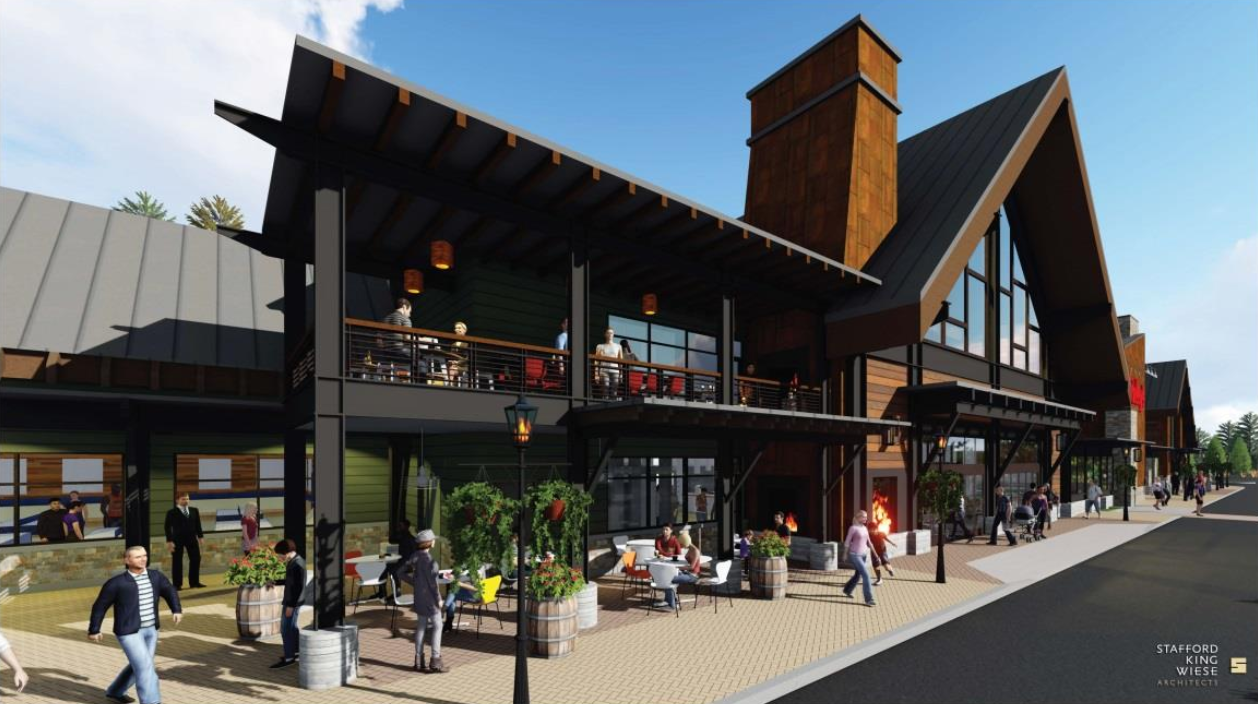
This is what the Raley’s Truckee could look like. Rendering/Stafford-King-Wiese

From railroad to Raley’s

Plans have also been in the works for years for a 40,000-square-foot Raley’s to be built on a 5.5-acre parcel off Highway 267 at Soaring Way and Joerger Drive near Truckee Airport. JMA Ventures, which owns Homewood Mountain Resort, owns the land.

The Joerger Ranch plan also calls for 19,000 total square feet of retail space and 224 parking spaces on the vacant lot. With more traffic expected, infrastructure improvements will involve a widening of the highway at that intersection, along with multi-use, paved trails, sidewalks and landscaping. 

As part of its real estate strategy, Raley’s seeks expansion in regions it’s a little familiar with. For example, two exist in South Lake Tahoe on opposite ends of the South Shore. Now it hopes to hit Truckee north off Interstate 80, after having given the Sacramento region a large presence.

“There’s a lot of excitement around that,” corporate spokeswoman Chelsea Minor said, adding the store is ready to go once all land-use permits are finalized. This project is estimated to go before the Planning Commission in January.

“The growth on the parcel of land makes it exciting,” Minor told Lake Tahoe News.

The Raley’s executive believes there’s enough of a market in different sections of town to support a city of 16,000-plus permanent residents. It swells to more than 40,000 on ski holiday weekends.

“All of us are being realistic and thoughtful in designing the stores,” she said.

Minor agreed that the latest supermarket trends involve making them a gathering place. Each time her company remodels or builds a supermarket, seating is a usual component along with other amenities. A bar was just put in to the new Santa Clara store. Truckee’s may bring a mezzanine-level with seating for small gatherings.

“You may get your book club meeting there,” she said. 

Truckee’s Raley’s-anchored proposal spelled music to the ears of Kings Beach resident Shari Wade. For her, it’s all about location, location, location.

“That’s a good location near the airport for working people,” Wade told LTN, while recently shopping at Save Mart. She works in an office building near the airport and admitted to avoiding Safeway in her hometown and work town based on “the lines being so long.”

At the outset, Wade believes five grocery stores “seems like a bit much” but takes solace in the fact that they’re spread out.

Another Save Mart shopper agreed to a certain degree.

“Truckee could probably sustain one more,” Peter Henry of Tahoe City said. “Yes, Safeway and Save Mart are busy – especially on Friday. They’re jam-packed. But Sunday’s a ghost town.”

Henry looked a little further to perhaps Truckee needing more stores to support more residential development with the upcoming Martis Creek project.

Even Placer County Supervisor Jennifer Montgomery welcomed the new additions, as she shops outside her jurisdiction in Truckee.

“People like me are looking for new choices. Safeway is crazy on the ski weekends. I try not to shop there at all then,” Montgomery told Lake Tahoe News. “I’m not sure if we need three, but definitely there’s a need for more.”
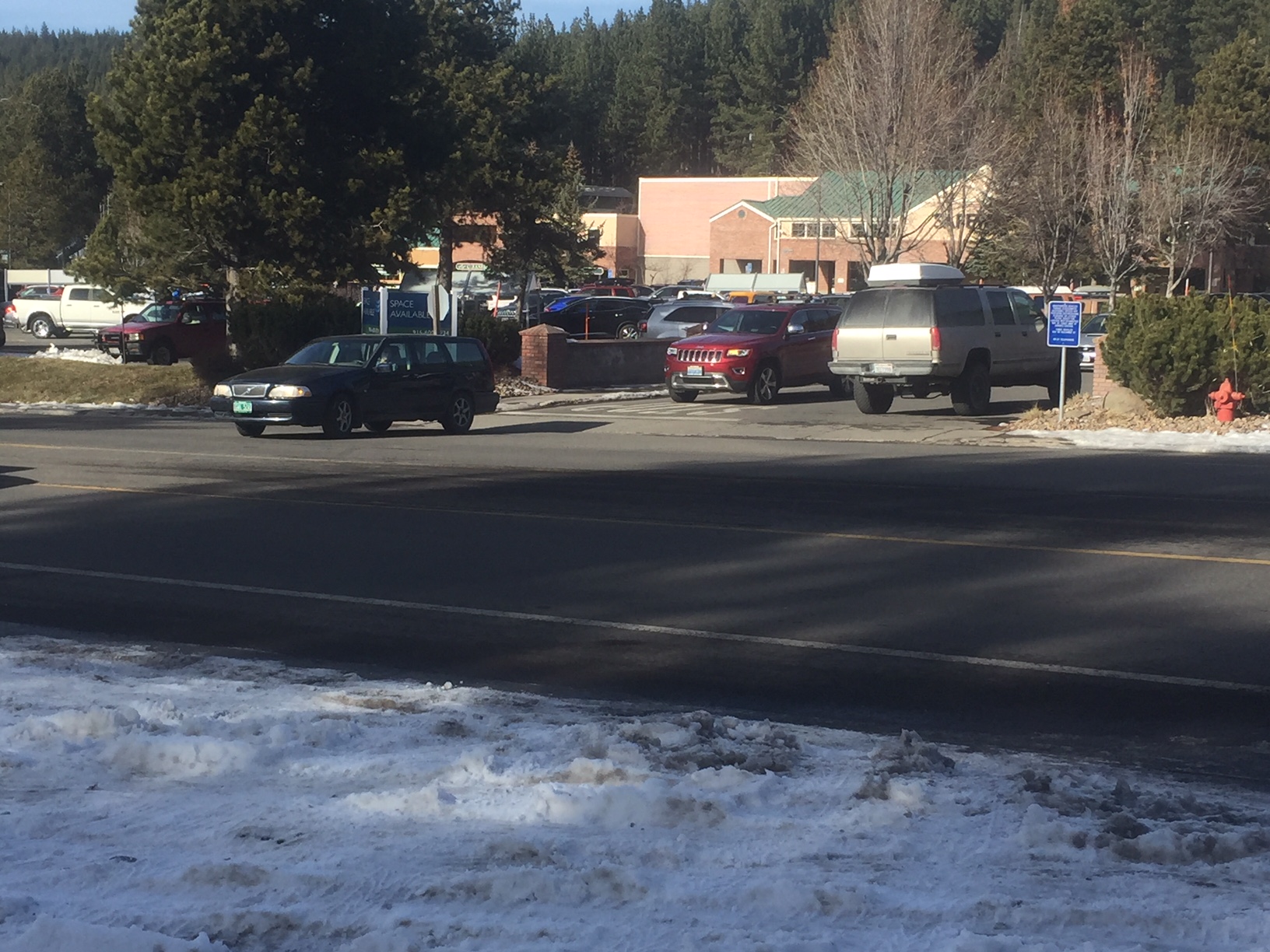
A boutique grocery story will go here, with the Truckee Safeway across the street. Photo/Susan Wood

And yet there is more

Another market – boutique in nature – is planned to go in across the very busy Donner Pass Road from Safeway. The store will be announced at a later date, but the Capitol Avenue Development Grocery Store project will involve a 17,568-square-foot store over 1.54 acres. The project will include two residential rental apartments as part of the deal and 44 on-site parking spaces.

Are five stores too much of a good thing?

Town Manager Jeff Loux said staff is used to hearing that question because upon initial mention the number sounds high. Government cannot turn down a project if it meets the land use and zoning qualifications just because there’s competition.

Loux did point out that economically-astute grocers such as Raley’s and the Nugget wouldn’t be interested if they didn’t do their homework. Both chains have discussed their concepts for several years.

“I believe they’ve done their marketing,” Loux told LTN.

Michelle Willard of the Greater Sacramento Area Economic Council agreed.

“Unless they have done the analytics, they wouldn’t be interested,” Willard said.

From a personal standpoint, Willard said when she enters a ski town one of her first stops is the grocery store.

The real challenge lies in traffic control as growth continues and motorists running errands try to get through town.

That’s why the locations of the projects are so important to the Truckee Chamber of Commerce.

“Not only is it sustainable (to have more), it’s necessary to decentralize the traffic congestion,” chamber spokeswoman Colleen Dalton said. “We needed to have a grocery store on the eastern side of town.

Dalton said the business community gives a “thumbs up” to adding a variety of stores in its 11 commercial districts at different sites selling unique food items at varying prices.

The food itself also appears to be changing.

“The next five years in grocery will be more transformative than the last 50,” spokesman Dave Heinzinger for inMarket, a company that develops supermarket technology, told Epicurious.

The food magazine also pointed out that the new supermarket won’t just lure people with products – but will give shoppers a pleasurable experience while there.

So, the idea is to take the dread out of grocery shopping – especially around the busy holiday season.  



Opinion: 2 skyscrapers and the Calif. imagination

By Joe Mathews

This is a tale of two cities and two new skyscrapers.

The Wilshire Grand Center, a project of the conglomerate that owns Korean Air Lines, towers 73 stories and 1,100 feet over downtown Los Angeles, making it the tallest building west of the Mississippi River.

Joe Mathews

The soon-to-open Salesforce Tower, named for the cloud computing giant that will be its signature tenant, rises 61 stories and 1,070 feet over San Francisco, making it the second-tallest building west of the Mississippi.

Each building has changed its city’s skyline. Considered together, however, they make a more earth-bound and less flattering point about the state of the California imagination.

The Wilshire Grand, like Los Angeles, is skinny and well-lit. But up close, it feels remote even though it’s in the middle of a metropolis. Reaching the Wilshire Grand on foot isn’t easy, given how it’s cut off by traffic on the 110 freeway and Wilshire Boulevard and Figueroa Street. And when you enter, you’re pointed in the direction of an elevator that takes you up to its most significant space the public can access – the 70th floor lobby of the Intercontinental Hotel.

While the lobby offers great views, the whole structure reveals the city’s weaknesses. L.A.’s relatively stagnant economy has left a glut of office space that has made the building tricky to lease. And the building’s Korea-based ownership serves as a reminder that L.A., for all its size, is more an overgrown outpost than a capital of anything. Its signature institutions – from the L.A. Times to the Dodgers — are owned by out-of-towners.

By contrast, Salesforce Tower is very San Francisco, both for better and for worse. Like the Bay Area’s tech industry, the skyscraper is a dominant, almost menacing presence hanging over the city. The tower’s city connections are deliberate: A bridge connects it to a park atop the under-construction Transbay Transit Center and the building has a public street-level plaza and a giant lobby opening right onto Mission Street.

But the Salesforce Tower also embodies a San Francisco paradox. This place that connects the world can feel small and insular. Between the new skyscraper and two buildings across the street, Salesforce is creating its own campus within the city, with retail and stores to satisfy workers’ every need. “It’s all right here. Right now,” boasts the tower’s publicity.

The preciousness of the project cries out for parody. The building literally breathes, with “innovative outside air intakes on every floor” that “provide outdoor-fresh air to each occupant to support health and wellness.” The interior is also expected to include “mindfulness zones.”

Such touches fit the only-from-San Francisco corporate culture of Salesforce, which wraps relentless acquisitiveness (now more than 24,000 employees and $8.4 billion in annual revenues), in touchy-feely corporate language that appropriates the Hawaiian concept of “Ohana,” or extended family.

An excerpt from the most recent annual report: “We are the #SalesforceOhana, a trusted family of employees, customers, partners and communities, united around delivering success to all of our stakeholders and improving the state of the world.”

For all the municipal differences that the two skyscrapers reflect, their similarities are even more striking.

Both are glass towers designed for maximum environmental sustainability and earthquake safety. And both make themselves appear taller than they really are. The Wilshire Grand gets its extra height from a 295-foot tall spire on top, while Salesforce has 170 feet of open space on the top that won’t have any people in it.

Neither building makes you say “wow.” In fact, both buildings were supposed to be bigger—Wilshire Grand was originally planned as two taller towers, and Salesforce as a 1,200-foot-tall giant—but were downsized for economic reasons. And neither structure matches the public esteem for the towers they now top. In L.A., the U.S. Bank building, also known as the Library Tower, sits on Bunker Hill and thus looks taller than the Wilshire Grand. In San Francisco, the hulking presence of the Salesforce Tower seems out of scale compared to the graceful Transamerica Pyramid, 200 feet shorter.

But to protest these new skyscrapers is pointless, because both buildings reveal a hard truth about power in California: Despite our boasts about creating new modes of business and living, our corporations still stand the tallest. Korean Air’s logo lights the Wilshire Grand’s crown. And San Francisco has agreed to rename the Transbay Transit Center and the park on top of it for Salesforce.

But these two competent corporate buildings don’t seem to be about much more than branding. And if California is going to build giant monuments above faults, then why can’t our skyscrapers offer edges that incite love or hatred, that provoke us to aim higher?

Structures that tall really should stand for something.

Joe Mathews writes the Connecting California column for Zócalo Public Square.


Folks ditching their possessions for tiny houses

By Yvonne Gonzalez, Las Vegas Sun

American homes are growing ever bigger, but a separate mindset is causing some to leave their possessions behind and embrace much smaller digs.

Minimalism is a movement away from excess and toward keeping only vital, important items.

Experts such as psychotherapist Linda Esposito write that this can help people achieve greater happiness and less stress by removing distractions, giving people the space and resources to focus on necessities and experiences.

Read the whole story


Snippets about Lake Tahoe

·      The Bicycle Advisory Committee of the South Lake Tahoe Recreation Facilities Joint Powers Authority will meet Jan. 10 from 9-11am in the downstairs conference room at Lake Tahoe Airport.

·      Skiers and riders may purchase reduced-rate lift tickets valid at many North Lake Tahoe ski resorts through the Tahoe Truckee Excellence in Education Foundation’s Skiing for Schools Program. For more info, go online.

·      El Dorado County Assessor’s Office will be closed Jan. 2-3 during the relocation of staff and records from the temporary offices into newly renovated offices at the Government Center in Placerville.

·      Tourism in rural Nevada, which includes Lake Tahoe, is a $2.3 billion industry supporting 27,870 jobs.

·      On Jan. 5-7, Douglas County CERT is hosting a free personal disaster and community response training. Registration is required. Contact Dave Thomas at 775.691.8709 or tvfd.dt@gmail.com