Asians develop a taste for snow, ski resorts

By Alex Frew McMillan, The Street

The Winter Olympics are fast approaching. And with the next two installments happening in Asia, the center of the ice-and-snow world is shifting ever so slightly to the East.

South Korea hosts the games in February 2018, now just two months away, in and around the resort of PyeongChang. That’s not to be confused with Pyongyang, the capital of the noisy neighbor to the north! Then Beijing will become the first city in history to have hosted both summer and winter games when it takes on the colder form in 2022.

China has yet to produce a ski resort of any note. The best-known is Yabuli, the largest resort in the country, 100 miles outside Harbin in the country’s most-northern province, Heilongjiang. Club Med, now a Chinese company, owns one of the two slopes on the hill. But lifts and slopes are limited.

Read the whole story


NORAD’s Santa tracker began with a typo

By NPR

This Christmas Eve people all over the world will log on to the official Santa Tracker to follow his progress through U.S. military radar. This all started in 1955, with a misprint in a Colorado Springs newspaper and a call to Col. Harry Shoup’s secret hotline at the Continental Air Defense Command, now known as NORAD.

Shoup’s children, Terri Van Keuren, 65, Rick Shoup, 59, and Pam Farrell, 70, recently visited StoryCorps to talk about how the tradition began.

Terri remembers her dad had two phones on his desk, including a red one. “Only a four-star general at the Pentagon and my dad had the number,” she says.

The red phone rang one day in December 1955, and Shoup answered it, Pam says. “And then there was a small voice that just asked, ‘Is this Santa Claus?'”

Read the whole story


Gaming industry mergers could hit a record next year

By Todd Prince, Las Vegas Review-Journal

The U.S. gaming market experienced several blockbuster deals in 2017.

The SLS Las Vegas, Alon project and Pinnacle Entertainment were all scooped up by competitors.

But 2018 might hold even more mergers in store for the industry as a strong economy, low borrowing costs, lack of new licenses, and the use of real estate investment trusts drive further consolidation, according to Deutsche Bank in a 2018 Gaming Outlook report.

Read the whole story


Road salt still used, despite negative impacts

Brine leaves streaks on the road at the end of North Upper Truckee Road toward Highway 50. Photo/John Adamski

By Jamie Summers and Robin Valleau, The Conversation

Marshes, streams and lakes lie alongside many of the roads and highways that zigzag across North America. Plants and animals inhabit these water bodies and can be exposed to many of the substances we put on those roads, including road salt.

Rock salt helps keep roads safe when winter storms hit, reducing winter road accidents. But it can also have serious, negative effects on aquatic ecosystems.

At high concentrations, salt can be fatal to some aquatic animals. Salt can also change the way the water mixes and lead to the formation of salty pockets near the bottom of lakes, creating biological dead zones.

When the weather takes a wintry turn, many cities and municipalities in North America rely on salt to deice their roads. This rock salt is similar to table salt, made up of sodium and chloride, but coarser. It dissolves quickly on the road, leaving the chloride to enter nearby waters through runoff and leaching. In fact, almost all chloride ions from the road salt eventually find their way into waterways downstream.

At low concentrations, chloride is relatively benign but as concentrations rise, it can be toxic to aquatic wildlife, including the plankton and fish that inhabit inland lakes. These ecological changes affect water quality.

In salt water

One study of North American lakes found that as little as one per cent of the land area within 500 meters of the lake had to be paved (or otherwise impervious) for there to be an increased risk of becoming saltier over the long term.

Basically, a little development can lead to a lot of salt entering a water body. About 27 per cent of large lakes in the United States are at least one per cent developed along their shores.

A recent study suggests that salt concentrations in many U.S. lakes will fall outside the bounds necessary for healthy aquatic plants, animals and microorganisms — and for good-tasting drinking water — by 2050.

Canada will likely face the same issues. Depending on the severity of the winter, approximately five million tonnes of road salt are applied annually to Canadian roads. Many municipalities in southern Ontario use more than 100,000 tonnes per year.

Road salt applications in Canada began in the 1950s. To fully understand how these increasing chloride concentrations have affected lake ecosystems, we must look back in time. But there’s little long-term data about these lakes for us to look at.

Instead, we examine past environmental conditions by coring into the lake bottoms and using the information preserved in the lake sediments.

A window into the past

Clay, silt, sand, pollen, chemicals and other substances from the surrounding environment accumulate slowly — and continuously — in layers at the bottom of lakes. That sediment provides a natural archive of past conditions. For example, a layer with a lot of charcoal may indicate increased forest fires in the region.

Scientists use the information preserved in this archive to understand how environmental conditions have changed over long periods of time — from years to centuries.

The Muskoka region of central Ontario — known for its lakes, rivers and cottages — has been applying road salt since the 1950s. The remains of algae and microscopic animals (called zooplankton) contained within the region’s lake sediments show us that changes have occurred in these lakes, coinciding with the onset of road salt applications in the region.

There are more salt-tolerant zooplankton species now than there were before road salt was widely used. The effect of that shift isn’t fully understood. But we do know that when things change at the lower levels of the food web, the effects may be felt through the whole ecosystem.

Consider, for example, a fish that has become adapted to eating one type of zooplankton. If all of a sudden it is replaced by another type — perhaps one that is larger — it may run into trouble.

Chloride can be toxic to zooplankton. At lower concentrations it can have sub-lethal effects — weakening individuals and raising rates of egg mortality. Fish are generally more tolerant to increasing salt concentrations, but the longer they are exposed to high chloride levels, the more toxic it is. Many young fish feed on plankton and if they lose their food source, they will not thrive.

Brine alternatives

Some communities in North America are looking for environmentally safe alternatives to road salt.

Beet wastewater — left over from sugar beet processing — cheese brine, pickle juice and potato juice are some of the unconventional deicers being tested.

The carbohydrates or sugars in beet wastewater make it more effective at lower temperatures than salt water or brine alone, lowering the melting point of the ice to below -20℃ from -10℃ — and reducing the amount of chloride applied to the road.

But there are downsides. Some communities dislike the smell of the beet wastewater, which people have likened to soy sauce, molasses or stale coffee. It also adds sugar to aquatic ecosystems, which may encourage bacterial growth.

Instead of using salt and salt additives, some engineers are experimenting with roads that clear themselves of snow and ice. Early tests have suggested that solar panels could replace asphalt to melt ice and eliminate the need for road salt, by heating water in pipes embedded in the road.

Others are looking for more effective ways to use rock salt — and reduce the amount that enters water ecosystems. A significant portion of rock salt bounces off the road when it’s applied so trucks tend to apply more than necessary. Wetting the pavement and applying brine solutions help the salt adhere to the road, meaning cities and municipalities can cut back on how much they use.

Scientists are also helping to figure out how much salt our lakes can handle, which species are at risk and which lakes are most sensitive to road salt exposure to find a way to keep humans safe on the road and plants and animals safe in our lakes, streams and wetlands.

Greatest Bond stunt has roots in Tahoe

By Rick Sylvester, Moonshine Ink

The year 2017 marked the 40th anniversary of James Bond’s “The Spy Who Loved Me.” One local historian and pundit opined the stunt I performed doubling for Roger Moore playing James Bond as part of the opening pre-credit sequence represented a “game changer.”

Though the movie was panned, it was a commercial success. The San Francisco Chronicle called it the “greatest Bond stunt in history.” Newsweek’s film critic took it further and said it was the greatest stunt in the history of cinema.

I found these statements interesting, as despite playing Bond twice, I never regarded myself as a stuntman per se, but merely a climber, skier, former distance runner, former wrestler, and novice parachutist who just happened to have come up with a rather odd idea.

Read the whole story


Transmitter may be installed on top of Jobs Peak

The U.S. Forest Service is considering installing a transmitter at the top of Jobs Peak.

Comments on the proposal, which is under environmental review, are being accepted until Jan. 8.

The plan is for a 25-square-foot shelter that would house a radio repeater for improved communications. It would include solar panels to power the transmitter and a 20-foot antenna.

The goal is to improve cover at in the Carson Ranger District.

Comments should be sent to elnoesser@fs.fed.us.

— Lake Tahoe News staff report


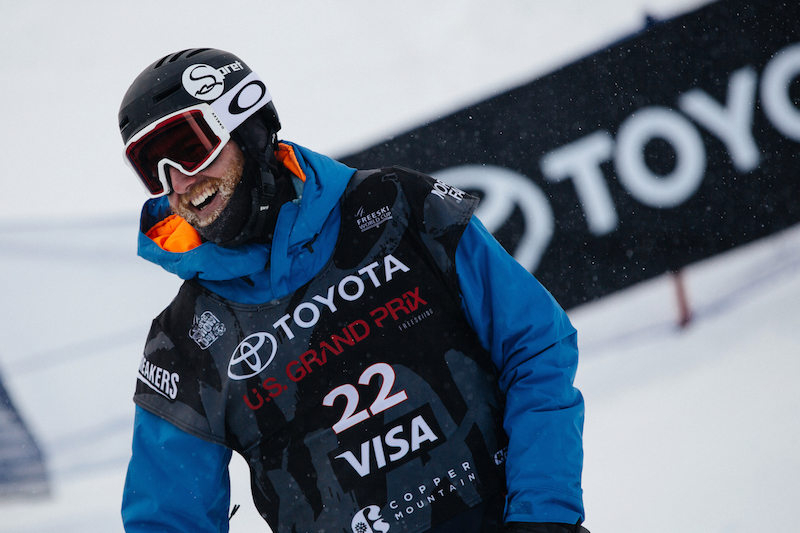
SLT halfpipe skier Smaine healthy and confident

Kyle Smaine is hoping for a spot on the 2018 Olympic team. Photo/Sarah Brunson/USSA

By Becky Wright, Tahoe Quarterly

Kyle Smaine spent the better part of last season “crutching [his] way through the seemingly endless snowbanks” in his native South Lake Tahoe.

Now, with a surgically repaired anterior cruciate ligament and meniscus, the Sierra-at-Tahoe halfpipe skier feels healthy and motivated to make a run at the 2018 Olympic Winter Games. But with a stacked field of talented U.S. athletes, he knowns it won’t be easy.

“With my injury last January, I haven’t had the luxury of doing any on-snow training leading into this winter. I have spent a ton of time in the gym this summer, as well as taking a step back and working on my mental game and mindset,” Smaine said. “I really feel like I’m heading into this winter as physically strong as I have ever been. I have learned over the years that I ski the best when I’m enjoying myself, so I haven’t really been putting any pressure on myself heading into this winter. I have set goals, and every day I have done what I was able to in order to set myself up for success, but I’m just taking it day by day.”

Read the whole story


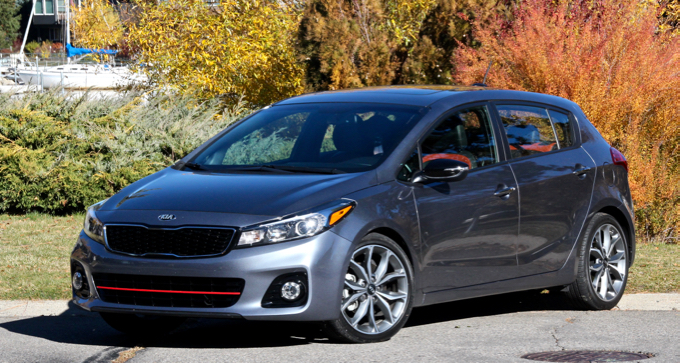
Road Beat: Kia Forte 5 SX strong on performance

The Kia Forte 5 SX is a small package with big performance. Photos/Larry Weitzman

By Larry Weitzman

Kia Forte 5 is a small car even though it is considered a compact, as it has an interior volume of about 100 cubic feet with a cargo capacity of over 23 cubes. Fold down the rear seat and it becomes a mini-ute with 54 cubes of volume. It is a practical design.

However, while it has a great looking, aggressive front end, the aft end and its truncated window line and rear end are not exactly my favorite. But that’s the end of the negatives as the rest of the Road Beat is all positive.

Forte 5 rides on a long 106-inch wheelbase while measuring just 171 inches in length. It is a reasonable 70 inches wide and stands 57 inches tall. But as above, it’s big inside.

Forte 5’s get one of two engines either a 2.0L 164 hp power house which should make for lively performance as it only weighs 3,000 pounds or in the top of the line SX model you get a downsized 1.6L inline four banger, but it has a turbo which takes peak hp to 201 at a low 6,000 rpm and peak torque which hardly peaks as it is flat as a slab of marble from 1,500-4,500 rpm cranking out a stout 195 pounds twist  between those rpms which is caused by the engine controller limiting boost but holding peak torque almost throughout the entire rev range. It makes for a very flexible engine being able to twaddle along in top (sixth gear at 1,500 rpm and still pull away smartly without a downshift. In the lower gears hand on to your hat (when the sun roof in open).

Specifications
Engine
2.0L DOHC, 16 valve inline four cylinder 164 hp @ 6,200 rpm
151 lb.-ft. of torque @ 4,000 rpm
1.6L DOHC, 16 valve turbo inline four cylinder 201 hp @ 6,000 rpm
195 lb.-ft. of torque @ 1,500-4,500 rpm
Transmissions
2.0L Six-speed torque convert
Transmissions
2.0L
Six-speed torque convert automatic
1.6L turbo
Six-speed manual
Seven-speed dual clutch automated manual
Configuration
Transverse mounted front engine/front wheel drive
Dimensions
Wheelbase 106.3 inches
Length 171.3 inches
Width 70.1 inches
Height 57.1 inches
Track (f/r) 60.8/61.3 inches
Ground clearance 5.5 inches
Fuel capacity 13.2 gallons
Cargo capacity rear seats up/down 23.2/56.4 cubic feet
Weight 2,976 pounds
GVWR 3,990 pounds
Steering lock to lock 2.85 turns
Turning circle 34.8 feet
Wheels 81X7.5 inches
Tires 225/40X18
Performance
0-60 mph 6.23 seconds
50-70 mph 3.00 seconds
50-70 mph uphill 4.32 seconds
Top speed Estimated 140-145 mph
Fuel economy EPA rated 23/29/25 mpg. Expect 28 mpg in rural country driving and 37 mpg on a level highway at legal speeds.

Performance is strong with the ability to knock off 0-60 mph in an average of 6.23 seconds. Passing performance is also super quick with a 50-70 mph run taking three seconds flat and the same run up a 6-7 percent grade only slowing that time to 4.32 seconds. Only a Honda Si, a VW GTI or a couple of other Hyundais and Kias using the same engine are in this class of performance. Everything else is in second place or much farther behind. Even with the turbo, in my first drive I was literally “blown away” by the instantaneous throttle response. This thing boogies.

As to the throttle, in the first three gears it pulls well from just 1,500 rpm, where it can make peak torque because of the turbo boost and by 2,000 rpm it will pull smartly even in sixth gear. Going up the Sierra at over 6,000 feet where the grade is at least 6 percent, it would pull like a freight train is fifth at just 2,500 rpm where it is making about 100 hp. I remember when a 1.6L inline four wouldn’t make 100 hp at 6,000 rpm. Ah, the benefits of boost. And did I mention this is one of the smoothest inline fours the Road Beat has encountered?

EPA fuel economy numbers appear to be pretty dismal at 23/29/25 mpg city/highway/combined, but even when putting the pedal to the metal in very aggressive driving I averaged 26 mpg. However, in more normal driving expect about 28-29 mpg and in a 70 mph two-way run on a level highway the Forte 5 SX averaged 36 mpg. More telling was my two-way average from Placerville to Carson City and back where the Forte averaged 37.1 mpg. EPA testing must have been done with a spark plug wire missing or something. Fuel tank is of average capacity at 13.2 gallons. Bigger would be nicer.

Handling is very good and sporty as it has the credentials, MacPherson struts up front and a coupled torsion beam in the rear, a quick electric rack at 2.85 turns lock to lock, big 225/40 series rubber on wide 7.5 x 18 inch good looking alloys and a wide 61 and 62-inch track. And it does handle and when pushed very hard in the twisties, understeer seemed to want to turn into oversteer. Most drivers will never get that far, but its grip is strong, with a crisp turn-in and a flat attitude. On and off-center feel is also very good. In other words, it is most fun when the road bends. I would call it playful.

The ride is extremely smooth and it is quiet. The only time tire noise becomes even apparent is on coarse roads, but smooth asphalt will leave you thinking is a whisper. While most bumps don’t get through the insulation of the suspension, hard jolts can be heard. That’s about it in the ride department. The engine spins a little fast, 3,000 rpm at 70 mph in top gear. The seven speed DCT would spin about 2,400 rpm and probably return a couple more mpg and actually improve its already stellar performance.

Safety includes most of the acronyms including an excellent back up camera, but no blind spot detection, something I didn’t miss as a good driver prides himself in situational awareness. Headlights are HID and very good on low and high beam.

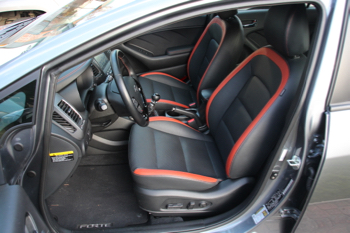
Inside is a two-tone leather interior done in a dark charcoal (Kia calls it black) with some bordering orange trim. Snazzy and comfortable, with full power adjustability for the driver and heating and ventilation for both driver and shotgun. Instrumentation is complete with a center info center and a big tach and speedo flanking left and right. Perfect. The rest of the interior is all first rate materials, with a few surprises like the “D” shaped leather wrapped steering wheel and leather shifter. Nice.

On top of the center stack is a big seven-inch color screen for NAV and the sound system and they are intuitive and very easy to use. BMW take a lesson. Great sounding radio.

Rear seating is a 60/40 split and according to a rear seat passenger quite comfortable.

As to the Forte 5’s utility re-read the first two paragraphs, for just 171 inches it can haul the mail and then some.

So what is the damage control for such an exceedingly fun ride probably made more fun by the addition of the DCT? How about $26,000, but if you want the obligatory floor mats add $125 and then the delivery charge of $895 from its Pesqueria, Mexico, assembly plant and if that doesn’t surprise, 82 percent of the content is from Mexico, including the engine. The tranny comes from Japan.

Larry Weitzman has been into cars since he was 5 years old. At 8 he could recite from memory the hp of every car made in the U.S. He has put in thousands of laps on racetracks all over the Western United States.


Letter: Heavenly gives back at Bread & Broth

To the community,

With funds provided by Vail’s EpicPromise grants, Heavenly Mountain Resort partners with Bread & Broth to annually host six Monday meal dinners at St. Theresa’s Grace Hall.  

Every other month, Heavenly sponsors an Adopt A Day of Nourishment and sends a team of volunteers to help crew at their sponsorship dinner. On Dec. 11, hosting their last AAD of the year, Heavenly’s volunteer sponsor crew was manned by Michelle Beall, Kelly Campbell, Chris Eckert, Katie Ficeto and Frank Papandrea.

“We are so appreciative of all that St. Theresa Bread & Broth does for our community,” said Campbell.  “It is an honor to support their efforts and help our neighbors and community.”   

Through their AAD donation of $250, Heavenly helps B&B provide a hot, full-course meal to the evening’s dinner guests. These guests include seniors on a fixed income, struggling families, the homeless, students, and workers earning minimum wage. In many cases, the Monday meal is their only hot meal for the week.

As always, the Heavenly team members were helpful, warm and welcoming. Since most of the crew had served several times at a Monday meal, they jumped right in to make the evening meal a pleasant and welcoming dinner event for the guest. B&B volunteers are always excited when they see that a Heavenly crew will be hosting an Adopt A Day meal. B&B would like to thank Vail corporation, Heavenly Mountain Resort and their employee crew members for their amazing generosity and efforts to serve to those in need.

Carol Gerard, Bread & Broth


Snippets about Lake Tahoe

·      Douglas County commissioners on Dec. 21 unanimously agreed to increase South Tahoe Refuse rates by 6.81 percent starting Jan. 1.

·      Here are the El Dorado-Tahoe and Sierra roadwork schedules for the week.

·      Nevada was the second fastest growing state from July 2016 to July 2017, according to the Census Bureau. The population grew 2 percent to nearly 3 million people.

·      The Tides Project donated $700 in art supplies to the Boys and Girls Club of South Lake Tahoe.

·      Mickey Avalon, plus EKOH, the Guestlist and disc jockey (R)Styles will be at Whiskey Dicks Saloon in South Lake Tahoe on Dec. 29. Doors open at 9pm. Must be 21 to attend. Tickets will be $25.