Tahoe area temps break multiple records

By Lake Tahoe News

Shorts weather is going to continue for the next couple days in the greater Lake Tahoe area.

Record highs were broken several places on Dec. 29 and Dec. 30.

The National Weather Service in Reno reports:

South Lake Tahoe’s high on Saturday was 58 degrees, breaking the high of 53 set in 1998. Glenbrook hit 56, the record was 53 degrees set in 1963; Daggett Pass was 51, old record set in 2000 was 47 degrees.

Records were also set on Friday:

South Lake Tahoe was 61, with the previous high of 56 set in 2011; Tahoe City was 60, old record was 55 from 1998; Truckee hit 63, previous record of 57 was from 1917; Glenbrook was 59, beating the 2008 record of 53.

“Through New Year’s we are expecting to flirt with some record high temperatures,” Evan LaGuardia, meteorologist with the Weather Service, told Lake Tahoe News. “Through New Year’s Day we should be 15 to 20 degrees above average.”

The weather is expected to start changing by Thursday when the high pressure system starts to break down.

LaGuardia said at this point to expect light precipitation with the incoming front. Snow levels are expected to be above 7,500 feet.


How to be prepared for an emergency

By Tia Rancourt    

Knowing that you are prepared for an emergency can help you and your family stay calm and act effectively. Working together, learning about risks, making an emergency kit, staying informed, knowing your evacuation plan are just some of the things you can do to prepare ahead of time.

The three key steps are: make a plan, assemble a kit, and stay informed. The Washoe County Emergency Management Program has compiled some general information listed below to help you prepare for an emergency.

Emergency plan

Prior to a disaster, each family must have a plan. You can begin this process by gathering family members and making sure each person is well informed on potential hazards and community plans. Discuss with them what you would do if family members are not home when a warning is issued. Meet with household members. Discuss with children the dangers of fire, severe weather, earthquakes, and other emergencies.

  • Draw a floor plan of your home. Mark two escape routes from each room.
  • Learn how to turn off the water, gas, and electricity at main switches.
  • Post emergency telephone numbers near telephones.
  • Instruct household members to turn on the radio for emergency information.
  • Pick one out-of-state and one local friend or relative for family members to call if separated by disaster (it is often easier to call out-of-state than within the affected area).
  • Pick two meeting places – one near your home and one outside your neighborhood.

Assemble a kit

You may need to survive on your own after a disaster. This means having your own food, water, and other supplies in sufficient quantity to last for at least three days. Local officials and relief workers will be on the scene after a disaster, but they cannot reach everyone immediately. You could get help in hours, or it might take days. There are six key items you should have: water, food, first aid supplies, clothing/bedding, tools and any special items. Keep the items that you would most likely need during an evacuation in an easy-to-carry container.

Stay informed

Learn what disasters or emergencies may occur in your neighborhood. Local emergency management officials will continually be updating the local media during the events of an emergency. Citizens should monitor Lake Tahoe News, and other media. It is a good idea to have a battery-operated radio included in your evacuation kit. Sign up for Code Red to receive emergency alerts by going online. The Emergency Alert System (EAS) local primary stations are: KKOH 780AM, KUNR 88.9 FM, KOWL 1490AM, KRLT 93.9 FM, KTKE 101.50 FM.

Evacuation preparedness

Should you need to evacuate, a key component is knowing how to safely and effectively evacuate. Successful community evacuation requires preparation. Elements of family emergency planning and preparation:

Complete an inventory of home contents and photograph/videotape the house and landscape. Store completed documents in a separate location and/or on a storage thumb drive. 

Tia Rancourt works for the North Lake Tahoe Fire Protection District.                          


Letter: Warm room thankful for community support

To the community,

Tahoe Coalition for the Homeless is pleased to announce that the warm room will move from Lake Tahoe Community Presbyterian Church to 1195 Rufus Allen Blvd., a property owned by the city of South Lake Tahoe, and begin operating out of that location at 7pm on the evening of Jan. 1.  The warm room is expected to operate out of the Rufus Allen location until it closes for the season on April 1, 2018. 

I would like to thank Pastor Bob Kelley and the congregation of Lake Tahoe Community Presbyterian Church for opening their doors to us during the holiday week, a time when many that live in hotels cannot afford high-season rates. I also would like to thank the city for leasing us the space on Rufus Allen, as well as residents and others who frequent the surrounding area for providing valuable feedback on how we can best operate in the area. Our goal is to be a great neighbor, and I think adjusting our operating hours, employing private security patrols, and maintaining a proactive, problem-solving approach will help us do that.

The warm room will be open from 7pm to 8:30am to provide shelter to those in need during its operating season. In addition to a safe and warm place to sleep, the warm room offers community resources including outreach from health and human services, outreach from the Department of Mental Health, information on Rapid Rehousing, substance abuse support groups, and support with career and education goals through collaboration with local agencies and organizations. 

Marissa Muscat, Tahoe Coalition for the Homeless executive director


Radon education events coming to Nevada

With January being National Radon Action Month, the University of Nevada Cooperative Extension’s Radon Education Program is offering free short-term radon test kits to Nevadans from Jan. 1 through Feb. 28.

Radon test kits are available at Cooperative Extension offices and partnering locations, as well as at presentations statewide.
 
Radon is a naturally occurring, radioactive gas that is colorless, odorless and tasteless. It comes from the ground and can accumulate in homes, raising the risk of lung cancer. The U.S. Environmental Protection Agency estimates 21,000 Americans die each year from radon-caused lung cancer, killing more people than secondhand smoke, drunk driving, house fires and unintentional carbon monoxide poisoning combined.
 
In Nevada, one in four homes tested show radon concentrations at or above the EPA action level. According to experts, living in a home with radon concentrations at the action level poses a risk of developing lung cancer similar to the risk posed by smoking about half a pack of cigarettes a day.
 
Scheduled presentations for Northern Nevada are:

Jan. 17 at Verdi Community Library & Nature Center, 270 Bridge St., Verdi, at 4pm.
Jan. 23 at Tahoe Regional Planning Agency, 128 Market St., Stateline, at 6pm.
Jan. 24 at the Carson City Senior Center, 911 Beverly Drive, Carson City, at 6:30pm.
Feb. 7 at South Valleys Library, 15650 Wedge Parkway, Reno, at 6pm.
Feb. 8 at CVIC, 1604 Esmeralda Ave., Minden, at 6pm.
Feb. 15 at the Storey County Senior Center, 100 Mill St., Virginia City, at 12:45pm.
Feb. 21 at Incline Village GID, Public Works, 1220 Sweetwater Road, Incline Village, at 6pm.
Feb. 24 at Northwest Reno Library, 2325 Robb Drive, Reno, at 2pm.


Historical photos of Tahoe donated to Calif. Archives

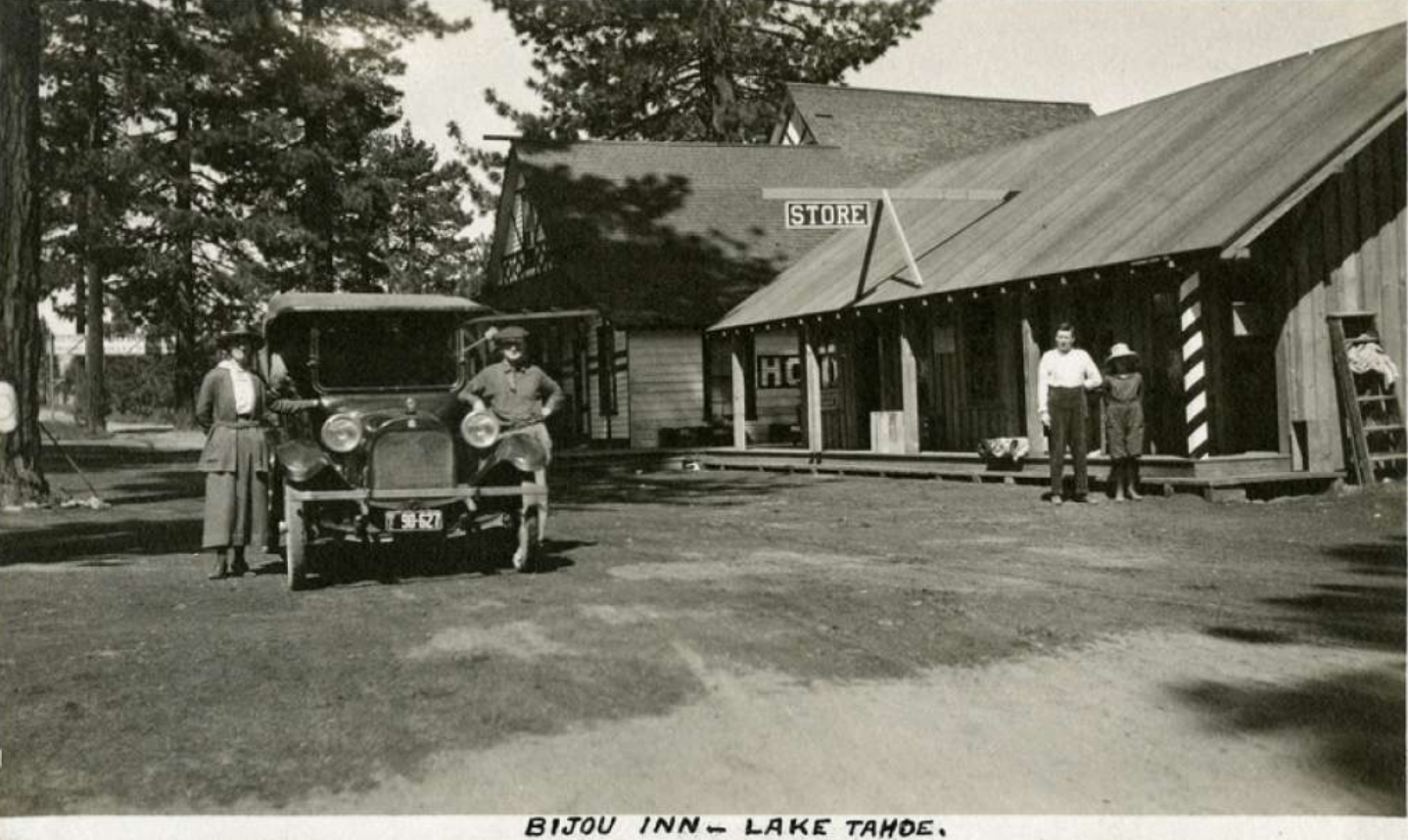
Pictures of the South Shore are now part of the state archives. Photo/California State Archives

By Alyssa Pereira, San Francisco Chronicle
 
William and Grace McCarthy made a life of traveling across the sunny and sometimes snowy state of California.

William, an armament expert for the U.S. War Department, and his wife lived in San Francisco but traveled frequently to the corners of the state, taking in Yosemite vistas, the lush forests of Tahoe and Shasta, and the waterside views at Tenaya and Tioga lakes.

Photographing the natural beauty of the state seems to have been a favored hobby for the couple in the early 1900s, as over 3,000 photos in newly digitized albums collected by the office of California’s Secretary of State Alex Padilla reveal. The photos were donated to the California State Archives in 1996 by the couple’s great-niece, Audrey Fullerton-Samora of Sacramento.

Read the whole story


Carson Ranger District revamps reservation system

The Carson Ranger District is changing how it handles permits for noncommercial group use like family reunions, weddings, and group camping excursions.

From Jan. 1-March 1, and annually thereafter, the district will accept proposals for summer recreation events and noncommercial group use gatherings that take place between May 1 and Oct. 31. Proposals submitted during this open season will be date stamped and evaluated in the order received. Once the review process has been completed, proponents will be notified of the outcome and additional requirements, if any, for processing accepted applications.

It could take up to eight weeks for the initial review of the proposal package.

A separate open season for wintertime (Nov. 1 to April 30) recreation event and noncommercial group use proposals will be offered next year in a separate solicitation.

For more information, or to submit a proposal, contact Sheryl O’Brien at 775.884.8112 or sobrien@fs.fed.us.


Letter: Frustrated with noise from SnowGlobe

To the community,

It’s 10:30pm (Dec. 29)and it sounds like SnowGlobe is in the living room of my home along the Bijou Meadow. Unfortunately, the only part of the concert we can hear is the incessant bass overlaid by what sounds like a huge swarm of bees–even the most ardent percussionist would not call it music.

On Friday evening my wife and I took our regular walk through the Bijou neighborhoods around 5pm and walked past Councilmember Tom Davis’ home just as Tom was going to his car. We’ve known each other over the years so we talked for a moment about SnowGlobe, which was pretty loud at his house, too, and he said he was heading to the college to talk to the promoter about the excess volume. I really appreciate Tom’s willingness to listen to me and any effort he made on behalf of our neighborhood. Unfortunately, after the first of very loud noise it seems he wasn’t very successful.

I invite any residents, and especially city leaders, to come to our neighborhood, or any neighborhood within a quarter mile of SnowGlobe and hear what we hear.

Most of the folks in our neighborhood, the Ranchos, are longtime residents and have supported the development quality projects in SLT, including LTCC and Bijou Park, and we are not ignorant of the value tourists provide to our community. However, we have continued to live here because we believe in a quality lifestyle. Any of us living in a resort community expect some inconvenience throughout the year, but SnowGlobe is far beyond being simply disruptive.

It is time that our city leaders work with residents to either dramatically modify this event of find a venue that is appropriate for it.

Rich Fischer has had a home bordering the Bijou Meadow for 27 years. He served as the superintendent of Lake Tahoe Unified School District from 1989 through 1997 and currently serves on the El Dorado County School Board.


Celebrate the West art contest for high schoolers

The 2018 Western Governors’ Association’s Celebrate the West regional art competition that challenges high school students to create works inspired by their state is accepting applications until April 30.

WGA’s visual arts challenge, sponsored by the Western Governors’ Foundation, is open to high school students in the 19 Western states and three U.S.-flag islands served by the nonpartisan policy association, which includes California and Nevada.

Entrants from WGA member states will create original two-dimensional artwork inspired by their state or informed by living in the West. Students may draw ideas from a variety of sources, including state history, landmarks, natural resources, National Parks and Monuments, people, communities and culture.

Winning artists will receive cash prizes and their works will be displayed at an upcoming WGA Governors’ meeting, as well as on the WGA website.

Click here for an entry form; for more information, go online.


Mystery propaganda emerges after SLT land sold

By Kathryn Reed

How Herbert Avenue will tie into the redevelopment project where Whole Foods 365 is being built just became a little murkier.

No longer is the commercial property on the corner of Herbert and Highway 50 locally owned.

Chutima Vasakarnpanich and Tavewat Youngunpipatkul of Palo Alto closed on the property Nov. 30. Mike McKeen was the seller.

McKeen had been battling with the city over ownership of Herbert Avenue.

“I did organize a good group of neighborhood support. We have since sold the property, couldn’t commit to years of meetings,” McKeen told Lake Tahoe News.

The leases on the two apartments in the back have been renewed by the new owners.

“It will continue at the moment as the way it is,” Peggy Eichorn, who is managing the property for the couple, told Lake Tahoe News. “They like the mix of tenants and the town. It’s investment property for them.”

For now, that is the truth based on the fact they haven’t submitted any plans to the city.

However, the day after the sale went through SouthLakeTahoeGroup.com was formed. That web address redirects people to a survey. The owner of the site is listed as private.

The survey questions are:

1.     Would you be in favor of closing Herbert Ave at Bill Ave for through traffic? (Y/N)

2.     Would you be in favor of putting in a stop light at Herbert Ave and Tahoe Blvd? (Y/N)

3.     Would be [stet] in favor of rezoning the property from commercial and retail to high-density residential housing at the Bijou Marketplace site? (Y/N)

4.     Would you be in favor of a mixed-use development that incorporated high-end retail shops below and housing above, at the Bijou Marketplace site? (Y/N)

5.     If Whole Foods withdraws from the Bijou Marketplace, would you be in favor of a high-end restaurant taking its place? (Y/N)

6.     The city of South Lake Tahoe has the ability to take over the homes and properties from private citizens abutting the Bijou Marketplace site. Are you in favor of the city utilizing Eminent Domain to take over these properties? (Y/N)

7.     Do you feel that the City should take the decision of whether to build the Bijou Marketplace into their own hands? (Y/N)

8.     If Whole Foods withdraws from Bijou Marketplace, would you be in favor of any of these retail establishments taking its place: Top Golf, Total Wine, a Night Club, a Cigar Bar, a Marijuana Superstore, or high-end clothing retailers? (Y/N)

9.     What businesses would you like to see at the Bijou Marketplace site? (Multiple Answers)

The backers of South Lake Tahoe Group have not come forward. They have sent material to neighbors encouraging them to take the survey. It talks about wanting to provide the city with high-end shopping, and to have the city take over the project through eminent domain.

City officials and Halferty Development, the company developing the site between Ski Run Boulevard and Herbert, both say they are not behind the South Lake Tahoe Group and don’t know who is. Bijou Marketplace referenced in the survey is the name of the project.

The propaganda and even some of the questions are misleading. That’s because the contract between Halferty, which owns the land being developed, and Whole Foods is described as iron clad by the developer. And while other tenants have been secured, the names of the businesses have not been released. There is still space available.

The city has no interest in regaining control of the property. It owned the Ski Run site for years, and basically in a pass-through had the land where the Knights Inn used to be. Plus, there are strict legal constraints when it comes to the use of eminent domain, which would not apply to this land. Even if it were legal, it would take a four-fifths vote of the City Council to allow it to happen.

Steve Teshara, who heads the Lake Tahoe South Shore Chamber of Commerce, said no one with his organization is behind the survey group.

Lake Tahoe News emailed the South Lake Tahoe Group and received no response, so the intent of their busy work remains a mystery.



Opinion: Calif. falls short on educating students

By Dan Walters, CalMatters

The fundamental mission of a K-12 school system should be to have as many students as humanely possible graduate from high school with the fundamental skills they need to succeed as adults.

We Californians who are already adults sometimes lose sight of that goal as we bicker over financing, curriculum, testing and other pedagogic issues involved with educating 6 million students.

Dan Walters

California’s high school graduation rates, once abysmally low, have improved somewhat in recent years, although the factors in that improvement are a little cloudy. It’s unclear whether kids are being better educated and thus are more capable of meeting graduation requirements or the requirements themselves have been dumbed-down.

It’s noteworthy that the Legislature has eliminated the high school exit examination. It tested the essential knowledge and skills 12 years of education were to have provided. Passage was required before a diploma could be awarded, but the exam was criticized for blocking too many students, particularly poor, Latino and black students, from graduation.

We also know that too many of the state’s high school graduates entering college—40 percent of enrollees in the California State University system, for instance—have been required to take remedial English and math courses because their high school instruction fell short.

Faced with that dilemma, CSU is eliminating such courses and folding remediation into courses required for graduation—a policy aimed at increasing college graduation rates but one that could mask, rather than solve, high schools’ failures.

A recent report from the Public Policy Institute of California points out that even without an exit exam, California’s high school graduation requirements, in terms of academic courses taken and passed, are among the nation’s lowest and are also significantly lower than what CSU and the University of California require for admission.

A concurrent PPIC report underscores the failure of the state’s school systems to produce enough graduates prepared to succeed in college and thus fill the state’s needs.

“Far too many California students are falling off the pathway to and through college,” the PPIC study concludes. “At current rates of high school and college completion, only about 30 percent of California 9th graders will earn a bachelor’s degree, a rate that is insufficient for an economy that increasingly demands more highly educated workers.”

The report points out that most California high school graduates do not complete the courses required for college admission, and “even academically prepared students are falling off the pathway” by starting, but not completing, the required courses, with black and Latino students particularly “likely to drop off the pathway at every stage.”

Finally, CSU does not have the capacity to enroll and educate those students who have completed admission requirements, PPIC says.

“In the past four years, CSU has turned away more than 69,000 qualified California high school graduates, who have completed the … course requirements,” its study found.

California’s shortcomings in preparing students for and later delivering successful higher education will bite a state whose economy, as PPIC says, increasingly needs highly educated workers.

No, not every Californian needs a four-year college degree. And society needs lots of skilled workers without college diplomas to produce services and goods and maintain our machinery, from cars to power plants, and technology.

However, we do need enough college-educated workers to replace retiring members of the baby-boom generation and keep us competitive in a global economy, and we need those graduates to be truly educated, not just shuffled through a system with lowered standards.