Opinion: Career-ready out of high school is a myth

By Anthony P. Carnevale, Andrew R. Hanson and Megan Fasules, The Conversation

Unlike old-fashioned vocational education, high school-level career and technical education doesn’t really prepare people for jobs directly after high school. While the stated end goal of K-12 education in America is for students to be “college and career ready,” the reality is the existence of career-ready high school graduates is a myth. The expectation that high school produces career-ready adults in a 21st century economy is unrealistic and counterproductive.

While there have been efforts to revive vocational training in high school, it has become clear that, for today’s students to be prepared for tomorrow’s jobs, all pathways must lead to a credential with labor market value, such as a certificate, associate’s degree or bachelor’s degree. Good jobs that only required a high school education, in blue-collar fields and the military, have declined, while the jobs that took their place in fields like health care, information technology and business services require more than a high school education.

On average, CTE courses comprise only 2.5 out of the 27 credits high school students earn, not nearly enough coursework to prepare students for an entry-level job with a career ladder. What’s more: CTE “concentrators” – that is, students who take at least three CTE courses – and who don’t go on to obtain a college degree, certificate or certification earn 90 cents more per hour than nonconcentrators.

This matters because – as we’ve shown through research here at the Georgetown Center on Education and the Workforce – half of young adults are failing to successfully launch their careers. If we fail to recognize that the game has changed and that high school is no longer enough, we will also fail to prepare future generations for tomorrow’s jobs.

Not your parents’ high school

The movement away from the tightly focused job training in high school – and toward the richer mix of academic and career-related learning in CTE – began in 1983 with the publication of “A Nation at Risk.” That seminal report urged the nation’s schools to adopt a set of new academic basics that stripped K-12 education of its vocational mission and watered down academic track in favor of a highly standardized academic college-prep curriculum for all students. The shift was driven by both changing economic and political realities – specifically, the postindustrial restructuring of the American economy and the criticism that vocational education put advantaged and disadvantaged students on separate educational tracks.

At the same time, it became clear that high school degrees no longer provide enough general or career-specific education to prepare young people for good jobs.

Since the 1980s, the relationship between education and careers has changed in other profound ways. The narrow job-specific training provided by traditional vocational courses, such as auto mechanics, was no longer enough in an economy where skill requirements were constantly rising at a fast pace. In modern economies, narrow vocational preparation at the high school level leaves workers without enough general education to land middle-class jobs.

Toward a college prep curriculum

Furthermore, in an increasingly diverse society, many policymakers in the ‘80s and ’90s became convinced that narrow vocational and academic tracking by race, class and gender was inefficient and unfair. This tracking left poor and black students in shop class and women in home economics – a reality that was characteristic of the comprehensive high school curriculum that had been in place since the end of WWII. Such tracking created indefensible differences in education and career opportunities for people from different backgrounds.

With vocational education and the watered down education track removed, the K–12 system became the host for a standards-based academic curriculum designed to prepare students for college and life in a modern democracy – but not for work in a particular job.

As a result of the curriculum reforms since 1983, there is no longer much room for career preparation in high school. For instance, an average of 22 of the 26 credits required for a high school degree are reserved for academic courses necessary to meet state graduation standards in subjects such as English, math and science.

Because of the shift from vocational to academic preparation, high school curriculums have become one-size-fits all. They no longer have a direct relationship with most college majors or careers. Career preparation has shifted to the postsecondary sphere. Even the much heralded Career Academies haven’t been shown to land students in living wage jobs, even eight years after graduation.

CTE programs – commonly in health care, agriculture, and business – that gradually replaced the old-style job training provide little actual job training. Compared with traditional vocational training programs, CTE is available to a much broader diversity of high school students by race and class. As a result, CTE today is much less likely to be accused of tracking by race, class and gender.

Modern CTE programs have multiple functions. CTE programs provide hands-on learning models. They also provide employability skills such as communication, teamwork, problem solving, initiative and self-management. Those skills are portable across occupations and different work settings. Modern CTE programs also help foster career exploration across in-demand career fields. But there is substantial room for improvement.

How CTE must change

We first have to recognize that the current vision is only working for half of our young adults. That is, less than half of young adults earn a bachelor’s degree, associate’s degree or industry-recognized certificate postsecondary credential – the current standard for career readiness – by the age of 30. The advantaged half of our high school students earn college degrees, and most, if not all, move on to successful career pathways.

Our research shows that among those who earn college degrees and certificates, the vast majority make more than the average high school graduate.

Recent developments in federal policy, such as the Every Student Succeeds Act, are not enough to meet the challenge of helping the forgotten half of young Americans. The act includes the words “career readiness,” but the career-ready high school graduate only exists in the collective imagination. Similarly, reauthorizing the Perkins Act, the chief federal funding source for CTE, would be a positive step. Ultimately, however, the major reforms must take place at the state or regional level.

In the best cases, a handful of states, like Delaware and Tennessee, are successfully developing pathways to in-demand careers. Middle school students are exploring careers that suit their talents and interests. High school students are gaining employability skills and practical work experience in career fields so that they are ready to shop for postsecondary programs in their junior year.

We must scale up this new model in more states and cities across the country and invest more in programs that connect education to work. Only then will we reach the forgotten half of young adults who aren’t making it in today’s economy.

Anthony P. Carnevale is a research professor and director of the Georgetown University Center on Education and the Workforce. Andrew R. Hanson is a senior research analyst at the Center on Education and the Workforce, Georgetown University. Megan Fasules is a research economist, Georgetown University.



The effects of loneliness on health

By Jane E. Brody, New York Times

 The potentially harmful effects of loneliness and social isolation on health and longevity, especially among older adults, are well established. For example, in 2013 I reported on research finding that loneliness can impair health by raising levels of stress hormones and inflammation, which in turn can increase the risk of heart disease, arthritis, Type 2 diabetes, dementia and even suicide attempts.

Among older people who reported they felt left out, isolated or lacked companionship, the ability to perform daily activities like bathing, grooming and preparing meals declined and deaths increased over a six-year study period relative to people who reported none of these feelings.

Writing for the New York Times’s department The Upshot last December, Dhruv Khullar, a physician and researcher at Weill Cornell Medicine in New York, cited evidence for disrupted sleep, abnormal immune responses and accelerated cognitive decline among socially isolated individuals, which he called “a growing epidemic.”

Read the whole story


Calif. lawmakers not done with housing legislation

By Angela Hart, Sacramento Bee

California lawmakers are preparing new housing legislation this week, just months after Democrats in both houses pushed through the biggest legislative package on housing in decades.

As the Legislature returns for session, state Sen. Scott Wiener, a San Francisco Democrat, will unveil his 2018 proposals.

Wiener, author of a new law passed last year that allows developers to fast-track construction projects, is planning to announce a trio of bills Thursday aimed at requiring cities to build taller, denser housing near transit, boosting the supply of farmworker housing and ensuring cities and counties are planning for their fair share of housing to meet demand associated with jobs and population.

Read the whole story


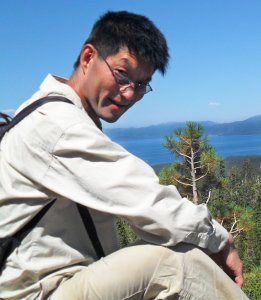
Ronson Sakioka — 1953-2017

Ronson Sakioka

Longtime South Lake Tahoe local Ronson Sakioka passed away Dec. 21, 2017. He was 64.

Ronson was struck by a vehicle in Nevada City after attending the Victorian Christmas Festival with family.

He was born and raised in San Jose. When he was in his early 20s he went skiing in South Lake Tahoe and never returned home.

Skiing was his passion. He was the friendliest guy you could meet on the ski lift. He taught ski lessons at Sierra-at-Tahoe in the early 1970s. Ronson also enjoyed tennis and getting together with his many friends. He could always be counted on for a big smile and fist bump.

Ronson owned and operated GGM Repair and Service. Many South Shore residents experienced his fine handiwork over the years. He worked on kitchen equipment for countless restaurants, sometimes in the middle of the night so the kitchens would not have any down time.

Ronson married late in life and will be greatly missed by his wife, Jackie. He also leaves behind his father, Frank Sakioka, sister Sheryn Kasianchuk, brother Glenn Sakioka, aunt Satomi Togo, nephews Daniel and Michael Kasianchuk and stepson Rick Norlie.

Ronson was preceded in death by mother Shizuko Sakioka and brother-in-law Walt Kasianchuk.

A celebration of life will be in the spring at Heavenly Mountain Resort.


Inmate who left Incline work crew in custody

Steven Timothy Grant

A Nevada inmate on work detail near Incline Village on Tuesday decided to take a break at the Hyatt.

Steven Timothy Grant, 30, left the work crew about 2pm Jan. 2. He was located at the hotel-casino about four hours later.

The minimum security inmate crew with the Nevada Department of Corrections was working in the forest on a fuel reduction project on Tuesday when Grant walked away.

Grant is in prison for burglary and grand larceny of a motor vehicle.

— Lake Tahoe News staff report


Snippets about Lake Tahoe

·      Charles Wilson is now executive chef of Edgewood Tahoe.

·      Lewis Carillo III of Santa Rosa has been identified as the skier who died last week at Heavenly Mountain Resort.

·      From the California Highway Patrol, “At least 40 people were killed in collisions in California between 6:01pm Dec. 29 and 11:59pm Jan. 1. This is a nearly 38 percent increase from the same period last year.”

·      BaseCamp at the Whitney Hotel in Reno will be hosting the USA Climbing Division 2 Bouldering Championship Jan. 13-14.

·      Snow Sessions with Nikki featuring Andre Nickatina will be at Whiskey Dicks in South Lake Tahoe on Jan. 14. Also performing will be Tip C & Deeday and DJ(R)Styles. Doors open at 9pm. Must be at least 21 to attend. Tickets are $25.


Bleak results in first snow survey of 2018

Frank Gehrke on Jan. 3 finds little snow to measure near Echo Summit. Photo/Kathryn Reed

By Kathryn Reed

PHILLIPS STATION – A major component of the first snow of the year was missing – snow.

Even so, there was something to measure. On Jan. 3 the California Department of Water Resources recorded an average depth of 1.3 inches of snow in the field adjacent to the entrance of Sierra-at-Tahoe. This equated to a water content of 0.4 inches. This is 3 percent of the long-term average for this location at this time of year.

Throughout California the snowpack is dismal. Statewide, the snowpack water equivalency is 2.6 inches, or 24 percent of the Jan. 3 average.

Dry brown grass dominated the local field, while patches of snow were intermittent. It wasn’t even cold. It felt more like fall than winter.

“There is still a lot of winter left,” Frank Gehrke, who conducts the survey near Echo Summit, said on Wednesday. “January, February and into March are frequently productive.”

He pointed out how while last January was better than now, it was the first quarter of 2017 that produced the abundance of snow. This is often the case. Still, California traditionally receives about half of its annual precipitation during December, January and February. And December was a dud.

Snow is an obvious economic driver for Lake Tahoe this time of year. But that’s not what the survey is about. The measurements that are taken throughout the Sierra are about water content for users downstream – people and farms.

The good thing is that the abundance of moisture last winter has the state’s reservoirs still sitting with plenty of water. At the end of December, the state reservoirs were at 110 percent of average for the end of the year. This is the highest since December 2012.


Grant Davis, director of the state Department of Water Resources, was also at the Echo Summit snow survey. He wouldn’t talk about his anxiety level at this juncture in the water year, but instead pointed out how the state and feds need to work together to come up with better precipitation information.

He pointed out that a 72-hour forecast is 70 percent accurate, while looking out two weeks the accuracy plummets to 7 percent.

Davis said better seasonal forecasting will be better for water management.

“That is where science needs to go,” Davis said. There is an effort under way to improve medium- and long-range forecasting. This involves supercomputers and new radar to better predict when atmospheric rivers will occur and where they will land.

Michelle Mead with the National Oceanic and Atmospheric Administration was also at the survey. While the region is expected to get some precipitation starting today and extending into the following weekend, there are no big atmospheric rivers on the horizon.

As Davis pointed out, “California’s great weather variability means we can go straight from a dry year to a wet year and back again to dry. That’s why California is focusing on adopting water conservation as a way of life, investing in above- and below- ground storage, and improving our infrastructure to protect our clean water supplies against disruptions.”


2017 Calif. wildfires — staggering losses

By Phillip Reese, Sacramento Bee

2017 will go down as one of the worst in California wildfire history, the latest state fire statistics show.

Large wildfires destroyed or damaged more than 10,000 structures in California last year, a higher tally than the last nine years combined. Large wildfires had killed 43 people – 41 civilians and two firefighters. That’s higher than the last 10 years combined, state figures show.

Several fires were among the worst ever recorded in the state.

Read the whole story


El Dorado County seeks Teen Court participants

El Dorado County youth in grades 8-12 are invited to participate in the Teen Court program.

Training is mandatory for all new and returning participants. Training will be Jan. 17 from 6-8pm at El Dorado County Superior Court, 495 Main St. in Placerville. Students are asked to arrive no later than 5:30pm.

After completing training, teens serve as court personnel in real cases where a minor has committed an offense, admitted the offense, and has chosen to be judged for sentencing by their peers.

Superior Court judges preside over Teen Court, and adult attorneys serve as mentors, donating their time to help students develop cases. Students get a real understanding of the juvenile justice system.

Pre-registration for the training is not required. Students must be El Dorado County residents and enrolled in grades 8-12; private school and home schooled students are also welcome.

Teen Court hearings will be from February through May on scheduled Wednesday nights.

For more information about Teen Court, or the training, call 530.621.6130.


EDC has money for seniors to remove dead trees

Funding is still available for eligible seniors living in high hazard areas specific to tree mortality, including South Lake Tahoe, Camino, Pollock Pines, Somerset, Garden Valley, Greenwood and Georgetown.

Applicants for the Hazardous Tree Removal Program must be 60 or older, own the property on which they reside and have incomes at or below 60 percent of the county’s area median income. Dead and dying trees must be greater than 10 inches in diameter and 20 feet in height; must be within 300 feet of, and pose a structural threat to, the residence; and must also be reasonably accessible by equipment or machinery.

Funding for the program comes from a CalFire and State Responsibility Area Fire Prevention Fund (SRAFPF), and Tree Mortality Grant. El Dorado County received approximately $200,000 to help senior citizens, remove dead and dying trees that endanger their residence.

Homeowners must complete an application packet. Completed applications will be accepted on a first-come, first-served basis. For more information, call 530.621.5159.