Opinion: Importance of running for election

By Judy Price, Moonshine Ink

Long-time Tahoe/Truckee residents likely recall frequent and extended power outages; street closures — sometimes all roads in and out — for more than a week at a time; grocery stores running out of food; gas stations running out of fuel. Neighbors helped one another to dig out from snow storms and share generator power, fuel, and even food.

The special districts and the town of Truckee were formed because we know that, at times, we are isolated and need our own organizations to provide services. We recognized the need to be self-sufficient in providing road maintenance, snow removal, public safety, power, water, sewer, recreation, schools, hospital, airport services, and more.

Read the whole story


Ditching your phone will change how you recreate

By Aaron Gulley, Outside

Guide apps and GPS tools can be vital for off-grid adventures. But relying on them too heavily means we miss out on hidden gems that aren’t online.

The first time my wife, Jen, and I brought Artemis the Airstream to Gold Canyon, Arizona, a retirement community pressed up against the Superstition Mountains southeast of Phoenix, I wanted to leave almost the moment I arrived. The problem wasn’t the camping: We had found a pretty, tucked-away site on state trust land where we happily could stay the full allowable two weeks. But at the time, I was training for a mountain bike race, and that first night, when I looked on my favorite online sources for trails in the area (Strava, MTB Project, Trailforks), I could find just one lonely, short piece of singletrack, which would never suffice.

“Let’s not unhitch,” I implored Jen. “We can leave early tomorrow and find something better.”

Read the whole story


Jacks Loop Fire at 30% containment

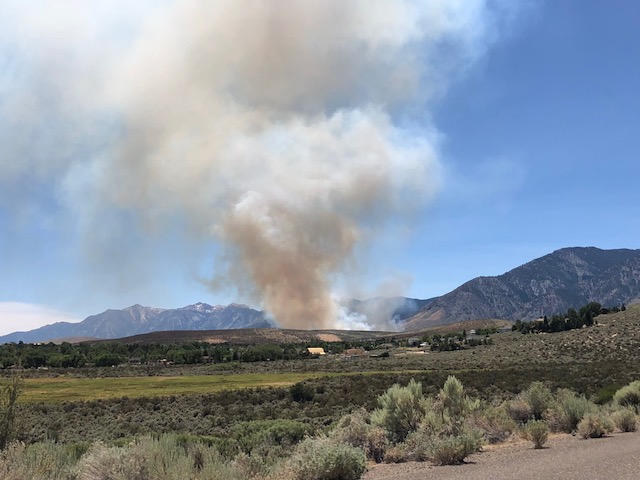
Looking south from Old Clear Creek Road at Costco at 1:50pm July 9. Photo/John Simonds

Updated 9:38pm:

The James Loop Fire burning in the Carson area is at 260 acres and 30 percent containment as of 9:30pm Monday.

It was reported at 12:45pm at the James Canyon Development near Carson City. Officials reported the fire was caused by heavy equipment working on a home under construction

The fire burned 163 acres of private and 107 acres of Bureau of Indian Affairs lands, but threaten lands managed by the Humboldt-Toiyabe National Forest.

The fire jumped Jacks Valley Road, but fire crews were able to stop it from reaching the Jacks Valley Wildlife Management Area.

More than 20 homes were threatened, but none were lost. Jack Valley Road is open, but only James Canyon residents are allowed back in the area effect by the fire.

— Lake Tahoe News staff report


Dockless bikes generating loads of newfound data

By Enrique Gili, Sierra

This past spring, clusters of brightly colored dockless shared bikes (DSBs) began to proliferate on San Diego’s city sidewalks like tulips after a spring rain. They were put there by companies—such as Lime, Ofo, and Mobike—seeking to disrupt the status quo of California’s omnipresent car culture. As a result, thousands of DSBs ended up scattered around commercial districts and residential neighborhoods.

Dozens of markets—from major metropolitan cities like Minneapolis and Dallas to college campuses like Arkansas State University to South Lake Tahoe—have similarly bike-strewn landscapes as a result of the DSB wave, which added 44,000 bikes to U.S. streets in 2017.

The companies behind DSBs are united in their eagerness to capitalize on the so-called sharing economy (which has exploded since the dawn of Uber and Airbnb) by changing the way people travel and commute.

Yet for all the well-documented controversy surrounding DSBs, one overlooked aspect is the rivers of data their systems generate. Since each bike is equipped with sensors, and each cyclist carries a GPS-enabled smartphone, any given fleet of DSBs is collecting multiple terabytes of user information.

Read the whole story


Road Beat: Lexus LX570, the ultimate SUV

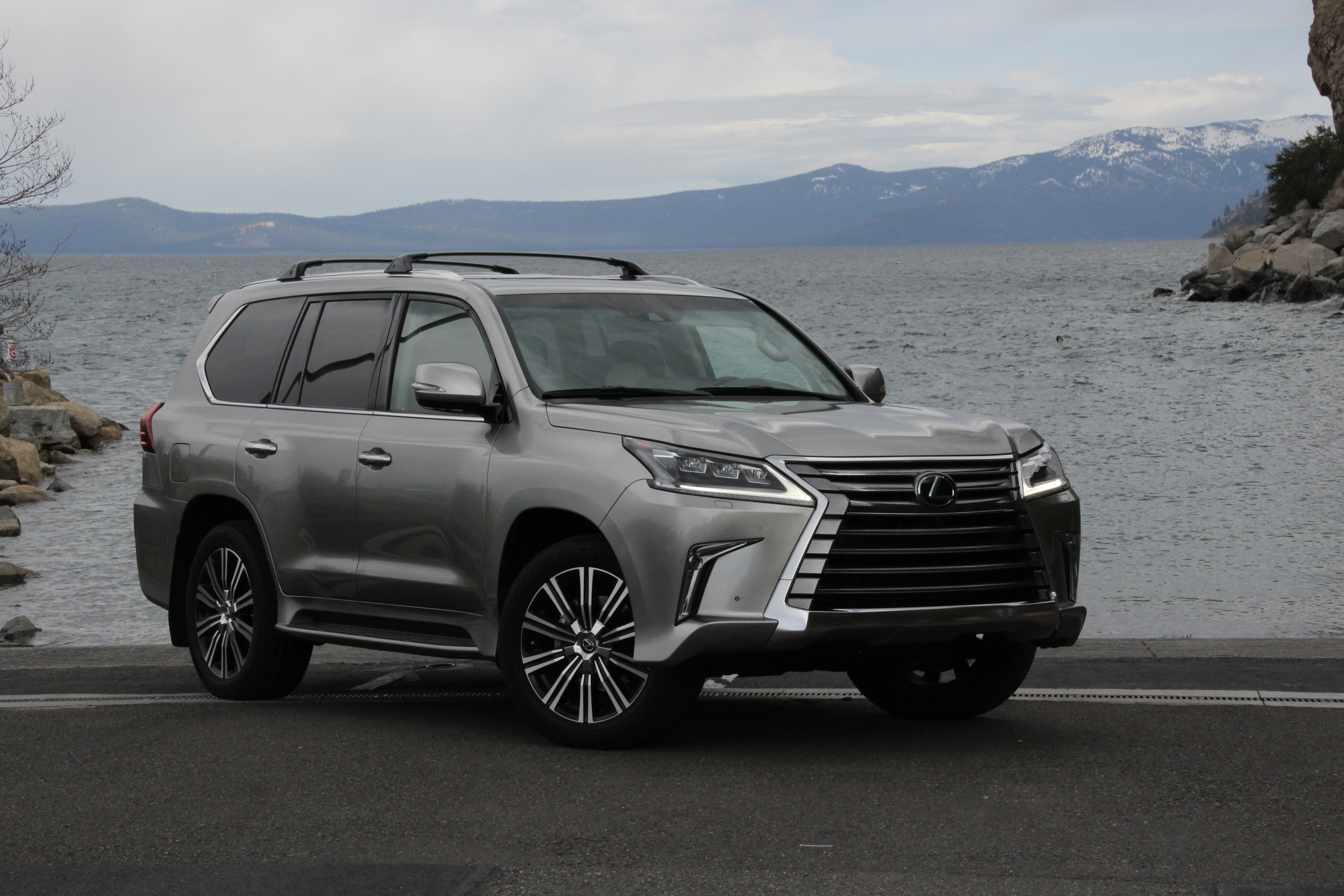
The Lexus LX570 continues to impress with each model. Photos/Larry Weitzman

By Larry Weitzman

With an MSRP $685 shy of a hundred grand, one would expect a sublime ride and anechoic chamber quiet. LX570 delivers that and more including a Mark Levinson sound system headlined by a muted, but wonderfully smooth sounding 5.7L V-8 engine.

Coming off its best sales year since 2008 with more than 6,000 units sold in 2017, Lexus LX570 goes into 2018 with few changes. One being a new color, Eminent White Pearl, and 10 years of complimentary Enform Safety Connect and Enform Service Connect, otherwise it is the exact same vehicle as the 2017 model following the motto: “Don’t fix what isn’t broken.” And being a Lexus, it rarely breaks, if ever.

By today’s standards LX570 is a big vehicle stretching out exactly 200 inches on a 112.2-inch wheelbase. It is beamy at 78 inches and stands a stout 75.6 inches tall. But it is narrow enough for the Panama Canal (by about 96 feet, 173 feet with the new locks). The design is a classic two box with a massive cargo hold of over 83 cubic feet. Up front is the now classic and familiar L’Finesse trademark Lexus grille. It is massive. Headlights are slick, sophisticated three box LEDs. Sweeping fender bulges add muscle and strength as the overall impression is one of beautiful mass. Speaking of mass, curb weight is 6,000 pounds.

To move such mass against the forces of Newton’s First Law is a large, 5.7L, DOHC, 32 Valve V-8 that pumps out 383 hp at 5,600 rpm and 403 pounds of twist at a low 3,600 rpm. It sends this power longitudinally to an eight-speed auto cog swapper that drives all four wheels all the time (it has a two-speed transfer case for rock crawling) with a rear wheel bias. That is the big change from four years ago, two more tranny speeds which added about an mpg to fuel economy. Its air suspension system can raise or lower the vehicle and there are several throttle mapping controls for off road work. But I doubt that anyone who buys an LX will ever use any of the systems. Marring its beautiful finish would only bring heartache and tears.

Specifications
Price $82,690 to about $90,000
Engine
5.7L, DOHC, 32 valve V-8 383 hp @ 5,600 rpm
403 lbs.-ft. of torque @ 3,600 rpm
Transmission
Eight speed electronically controlled automatic
Configuration
Longitudinal front engine/all wheel drive
Dimensions
Wheelbase 112.2 inches
Length 200.0 inches
Width 78.0 inches
Height 75.6 inches
Ground clearance 8.9 inches
Track (f/r) 64.8/64.6 inches
Weight 6,000 pounds
GVWR 7,385 pounds
Weight Distribution (f/r) 51/49 percent
Towing capacity 7,000 pounds
Fuel capacity 24.6 gallons
Cargo capacity third row removed, second row folded 83.1 cubic feet
Turning circle 38.7 feet
Steering lock to lock 2.4 to 3.4 turns (at below 6mph)
Wheels 20X8.5-inch alloys
Tires 285/50 HR mud and snow
Coefficient of drag 0.35
Performance
0-60 mph 6.88 seconds
50-70 mph 3.61 seconds
50-70 mph uphill 5.45 seconds
Top Speed Electronically limited to 137 mph
Fuel economy EPA rated at 13/18/15 mpg city/highway/combined. Expect 16 mpg in rural country driving and 19-20 mpg on the highway at legal speeds.

Performance is outstanding, able to move the big Lexus from a standing start to 60 mph in 6.88 seconds. Passing times are commensurate with that number as 50-70 mph comes up in 3.61 seconds on level ground and in 5.45 seconds up a 6-7 percent grade. That is getting the lead out, quickly. Throttle response is strong although I found throttle travel to be a bit long. Interestingly, when this vehicle was tested four years ago, the performance times were virtually identical with the respective numbers coming in at 6.89, 3.59 and 5.28 seconds. How’s that for production consistency and keeping nano tolerances.

As you would expect, a 6,000-pound vehicle that can accelerate from 0-60 mph in under seven seconds powered by a honking, huge V-8 engine, wouldn’t exactly win any awards for frugal fuel economy. LX doesn’t but compared to big vehicles 40 years ago with bigger engines, the LX is remarkably fuel-efficient averaging 18.1 mpg in a 200-mile round trip from Placerville to Carson City. That trip included about a dozen full throttle passes in the passing zones. On the highway at 70 mph the LX managed 18.8 mpg. EPA numbers are 13/18/15 mpg city/highway/combined. Overall, during my 400 plus miles, I averaged about 16.8 mpg. Don’t expect much more than the EPA numbers, maybe an mpg or two. Fuel capacity is a monstrous 24.6 gallons, only high limit credit cards need apply.

Handling is good. Suspension is by state of the art double wishbones up front and a four-link controlled live axle in the rear with electro/hydraulic variable suspension. Track is wide at 65 inches at each end and steering is a variable gear ratio electric power rack with a tight turning circle (for a big vehicle) of 39 feet.  However, steering is on the heavy side. As the ride is super compliant and on the softer side of life, body roll is present when pushing the big Lexus in the twisties. However, massive 285/50 series rubber riding on 20X8.5-inch alloys provide intense grip allowing the big SUV wide latitude in choosing your cornering speeds. This baby goes around corners at speed with control and confidence. I surprised many sporting sedans when the road started bending.

Ride quality is extremely smooth and compliant. For a hard core serious off-road vehicle with extreme capabilities, the ride is as soft as the vehicle is rugged.

Safety is a tour de force starting with its stout construction. It feels like you are surrounded in armor-plate. With Lexus Safety Sense plus, there is just about every acronym ever. Its triple beam LED headlights turn night into day and its four-wheel, huge ventilated discs provide immense stopping power.

Inside is a scrumptious reddish-brown leather interior. It is soft, comfortable and beautiful. Instrumentation is complete with a big speedo and tach flanking a centered trip computer/info center. But the mouse controller system makes the operation of the otherwise fabulous Mark Levinson Sound System difficult. HVAC was more conventional.

Its copious interior would be dangerous at Home Depot or Lowe’s. There is about 83 cubic feet of cargo behind the front seats and second seat legroom is of limo proportions. Can’t say the same for the sideways folding third row seats.

When I last tested the LX570 some four years ago, it stickered for about $90 large with most options. Now the base price is $20 shy of $90,000 plus the $1,195 luxo suite on the yacht from its Japanese assembly plant. Options on my tester like its dual screen DVD system added nearly 10 grand bringing the total sticker shock to $99,315. For that kind of money, I’ll take an LC500 and move to where there is little or no snow. Wait a minute, I already ready live there.

Larry Weitzman has been into cars since he was 5 years old. At 8 he could recite from memory the hp of every car made in the U.S. He has put in thousands of laps on racetracks all over the Western United States.


Snippets about Lake Tahoe

·      West Shore Café in Homewood won Wine Spectator’s award of excellence for the fourth year in a row.

·      The Country Gone Wild after party with Moonshine Bandits will immediately follow the Keith Urban concerts. The parties are July 21 and July 22 at Blu Nightclub inside MontBleu at Stateline. Must be 21 to attend. Tickets are $20 in advance, $25 each night.

·      Celebrity Golf Afterparty Mayhem featuring Tommy Lee and DJ Aero will be July 14 at Blu Nightclub at MontBleu in Stateline. Advance tickets are $30 plus taxes and fees, $35 that night.

·      South Lake Tahoe firefighters are hosting a blood drive July 23, 9am-1pm at Station 3, 2101 Lake Tahoe Blvd.

·      Glenbrook is one of the 10 most expensive neighborhoods in the United States, according to realtor.com.


Environmental review beginning on Tahoe XC Lodge

On July 17, Tahoe City PUD is hosting two scoping meetings for the environmental impact report for the Tahoe Cross-Country Lodge replacement and expansion project.

They will be at 10am and 6pm in the board room at 221 Fairway Drive, Tahoe City.

The notice of preparation per CEQA was released June 22. 

In 2015, the historic 1930s Rubicon Bay Schilling residence was donated to TCCSEA with the vision of becoming the Tahoe XC Lodge. The existing Tahoe XC Lodge at 925 Country Club Drive, Tahoe City is owned by Tahoe City Public Utility District and operated by Tahoe XC and the Tahoe Cross-Country Ski Education Association (TCCSEA) under a concession agreement with TCPUD. 

The project involves replacing and relocating the lodge to a site off Polaris Road adjacent to the North Tahoe Middle/High School. The purpose of the project is to reconstruct a facility by re-using and re-purposing the historic Schilling Lodge in an effort to better serve year-round recreation activities and services.


Edgard Jan Pevenage — 1940-2018

Edgard Jan Pevenage,

Edgard Jan Pevenage, known by his friends and family as Eddy, passed away on July 5, 2018, at age 77 after complications from a motorcycle accident.

Originally from Belgium, Eddy came to the United States in his early 20s. He spent many years as a chef in Lake Tahoe.

In addition to cooking and riding motorcycles, Eddy loved learning about cars, watching soccer, and skiing with his family.

Eddy will be lovingly remembered by his wife, Pamela, and her family, son and daughter-in-law, Steve and Kim, and granddaughters, Tyler and Jenna.

An intimate gathering with friends and family will be in Campbell, Calif., on July 14.


Development rights in Tahoe get overhaul

By Adam Jensen

The Lake Tahoe Basin has a unique system of private property development rights established to protect this national treasure.

The development rights system began in the 1980s and is central to the Tahoe Regional Planning Agency’s management of growth in the Lake Tahoe Basin. It is designed to ensure development will help achieve a wide range of environmental goals.

It has also become clear the system is not well understood or easy for investors and developers to use.

Development rights, formerly known as commodities, are entitlements one must acquire before developing a property and can include commercial floor area, tourist accommodation units, existing residential units, residential development rights and allocations, land coverage, and restoration credits.

“The Lake Tahoe Regional Plan recognizes the importance of redevelopment,” said Jennifer Self, a senior planner with TRPA. “Private investment in our communities is a key mechanism for getting environmental improvements on the ground. We want to make sure our systems are encouraging this type of redevelopment and not hindering progress.”

Since September 2015, a dedicated group has been meeting to discuss how to better manage growth, support environmentally beneficial and economically feasible redevelopment, and improve the effectiveness and predictability of the current development rights system.

The Development Rights Strategic Initiative Working Group includes representatives from the environmental and business sectors, state land banks, California Attorney General’s Office, the TRPA Advisory Planning Commission, and the Regional Plan Implementation Committee.

The working group released recommendations in September 2017. A formal environmental review of the recommendations is anticipated this summer, with the final approval and adoption in September and October. All working group meetings and approval hearings will include opportunities for the public to comment on the proposals.

“The working group partnered with a national expert in development rights systems to look at best practices from around the country and see what we could model right here in Tahoe,” Self said.

Under the recommendations, TRPA would make five key improvements that would increase flexibility and create a more user-friendly system while still maintaining the overall development cap for the basin:

  • Allowing for the conversion or exchange of development rights from one type to another to allow for more flexibility and responsiveness to market demands. The system no longer has rigid silos of development types.
  • Eliminating local government approval of development rights transfers across jurisdictional boundaries to simplify the system and reduce fees. A local jurisdiction would have the option to reinstate the so-called “veto” if it saw a net loss of 5 percent of existing development rights over a two-year period.
  • Strengthening partnerships between TRPA and the California and Nevada land banks to increase development rights inventories. This partnership would help accelerate the goals of the Regional Plan by retiring development on sensitive lands and transferring the development rights at low cost to projects in town centers.
  • Improving the transfer-of-development-rights system to increase predictability and make the system more user-friendly. A few key improvements include eliminating a requirement to have an approved project prior to a transfer, expanding tracking and inventory capabilities on LakeTahoeInfo.org, and highlighting successful redevelopment projects.
  • Allocating a portion of the residential bonus units for local achievable housing—housing for those who earn too much to qualify for affordable and moderate-income housing but too little to afford the median market-priced multi-family or single-family unit. These bonus units would be awarded essentially free of charge to eligible projects.

“All in all, we’ve heard from community groups that we’re moving in the right direction,” Self said.

For more information on development rights and public meetings, go online.

Adam Jensen is an environmental education specialist for the Tahoe Regional Planning Agency. This article first appeared in the summer 2018 issue of Tahoe In Depth.


Opinion: U.S. not as divided on immigration as you think

By Deborah Schildkraut, The Conversation

Lawmakers in Washington, from the president down to first-term members of Congress, may be misjudging how the public feels about immigration.

President Trump appears to believe the country needs and wants hard-line policies. Members of Congress haven’t stopped him from carrying out those policies.

Do the American people really support them?

It turns out that government officials who think the majority of Americans want hard-line immigration policies are wrong.

Elected officials – both Republican and Democratic – tend to think that their constituents are more conservative than they actually are on immigration and other issues. Moreover, recent research suggests that Republican constituents have been more likely to contact their elected officials than Democratic constituents.

Yet, my research on public opinion about immigration, and that of other social scientists, shows that the American public is supportive of more welcoming immigration policies. Welcoming policies might include a pathway to citizenship for undocumented immigrants, accepting more asylum claims or allowing the use of multiple languages in public places.

Most Americans support a path to citizenship

I am a scholar of public opinion about immigration and national identity, and I have studied how people from a variety of backgrounds feel about immigration-driven diversity in the United States.

Let’s look at public opinion on one immigration proposal that has been debated for over a decade: providing a path to citizenship for undocumented immigrants living in the U.S.

Since late 2007, polls conducted by CBS and the New York Times have asked respondents which option they prefer when it comes to “illegal immigrants working in the United States.” The options include: allow them to stay in their jobs and eventually apply for U.S. citizenship; allow them to stay only as guest workers but not apply for citizenship; or require them to leave their jobs and the country.

This question has been asked in 31 CBS/New York Times surveys since 2007. In 22 of them, providing a path to citizenship is the majority preference. Support for citizenship has not fallen below 50 percent since 2013. In fact, support has increased over time, a trend that has continued throughout Trump’s presidency.

Support for a path to citizenship varies by one’s background when it comes to race, gender, education, income, party and ideology. However, support is high across the board, even among those who say they are Republican or conservative.

Of course, this is only one of many immigration policies getting attention these days, and support for other policies varies.

Attitudes on this policy show that Americans are not as divided or as conservative as the discourse coming out of Washington, D.C., might reflect and is becoming even more supportive of the welcoming approach. Yet, providing a path to citizenship is also the primary policy that seems to keep thwarting legislative reform in Congress.

A welcoming climate need not alienate U.S.-born whites

Public officials may be concerned about alienating non-immigrant whites if they pursue welcoming immigration policies. We tried to find out whether that alienation could happen. In a recent experiment, my colleagues and I asked U.S.-born whites in Arizona and New Mexico how they felt about their state adopting more welcoming or restrictive immigration policies.

We asked people if the proposed policy would make them angry, sad or happy. We found that liberal and moderate whites responding to the more welcoming treatment were more likely to be happy and less likely to be angry or sad than were those who were responding to the restrictive treatment.

We also asked them if the proposed policy would make them feel more or less at home and more or less likely to want to move. Again, we found that liberal and moderate whites, in response to the welcoming treatment, felt more at home and less likely to want to move than did liberal and moderate whites who were given the unwelcoming treatment.

Only conservative whites were happier, less angry, less sad and felt more at home in response to restrictive treatment. Every one else fared better when told that their state was considering adopting policies that welcomed immigrants.

It is worth noting that in the 2016 data mentioned above, only 35 percent of whites identified as conservative while 65 percent identified as either liberal, moderate or other.

Squeaky wheel gets the grease

Given these data, why is a conservative approach to immigration dominating in Washington?

In American politics, it is the squeaky wheel that gets the grease. Within the Republican Party, which holds a majority of seats in Congress, voters with more conservative preferences on immigration and other issues have been more active in recent years than other party members. As long as that continues to be the case, Republican politicians will feel that they need to push restrictive immigration policies if they wish to remain in office, even if the majority of their constituents feel otherwise.

As more and more people respond to President Trump’s immigration agenda with protests and participation in electoral politics, this asymmetry in engagement may change.

Deborah Schildkraut is a professor of political science, Tufts University.