Stateline nightclubs No. 1 problem for DCSO

By Kathryn Reed

Simple batteries and assaults at Stateline nightclubs are the No. 1 call Douglas County sheriff’s deputies respond to.

“It’s just a younger, more rambunctious person that tends to go to the clubs,” Undersheriff Paul Howell told Lake Tahoe News. “When you mix alcohol and young people, you get fights. When I talk to my counterparts in Reno and Vegas, they see the same problems.”

On occasion, shoplifters at the big box stores in the Carson Valley eclipse fights at the casinos. Such was the case in July. Last month deputies responded to 62 thefts in the valley and 51 assaults at the lake. Still, 95 percent of the thefts throughout the county are in the valley, while 95 percent of the fights in the county are at the clubs.
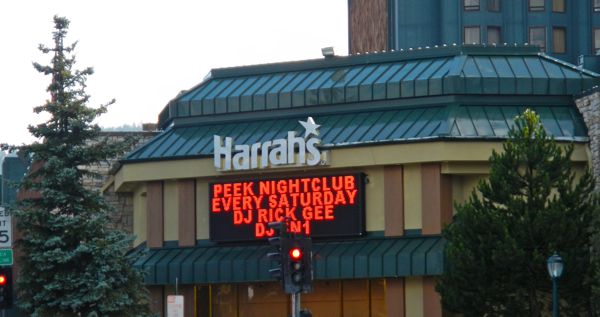
Nightclubs on the South Shore keep Douglas Count sheriff's deputies busy. Photo/LTN

Nightclubs on the South Shore keep Douglas County sheriff’s deputies busy. Photo/LTN

Howell said the number of altercations at the Tahoe casinos has declined through the years as gaming has slid in popularity in the basin. Plus, the numbers fluctuate based on how many people are in town. And summer is always a more violent time than winter.

A simple assault is defined as pushing, shoving, slapping and punching – “something that does not cause serious injuries.”

Not all the people deputies run into are arrested. Sometimes security at the clubs has defused the situation. Howell said his officers work hand-in-hand with casino security to quell the unrest. It is usually security that calls in DCSO for reinforcements.

Many times the situation is resolved by people willingly leaving the club. Often people don’t want to press charges, so no arrests are made.

Between 95 and 98 percent of the people causing the disturbance are visitors; with most of them being from the Sacramento or Bay Area, according to Howell.

Howell doesn’t blame the free alcohol at the casinos as the problem. He said the people gambling are seldom the same ones who are in the clubs. People in the clubs are paying for their booze and it’s not always cheap, especially with bottle and VIP services.

But there are opportunities to drink for cheap or free. At Opal Ultra Lounge inside MontBleu drinks are a buck on Thursdays, while women drink for free on Fridays until 2am.

No one from MontBleu nor Harrah’s returned phone calls. Those two casinos are home to the main nightclubs in Stateline.

XHale – Hookah Bar and Lounge, which opened in May in part of the building that used to be Bill’s Casino, has seen deputies show up a few times.

“When people are intoxicated, they don’t know what they are doing and they get all physical,” Sunny Patel, owner of XHale, told Lake Tahoe News. “My security guards try to break up the two people who are fighting. Usually it’s the other person not fighting who gets in the middle and ends up getting hurt.”

Patel said he has cameras in many locations so there is evidence to prove who did what when. He added that it hasn’t always been guys at XHale who are the instigators.

But Howell said deputies mostly interact with guys in their 20s.

He doesn’t anticipate the Hard Rock Hotel, when it opens in the winter, will add to his deputies’ workload. Howell said a property of that caliber tends to hire the appropriate number of security officers and that they tend to be highly trained.



Opinion: Medicare billing not a simple answer

By Sue Fairley and Lisa Fisher

Hospital care can be complex and expensive. Strangely, a short hospital trip may cost more than an extended stay.

Sound familiar? In October 2013, Medicare enacted the “two-midnight rule” to discourage hospital inpatient admissions. Medicare patients staying longer than two midnights in the hospital, excluding discharge, may be considered inpatients. Medicare patients that stay less than two midnights typically receive outpatient or “observation status.”

Observation status costs more for Medicare patients and hospitals. Insurance companies likely will model Medicare’s limited reimbursement plan which means non-Medicare patients may soon experience this change.

Barton wants to help Medicare patients and their families better understand how the “two-midnight rule” affects the patient’s health and financial responsibility.

Am I affected?

Any Medicare patient that enters a hospital for emergency care requiring admission is assessed for inpatient or observation status. Based on the patient’s medical condition and symptoms, a medical provider uses Medicare’s established “two-midnight rule” criteria to determine the patient’s status.

Why does it cost more?

Medicare charges “observation status” like outpatient treatments that occur outside the hospital setting. Outpatients are expected to pay line-by-line for services and both the patients and hospital receives far less reimbursement than an admitted inpatient.

Will I receive less quality care as an outpatient?

All patients admitted to the hospital receive the same level of expertise and care.

How can hospital staff determine how long I will stay when I arrive? If my condition worsens, can I change from outpatient to inpatient status?

When a patient is admitted to the hospital, the hospital staff considers many factors to determine the patient’s status, such as symptoms, treatment needs, and severity of condition/illness. Physicians use these findings, in conjunction with the established criteria from Medicare, to best determine how long a patient will remain in the hospital. If conditions and circumstances change, admission status can change to match the care needed.

To ensure that medical staff has admitted the patient to the correct status, Barton contracts with Executive Health Resources (EHR) to verify the admitted patient matches the correct status under Medicare Guidelines.

Should I insist I be considered inpatient status instead of observation?

If only it were that simple. Medicare has instituted the “two-midnight rule” which medical providers are required to follow, and are the same for every hospital nationwide.

Why can’t the hospital just absorb the increase in costs for observation status?

When Medicare reimbursements decrease, hospitals and medical providers must find other ways to make up this decrease in revenue. The hospital cannot absorb these extra costs and still provide the variety and quality of services to the community. Thus, some costs trickle down to the patient.

Barton Health strives to help patients with financial hardship. In 2013, Barton donated nearly $7 million in care to patients that qualified for financial assistance.

How can I find out what Medicare covers?

For a comprehensive list of Medicare coverage, go online.

Sue Fairley is vice president of Nursing and Ancillary Services and Lisa Fisher is director of Case Management and Social Services for Barton Health.


LTCC soccer teams set to play

Lake Tahoe Community College’s men’s and women’s intercollegiate soccer teams are getting ready to kick off their inaugural season.

ltcc logoThe public may meet the teams Aug. 15 at 1:30pm on the soccer field. The women’s team is hosting an open tryout that day at 3:30pm. Interested players should contact coach Chris DeLeon at cadeleon@mail.ltcc.edu or 530.541.4660, ext. 551. Both coaches will make final player selections based on Friday’s performances.

On Aug. 18 the men’s team plays its first inter-squad scrimmage starting at 7:30 pm.

The return of college athletics to LTCC is also ushering in a new mascot and logo. The kokanee salmon has been replaced by the coyote. Royal blue has been added to the school’s colors of green and white.

LTCC is part of the Golden Valley community college soccer conference, which includes Butte, Feather River, Lassen, Redwoods, Siskyous and Shasta colleges.

LTCC’s first women’s home game (non-conference) is Sept. 11 at 3pm against Yuba College. The first men’s home game (non-conference) is Sept. 23 at 1:30pm against Folsom College. Click here for the teams’ schedules.


Snippets about Lake Tahoe

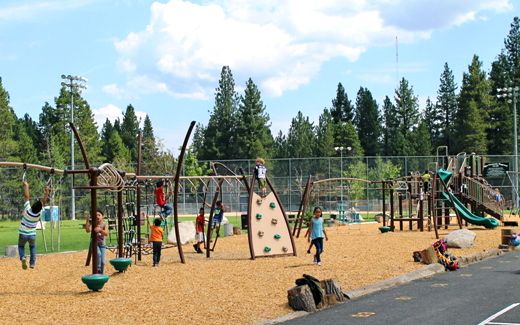
bijou playground• Bijou Community School’s playground has been erected just in time for this school year. The PTA will officially unveil it Aug. 22 at 2pm.
• Placerville resident Rachel Carter just had her first book published. “The Black Mage: First Year” is a young-adult fantasy.
• The Mountain Collective added Ski Banff-Lake Louise-Sunshine as the seventh destination on its multi-resort pass.
• Bigfoot was seen in Tahoe City. Check out this video:


Tahoe youth accuses camp leader of sexual advances

A 22-year-old man from Sonora is accused of sexting a 14-year-old Meyers boy.

Brandon Moe met the teen at a summer camp outside the basin. Moe was the youth’s cabin leader.

Following the boy’s return home the two communicated via text and Facebook, according to El Dorado County sheriff’s deputies.

“When the child’s mother detected that the communications had changed from innocent to inappropriate and sexual she contacted the sheriff’s office,” Sgt. Michael Seligsohn said in a statement.

Moe was arrested Aug. 11 on a charge of distributing or exhibiting lewd material to a minor. Bail was set at $1 million.

— Lake Tahoe News staff report


Truckee man found dead in wilderness

A missing Truckee man was found deceased Aug. 11 in the Boca/Verdi Peak area of Nevada County.

The Placer County Sheriff’s Office helicopter located Eusebio Nunez’s vehicle Sunday at 11:35am. A search team from Placer and Nevada counties on Monday found his body approximately 100 yards from his vehicle.

The cause of death is under investigation.

The 49-year-old had not been seen July 25.

— Lake Tahoe News staff report


Drought could increase tree beetle problem

By Associated Press

RENO  — Scientists say there’s been a significant reduction in the amount of Nevada forest under assault from bark beetles and similar bugs, but they fear lingering drought will further weaken trees and make them more susceptible to future attacks.

Nevada Division of Forestry forest health specialist Gene Phillips says aerial surveys show populations of the tree-killing insects plummeted across the state last year compared to 2012 — from 500,000 acres to only about 50,000.

“These are some pretty dramatic decreases,” Phillips told the Reno Gazette-Journal.

The trend was seen with the Pinyon Engraver beetle, also called the Ips, which infested some 12,000 acres of forest across Nevada in 2012. Last year, surveys concluded only about 2,500 acres were infested, a drop of more than 80 percent.

Infestation by mountain pine beetles — which have decimated forests in Colorado, Idaho, Montana and British Columbia — also dropped significantly in Nevada, down from 3,650 acres to 1,100, Phillips said.

The most dramatic reduction, nearly 90 percent, came in the amount of land under assault by the Pinyon needle scale, a pinhead-sized critter shaped like a bean. That infestation fell from an estimated 487,000 acres to only 49,000.

Phillips said it’s most likely part of a normal cycle that produces booms and busts in insect populations.

Significant overpopulation of an insect species is often followed by a crash in numbers, he said. Big beetle populations can result in spikes in the number of natural predators like wasps, which then whittle down beetle numbers.

“Insect outbreaks are very cyclical,” Phillips said. “They increase dramatically and they decrease dramatically. They increase and then they crash.”

The biggest concern is that a 3-year-old drought may continue, stressing already-stressed trees to make them more susceptible to insect attack.

“It doesn’t mean we might not see a dramatic increase this year,” Phillips said. “If this drought continues, all tree species in Nevada are going to continue to be stressed and bark beetles sense that. That’s when they get going.”

Healthy trees can easily fend off attacks by a limited number of bark beetles by secreting resin and essentially booting the bugs out of their bark. But when trees are stressed by drought, their defense mechanisms are weakened. Beetles can then attack successfully and while doing so, secrete perfume-like pheromones that attract hordes of more aggressive beetles than can overwhelm trees relatively quickly.

Drought has resulted in huge spikes in beetle populations and widespread tree die-offs before, said Gary Blomquist, a biochemist at UNR who has studied beetle pheromones.

The extensive drought the Reno-Tahoe area experienced from 1987 to 1994 resulted in nearly a third of the trees in the Lake Tahoe Basin being killed by beetles, Blomquist said.

That beetle infestation didn’t peak until the drought had lasted four to five years, he said.

“We’ve actually been very fortunate in this area. We haven’t seen that much in the Sierra yet,” Blomquist said. “We’re going to see more of them.”


Tennis mixer at Zephyr Cove

Zephyr Cove Tennis Club will host its last tennis mixer of the season on Sept. 3.

FAN-tastic Hump Day participants are encouraged to dress representing their favorite sports team, with a prize going to the best dressed.

Play starts at 5:30pm. The doubles mixer is for adult players of all abilities.

Cost is $10 for club members, $15 for non-members, and $5 for the meal only. The fun includes a barbecue, raffle prizes and tennis.

Participants of Hump Day events are encouraged to bring a side dish or dessert, as well as beverage of choice that does not come in a glass container. No advance sign-up is required.


‘Boys in the Boat’ captures historic crew team

By Kathryn Reed

The United States in the early and mid-1930s wasn’t anything like it is today. People on the East Coast barely could find Seattle on a map. The Olympics truly were a contest of amateur athletes. And, of course, Hitler was creating a dictatorship few saw coming.

This is the backdrop for “The Boys in the Boat: Nine Americans and Their Epic Quest for Gold at the 1936 Berlin Olympics” by Daniel James Brown. It was published in 2013.

TheBoysintheBoatGrit, determination and camaraderie are what made this crew team so successful. Saying this group of young men from Washington was special is an understatement.

Brown is able to capture the intensity of their quest through storytelling that makes this a page-turner. While the team is front and center, it is Joe Rantz who is the main character. His struggles to survive when his family turned its back and to find the money to pay for college were not unique. But they made him the man he became.

Lessons of what it means to be part of a team were often learned the hard way for this University of Washington team.

“The Boys in the Boat” is a bit of a coming of age story, part sports, and a ton of history. But all the segments are woven together in a way that gives depth to their various stories within the main story and perspective about living in Seattle 80 years ago as well as the workings of the Nazi regime.

It doesn’t matter if you know the outcome of the various races, the words are enough to stimulate a bit of adrenaline. Brown’s delivery is like that of a good broadcaster who makes you envision what is going on without needing to actually attend the sporting event.

Brown does such a superb job making the reader care about these men that you can find yourself silently cheering during each race.

The movie rights have already been sold.


Tahoe Fund paying to improve environment

Tahoe Fund this summer gave out $131,000 for four environmental improvement projects that address erosion control, beach improvements, bike paths and the removal of invasive Asian clams.

Project recipients were California State Parks for a bridge across Angora Creek on the South Shore; Nevada State Parks for beach improvements including ADA access at Sand Harbor; Tahoe City Public Utility District for a mile section of bike path along the West Shore; and the Tahoe Regional Planning Agency for the removal of Asian clams at the mouth of Emerald Bay.

Founded in 2010, the nonprofit Tahoe Fund is dedicated to raising money for projects that will improve lake clarity, enhance recreation and inspire environmental stewardship in the Lake Tahoe Basin. The Tahoe Fund welcomes donations of any size to help sustain the organization and the natural environment of the Lake Tahoe Basin. Information is available at info@tahoefund.org or by calling 775.298.0035.