Publisher’s note: Lake Tahoe News asked the seven South Lake Tahoe City Council candidates a series of questions. All are the same except for one that is specific to each candidate. The responses are being run in the order LTN received them.
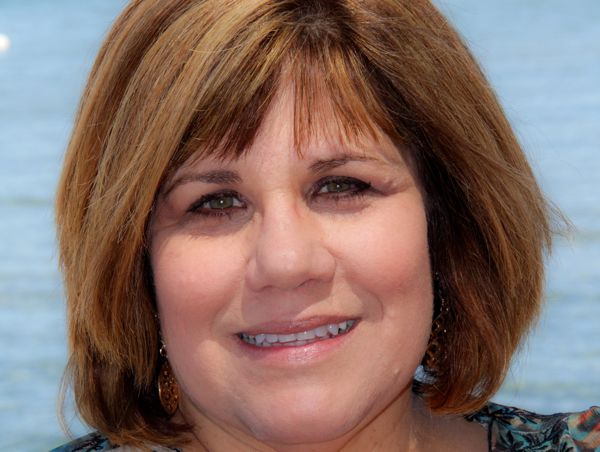
 Name: Angela Swanson
Profession/work experience: Grant writer and school facilities planning consultant.
Age: 53
What organizations, committees or groups are you or have you been involved with?: I was elected to the City Council in 2010. Prior to that I was elected and served on the governing board of the Lake Tahoe Unified School District. In addition, I’ve been active in community service since moving to this community in 1993 with husband and infant son. I volunteered in my kids’ schools, served on PTA boards, volunteered in youth sports, and Girl Scouts. In addition, I have had the privilege of serving in many official capacities, some highlighted below.
Appointed service:
• Ad Hoc Legislative Committee member, CSLT City Council 2011-2013
• Board member, Tahoe Transportation District, 2010-2014
• Board member, CalTahoe Emergency Operations Service Agency, 2010-2014
• Board member, California Tahoe Conservancy, 2010-2012
• Board member, Sacramento Division, League of California Cities
• Board member, Solid Waste Tri-County Commission
• League delegate, Transportation, Communications & Public Works Committee, 2011-2014
• League delegate, Employee Relations (PERS) Committee, League of CA Cities, 2014
• Ad Hoc delegate, Water Bond Task Force, League of CA Cities, 2014
• Ad Hoc delegate, CEQA Reforms, League of CA Cities, 2013-14
• Steering Committee, 56-Acre (Lakeview Commons) Project.
Why are you running for City Council?: I am running for re-election to the City Council to continue the successes of the past four years and to keep our city on track for continued improvement. It’s been a privilege to serve this community as a council member the past four years. We have made significant progress in moving the city to greater economic, environmental, and social sustainability. My decisions have supported a strong fiscal policy that took us from a sea of red ink to a balanced budget and a plan to meet our pension and healthcare liabilities. We’re investing in infrastructure. After decades of neglect, streets are regularly paved and bike trails added. Pioneer Trail finally has sidewalks and streetlights, Harrison Avenue is newly revitalized and the hated “Hole” is a retail center. We have our first neighborhood playground at Bonanza Park, Lakeview Commons bustles year-round and Regan Beach is funded for improvement.
There is still much to be done. Protecting our lake requires economic investment in our aged infrastructure. It’s time to simplify permitting, improve broadband service and spur investment at the Y. We need to diversify our economy around recreational tourism, special events, a destination college, and telecommuting professionals. We must also address the needs of seniors, the working poor and our failing mental health system.
Why should people vote for you over the other candidates?: 1. Performance. No other candidate has the track record of success that I’ve achieved in the past four years on council. Some examples. I championed the Harrison Avenue revitalization project, getting it constructed in three years, after 20 years languishing in the “plan pile.” The first-ever joint-agency Recreation Master Plan is now completed. It is the blueprint for projects and investment in our new recreation-based economy. When I joined the council, we laid-off over 65 employees and slashed services. In September we will approve our second balanced budget that also includes over $3 million in capital investment. I pushed for infrastructure investment and delivered a repaving program, new bus stops, and at long last – lighted sidewalks on Pioneer Trail.
2. Vision. Citizens in South Lake Tahoe should be represented by council members that can articulate, coalesce and achieve visionary change for our community. My work with Harrison Avenue, the Loop Road, the turnaround in the city’s culture, and my work building public/private sector partners evidences this skill.
3. Effective leadership. I believe effective elected leaders communicate clearly, demonstrate follow through, are consistent in their logic and actions, have passion for their work and the ability to build consensus. Whatever the topic – building a new recreation economy, plastic bags, the Highway 50 realignment, TMDL regulations, union negotiations – I have consistently used leadership skills to guide my decision-making and to persuade my fellow council members to follow suit.
What do you think is the most pressing issue facing South Lake Tahoe and how will you deal with it?: Jobs and Economic Development are hands-down our most pressing issues.
I will pursue a three-fold strategy that starts with stabilizing and expanding existing business, giving them incentives to grow and/or build. We must build on these strengths particularly in the areas of eco-tourism and destination education, cultivating a well-rounded product in those industries. Tax and commodities incentives that get government red tape “out of the way” and enhance zoning are so often the missing ingredients to existing business expansion. These tools are key to growing new business, too.
Second, the city must develop the infrastructure necessary to draw new economic growth. That infrastructure begins with adequate cell and broadband coverage, continues into recreational facilities including bike paths and continues with road improvements. Businesses seeking new locations want to move to attractive communities with high quality housing stock at a variety of price points, good schools and a technological and physical infrastructure capable of supporting their operational needs. We lag behind in these areas. We must not be afraid to invest in ourselves. I’ve watched our city suffer for years because public and private owners have failed to maintain their assets.
Third, use the resources of our private sector partners like the city’s recently formed economic development task force and both of our chambers, to recruit new businesses in the areas of recreation/tourism, destination education, and health and wellness. Building on these established bases is smart and logical. We need to also seek out and recruit the tele-commuting young professional who would appreciate the luxury of living and working in Tahoe.
If the city cannot reach an agreement with its bargaining units, are you willing to go to impasse? Why or why not?: Yes. The city has been direct and transparent about our present and future financial challenges and the role employees need to play in righting the course. To ensure we are a sustainable organization, we must collectively share the burden of righting past policies that led us into unfunded PERS and health care liabilities. If that means we must go to impasse as part of the negotiations process, then we will do so.
How would you resolve the CalPERS and health care issues in the city?: I am the only member of the city to work directly with legislators, the governor’s office and fellow city officials to solve PERS. As a member of the League of California cities PERS committee and the ad hoc task force, I work directly at the state level to resolve these problems. This experience confirms for me that the city is on the right track.
The CalPERS and health care unfunded liabilities should have been dealt with 10, event 20 years ago. I hear from many current and former staffers who tell me they knew then that the program was unsustainable. The problem? Nobody was prepared to make the tough decisions. I have been a consistent advocate to address these issues fairly. Toward that end I supported council’s action course initiated by council over the past two years to resolve the city’s unfunded CalPERS and health care liabilities. In my first year on the council, employees began to pay the matching share into PERS (8-9 percent). The next year, council voted to set aside additional funding against our PERS indebtedness. By refinancing our PERS liabilities repayment schedule, we will be able safeguard our employees retirements and eliminate the red ink.
Health care. We have to hold the line on health care costs. Presently, our $30 million/year General Fund must fund over $4 million on health care. Of that nearly $2 million goes to retirees. We must balance the needs of the current workers with the retirees. We also have an obligation to return dollars back into our community. On the table is a proposal that provides equal access to health care for all with a net savings to the General Fund. This proposal would also fully fund retiree health care, eliminating a problem that past councils allowed to linger for a decade.
What is your opinion about term limits for the council?: I believe the voters of South Lake Tahoe thoughtfully choose their council members. The real question is how do we broaden and enrich the candidate pool.
If the city has positive cash flow, where should the money be spent?: Uncommitted funds should go first into improving our community’s built environment. I am proud that this council has adopted and funded the first Capital Improvement Program (CIP) of substance in a decade. We’ve identified four key projects – road repairs, moving the maintenance yard from the 56-acre complex to our new industrial location, improving Regan Beach and renovating the rec enter. Any additional funds should go to the unfunded projects on the list.
We are learning from the lessons of the past. Don’t throw money away. Invest in capital.
What are your ideas for increasing the city’s revenues?: Cities are funded primarily from three sources – sales and property taxes and TOT. Our most effective way to raise the bottom line is to stimulate the economy so existing businesses thrive and new business is drawn to South Lake Tahoe. We are a notoriously difficult place to develop because of our regulations. The city needs to focus attention on smoothing the permitting and planning process and do more to facilitate private investment. We also need to implement the Tahoe Valley and Tourist Core area plans. These blueprints identify prime areas for private investment.
What is your vision for the 56-acre project?: As a member of the 56-acre steering committee, I collaborated in forming a strong vision for the site. It is the heart of our community and needs to be developed to complement the work done at Lakeview Commons and nearby Harrison Avenue. Moving the city’s maintenance yard from the site, make the existing rec center into a water complex, building a new indoor complex would create a more complete recreation experience as would adding interpretive trails and signage. An outdoor amphitheater and revitalized campground are additionally required amenities. Lastly, the senior center and museum should be transformed to include a full-bodied community center complex.
What would you do to improve relations with El Dorado County?: Good relations require relationships. That is why I have made the effort to build relationships with the full Board of Supervisors, the CAO and key staff members. I know many of the Placerville City Council members and have worked to learn about the issues important to them. This is why I volunteer my time with the League of Cities and other organizations in Sacramento.
Is the city on the right course with restructuring debt and focusing on recreation? Why or why not?: Yes. Restructuring debt took the budget from red ink to black and resolved 20 years of poorly negotiated agreements. The public has told us that recreation is the new hub for our tourist economy. Investing in the public infrastructure needed to support recreation is our contribution to economy revitalization. With our fiscal house in order and our recreation infrastructure in place, South Lake Tahoe will be poised for additional economic development and expansion.
Name one vote the City Council made in the last four years you are proud of and one you are disappointed in – why?: The vote to fund the Harrison Avenue renovations. I was the champion for this project, working with the owners, staff, and consulting team to resolve 20 years of debate. The result – a project that nearly completed representing over $5.8 million in public infrastructure improvements. More, the project includes an important partnership with the local property owners and businesses that generate economic and environmental wins for our community.
I am disappointed that council chose to delay the second phase of the plastic bag ban. It is frustrating to revisit ordinances repeatedly. Council’s job is to set policy then stay out of the weeds when it comes to implementation. I was particularly disappointed that the delay was implemented for no clear purpose. There was no protest from business or individuals. Instead there was an outpouring of support for final implementation from nearly 200 residents. I believe council missed an opportunity to listen to and serve our voters.
What is working in the city and what isn’t; and how would you go about changing what isn’t working?: The citizens survey guides me in this area. They said they wanted infrastructure, better communication, a balanced budget, built environment improvements. Four years ago we turned this around, making the cuts to balance the budget.
Being on the council requires working with four others. Give readers an example of how you work well others in difficult situations with differing opinions: SnowGlobe is an excellent example of working well under pressure under contentious circumstances. I was newly elected when SnowGlobe came to town, catching us all by surprise with its booming bass levels, crowds and congestion. I spent long hours on the phone with irate residents across the city listening to their complaints and working with the city and staff to solve the problems. Council received strong protest and criticism in the weeks following. It was important to me that council allowed community members to express their opinions. More, we needed to ensure that conflicting opinions were respected. It wasn’t easy, but the post-SnowGlobe discussions resulted in many good suggestions for improvement.
When the question of bringing SnowGlobe back for a second time came up in the fall, there was great opposition. I am proud of my work, along with my fellow council members, to identify opportunities to correct mistakes and provide a better concert experience. I drove through neighborhoods every night of SnowGlobe that second year, visited the site and sat in the daily site briefings. Being informed and pro-active gave me the tools to problem-solve issues with residents and businesses.
Now, going into our fourth year of the SnowGlobe music festival there are still challenges, but the most significant debate is past. Instead we have a city/community partnership working each year to minimize problems. Looking forward we have no venue after this December.
What is your opinion about the following topics:
• Ferry service on Lake Tahoe?: Ferry service is an interesting prospect that could potentially better the economy and vitality of the Tahoe basin if it is tied into an effective multi-modal transportation system that runs frequently and reliably. The full analysis that assesses the economic and environmental viability of ferry service is still months from completion. I believe that finding revenue to make both ferry and bus service free to riders is an important part of transforming Tahoe as a recreation destination.
• Loop road?: First, we don’t have a project yet. The project is an opportunity to draw in $60 million in improvements to that detour.
Second, the more relevant question is this. Is the city of South Lake Tahoe prepared to leverage that roadway investment to revitalize the adjacent residential and business neighborhoods per our old Ski Run and Stateline community plans? If the answer is yes, as I believe it should be, we have the rare opportunity to make major improvements such as a neighborhood park, greenway and bike path, pedestrian lighting, quality workforce housing and mixed use housing/retail opportunities. This is the critical question. If the city is unwilling to take advantage of the investment opportunity presented by the loop, it’s not worth the effort.
• Future of Lake Tahoe Airport?: Expanding the general aviation (GA) activities at the airport is our most viable option for creating a profitable operation. Commercial air service is not viable without a multi-million dollar subsidy, a sum unaffordable for the city nor on offer from other jurisdictions. There is a business model for GA that can transform our airport into a bustling, profitable venture. Pairing our GA activities with expansion of routes/carriers/gateways at our regional partner airports (Reno, Sacramento), we can attract more visitors across a broader geographic and economic spectrum.
• Increasing the transient occupancy tax?: Until we have a clear picture of what citizens would support there is no reason to raise TOT. Believe there are projects the community would only consider a TOT increase (or any other type of tax) if it is linked to a specific improvement or benefit that is fully vetted by the community. A 1 percent TOT increase will generate about $500,000 a year, a one-half cent sales tax increase about $2 million. Implementing either requires voter approval.
• Changing the vacation rental ordinance to reduce the number of such units in neighborhoods?: During my first term on council, we have dealt with the vacation rental ordinance at least once a year. When this issue came up in July, I asked staff to prepare a detailed analysis of our code enforcement activities, identifying the types and volume of complaints and whether the city is adequately enforcing existing codes and ordinances for vacation rentals.
The public voted to not elect you supervisor, why do you think they will re-elect you to the council?: Missing a spot in the general election by 12 votes was disappointing to the nearly 1,000 voters who gave me their vote of confidence.
Tell the voters something about yourself that they may not know: I’m a farm girl who grew up working alongside my parents in the fields and working with livestock. As a result, I say the word almond like I it rhymes with salmon.