Sorting through myths-facts of flu vaccine

By Tara Haelle, NPR

Brace yourselves: Flu season is coming. And along with the coughing, fevers and aches you can expect a lot of unreliable or downright wrong information about the flu vaccine.

Flu kills more people in a year in the U.S. than Ebola has killed in the history of the world.
Many people underestimate the health risks from flu. Thousands of Americans die from flu-related complications in a typical year, and last season’s H1N1 strain hit young adults particularly hard.

Flu and pneumonia combined consistently rank among the top 10 causes of death in the U.S., according to the Centers for Disease Control and Prevention. It was ranked eighth in 2011, the most recent year for which data are available.

Getting a shot (or an immunizing spritz up the nose) isn’t a perfect defense against flu. Some years the strains used to make vaccines aren’t a good match for the type of flu that eventually strikes. But vaccination remains the most reliable way to reduce the risk for illness.

The Centers for Disease Control and Prevention recommends that everyone 6 months of age and older gets vaccinated against flu every year, with rare exceptions, such as those with severe, life-threatening allergies to flu vaccine ingredients or potentially those with a history of Guillain-Barré syndrome following a previous flu shot.

Read the whole story


Treat Street moving to Lake Tahoe Airport

The 13th annual Treat Street will be Oct. 31 at Lake Tahoe Airport.

All trick or treaters are invited to this free evening of fun and games from 5-8 pm.

The purpose of this event is to provide a safe environment for youth on Halloween. There will be a haunted house, a bounce house, live radio remote and other special events.


Safe connections to STMS being plotted

By Kathryn Reed

On a good day maybe three dozen of the nearly 800 students at South Tahoe Middle School ride their bike to school. Some walk, even more get a ride either from their parents, friends’ parents or via the school bus.

For anyone who has been by the school in the morning or afternoon it’s easy to see why parents may not want their child to walk or bike to the campus. The school fronts a state highway and has a four-lane major thoroughfare on one side.

Along Al Tahoe Boulevard the sidewalks are sporadic. It’s most dangerous by the school because of the bus barn on the school side and all the driveways to the shopping center on the other side.
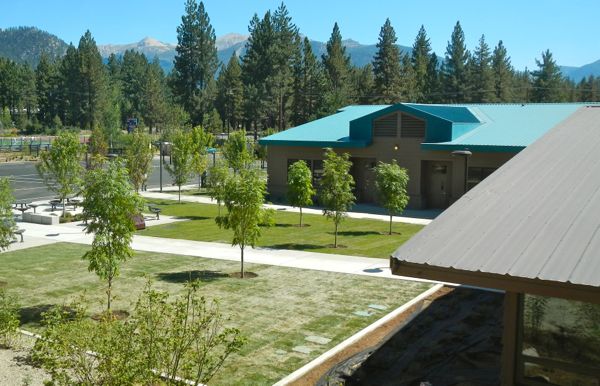
Planners want to make it safer to bike and walk to South Tahoe Middle School. Photo/LTN file

Planners want to make it safer to bike and walk to South Tahoe Middle School. Photo/LTN file

Because this is the only 6-8 school in South Lake Tahoe students are coming from all parts of the district. And the routes to get there are not ideal.

This is why a group in town is looking at how to improve the trail system in the area to make it safer for students.

“At the end of it we will have a full connectivity plan,” Gavin Feiger with the Community Mobility Group told Lake Tahoe News. “Consultants will provide alternatives about how to connect to surrounding neighborhoods and the broader community.”

His group is part of the larger Lake Tahoe Sustainability Collaborative. The collaborative was awarded a $153,625 On Our Way grant from the Tahoe Regional Planning Agency. Experts associated with Safe Routes to Schools are part of the team.

Enough money is in the pot to pay for design and engineering plans. The goal is not to talk about what could be done, but to have a plan ready to build.

This week begins a series of meetings and workshops to gather input from the public about possible improvements to get kids to and from school as well as how to tie the school to the existing trail system.

Safety is a huge concern.

“It is a problem not only in that area but elsewhere in the city,” Police Chief Brian Uhler told Lake Tahoe News. “Anything that can be done to improve bike trails, pedestrian pathways, signage, and increasing the distance from 4,000-pound vehicles and bicycles or walkers is going to help.”

With how trails suddenly stop, people often find themselves in precarious situations, even going against the flow of traffic.

Principal Beth Delacour said the biggest problem she sees is students not using the crosswalk between STMS and Rite-Aid. Delacour is curious to hear what the activists come up with, as she was just brought into the loop in the last two weeks. She will be administering a survey to students to get their feedback about trail connections in and around the South Lake Tahoe school.

The mobility group earlier this month conducted traffic counts during the week and weekend to see how many people were using trails by STMS and which ones.

Going forward planners see this area of town being more of a hub, especially with the addition of Lakeview Commons, improvements to Harrison Avenue and potential growth at Lake Tahoe Community College. They would like the trails to logically connect to the recreation center, library, ball fields, Bijou Community Park and surrounding businesses.

After this week’s meetings there will be a workshop in November where alternatives will be presented. The final plans and projects will be chosen, with appropriate design and engineering work done so construction funding could be applied for in May.

—-

Notes:

• LTUSD board meeting, Oct. 14 at 6pm at the district office on the corner of Highway 50 and Al Tahoe Boulevard.

• Outreach meeting, Oct. 16, 7-9am at STMS.

• Public workshop, Oct. 16 from 5:30-7:30pm in the STMS multipurpose room.

• Public workshop, Nov. 19 from 5:30-7:30pm in the STMS multipurpose room.


Tahoe Tails — Adoptable Pets in South Lake Tahoe

Jose

Jose

Jose seems to enjoy posing for his photo — what a cute face. He is 12 weeks old, and one of three male and three female kittens at the shelter right now.

Plus, there are several nice adult cats.

Jose is an energetic, handsome brown tiger longhair kitten.

He is neutered, microchipped, tested for FIV, and vaccinated. He is at the El Dorado County Animal Services shelter in Meyers, along with many other dogs and cats who are waiting for their new homes.

Go to the Tahoe animal shelter’s Facebook page to see photos and descriptions of all pets at the shelter.

Call 530.573.7925 for directions, hours, and other information on adopting a pet.

For spay-neuter assistance for South Tahoe residents, go online.

— Karen Kuentz


Metastatic breast cancer needs more attention

By Kelly Shanahan

Oct. 13 is Metastatic Breast Cancer Awareness Day. It is important to recognize the elephant in the pink room that is October: metastatic breast cancer, cancer that spreads outside the breasts, affects 155,000 Americans, killing 40,000 of us every year, yet it only receives 2 percent of breast cancer research dollars.

Metastatic breast cancer is rarely talked about, even during October, despite the fact that almost a third of women with early stage breast cancer develop metastases –- even 10, 20, 30 years later.

Kelly Shanahan

Kelly Shanahan

Once diagnosed with metastatic disease, average life expectancy is only two to three years. We are never out of treatment. Our cancer is not curable, at least not in 2014.

Recently, I attended two conferences for women with breast cancer, one exclusively for women with metastatic, or stage four, disease. At these conferences I found great hope, meeting women who have lived full and productive lives for up to 20 years after being diagnosed with metastatic breast cancer.

However, without more money being spent studying metastatic breast cancer, we cannot make that 20-year survival the norm instead of the exception.

We don’t even know why some breast cancers spread, and why other women with early stage disease are treated and never have a problem again. That is basic biologic research. We don’t have standard treatments for metastatic breast cancer; put 10 women with 10 different oncologists in a room and you’ll find 10 different treatments. That is basic clinical pharmaceutical research. But without more funding, that research cannot be done.

One of the problems with “Pinktober” is that all the cheery pink ribbons imply that breast cancer is no big deal if we are just aware and get our mammograms. That complacency, in turn, removes the sense of urgency to obtain more funding for more research, and also keeps us from addressing how to prevent breast cancer in the first place.

So many of those pink products contain chemicals that actually increase the risk of breast cancer, like BPA in hard plastic bottles and phthalates in cosmetics. And sugary, processed foods wrapped in pink also are counterproductive in preventing breast cancer. So this Oct. 13, I ask you not to pity me and the 155,000 other Americans living with metastatic breast cancer, but rather to support us as we fight for our lives. Support us as we advocate for more information, more funding. Support us as we live.

Kelly Shanahan is a 20-year resident of South Lake Tahoe and the owner of Emerald Bay Center for Women’s Health. She has been living with metastatic breast cancer for 11 months. A mom, a wife, an active member of our community, she continues to work part time as a gynecologist even as she undergoes chemotherapy.


Letter: Important to vote yes on H

To the community,

Voting yes on Measure H helps to transform Meyers and the county into one of the many fire-adapted communities sprouting up around the country. An additional $100 per household is actually a sound investment considering the staggering cost of catastrophic wildfire.

The creation of a healthy forest through fire hazard reduction protects us from catastrophic wildfire, saving our families, our homes, and our way of life in Tahoe. It also supports small local businesses and is extremely cost effective compared to the cost of wildfire.

Fuels reduction costs $1,000-$2,000 an acre. According to the U.S. Department of the Interior’s Wildland Fire Management Program Benefit-Cost Analysis, firefighting costs alone run at around $3,000 an acre for fires between 10 and 100 acres. The Angora Fire at 3,100 acres cost taxpayers nearly $7,500 an acre to extinguish. These figures do not include major economic costs such as infrastructure damage, loss of tourism, community health problems, and the destruction of community homes and quality of life. The Angora Fire caused $150 million in damages. That equates to almost $50,000 an acre additional impact.

The cost of catastrophic wildfire is staggering, especially since it causes additional impacts from carbon dioxide release, soil erosion, watershed damage, and wildlife displacement. By funding Lake Valley Fire Protection District’s wildfire education and fuels reduction program, Measure H will protect our neighborhoods from the dangers of wildfire and save the community money in the long run.

A recent study estimated that wildland fires cost between two to three times as much as the cost to reduce hazardous fuels. The Mokelumne Watershed Avoided Cost Analysis, conducted by the Nature Conservancy, Sierra Nevada Conservancy, and the U.S. Forest, also documented the environmental gains a community receives from fuels reduction. Essentially, fuels reduction simulates what fire would do naturally in our ecosystem without posing a threat to our community. The benefits of this include the following: healthier and more mature stands of trees, reduction of invasive pest and plant species populations, improved habitat for large mammals, reduced soil erosion, healthier watersheds and riparian environments, increased carbon storage from larger tree stands, cleaner air, and a reliable source of renewable energy.

In the end, our community has the opportunity to be on the leading edge of fire prevention and environmental stewardship while also saving a substantial sum of money. Living in the forest carries with it responsibility. Make an investment in the future of our community by voting yes on Measure H.

Citizens for a Fire-Adapted Community – Yes on Measure H


Tahoe rapper releases album

South Lake Tahoe native rapper Patterns of Perfection (P.O.P.) has released his latest LP, “Pappa’s Back.”

The 13 original tracks were published on the World Records independent music label without support of the corporate music industry.

He says there are party tracks, groove tracks, chill out tracks, hardcore tracks, and tracks he included just for fun.

His first record, “A New Age,” appeared on digital shelves in 2013. Shortly thereafter the artist’s hand was caught in machinery, leaving him with a full year’s recovery time during which he composed only instrumental music. Having relocated to Gardnerville by way of Colorado, P.O.P. toured the U.S. before settling down to produce “Pappa’s Back” under his own World Records label.


Firm to look at Olympic Valley incorporation

Placer County LAFCo unanimously voted last week to award RSG of Santa Ana a contract to develop a comprehensive fiscal analysis of the possibility of incorporating Olympic Valley.

The $85,360 fee will be paid for by Incorporate Olympic Valley.

“A comprehensive fiscal analysis is required for any incorporation proposal. It shows us whether the proposed town will have sufficient revenues to operate, and shows potential impacts to the county to help insure these are mitigated,” Kris Berry, LAFCo executive director, said in a statement.

The analysis is designed to provide a foundation for revenue neutrality negotiations between representatives of the proposed town and Placer County. If LAFCO approves the application, the measure will be put on the ballot and decided by simple majority of registered Olympic Valley voters.

— Lake Tahoe News staff report


McClintock, Moore to debate

By Jon Ortiz, Sacramento Bee

The on-again, off-again debate between 4th Congressional District incumbent Tom McClintock and challenger Art Moore is back on.

A day after McClintock backed away from a one-hour debate that would have been hosted by the League of Women Voters next week, the Elk Grove Republican’s camp issued a press release that he had accepted an debate invitation from the Auburn Chamber of Commerce’s “Meddlers” forum at 7am on Tuesday.

Moore will be there, his campaign strategist Rob Stutzman said, although he thinks McClintock was more an organizer than an invitee to the debate.

As proof, Stutzman forwarded a Friday morning email from McClintock campaign manager Jon Huey to Auburn Chamber board member Steve Galyardt thanking him for “taking my call and trying to help us set up the debate.”

Read the whole story


Sierra House to be growing veggies this fall

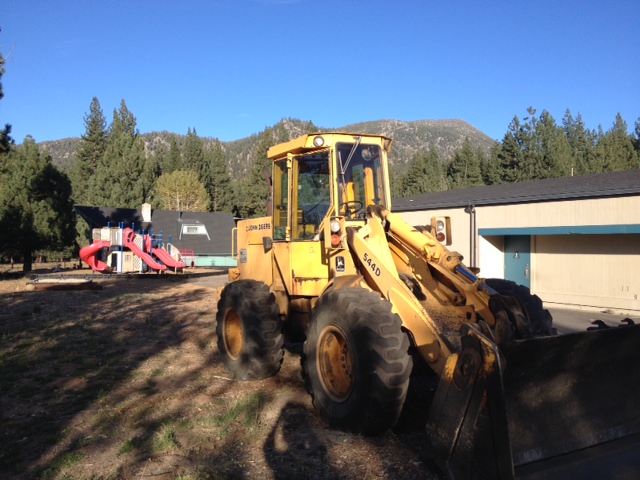
Excavation work is beginning at Sierra House Elementary where two growing domes will be erected. Photo/Rebecca Bryson

Excavation work begins at Sierra House Elementary where two growing domes will be erected. Photo/Rebecca Bryson

By Kathryn Reed

Grading began this weekend at Sierra House Elementary School on what will be two growing domes by the end of November.

A cadre of parents determined to make this a reality has never wavered in their desire to bring this to fruition. With the Tahoe Regional Planning Agency signing off on the necessary permits, all that is left is final approval from the state architect’s office. Steve Morales, facilities manager for Lake Tahoe Unified School District, said this could come any day.

Holes for the two 18-foot diameter domes will be dug this week, with the foundation then going in. The foundation will be built higher than what is normal for a structure because inside will be dirt. This will allow for some insulation.

Between the domes will be a 25-foot by 25-foot outdoor learning area.

The domes are likely to go up in mid-November.

“Erection of the two domes will take place in probably less than eight days. They are a kit. The dome company sends erection crews out with supervisors,” Morales told Lake Tahoe News.

Then it will be up to the parents to outfit the interiors how they want.

Rebecca Bryson, a parent who has been instrumental is making the dome a reality, said parents will likely spend Thanksgiving week getting the interior of the domes situated how they like. Volunteers will do the teaching, including master gardeners.

To start with Bryson expects lettuce, kale and other winter crops to be grown.

The parents have raised nearly $118,000 for the project. The district has incurred expenses mostly just in terms of personnel.

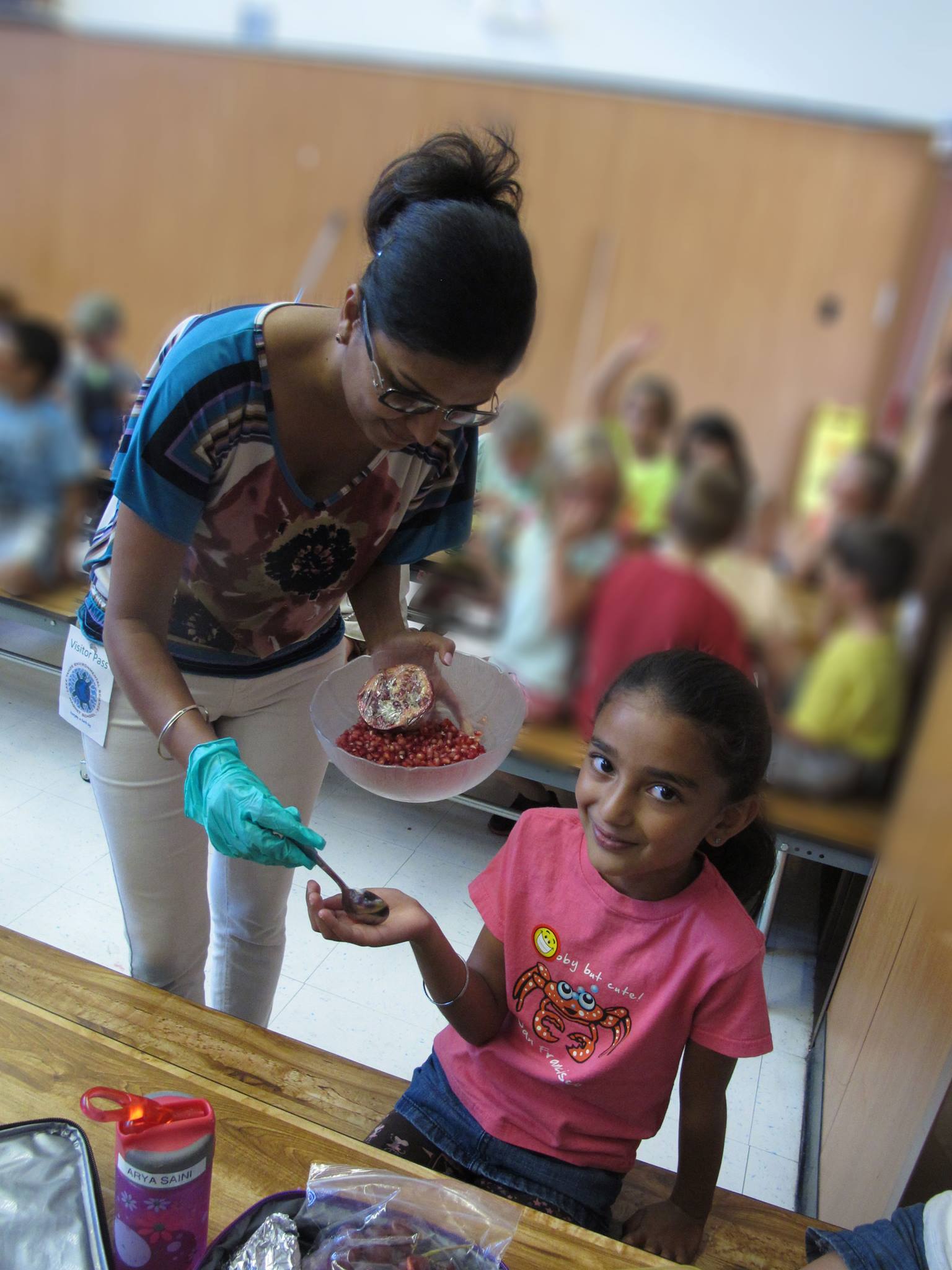
Ravinder Saini gives pomegranate seeds to her daughter, Arya. Photo/Provided

Ravinder Saini gives pomegranate seeds to her daughter, Arya. Photo/Provided

Soroptimist International South Lake Tahoe was the single biggest donor at $25,000. The remainder of that cash will be given to the parents group on Wednesday at the service club’s weekly meeting.

The dome in Truckee requires about a $500 operation and maintenance fund each year. The South Shore parents are using that figure as a barometer for what it will need to put aside for O&M costs; with the realization annual fundraisers may be necessary to keep the domes operational.

Nutrition, healthy eating and teaching students where food comes from before it reaches the grocery store are all components of the growing dome. It’s also a chance for kids to play in the dirt, see veggies grow from seed into something edible, and to learn about other aspects of gardening. They will also get to eat what they grow.

“We will be able to supplement school lunches,” Bryson told Lake Tahoe News. “McDuff’s was one of the early sponsors. They would like to make pizzas with kids using ingredients from the dome.”

Some lessons are already being taught. This fall students throughout the district were introduced to pomegranates through a joint project with Barton Health, UC Cooperative Extension and Raley’s.

Bryson said it’s possible art students from Lake Tahoe Community College will create a Let it Grow mural at the elementary site by the domes.