DC commissioners waffle on water decisions

Douglas County residents are not happy with how the electeds are handling water issues at the lake. Photo/LTN

Douglas County residents are not happy with how the electeds are handling water issues at the lake. Photo/LTN

By Kathryn Reed

Water issues brought out the masses to Thursday’s Douglas County Commission meeting in Stateline.

People are not happy with the prospect of rates going up as much as 50 percent and the county’s going back on its June decision to consolidate water companies.

So many residents were at the Oct. 16 meeting that they didn’t fit into the room and had to stand in the lobby area of the county administrative building. The meeting, which started at 1:30pm, did not get over until after 9pm.

The districts affected are Zephyr Water Utility District, Cave Rock/Uppaway and Skyland – all at Lake Tahoe.

Residents thought everything was a done deal because in June the commissioners approved rates to go up and for consolidation. The idea was that combining maintenance and operation expenses would be more cost-effective. Debt, though, would have remained separate.

One enterprise fund has been created for the districts, but the county is keeping separate accounting departments for each system.

Consolidation of the water systems is now off the table indefinitely.

“ZWUD did a special assessment of $7,500 per parcel some years ago, thus the systems have too much difference in their infrastructure needs as well as current debt and operational/maintenance costs to do consolidation now,” Commissioner Nancy McDermid told Lake Tahoe News.

But it’s not like the commissioners didn’t know about the special assessment in June.

At the meeting McDermid said consolidation could be revisited.

On Thursday the commissioners unanimously approved ZWUD rates to increase. Monthly rates will go from $79.95 to $99.91 starting Nov. 1. This 25 percent increase will remain in effect for the next two years. The other water rate items were for discussion, with no vote being taken.

“We will be coming back to them with proposed rates based on the info they provided,” County Manager Jim Nichols told Lake Tahoe News.

Cave Rock has retained legal counsel.

“Cave Rock Water System likely will sue if this isn’t resolved correctly,” a customer at the meeting told Lake Tahoe News. “The county previously voted for consolidation, but now is changing its mind. We already are paying more than $200 a month and they want to increase that.”

Cave Rock customers support total consolidation.

A letter to the commission from the law firm Kaempfer Crowell in Reno says, “Through consolidation and an appropriate ratemaking process, the long-term viability of CRWS and the county’s other water systems can be ensured. Moreover, consolidation will allow the county to budget for and spread the costs of infrastructure overhauls over the long term and over the entire county.”

Lake Tahoe water district issues will continue to be on future commission agendas.


Liberty Utilities seeks rate increase

Calpeco, parent company of Liberty Utilities, on Oct. 15 filed a request with the California Public Utility Commission for a rate increase.

If approved, the increase would take effect Jan. 1.

Liberty is the electric provider for the California side of the Lake Tahoe Basin, as well as Alpine County and Truckee.

The increase for residential customers is 0.66 percent.

Comments or protest letters may be emailed to public.advisor@cpuc.ca.gov.

— Lake Tahoe News staff report


Snippets about Lake Tahoe

road sign• Caltrans has an extension to work on Highway 89 in Tahoma past the Oct. 15 grading deadline. Work on Highway 28 in Kings Beach is also continuing.

• If you need to ski before the Tahoe resorts open, Arapahoe Basin Ski Area (aka A-Basin) in Colorado opened Oct. 17.

• Nevada Department of Transportation PIO Julie Duewel’s photo of the Stateline to Stateline Bikeway won in the Road Less Traveled category of the American Association of State Highway and Transportation Officials competition.

• Charter Advertising in Meyers has put a YouTube channel together for Lake Valley Fire Protection District.  The feature video is an overview of the district.

• TAMBA is putting on two trail building days in Incline Village. Meet Oct. 19 and Oct. 26 at 9am behind Tunnel Creek Cafe. For more info, go online.


Training cuts down on ski injuries

By Kyle Swanson

Ski season is around the corner. As an orthopedic surgeon, I see many skiing and snowboarding related injuries. Consider the following tips to avoid preventable injuries and actively prepare for the season.

Equipment assessment

Start with an equipment check. For skiers, one major cause of knee injuries is improper binding settings. If the binding is too tight, the boot does not disengage from the ski and can torque the knee. Have a professional who understands different bindings adjust the setting. Settings are based on each skier’s level, height and weight, and type of skiing.

Kyle Swanson

Kyle Swanson

Tune the skis or snowboard. Sharpen the edges and wax the bottoms for appropriate snow conditions.

Wear protective equipment. Inspect the helmet for cracks or defects that make the helmet ineffective in preventing head injuries and, if necessary, replace it. Wrist guards for snowboarders decrease wrist injuries and should be considered, especially for beginners. Also, wear weather appropriate clothing for the mountain’s conditions.

Strengthening exercises

Both skiing and snowboarding require strength and endurance. The muscles in the legs, hips, and core take the most impact. Strengthen these areas six to eight weeks before the season starts to decrease injuries later. Skiers and snowboarders at any level should try these simple exercises.

Band walks. Target the gluteus medius, the stablizing muscle on the side of the bum between the hip and top of the pelvis. Allow 15 feet of space. Wrap a mini-band, a workout rubber band, around the ankles. Stay low in a squat and take a large sideway step followed by a half step with the other foot. Repeat 20 sideway steps to the left for 15 feet then repeat to the right. Complete two sets in each direction.

Weighted Single Leg Box Squats. This comprehensive exercise uses the glutes, quads, hamstrings, calves, and core. Squat on one leg, as the other extends out, to a box or chair. Throughout, keep the knee facing forward, the chest out, and the chin up. Focus on pushing through the heel. Start with two sets of 10 repetitions on each leg.

Lateral Box Jumps. Work on balance and explosiveness. Start on one side of a stable box and jump up to the box and then jump down to the other side. Repeat jumping back to the other side. Go fast and maximize the number of repetitions in thirty seconds. Start with three sets for 30 seconds each.

Wall Sits. Help the quads, glutes and core. Rest back against a wall and flex knees about 60 degrees. Tighten the abdominal muscles and quads. Goal is to hold position for 60 seconds. Start with three sets of 60 seconds each.

Perform these exercises at least two times a week for six weeks. Incorporate them into a regular workout routine. Let’s hope for snow and prepare now for an injury-free ski season.

Kyle Swanson is an orthopedic surgeon with Tahoe Orthopedics & Sports Medicine. 


N.J. to approve real-money skill gambling, Nev. may follow

By Wayne Parry, AP

ATLANTIC CITY — Sure you love matching little candy pieces with each other, or spelling out words with your pals. But New Jersey gambling regulators want to let you do it for real money.

The state Division of Gaming Enforcement says it is seeking game developers’ proposals to conduct real-money gambling on skill-based games, which would make New Jersey a nationwide laboratory for a betting phenomenon many have predicted will become the next big thing.

And because of its vast potential reach, some are worried that the addictive nature of the games and their easy availability on smartphones and tablets could cause some people to get in way over their heads when the money is real. But New Jersey sees it as another way to help its struggling casino industry.

“More and more we’ve been watching the social gaming arena and hearing about the opportunities it presents,” said David Rebuck, director of New Jersey’s Division of Gaming Enforcement. “We thought, ‘Wait a minute: why aren’t these companies coming to us?’ We are ready, willing and able, under existing law, to deal with this. This is not theoretical anymore; this is real.”

Eric Meyerhofer, CEO of Gamblit Gaming, which adds gambling components to familiar social games, says the potential market in the United States for such betting is $8 billion to $10 billion.

“Casual games are played in such abundance across such a wide demographic,” he said. “We think there’s quite a large market for this.”

Players could face off against one another to compete for a prize, with the casino taking a fixed percentage of it.

Game developers would have to partner with one of Atlantic City’s eight casinos, in the same way that Internet gambling providers must do. And like online gamblers, players of real-money skill games must be physically located within New Jersey’s borders. (New Jersey can approach other jurisdictions about multi-state gambling compacts if there’s enough interest.) Nevada is considering a similar plan, and other countries including England and Mexico are testing similar technology.

Currently, most games offer free play up to certain limits. From there, players can buy additional chances to play or equipment to use in the game. Ashley Feinberg, a staff writer at Gizmodo.com, quickly burned through $286 in less than a month buying additional play time on Candy Crush Saga.

“It’s all very high-reward; you get sucked in and there’s this big reward and then it goes away and you keep trying to get it back,” she said. “Unless you actually seek out how much you’re actually spending on this, it goes like nothing. It feels like Monopoly money.”

After writing her first-person account, Feinberg kicked the habit — for a while.

“Then it went back downhill,” she said, adding she doesn’t know how much the second binge has cost her.

“I’m scared to look,” she said.

Gary Loveman, CEO of Caesars Entertainment, has long lamented that people spend millions of dollars on games like Farmville — where they buy equipment for a virtual farm — with none of that money going to his company.

“Millennials typically find traditional slot machines boring because there’s little or no skill involved; they’d much rather play games were there’s an element of skill and the opportunity to socialize or compete with friends while doing so,” said Caesars spokesman Gary Thompson. “It’s clear skill-based games are going to be a big part of the industry’s future.”

Les Bernal, national director of Stop Predatory Gambling, is worried New Jersey could be creating a new generation of problem gamblers.

“State officials know the future of New Jersey’s casinos hinges on luring kids to develop a gambling habit,” he said, adding that by taking games that thousands of young people already play and turning them into gambling games, the state is trying to create a new generation of gamblers to exploit.

Players would fund an account that would be good for in-person play on a casino floor, or remotely via a smartphone, tablet or computer. While details still need to be worked out, the games have to meet complex rules incorporating minimum payout standards that apply to slot machines, while also providing for the variable element of player skill.

So far, some of the biggest names are taking a pass. Zynga, which makes Words With Friends, has said it doesn’t favor real-money gambling on its platforms, preferring to focus on free-play. King Digital Entertainment, the makers of Candy Crush Saga, said it “does not have any plans to license Candy Crush Saga or any of our other games for use in casino slot machines or for any form of gambling.”


Series of classes for caregivers in SLT

There will be a six-week series of classes in South Lake Tahoe designed to provide instruction and support for caregivers who are or are planning to care for a family member or friend age 60 or older.

All classes and materials are free, though donations are accepted.

Classes will be from 1-3pm at Lake Tahoe Resort Hotel.

Oct. 20: Disaster Preparedness Planning for Family Caregivers taught by Michelle Patterson and Leona Allen.

Oct. 27: Coping with Grief and Loss taught by Rebecca Phillipsen.

Nov. 3: Techniques for Maintaining Healthy Skin with Karen Wilson and Sebastian Combes.

Nov. 10: The Basics: Memory Loss, Dementia and Alzheimer’s Disease with Jacob Harmon.

Nov. 17: Senior Legal Services info from Diana Steele.

Nov. 24: The Basics and Beyond of Medi-Cal and Medicare with representatives from HHSA and HICAP.

To register, call 530.621.6369.


Food Bank working on S. Tahoe hunger issues

The Food Bank of El Dorado County will be in South Lake Tahoe to host a Hunger Response Network meeting on Oct. 22 from 9:30-11am at St. Theresa’s Grace Hall on Lyons Avenue.

Local organizations will discuss the results of the South Lake Tahoe focused Hunger Study in an attempt to understand the community’s needs and the best ways to allocate the Food Bank’s resources in Tahoe.

Hunger response agencies, organizations and individuals in South Lake Tahoe who would like to attend should contact Carey Fong at 530.621.9950 or  cfong@foodbankedc.org.

Based on the results of this Hunger Study, the Food Bank and collaborating hunger response agencies will determine the best way to mobilize the Food Bank’s resources which include partnerships with California Emergency Food Assistance Program, FoodLink, Feeding America, California Association of Food Banks, USDA, local grocers and others to increase food distributions to its partner agencies throughout South Lake Tahoe.

On the same day, the Food Bank of El Dorado County will also be providing a Free Farmers Market to the at-risk community of South Lake Tahoe at the American Legion from 10-11am.


Douglas County manager ready to lead

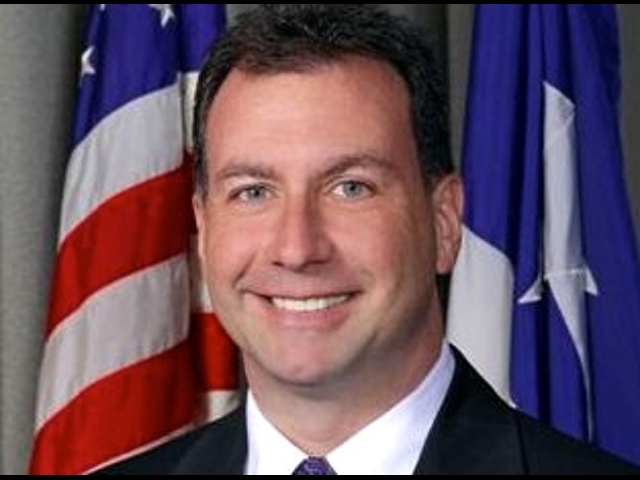
Jim Nichols began his tenure as Douglas County manager on Sept. 29. Photo/Provided

Jim Nichols began his tenure as Douglas County manager on Sept. 29. Photo/Provided

Jim Nichols is finishing his third week as manager of Douglas County. He replaces Steve Mokrohisky who left in April for a job in Oregon.

Nichols was one of 72 applicants for the job. Most recently he was assistant city manager for Midland, Texas. He will be making $172,000 a year.

Lake Tahoe News caught up with him for a quick Q&A.

LTN: Since you are new to Northern Nevada, how do you expect to get up to speed? What few things are you focusing on first – besides learning everyone’s name?

Nichols: I am getting up to speed on Northern Nevada in a variety of ways. First, I am relying upon the insight of my staff who are all very familiar with the region. They are informing me of the issues of significance. Our commissioners are also providing me with valuable feedback on the county.

In addition, I am meeting with various community leaders, stakeholders and county partners to learn their priorities and the needs of the region.

Finally, I am trying to get out into the community so I can meet with residents and see the county firsthand and learn about everything we have to offer.

LTN: What do see as the biggest problem dividing the lake and the valley, and how do you expect to fix it?

Nichols: I don’t really see there being a “problem” dividing the lake and the valley. We are one county and one community all focused on continued prosperity. The only real disconnect between these two distinct parts of our community is distance.

However, as long as we respect and appreciate the unique aspects of each area that make them so important to Douglas County, there really shouldn’t be any problem dividing them.

LTN: Water is a growing issue in Nevada now that we just started year four of the drought. At the lake the issues center on potable water and recreation. In the valley potable water and ranching are the issues. What is your approach to managing water and what should be done that isn’t being done?

Nichols: I’m still being brought up to speed on the water situation in Douglas County so I don’t have all of the information on everything being done to address our current and future water needs. However, having recently worked in Texas during a prolonged drought affords me some perspective on dealing with Douglas County’s water situation. Fundamentally, I believe in looking at a community’s water from a regional perspective. When we become too focused on only our needs and concerns, we lose sight of potential opportunities and solutions that may exist just outside our borders.

LTN: You were living in Henderson when you moved to Douglas County and were last working in Texas. What were you doing when you weren’t employed, how long were you unemployed and why did you leave that job?

Nichols: Over the past year, I began to pursue executive-level positions that would have been a natural extension and progression in my career. I had served as a deputy-assistant city manager for nine years and was ready to lead an organization. I had advised my city manager of my intentions and had his full support on my career pursuits. However, earlier this year, my job interviews became public knowledge in the community and had the potential of becoming a distraction for my previous employer. Therefore, I decided it was best that I leave for the good of the organization. I left Midland in March with several job opportunities on the horizon. Unfortunately, none of them materialized. I remained in Henderson to oversee a rental property that I still own in the area while seeking a new position. I learned of the Douglas County manager opportunity and applied for it. I feel very fortunate to have been selected and am happy to call Douglas County my new home.

LTN: What in your background points to being to deal with how heavily regulated Lake Tahoe is?

Nichols: My applicable background related to Lake Tahoe goes back to my time as public works director/city engineer of Chehalis, Wash. During my time with the city, the Chehalis River was regulated by a TMDL. During my 5½ years of service with the city of Chehalis, I worked with the state’s environmental regulatory agency (DEP) regarding our wastewater treatment plant and specifically our discharge into the Chehalis River. I became well versed in the issues and intricacies associated with total maximum daily loads and feel comfortable in working on the regulatory needs of Lake Tahoe.

LTN: What is your opinion of the proposed realignment of Highway 50 at the lake – better known as the loop road?

Nichols: I am still getting up to speed on the U.S. 50/South Shore Community Revitalization Project and feel it would be premature for me to comment on it at this time.

LTN: Suppose you get to seek counsel with five Nevadans (or those who lived in the Silver State at one time) to dinner (living or dead), who would you summon and why?

Nichols: Wow – excellent question. I’ve never been asked that before. I would say that my five Nevadans to dine with would be: Donald Bently (because of the profound impact he’s had on Douglas County); Gov. Brian Sandoval (to learn his vision for the future of Nevada); Snowshoe Thompson (because of the important role he played in the history of Douglas County); Andre Agassi (to learn where he gets his competitive spirit); and Mark Twain (to learn the source of his wit and wisdom).

LTN: You’ve written a couple books, do you think you would write one out of your experiences in county-city manager offices? If so, can we get a sneak peek?

Nichols: Thank you for even taking note of my prior books. I do think a book that looks at city/county management and maybe even compares and contrasts the two would be an interesting subject. If I write another one (which I would love to do, as time allows), I will gladly offer you a sneak preview.

LTN: Where will we find you recreating in Lake Tahoe?

Nichols: I can be found anywhere that has a bike path or hiking trail. I am an avid bicycle enthusiast and hope to be able to take my bike to the lake regularly to enjoy the scenic views. I also enjoy hiking and hope to hike around the lake from time to time.

— Lake Tahoe News staff report



Letter: Knights of Columbus help B&B

To the community,

The St. Theresa Church’s parish council of the Knights of Columbus hosted Bread & Broth’s Adopt A Day dinner on Sept. 29. According to the principles of the Knights of Columbus, there is no better way to experience compassion than by helping those in need.

Through their donation and volunteering at B&B’s Monday evening dinner, the Knights of Columbus helped feed a nourishing meal to over 115 needy community members. From 3-6pm, Knights of Columbus members Earl Scilingo, George Westinghouse, Steve Elder, Tom Finn and Romeo Alaoen volunteered to help with the evening’s dinner.

This energetic group helped with bagging the giveaways donated by local stores, greeted and served the dinner guests, manned the dishwasher and helped with the cleaning and stacking of the tables and chairs.

“It’s time to give back, especially when I see the children in need,” said Scilingo. “Breaks my heart.”

In addition to families with children, B&B dinner guests include the working poor, elderly on fixed incomes as well as the homeless. Despite the economic upturn, many community members are still in need of assistance.

Thanks to the compassion and dedication of organizations like the Knights of Columbus, B&B is able serve those in need.

“I like to serve the community,” said Westinghouse.

Judging from their actions that can be said of all the member of the Knights of Columbus.

For more about B&B, go online or find us on Facebook.

Carol Gerard, Bread & Broth


Opinion: Healthy forest critical for Tahoe

By Joanne Marchetta

With California and Nevada grappling with a third year of drought, one of the largest and most complex challenges we face over the long run at Lake Tahoe is adapting to a changing climate.

Climate change will affect the protection and restoration of our beautiful mountain lake as well as the expansive forests around it. And the health of our lake, forests, and communities are all intertwined.

Maintaining healthy forests here at Tahoe and also across the greater Sierra Nevada will be a critical issue as California works to confront its water scarcity problems and maintain water quality and quantity for nearly 40 million residents.

Joanne Marchetta

Joanne Marchetta

About 60 percent of California’s drinking water originates in the Sierra Nevada forests and the headwaters they shelter. Protecting the health of our Sierra Nevada forests is one and the same with protecting our communities and our water resources from fire.

The King Fire that broke out in western El Dorado County in September and burned nearly 100,000 acres is just the latest example showing that we have much work to do to better manage our forests and their watersheds. That same message was driven home by the “State of the Sierra Nevada’s Forests” report the Sierra Nevada Conservancy released in October.

Forests in the Sierra Nevada are overgrown and susceptible to wildfire and funding is not available to adequately treat them. That’s not to say the Tahoe Regional Planning Agency and its partner agencies in the basin have sat idle – far from it.

Working together as the Tahoe Fire and Fuels Team, agencies in the basin are leading by example – collaborating to secure funding to reduce fuel loads, prioritize the work and get it done. From 2008 to 2013, almost 37,000 acres in the basin were treated for hazardous fuels by local, state, and federal agencies.

Our projects have been keeping up with our plans, but much more remains to be done. Adequately reducing hazardous fuels in the forests around our watersheds and our communities will require more funding, a situation that’s true here at Tahoe and throughout the rest of the Sierra Nevada.

That’s why TRPA is asking Congress to adopt the Lake Tahoe Restoration Act of 2013. The bill would authorize $415 million over 10 years to pay for environmental restoration projects, watercraft inspections and control efforts to fight invasive species, the Lahontan Cutthroat Trout Recovery Plan, and scientific research. Nearly one-third of the funding, $135 million, would pay for hazardous fuels reduction projects.

We know treating forests to reduce hazardous fuels is far more cost effective than fighting wildfires. One recent study estimated that fighting wildfires between 10 and 100 acres in size in our forests costs $2,000 to $3,000 per acre. That’s two- to three-times as much as projects to reduce hazardous fuel loads in them.

The Angora Fire that burned on Lake Tahoe’s South Shore in 2007 destroyed 254 homes, cost almost $7,500 per acre to fight, and on top of that, caused about $150 million in damage – all within a 3,100-acre area that is small compared to other recent fires that have burned hundreds of thousands of acres in California.

In addition to funding, maintaining healthy forests and watersheds in the Sierra Nevada will also require extensive relationship building and collaboration across political boundaries. Communities inside the region will have to work together and with communities outside the region. Members of the public, too, must ensure they have adequate defensible space around their homes and do what they can to be part of the solution as we try to create what are called fire-adapted communities.

This challenge represents an opportunity for stakeholders to seek significant progress through multiple-benefit fuel reduction projects that not only protect our many communities from fire, but also improve the health of our forests, reduce erosion, and protect the water sources millions of people rely on. The time to act is now. Please join us at any scale in finding solutions to the next set of challenges, even those as daunting as the long-term effects of climate change here in our beloved Sierra Nevada.

Joanne Marchetta is executive director of the Tahoe Regional Planning Agency.