EDC wants vacation rentals to be good neighbors

C.L. Raffety, El Dorado County tax collector, leads a meeting Oct. 23 about vacation rentals. Photo/Kathryn Reed

C.L. Raffety, El Dorado County tax collector, leads a meeting Oct. 23 about vacation rentals. Photo/Kathryn Reed

By Kathryn Reed

Vacation rentals aren’t going anywhere, so El Dorado County officials want to find a way for neighbors to get along with these temporary guests.

C.L. Raffety, the county treasurer-tax collector, hosted a meeting in South Lake Tahoe on Oct. 23 for people who manage vacation rentals or own them. Her department oversees vacation rentals throughout the county.

“We want to work to prevent violations,” Raffety told the group. “They have a right to rent their home, but neighbors also have rights. Everyone has rights that need to be respected.”

The county has devised the Good Neighbor Program. A trifold brochure has been created with the intent that it be handed out to all renters. It touts how to be a good neighbor by following noise, parking, garbage, pet, and occupancy regulations.

It says, “Renters please keep in mind that you may be cited or fined or evicted for creating a noise disturbance or violating any of the provision of the county vacation home rental ordinance chapter 5.56. Neighbors are provided contact numbers and should an occasion arise they are encouraged to report disturbances. Your permanent neighbors have a right to peace and repose and this must be respected at all times of the day but especially into the evening hours.”

The goal of the whole program is to reduce the number of complaints.

“It starts with VHR (vacation home rental) owners taking the responsibility to communicate with their VHR neighbors in a diplomatic outreach effort to prevent incidents that lead to complaints,” reads a letter the county sent to owners. “The outreach includes distributing to the permanent residents in the vacation home rental neighborhood, a brochure with your local contact person’s phone number.”

Every vacation rental has to have a person who can be at the property within an hour – no matter the time of day or weather conditions. That person, the owner or property managers are being encouraged by county reps to walk the neighborhoods to get to know the permanent residents before there is an issue.

There are about 700 permitted vacation rentals in the unincorporated area of the Lake Tahoe Basin of El Dorado County. All are supposed to be permitted. County officials at the meeting said they regularly peruse vacation rental websites to check addresses to see if they have a permit.

Those without permits are also not paying transient occupancy tax — which is another issue.

People have 10 days to get into compliance before a fine would be levied. County officials said only once has someone not complied. The county does not mandate owners put their permit number on any website advertising the property.

South Lake Tahoe, however, does have that rule in its ordinance.

Several representatives from property management firms urged Raffety to get the Board of Supervisors to make that change to the county ordinance. She said she would see what she could do.

Enforcement of rules in the ordinance is an ongoing battle.

“They hired two code enforcement officers for the community development agency. They are so busy with health and welfare issues,” Raffety said. “They don’t do vacation rentals.”

El Dorado County sheriff’s deputies can enforce some aspects of the ordinance, but for a citation to be issued the reporting party needs to sign a complaint. That has been a sticking point with some people because they don’t want their name to be known. Property managers asked Raffety to coordinate a meeting with the higher ups in the sheriff’s department to discuss how things might be able to work better in the field.

Notes:

• Complaints about vacation rentals may be made to the El Dorado County Sheriff’s Office at 530.573.3000 or to Raffety’s office at 530.621.5800.

• South Lake Tahoe will be revisiting its vacation rental ordinance early next year.


Letter: Yacht club helps at Bread & Broth

To the community,

On Oct. 13, the South Lake Tahoe Yacht Club sponsored a Bread & Broth Adopt A Day Nourishment.

With the $250 donation from the club and the help of club members Nick and Margo Carrell, Ruth Goshorn, Jerry Kahler and Barbara Marsden, the dinner guests enjoyed Lake Tahoe trout and baked salmon, rice pilaf, sautéed vegetables, green salad, fruit salad, a wide assortment of desserts and drinks. The five yacht club volunteers were wonderful with their warm smiles and welcoming words to the dinner guests.

For Marsden and Kahler, it was their first time experiencing a dinner served by B&B. Marsden “was very impressed by the quality of the food served” and was really glad that through her membership in the yacht club and their charitable contribution, she had the opportunity to volunteer at a B&B dinner. “It is truly a worthwhile cause.”

Goshorn has volunteered several times at B&B dinners and did a great job of running the dessert and drink table. The Carrells are also experienced B&B “substitute” volunteers and regularly give of their time and energy to feed the hungry in our community.

The SLT Yacht Club frequently supports charitable causes and B&B is extremely grateful for their donation and support. Because of the yacht club’s sponsorship, over 130 dinners were served which helped to ease the hunger of people in need in our community.

To help B&B as a donor or sponsor, contact me at 530.542.2876 or carolsgerard@aol.com.

Carol Gerard, Bread & Broth


CrossFit responds aggressively to criticism

By Cliff Weathers, AlterNet 

You’d be hard pressed to find an article — outside one written by a CrossFit enthusiast — that reviews this exercise phenomenon without asking some real tough questions about its safety, effectiveness, cost, and even the philosophy behind it. Shouldn’t all products, whether good or bad, be held up to such scrutiny? Maybe General Motors, Comcast and Apple grudgingly accept this, but CrossFit — both the corporation and its acolytes — can’t seem to take criticism in stride. And there’s been a lot of it going around lately.

The New York Times magazine was the latest publication to take issue with CrossFit and other extreme fitness programs, likening them to nothing more than labor camps you pay a king’s ransom to join. “Why not join a roofing crew for a few hours instead? Surely there’s a tunnel somewhere that needs digging,” sniffs Times columnist Heather Havrilesky.

In response, commenters, many of them CrossFitters, swarmed the online version of the article, posting more than 800 messages. Many were sharply critical of Havrilesky’s assessment of the workout routines.

The Times magazine article is only one in a recent wave of brickbats hurled at the sports-fitness brand, which now boasts an estimated 10,000 affiliates. Its critics are as diverse as medical researchers, fitness organizations, sportswriters, and social commentators. They’ve all found a bone to pick with CrossFit, and no, they’re not joining them for a Paleo diet dinner.

Critics and online commenters have likened CrossFit to a cult, insinuating that it’s not much more than a paramilitary, post-apocalyptic wet dream. They’re fitness preppers ready to take on whatever catastrophe awaits mankind. CrossFit’s own website hints at this on its ” What is CrossFit?” page: “We have sought to build a program that will best prepare trainees for any physical contingency — not only for the unknown, but for the unknowable.”

CrossFit’s founder, Greg Glassman takes the rhetoric a step further in his CrossFit newsletter, stating “nature, combat and emergency can demand high volumes of work performed quickly for success or for survival.”

Read the whole story


Drought takes bite out of Calif. rice harvest

By Terence Chea, AP

California’s deepening drought is shrinking its rice harvest, and that’s bad news for farmers, migratory birds and sushi lovers.

The $5 billion industry exports rice to more than 100 countries and specializes in premium grains used in risotto, paella and sushi. Nearly all U.S. sushi restaurants use medium-grain rice grown in the Sacramento Valley.

The rice harvest is just the latest victim of California’s historic drought, which has sharply reduced crop production as it enters its fourth year. With 95 percent of the state in “severe” to “exceptional” drought, farmers are leaving fields unplanted, cattle ranchers are reducing herds and almond growers are tearing out orchards.

California, the nation’s second largest rice-growing state after Arkansas, usually produces more than five million pounds of rice and sells about half of it abroad.

But this year rice farmers only planted 420,000 acres — 25 percent less than last year — because of water restrictions, according to the California Rice Commission.

On a clear October day, farmer Mike DeWit watched as a giant combine harvester cut and threshed a field of rice plants, discharging the grain into a tractor-pulled wagon.

DeWit, who usually plants 1,000 acres of rice on his family farm in Woodland, outside Sacramento, said he only planted 700 acres this year because his water supply was cut by 30 percent.

So he idled one of his combine harvesters, and hired one less worker and one less tractor.

“I think it’s the worst as far as the California rice industry is concerned on record,” DeWit said. “One more dry year, and I think the impacts on California rice farmers will be devastating.”

The reduced plantings also impact migratory birds and other wildlife that depend on flooded rice fields as habitat. Every fall, millions of waterfowl fly south from Canada and Alaska to spend their winters in California’s Central Valley.

After the fall harvest, farmers usually cover their fields with water to break down the rice stalks, creating wetlands habitat for millions of ducks and geese that can feed on uncollected grains and other plants.

“It is environmentally a very nice crop to have in the system. It mimics the natural system of a couple hundred years ago, when that area was wetlands,” said Bruce Lindquist, a rice researcher at UC Davis.

In a typical year, rice farms flood 250,000 to 300,000 acres in winter, but this year as few as 50,000 acres may be flooded because of water restrictions, according to the rice commission.

Conservationists are worried that waterfowl and shorebirds will be at greater risk for disease as they crowd together in fewer rice fields and wetlands.

“When you have less rice out there, the impacts are significant for our environment, our economy, for the farms as well,” said Jim Rice, a rice commission spokesman.

This year, conservation groups are renting 14,000 acres from rice farmers and temporarily flooding them, turning the fields into “pop-up wetlands” for birds traveling along the Pacific Flyway.

The rice commission doesn’t track prices, but Taro Arai, who runs eight Japanese restaurants in the Sacramento area, said he paid 8 percent more for rice this year and expects to pay even more next year.

Arai, “chief dreaming officer” of the Mikuni Restaurant Group, is concerned about the reduced supply and rising cost of California sushi rice, but he’s reluctant to buy rice from outside the state.

So he’s looking into growing and harvesting his own rice as he prepares to open more restaurants in Northern California.

“Sushi rice makes or breaks sushi for every restaurant in California or the United States,” Arai said. “I hear the rumors there’s a cheaper rice, but you want to eat high-quality California rice.”


Snippets about Lake Tahoe

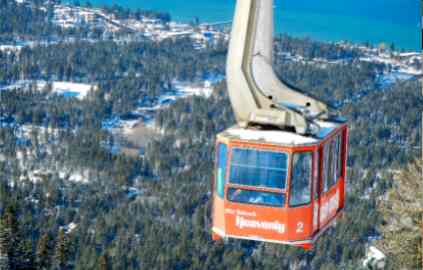
heavenly• Young the Giant will headline the Winter Ignite concert in Heavenly Village on Dec. 13 at 7pm. Heavenly’s Winter Ignite event series spans two weekends, Dec. 5-6 and Dec. 12-13. It includes on-mountain activities such as pop-up DJ Cat and Unbuckle après parties, as well as off-mountain events like the “Pretty Faces” movie premier and comedy from Daniel Tosh at MontBleu.

• Mountain Lake Cleaning in Incline Village has expanded into Truckee.

• The original Thomas Kinkade art gallery in Placerville is closing.

• World Series of Poker Circuit returns to Harveys on Oct. 30.

• According to this story, Virginia City is one of the seven spookiest places to visit.


Plastics industry spends big to reverse Calif. bag ban

By Jeremy B. White, Sacramento Bee

The clash over California’s newly passed ban on single-use plastic bags has moved from the Legislature to the streets as the national plastics industry has donated more than $1 million for a campaign to undo or delay the law.

Moments after Gov. Jerry Brown announced signing Senate Bill 270 in September, a plastic industry group that vociferously fought the legislation declared its intention to launch a referendum campaign. If proponents secure enough signatures by the end of December, the measure would be placed on the 2016 ballot, suspending the law’s implementation until then.

Money has begun pouring in. A new filing shows plastics companies contributing $1.2 million toward the referendum campaign. All but $50,000 came from companies based outside of California, illustrating the fight’s national dimensions.

Even if the referendum ultimately fails, bag manufacturers would buy themselves a significant reprieve if the signature-gathering campaign succeeds. Large stores are poised to cease offering plastic bags by this summer, with smaller stores to follow by July 2016. Qualifying a referendum that pushes those dates back until after the November 2016 election could be worth a multimillion-dollar price tag of collecting signatures.

Read the whole story


Lecture to focus on brain physics

Jesse Livezey, a UC Berkeley doctoral student, will talk about brain physics next week at Lake Tahoe Community College.

The free lecture is Oct. 27, 6-7:30pm in the board room; it is part of the Lake Tahoe Community College Foundation’s Speaker Spotlight Series.

Livezey’s presentation, Brain Physics: Using Mathematical Models to Understand the Brain, will explore what is known about how the brain processes sensory inputs ranging from vision to audition to touch. He’ll also look at how the brain influences current algorithms used at companies like Google and Facebook.

Livezey is at the Redwood Center for Theoretical Neuroscience where he studies topics ranging from the coding of sound in the auditory pathway to learning probabilistic models of images.


Squaw removing trees in Red Dog area

Squaw Valley began a monthlong forest thinning project this week.

More than 5,000 dead or diseased trees will be removed from the Red Dog region of the lower mountain in an effort to improve the natural habitat, reduce the risk of wildfire, and provide better access to tree skiing and riding in that area.

When the project is complete there will be 100 acres of enhanced skiable terrain near Red Dog. The terrain will include three newly designated glade areas — Red Dog Glades, Paris Glades and Heidi’s Glades — as well as a new connector trail on Champs Elysees that will eliminate the current lengthy traverse.

Trees will be taken out via helicopter. Most of the trees will be processed for timber, and the remaining materials will be chipped for future use.


Austin’s House on fundraising quest

Austin’s House is celebrating seven years of providing compassionate care for children in crisis by launching its third annual giving campaign, the 2014 Appeal for Kids.

The 10-bedroom facility opened in September 2007 and was built entirely with donations.

Austin’s House cared for a record number of children over the past 12 months. The children come from Carson City, Douglas County, and the surrounding rural communities.

Austin’s House has no limit on the length of stay. It provides continuity for each child with services that allow them to stay in the same school, see the same doctor, dentist, and therapist, and have routine visits with family and friends.

It costs about $100 a day per child. The goal for this year’s campaign is to raise $50,000.

For more information about Austin’s House, the Appeal For Kids campaign or making a donation, call 775.267.6711 or go online.


Cubs making progress at LTWC

Gardner is Lake Tahoe Wildlife Care's newest cub. Photos/Provided

Gardner is Lake Tahoe Wildlife Care’s newest cub. Photos/Provided

By Tom Millham

Briefly we were 12.

Last Friday, California Department of Fish and Wildlife brought us the Gardner Mountain bear cub we assisted in trapping on Oct. 9. Yes, we still have Cinder (more on her later) and we still have the cubs in the bear cage (also later), but, now, we have Gardner (as we are calling him).

For those of you not familiar with Tahoe’s South Shore, Gardner Mountain is the northwest corner of the South Tahoe Y, where South Tahoe High is located. On Oct. 4, Gardner’s mother was hit and killed by a car on Highway 89 across the street from the Cantina. Gardner was up a tree, directly adjacent to where his dead mom was laying.

Over the next five days, LTWC received many calls telling us Gardner was in their area. But he was moving from street to street and from the west side of Highway 89 to the east side of Highway 89.

On Oct. 16, I went on all three local radio stations pleading for help from the residents and workers in the Y area that if they saw Gardner to please call LTWC and let us know where he was.

We had spoken with CDF&W and they were sending a biologist up with a trap to get Gardner and help him.

It worked.

We got a call from 13th Street telling us that Gardner was right across the street from Anderson’s Bike Rental. I got there within 10 minutes and found Gardner within another 15 minutes. He had already crossed Highway 89 to the west side. When I saw him he was at the base of a big pine tree and I “convinced” him that his best place was up the tree. He conveniently did as I requested and I awaited the arrival of CDF&W.

They brought two cages and loaded them with all kinds of yummy food. It didn’t take his nose long to get the scent of that good, scrumptious food and, shortly he was in the trap chowing down. CDF&W took Gardner to their Region 2 headquarters in Rancho Cordova and kept him there until Oct. 17, at which point they brought him up to LTWC so we can rehab him with the other bears.

So, like I said, that made for 12 cubs at our center. However, that didn’t last long. They came up here Oct. 22 to get the three cubs that came from Paradise (just east of Chico) and will be releasing them in the foothills nearby.

So, almost as quickly as we got cub No. 12, we are down to nine. Eight are in the bear cage and, of course, Cinder, who is in the bobcat cage.

Cinder

Cinder

Here is some good news for you regarding where we are at with Cinder. Kevin Willitts was here Oct. 9 to examine her paws. He had not seen her since Sept. 30 and at that time he decided to put her into her cage without any bandages on her paws. This was the first time since Aug. 3 that she was without bandages. On Sept 30 he told us to watch and see if she does any excessive licking or if we see any small pools of blood. On Oct. 9, he saw nothing to change his mind and decided to let that good Tahoe air get to her paws and scheduled his next visit for two weeks.

That is indeed great news. In addition, he said that we could go ahead and start preparing to transport her back to Washington around the middle to late November so she can complete her rehab closer to where she will eventually be released. Yes, she will be released sometime next year. He wants her to spend the winter in the same area she came from and then can be released either in the winter or spring next year near the Methow Valley.

I have contacted the Washington Fish and Wildlife biologist, Rich Beausoleil, who will coordinate the exact location she will spend the rest of her time in rehab. It sounds like Beausoleil wants us to take Cinder to Sally Maughan’s Idaho Black Bear Rehabilitation Center in Garden City, Idaho, just outside of Boise. When Cinder was examined Oct. 9 she weighed in at a very healthy 80.8 pounds, more than double her weight when she arrived at LTWC on Aug. 4.

Tom Millham is co-founder and secretary-treasurer of Lake Tahoe Wildlife Care.