Snippets about Lake Tahoe

sugar bowl lede• Sugar Bowl’s Torchlight Parade with Santa and the Backcountry Ball is Dec. 13 from 5-10pm in the Judah Lodge. It’s a fundraiser for the Sierra Avalanche Center and features professional big-mountain snowboarder Jeremy Jones. Tickets are $20 at the door.

• Northstar will host a Northern Lights Festival and Mardi Gras Celebration, as well as its annual Carve Tahoe ice-sculpting contest from Jan. 28-Feb. 2.

• Kings Beach Commercial Core Improvement Project construction activities have essentially come to a halt for the season, except for a few final wrap-up tasks that are still in the works.

• Live Violence Free distributes food every Thursday from 9-10:30am at 2941 Lake Tahoe Blvd., South Lake Tahoe. Give-aways also include adult and children’s clothing, toys, household and miscellaneous items.

• Here are the El Dorado-Tahoe and Sierra roadwork schedules from Caltrans for the week.


Gaming officials dealing with medical marijuana

By J.D. Morris, Las Vegas Sun

Medical marijuana and the Nevada casino industry don’t mix, gaming officials said at a conference Nov. 7, and that’s not likely to change anytime soon.

The Gaming Control Board made it clear in a May notice that casinos must stay out of the state’s budding medical marijuana business since the drug is illegal at the federal level. But it’s still a hot-button issue for the industry, and it was a recurring subject at Friday’s Gaming Law Conference at Red Rock Resort.

Nevada’s two top gaming regulators, Control Board Chairman A.G. Burnett and Gaming Commission Chairman Tony Alamo, spoke on a panel together where they reaffirmed that the board made the right call.

Alamo, whose father was a prominent Las Vegas casino executive, expressed some disbelief that the mixture of medical marijuana and gambling became a serious regulatory concern.

Read the whole story


Showdown looms as Calif. eyes pesticides

By Elle Knickmeyer, AP

SAN FRANCISCO — With organic food growers reporting double-digit growth in U.S. sales each year, producers are challenging a proposed California pest-management program they say enshrines a pesticide-heavy approach for decades to come, including compulsory spraying of organic crops at the state’s discretion.

Chief among the complaints of organic growers: The California Department of Food and Agriculture’s pest-management plan says compulsory state pesticide spraying of organic crops would do no economic harm to organic producers, on the grounds that the growers could sell sprayed crops as non-organic instead.

“I would rather stop farming than have to be a conventional farmer. I think I am not alone in that,” said Zea Sonnabend, a Watsonville organic apple-grower with California Certified Organic Farmers, one of more than 30 agriculture groups, environmental organizations and regional water agencies to file concerns about the agriculture department’s pesticide provisions by an Oct. 31 state deadline.

At issue is a California organic agriculture industry that grew by 54 percent between 2009 and 2012. California leads the nation in organic sales, according to statistics tracked by University of California-Davis agriculture economist Karen Klonsky, who says the state is responsible for roughly one-third of a national organic industry. The U.S. Department of Agriculture puts the overall value of the U.S. organic sector at $35 billion.

The U.S. organic industry has seen a similar growth spurt nationally in the same time frame, and three out of four grocery stores in the country now carry at least some organic goods, according to the USDA. California’s $43 billion agriculture industry is the largest in the country by revenue, so what happens here matters to consumers and to the agriculture industry nationwide.

The state’s more than 500-page document lays out its planned responses to the next wave of fruit flies, weevils, beetles, fungus or blight that threatens crops. Many groups challenging the plan complained that it seems to authorize state agriculture officials to launch pesticide treatments without first carrying out the currently standard separate environmental-impact review.

But Steve Lyle, a spokesman for the agriculture department, said the outline doesn’t give state crop-pest programs any power they don’t already have by law.

The state’s program is designed “to protect California’s food system through the principles of integrated pest management, while also protecting public health and the environment,” Lyle said in an email.

For some conventional growers as well as some organic ones, the fate of the pest-management plan outlined by the state isn’t a theoretical concern.

It’s an immediate issue of their economic survival due, in part, to a disease-carrying pest that’s a little bigger than a pencil point.

The disease spread by the Asian citrus psyllid kills citrus trees outright and has caused billions of dollars in damage to crops in Florida and Texas. California’s $2.4 billion citrus industry has found incursions by the bug, but not yet significant outbreaks of the disease it carries.

The standard treatment for the citrus pest is conventional pesticides, including neocotinoids linked to the decline of crop-pollinating bees. The citrus industry and federal government also have spent $25 million to try to find, without major breakthroughs so far, less toxic controls for the citrus pest, said Joel Nelsen, head of the California Citrus Mutual industry trade-group.

Organic farmers complain about the state’s frequent reliance on pesticides, but “if we don’t eradicate the pest, their organic production is non-existent,” Nelsen said. “A pest or a disease doesn’t know if it’s eating an organic or a non-organic orange.”

Organic farmers are asking the state to give more consideration to non-toxic controls, including long-term methods to strengthen crops and habitats in advance against marauding tropical species, said Kelly Damewood, policy director for California Certified Organic Farmers.

The growing alarm over the citrus bug is part of the problem — California agriculture reels from pest emergency to pest emergency, treating most with the same pesticide programs and crop quarantines, argued James R. Carey, an entomologist at the University of California-Davis. He’s been watching California respond to invading tropical pests since at least the 1980s’ Mediterranean fruit-fly spray program. Some programs were successful; others struck even many conventional growers as unnecessary.

“They treat this in a crisis mode in the same way they would an earthquake or a fire,” Carey said. “Most times there’s not that kind of urgency at all.

“Every pest that comes in they request federal money for, run out of money for, and it just kinds of fades away.”



Truckee raising money, awareness about cancer

Employees of the town of Truckee, including police officers, will begin to look a bit scruffy over the next several weeks. They are participating in the national cancer awareness campaign known as No-Shave November.

The Gene Upshaw Memorial Tahoe Forest Cancer Center has estimated it would treat 350 new patients from this area. The center has several programs for patients that are funded by the American Cancer Society which include wigs, transportation support, and travel expenses.

The goal of No-Shave November is for people to donate the money they would using on hair grooming to a cancer charity.

Employees of the Town of Truckee, have partnered with No-Shave November, a web based organization who is partnered with the American Cancer Society, who are devoted to raising cancer awareness and supportive funds by putting a fun twist on the month of November. And what better way to grow awareness than with some hair?

To participate in the Truckee promotion, for more info or to donate, go online and then hit the donate button.


Christmas tunes at S. Tahoe library

Dream Spirit Baroque Band will be playing festive music featuring traditional Christmas tunes, and popular classics on Dec. 13 at 11am at the South Lake Tahoe Library.

Refreshments will be provided by Friends of the Library.

The event is free, however  non-perishable food items are being collected for Christmas Cheer.

The library is at 1000 Rufus Allen Blvd.


TOCCATA sets series of holiday performances

TOCCATA-Tahoe Symphony will present Parts I & III of Handel’s Messiah along with carols the audience can join in singing on Dec. 12, 14, 19, and 21.

Locations are as follow:

Dec. 12 7pm: First United Methodist Church, 209 W. First St. Reno.

Dec. 14 3pm: Cornerstone Church, 300 Country Club Drive, Incline Village.

Dec. 19 7pm: Grace Church, 1220 Robb Drive, Reno.

Dec. 21 3pm: St. Theresa Church, 1041 Lyons Ave., South Lake Tahoe.

Cost: $30 adults, $25 seniors, $5 students, $40 preferred.

For more info, call 775.313.9697.


U.S. casino revenue up as economy strengthens

By Stephen Singer, AP

HARTFORD, Conn. — Revenue at U.S. casinos jumped more than 6 percent in 2012, the first significant increase in three years as economic growth picked up speed and more casinos opened in several markets.

But revenue generated by Indian casinos rose less than 2 percent the same year, Casino City’s North American Gaming Almanac found. Growth is limited due to regulations restricting tribal casino expansion beyond reservations and differences between tribes over how best to expand, said Vin Narayanan, editor in-chief of Casino City.

“There’s a giant political question about that,” he said.

Total gambling revenue in 2012 was $94.47 billion, with the largest share, $40.38 billion, from casinos and card rooms. Tribal casinos generated $28.14 billion followed by lotteries ($23.41 billion) and racing and sports gambling ($2.55 billion) in 2012.

Casino revenue grew by a fraction of 1 percent in 2011 and 2010 and fell nearly 6 percent in 2009 as the steepest economic downturn since the Depression took hold.

Year-to-year revenue changes are vastly different from one state to another. In Ohio, for example, total gambling revenue jumped by one-third from 2011 to 2012 as casino gambling ramped up.

But in New Jersey, seventh largest among the states in overall gambling revenue in 2012, casino revenue fell from $3.69 billion in 2009 to $2.71 billion in 2012 as three Atlantic City casinos shut. Nevada, California and New York are the top three states in casino revenue.

Narayanan said saturation is the culprit for the decline of Atlantic City’s casinos, but it’s not an issue elsewhere.

“Are there too many casinos in the market? As far as Atlantic City is concerned, there are too many casinos on the market,” he said.

But casinos opening in Ohio are satisfying “pent-up demand,” he said.

Similarly, the legalization of casino gambling in Maryland in 2008 and the opening of the state’s first casino in 2010 generated tremendous revenue. Casino and card room revenue increased from $27.6 million in 2010 to $377.8 million in 2012. Total gambling revenue jumped to $1.15 billion in 2012 from $760.6 million in the same period.

“Maryland is a place that’s just taking off,” Narayanan said.

The opening of casinos in Massachusetts in the next few years is expected to lead to a significant new source of revenue, possibly at the expense of neighboring Connecticut’s Mohegan Sun and Foxwoods Resort casinos.

Narayanan questioned if gamblers who check out a Massachusetts casino will still be comfortable traveling to Connecticut’s tribal casinos.

“That’s a real good question,” he said.


Reno patient being monitored for signs of Ebola

By KRNV-TV

A traveler who visited one of the three West African nations experiencing an Ebola outbreak and returned to the United States and the Reno area, is being actively monitored by the Washoe County Health District for appearance of any symptoms of Ebola.

According to the Washoe County Health District, the individual was not involved in treating Ebola patients and did not have any known exposure with a person sick with Ebola.

The individual is cooperating with local health officials, and is being actively monitored according to CDC guidance for a 21-day period.

Read the whole story


Then and now: From bank to pet store

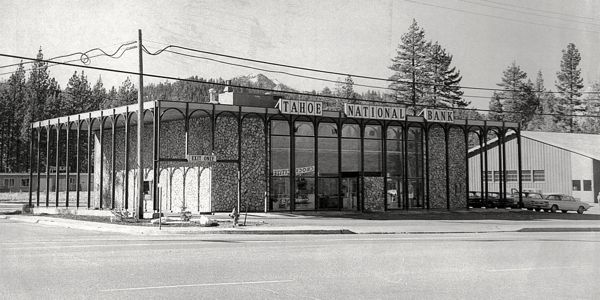
Tahoe National Bank

Tahoe National Bank Photo/Private Collection

Tahoe National Bank existed from 1963 to 1979 before being absorbed by Central Bank. One branch was built next to the Tahoe Valley Post Office with a drive-up teller window.

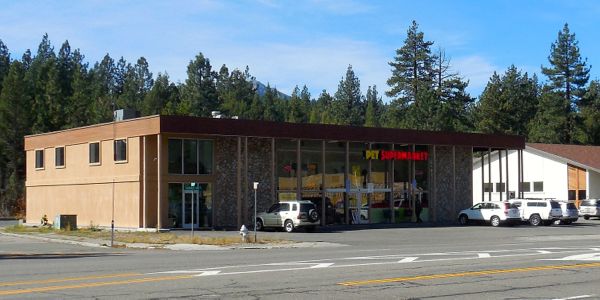
What the building looks like today. Photo/Bill Kingman

What the building looks like today. Photo/Bill Kingman

That building later has housed a clothing outlet store, video rentals, and currently Pet Supermarket.

The Stateline Tahoe National Bank building in 2003. Photo/Bill Kingman

The Stateline area Tahoe National Bank building in 2003. Photo/Bill Kingman

The other branch was built where the Marcus Ashley Gallery now stands in the Village Center near Stateline.

Redevelopment took out the state line branch. Photo/Bill Kingman

Redevelopment took out the branch near the state line. Photo/Bill Kingman

Between that site and the adjacent junction of Pioneer Trail there had been the Swiss Village Motel with a phone booth, a gas station, El Dorado Savings, and the last Stateline, Calif., post office. They were gone with redevelopment.

A steam shovel is needed to remove the bank vault. Photo/Bill Kingman

A steam shovel is needed to remove the bank vault in May 2003. Photo/Bill Kingman

The Stateline TNB building last housed Pacific Pawn. Upon razing the building, the original bank vault inside posed a challenge over several days.

— Bill Kingman


WHS girls, Incline boys win state soccer titles

Lake Tahoe schools dominated the NIAA Division III state soccer tournament.

Whittell High School’s girls won the state crown on Nov. 8 by beating Incline 3-1 on their home field.

All the games were played at WHS.

Whittell beat White Pine 5-0 the day before in the semifinal round. Incline topped North Tahoe in the semis 5-3.

The Warriors were undefeated in league play this season, posting a 14-0 record. The team will be losing five seniors to graduation.

In the boys matchup, Incline and North Tahoe battled for the state championship. Incline eked out a 5-4 win.

— Lake Tahoe News staff report