Grant allows SLTPD to beef up enforcement

South Lake Tahoe Police Department has been awarded a $47,000 grant from the California Office of Traffic Safety for a yearlong program of special enforcements and public awareness efforts to prevent traffic related deaths and injuries.

After falling dramatically between 2006 and 2010, the number of people killed and injured in traffic collisions saw slight increases in 2011 and 2012.

Officers they are particularly worried about recent increases in pedestrian and motorcycle fatalities and the dangers of distracting technologies.

This grant funding will provide opportunities to combat these and other problems such as drunken and drugged driving and speeding.

Activities that the grant will fund include:

  • · Traffic safety educational presentations to include bike and pedestrian awareness
  • DUI checkpoints
  • DUI saturation patrols
  • Motorcycle safety enforcement
  • Distracted driving enforcement
  • Seat belt and child safety seat enforcement
  • Speed, red light, and stop sign enforcement
  • Compilation of DUI “Hot Sheets,” identifying worst-of-the-worst DUI offenders
  • Specialized DUI and drugged driving training such as Standardized Field Sobriety Testing, Advanced Roadside Impaired Driving Enforcement, and Drug Recognition Evaluator
  • Court “sting” operations to cite individuals driving from DUI court after ignoring their license suspension or revocation
  • Stakeout operations to observe the “worst-of-the-worst” repeat DUI offender probationers with suspended or revoked driver licenses.

Funding for this program is from the California Office of Traffic Safety through the National Highway Traffic Safety Administration.


California pension funds running dry

By Marc Lifsher, Los Angeles Times

A decade ago, many of California’s public pension plans had plenty of money to pay for workers’ retirements.

All that has changed, according to a far-reaching package of data from the state controller. Taxpayers are now on the hook for billions of dollars more to cover the future retirements of public workers, with the bill widely varying depending on where they live.

The state’s pension goliath, the California Public Employees’ Retirement System, had $281 billion to cover the benefits promised to 1.3 million workers and retirees in 2013. Yet it needed an additional $57 billion to meet future obligations.

The bill at the state teachers’ pension fund is even higher: It has an estimated shortfall of $70 billion.

The new data from a website created by state Controller John Chiang come at a time of growing anger from taxpayers over the skyrocketing cost of public workers’ retirements.

Until now, the bill for those government pensions was buried deep in the funds’ financial reports. By making this data available, Chiang is bound to stir debate about how taxpayers can afford to make retirement more comfortable for public workers when private-sector employees’ own financial futures have become less secure. For most non-government workers, fixed monthly pensions are increasingly rare.

Read the whole story


California sees third-warmest October

By Joseph Serna, Los Angeles Times

This past month was the third-warmest October in California since officials began keeping records more than a century ago, continuing the state’s pattern in what is likely to be its hottest year ever, according to government climatologists.

The average temperature statewide last month was 64.5 degrees, less than one degree under the all-time record set in 2003, the National Climatic Data Center reported.

Read the whole story


El Dorado water official accepts Calaveras deal

By Betty Martin, Calaveras Enterprise

Despite numerous pleas from residents to postpone the vote, David Eggerton is the new general manager at the Calaveras County Water District. Directors approved the move on a 3-0-2 vote at Wednesday’s board meeting, which saw Director Jeff Davidson and Don Stump away on vacation.

The controversial vote drew particular criticism from ratepayers and newly elected board members on Eggerton’s contract.

“No one gets this type … of benefits package (in Calaveras County),” Marti Crane said, adding that residents had no opportunity to review the contract, which wasn’t available until the beginning of the meeting.

In fact, according to board President Scott Ratterman, one reason for Eggerton’s move from El Dorado County Water Agency is that, while he’s making less than past general managers at CCWD, he’s making more than he was getting at El Dorado as general manager.

Read the whole story


SLT council to tackle public beach access

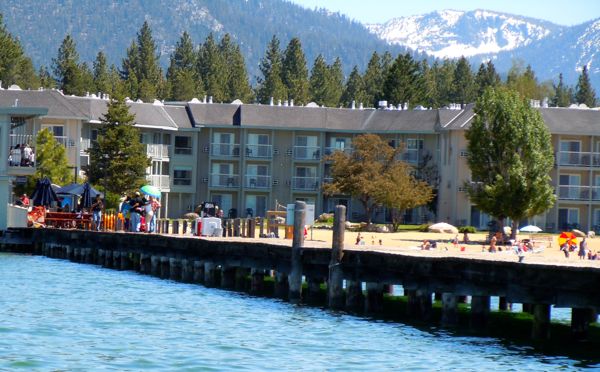
Timber Cove Pier is private, but the beach is public and private. Photo/LTN file

Timber Cove Pier is private, but the beach is public and private. Photo/LTN file

By Kathryn Reed

The beach by Timber Cove Marina is not as public as some would like it to be and is too public for the hotel-pier owners.

This stretch of sand in South Lake Tahoe is going to be the subject of discussion by the City Council when it meets Nov. 18 at 9am at Lake Tahoe Airport. City Attorney Tom Watson, who will be making the presentation Tuesday, was not available for comment.

Public access has been a battle for decades. And the state Supreme Court has been involved.

Problems arose again this summer and continued into the fall as the Beach Retreat & Lodge cut off access to parking at the marina and therefore the beach while some construction was taking place on the property.

Owners believe the beach is for their guests. And the public parking spaces they believe can be used by their employees.

City staff has done extensive research to sift through the legalities, to know who owns what, and when the public gets to play there without being a guest of the lakefront hotel.

Connolly Beach, which is the official name, was open to the public – including the pier – before South Lake Tahoe incorporated in 1965. It was in 1972 that a 261-room hotel was proposed.

“Initially the city’s Architectural Review Committee approved the project, requiring only a 15-foot wide pedestrian easement along the beach, measured from the high water mark,” the staff report says. “This decision was approved on a 2-1 vote. John Cefalu and Larry Muston in favor, Patricia Lowe against.”

The council at the time changed things a bit to accommodate concerns of local residents. Added were 18 public parking spaces and free use of the beach by the public. HKM, the owners of the property, sued the city in 1974 because of the public access.

The case languished in the court system for 11 years. South Lake Tahoe and the Tahoe Regional Planning Agency were the defendants.

In April 1975, the state Lands Commission decided it had a vested interest in the shoreline of Lake Tahoe. Then the state Attorney Generals Office took over as well. The case was now about public access to the beach and the state’s interest in the shoreline.

Eventually the state Supreme Court got involved. The justices ruled in August 1985.

The final outcome:

• The state of California owns the land below the historic low water mark. The public has the right to be on that section at any time.

• Property owners may use the beach for commercial purposes by temporarily sectioning off part of the beach in the 100-foot mark from high water, but cannot exclude the public from the entire beach. The state is the only entity that can enforce this provision.

• The public can use 100 feet of beach during daylight hours from June through September.

• The state owns a public trust easement that allows access for the public year-round between the high water mark (6,229 feet) to low water mark and below.

• There must be 18 parking spaces for the public.


Editorial: Worst voter turnout in 72 years

Publisher’s note: This editorial is from the Nov. 11, 2014, New York Times.

The abysmally low turnout in last week’s midterm elections — the lowest in more than seven decades — was bad for Democrats, but it was even worse for democracy. In 43 states, less than half the eligible population bothered to vote, and no state broke 60 percent.

In the three largest states — California, Texas and New York — less than a third of the eligible population voted. New York’s turnout was a shameful 28.8 percent, the fourth-lowest in the country, despite three statewide races (including the governor) and 27 House races.

Over all, the national turnout was 36.3 percent; only the 1942 federal election had a lower participation rate at 33.9 percent. The reasons are apathy, anger and frustration at the relentlessly negative tone of the campaigns.

Republicans ran a single-theme campaign of pure opposition to President Obama, and Democrats were too afraid of the backlash to put forward plans to revive the economy or to point out significant achievements of the last six years. Neither party gave voters an affirmative reason to show up at the polls.

Read the whole story


Garbage rates on South Shore increasing

Garbage rates on the South Shore are going up Jan. 1.

The Waste Management Joint Powers Authority on Nov. 14 approved rates in South Lake Tahoe and Douglas County to increase by 2.88 percent and 2.66 percent in El Dorado County. This board is made up Nancy McDermid from Douglas County, JoAnn Conner of South Lake Tahoe and Norma Santiago with El Dorado County.

The respective jurisdictions still need to approve the increases requested by South Tahoe Refuse. South Lake Tahoe City Council doesn’t have it on an agenda, though. The only December meeting is on the ninth when the new council is sworn in.

The rates are lower than the garage company originally requested. The independent review of STR’s proposal said to lower the increase in part because of a disagreement about increasing retirement benefits.

Also at Thursday’s meeting it was agreed that STR after the first of the year will survey customers about curbside recycling as well as other service issues.

— Lake Tahoe News staff report


Snippets about Lake Tahoe

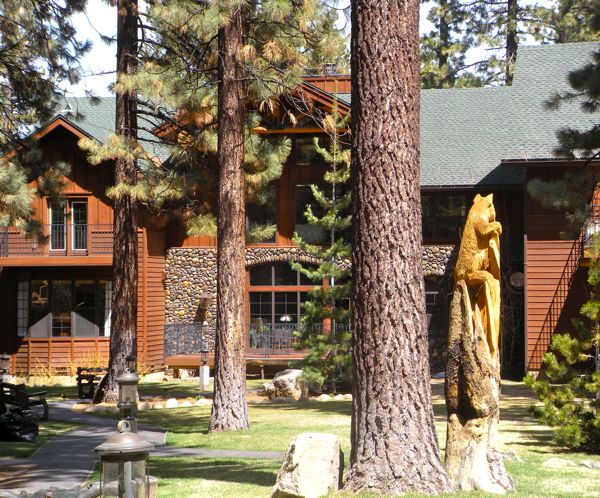
black bear• The Black Bear Inn in South Lake Tahoe isn’t allowed to name the network or show, but a production crew and cast just wrapped up the pilot for a new reality show to be aired the second quarter of 2015.

• El Dorado Arts Council is now the 501(c)3 BATS (Bring Arts to Schools) is affiliated with.

• Mt. Rose Ski Area will open again this weekend for skiing and riding.

• Douglas County District Judge Michael Gibbons is in contention to move to the Nevada Court of Appeals.

• Douglas County residents or business owners interested in participating in an advisory committee to assist in the selection process for clerk-treasurer should call 775.782.9860 or email wlang@co.douglas.nv.us by Nov. 21 at 5pm.


Audit: S. Tahoe’s paid parking was profitable

An item on Tuesday’s South Lake Tahoe City Council agenda shows that the now defunct paid parking program made money.

Vavrinek, Trine, Day & Company, a certified public accounting firm, conducted an independent review of the parking program and found that had the program existed for five years, it would have had net revenue of more than $1.8 million. In the 15 months of the program’s existence the net revenue was $285,002.

Opponents to the program convinced city officials to put parking to a vote of the people. In June, voters said abolish paid parking near beaches inside the city limits. The kiosks went away at the end of August.

The meeting starts at 9am Nov. 18 at Lake Tahoe Airport. The parking item is on the consent agenda, which means there will be no discussion about the topic unless someone pulls it off the consent agenda.

— Lake Tahoe News staff report


Calif. leads by example on climate change

By Associated Press 

SACRAMENTO — As the U.S. and China — the world’s top two polluting nations — turn to implementing new rules aimed at curbing climate change, the countries can look to the most populous U.S. state as an example of the costs and challenges of fighting global warming.

California already has imposed some of the world’s toughest air quality standards as it moves aggressively to lower emissions.

The state’s cap-and-trade program, launched nearly three years ago, offers one of the few real-world laboratories on how to reduce carbon emissions. The state has opted to impose extra costs on businesses that emit pollutants.

Next year, the program will be expanded to include companies that produce gasoline and other fuels, prompting predictions that consumers will see a spike in prices to cover the costs.

Gov. Jerry Brown, a Democrat, has been unapologetic about the program, saying there needs to be a completely new way of thinking if the world is going to curb carbon emissions.

“California has the most integrated response and strategy to deal with climate change of any political jurisdiction in the world,” Brown said in an interview with the Associated Press before he was re-elected this month. “What happens here doesn’t stay here, it goes all around the globe.”

Brown also said he intends to push for even tougher greenhouse gas emission reduction goals that will be far more difficult to meet by 2030. The current goal is to reduce emissions of heat-trapping gases to 1990 levels by 2020.

California’s carbon emissions law already has cost industrial polluters nearly $2.3 billion in permit fees. Starting next year, the law will include fuel distributors in the same cap-and-trade marketplace as utilities and major manufacturers.

“California is the living experiment right now,” said Jay McKeeman, a California Independent Oil Marketers Association vice president. “They are, as far as I know, the only government entity that’s fully engaging on a variety of fronts regarding greenhouse gas reductions.”

The state is also a leader in setting building and appliance energy efficiency standards, requiring the use of renewable energy and setting low carbon fuel standards.

The state’s cap-and-trade program has grabbed the most recent attention. It limits, or caps, the amount of heat-trapping gases companies can emit by requiring companies to pay for each ton of pollution emitted. The price is set at an auction. Polluters that cut emissions below the cap can sell their leftover pollution permits to companies that produce more pollution.

Including fuels such as gasoline, natural gas, propane and heating oil under the program has McKeeman and others predicting it will bump prices at the pump next year, though estimates vary widely and gasoline prices otherwise have been on a steep decline.

Mary Nichols, chairwoman of the California Air Resources Board, which regulates the cap-and-trade law, has said oil companies are not required to pass on the costs to consumers and should absorb the cost of the allowances.

Cap-and-trade is a key component of AB32, the landmark law signed by former Gov. Arnold Schwarzenegger, a Republican, in 2006. But other provisions, such as requiring energy efficiency, renewable energy and lower-carbon fuels, also are intended to promote changes in Californians’ transportation and energy consumption habits.

Adrienne Alvord, California and western states director of the Union of Concerned Scientists, said California’s success has happened at the same time the economy is growing.

“There was a prediction that our energy costs would be prohibitive and industries would be leaving the state,” she said. “We just haven’t seen that.”

Brown has tried to be a leader in promoting the state’s climate change programs internationally, signing agreements with China and officials in other nations.

China this week set a target for its emissions to peak by about 2030, while President Obama set a goal to cut U.S. emissions.

Catherine Reheis-Boyd, president of the Western States Petroleum Association, was pleased with the international agreement in part because she is concerned that California’s go-it-alone policies will harm consumers and businesses while having little practical impact.

She noted the state produces less than 1 percent of the world’s greenhouse gas emissions. But she warned that widespread adoption of some California requirements, like low-carbon fuels, could lead to shortages of products that meet those standards.