Tahoe area ski resorts adapting to climate change, trying to attract newbies

By Kathryn Reed

TRUCKEE – In spite of the challenges of climate change and a shrinking snowboarding clientele, the ski resort industry is going strong, according to those in the know.

“The market and demand is still out there,” Bob Roberts, president of the California Ski Industry Association, said at this week’s Truckee-Donner Chamber of Commerce breakfast meeting.

Lake Tahoe is a critical piece to the state’s overall ski market with half of the visits being to one of the local resorts and more than half of the revenue generated here.

California had been averaging 7.4 million skier visits a year until three years ago. Last season it plummeted to 5.3 million visits. Mother Nature didn’t cooperate so the skiers and riders found something else to do.

It’s hard to attract people when resorts like Mount Shasta were open four days and Dodge Ridge 33 days. Shasta bought goodwill by offering those who purchased a season pass last year to roll it over to this season.
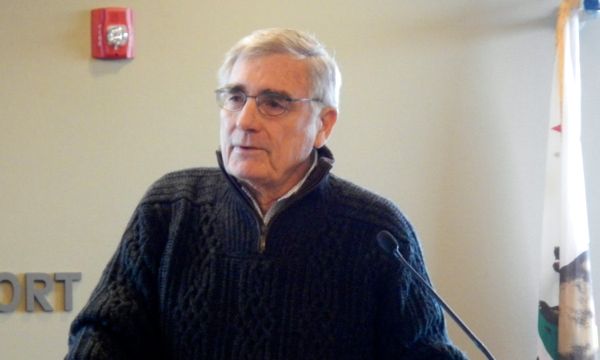
Bob Roberts, president of the California Ski Industry Association, addresses concerns and goals of the industry at a Truckee meeting Nov. 18. Photo/LTN

Bob Roberts, California Ski Industry Association president, addresses industry concerns and goals Nov. 18. Photo/LTN

Roberts on Nov. 18 acknowledged that snowmaking might have to regularly augment what naturally falls.

Resorts are beefing up their snowmaking capability, putting them on more runs and constantly working to make what comes out of the guns as close to “real” snow as possible.

“We had passholders who skied more than 100 days last year. We know we can deliver that again this year,” Rachael Woods with Northstar said.

Jeff Monson with Sugar Bowl said his resort off Interstate 80 put in $500,000 worth of snowmaking equipment, which includes 25 guns that can provide top to bottom skiing. The goal is when Sugar Bowl opens for its 75th season on Nov. 26 there will be three lifts with 1,500 vertical feet.

“We are blowing more snow, more efficiently,” Monson told the packed room at Truckee Airport.

Heavenly Mountain Resort and Northstar have two of the largest snowmaking operations on the West Coast, which is allowing both resorts to open today.

When it comes to snowboarding it is hitting the Southern California market the hardest, Roberts said. The problem is younger people are not picking up the sport. It is an issue Roberts and his colleagues are trying to figure out how to remedy.

Ski resort officials who spoke at the meeting talked about various learn to ski-ride programs that make snowsports more affordable.

Paul Raymore with Homewood Mountain Resort said the West Shore resort is bringing back free lessons for intermediate and advanced skiers-riders.

Roberts said one benefit of the consolidation of resorts is season passes are getting people to ski beyond their one favorite resort. And resorts that aren’t owned by the same company are partnering to offer combined passes.

“Season pass sales are running ahead of last year,” Roberts said. “The indicators are the market is still strong.”

In the last five years more than $500 million has been spent by Tahoe area resorts on upgrading their product. Some of this is for summer fun as they evolve into year-round destinations.

Roberts said Reno-Tahoe International Airport landing direct flights from England and Mexico would also help the local industry. He said Californians tend to spend $175/day on an average ski day, whereas travelers from abroad spend $300 per day and tend to stay at least seven days.



Letter: Kirkwood takes turn at Bread & Broth

To the community,

From funding provided by Vail’s Epic Promise Grant, Kirkwood Mountain Resort hosted Bread & Broth’s Nov. 10 evening dinner.

Starting off at Kirkwood Mountain Resort’s first Adopt A Day of Nourishment sponsorship were members of Kirkwood’s leadership team. Casey Blann, general manager, was impressed with the “sincere and appreciative thank yous ” he received from the guests.

“Those with less than most went away happy and looking ahead to taking the extra food home for future meals,” Blann said.

In addition to the full, course nutritious meal, the AAD sponsorships provide funding for giveaway bags containing fruit, vegetables and canned goods and sufficient food from the dinners for seconds and “to go” servings.

Helping Blann with the bagging and serving were fellow Kirkwood sponsor volunteers, Jon Copeland, skier services director; Scarlett Mellin, mountain dinning director; Becca Daiek, executive assistant; and Frederick Newberry, health and safety manger.

“What a great experience. The B&B team ran a fantastic kitchen and event, making it a lot of fun,” Mellin said. “The diners were so thankful and it was nice to put a smile on their face and serve a delicious meal. I could not stop smiling too.”

B&B would like to thank Kirkwood Mountain Resort for its part in supporting B&B’s goal of providing food were most needed and staying to the very end vacuuming and mopping the floors.

To help B&B as a donor or sponsor, contact me at 530.542-.2876 or carolsgerard@aol.com.

Carol Gerard, Bread & Broth


Opinion: Without collaboration, status quo prevails

By Joanne Marchetta

As the keynote speaker at last month’s National Workshop on Large Landscape Conservation in Washington, D.C., U.S. Department of the Interior Secretary Sally Jewell emphasized the central role collaboration must play for America to protect its natural resources, balance economic needs, and address emerging environmental challenges such as climate change.

“We are moving into an era of epic collaboration,” Jewell said, explaining that regional partnerships across jurisdictional boundaries are more important than ever for the federal department that manages 20 percent of our nation’s land.

Joanne Marchetta

Joanne Marchetta

The Department of the Interior has directed 70,000 employees at its array of agencies, bureaus, and offices not only to work better together, but to work better with other federal, state, tribal, and local governments, and the private sector, toward large-landscape solutions for challenges and conflicts. When insular agendas conflict, nothing gets done, and when nothing gets done, the status quo is our only option.

The need for collaboration, partnership, and a landscape approach to planning and environmental protection has long been recognized at Lake Tahoe. It was the central factor when California and Nevada took a visionary step and created the Tahoe Regional Planning Agency 45 years ago this December.

The bi-state compact created TRPA to “harmonize the needs of the region as a whole so as to ensure an equilibrium between the region’s natural endowment and its man-made environment,” tasking it, two states, and six local governments to work together to protect and restore one of the world’s largest and clearest mountain lakes and its 500-square-mile watershed.

While it may have been implicit all along, TRPA made building partnerships and taking actions to back them up an explicit core value in its 2010 Strategic Plan. Today, as resources for continued restoration progress become scarce, we need to ensure partnership and collaboration remain at the heart of our approach to regional environmental and socioeconomic restoration work. TRPA is taking partnership to the next level and making “epic collaboration” its central strategic goal. Collaboration has not always been easy to achieve at Lake Tahoe, but history proves no progress is possible without it. Fortunately, it is alive and well at Tahoe.

The TRPA-led watercraft inspection program, recognized as a national model, brings together 40 public and private partners working to keep aquatic invasive species out of Lake Tahoe. At iconic Emerald Bay, divers are removing five acres of rubber mats that were laid down to control an infestation of harmful invasive Asian clams. The collaborative project not only reduces the population of non-native clams, but also studies the mats’ effectiveness as a way to control other invasive species populations in the lake.

For years, agencies at Lake Tahoe have been working together to reduce hazardous fuel loads and the risk of catastrophic wildfire through a multijurisdictional plan. Nearly 37,000 acres were treated from 2008 to 2013, mostly close to homes and property for front-line protection.

Impressive water quality improvement projects are showing how public agencies and the private sector can partner to improve communities and transportation systems and reduce stormwater pollution. That includes the Kings Beach Commercial Core Improvement Project, which along with pollutant cleaning strategies, has added benefits of sidewalks, street lighting, roundabouts, traffic calming, and overall revitalized community character for that North Shore community. It also includes the Bijou Erosion Control Project and Harrison Avenue Streetscape Improvement Project in South Lake Tahoe, which added renewed vitality and streetscape improvements to businesses close to Lakeview Commons. Together, these three projects will reduce the amount of fine sediment and pollutants washing into Lake Tahoe each year with stormwater by almost 70,000 pounds – a critical achievement as we continue to restore water clarity our lake lost for decades.

Communities around Tahoe are working to reimagine their futures and craft their own visions of environmental restoration and economic revitalization under the new Regional Plan. It is a challenging process, but as these area plans are created and realized they will improve not only individual communities, but the natural splendors, economies, transportation systems, and recreational opportunities of the Tahoe Basin as a whole.

Public agencies and stakeholders at Tahoe had to set aside independent agendas to overcome huge challenges and controversies and come together to agree on their common interests and needs for the new Regional Plan approved in 2012. We are now working together to ensure those interests and needs are met and balanced with our beautiful lake’s environmental needs. Let’s show the rest of the country we can lead. Epic collaboration is hard, relentless work. Without it, our political system elsewhere is in gridlock. Here at Tahoe, we have something going for us that we cannot risk losing. Collaboration and partnership are a continuing commitment needed for our collective success. Please join TRPA in making that commitment.

Joanne Marchetta is executive director of the Tahoe Regional Planning Agency.


Scam artists calling South Tahoe residents

A  South Lake Tahoe resident was scammed out of a large sum of money, according to South Lake Tahoe police officers.

The scammer told the victim he was stuck in customs and needed help getting out. The suspect convinced the senior citizen to send him a large amount of money. The scammers also called back and tried to convince the victim to give them additional money with an addition scam, saying he won the lottery, according to police.

The scammers are calling from a phone number with an 876 area code, which is Jamaica. Jamaica has been the source for a variety of international scams.

Officers warn people to never send or transfer money to people you don’t know even if the caller reports to be from a legitimate business; never call back any number provided by the caller; do not to give out any personal information over the phone to anyone calling you unsolicited.

— Lake Tahoe News staff report


Skiing lesser-known resorts has advantages

By Karen Schwartz, AP

Big-name ski resorts might give you bragging rights when you go back to the office, but lesser-known mountains can give you something else: less crowded slopes, shorter lift lines and even outlets for Crock Pots.

Some of these hidden gems are located near their famous rivals, so visitors can enjoy the same choice of lodging, restaurants and off-the-slope activities.

Suzanne Greenwood, 49, an experienced skier from Nashville, happened upon one of these satellite resorts last March.

Although she’d skied the big resorts in Colorado and Utah with her husband for years, this trip was different. They were introducing their two children, ages 14 and 25, and their two friends, to skiing.

Their plan for spring break was to use the home they’d rented in Breckenridge as a base for the week while visiting several mountains in the area: Breckenridge, Vail, Beaver Creek, Keystone and Arapahoe. They’d even bought a type of pass good at multiple areas.

The first three days they skied Breckenridge, dropping $1,000 on private lessons. Then they headed 20 minutes down the road to Arapahoe Basin.

“The kids got there and loved it,” she said.

Her discovery wasn’t unusual. Smaller resorts are often favored by families and beginners who don’t mind having less terrain to choose from.

Greenwood’s children felt more comfortable on slopes that weren’t crowded. They also found the people friendlier.

She said Breckenridge had better apres ski, but, “The fact is that the kids felt they were getting skiing that was just as good” at Arapahoe.

The two resorts are about equal in the makeup of beginner, intermediate and advanced slopes, but without a doubt, there are differences.

Arapahoe has 109 trails on 960 skiable acres (388 hectares), while Breckenridge has 187 trails on 2,900 acres (1,173 hectares). The lift capacity at Arapahoe is 10,700 people per hour on six chairlifts, while Breckenridge carries four times as many people on 19 chairlifts and a gondola.

In addition, Breckenridge has more vertical: 3,400 feet compared to Arapahoe’s 2,270 feet.

Nonetheless, Greenwood and her family were so happy at Arapahoe that they didn’t bother skiing anywhere else, writing off the higher-priced lift pass they’d purchased.

Greg Ditrinco, editor of Ski magazine, said the savings on lift tickets can vary from good to nonexistent depending on the resort and how savvy the purchaser is. Still, lessons at satellite resorts generally cost less and the food isn’t as pricey, though there are fewer options.

And, “No one gives a fig about what you wear, how you ski or what you’re skiing on. It’s an authentic experience,” he said. “There’s a real value to that.”

Colorado has a wealth of smaller resorts, sometimes marketed as the “Gems,” but so do other ski states.

In Vermont, Mad River Glen is a half-hour away from Stowe and 10 minutes away from the Sugarbush Ski Complex.

In Utah, Solitude is about 45 minutes from Deer Valley, which recently announced plans to purchase the smaller resort. The locals’ resort of Brighton is also nearby.

The Mount Rose Ski Tahoe resort near Reno is within 45 minutes of both Squaw Valley and Northstar.

During the holidays, it attracts skiers from the Bay Area, who bring their rice cookers, electric kettles and occasional Crock Pot to make noodles or soup in the lodge.

“We’re a lot more lax with folks doing that,” than some of the big resorts, said Mount Rose spokesman Murray Blaney.

In the Canadian Rockies, Mount Norquay is just 15 minutes from the town of Banff, Alberta, far closer than Sunshine or Lake Louise.

“Because the resort is small, it only really provides enough terrain to keep people interested for a day or two, unless they are beginners, are taking lessons or race training,” said Banff resident Diane Volkers, 58.

But even advanced recreational skiers enjoy it if they are mixing their time with other activities.

“You can ski an incredible amount of groomed vertical in an hour,” said Volkers. “It’s very handy to go for a partial day.”

Visitors can shop, cross-country ski or do some work in the afternoon.

Greenwood’s group enjoyed Arapahoe so much they are planning on returning this season. And this time, it’s the only place they plan to ski.

“At the end of the day for the kids it’s the snow and the lifts,” she said. “They are less interested in the glitz.”


Thieves hit Truckee sporting good store


More than $25,000 worth of ski equipment was stolen from Soulhouse Project Ski and Snowboard Shop in Truckee.

The Donner Pass Road business was broken into about 3am Nov. 20. The thieves triggered the alarm, but they still got away with about 40 pair of skis and snowboards.

The snowboards were all new, without bindings, made by Lib Technologies and Burton in various graphic designs and models. The skis were all Moment brand, unmounted, and will require a template to install any bindings.

“These items will likely show up on CraigsList or in a similar venue,” officers said in a statement.

Anyone with information is asked to call 530.550.2335 or 530.550.2336.

— Lake Tahoe News staff report


S. Tahoe parade to benefit Christmas Cheer

The third annual Holiday Parade will be Dec. 13 beginning at 3pm in South Lake Tahoe.

The parade will start at the corner of Ski Run Boulevard and Pioneer Trail and proceed down the run to Highway 50 where it will turn west toward the Y. The parade will end in the back of the parking lot at T.J. Maxx.

Cookies provided by Raley’s and Grocery Outlet, and hot cocoa provided by Lake Tahoe Pizza will be served.

Santa will be on hand for the children.

Christmas Cheer will be on site to collect new toys, cash donations, and non-perishable food items. There will also be a donation box in the foyer at T.J. Maxx from Nov. 25-Dec. 1 for those who cannot attend but wish to donate.

The parade is produced with no profit by Golden Bear Events for Christmas Cheer.

For more information or to enter the parade, call JoAnn at 530.544.7412 or go online. School entries, Scout troops, and public safety related entities are free, but must register for the parade.


Commercial shoot benefits Boys-Girls Club

At the beginning of November, Dick’s Sporting Goods chose South Lake Tahoe as the location for a commercial featuring kayaks and paddleboards.

Once filming was completed, the top of the line equipment worth $8,500 was donated to the Boys and Girls Club of Lake Tahoe.

“We are so grateful to Dick’s Sporting Goods for their kind and generous donation. Many of our members have not had the opportunity to go kayaking or paddleboarding on the lake and having this equipment will enable us to ensure that every member gets out and experiences big blue in the best possible way,” Jude Wood, executive director, said in a press release.


Finding the right wine for Thanksgiving

By Mike Dunne, Sacramento Bee

Summer wasn’t even over before the most popular wine question of fall popped up: What wine do you serve at the Thanksgiving feast? Judy Laverty asked this as she moderated the Blazing Pans cooking competition in early September at the Lake Tahoe Autumn Food and Wine Festival in the Village at Northstar.

This is a cook-off in which two of the Tahoe area’s more celebrated chefs go head-to-head in a format and with an intensity akin to the popular TV series “Iron Chef.”

This year’s contestants were defending champ Mark Estee of Campo in Reno and challenger Ben “Wyatt” Dufresne of Plumpjack Café in Squaw Valley, the ultimate winner.

Within 75 minutes, the chefs were to prepare four courses featuring an ingredient they learned of only as the clock started its countdown. This year, that was a whole organic free-range turkey.

Thus Laverty’s question to the five judges, one of whom was myself. I was more-or-less ready with my usual answer: Set the table with whatever wine you like and whatever you expect your guests will like. If it’s a big gathering, almost surely someone about the table will expect Chardonnay. Another will be looking forward to Cabernet Sauvignon. Not my first choices, but go ahead, be the most hospitable of hosts.

Read the whole story


Nev. outsourcing IT work to private sector

By Kyle Roerink, Las Vegas Sun

Their contracts with the state of Nevada are worth millions.

Their offices are based in places like New Jersey, Texas, California and the Midwest.

They are hired to converge government with a world that moves much faster: technology.

Gov. Brian Sandoval and the state’s Board of Examiners last week approved up to $100 million in 20 information technology contracts. According to the board’s official announcement, the contractors will “provide assistance in a variety of information technology consulting and technical specialist levels on an hourly basis to state agencies.”

The new contracts highlight a growing trend in state government: hiring the private sector to do public sector IT work.

Read the whole story