‘Addicted To Life’ film coming to Squaw

The U.S. film premiere of “Addicted To Life” is Dec. 26 on the North Shore.

The movie will take people on a trip around the world to exotic locations while watching the best of the best wing suit base jumpers, skiers, surfers, BMX athletes, skateboarders, kayakers, and kite boarders on a quest to fulfill their “Addiction To Life.”

Chamonix based filmmaker Thierry Donard will participate in a Q&A after the show.

Tickets are $15 online. Food and beverages will be available for purchase.

The Squaw Valley Institute is putting on the Dec. 26 film at 5:30pm and 8pm at the Olympic Village Lodge.


10 ways to keep holiday hackers at bay

By Gary S. Miliefsky

We’ve all lost our identity at least three times, with more than 930 million records breached, lost or stolen to hackers and cyber criminals, says consumer advocacy non-profit Privacy Rights Clearinghouse.

Why don’t we do all we can to stay safer online?

According to StaySafeOnline.org, more than a quarter of Americans say they lack the information necessary.

So, here it is – everything you need to know to enjoy the Christmas shopping experience without losing your privacy and identity or putting your children’s safety at risk:

• Assume you’ve already been compromised. Whether it’s your baby monitor, your SmartTV, the Webcam on your laptop or apps you installed on your smartphone or tablet, your antivirus is not enough protection. It’s time to take those devices’ and apps’ privacy policies, and the permissions you grant them, much more seriously.

• Change your passwords – all of them. Change your passwords — all of them. Now. And do it as frequently as you can tolerate. Also, if you don’t want to change it often, then use any unique characters you can think of, such as a dollar sign or exclamation mark, or replace an “o” with a zero. This goes a long way in preventing attacks against your password.

• Turn off wireless and geolocation services. Protect your smartphones and tablets by turning off WiFi, Bluetooth, NFC and GPS, except when you need them. That way, if you are at a local coffee shop or in a shopping mall, no one can spy on you using nearby (proximity) hacking attacks and they can’t track where you were and where you are going on your GPS.

• Assume most of your apps are creepware. Assume most of your smartphone or tablet apps are creepware – malware that spies on you and your online behavior. Do you really need them? Delete all of the apps you aren’t using too often. Replace apps that ask for too many permissions and take advantage of too many of your privacy settings — like GPS, phone and sms logs, personal identity information – with similar apps that don’t.

• Opt out of sharing your information. Opt out of every advertising network that you can. Visit the National Do Not Call Registry and register your smartphone and home phone numbers at www.donotcall.gov. If you use a Google email account and have an Android phone, even with your GPS off, it’s tracking your every move. (Log in to maps.google.com/locationhistory/b/0 and see for yourself.) Go into your smartphone or tablet settings and turn this feature off. In your Android phone, go to Settings, then Location, select Google Location Reporting and set Location History to off. The same holds true for the Apple iPhone, iPad and iTunes. You need to find the location and privacy settings and turn off access under Settings, then Privacy then Location.

• Your browser is a double agent – keep it clean. It is spying on you for advertisers unless you block and remove cookies and delete the cache frequently. In your web browser settings, delete your history, all cookies and passwords and the cache. You should do this frequently so you don’t leave personal information sitting around on your computer, smartphone or tablet.

• Remove third-party Facebook plugins. Third-party plugins are mini applications designed to eavesdrop on your behavior in Facebook and possibly grab information about your habits within that social network. Some websites you visit will require you to log in using Facebook, and then you have to trust them to connect to your Facebook account. This is very risky. Read their privacy policy and make sure they are a legitimate business before you risk doing this.

• Only shop on the websites of companies you already trust. If you don’t know where the merchant is located, don’t shop online there. If they don’t have a corporate address or are located in another country, it is risky for you and you may never see the goods you think you purchased. Also, if their shopping cart experience is not an HTTPS browser session, then everything you type in, your name, address and credit card information, is going over the internet unencrypted — in plain view.

• Turn off geotagging – your photos are full of information. Twitter and Instagram as well as your iPhone will give away your location. Most people don’t realize Twitter and Instagram both use geotagging for everything you send out. Geotagging stores the latitude and longitude of your tweet or image. Pictures you take on an iPhone usually store geotagging information, as well. The less information you give out about where you are located, the safer you are.

• Don’t use cash or debit cards – use credit cards, wisely. Credit cards allow you to travel with less cash, and if you’re purchasing online, it’s safer to give your credit card than your debit card information. The same holds true when you visit your local retail outlet. The reason? If you experience identity theft, credit card laws allow you to keep all of your credit, with no responsibility during an investigation. With a debit card, your bank can tie up your money in the amount equivalent to the fraudulent transactions for up to 30 days.

Gary S. Miliefsky is CEO of SnoopWall and the inventor of SnoopWall spyware-blocking technology. He is a founding member of the U.S. Department of Homeland Security and serves on the advisory board of MITRE on the CVE Program, and is a founding board member of the National Information Security Group. 


Dirt roads off-limits in Eldorado National Forest

The annual seasonal closure of as dirt roads in the Eldorado National Forest takes effect this week.

Rainfall, soil moisture, road and trail conditions, and weather forecasts are factors that trigger a seasonal closure earlier than Jan. 1. The roads will remain closed until at least April 1.

The seasonal closure is designed to protect roadbeds and watersheds from damage and to protect water quality. A minimal three-month closure period from January 1 through March 30 was designated for the harshest part of the winter in the Eldorado National Forest Travel Management Plan. To maintain flexibility, going into the dirt road closure early or extending the closure is determined based on current conditions at the time. Last year, conditions were so dry the roads were only closed for the mandatory three-month period.

Roads subject to seasonal closure are identified on a map that is free-of-charge and available at all Eldorado National Forest offices and online.


Apple Hill Christmas trees survive drought

By Debbie Arrington, Sacramento Bee

Drought realities haven’t evaporated the holiday spirit on Apple Hill.

“Conifers are pretty drought-tolerant trees,” noted Dee Kobervig of the El Dorado County Christmas Tree Growers. “A lot of trees we grow up here don’t need that much water.”

That list includes Douglas firs, blue spruces, Scotch pines, Nordmann firs and native incense cedars; they’ve lived through the drought with their green needles intact.

“My silver tips and my red firs are doing really well,” Kobervig added. “The incense cedars are native to our area and very, very drought tolerant. This year, they’re beautiful trees.”

Recent rain came just in time to plump up the crop for prospective buyers.

Read the whole story


Chief explains SLTFD staffing

Lake Tahoe News asked South Lake Tahoe Fire Chief Jeff Meston about staffing issues at station two.

Here is his response:

“Fire station two has two personnel assigned to it; a shift commander whose role is to provide 24-hour dedicated supervision to the on-duty resources, provide for consistency, safety and accountability for daily crew assignments and to coordinate all emergency responses.

“We also have one engineer assigned to the squad at that station whose emergency response capabilities include rescue systems, ventilation, forcible entry, advanced life support EMS and a variety of technical rescue components that the department has. This deployment supports our additional engine and medic units deployed at stations one and three.

“Our daily staffing has remained consistent at 10 and we staff up based on conditions that include red flag wildland warnings, inter-facility transfers that take medic units off the hill and for special events that require a more robust emergency response.

“We now also for the first time meet the national standard for an effective fire response delivering 15 personnel to a first alarm assignment with our automatic aid agreement with Lake Valley, staffing can also be augmented with mutual aid from Tahoe Douglas, CalFire and USFS.

“We were able to dedicate a shift commander based on our recent collective bargaining agreement which met a significant city goal, and we accomplished this with no increase to our budget, no addition of personnel all within our modest staffing levels. We implemented this approximately 30 days ago and have found that a dedicated shift commander has improved our operations immensely.”

— Lake Tahoe News staff report


Sponsors may help kids see ‘Peanutcracker’

Each holiday season, through the Sponsor a Child Program, Sierra Nevada Ballet is able to invite hundreds of at-risk children to attend the school performances “Peanutcracker – The Story in A Nutshell” for free.

For most young students this community-sponsored performance is likely to be their first live theater experience.

The Sierra Nevada Ballet will present “Peanutcracker – The Story in A Nutshell” to schools throughout Northern Nevada on Dec. 5 at the Bob Boldrick Theater in the Carson City Community Center and on Dec. 16 at the Pioneer Center for the Performing Arts. Two performances are available each day at 10am and noon.

Based on Lev Ivanov’s original ballet “The Nutcracker,” “Peanutcracker” is a 45-minute narrated version that is designed to introduce children to the world of ballet.

Individuals or businesses interested in helping to sponsor free tickets for the Carson City or Reno performances for schools should contact Sierra Nevada Ballet’s company coordinator Elizabeth Cuff at 775.997.4252 or  elizabethcuff@yahoo.com.


Reassessing Merlot 10 years after ‘Sideways’

By Chris Macias, Sacramento Bee

The words were like a corkscrew through the heart of a signature wine grape.

“If anyone orders Merlot, I’m leaving. I am not drinking any (bleeping) Merlot!”

This seeing-red meltdown might be the second most famous movie line about wine (the top prize has to go to Hannibal Lecter and his Chianti). And it was 10 years ago this fall that moviegoers first heard Paul Giamatti’s Miles utter it in “Sideways,” a film that would go on to earn more than $100 million at the global box office, five Oscar nominations and a win for best adapted screenplay.

But this infamous Merlot diss became more than just a memorable quote from the road-trip dramedy that mixed Santa Barbara County’s bucolic wine country with a mighty mid-life crisis. Miles’ anti-Merlot rant seemed to cause ripples in the wine marketplace, a phenomenon studied in a 2008 paper called “The Sideways Effect: A Test for Changes in the Demand for Merlot and Pinot Noir Wines.”

This research team was headed by Steven Cuellar, an economics professor at Sonoma State University. The study found that national grocery store sales of Merlot fell 1.4 percent each year after 2005, though its decline had been underway for a few years prior.

Meanwhile, sales for Miles’ preferred Pinot Noir skyrocketed in the months after the movie’s 2004 release, to the tune of a 16 percent sales spike, according to an A.C. Nielsen analysis.

Nevertheless, a decade after the film’s release, Merlot still ranks as one of the country’s most popular wines.

Read the whole story


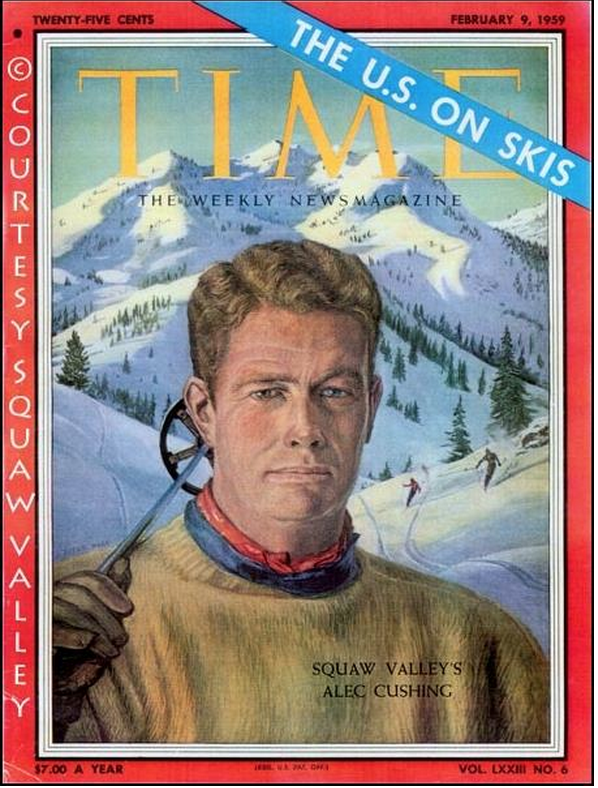
Then and now: Cushing making headlines

Screen Shot 2014-11-29 at 8.38.12 AM

The 6-foot, 5-inch Alexander C. Cushing was a Harvard-educated, World War II Navy veteran and Wall Street lawyer.

Nov. 28 would have been Cushing’s 101st birthday. He lived to 92.

He left his mark on Lake Tahoe when he almost single-handedly brought the 1960 Winter Olympics to Squaw Valley, which at the time was a no-nothing resort that he owned.

Note that the Time magazine cover fro 1959 refers to him as Alec. However, he went by Alex.

— Bill Kingman


Tree festival becomes student art project

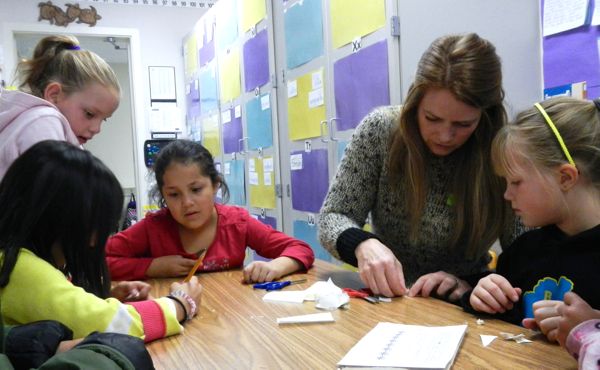
Katie Long shows students how to make snowflakes for Bijou's festival tree. Photos/Kathryn Reed

Katie Long shows students how to make snowflakes for Bijou’s festival tree. Photos/Kathryn Reed

By Kathryn Reed

Students gently take the special paper and fold it in triangles, then they make precise, delicate cuts like a surgeon.

What they create proves no two snowflakes are alike.

“Let it Snow” is the theme of the school trees being created for this year’s Festival of Trees and Lights. Now in its sixth year, the festival is all about creating a winter wonderland.

Trees will fill Harrah’s Lake Tahoe convention center Dec. 3-7. Some are elaborately decorated, others are traditional, some are over the top, others are whimsical. The school trees are generally smaller than the designer trees, but shine through because of the creativity of youngsters.

“What’s fun is you get to fold and start cutting and it makes really cool designs,” Mia Koda told Lake Tahoe News.

She along with other students in Alana Cayabyab’s second-grade class at Bijou Community School is learning from Katie Long how to make the snowflakes. Long is a parent volunteer whose goal was to have about 600 snowflakes for Bijou’s tree. That would be one snowflake per student.

“Because of fire restrictions I ordered this special paper online so if the fire marshal tries to light it, it won’t,” Long told Lake Tahoe News.

Student Mia Koda shows off her snowflake.

Student Mia Koda shows off her snowflake.

The class is broken into groups, with Long working with a handful of students at a time. She explains how folding the paper into different triangles will result in a bigger or smaller snowflake. As the students finish their creations, she strings them together, creating a mini snowstorm effect.

And while it’s fun to decorate the trees, they are judged – so there are at least bragging rights to compete for among the South Shore schools.

Crystal Wolverton was surprised at what her snowflake looked like. What she liked best is how the cutting makes different shapes.

Student Davis Castles is a veteran of the festival, having gone in the past to have his picture taken with Santa and to adopt a teddy bear.

The festival is designed to be an event for all ages to embrace the season without any religious overtones. Each year the festival, which is put on by the Barton Foundation, raises money for a specific cause. This year Barton Health’s Hospice Programs & Services is the beneficiary.

—-

Notes:

• More info about the festival may be found online.

• The event is Dec. 3-7 at Harrah’s Lake Tahoe.


Opinion: TY&FS helping runaway, homeless kids cope

By Cheyanne Lane

What are the first thoughts that go through your mind when you see a youth on the streets? How did they get there, where are their parents, and are they safe?

It’s disturbing to realize that between 1.6 million and 2.8 million youth run away annually. Most youth who run away do so because of threatening environments at home, such as physical-verbal abuse, neglect, substance abuse issues, questions of sexual orientation, or escaping state care.

Unfortunately, by choosing to run away, they further subject themselves to threatening situations that impede their progress in life. Young people who live on the streets are at high risk of developing serious, life‐long health, behavioral, and emotional problems. They suffer from high rates of depression, poor health, low self-esteem, and higher likelihood of suicide, survival sex, pregnancy, substance abuse, and post‐traumatic stress disorders. The longer they live on the streets, the more likely they are to fall victim to sexual exploitation, human trafficking and engaging in high-risk behaviors, which in turn cause them to be more likely to remain homeless and more resistant to change.

Almost 40 years ago, the groundbreaking Runaway and Homeless Youth Act created the first line of defense for young people who had run away from home, become homeless, or been asked to leave home by their families. Congress recognized the precarious circumstances of young people who could not return home but did not yet have the financial, social, or emotional resources to live successfully on their own. Today, that safety net is woven by the Runaway and Homeless Youth Act, most recently reauthorized by the Reconnecting Homeless Youth Act of 2008, and administered by the Family and Youth Services Bureau (FYSB) within the Administration for Children & Families of the U.S. Department of Health and Human Services.

Tahoe Youth & Family Services has been able to provide for homeless, runaway, couch surfing, or at risk youth for 38 years in South Lake Tahoe, eight years in Gardnerville, and three years in Alpine County. We have provided these supportive services by being awarded the Basic Center Program grant that funds our emergency host home shelters for minors up to the age of and 18 and drop in centers services for youth up to the age of 24 who are either at immediate risk of being homeless or who are already on the streets.

Beyond emergency services, basic centers provide supportive services, mediation and counseling to keep youth in their homes or to reunify them with their families after they’ve left, if appropriate.

TYFS has also been awarded the Street Outreach Program grant that provides education and prevention services to runaway, homeless and street youth who have been subjected to, or are at risk of being subjected to, abuse or exploitation.

Last fiscal year TYFS had 92 unduplicated clients pass through our doors. Youth accessing Basic Center services through TYFS’ drop in centers received 7,526 individual food, 271 backpacks of healthy food and snacks and survival aid items including 192 pairs of socks, 309 hygiene products, 16 sleeping bags, two tents, 284 articles of clothing, 18 pairs of shoes and staff assisted three chronically homeless youth with obtaining proper identification in order to obtain employment, apply for funding to attend the local community college and get off the streets.

Tahoe Youth & Family Services’ drop in centers are a point of entry to provide information, resources, and opportunities to all youth who are homeless, living in poverty or who may be at risk of becoming homeless and/or are seeking to improve their overall wellness, and quality of life to find stability. Our drop in center staff can assist youth with the following supportive services: food, clothing, socks, sleeping bags, back packs, hygiene supplies, laundry services, showers, help looking for a job or filling out an application, obtaining proper identification, as well as motivation to move beyond the street with guidance and compassion.

The Drop in Center is a great place for youth to: get recharged, get resources and get respect.

Become a mentor for youth in our community today, to help prevent youth from looking toward the streets as a way out.

For more information on the drop in center or how you can help runaway and homeless youth in our community please contact me at 530.541.2445.

Cheyanne Lane is the supportive services coordinator for Tahoe Youth & Family Services.