Science puts the squeeze on compression garments

By Teal Burrell, Outside

As tight as they are bright, compression socks, sleeves, shorts, and pants promise to boost performance and recovery. But scientists aren’t entirely sure how — or if — compression gear works as advertised, questioning its usefulness in competition and recovery.

We might be better off, they say, lounging around in compression than we are racing in it.

There is moderate evidence to support wearing compression gear after a long race or workout. Jessica Hill, a sports scientist at St. Mary’s University in Twickenham, England, tested the gear’s effect on recovery in two groups of marathoners. When asked to hold a squat the day after the marathon — a formidable task — those who immediately and continuously donned compression leggings post-race (removing them only to shower) reported less quadriceps soreness compared to those in the control group. Hill also reviewed 12 studies examining compression gear and recovery.

The resulting data showed compression gear provided a modest reduction in soreness and muscle damage while restoring both leg strength and power, possibly by reducing inflammation.

“For an athlete who needs to do lots of training programmed quite closely together that could be an advantage,” Hill says. For others, “The only benefit they’re likely to get out of it is probably reduced soreness.”

Read the whole story


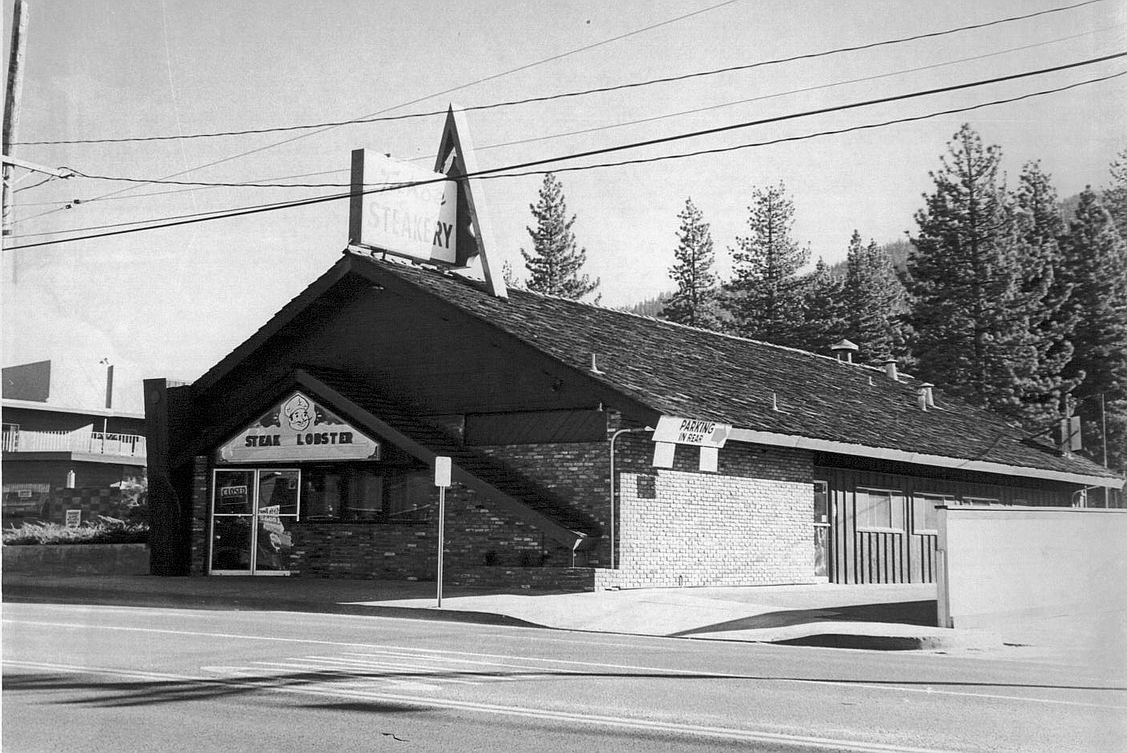
Then and now: Steakhouse sacrificed for redevelopment

The Tahoe Steakery, circa 1960s. Photo/Private Collection

The Tahoe Steakery, circa 1960s. Photo/Private Collection

At the Tahoe Steakery people would select their steak from the refrigerated display. Then it would be cooked to order.

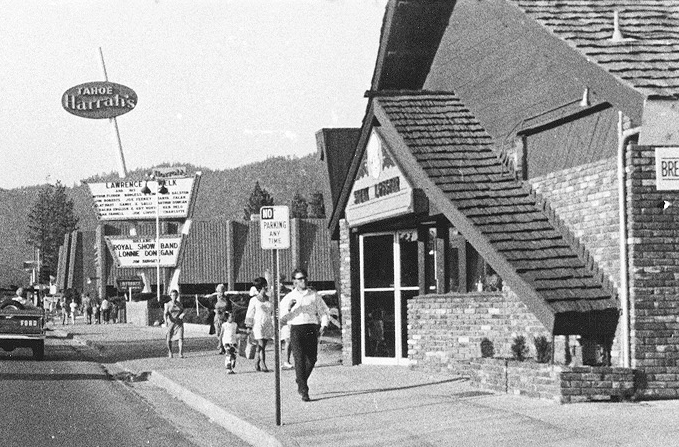
The Steakery was near the state line. Photo/Don Lane

The Steakery was near the state line. Photo/Don Lane

Between the Steakery and the state line was a Harrah’s parking lot on the California side. Now the site is Lake Tahoe Resort Hotel — aka the old Embassy Suites.

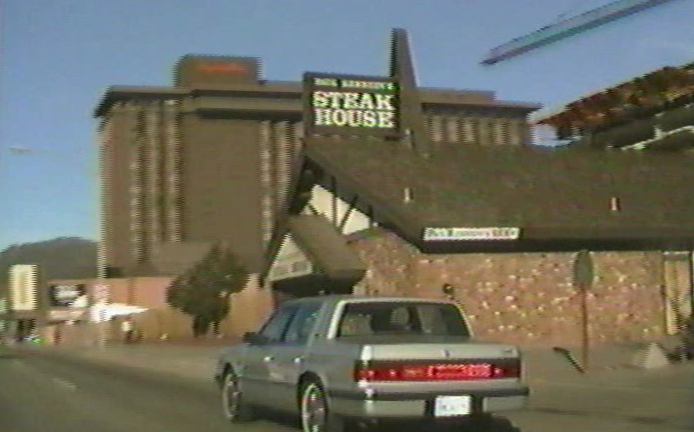
The steakhouse evolved through the years. Photo/Bill Kingman

The steakhouse evolved through the years. Photo/Bill Kingman

Prior to being razed for redevelopment in 1991, the sign read “Paul Kennedy’s Steak House.” The parking lot is fenced and a hotel construction crane is seen at top right in the photo.

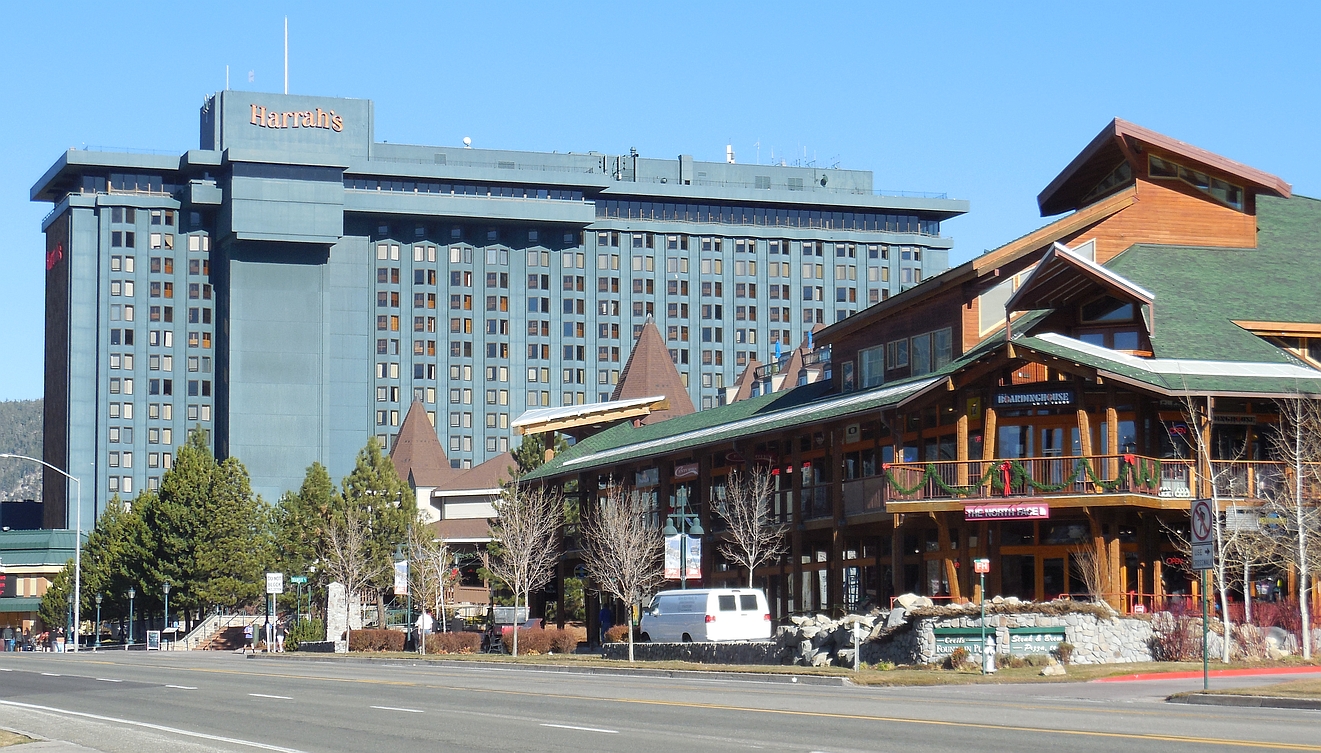
Redevelopment wiped out a lot of old Tahoe. Photo/Bill Kingman

Redevelopment wiped out a lot of old Tahoe. Photo/Bill Kingman

Today, the steak house would be where the white van is parked.

— Bill Kingman


Weight, food, inactivity contribute to cancer risk

By Kathryn Reed

While the cause of many cancers is unknown, a person’s lifestyle can be a large contributing factor.

That was the overriding message delivered by Lynn Norton, a registered dietician with Barton Health, during a Dec. 2 lecture at Lake Tahoe Community College.

“The majority of cancer is basically preventable,” Norton said. “There are enough things in our lifestyle and with nutrition that we can do.”

She cited several studies that underlined the need to pay attention to diet, body weight and exercise.

The risk of cancer increases, Norton said, with a high body mass index. This number is based on a person’s height and weight. A healthy weight for a person who is 6-feet-tall is between 140 and 180 pounds, while someone 5-feet-6 should weigh between 115 and 150 pounds.

There are people who are overweight, and then those who fall into the obese category. In the United States people are increasingly in the worst category – obese. Thirty-four percent of the people in this country are considered obese. For those 19 and younger, the percentage is 17.

Obesity increases the risk of being diagnosed with the following cancers: esophagus, pancreatic, colorectal, breast, endometrial, kidney and gall bladder.

Garlic is said to ward off certain cancers. Photo/LTN file

Garlic is said to ward off certain cancers. Photo/LTN file

Being active is going to help reduce one’s weight, as well as reduce the risk of cancers like colon, post-menopausal breast and endometrial.

The recommendation is get 30 minutes of at least brisk walking every day, then work up to 60 minutes.

Another suggestion is to limit high calorie foods and sugary drinks. This can be attained by a diet derived mostly from plants. Norton pointed out how some veggies have more benefits than others, like garlic is a deterrent to colorectal cancer, carrots help prevent cervical cancer, and legumes ward off stomach and prostate cancers.

“Fibrous foods are dense and filling,” Norton said. “Americans eat 10 to 15 grams of fiber a day and it should be 20 to 35 grams.”

Red meat should be limited – in how often it is consumed and how much. Eighteen ounces a week is the recommendation.

When it comes to alcohol, Norton said it is considered a carcinogen. Two drinks a night for men, one for women, are the ideal amounts based on studies.

Sodium, while it’s needed, is often consumed in alarming rates at restaurants and via packaged foods.

Norton cautioned people to be wary of supplements because they are unregulated. She stressed the need to do research to know what a safe level of them is.

She said the easiest way to begin making changes is to shop differently at the grocery store by putting more grains in the basket, along with vegetables. Norton suggests buying extra chicken or fish so there are leftovers for lunch instead of eating processed food midday. Shrink the size of the specialty coffee, order veggies on a pizza and no meat, put wine in a smaller glass. And treats – make them a treat, not a staple.

U.S. women sweep Lake Louise downhill

By USSA

LAKE LOUISE, Alberta – Lindsey Vonn (Vail) reclaimed her title as Queen of the Downhill at Lake Louise on Saturday, winning her 60th Audi FIS Ski World Cup and capping a first-ever U.S. Ski Team podium sweep.

At the World Cup dubbed Lake Lindsey, she regained her crown as she pulled out the win by almost a half second. Early-running Stacey Cook (Mammoth Mountain) took the lead and held it until Vonn bumped her into second. Julia Mancuso (Squaw Valley) rounded out the podium in third. It was the best finish in two seasons for all three athletes.

Out of her 60 career World Cup wins, 15 of Vonn’s first places have come in Lake Louise and she did it again. Vonn looked fast and strong, keeping her speed up throughout the run and never losing the lead. When she crossed through the finish and looked up at the time, she let out a scream of excitement, thrilled to be back in action.

“Every day has gotten better here,” Vonn said in the finish. “Today I went a little bit more aggressive than I did yesterday and took some more chances. I’m finally feeling confident going fast again.”

It was the first ever all-American podium in alpine World Cup ski racing. It also marked four Americans in the top 10, with Laurenne Ross (Bend, Ore.) in sixth.

The rest of the Americans had to deal with a dark, snowy course, but had good results. Also coming back from multiple knee surgeries, Alice McKennis (Glenwood Springs, Colo.) took 18. Jackie Wiles (Aurora, Ore.) 37 and Katie Ryan (Aspen) 46. Julia Ford (Plymouth, N.H.) did not finish.


Opinion: You’re a jerk if you leave a small tip

By Colleen Shaddox, Washington Post

A Facebook friend was offended by the presence of an attendant with a tip jar in an airport bathroom.

“I felt harassed and examined and judged when I did not leave a tip or make conversation with the attendant,” she wrote, revealing herself to have zero experience being harassed, examined or judged. Many folks added a riposte sympathizing with her and making fun of anyone who had to earn their living minding a restroom.

“It’s how she feeds her family,” I commented.

My incredibly hardworking mother was a waitress, and I became one as soon as I turned 16. After almost 20 years surviving on tips, I understand what it’s like to be on the other side of that jar. Tipping is a demeaning custom. A worker’s compensation should not rest on somebody’s whim. Nor should she have to put up with insulting or handsy customers because she doesn’t want to endanger her pay. Tip-based compensation not only institutionalizes the examination and judgment of workers, it invites harassment, too.

Tipping absolutely should be replaced by fair wages. The regular federal minimum wage stands at $7.25 per hour, but for tipped workers, it’s just $2.13. While the regular minimum wage has risen by $3 since 1991, the tipped minimum wage hasn’t changed at all. People who work for tips are more likely to live in poverty. So until the system is overhauled, and all workers are given fair pay, your tips always should be large. If you can dine out, travel or get someone to clean your house, then you have discretionary income. Adding another $5 to the tip isn’t going to affect your standard of living, but it will make a big difference to the person serving you. That person almost certainly waits until her car’s gas gauge light comes on before pulling into the filling station. For $5, you can be a hero.

But when you do tip big, try not to think of yourself as a hero, lest you morph into a jerk. When my mother worked as as a waitress in a private club, the staff had to wear white gloves and line up like little tin soldiers as the officers of the club passed out the Christmas gratuities. The first year she worked there, she wondered – without any sarcasm whatsoever – if she should curtsey. No one should have to sit up and beg for a tip, but many customers think otherwise.

Read the whole story


Holiday in History in South Lake Tahoe

Lake Tahoe Historical Society’s annual Holiday in History is Dec. 13-14.

Santa Claus will arrive by sleigh Dec. 13 at 5pm at the senior center to hear children’s requests, phone calls to the North Pole may be made from the cabin, and the with menorah will be lighted.

The decorated museum with a period Christmas tree will open for free that Saturday from 11am-7pm and Sunday 11am-3pm.

Lake Tahoe Historical Society Museum is at 3058 Lake Tahoe Blvd., South Lake Tahoe.


Teter holds on for third at Sprint Grand Prix

By USSA

COPPER MOUNTAIN, Colo. – U.S. riders put on an impressive early season showing at the Sprint U.S. Grand Prix on Saturday, clinching five of the six podium spots.

Veteran Kelly Clark led an American sweep on the women’s side, with Taylor Gold taking home top honors for the men.

This is the first year that FIS and the U.S Grand Prix tour have implemented a three run final and it proved to be the deciding factor for today’s men’s event. Second place finisher Yiwei Zhang’s third run earned him a 95, putting the Chinese rider in the top spot with just three riders to drop, including Gold. Ben Ferguson, who was the top qualifier in the event, outdid his first two runs with a 94. But it was Gold’s third run, complete with a frontside 1260, that would prove to be unbeatable. While these names are by no means new to the podium or the Olympic roster, it has been duly noted that the next breed of American male snowboarders has arrived on the scene, including fifth place finisher Chase Josey and 15- year-old Jake Pates.

On the women’s side, no one has as much competition experience as veteran Clark, which she continues to use to her advantage. Clark’s first run proved to be enough to win the contest, but she continued to push herself and the sport adding an inverted frontside 720 to a run that already included a frontside 1080, a trick few other women have landed. Arielle Gold rose to the occasion, putting down a both a frontside and Cab 900 in her run.

Hannah Teter of Meyers, who struggled to land on her feet in runs one and two, stomped a classic Teter run with a perfectly executed backside 900 on her last hit to complete the American podium sweep.


“Today started off a little on the wrong note. I fell on nearly every practice run, so I decided to take a moment and get my stuff together. And thank goodness we had a third run because it all clicked on that third run,” Teter said.

Spain’s Queralt Castalet was absent from today finals after taking a hard fall in practice.


Settlement ends North State resort plans

By Jane Braxton Little, Sacramento Bee

SUSANVILLE — A decadelong legal battle over a controversial four-season resort on Dyer Mountain has ended with a settlement agreement reached between Lassen County, Sierra Pacific Industries and three environmental groups.

The county and the timber company, which bought the 7,000-acre property in 2013, agreed to pay $519,000 to Sierra Watch, Mountain Meadows Conservancy and the Sierra Club, said Richard Egan, Lassen County administrative officer.

The payments were sent this week, he said Thursday.

The settlement, approved last month in a closed session of the Lassen County Board of Supervisors, ends the environmentalists’ challenge of the development, planned to include ski facilities, golf courses, 600,000 square feet of commercial space and more than 4,000 residential units.

Read the whole story


Detectives revisiting 20-year-old Tahoe murders

By Ed Pearce, KOLO-TV

INCLINE VILLAGE — Twenty years ago, a retired couple was murdered in their Incline Village home. The crime remains unsolved, one of Washoe County’s “cold cases.”

But it and others like it are getting new attention. In a small storage room in the Washoe County Sheriff’s Office are shelves containing the files of this department’s unsolved major crimes. Each represents a victim, a family without closure, justice delayed, but not necessarily denied.

You see these cases aren’t sitting on the shelf, gathering dust. They’re getting new attention and that includes the murders of Charles and Nona Rauer.

Sixty-three-year-old Charles Rauer and his 56-year-old wife Nona had moved in their retirement away from the big city crime of southern Florida to the safe quiet of Tahoe’s north shore. “They were retired, living in a condo up in Incline, basically living the dream that they had,” says Washoe County Sheriff’s Detective Josh Palmer..

The dream turned to nightmare one morning in early December of 1994. Their bodies were found in their home in the 800 block of Oriole Way in Incline Village on the foruth. It’s likely they were killed in the morning of the second or third. Cause of death: blunt force trauma.

Read the whole story


Douglas libraries putting on Lego contest

Douglas County libraries are hosting a winter break Lego building challenge.

The challenge is to build an original structure with an animal theme. Bring thecreation to the Minden or Zephyr Cove library between Dec. 15 and noon on Jan. 7.

Lego prizes will be awarded to the first and second place winner in each age category. Children and adults may participate; one entry per person. Children under age 4 must use Duplo bricks. Winners of the contest will be announced Jan. 14.

Winning entries will be displayed at the Minden library through Jan. 31. Complete rules and entry forms are available at the Minden and Zephyr Cove libraries and online.