Opinion: California is more bust than boom

By Ted Gaines

Ebola, landslide elections, immigration and Ferguson have dominated the holiday season news, and those massive stories have obscured a host of other events that augur poorly for the future of California unless we act to change the way we govern this state. It’s the problems related in these stories that inspired me to write “CA-Boom! California’s Amazing Past, Troubled Present and Unlimited Future”.

These stories lost among the mega-events are not new – they are continuations of troubling California trends – and I tackle them all in my book and address how they can make or break our state moving forward. Here’s a sampling:
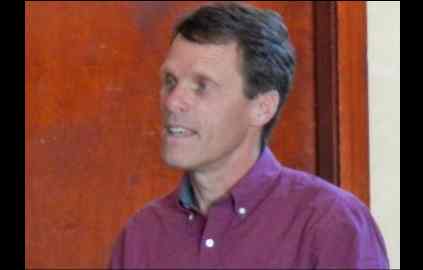
Ted Gaines

Ted Gaines

Social Security Disability Insurance (SSDI) will become insolvent in 2016 unless the federal government slashes benefits, raises taxes, changes eligibility, or takes all three of those steps. In my book I discuss the staggering growth of disability payments and how expanding entitlements affect the workforce. But most important to our long-term future, I ask the question: If jobs are getting physically less demanding, and medical care is getting better, then why are fewer and fewer people able to work? What does that mean for California in the decades to come? If you’ve ever had a sense of unease about SSDI, check out “CA-Boom!” to see some numbers that will validate every fear you’ve ever had. Here’s a hint – it’s worse than you think.

The free-market Cato Institute recently issued a “fiscal report card” of all 50 governors. Gov. Jerry Brown was dead last and it wasn’t close. Despite his claims of austerity and a beneficial action here and there, Brown’s spending increases over the past three years are more than double the national average. That’s unsustainable. And because spending equals future taxes, Brown’s expansion will put pressure on government to wring more out of every taxpayer. “CA-Boom!” looks at our tax burden and shows why increasing taxes, at least in this state, could be a disaster.

Proposition 47, recently passed by the California voters, will dump thousands of criminals onto the streets, supposedly non-violent and low-risk offenders who shouldn’t be in prison at all. I take a look at some data and conclude one thing: It’s hard to end up in prison. In 2011 there were nearly 400,000 felony arrests in California. How many of those people saw the inside of a prison cell? My book tells you, and I bet the number is much, much smaller than you think.

I also examine innovation and its role in the California economy; our crumbling infrastructure; and why our schools cost so much and return so little. There are charts in the book about education spending and educational achievement that will make you rethink every call for more money in our schools. I look at how our energy policy could supercharge our economy but instead drags it down and other issues critical to the health of the Golden State.

It’s obvious that California has enough problems for 10 states, but what defines us is hope, hope that we can recapture our glorious economic past. Everything in the book is discussed in the context of our state’s rich Gold Rush history. In it I ask: “What would happen if John Marshall dipped his hand into the American River today and pulled out that same brilliant sparkle? Nothing. No Gold Rush. No mass migration. No inventions. No progress. Nothing. California’s current government would kill off a new Gold Rush before it started.”

We’ve fallen a long way from the freewheeling, risk-taking spirit that fueled the most amazing economic spectacle the world has ever seen. But that is the government’s fault, not the people’s. However, with the right policies, we can unlock the potential in today’s California and turn the state back into the Gold Rush dream that pulled people from around the world to our shores.

Sen. Ted Gaines represents the 1st Senate District, which includes all or parts of Alpine, El Dorado, Lassen, Modoc, Nevada, Placer, Plumas, Sacramento, Shasta, Sierra and Siskiyou counties. 


Trend: Inhaling alcohol instead of swallowing

By AC Shilton, Outside

Bold prediction: In 2015, we won’t drink our liquor. We’ll inhale it.

Julie Palmer got the idea for the Vaportini—a device that vaporizes spirits—while traveling in Helsinki. A friend introduced her to the Finnish tradition of dumping vodka over the coals of a sauna, and she found the effect intoxicating. So Palmer decided to bring the tradition back to the United States, but in a way that involved less awkward sauna nudity.

With the help of her father, a retired engineer, Palmer designed and patented the Vaportini, a pint-glass-like base with an orb perched on top.

Read the whole story


Vonn back on podium in super G

By USSA

LAKE LOUISE, Alberta — Just a day after leading a first-ever American podium sweep, Lindsey Vonn (Vail) on Sunday was back on the winner’s stand, finishing second in the season-opening Audi FIS Ski World Cup super G in Lake Louise. Julia Mancuso (Squaw Valley) was sixth, while Lara Gut of Switzerland took the win and Tina Maze of Slovenia rounded out the podium.

Vonn, whose return to ski racing after a knee injury happened just on Friday, came in eighth that day before winning Saturday’s downhill. Although she lamented her timing-based mistakes on the course, she said, “It was a solid day and a phenomenal weekend for me.” This was Vonn’s best super G finish since she won in St. Moritz in December 2012.

Mancuso had a solid run, sitting in fifth for 15 racers, until Cornelia Huetter from Austria bumped her to sixth place overall. Stacey Cook (Mammoth Mountain) and Laurenne Ross (Bend, Ore.) also scored World Cup points, finishing in 23 and 24, respectively. Katie Ryan (Aspen,) finished 42, Alice McKennis (Glenwood Springs, Colo.) 43, Jackie Wiles (Aurora, Ore.) 47 and Abby Ghent (Edwards, Colo.) 52.

The women’s tour now heads to Are, Sweden, a replacement site from Courchevel, France, for a giant slalom and slalom. Vonn will remain at home in Vail to train, looking ahead to the next speed races the following weekend in Val d’Isere, snow permitting.


Cameras circling Lake Tahoe would warn of fires

By Associated Press

RENO — Nevada scientists working to expand early earthquake warning systems around Lake Tahoe are developing new plans to eventually ring the mountain lake’s basin with a network of cameras to help alert authorities to potentially disastrous wildfires.

Researchers are seeking private funding to substantially expand the system after a pilot program conducted by the University of Nevada’s Seismological Laboratory was determined to be an encouraging success.

“In the end, we envision encircling the basin so you can see the entire basin,” Graham Kent, director of the seismology lab, told the Reno Gazette-Journal. “We feel this is a very important thing.”

Like an automated version of the manned fire lookouts used for decades to protect vulnerable forests from fire, the cameras are designed to alert officials that a fire has started, allowing them to send firefighters to the scene before it gets big.

The first device, also outfitted with a seismometer, was installed in July 2013 as part of an effort to expand the seismology lab’s seismic network. Two more were installed last summer, and a fourth should be installed near Homewood in a week or so.

The stations employ a wireless, digital microwave communication system that can also be useful in obtaining weather data and in atmospheric and other environmental studies, Kent said.

Their potential usefulness in detecting fire was evident last August when a U.S. Forest Service official was testing one installed in the mountains above Tahoe’s east shore to scan an area that had been hit by lightning over a span of several days.

Mac Heller of the Lake Tahoe Basin Management Unit of the U.S. Forest Service spied thin wisps of smoke and contacted firefighters, who found and contained a half-acre wildland fire near Spooner Summit. “Who knows how big the Spooner fire would have been if it had been reported later or the next day or so?” Heller said.

There’s no way to know for sure, but Kent suspects that had the camera system been in place in June 2007, the Angora Fire might have been stopped before it whipped into an inferno that destroyed 254 homes on the South Shore.

“The fire this system is built to detect is the Angora Fire,” Kent said. “That fire smoldered for hours before it took off. Even the smallest fire is super-apparent, and that thing would have been super-apparent for much of the day.

“This system will have the potential of jumping on fires and the majority, if not all, will be discovered early.”

Lake Tahoe’s fire chiefs have been briefed on the program and are impressed with what they learned, said Mike Brown, chief of the North Lake Tahoe Fire Protection District.

“What they have to offer is awesome when it comes to early detection,” Brown said, agreeing that the cameras might have made a big difference during the Angora Fire.

Officials at REMSA, a paramedic and ambulance service in the region, say the cameras could also be useful in providing a real-time look at Tahoe weather conditions prior to flights of Careflight medical helicopters, Kent said. The cameras — which are controlled remotely by computer and can tilt, pan and zoom — have been used this fall to monitor controlled burns and the smoke they create.

Kent and colleagues envision installing the camera stations at 15 additional locations at a cost of about $2 million. While grants might cover some of the cost, they are hopeful private donations could provide needed money at an accelerated schedule. The lab’s fundraising campaign is called, “AlertTAHOE.”


Bike committee needs members

The South Lake Tahoe Recreation Facilities Joint Powers Authority is seeking applicants to the Bicycle Advisory Committee.

The seven-member committee meets monthly. There are four open positions for two-year terms. The other three positions will expire in January 2016, and will be filled for two-year terms at that time.

The Bicycle Advisory Committee expects to continue to have work until 2030.

The application deadline is 5pm Jan. 16. The application can be obtained by mail or email from the South Lake Tahoe City Clerk, 1901 Airport Road, 530.542.6004 or eapalazzo@cityofslt.us.

The JPA will meet to consider and appoint members Jan. 23 at 9am at the South Lake Tahoe City Council Chambers, 1901 Airport Road, South Lake Tahoe. If unable to attend, applicants should advise JPA staff John Upton at 530.541.0525 or rkupton@aol.com.


Caesars Entertainment wants Delaware lawsuit tossed

By Randall Chase, AP

GEORGETOWN, Del. — A Delaware judge is weighing whether to grant a motion by Caesars Entertainment Corp. to dismiss a lawsuit by bondholders accusing the company of fraudulently transferring assets of its debt-laden operating unit in order to shield them from creditors.

Lawyers for Caesar’s argued Friday that the second-lien bondholders are bound by an intercreditor agreement with first-lien noteholders to bring such claims in New York, where the company is involved in related litigation, including a suit that the company filed against certain investors just hours after the Delaware action was filed in August.

“They have a contractual obligation to bring this case in New York,” said Caesar’s attorney Eric Seiler.

But attorneys for the bondholders, who are represented by Delaware-based Wilmington Saving Funds Society as successor trustee, contend that Caesars is not a party to the intercreditor agreement, and that its provisions do not apply to their lawsuit against the company. They also argue that the asset transfers in dispute involved entities that were formed in Delaware and are controlled by Caesars officials in Nevada.

Caesars is the parent company of Harrah’s Lake Tahoe and Harveys

“The important and central witnesses are going to be the business people who signed off on these transfers,” said Bruce Bennett, an attorney for the bondholders.

Vice Chancellor Sam Glasscock said he had expected to rule at the conclusion of Friday’s hearing but told attorneys that they have raised complex issues that he needs time to consider. He said he would rule promptly but gave no timeline

The lawsuit is one of two filed in Delaware against Caesar’s, which was saddled with debt since a 2008 highly leveraged $30 billion buyout of Harrah’s Entertainment Inc., as the company formerly was known, by private equity investors led by TPG Capital and Apollo Global Management.

Last week, UMB Bank, a trustee for first-lien noteholders owed more than $1 billion, sued Caesars in Delaware, with allegations of misconduct similar to those made by the junior bondholders. The plaintiffs allege that Caesar’s officials have stripped Caesar’s Entertainment Operating Co., or CEOC, of assets including trademarks, real estate and interactive gambling operations, transferring them to affiliates that are not liable for CEOC’s debt. UMB, on behalf of the first-lien noteholders, is asking the court to impose a receiver for CEOC.

Meanwhile, Caesars is working to restructure its debt and has sued certain institutional investors in New York court, claiming they are trying to push CEOC into default and thwart its restructuring efforts. The complaint names certain investors holding CEOC second-lien notes, as well as Elliott Management Corp. which holds first-lien notes.

Caesars CEO and chairman Gary Loveman said in August that the company refuses to be “held hostage” by speculators who seem to be betting against its long-term health.


Minor work in Kings Beach to continue

While much of the work on the Kings Beach Commercial Core Improvement Project has stopped for the season, some may continue.

Based on weather, there is a chance AT&T this season may complete the last utility relocation at the intersection of highways 28 and  267.

With the recent precipitation, crews have been out monitoring the stormwater treatment system to verify it is doing what it is intended to do. Drainage patterns are also being observed to locate areas of adverse ponding or flooding.

Other improvements anticipated to be completed in the coming weeks are the installation of handrails at the entrance to several businesses between Bear Street and Coon Street.

Placer County is hiring a snow removal contractor to clear a 5-foot wide path along portions of the project where the new sidewalks have been built. Brook and Minnow parking lots will continue to be cleared.

Gateway to the Core is the second phase of improvements which are planned along Highway 28 and in the grid. This second phase of work will provide pedestrian, water quality, and aesthetic improvements on both ends of Kings Beach’s commercial corridor. Bids will be advertised in fall 2015, with construction expected to begin the next spring.


Rahlves part of Sierra Avalanche Center fundraiser

Daron Rahlves will talk about his role in one of the most talked about ski films of the year at the Backcountry Ball, a fundraiser for the Sierra Avalanche Center, on Dec. 12.

Rahlves, a former Olympian, World Cup Champion and Sugar Bowl Resort ski ambassador, will give attendees a behind-the-scenes look at Sweetgrass Productions’ “Afterglow’”short film, where he skied steep Alaska spines at night wearing a LED lightsuit. Rahlves wore a suit fitted with 7,000 LED lights, and skied through landscape illuminated only by spotlights and the glow of the LED lighting from his lightsuit.

The fundraiser at Sugar Bowl Resort’s Mt. Judah Lodge will also feature a slideshow from ski photographer Grant Barta, music,  silent auction, dinner and drinks. Dual-logo Sierra Avalanche Center and Sugar Bowl Resort pint glasses will be available for $10 and include the first beer.

The event supports Sierra Avalanche Center, the nonprofit that funds the daily avalanche advisory in the Northern Sierra and delivers avalanche awareness programs around the Tahoe.

Tickets are $20 in advance and $25 at the door. Advance tickets can be purchased online under the “upcoming events” tab. Doors open at 5pm, dinner is served at 6pm and the presentation begins at 7pm.


Money laundering a concern for casinos

By J.D. Morris, Las Vegas Sun

Monitoring casino floors for potential money-laundering is a full-time job for the American gaming industry.

Casinos, like banks and other institutions that deal with a lot of money, are required by law to vigilantly look out for financial transactions that may be illegal. And a first of its kind report from the industry’s Washington, D.C.-based trade association sheds light on the best methods casinos can employ to do that.

The report comes as the industry is under substantial pressure to make sure its anti-money laundering tactics are airtight.

Read the whole story


Vermont writer wins Tahoe poetry contest

Julia Shipley is the 2014 winner of Bona Fide Books’ Melissa Lanitis Gregory poetry prize.

Shipley is the author of three poetry chapbooks. She is a two-time recipient of grants from the Vermont Community Foundation and the Vermont Arts Council and has also received fellowships from the Frost Place in New Hampshire the Center for Books Arts in New York City, and the Studios at Key West.

A born-again agrarian, she raises animals and vegetables on her 6-acre farm in northern Vermont.

The prize is named after Lanitis, a South Lake Tahoe artist who died in 2009. This award created by Bona Fide Books Publisher Kim Wyatt is in honor of her friend and to recognize the inspiration Lantis gave to so many others in pursuit of literary and artistic dreams.

Shipley’s collection of poetry titled “The Academy of Hay” will be published by Meyers-based Bona Fide Books in 2015.