At 50, ‘Rudolph’ sets television record

By Lisa Respers France, CNN

The longest-running holiday special still has a very shiny nose.

“Rudolph the Red-Nosed Reindeer” premiered on television Dec. 6, 1964, and is now one of the holiday season’s perennial favorites. The story of the reindeer who saves Christmas is beloved among children and adults alike.

The Rankin-Bass animated film production company used Japanese puppets and stop motion to tell the tale, bolstered by a soundtrack featuring Burl Ives’ rendition of the theme song.

In the story, Santa’s reindeer Donner and his wife have a son, Rudolph, who has the distinction of a nose that glows. He runs away after being made to feel an outcast and links up with an elf who dreams of becoming a dentist and an adventurer seeking silver and gold.

Read the whole story


S. Tahoe groundwater contamination improving

By Kathryn Reed

Owners of Tahoe Tom’s on Dec. 8 were issued a letter by the Lahontan Regional Water Quality Board allowing the South Lake Tahoe gas station to shut down the onsite remediation system during the winter.

Tahoe Tom’s has long been a source of contaminating the groundwater and affecting wells. Even though MTBE (methyl tertiary butyl ether) has been banned for years as a gasoline additive, it is still in the water system. Last summer it was found in a nearby well.

“Significant cleanup at the site occurred April through November and concentrations of petroleum products reduced significantly,” Lauri Kemper, Lahontan assistant executive officer, told Lake Tahoe News.

Testing the hydrocarbon concentrations will continue. If numbers are higher than the October results, the onsite remediation system will be turned back on.

Groundwater samples will be taken at the Mark Twain Lodge. In the past it had been contaminated, which required the gas station to provide the hotel with bottled water.

“(A) decision on further enforcement such as a penalty for the past violations (of) not providing bottled water or a plan is still pending,” Kemper said.

Beginning in 2015 water samples from the Best Western Station House and Alpenrose Motel wells also must be collected.

A more permanent solution to the problem is still being worked out.

“We are also waiting for final decision from county health on the treatment system design and plan submitted by Tahoe Tom’s. Once they have county approval, then we would expect Tahoe Tom’s to provide a schedule for implementation or the water board may impose a schedule,” Kemper said.


Calif. water at-risk from abandoned Sierra Nevada mines

By Ed Joyce, California Public Radio

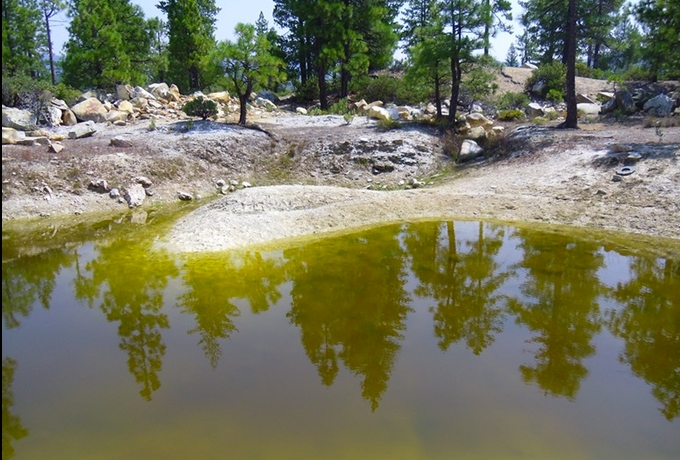
Along the western slopes of the Sierra Nevada, runoff pollution from abandoned mines in “Gold Country” could threaten California’s primary water supply. A pilot project at one mine site is intended to prevent contaminated runoff from reaching the Yuba River.

The Sierra Nevada Conservancy said more than 60 percent of California’s water supply comes from forests in the Sierra Nevada. The state agency says the health of many of those forests is in decline.

Joan Keegan, Conservancy assistant executive officer, said abandoned mines with contaminated soil are a “huge problem.”

A Sierra Nevada Conservancy pilot project is intended to reduce contaminated runoff from an abandoned mine in Nevada County. Bob Kingman / Sierra Nevada Conservancy

The Sierra Nevada Conservancy is working to reduce runoff from an abandoned mine in Nevada County.
Photo/Bob Kingman/Sierra Nevada Conservancy

“There are 47,000 abandoned mine lands in California that have been inventoried and over half of those are in the Sierra Nevada,” said Keegan. “And of those, there are 3,000 that are known to contain chemical hazards, including mercury.”

Keegan said there are probably more mines in the Sierra Nevada with chemical hazards that haven’t been assessed.

She said contaminated soil from abandoned mines drains in waterways that flow to the Sacramento-San Joaquin River Delta.

“Basically, a lot of the mercury and other toxins, that are a result of abandoned mine lands in the Sierra, have and continue to make their way downstream into the Delta,” said Keegan.

Keegan said the majority of those abandoned mines are in “Gold County” including El Dorado and Placer counties.

Read the whole story


Significant storm heading toward Lake Tahoe

A storm coming from the Gulf of Alaska is expected to wallop the Sierra midweek.

Rain and snow will arrive in eastern California-western Nevada late Wednesday-early Thursday.

Forecasters with the National Weather Service are not putting a snow total amount out yet. It will depend how the system moves as to how much snow falls above or below the 7,000-foot mark. Snow is expected to start at 7,500 feel and then drop.

The warning for now is to be prepared. Travel over the mountain passes will be affected. Check the state icons on the home page of Lake Tahoe News for current road conditions.

— Lake Tahoe News staff report


Tahoe Tails — Adoptable Pets in South Lake Tahoe

Mr. Boots

Mr. Boots

Mr. Boots is a 13-year-old Maine coon cat who has come back to the shelter. He was adopted, but was too rough for the dogs in his new home. He is nice with his people, but he might be best as an only pet. Mr. Boots qualifies for a free adoption to seniors and the right home.

Mr. Boots is neutered, microchipped, tested for FIV, and vaccinated. He is at the El Dorado County Animal Services shelter in Meyers, along with many other dogs and cats who are waiting for their new homes. Go to the Tahoe animal shelter’s Facebook page to see photos and descriptions of all pets at the shelter.

Call 530.573.7925 for directions, hours, and other information on adopting a pet.

For spay-neuter assistance for South Tahoe residents, go online.

— Karen Kuentz


Affordable Care Acts cuts down on ER visits

By Phillip Reese, Sacramento Bee

Fewer uninsured Californians are seeking treatment in the state’s emergency rooms, a decline that experts say is a direct result of the federal Affordable Care Act.

The trend represents welcome news for previously uninsured patients who had trouble affording a trip to the emergency room. But it has not brought down ER treatment costs for everyone else, health care experts said, nor has it slowed a years-long increase in overall emergency room traffic.

The Affordable Care Act required most Californians to obtain health insurance by April 15, 2014, or face a penalty. The new figures, reported by hospitals to the Office of Statewide Health Planning and Development, show that about 337,000 uninsured patients visited California emergency rooms between April and June, down by 90,000, or 20 percent, from the same quarter in 2013. Put another way, 12 percent of emergency room patients lacked insurance this year, down from 16 percent in 2013.

Read the whole story


Backcountry enthusiasts plow through the pow

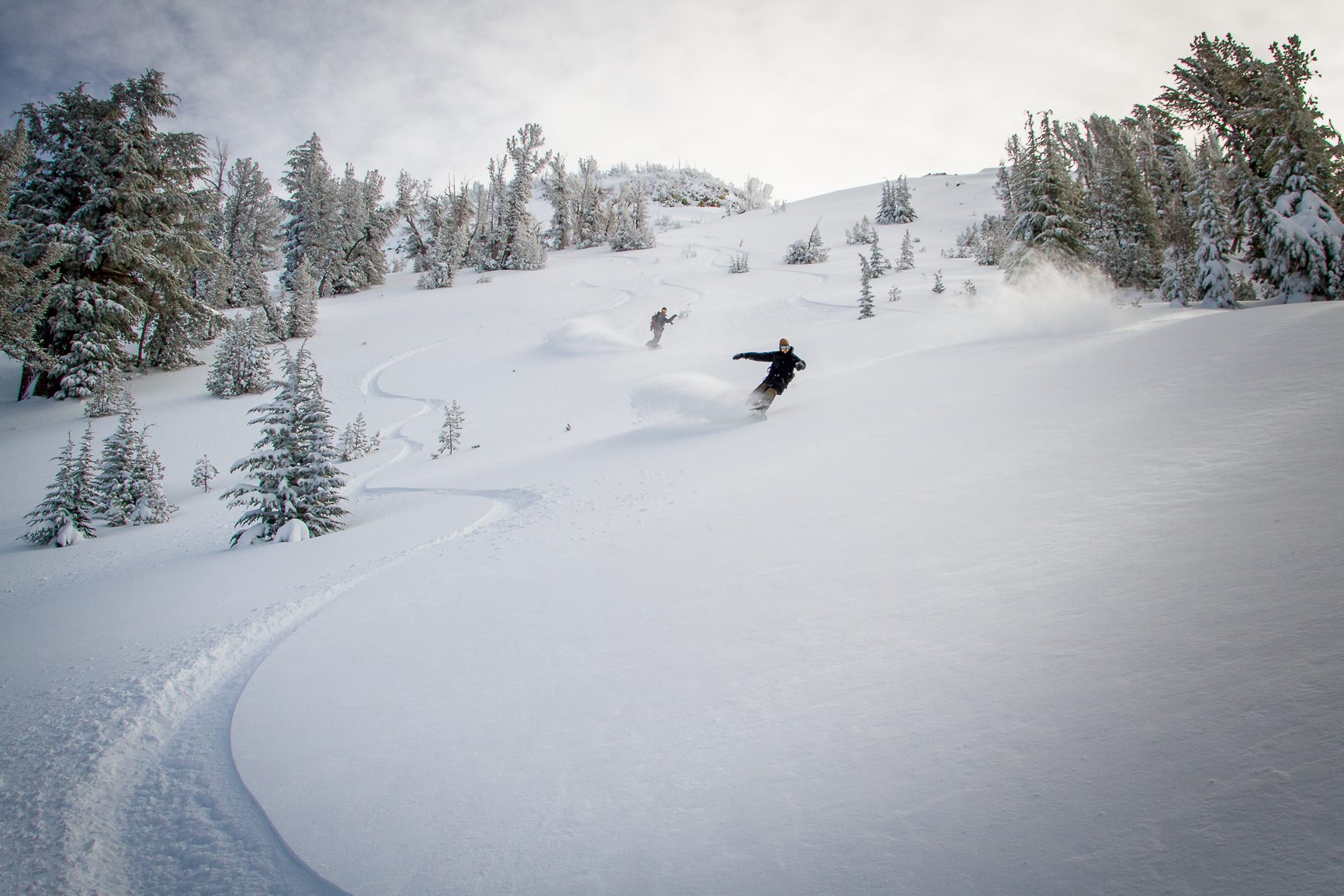
Making turns in fresh powder near Mt. Rose on Dec. 6. Photos/Chris Bartkowski

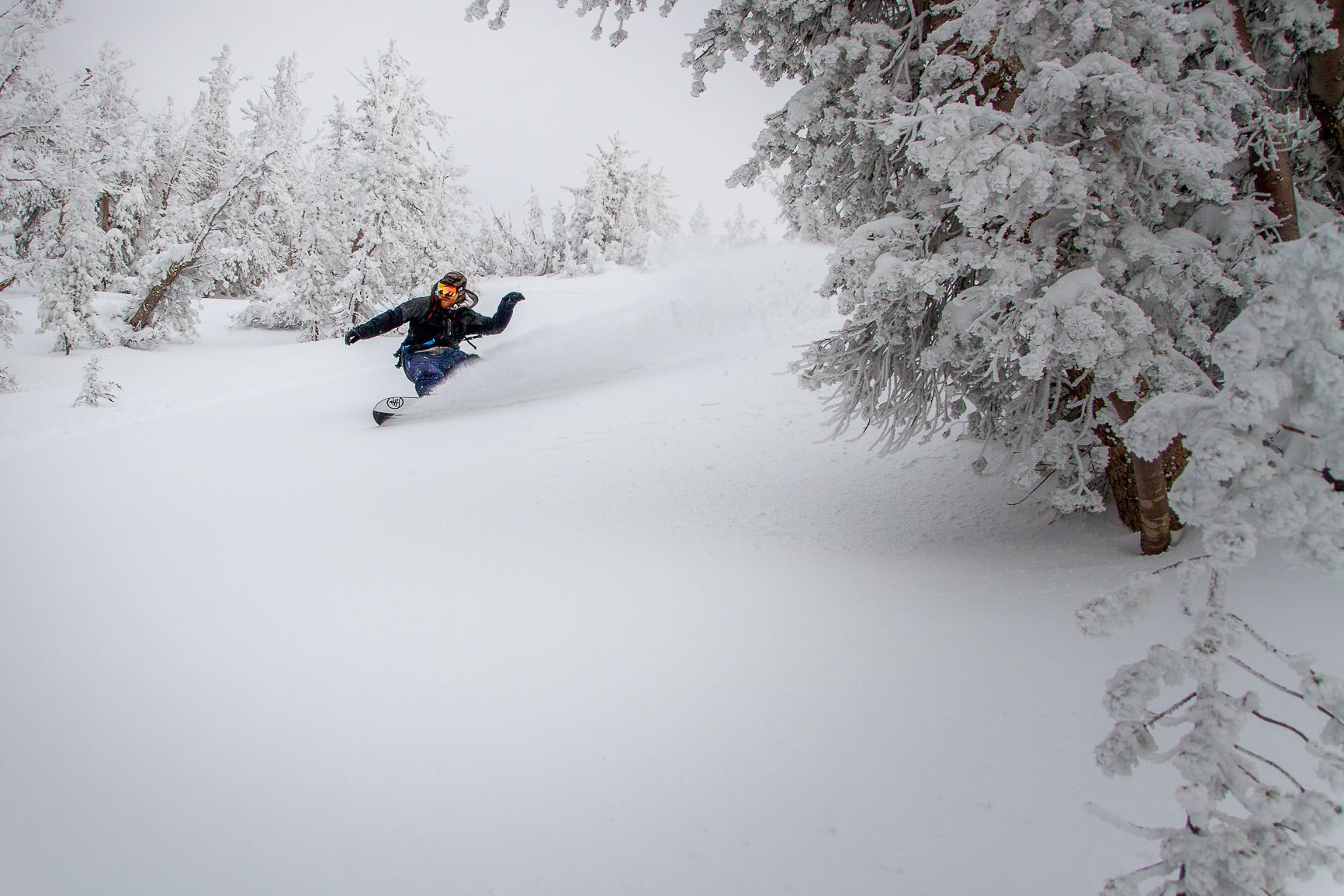
Making turns in fresh powder near Mt. Rose on Dec. 6. Photos/Chris Bartkowski

We had a pretty fun backcountry day Dec. 6. It seemed like everyone was out enjoying the fresh snow in high elevation.

Backcountry boarding in Lake Tahoe.

Backcountry boarding in Lake Tahoe.

We snowmobiled into the Mt. Rose OHV area and up to the ridgeline there. Then we dropped in on a north facing aspect and used our split-boards to skin back out. We took a few runs that day, and the snow was phenomenal. We didn’t see a single person on that pitch either.

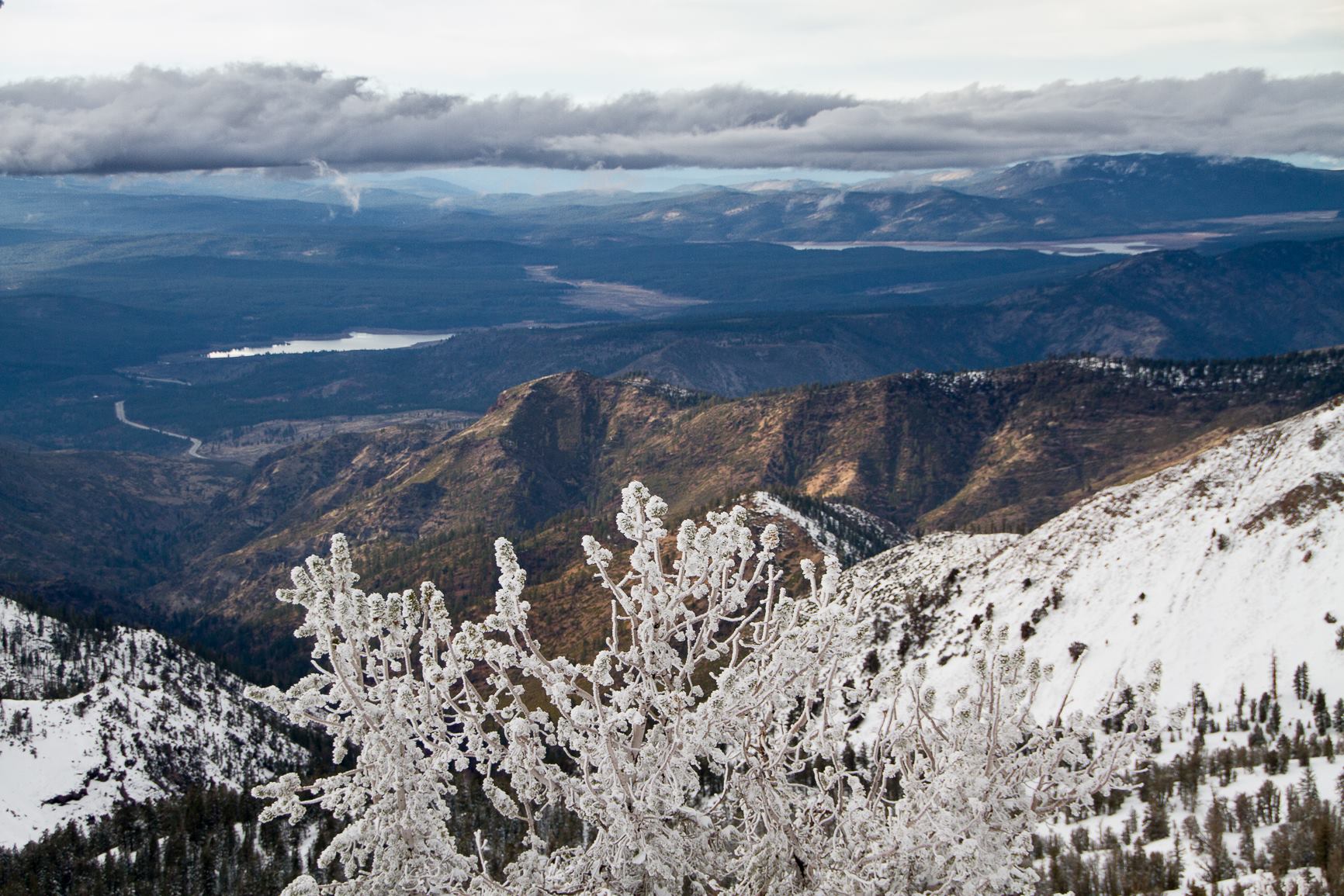
Lake Tahoe from Mt. Rose.

Lake Tahoe from Mt. Rose.

We were a group of three, Joe S. with the red pack, Kevin M. in the brown/black and myself in the blue jacket. All backcountry prepped with beacons, avi gear, food/water etc.

— Chris Bartkowski


Vail Resorts misses revenue forecasts

By Associated Press

BROOMFIELD, Colo. — Vail Resorts Inc. today  reported a fiscal first-quarter loss of $64.3 million.

On a per-share basis, the Broomfield, Colo.-based company said it had a loss of $1.77. Losses, adjusted for non-recurring gains, came to $2.05 per share.

The results met Wall Street expectations. The average estimate of analysts surveyed by Zacks Investment Research was also for a loss of $2.05 per share.

The ski resort operator posted revenue of $128.3 million in the period, which missed Street forecasts. Analysts expected $133 million, according to Zacks.

Vail Resorts shares have increased 22 percent since the beginning of the year. The stock has risen 22 percent in the last 12 months.


Snow-day alternative creates new challenges

By Adam Beam, AP 

FRANKFORT, KY — Public school students in 13 districts across Kentucky will be home schooled — mainly via the Internet — during some snow days this year as part of an experiment aimed at keeping students learning amid the growing number of weather-related closings.

The state’s solution has caused a new set of challenges for some districts in one of the country’s most impoverished areas. Some students don’t have computers or home Internet access. And the school district might lose some state and federal aid.

Nonetheless, the snow day problem is too significant for Kentucky to ignore. Schools across the state had nearly four times as many snow days last year as they did the previous year. Some districts canceled school for more than a month.

To make that time up, schools had to cancel spring breaks and shorten summer vacations, creating low attendance days that hurt their state funding. The legislature had to pass an emergency law letting five districts cut their school years short.

Educators fear they might face a similar problem this year. Some schools have already used snow days.

Coping with fierce winter weather by teaching over the Internet has become more common in recent years, but it’s harder in states like Kentucky, which ranks 46th out of 50 states for availability of high speed Internet. The problem is most pronounced in rural counties, which is why the state is moving forward with a $200 million plan to lay 3,000 miles of fiber-optic cables.

Thirteen school districts are part of an expanded program allowing students to complete assignments from home either by downloading them or working from packets prepared and sent home ahead of time. In exchange, the state will forgive up to 10 makeup days.

“If you could make this work, you would never have a snow day,” said David Cook, director of innovation and quality management for the Kentucky Department of Education. “You would just have kids doing this kind of instruction and learning anytime you have snow.”

Schools in Owsley County, where 90 percent of the students qualify for free or reduced lunch, missed 30 days because of snow last year. Owsley officials say they embraced the program because interrupting schooling takes a disproportionate toll on high-risk students.

Districts that opt to use the home school option would lose state transportation dollars and federal money for free and reduced lunches.

Though school buses might not be able to ply all the county’s side roads to bring kids to school on snow days, education officials might still be able to deliver meals to the students at some central locations, such as community centers.


Climate change affecting Lake Tahoe

By Susan Wood

INCLINE VILLAGE – If a tree grows submerged in a lake, will anyone notice?

That’s the prevailing question posed during a lecture at Sierra Nevada College last week by Benjamin Hatchett, who studies climate models for the Nevada State Climate Office of UNR.

The talk, which brought out almost 100 people who were interested in the topic, covered changes to the landscape of what’s considered the Great Basin. Its series of lakes provide a picture of the past and perhaps the present and future of the climate’s effects on Walker, Convict, June and Mono lakes, as well as Emerald Bay and other areas of Lake Tahoe.

From tufa and tree stumps to shorelines and slow-moving glacial movements, Hatchett’s slide show demonstrated a much different-looking western front surrounding Tahoe.
Benjamin Hatchett gives at talk Dec. 4 at Sierra Nevada College. Photo/Susan Wood

Benjamin Hatchett gives a talk Dec. 4 at Sierra Nevada College. Photo/Susan Wood

And as much science as there was, Hatchett made the subject somewhat light with his reference to Bonneville Lake being more known now for giant desert parties and speed races.

Scientists like Hatchett are now able to make the connection between moisture availability with outgoing evaporation and incoming precipitation – a subject near and dear to California and Nevada residents enduring one of the worst droughts in a century.

Tahoe-area researchers have been able to discover 200-year-old trees submerged in Walker Lake, just like those they’ve found in Fallen Leaf. And Mono Lake’s high shorelines that make the tufa rock formations so unusual are “an indicator of how dry it can be here,” Hatchett pointed out.

How do these dry spells affect the web of life?

Walker Lake’s low level has already jeopardized Hawthorne’s famed Loon Festival, a mainstay for the small Western town. When the lake drops, the food chain is disrupted and therefore the birds reduce their visitation.

The best scientists can hope for is moisture because we’re all at the mercy of Mother Nature. Beyond using historical maps, they can also count on solving equations upon geographic grid cells on charts using components such as snowpack, snowmelt, temperature, precipitation, evaporation and water storage.

So at least we’ll have a heads up if we face a “modern mega drought,” which is the worrisome equation at work here.

From 2012 to 2014, the Great Basin experienced the similar level of precipitation to other mega droughts based on the models.

“We could end up with lakes drier than the time when we had trees growing in them,” Hatchett said, adding that the scenario could lead to “massive socioeconomic and ecological implications.”

As it is, Hatchett cited a $2 billion expense reported by UC Davis of the three-year drought. It’s difficult to imagine a long-lasting mega drought.

So, Hatchett put up pictures that showed Emerald Bay and Fallen Leaf Lake as a series of moraines during the Ice Age more than 14,000 years ago. These extreme climate conditions result from large-scale swings in hydrologic history.

The ice flowed down Eagle Creek into Emerald Bay “leading to a nice place to go have tea,” he said, referring to Fanette Island situated in the middle of the bay. The resident of Vikingsholm, Helen Knight, took her guests out there for the English staple.

“Desolation Wilderness is one of the best examples of the Ice Age,” he said.

So the next time you walk in the wilderness and notice a few rock formations that either seem thrown there or out of place in terms of other nearby rocks – think ice movement.

“We can blame glaciers for a lot of weird geologic finds,” he said. What’s the big picture? “Natural or manmade (climate conditions) – if it gets drier, we’re all in big trouble,” he clarified.

And with that, the audience was hushed with keen interest.

Bob Richards, Tahoe researcher Charles Goldman’s understudy for years, was on hand for the talk. Afterward, he told Lake Tahoe News that he wanted to know if Hatchett could say how the 5,000-year-old submerged trees out from Taylor Creek on the South Shore fit into the climate picture of other submerged forests such as the Walker Lake drainage.

After the talk, Hatchett confirmed it’s all a part of the same dry picture. All the studying was food for thought for those wanting to “appreciate a lot of the features around us and how they’re a product of a long-term state of our climate,” Hatchett said. “This can be helpful in what we would do now for the ‘what if’ we’re three years into a 10-year drought.”

More observing is on the horizon. This includes studying the submerged forest off shore from Kings Beach next.