SnowGlobe still in search of permanent location

By Kathryn Reed

Where will the stages for SnowGlobe 2015 be located?

That is a question many people would like answered.

Promoter Chad Donnelly has a three-year contract with South Lake Tahoe to bring the three-day music festival to the city. While this is the fourth year for SnowGlobe, it is the first year of the latest contract.

A big condition of the contract is that the ball fields adjacent to Lake Tahoe Community College can only be used in subsequent years if it’s deemed the artificial turf can sustain such activity. That answer won’t be known until the spring.
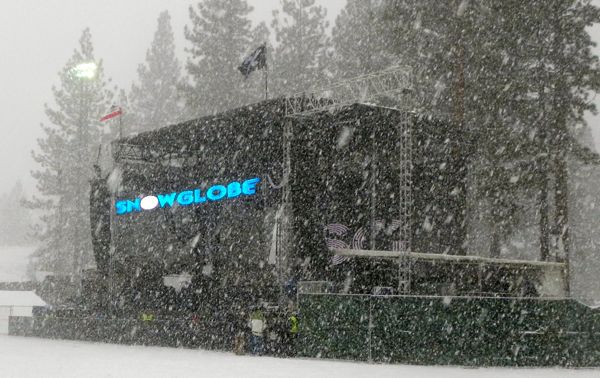
SnowGlobe is returning to the ball fields next to Lake Tahoe Community College Dec 29-31. Photo/LTN file

SnowGlobe is returning to the ball fields next to Lake Tahoe Community College Dec 29-31. Photo/LTN file

“Last year the team thought the field could only take one more year. And because the college is using it for soccer, it is getting used for that as well,” City Manager Nancy Kerry told Lake Tahoe News.

The city and college own the field. However, when it was built with what was Measure R money, the taxpayers agreed to the measure with the belief it was a community ball field.

Now the college is adding to the wear and tear by having resurrected the men and women’s soccer programs. A question is whether LTCC should be contributing to the maintenance costs of the field. Plus, there is money in the just approved Measure F that deals with fields.

When it comes to the field where SnowGlobe is happening, the city is in the driver’s seat, as the community field is under the control of the city, not LTCC. We just have first right to scheduling for our programs,” Kindred Murillo, LTCC president, told Lake Tahoe News.

If the field were replaced during the life of the SnowGlobe contract, a new venue automatically has to be found. When the field is replaced, funds will come from what is now Measure R.

“We really need an event location in town,” Kerry said. “And with Hard Rock coming on line, we’d really like to keep it on the South Shore. We will explore any option if we can’t have it on the field. To lose it to another location would be disappointing for economic reasons as well as we have it running smoothly.”

Donnelly would also like to keep it within the city limits – especially since that is whom he has the contract with. He said it is premature to be discussing the possibility of moving the festival across the state line.

“In a perfect world I don’t necessarily know that it is the best fit (at LTCC). I love the location and our partners there and there are things that make it very special, but there are a few different places that could potentially add to the experience,” Donnelly told Lake Tahoe News.

He would not reveal what other locations he might prefer.

One thing that needs to be taken into consideration is the festival keeps growing. In the first year about 9,000 people attended each night. This year Donnelly is predicting close to 15,000 per night.

Donnelly said the growth is a “testament that people like the city of South Lake Tahoe, the festival, and the opportunity to ski and snowboard.”

Discussions about changing locations will take place between Donnelly and the city when he is here later this month for SnowGlobe. Also on the table is the possibility of bringing a summer festival, with a different music genre, to town.

—-

Notes:

• SnowGlobe is Dec. 29 from 3-11pm, Dec. 30 2:30-11pm, and Dec. 31 2:30pm-Jan. 1 at 1:30am.

• The city’s hot line is already up and running – 530.542.6001.

• There will be fireworks all three nights.

Tickets are still available.


Opinion: Quiet demise of TRPA’s Asian clam program

By Steve Urie

In a recent Voices post, (Collaborate over good policy, Lake Tahoe News, Nov. 28), I criticized the Tahoe Regional Planning Agency for carpeting acres of Lake Tahoe with rubber mats in a futile attempt to eradicate Asian clams. Since 2008, millions have been spent on the failed project that killed many more animals native to Lake Tahoe than the nonnative clams. Mercifully, when the 35 tons of mats that covered 5 acres of Emerald Bay were rolled up last month, the project was placed on hold, and there is no plan to reuse the mats.

In the November post, I wrote that Asian clam shells don’t create high-calcium microzones where quagga mussels can survive, a reason that TRPA and UNR Professor Sudeep Chandra used to justify the eradication program. I also said that the clams slightly decrease dissolved calcium by absorbing it from the water to build their shells and for muscle function.

Steve Urie

Steve Urie

A respondent to the article, who identified himself as Cosa Pescado, wrote: “Living [Asian clams] absorb calcium, yes. And the dead ones leave shells that release calcium. Baseline calcium is low for Tahoe. What is also telling about your understanding of science is that you mentioned limestone as a source of background calcium. It certainly is … the remnants of living organisms are responsible for the calcium in limestone.”

Although Cosa Pescado’s response appears logical and some aspects of his argument are correct, the science is wrong. He says that baseline calcium is low for Lake Tahoe — about that he’s correct, it’s exceptionally low. Tahoe’s average shore zone dissolved calcium is 9.16 parts per million. (The minimum calcium threshold for survival for Asian Clams is 6.5 ppm and for quagga and zebra mussels it’s 12 ppm — only 9 percent of all U.S water bodies have dissolved calcium less than 12 ppm.) Whittier, et al., 2008

Cosa Pescado also accurately points out that the remnants of living organisms are responsible for the calcium in limestone. But he then inaccurately implies that clam shells add to calcium concentrations in the water column, creating what Chandra calls “calcium hot zones.”

For all practical purposes, the total amount of calcium in Lake Tahoe is constant. There is a tiny increase from concrete leaching and natural sources, but the vast quantity of Tahoe’s water quickly dilutes it, and the average annual increase from external sources is minute. Asian clams and the half dozen native Tahoe mollusks filter calcium to build their shells, which reduces the lake’s dissolved calcium and proportionately increases the solid calcium — but the total calcium remains the same.

Measurable reduction of calcium in the water column by mollusks has occurred in the Great Lakes. In a research report, Long-term trends of Great Lakes major ion chemistry, scientists attribute slightly decreased dissolved calcium in the lower Great Lakes water to zebra mussels.

Like all mollusks, zebra and quagga mussels need calcium to build their shells, and they get it from the water. Hypothetically, how much calcium is needed to raise Lake Tahoe’s dissolved calcium from 9.16 ppm to 12 ppm? It would take approximately, 1.48 million tons of pure limestone (CaCO₃) to raise the lake’s dissolved calcium by 2.84 ppm. That’s enough limestone to fill a freight train stretching for 80 miles from Oakland to Sacramento — it is estimated that all of the Asian clam shells in Lake Tahoe would fit in a large dumpster.

Cosa Pescado also takes issue with my statement that because “Asian clams live on detritus and algae that they filter from the water, they actually improve water quality and clarity,” and he writes that that the clams “fecal matter concentrates nitrates,” which degrades water quality. That is true, but the logic error is similar to that which he makes with dissolved calcium — the clams remove more waste than they create.

All of Tahoe’s native mollusks and Asian clams are prodigious filter feeders, and steadily remove pollutants, micro-particles, algae, bacteria, and waste from the water; convert it to shell material and use it for muscle energy and function. Unarguably, they measurably improve clarity and water quality. This has been demonstrated over the last 20 years in Lake Michigan where water clarity is greater than at any time since the 1950’s. That Asian clams improve water quality was even acknowledged in a study in which Chandra was a principal investigator: Natural and Human Limitations to Asian Clam Distribution and Recolonization.

But looking at the larger picture of whether the Asian clam control program was not only a colossal waste of money, but also environmentally destructive, in 2013 Chris Rosamond, a freshwater biologist at UNR’s Desert Research Institute and a colleague of Chandra’s, wrote: “I would concur [with the] disdain for the ‘Keep Tahoe Blue by putting big blue tarps all over the bottom and killing everything’ approach that has been used these last few years.

“In addition to the initial shock of suffocating whatever native benthic organisms there are in these locations, the anoxic conditions under these tarps will alter nutrient dynamics in the benthic substrates, particularly phosphorus and nitrogen cycling. Recall that nitrogen and phosphorus are our two greatest pollution concerns in the basin. In short, sterilizing the floor of Tahoe’s shallow habitats through suffocation is probably not a viable long-term solution.”

Last month at Emerald Bay, Rosamond was proven to be correct.

The Wittmann study also states: “Costs of Asian clam treatment in Lake Tahoe were approximately $210,000 per acre. A hypothetical 100-acre area for treatment indicates that total costs of treatment can range [up to] $26 million and will neither achieve eradication, nor the maintenance of low density populations of Asian clams in Lake Tahoe.”

In other words, suffocating clams with rubber matting is prohibitively expensive, even if it were effective.

The quiet demise of the Asian clam control program won’t be as hyped as its rollout was, but it is long past due, and Tahoe is the better for it.

Steve Urie is a 40-year Tahoe-Truckee resident and is the author of “Tessie, Quagga Mussels, and Other Lake Tahoe Myth’s. To learn more about Tahoe’s AIS programs go online.

A note to Cosa Pescado: “The Science” reference in my November post was not put in quotes to cheapen science or employ sarcasm, but to direct the reader to “The Science” tab on the website, where science studies and articles relevant to the Asian clam program and other TRPA AIS prevention and control programs can be found. Since you have an obvious interest in the subject, but aren’t willing to spend $10 to buy the book, please use “Contact” on the website to send me a postal address, and I will send you a complimentary copy.


Amador County man guilty of deer poaching

A Plymouth man has been convicted in Amador Superior Court on multiple deer poaching charges.

Gary Michael Creason Jr., 24, was fined $19,520 for activities involving the take of trophy deer out of season.

Acting on a tip, wildlife officers from the California Department of Fish and Wildlife contacted Creason at his home in July 2013, where they found him in possession of several sets of trophy deer antlers and deer meat. Creason admitted to taking deer out of season, using another person’s tag and to pursuing trophy bucks outside the hunting season.

The $19,520 fine was on top of three years of probation, loss of all hunting privileges during that timeframe and forfeiture of all wildlife evidence seized.

— Lake Tahoe News staff report


Snippets about Lake Tahoe

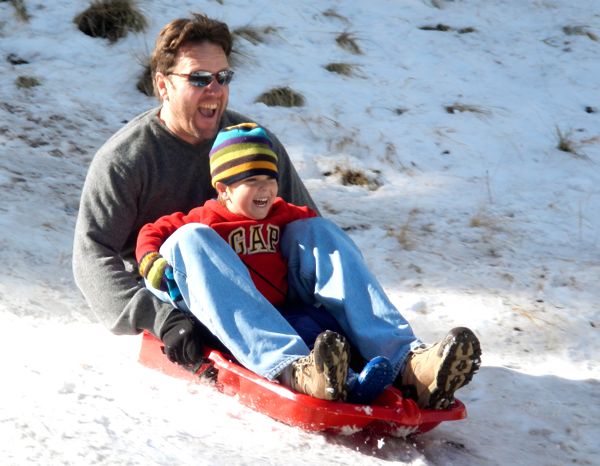
sled-ledeParade magazine calls Adventure Mountain and Granlibakken in Lake Tahoe two of the best sledding hills in the U.S.

• Lynn Gillette this week resigned as president of Sierra Nevada College in Incline Village and Shannon Beets, executive vice president and provost, is temporarily taking over the top spot.

• The Christmas bird count on the South Shore tallied 74 species, with an additional seven during the week.

Lake Tahoe News T-shirts are available for $15. Send a check made out to Lake Tahoe News to P.O. Box 13406, South Lake Tahoe, CA 96151 and tell us your shirt size and where to mail it to. We have small, medium, large and extra large.

• Tahoe Donner Cross Country is opening this weekend.


Gift and party wine ideas

By Mike Dunne, Sacramento Bee

Along with strands of colorful lights and sets of Nativity figures, sales of wine peak during the year-end holidays. But you may be asking what to buy, whether as a centerpiece for a Yuletide soiree or as a gift for your favorite wine geek.

When the holiday open house is relaxed and casual

If you pour solid, interesting and modestly priced representatives of the three most popular varietals, you aren’t likely to disappoint your neighbors. Plus, throw in one outrider sure to surprise the resident wine authority in the gathering.

Read the whole story


Feds forecast wet conditions for next 3 months

By Paul Rogers, San Jose Mercury News

There is a 75 percent probability of average or above-average precipitation between January and the end of March for California, according to a new report by federal scientists — the first time in five years such a wet outlook has been predicted in the state during the first three months of a year.

“This is good news,” said Steve Baxter, a seasonal forecaster with the National Oceanic and Atmospheric Administration, which issued the report on Thursday predicting that the harsh reality of California’s historic drought may finally be giving way to wetter days ahead.

“There are not indications of a monster wet season,” he said. “It’s unlikely that the drought will be broken this year, but it’s likely that it will be improved.”

Pacific Ocean temperatures, which are warmer than normal, along with satellite imagery and computer models, are showing a greater likelihood of low-pressure systems, which can draw storms to California, Baxter said. There still is also a 65 percent chance of mild El Niño conditions developing this winter, which could further increase chances.

Meanwhile, reservoirs continued to slowly rise across Northern California after three weeks of drenching rains. And another report out Thursday also offered an additional glimmer of hope. The U.S. Drought Monitor, a weekly map issued by the U.S. Department of Agriculture and other agencies, showed that 32 percent of California is in “exceptional drought,” notably down from 55 percent last week, due to the recent rains.

Read the whole story


Caesars subsidiary to file for bankruptcy

By J.D. Morris, Las Vegas Sun

Casino giant Caesars Entertainment, which for years has struggled with massive debt, announced today that its largest subsidiary reached an agreement with key creditors on a financial restructuring plan.

The subsidiary, Caesars Entertainment Operating Company or CEOC, will file for bankruptcy in mid-January, the company said in a statement. Bloomberg News reported this morning that an agreement was in the works.

Read the whole story


Letter: Appreciation for Tahoe concert cruises

To the community,

Over the last few weeks, the talented duo of Ike and Martin have rocked the MS Dixie and the Tahoe Queen with a series of free concert cruises.

I can’t begin to express how wonderful these musical interludes, in the midst of all the holiday madness, lightened our moods and elevated our love of all things Tahoe. Kudos to not only Ike and Martin, but to Aramark Parks and Destinations along with their very hospitable staff on both ships.

There really are few things as magical as a lake cruise, surrounded by friends, listening to exceptional music. It was a Christmas present, in and of itself.

Thank you to all who made it happen.

Denise Haerr, South Lake Tahoe


Douglas W. Anderson — 1963-2014

Doug Anderson

Doug Anderson

A memorial service and celebration of life for Douglas W. Anderson will be Dec. 20 at 10am at the First Baptist Church on Wildwood Avenue in South Lake Tahoe.

Doug died on Dec. 13. He was 51.

Doug was born July 16, 1963, to August William Anderson and Bridget Anderson.

Doug’s legacy is his unbelievable commitment to his family owned business — Anderson’s Bicycle Rental. For 36 years “The Man with the Straw Hat” could be seen standing at the lot at the corner of 13th Street and Emerald Bay Road. April through November you could depend on him being there from start to finish every day.

He was amazing at what he did and took great pride in always providing the best possible experience for every group that arrived. Doug can be proud going to heaven knowing that he made so many people happy while visiting Lake Tahoe. Groups come back to see Doug, they all remembered his name and he never forgot a face or name.

Last summer he was seeing third generations of customers who had become friends to him over the all the years.

Doug is loved very much and will be missed by not only his family and dedicated loyal friends and customers that will come to visit next summer, but the locals who also stopped on a daily basis to chat with him.

Doug has left behind his wife, Sue Swanson Anderson, of 20 years; and two children, Bailey Nichole Anderson and Daniel August Anderson. He is also survived by his four sisters, Alice Anderson Palmer and her son Hunter Busenlehner, Betsy Kelly, Kate Anderson and Maureen Walker.

In lieu of flowers, make contributions-donations to the young man who passed recently (Dejon Smith’s family) online.


Nyman soars in Italy, Ganong earns World Cup points

By USSA

VAL GARDENA, Italy — There are some downhill courses that suit certain athletes. And the fabled Saslong in Val Gardena is that downhill course with the U.S. Ski Team’s Steven Nyman (Sundance, Utah). On Dec. 19, Nyman etched his name once again into the annals of skiing history as he won his third career downhill in one of his sport’s most challenging races.

Coming off a podium finish at the Audi Birds of Prey in Beaver Creek, Nyman ripped to a 1.51 second lead from the lucky seven start position, and hung on to take a 0.31 second margin over World Cup downhill leader Kjetil Jansrud of Norway.

Dominik Paris of Italy was third.

Val Gardena’s Saslong downhill is the jewel of the Dolomites — a classic on the Audi FIS Ski World Cup. It’s the December ritual for the men, offering a long and challenging piste with dark December shadows, nasty early season snow and the fabled camel bumps coming into the finish. It has taken its toll on many a ski racer over the years and few have mastered it like Nyman, who became only the fourth athlete to win three times.

Travis Ganong (Squaw Valley) was the only other American in the points, finishing 13.