Tahoe nonprofit gets boost from ski resorts

By Sammy Caiola, Sacramento Bee

Skiers can save money on lift tickets and help a good cause this winter thanks to a partnership between Tahoe SAFE Alliance and three of the region’s biggest mountain resorts.

The alliance serves as a support network for victims of domestic abuse and other forms of violence in the North Tahoe/Truckee area, and also works to prevent abuse and violence in schools and communities. Their services include legal consultations, safe housing, peer support groups, counseling and education.

This season SAFE (Stopping Abuse for Everyone) Alliance will continue an annual tradition of selling discounted tickets to Heavenly Mountain Resort, Northstar and Kirkwood Mountain Resort at $70, a cheaper alternative to standard adult lift tickets, which are typically priced in the $90 to $120 range.

Vail Resorts Inc., the company that oversees the three local resorts as well as destinations in other states, gave the nonprofit a bundle of 300 tickets in the weeks before Christmas. SAFE sells the tickets at a discount on its website, and then mails the lift passes to customers within 48 hours of purchase. The nonprofit dedicates 100 percent of the proceeds to its initiatives, said Dawn Harris, development manager.

Read the whole story


Slew of California laws take effect Jan. 1

By Associated Press

SACRAMENTO — California’s historic drought prompted the Legislature into action in 2014, leading lawmakers to regulate groundwater for the first time and override homeowners associations that fine members for replacing lawns with more drought-tolerant landscaping.

The most populous state also becomes the first to set a “yes means yes” standard for sex between college students and the first to ban single-use plastic bags, a law the plastic bag industry is seeking to overturn through a voter referendum.

Those are among more than 900 bills passed in 2014 by the Legislature and signed by Gov. Jerry Brown, who also vetoed 143.

Most of the laws take effect Jan. 1. That includes a bill allowing driver’s licenses for people who are in the country illegally, another that will influence the 2016 ballot by modernizing California’s century-old initiative process and others addressing everything from teacher tenure to massage parlors.

Also taking effect with the new year is a ballot initiative approved by voters in 2008 that restricts the confinement of egg-laying hens, breeding sows and veal calves.

The state’s biggest ongoing story of the year led to a series of bills designed to have a lasting effect on California’s water supply.

In the midst of a third year of drought, the Legislature and governor closed a gap in the state’s water oversight that dated to the Gold Rush days, passing and signing bills to regulate groundwater use for the first time.

Although the drought is beginning to ease with early rain and snow, Brown’s signing of SB1168, SB1319 and AB1739 by Assemblyman Roger Dickinson, D-Sacramento, and Sen. Fran Pavley, D-Agoura Hills, ends the state’s pump-as-you-please policy. It also brings California’s groundwater rules in line with those of other Western states.

Specifically, the bills require water districts and other local entities to develop plans to manage their groundwater and allow the state to intervene if necessary.

Brown’s call on Californians to reduce water use by 20 percent led some residents to run afoul of their homeowner association rules. Lawmakers responded by approving bills that prevent associations from punishing residents who cut back on water use, allow plants to die or install drought-resistant landscaping.

“There are moments in legislative time when folks sort of rise to the occasion and we get something done on water,” said Felicia Marcus, chairwoman of the State Water Resources Control Board.

She also noted that lawmakers worked together to craft a bipartisan, $7.5 billion water bond measure that voters approved in November. It will let the state expand storage and develop water management plans.

With the new year also comes a first-in-the-nation standard for investigating sexual assaults on college campuses.

SB967, by Senate President Pro Tem Kevin de Leon, D-Los Angeles, requires “an affirmative, conscious and voluntary agreement to engage in sexual activity,” meaning silence or a lack of resistance can no longer be deemed consent.

The California State University and University of California systems already adopted similar consent standards, which will now apply to all public and private post-secondary schools that receive state money for student financial aid.

The statewide plastic bag ban, SB270 by former state Sen. Alex Padilla, D-Los Angeles, will be phased in starting in July at large grocery stores and supermarkets, unless opponents force a delay while voters consider repealing it. It could be May before the secretary of state’s office — headed by newly elected Padilla — determines whether the industry gathered enough valid signatures to place a referendum on the November 2016 ballot.

Proposition 2, the 2008 ballot initiative restricting the caging of certain farm animals, goes further than any other state when it is coupled with a law signed by former governor Arnold Schwarzenegger that extends the space requirements for egg-laying hens to out-of-state suppliers, said Wayne Pacelle, president and chief executive officer of The Humane Society of the United States. The measures helped trigger “a cascade of legislative and corporate reforms” nationwide, he said.

Other laws taking effect include:

  • AB215 by Assemblywoman Joan Buchanan, D-Alamo, which makes it easier for school districts to fire abusive teachers. The bill gained traction as a compromise between teachers unions and some education-reform groups after a headline-grabbing case of misconduct in Los Angeles highlighted how difficult it can be to remove problem teachers. The Los Angeles Unified School District paid elementary school teacher Mark Berndt $40,000 to drop the appeal of his dismissal after he was charged with spoon-feeding semen to his students and other lewd acts.
  • SB505 by Sen. Hannah-Beth Jackson, D-Santa Barbara, which requires law enforcement agencies to develop policies that encourage officers to search the state’s database of gun purchases as part of routine welfare checks. The bill was prompted by sheriff’s deputies failure to detect the danger posed by a man who weeks later embarked on a deadly rampage in May near the University of California, Santa Barbara.
  • AB1147, by three Democratic lawmakers, allows local governments to revoke the license of any massage parlor that violates the law. It is intended to make it harder for massage parlors to operate as fronts for prostitution.
  • AB2048 by Assemblyman Brian Dahle, R-Bieber, gives property owners in fire-prone areas a few breaks on paying the state’s annual $150 fire-prevention fee. It eliminates a requirement that the fee will increase each year based on inflation, lowers the 20 percent late payment penalty to 10 percent and permits exemptions for homes destroyed by natural disasters.
  • SB926 by Sen. Jim Beall, D-San Jose, gives sex-abuse victims more time to pursue criminal charges against offenders. It raises the age ceiling from 28 to 40 for childhood sexual abuse victims to file criminal complaints.


Nutmeg has a secret story that isn’t so nice

By Allison Aubrey, NPR

Ah, nutmeg! Whether it’s sprinkled on eggnog, baked into spice cake or blended into a latte, this pungent spice can evoke memories of holidays past.

But a lot of blood has been shed over this little brown seed.

“Nutmeg has been one of the saddest stories of history,” says culinary historian Michael Krondl. If you listen to my story, you’ll hear the gruesome, grisly tale of how the Dutch tortured and massacred the people of the nutmeg-producing Banda Islands in Indonesia in an attempt to monopolize the nutmeg trade.

So, why was nutmeg so valuable? Well, Krondl likens it to the iPhone of the 1600s. It was fashionable among the wealthy. It was exotic and potent enough to induce hallucinations — or at least a nutmeg bender, as detailed in this account from the Atlantic.

Read the whole story


Pope’s edict on climate change may anger deniers, U.S. churches

By John Vidal, Observer

He has been called the “superman pope”, and it would be hard to deny that Pope Francis has had a good December. Cited by President Obama as a key player in the thawing relations between the US and Cuba, the Argentinian pontiff followed that by lecturing his cardinals on the need to clean up Vatican politics. But can Francis achieve a feat that has so far eluded secular powers and inspire decisive action on climate change?

It looks as if he will give it a go. In 2015, the pope will issue a lengthy message on the subject to the world’s 1.2 billion Catholics, give an address to the UN general assembly and call a summit of the world’s main religions.

The reason for such frenetic activity, says Bishop Marcelo Sorondo, chancellor of the Vatican’s Pontifical Academy of Sciences, is the pope’s wish to directly influence next year’s crucial UN climate meeting in Paris, when countries will try to conclude 20 years of fraught negotiations with a universal commitment to reduce emissions.

Read the whole story


Nevada — the driest state — has no statewide water plan

By Jeff DeLong, Reno Gazette-Journal

Nevada is suffering from a debilitating drought, experiencing the impacts of a warming climate and, some say, is deficient when it comes to long-term water planning for the state as a whole.

Debate is mounting over the need to begin development of a comprehensive water plan taking into account available water supplies, drought, climate projections and development that will tap limited water resources across the nation’s most arid state.

Planners and elected officials have water resource plans in place across the state – in Reno-Sparks, Las Vegas, the Carson River Basin and elsewhere. But a number of experts are now pushing for a more holistic approach addressing water supply issues statewide, efforts similar to ones taken by neighbors of the Silver State including Utah, Arizona and California.

Read the whole story


Ganong on top of podium for first time

By USSA

SANTA CATERINA, Italy — Travis Ganong (Squaw Valley) took advantage of a new course for the men’s Audi FIS Ski World Cup tour and punched through for his career first victory on Dec. 17, winning the Santa Caterina downhill.

Austria’s Matthias Mayer was the only one who got close to Ganong, finishing in second, nine-hundredths back. Italy’s Dominick Paris was third.

A traditional site for women’s downhill including World Championships in 1985 and 2005, it was first time for the men on the Deborah Campognini downhill, which Ganong used to his advantage.

“It was a perfect run.” said Ganong. “I love to take on a new challenge and a new slope. I love the hill — the mountains are huge here and it’s fun skiing.”

Ganong took advantage of information from teammate Steven Nyman (Sundance, Utah), who won last weekend’s Val Gardena downhill and was on the podium in Beaver Creek. Nyman started out for the U.S. in the eighth starting position, executing his planned line but finding clearly where time could be gained. His radioed advice to Ganong that proved beneficial. Starting 16th, Ganong took charge of the race from the outset. He skied a very straight line to build a lead, then nailed a perfect sweeping turn through the final carousel to take the lead. It was his second career podium after finishing third in Kvitfjell, Norway, last February.

Nyman ended up 15 as the Americans notched back-to-back downhill wins. Jared Goldberg (Holladay, Utah) was 24 with Marco Sullivan (Squaw Valley) 29. Bryce Bennett (Squaw Valley) was 50, while Andrew Weibrecht (Lake Placid, N.Y.) did not finish.


Older people urged to get high-dose flu vaccine

By Cynthia H. Craft, Sacramento Bee

Older people, believed to be at greater risk for developing severe flu symptoms this season, should seek a high-dose vaccine instead of the standard dose even if they are frail and in long-term care, researchers say.

Federal officials approved the high-dose vaccine for people ages 65 and up about five years ago. It was first tested on independent, healthy older adults with an average age of 73 years – and proved successful at triggering stronger immune responses.

Now, new data show that the high-dose vaccine outperformed the standard dose in residents of long-term care facilities with an average age between 86 and 87, according to University of Pittsburgh researchers. The findings are considered promising, as the predominant virus has already mutated, making for a challenging flu season for ailing older people.

Read the whole story


1 person killed, 1 hurt in Strawberry snowmobile crash

By Nick Houser, KCRA-TV

STRAWBERRY — A Folsom man was killed and a second man was hurt in a snowmobile crash Friday night, according to the California Highway Patrol.

The CHP said the snowmobile was going about 50 mph on Pack Saddle Pass Road when the driver took a curve too fast and hit a tree.

It is suspected that alcohol played a factor in the crash.

Read the whole story


Bad employees — fix or fire them?

By Ed Koch, Las Vegas Sun

The administrative assistant spent about as much time hanging around the water cooler complaining about her job and the workplace as she did half-heartedly completing her assigned duties.

“I wish they’d fire me so I can sit home and collect unemployment,” time and again she told co-workers, many of whom were fed up with her not pulling her weight.

It took less than two weeks for the company’s new human resources director, Mary Beth Hartleb, to conclude that, as employees go, the woman was broken and could not be fixed.

“She was thrilled to get her severance package,” said Hartleb, a 30-year veteran in the field that used to be called personnel. “And, despite having to pay her more than we wanted to, the company benefited from her departure because soon after she left, office morale greatly improved, as did worker productivity.”

Perhaps most shocking about that story is that the secretary in question had lasted 10 years in that job. She survived a fistful of frustrated supervisors before anyone did anything to stem the toxicity she was spreading through her department.

“Unfortunately, many employers do not document each incident (of poor employee productivity or misconduct), as was the case here,” said Hartleb, owner of Prism Global Management Group LLC of Henderson, which runs human resources operations for about 30 companies that collectively employ more than 5,000 people.

Read the whole story


Then and now: Baldwin estate was all-inclusive

 (private collection) 1908 postcard

A 1908 hand-colored postcard of the Tallac House. Photo/Private Collection

2 (private collection) 1908 postmark

The same card postmarked at 5pm Aug. 4, 1908. Photo/Private Collection

Elias “Lucky” Baldwin opened his opulent Tallac House and Casino near Mount Tallac on the South Shore in 1899. It stood 3½ stories.

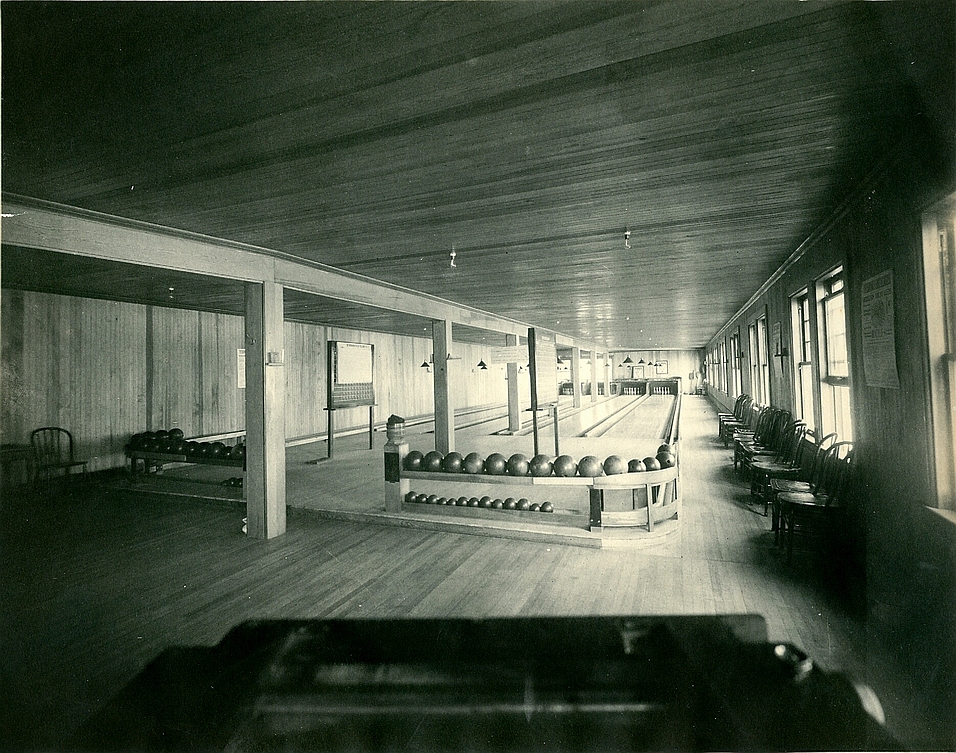
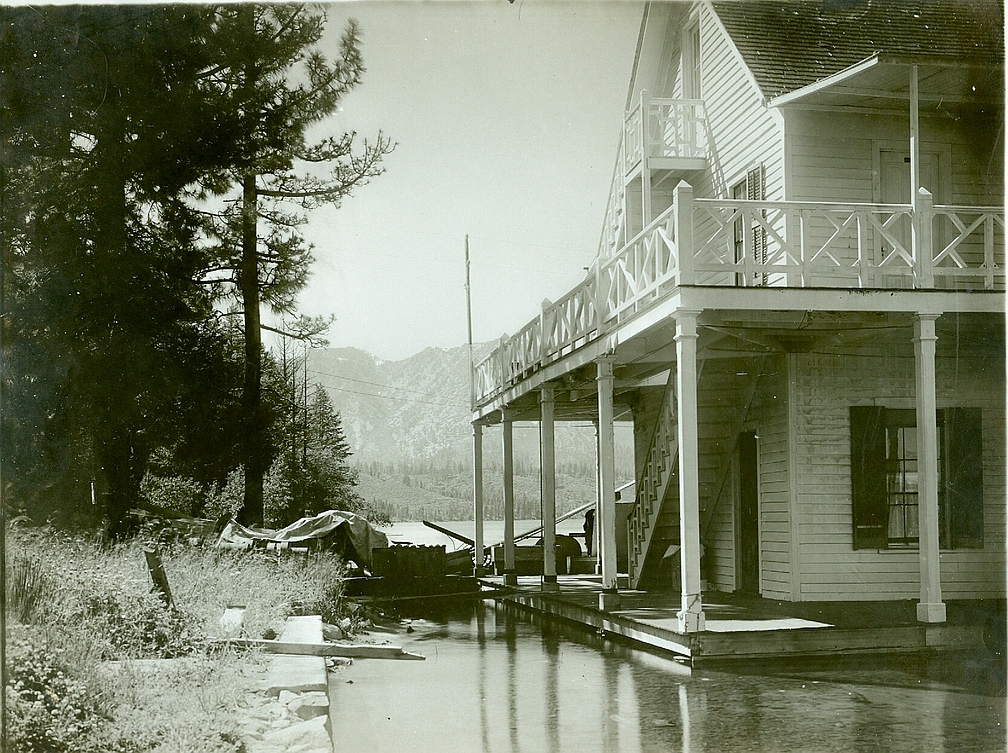
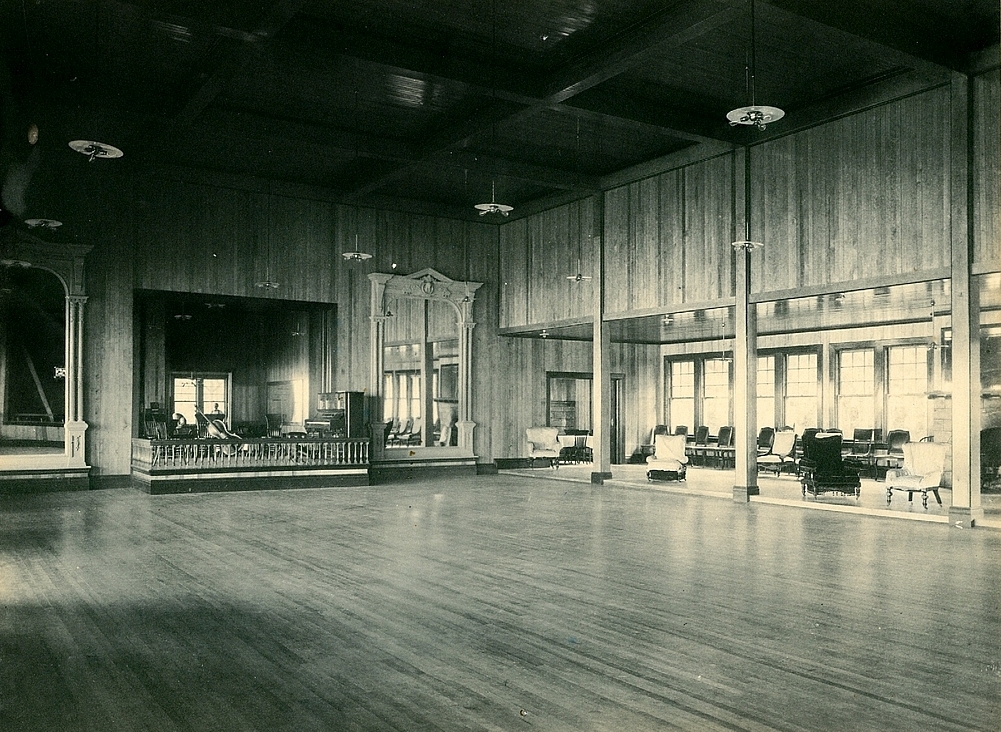
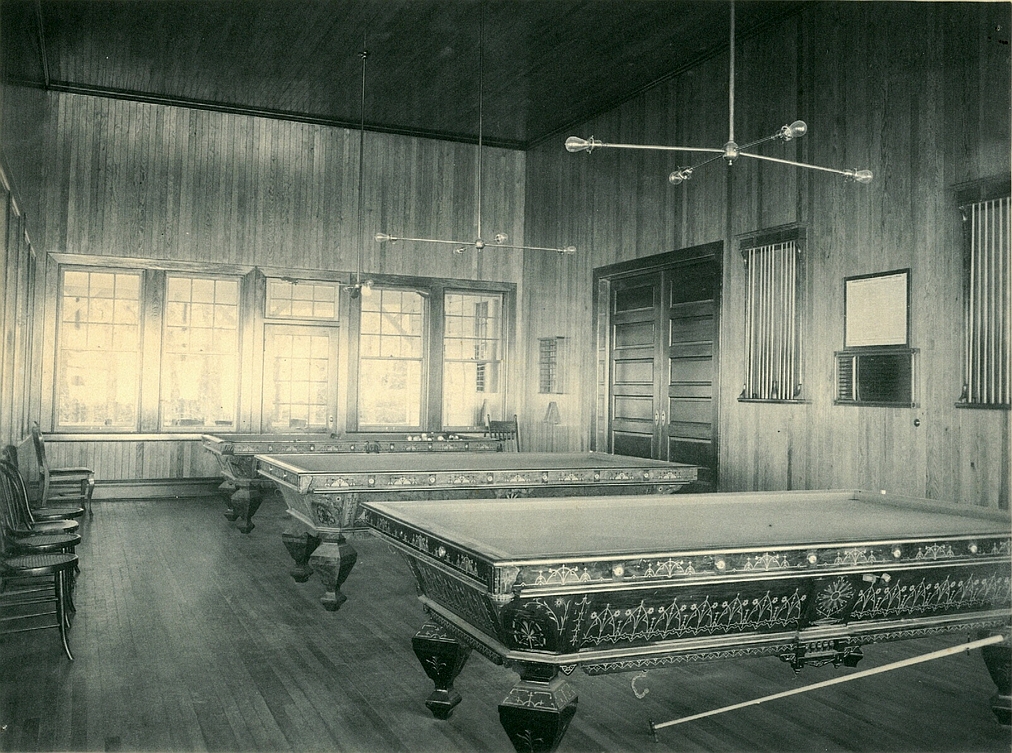
Boasting steam heat and electricity, this year-round favorite of the wealthy included a ballroom, a pool room, bowling alley, boathouse, and spectacular view.

Ballroom Photo/Lake Tahoe Historical Society

Ballroom
Photo/Lake Tahoe Historical Society

Billiards room Photo/Lake Tahoe Historical Society

Billiards room
Photo/Lake Tahoe Historical Society

Baldwin was adamant about protecting this forest land and he prohibited any logging. The tallest trees on the South

Bowling alley Photo/Lake Tahoe Historical Society

Bowling alley
Photo/Lake Tahoe Historical Society

Shore are on that land. Besides his Tahoe property, Baldwin’s imprint remains today on his Southern California properties which include Baldwin Park, Baldwin Hills, Santa Anita, Montebello, Sierra Madre, Arcadia, and Monrovia. He also built the Baldwin Theatre and Hotel in San Francisco.

Boat house Photo/Lake Tahoe Historical Society

Boat house
Photo/Lake Tahoe Historical Society

Baldwin died in 1909 at age 80 at his Arcadia ranch.

View from the Baldwin estate. Photo/Lake Tahoe Historical Society

                                View from the Baldwin estate.                                       Photo/Lake Tahoe Historical Society

By 1927, the Tallac House was deteriorating and Lucky’s daughter Anita ordered its destruction and then restoration of the site. The land was deeded to the U. S. Forest Service and is open to the public with seasonal historical tours, activities and exhibits.

— Bill Kingman