Easy to recycle electronic waste responsibly

By Molly Wood, New York Times

Maybe you replaced old electronics over the holidays or you’re just sweeping out the old and ushering in the New Year. Either way, you’ll need to do something with your old devices. For everyone’s sake, including Mother Nature’s, try to get rid of your old technology the right way.

Recycling electronics is becoming easier by the day. Stores like Best Buy and Staples now offer programs to take back old gadgets and recycle them. Churches and schools commonly hold e-waste collection drives, and you can even occasionally find bins for dropping off old tech on the street.

Still, most old gadgets end up in the trash. Americans alone throw away 2 million to 3 million tons of electronics yearly, according to the Environmental Protection Agency. With the life span of devices shrinking — the average phone is replaced every 18 months — the problem keeps growing worse.

The toxic waste from all those tossed gadgets causes terrible damage to soil, water and people. The Blacksmith Institute, a nonprofit organization that focuses on solving global pollution problems, estimates that so-called toxic e-waste threatens the health of 100 million people worldwide. And the United Nations Environment Program calls electronic waste the “fastest growing waste stream in the world.”

The solution is not just recycling. It’s to be sure that you’re recycling with a responsible processor. Some programs do little more than pass the load to unverified operators that then toss loads of e-waste into increasingly toxic dumps around the world.
Read the whole story


International rock climber to give talk at Squaw

Mike Libecki, rock climber of international fame and a National Geographic nominee for adventurer of the year, is part of Alpen Glow Sports Winter Film Series.

Libecki will be at Squaw Valley’s Olympic Village Lodge on Jan. 15 at 7pm.

Now in its ninth year, the Alpenglow Sports Winter Film Series is designed to inspire, motivate and educate, the event runs from November through March and showcases five famous athletes. All shows are free and raffle prizes from sponsors are sold to raise funds for local nonprofit organizations. Tahoe Nordic Search and Rescue is the beneficiary for the Jan. 15 show.

Libecki’s “Global Climbing Pursuits” will document his most recent adventures in his quest to complete 100 expeditions throughout the world. These include a winter expedition to Siberia, big wall first ascents in subzero Greenland and Baffin Island, an Antarctica ski trip with his 11-year-old daughter, and rock climbing remote Polynesian jungle towers.

For more info, call 530.583.6917.


Tasty meal isn’t just about the food

By Maanvi Singh, NPR

What makes the perfect meal?

Most of us might envision a specific dish, or a certain ingredient — a fine steak cooked medium-rare, grandma’s chicken curry or mom’s hearty ratatouille.

Charles Spence thinks about the food, for sure. But he also thinks about everything else: the color and size of the dinnerware, the music playing in the background and the lighting in the dining room.

That’s because Spence, an experimental psychologist at Oxford University, has dedicated his career to studying how our environment affects the way we experience food and drink. He has found, for example, that the weight and color of our utensils can affect how sweet or salty a food tastes. And people tend to enjoy the same dish more when it has a longer, more descriptive name.

In :The Perfect Meal: The Multisensory Science of Food and Dining”, Spence and psychologist Betina Piqueras-Fiszman from Wageningen University in the Netherlands explore how even the most minute adjustments can enhance the dining experience.

Read the whole story


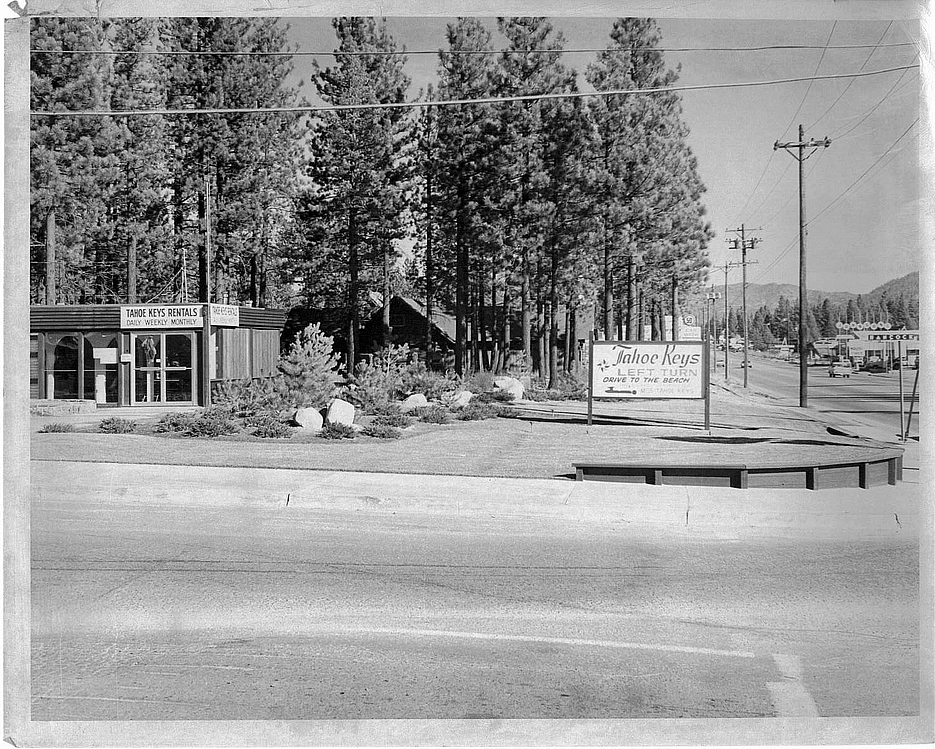
Then and now: Keys Blvd. not always a major intersection

Did you ever wonder why South Lake Tahoe doesn’t have a First Street?

It did until the early 1960s when First Street was renamed Tahoe Keys Boulevard.

The corner sign read: “Tahoe Keys … left turn … drive to the beach.”The building sign said: “Tahoe Keys Rentals … daily, weekly, monthly.”

Tahoe Keys Boulevard and Highway 50 circa 1964. Photo/Private Collection

Tahoe Keys Boulevard and Highway 50 circa 1964. Photo/Private Collection

The photo above pre-dates today’s electric traffic signal at the corner and shows the overhead wires circa 1964 along Highway 50. The gas station at far-right was a Hancock (now a 76 after many reincarnations), and distant beyond it (just left of the dark telephone pole) was the Outdoorsman (now the Grocery Outlet).

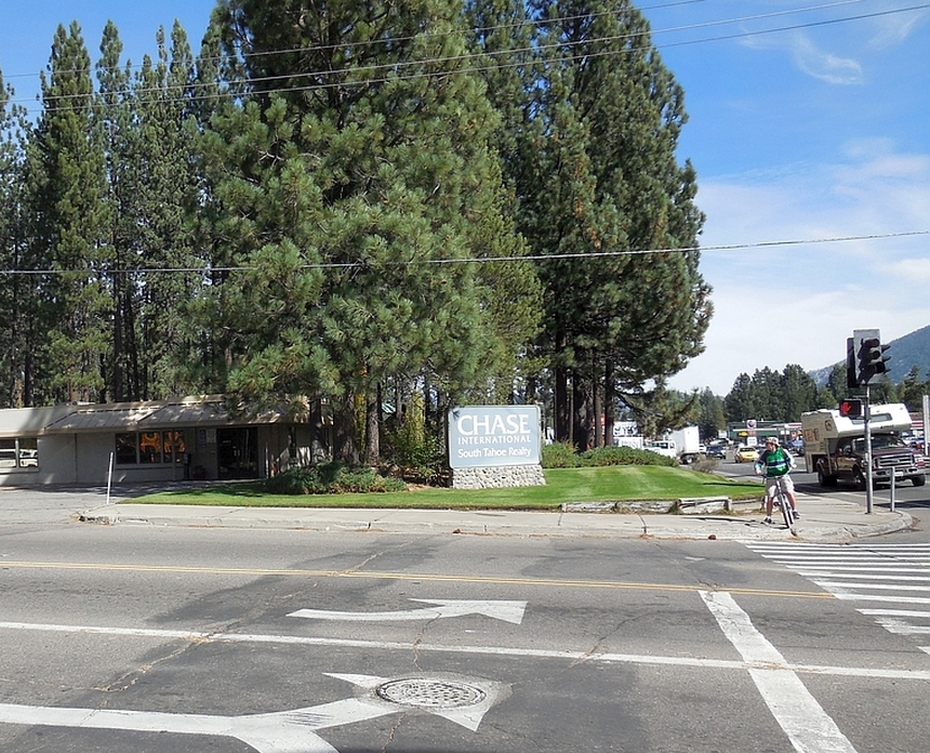
Tahoe Keys Boulevard today. Photo/Bill Kingman

Tahoe Keys Boulevard today. Photo/Bill Kingman

Today, Tahoe Keys Boulevard has marked turn lanes with electric traffic and pedestrian signage. All Highway 50 wiring has been placed underground, as has most of the wiring along Tahoe Keys Boulevard. Notice how the trees have flourished.

— Bill Kingman


Discovering wild mushrooms in the woods

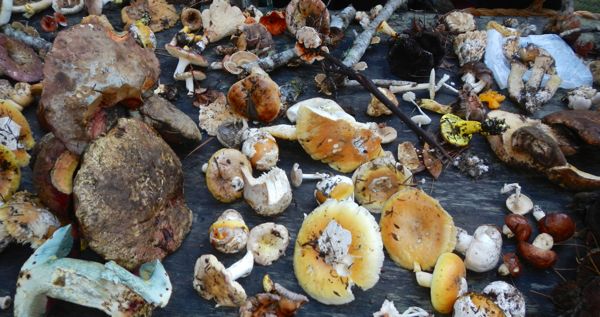
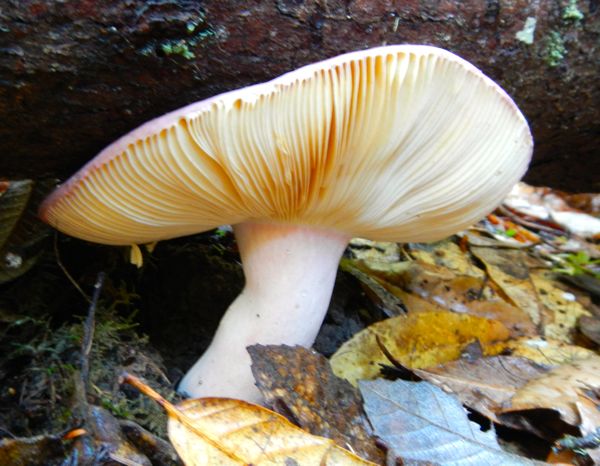
Wild mushrooms come in a variety of sizes and colors. Photos/Kathryn Reed

Wild mushrooms come in a variety of sizes and colors. Photos/Kathryn Reed

By Kathryn Reed

SALT POINT STATE PARK — Red, yellow, orange, brown, white, green. Tiny and huge. Slimy and delicate. Spongy and bulbous. Edible and non.

These were clearly not your grocery store variety of mushrooms. And, yet, we kept picking them. What we didn’t do was eat them.

Sue and I were on our first mushroom foray in October. While I have hunted for mushrooms in Lake Tahoe, that was always for personal consumption. This was more for education.

Mushrooms often blend in with the environment.

Mushrooms often blend in with the environment.

The Sonoma County Mycological Association (SOMA) led us into the woods of Salt Point State Park, which is one of two California state parks to allow people to forage for wild mushrooms. The limit is 31 pounds per person.

Nearly 300 varieties of fungi grow in this coastal park, with many of them OK to eat.

“It’s more of a quest than anything else,” Jim Wheeler, board member of the mycological association, said. “We are not hunting because the mushrooms don’t move.”

But they do hide.

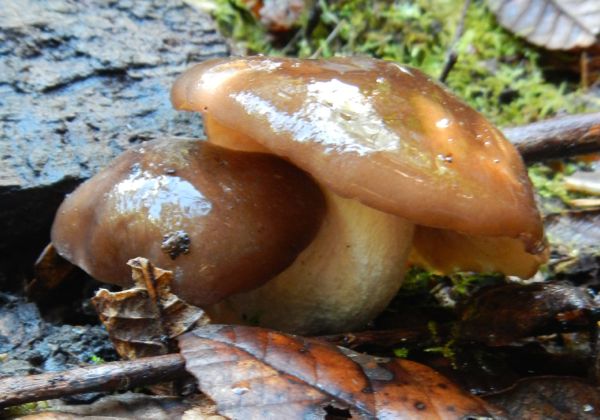
Wild mushroom on Sonoma coast.

Wild mushroom on Sonoma coast.

Some are tucked under foliage, others grow under downed trees, while a few are able to camouflage themselves. Then others are out in the open, bright and ready to be plucked like a wildflower.

Many of the nearly 40 people on the foray were first-timers. It was like we were on a treasure hunt as we whispered to one another. Fog seeped through the dense redwoods, adding a sense of mystery to our outing.

SOMA has forays September-May, with a three-day camp in January. And the mushrooms in the Bay Area, well, they are multiplying in ways that haven’t been seen the last three years. This is all because the December rains are just what the fungi love.

All mycological groups are serious about their mushrooms. But most are also inclusive, eager to share their knowledge and bring more people into the inner circle.

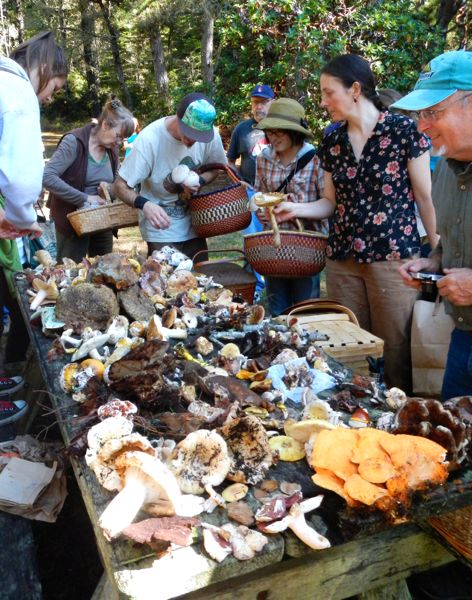
Sorting through the haul.

Sorting through the haul.

People are separating their finds with wax paper. Some photograph the specimens and take notes in journals. Baskets and canvas bags are slowly filling up with mushrooms of all shapes, sizes and colors.

Experienced shroomers know the scientific names and which are edible. They seem to find them faster as well.

On this particular day we spread out a haul that more than filled a picnic table. Porcini, slippery Jacks, golden chanterelles, coral, spy are just a few of the varieties.


Editorial: It’s time for a humane immigration solution

Publisher’s note: This editorial is from the Jan. 1, 2015, Los Angeles Times.

In this nation’s never-ending debate over immigration, those who demand strict enforcement of existing laws are armed with a simple rejoinder: What, they ask, do you not understand about “illegal”? To them, the solution to illegal immigration is to identify those who are here illegally and deport them.

It’s a reasonable point. A law should be enforced. But the argument can’t be isolated from the realities of immigration, which is propelled by regional economic imbalances, familial connections and the basic human desire to live a better, safer and richer life. Those are powerful forces, unlikely to be thwarted by stepped-up deportation. Instead, under those pressures, our immigration system has crumbled, and strict enforcement has become impractical, even impossible.

Congress can and should, but probably won’t, fix it.

That leaves pragmatism — which President Obama exhibited with his recent directives offering deportation reprieves for some 5 million immigrants here illegally.

Read the whole story


Snippets about Lake Tahoe

humane society• Lake Tahoe Humane Society on Jan. 15 moves into new offices on Emerald Bay Road in South Lake Tahoe next to Brothers Bar.

• Truckee Donner Public Utility District customers may track their water use online.

• L’Atelier Hair Studio, owned by Michelle Langmayer and Shelly McMillin, just opened in Round Hill.

• Heidi Hill Drum and Bev Ducey of the Tahoe Prosperity Center will talk about what that organization is up to on Jan. 20 at 6pm at the South Lake Tahoe library.

• Incline Village General Improvement District Community Appreciation Week starts Jan. 5. Go online for more info.


Low back pain topic of free talk

Two doctors affiliated with Barton Health will be talking about low back pain prevention and treatment.

The free lecture is Jan. 15 from 6-7pm at Lake Tahoe Community College’s board room.

Alison Ganong with Tahoe Orthopedics and Sports Medicine and Mike Fry of Tahoe Fracture and Orthopedic Clinic will discuss non-surgical vs. surgical treatments.


Climates specialists to give talk in Stateline

James Hansen, former director of the NASA Goddard Institute for Space Studies and adjunct professor at Columbia University’s Earth Institute, is the keynote speaker at Operation Sierra Storm on Jan. 8 at Harveys in Stateline.

Hansen’s presentation will include his take on assuring real progress on climate — whether and how an international climate accord can achieve intergenerational and global justice.

His testimony on climate change to congressional committees in the 1980s helped raise broad awareness of the global warming issue. He was designated by Time magazine in 2006 as one of the 100 most influential people on Earth.

Bernice Notenboom, climate journalist, science writer will also share her latest excursions of the North Pole and discuss her film “The Arctic March” that is soon to be released.

Notenboom will talk from 7:45-9am and Hansen from 9:15-10:30am; both in the Cabaret Theatre.


LTCC looking to fill bond oversight committee

Lake Tahoe Community College is seeking people to serve on an independent Citizens’ Oversight Committee for Measure F, the facilities bond that passed in November.

The committee oversees the expenditure of the $55 million bond, and acts to ensure the funds are spent in the fashion outlined in the bond resolution. The citizens’ oversight committee is a requirement in the bond language.

The COC will consist of at least seven members who serve for a term of two years without compensation, and for no more than two consecutive terms. The committee will include: a member active in a business organization representing the local business community; a member active in a senior citizens’ organization; a member active in a bona fide taxpayers’ organization; and a member who is a currently enrolled LTCC student active in a student club or organization, such as student government.

Those interested in becoming COC members should have some experience with reading and understanding basic financial reports. The COC must meet at least once a year and inform the public about the college’s bond revenue expenditures, and to report on the efficiency of those expenditures.

To apply, go online. For more info, call 530.541.4660, ext. 210.