Weather hampers women’s downhill in Italy

By USSA

CORTINA D’AMPEZZO, Italy 0- A shortened Cortina downhill became more of a sprint course on Friday, with first-starting Laurenne Ross (Bend, Ore.) leading the United States.

Julia Mancuso (Squaw Valley) was eighth and Lindsey Vonn (Vail) 10, having to wait again for record win number 62 in the Audi FIS Ski World Cup.

Host Italy had its day with Elena Fanchini taking the win by 0.15 over Canada’s Larisa Yirkiw. Viktoria Rebensberg of Germany was third.

Ross took the early lead out of the top starting position on a course that was shortened by nearly 20 seconds from Thursday’s lone training run due to weather. The start was in the fog with light snow falling during the race. Ross was just three-hundredths off the podium. Three of the top four started in the first five as conditions deteriorated through the running order.

“I was surprised at how foggy it was — all the way to Daytona, the big left footed turn,” said Vonn. “I charged but I had a hard time seeing everything. And it was snowing so that slowed it down, especially on the flats. Sometimes it happens that way when the weather changes — some people have sunshine, some have fog. It’s not always fair but it’s an outdoor sport. Tomorrow’s another day I’m looking forward to it.”

Ross drew lucky number one and had somewhat better course conditions, but had to run on trust and without the benefit of a course report.

“It was definitely a sprint — any tiny errors added up to a big amount of time,” she said. “I feel happy with my result. I was pretty lucky to draw bib one although going first it’s always tough because you don’t get a course report. You have to test it out. From that new tart I didn’t know how the speed would be or how I would have to adjust my line. You just have to trust.”

Heavy fog during inspection forced organizers to move the start down to the lower super G start. “It took out some of the fun aspects of the Cortina downhill,” added Ross. “But it was good we actually got to race.”

More snow is forecast for Friday night and through Saturday, putting the weekend schedule in jeopardy.


Snippets about Lake Tahoe

wine-2• The 24th annual Passport Weekend at El Dorado County wineries is April 11-12 and April 18-19. Purchase tickets before Jan. 31 for special pricing.

• The Vagina Monologues will be performed at Lake Tahoe Golf Course on March 6 at 7pm. To buy tickets, go online.

Train is returning to Lake Tahoe on July 21 a 7pm. Joining them at the Harveys Outdoor Concert Series that night are The Fray and Matt Nathanson.

• There is still no buyer for Kingsbury Middle School. It will be on the Douglas County School District board agenda in April, with the possibility of lowering the asking price.

• Heavenly House Foundation is in need of winter clothing for men and women. For more info, contact Karen at 530.416.1396.


6 Tahoe basin meadows slated for restoration

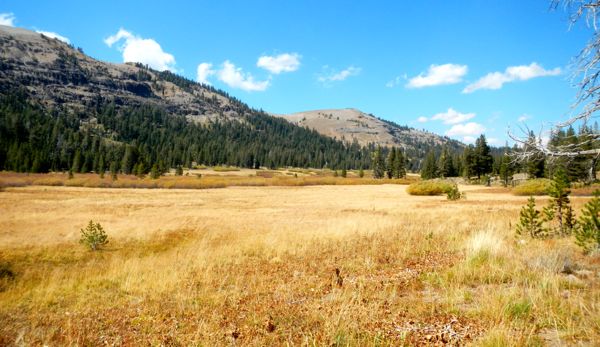
Meiss Meadow is targeted for restoration by the U.S. Forest Service. Photos/LTN

Meiss Meadow is targeted for restoration by the U.S. Forest Service. Photos/LTN file

By Kathryn Reed

Restoring the health of six meadows in the Lake Tahoe Basin is the goal of a project the U.S. Forest Service wants to undertake starting this summer.

The agency is seeking comments on the environmental documents through the first week of February. Two options are part of the environmental assessment – do nothing and the proposed work plan.

Between 2000-11 the agency studied 37 meadows, with six rising to the top of needing immediate help.

Those six are Baldwin Meadow, which is south of Baldwin Beach; Benwood Meadow, south of Adventure Mountain snow play area on Echo Summit; Freel Meadow north of Thompson Peak, which is north of Luther Pass near Grass Lake; Hellhole Meadow, which is north of Freel Meadow; Meiss Meadow is on the south end of Meiss Country, north of Highway 88; and Star Meadow, which north of Freel Peak and west of Star Lake.

Restoration efforts would include a combination of tree removal, prescribed fire, stream channel repair, planting of vegetation and rerouting trails.

When asked why the USFS believes it is necessary to intervene with Mother Nature, the agency responded, “The Forest Service and the Tahoe Regional Planning Agency have identified meadow ecosystems as an important focus area for restoration efforts in the Lake Tahoe Basin. Past land use and recurring droughts have impaired the natural function and processes of many meadows in the basin. Fire suppression, grazing, stream incision, conifer encroachment, climate change and recreation and trails have combined to produce complex effects on meadow function, composition and structure.”

The proposal calls for removing trees from 228 acres and thinning another 359 acres – all by hand. Controlled burns would occur on about 1,226 acres.

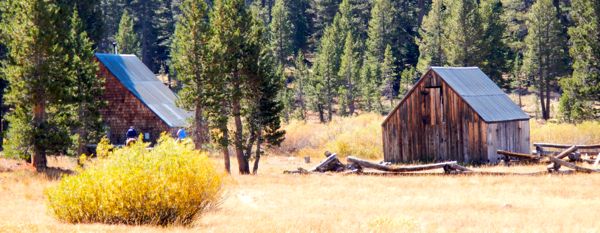
The corral in Meiss Meadow is on the repair list.

The corral in Meiss Meadow is on the repair list.

Stream channels, some of which are not named, will be worked on in every meadow area except Hell Hole Meadow. In total, about three miles of water will be affected. This includes planting willows on 22 acres.

Pacific Crest Trail hikers will be affected. The plan calls for 1.1 miles to be rerouted and 1.1 miles decommissioned.

“We are not sure when implementation will occur, therefore cannot identify how this will impact hikers next summer,” Herron said.

The goal is to build the new section, then decommission the old trail.

“The Forest Service plans to minimize impacts to hikers during implementation by coordinating the trail reroute alignments with the Pacific Crest Trail and Tahoe Rim Trail associations and notifying them both regarding timing of project activities,” Herron said. “We will work with both associations to alert trail users of planned work and potential impacts via their websites and social media.”

Lodgepole pine that will be removed from Meiss Meadow will be used to repair the old corral. This will allow pack animals visiting the area the opportunity for daytime or overnight stays.

A price has not been determined for the work that is planned – either by individual meadow or cumulative. A fraction of the millions that is needed will come from the Southern Nevada Public Land Management Act. Other funding sources have not been determined. Money usually becomes available for projects like this once all the environmental documents are completed.

Work will take place as money becomes available. There is no time line for when the work will be completed.

“If additional work is needed in other meadows where long term plots have been established and continue to be monitored, additional projects may be proposed,” Herron said.

Notes:

• The deadline to comment is Feb. 6.

• The draft environmental assessment is available online.

• For more information, contact Matt Dickinson at 530.543.2769 or mattdickinson@fs.fed.us.


Opinion: Working together for Tahoe’s sake

By Casey Beyer

As the incoming chair of the 15-member Tahoe Regional Planning Agency Governing Board, this promises to be a hopeful and exciting year. 2015 will be full of opportunities, but also challenges, for the continued protection of Lake Tahoe.

The No. 1 priority among our challenges is funding shortfalls. Federal and state funding that has paid for environmental restoration and protection efforts at Lake Tahoe for years is drying up and new approaches need to be pursued.

Casey Beyer

Casey Beyer

We must work together to find creative resources from our federal, state, local, and private sector partners to continue completing environmental improvement program (EIP) projects. Over the last two decades, the EIP has built bike paths, improved the health of our forests, reduced stormwater pollution, and halted a decadeslong decline in Lake Tahoe’s mid-lake water clarity.

Our environmental efforts must include Tahoe’s near shore. That area of the lake is the focus of a new monitoring and research program because it continues to experience water quality problems even as mid-lake clarity has stabilized. Addressing threats from pollution, algae growth, and the spread of invasive species are top priorities for us.

We must find long-term funding sources to continue our mandatory boat inspection program to prevent the introduction of new aquatic invasive species into Lake Tahoe, and to control as best we can the impact of damaging invasive species that are already in the lake.

We are seeing many transportation improvements in the Tahoe basin, with major local projects such as the Kings Beach Commercial Core Improvement Project, Harrison Avenue Streetscape Improvement Project, and Incline Village to Sand Harbor Bike Path all taking shape. But we must do more to improve our transportation corridors.

Transportation projects offer some of the best return for our dollar in terms of community revitalization and improved mobility, access, and recreation. They also offer tremendous environmental benefit by creating safer and more convenient ways for people to get around on foot or bike and by reducing the amount of fine sediment and other pollution that washes into Lake Tahoe with rainfall and snow melt.

Part of our transportation challenge is educating policy makers in Washington, D.C. Federal funding formulas allocate money for roadwork based on our small rural population, and fail to account for the millions of visitors who travel to Tahoe each year from nearby cities. Upgrading our transportation infrastructure and transit systems in the basin, so critical to the health of Lake Tahoe’s environment and communities, as well as the experience of visitors, requires changing those formulas.

As a native of Nevada and a California governor appointee, in my three decades of public service in California and Nevada, no assignment has been more important to me than when I was appointed to the TRPA Governing Board in September 2009. In the last five plus years I have worked to build a bi-partisan bridge of trust between two states and gained the respect of California Gov. Jerry Brown and Nevada Gov. Brian Sandoval. There is no question that California and Nevada share the responsibility to protect this national treasure.

Growing up in Reno, Lake Tahoe was my playground and backyard and I spent every spare moment I could enjoying it. Skiing and swimming in the lake’s crystal clear water and hiking the Rim Trail before it was recognized as a recreational wonder were all part of growing up. It’s these activities that turned me into a young environmental steward in the 1960s at the same time the TRPA was being created.

For years, unproductive interactions between the stakeholders at Lake Tahoe stalled progress and did little to improve the lake’s environment or our communities. Fortunately, times are different today.

In December 2012, we turned a page in Lake Tahoe’s history by approving a widely supported Regional Plan. Implementation of the plan will improve Tahoe’s natural environment and the health, sustainability, and economic vitality of our communities. A variety of groups with different opinions are setting aside their differences to focus on our challenges and seeking solutions for the mutual interest of the Lake Tahoe Basin.

Winston Churchill once said, “If we open a quarrel between the past and present, we shall find that we have lost the future.” I want everyone to be a part of solving the challenges we have before us, because meeting them head on will benefit our lake and the opportunity will be our legacy to future generations. That does not mean we will agree on every issue, but when we stay engaged, bringing our different views and opinions to bear on problems, keeping the big picture in mind, we will find common solutions.

Casey Beyer will serve as chair of the TRPA Governing Board from January 2015 to December 2017.



Snippets about Lake Tahoe

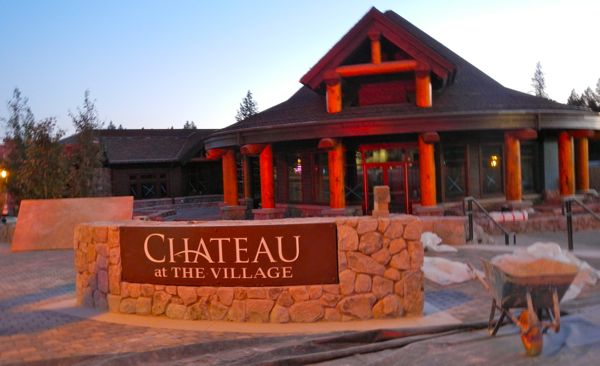
chateau-1• McP’s Taphouse Grill in South Lake Tahoe at the shops at the Chateau is open.

• On Jan. 23, the FNCTN Winter Music Series will rock the clubhouse inside the Lake Tahoe Golf Course. Forrest Day will kick off a series of concerts at the clubhouse. Big Sticky Mess, a funky jam band from Davis, will open up the show with other entertainment including live painting, local sponsor and nonprofit organization booths and sponsor giveaways. Doors open at 8pm; admission is $10.

• Poundawg Enterprises in South Lake Tahoe just opened. They focus on walking/running large, active breed dogs. For more info, call/text 530.409.0871.

• Tom and Beth Jones now own Amador Foothill Winery in Plymouth. Tom Jones had been making winery for his family’s Lava Cap Winery in Placeville.

• Nevada law enforcement will join forces and continue its high-intensity enforcement effort between Jan. 16 and Feb. 2. Last year, 284 fatalities were reported in Nevada, 18 more than in 2013. Of those fatalities, 74 deaths were ruled to be alcohol-related. •


USFS offers free ski tours at Heavenly

The U.S. Forest Service Lake Tahoe Basin Management Unit’s Ski with a Ranger at Heavenly Mountain Resort begins Jan. 16.

Tours begin at the top of the gondola at 10am and 1pm every Monday and Friday. Spanish Ski with a Ranger returns Feb. 20, 2015, with tours offered every Friday at 10:30am. Both programs last approximately one-hour and continue through April 10, weather permitting.

Participants must be intermediate level skiers/boarders or above and provide their own lift ticket. No reservations are required; attendance is on a first-come, first-served basis.

These free conservation education programs are offered to educate the public about the mission and role of the Forest Service in ski area management, to improve public understanding of natural resource processes and issues, and to promote environmental literacy and stewardship. Programs are led by U.S. Forest Service conservation education staff and volunteers, and operate through a cooperative effort between Heavenly Mountain Resort and South Lake Tahoe.

For more information, go online.


Aramark swapping out boats for Tahoe cruises

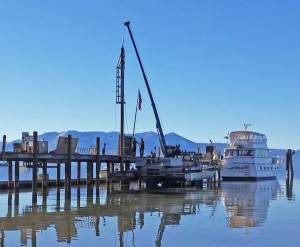
The pier at Zephyr Cove, where the M.S. Dixie and Bleu Wave reside, is being rebuilt. Photo/Carolyn E. Wright/Copyright

Zephyr Cove pier, where the M.S. Dixie and Bleu Wave reside, is being rebuilt. Photo Copyright 2015 Carolyn E. Wright

Aramark officials have taken the Tahoe Queen out of service indefinitely because of the low lake level. The channel at Ski Run Marina in South Lake Tahoe is too narrow for the paddle-wheeler to operate, an Aramark official told Lake Tahoe News.

The M.S. Dixie was put into service shortly after the Queen ran into trouble New Year’s Eve. The Queen was taken out of commission by the U.S. Coast Guard for mechanical reasons. The Coast Guard did not return calls.

The Dixie, which operates out of Zephyr Cove, is only available until Jan. 20. The Dixie is going to be remodeled – including a new engine and complete facelift.

Starting Jan. 24, the Paradise will offer dinner and scenic cruises out of Ski Run Marina. The yacht is smaller than the paddle-wheelers, with a capacity of 70 for dinner, 90 for the scenic rides.

— Lake Tahoe News staff report


Calif. targets pot farms polluting waterways

By Kathryn Reed

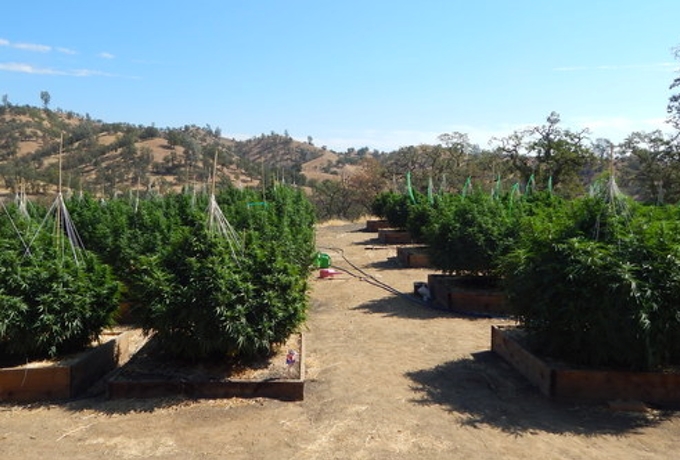
Chemicals – some of them banned substances in California – are flowing into streams, trees are being cut down without a permit, garbage is strewn about, human waste is not properly disposed of and the soil is so contaminated nothing may grow there again.

This is going on throughout California as people find out-of-the-way places to grow marijuana for medical purposes, and drug cartels consolidate their operations so the product is grown closer to the user and doesn’t require crossing international borders.

But now those marijuana growers have another watchdog – the California Water Board and the regional offices, including Lahontan based in South Lake Tahoe.

Illegal pot grows in California are causing the state to intervene. Photo/Shasta County Sheriff's Office

Illegal pot grows in California are causing the state to intervene. Photo/Shasta County Sheriff’s Office

“It is a serious statewide water quality problem – mostly on the north coast and Central Valley, but we do have illegal grows in our region,” Lauri Kemper, assistant executive director of the Lahontan Regional Water Control Board, told Lake Tahoe News.

Cris Carrigan with the state agency told the regional board Jan. 14 about the dangers of grows on private land, while Lahontan engineer Eric Taxer spoke about what is going on with public lands.

“All sites have water quality and water diversion issues,” Carrigan said.

Growers are siphoning off water from streams for their crop. Some of the diversions are more impactful to the environment than others. Part has to do with the material used for the diversion.

Of the grows they have come across, Carrigan said, at minimum all are degrading water quality by adding sediment to the system. But most are also adding pollutants.

“This heretofore was an unregulated activity. Law enforcement has not worked,” Carrigan said.

He said the number of grows is five times greater than in 2010.

“These types of things don’t have to happen. They need a business plan,” Carrigan said of the growers. And they need a sustainable ecological plan.

The water board has the authority – and is now using it – to stop these growers from polluting waterways. They are getting warrants to access properties. Property owners, operators and contractors doing the work are all being targeted by the state.

Fines will be levied and abatement plans instituted. The problem the state may have after this pilot program runs out of money is sustaining the enforcement. The goal is fines that are collected will keep the program going.

These grows – whether for medicinal or illegal sales – are wreaking havoc on the environment, officials say. This includes the land, water, fisheries and wildlife habitat.

Not all grows are illegal. Some jurisdictions allow outdoor cultivation of medical marijuana. But they still might not be employing practices that are in accordance with the state Water Board.

Taxer has found illegal pot grows at elevations as high as 11,000 feet as well as in the barren desert.

“A lot of cartels or drug trafficking organizations seek out-of-the-way places for grows,” he told the Lahontan board.

And because of their remoteness it is often hard for the agencies to cleanup and restore the site because of limited resources.

“Because of climate change there are more pot growers in our area,” Taxer said.

The Sierra has water, while other locations are drying up.

Taxer showed a photo of a bust in Alpine County in August where 4,000 plants growing among the pines were seized.


Suit challenges medical pot dispensaries in Washoe County

By Associated Press

A legal battle is brewing over the licensing of medical marijuana dispensaries in Washoe County.

One of the license applicants has filed a lawsuit against the state that says the state ranking system undermines a part of the law intended to guard against monopolies.

Lawyers for Washoe Dispensary LLC told the Reno Gazette-Journal that Tryke Companies Reno LLC should not be awarded two licenses — one in Sparks and one in unincorporated Washoe County.

They also challenge plans to issue three of the total five licenses allowed in the unincorporated county at north Lake Tahoe — in Incline Village and neighboring Crystal Bay.

The suit says the state failed to follow the law requiring that local governments have the final say about where the dispensaries should be located.


Father faces murder charge in death of infant

Trent Getty of Douglas County has been charged with first degree murder in the death of his 2-month-old daughter.

He is expected to appear in East Fork Justice Court in Minden on Jan. 16.

Getty waived extradition to Nevada after being arrested in Sacramento on Jan. 13.

He was being held without bail.

— Lake Tahoe News staff report