Scientists worried about tiny Tahoe creatures dying

By Jeff DeLong, Reno Gazette-Journal

A first-of-its-kind circuit by scuba divers around Lake Tahoe is complete. Now, experts are seeking to understand worrying changes on the bottom of the landmark alpine lake.

Members of the scuba team that 13 years ago reached the wreck of a famous steamer sunk in Tahoe’s frigid depths completed the first circumnavigation of the lake by divers in October. Scientists are examining the data collected to understand why some of the lake’s tiniest bottom dwellers and the plants they depend on appear to be disappearing at an alarming rate.

The dive team will likely cast significant light on an issue of mounting concern, scientists said.

“We basically have new habitats being created in the shallows,” said Sudeep Chandra, a freshwater science expert at the University of Nevada, Reno. The lake bottom, Chandra said, serves as the “backbone” for chemical cycling of the lake’s waters. Changes now taking place could come with profound effects.

“It’s the sponge of the lake, basically,” Chandra said. “Protecting Lake Tahoe and its clarity in the long run is really dependent on a functional lake bottom.”

Read the whole story


What Caesars’ bankruptcy means for company, consumers, workers

By J.D. Morris, Las Vegas Sun

When the largest operating division of casino giant Caesars Entertainment filed for bankruptcy protection on Thursday, it was just the most recent piece of what has already been an intense and controversial path toward financial restructuring.

Expect more drama as the process moves forward.

For years, Caesars has struggled with a massive debt load, most of which is concentrated in the cash-strapped operating division called Caesars Entertainment Operating Company, or CEOC, which includes Harrah’s Lake Tahoe and Harveys. That division is now seeking to reduce its $18.4 billion debt load by nearly $10 billion.

The bankruptcy plan voluntarily put forward by Caesars is complex on its own, but the situation is further complicated by a dueling involuntary bankruptcy case filed by junior creditors.

“This is going to be a long and contentious, protracted process,” said Alex Bumazhny, a financial analyst for Fitch Ratings.

Read the whole story


Ex-Kirkwood leader struggling with no snow

By Mark Warszawski, Fresno Bee

Being a ski resort owner during what some are calling California’s worst drought in 1,200 years can’t be a pile of soft, fluffy powder.

In May 2010, Tim Cohee fulfilled a lifelong dream by purchasing a 1,300-acre ski resort 65 miles east of Fresno. The first thing he did was restore the original name, China Peak. Then he went about fixing everything else.

Tim Cohee

Tim Cohee

Cohee brought a new level of customer service learned from decades in ski area management, including 17 years as a senior executive at Kirkwood Mountain Resort. He brought in enthusiastic new employees and reinvigorated the holdovers with fresh energy. He made the base area more beginner-friendly and gave snowboarders and freestyle skiers their own terrain park.

He remodeled the hotel and improved the food and beverage offerings. Everything from beds to burgers is better. He made the place a year-round destination by adding summer weddings, events and mountain biking.

Cohee and his small partnership group, China Peak LLC, bought the resort from Snow Summit Ski Corp. for $3.8 million and have since spent $3 million more on improvements.

Midway through his fifth winter, about the only thing Cohee hasn’t done is something he can’t control: Make it snow.

Read the whole story


2 hikers enduring winter on the PCT

By Associated Press

RENO — After more than two months spent cold, wet, frostbit and blistered, Justin Lichter and Shawn Forry just wanted a few moments of comfort.

So, the first thing Lichter did before sitting down to talk about their attempt to become the first people to complete a wintertime through-hike of the 2,650-mile Pacific Crest Trail from Canada to Mexico was throw some logs in the fireplace at his Truckee-area home. Then, he and Forry joked about a planned side trip to Reno where they could watch movies and find an all-you-can-eat sushi restaurant.

With more than 1,500 miles of mud, slush and ice behind them and the heart of the Sierra Nevada ahead, the two men were determined to make the most of a 48-hour break from the trail.

“This is definitely a stop that we have been dreaming about for a long time, even before the trip started,” said Lichter, 34.

Although they’re still facing what will likely be the riskiest and most challenging terrain of the trip, the miles behind them have been no picnic.

Not long after they started in late October, the weather took a dreary turn which meant weeks of hiking, setting up camp, eating, sleeping and waking in cold and wet conditions.

Forry’s first blog post from the trail focused largely on the blisters that developed from hundreds of miles of walking with damp feet.

“The feet have been kind of a constant theme,” Forry, 33, said. “When you start in the wet and cold, it is a hard adjustment.”

Advertisement
In addition to contributing to blisters, week-after-week of wet, dreary weather was a challenge to the hikers’ psyches, said Lichter, who has more than 35,000 miles of ultralight hiking on his outdoors résumé.

“Every day, you are putting on all your wet and frozen clothes again and not seeing any of the views you worked so hard to climb up for.”

“Every day, you are putting on all your wet and frozen clothes again and not seeing any of the views you worked so hard to climb up for,” he said.

Toss in some high winds, snowstorms and extreme cold they’ve experienced and it starts to make sense there’s no record of anyone completing what Lichter and Forry are attempting.

Although both men are experienced adventurers with wilderness medical training and countless hours in the backcountry, the foreboding conditions already have resulted in some moments of doubt.

The greatest occurred not far from Bend, Ore., where they developed symptoms of frostbite on their feet. They’d been used to wet feet and cold mornings, but when they got to Oregon, the temperature dropped below freezing and it was too much for wet skin to endure.

“My journey into frostbite begins with jamming my feet into frozen boots in the morning,” Forry wrote in a Nov. 19 blog post. “I’ve seen a fair amount of frost nip and frostbite during my tenure in the winters of Minnesota, so when I saw the hardened, blanched white skin, I knew I was in for a long recovery ahead.”

At another point, the duo reached a rain-swollen Grider Creek in the Klamath National Forest only to find out the bridge they had been counting on to cross had been destroyed.

“We both ended up swimming across the creek at 7:30 in the morning and getting pretty wet in December,” Lichter said.

Given the difficulty of the journey, the obvious question for Lichter and Forry is, “Why?”

They say between the hardships, the trip has been punctuated with moments of ecstasy.

A big part of the enjoyment comes from knowing that even though thousands of people hike the Pacific Crest Trail in warmer months, very few get the chance to experience it during the winter when snowfall can make animal tracks easier to spot and lend a sense of quiet to the wilderness.

“There is just a real calm, surreal feeling in the wilderness,” Forry said. “You get a sense you are the only people out there, and in reality, we probably are.”

Lichter described waking up on Mt. Adams in Washington to a clear sky after weeks of storms and thick clouds and seeing Goat Rocks Wilderness and Mount Rainier in the distance.

“It was pretty much raining and snowing for over 40 days,” he said. “Then, you get a sunny day after that and, oh my God, I can see all these mountains. We just woke up to that.”

They’re even finding ways to power through the low moments by using them as reminders of why they decided to make the journey in the first place.

“You get frustrated, you get tired, that is part of the challenge,” Lichter said. “That is what makes the high parts even better.”

What’s next?

Lichter and Forry made it to Truckee late last week and even managed to get some miles in on Friday. They wanted to test the skis and boots they planned to use for the next part of the trip by traveling from Interstate 80 to a mountaintop at Sugar Bowl Resort, where Lichter works as a ski patroller.

Not only was it a chance to make sure the gear worked and fit comfortably, it allowed them to complete a difficult climb before resuming the trip. Getting to the top by their own power on Friday meant they could take the lift up the mountain Sunday morning to resume the journey from there.

At that point, they’ll be embarking on the portion of the trip that could be the most critical to success.

They’ll pass Lake Tahoe and experience the Sierra Nevada as it gets taller and more removed from towns and road access going south.

It’s also the time of year when storm cycles can stack up and dump snow by the foot, making travel treacherous.

“The mountains get bigger, so do the avalanche paths,” said Don Triplat, director of the Sierra Avalanche Center. “Right now, there are really good conditions that could change with the next storm.”

That means Lichter and Forry will need to stay mentally sharp throughout the physically demanding trek. Snow conditions can vary from one aspect to the next and throughout the day.

“If you are on a trail in the summertime, you can put your head down and walk,” Triplat said. “In the winter, you need to be evaluating constantly.”

In order to account for tougher conditions, Lichter and Forry adjusted their estimated daily mileage in the Sierra Nevada to about 10 per day, down from 20 or more on other parts of the trip.

If they successfully navigate the Sierra Nevada, the two hikers will be left with some desert miles, then the San Bernardino, San Jacinto and Santa Rosa ranges in Southern California.

Whether they make it to Mexico successfully or not, each man said the experience of the journey is more important than finishing.

“You don’t want to get started in that rabbit hole of ‘I’m only doing this to finish,'” Forry said. “It is cliché, but the journey is the biggest part of the trip.”

Soft snow keeps men from Squaw out of contention

By USSA

WENGEN, Switzerland — It was thigh-burning, legs-shaking race at the Audi FIS Ski World Cup in Wengen, complete with crashes, screaming fans and course holds. Steven Nyman (Sundance, Utah) was the top American finisher of the day, grabbing 14th place, while Hannes Reichelt from Austria took first. Competing on home turf, Beat Feuz and Carlo Janka of Switzerland rounded out the podium.

It was a perfect bluebird day on the Lauberhorn — one of the classic downhills on the World Cup circuit. The men reached 100mph speeds in front of the 30-40,000-person crowd, and had to put everything they had into this course — the fastest guys had times of 2 minutes, 36 seconds, which makes this the longest World Cup downhill.

Nyman was thrilled about his 14th place finish — especially because he is still recovering from being sick, which left him low-energy throughout the week. “Stephen is finally feeling better,” said Sasha Rearick, men’s head coach. “He had the pukes a couple times.”

Nyman confirmed his feelings about his run. “I’m happy with my run overall. I surprised myself today,” he said. “I had some energy. I never even got to ski the top and I was pretty fast up there.”

Jared Goldberg (Holladay, Utah) had a good run, as well — skiing to 23rd place. Crashing into the finish, he looked to the board to see his result and pumped his fist in excitement. “That’s all you can do—give all the energy you have,” Goldberg said, after his run. “We ran about an hour and a half after the top guys. I’m definitely happy.”

Marco Sullivan (Squaw Valley) and Travis Ganong (Squaw Valley) — who finished 44th and 31st respectively — were not thrilled with their results, both getting caught in the soft snow. Their thoughts have now turned to Kitzbuehel. “On a hill like [Wengen], I just haven’t figured it out yet. I’ll try again next year,” said Ganong. “With Kitzbuehel, I know the hill well now and can excel there. I can’t wait to get on the Streif.”

Wiley Maple (Aspen) did not finish, skiing out after hitting the fence.


Vonn makes history with downhill win

By USSA

CORTINA D’AMPEZZO, Italy — With a powerful run through sunshine and fog, Lindsey Vonn (Vail) etched her name into the ski racing history book, winning her 62nd career Audi FIS Ski World Cup at the Cortina downhill by 0.32 over Austria’s Elisabeth Goergl. The win by Vonn matched the seemingly unbeatable record of 62 World Cup wins set by Austrian great Annemarie Moser-Proell that had stood for 35 years.

“It’s a pretty special moment for me,” said Vonn, whose parents were in Cortina. “These records mean a lot to me and my family.”

After two days of snowfall, a patchwork of clouds against the blue sky were mixed with bands of fog on the Olympia delle Tofane course in the 1956 Olympic city of Cortina d’Ampezzo. Vonn took the early lead coming off a steep face into a band of fog and kept it through the finish, building continually down the course on which she had won seven times previously. It was the same day on which 11 years ago a 19-year-old then Lindsey Kildow scored her first World Cup podium, finishing third in the Cortina downhill.

Many thought that Moser-Proell’s string of 62 wins from 1970-1980 would never be broken.

“When I won my first podium here I never thought I would make it this far in my career,” said Vonn. “That was the first time I thought I could be a contender. Never in a million years would I have believed I could tie the record.”

Vonn was a little shaky out of the start, but quickly found her rhythm in the soft snow. “The snow was really soft and I’m not good when it’s soft. I’m from Minnesota and we used to race on ice. i wasn’t very fast on the top.”

Her biggest challenge came from Austrian Elisabeth Goergl running two racers later. Goergl jumped out to a lead and looked to challenge, but didn’t have the speed Vonn had coming into the finish.

Five Americans finished in the top 18 including Laurenne Ross (Bend, Ore.) in ninth, Alice McKennis (Glenwood Springs, Colo.) 11, Stacey Cook (Mammoth Mountain) 16 and Julia Mancuso (Squaw Valley) 18. It was McKennis’ best finish of her injury comeback season.


Tahoe real estate picked up steam in 2014

By Mark Glover, Sacramento Bee

The Lake Tahoe real estate market continued its post-recession improvement last year, according to Nevada-based Chase International.

The 2014 median sales price of a Lake Tahoe home increased 7 percent year-over-year to $475,000; the average price was $807,088, up 4 percent from the previous year.

Unit sales, however, were down around the lake, with overall sales volume dipping 8 percent. Homes selling for more than $1 million were down 6 percent.

Read the whole story


Then and now: Open space replaces old hotels

xxx

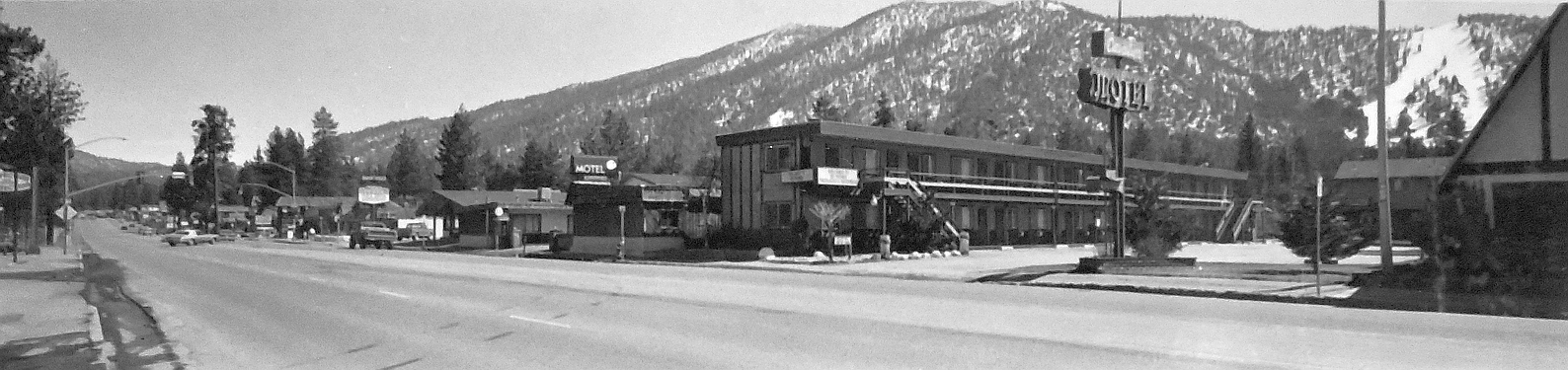
Highway 50 looking toward Wildwood Avenue. Photo/South Lake Tahoe

Sometimes it takes photographs to show progress.

Redevelopment in South Lake Tahoe has not always meant the construction of a building. The photo above shows hotels on Highway 50 near Wildwood Avenue before they were taken down in the 1990s.

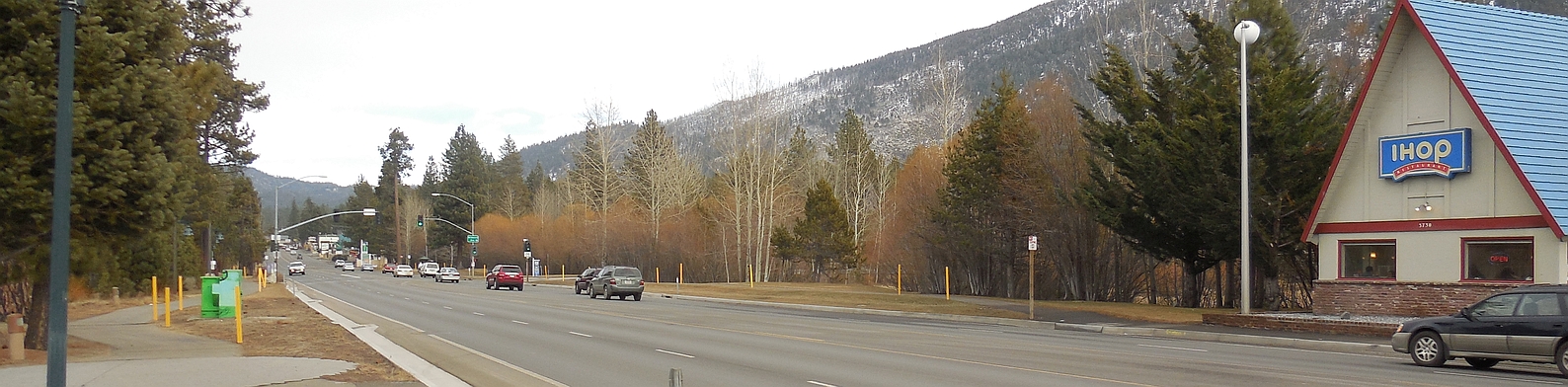
Redevelopment mean open space for these parcels. Photo/Bill Kingman

Open space dots the landscape along Highway 50. Photo/Bill Kingman

Along with the scenic improvements, this area has new sidewalks, curbs, gutters and lighting. Next to the restaurant is the children’s memorial. On the left side of the street is Linear Park.

— Bill Kingman


Docs dissect remedies for low back pain

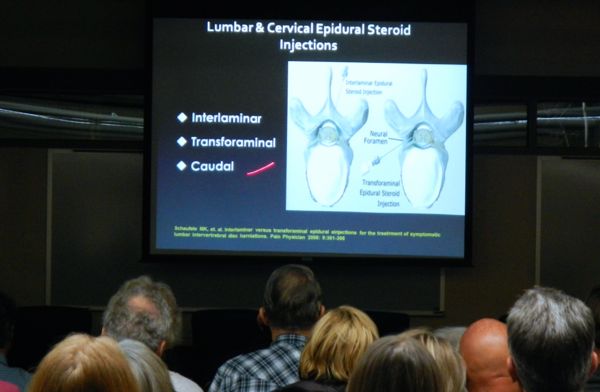
Barton doctors talk about different remedies for low back pain. Photos/LTN

Barton doctors talk about different low back pain treatment. Photos/LTN


By Kathryn Reed

Surgery isn’t going to always relieve back pain nor is surgery always the best option.

That is what doctors Mike Fry with Tahoe Fracture and Orthopedic Clinic and Alison Ganong with Tahoe Orthopedics and Sports Medicine told a group of more than 60 people last week.

Fry’s approach is more traditional – with drugs and surgery the main course of action.

Ganong takes a more holistic approach, where drugs might be a component, but the whole person and what their lifestyle is like is considered.

While most people at some point in their life will have low back pain, there are different types of lumbar diseases. Lumbar stenosis is what the doctors focused on.

Fry said people 50 and older are more often afflicted and can also have other issues going on like diabetes. Some people are born with it, while others acquire it over time.

Pain can be in the back, legs and glutes. Usually pain is most severe when sitting or lying down. More than half of back patients have numbness and less than half have weakness.

Fry explained that how people describe pain running down their leg could help narrow which of the five vertebrae is being affected.

Screw used during back surgery.

Screws used in back surgery.

“Surgery treats the symptoms of the disease, not the disease,” Fry said. “The degenerative process is still an ongoing problem with the spine after the operation.”

For Ganong, it’s a team approach to finding a remedy for the pain.

“It’s important to find out what causes the pain,” she said.

She likes physical therapy to be used early on because staying active is critical. Gone are the days when people with back pain are confined to bed.

Ganong is a proponent of the whole body being strong, especially deep muscles and the core. She pointed out how so much physical activity requires a strong core – like serving in tennis and pitching in baseball.

She works with patients on distinguishing between pain and function. When the pain limits ones ability to do something, that is much worse than being able to play-work through the pain.

When asked about the use of braces, both doctors said it is not a tool they favor except for possibly in post-operative situations. The no to braces is because the muscles become reliant on it.

As for whether a certain mattress can help people with back issues, a firm one is all they would say.

—–

Notes:

• The next Barton Wellness Lecture is Feb. 12 from 6-7m on Sleep Apnea & Cardiovascular Disease. David Young with Barton Cardiology will be giving the talk at Lake Tahoe Community College.


Letter: A successful chamber charity event

To the community,

The Lake Tahoe South Shore Chamber of Commerce thanks the community for supporting local food banks at the annual BAHM for Charity at Riva Grill on Jan. 15.

Over 100 people attended and together we raised $3,650 for charities Christmas Cheer All Year and Bread and Broth. We couldn’t have been more pleased with the turnout and the amount of donations we received.

We’d like to thank Riva Grill for hosting the event and providing the generous spread. We’d also like to thank Lauren Lindley Photography for providing a mobile photo booth that allowed guests to try on costumes and take fun photos to remember the night. A special thank you to all of the business that provided great raffle prizes, including Tahoe Production House, Lauren Lindley Photography, Dollar Signs & Graphics, FATFACE Skincare, Blue Angel Café, Lucky Beaver Bar & Burger, Ken’s Tire Center, Tahoe Bowl, Gunbarrel Tavern & Eatery, Harrah’s & Harveys Lake Tahoe, My Tahoe Chef and Lake Tahoe Cruises-Zephyr Cove Resort.

This event wouldn’t have been possible without the support of our members and the community. We look forward to seeing you next year.

Shannon Earley, chamber communications coordinator