Prescribed fires to be ignited in basin

The California Tahoe Conservancy, Nevada Division of Forestry and U.S. Forest Service may continue prescribed fire operations in numerous areas around the Lake Tahoe Basin beginning Feb. 9.

On the South and West shores, operations may take place south of Tahoe City near Sunnyside, Gardner Mountain near South Tahoe High School, Christmas Valley, Luther Pass near Grass Lake, and Ski Run Boulevard near Heavenly. On the East Shore, operations may take place on lower Kingsbury Grade off Easy Street, Logan Creek Drive, the north side of Spooner Summit, Slaughterhouse Canyon and near Memorial Point at Sand Harbor.

Operations will last through the next several weeks as conditions allow.

Smoke from prescribed fire operations is normal and may continue for several days after an ignition depending on the project size. Agencies coordinate with state and local county air pollution control districts and monitors weather conditions closely prior to prescribed fire ignition.

Before conducting prescribed fire operations, agencies may post road signs around affected areas and make email or phone notifications. The Forest Service updates the local fire information line at 530.543.2600, ext. 6.


Wildfire destroys 40 structures near Mammoth

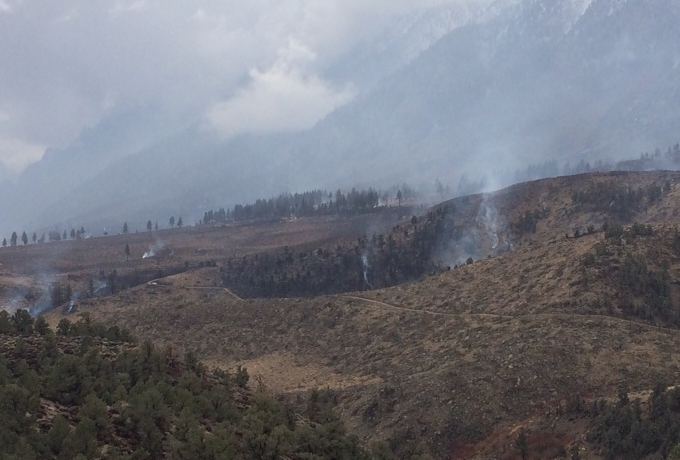
Round fire off Highway 395 atop Sherwin Grade between Bishop and Mammoth on Feb. 7. Photo/BIll Kingman

Round fire off Highway 395 atop Sherwin Grade between Bishop and Mammoth on Feb. 7. Photo/BIll Kingman

Updated 5:45pm:

A fire burning near Mammoth has consumed at least 40 structures and 7,000 acres. It is 50 percent contained.

The Round Fire is burning west of Highway 395 at the Sherwin Grade.

The communities of Paradise (not the one by Chico) and Swall Meadows are under a mandatory evacuation.

Fire officials said significant rain stopped the forward rate of the fire about 2am Saturday. Downed power lines and venting propane tanks make re-entry for residents dangerous.

The cause is under investigation.

One person has been injured.

— Lake Tahoe News staff report


SLT cracking down on storm drain pollution

By Kathryn Reed

South Lake Tahoe businesses with contaminants at their businesses that could reach Lake Tahoe via a storm drain are soon going to face stricter scrutiny.

The city is developing a commercial stormwater program that will affect 188 businesses – 12 gas stations, 33 automotive related businesses, 141 restaurants and two industrial enterprises.

Jason Burke, the city’s stormwater program manager, explained to the City Council earlier this week the reasons for the fee and how the inspections will work.

The council still needs to formally adopt the program. Before that happens, though, Burke and his colleagues want to schedule a meeting with businesses so most questions are answered before the council votes.

Part of the city’s stormwater permit from the Lahontan Water Quality Control Board requires this oversight. Plus, in 2009 the city failed an audit by the EPA.

“They looked into the stormwater program and we were not proactively inspecting these businesses,” Burke told Lake Tahoe News.

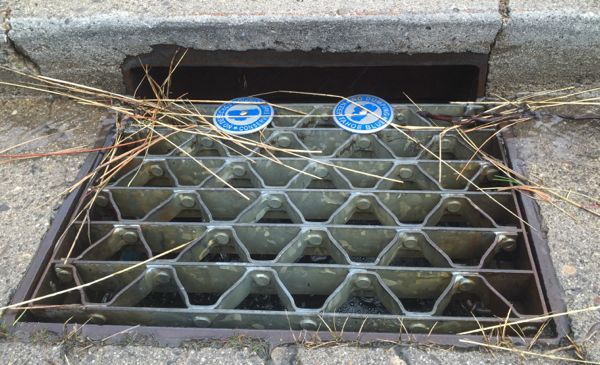
What goes in storm drains end up in Lake Tahoe. Photo/LTN

What goes in storm drains ends up in Lake Tahoe. Photo/LTN

The permit with Lahontan holds the city liable for anything that goes in its storm drains no matter how it got there or who put it there.

Burke said staff cutbacks and working on other issues regarding Lahontan’s mandate to reduce pollutants getting into the lake took precedence which is why the new program is just now getting under way.

The change will have the city being proactive instead of reactive. Burke showed photos of examples of issues the city has dealt with – including an auto repair shop on Jan. 12 leaking brake fluid into a gutter that is 200 feet from a stream environmental zone, a restaurant waste leaking into a drain on Jan. 7, and a non-secure grease bin dumped and washed into a drain next to the Upper Truckee River on Aug. 7, 2014.

The new policy is designed to identify potential pollutant sources so the types of issues above are less likely to occur.

An inspector has been hired. The inspection fees are designed to cover the bulk of the program – about $20,000. The city is not allowed to profit off the fee, only recover costs.

—–

Notes:

• Businesses that have questions may contact Jason Burke at 530.542.6038 or jburke@cityofslt.us.


Frozen pipes a concern if winter returns

With winter returning and the temperatures dropping, frozen pipes can be a household situation that you may want to get ahead of before you incur damage.

Tahoe Fire Fuels Team offers these steps to prevent frozen pipes and thaw those that are already frozen:

  • Insulate all water pipes away from cold moving air and keep them dry. Locate the main water shut off in case you need it. Leaks often happen when the pipe is thawed out.
  • Use either heat tape wrapped around the pipes or a heated reflector lamp in a dry enclosed space. On cold nights, check the light to see that it is working. The heat tapes work by a built-in thermostat. In order to work, the tape must be wrapped between the pipe and the insulation.
  • If electric power is unavailable or is lost, let the water run no faster than a slow constant drip; this is cheaper than repairing it. First start a slow drip on the hot side faucet, then a faster drip on the cold side faucet. There is no need to run a lot of water. Bathrooms can be cold, as long as they aren’t freezing.
  • Remember to insulate and heat the drain lines in crawl spaces and cold basements. Again, a heat lamp focused on the drain p-trap will keep it from freezing if it is also protected from moving cold air with a boxed enclosure.
  • To thaw a frozen pipe, first check the pipe in the area of the freeze. Some plastic or copper pipes will split and will flood the area when thawed. If the pipe looks broken or has a slit in it, call the plumber.
  • It is far better to heat the area around the frozen part with an electric space heater, a hand-held hair dryer, or a heat lamp in a reflector to prevent a fire. If this is a problem, call the plumber.
  • Always disconnect your water hose from your outdoor spigot in the winter, or before the temperature drops below freezing. The water inside the hose can freeze, and the freezing continues back into the spigot until it reaches your pipes. If you have PVC plastic pipe leading to this spigot, it will burst.
  • Keep garage doors closed if there are water supply lines in the garage.
  • Open kitchen and bathroom cabinet doors to allow warm air to circulate around the plumbing. Be sure to move any harmful cleaners and household chemicals up out of the reach of children.
  • Keep the thermostat set to the same temperature during the day and at night. You may incur a higher heating bill, but you can prevent a costly repair job if pipes freeze and burst. If you are going away during cold weather, leave the heat on in your home and set temperature no lower than 55 degrees Fahrenheit.
  • If the house isn’t in use during the coldest months, drain the plumbing system before closing the house down. A drained system is the only foolproof way to avoid a freeze-up.
  • Heating appliances can cause a fire hazard when manufacturers’ recommendations are not followed. Always follow manufacturer’s instructions, and consult a professional electrician or plumber when in doubt.
  • It is recommended that you have contact numbers for a licensed plumber on hand in case a plumbing emergency occurs.


Snippets about Lake Tahoe

sths• South Tahoe High School students who won National Scholastics Gold and Silver Key awards for their art and photography are Kyle Robertson for photography, Alexandra Cody for photography, Skye Kid for photography and Rachael Lamoure for drawing. Their artwork and photography will go on to the national competition in New York.

• Harumi Sushi opened recently in the Round Hill center.

• Meyers has two new restaurants – Verde Mexican Rotisserie and Burger City.

• The California Tahoe Conservancy board on Feb. 5 approved easement agreements that could mean 2.2 miles of the Dollar Creek share-use trail project may be built this summer.

• Lake Tahoe Unified School District board will interview John Drum, Adam Jones, Kyle Martinez, Madelyn Rios and Jennifer Peterson to fill the position vacated by Sue Novasel. Interviews are Feb. 10 at 5pm in the board room. A decision is expected that evening.


Caesars CEO lacks casino experience, stormy exit from Hertz

By J.D. Morris, Las Vegas Sun

Caesars Entertainment’s next chief executive left his last job after revelations of accounting problems at his company and calls for his resignation from some investors.

Mark Frissora, the Caesars CEO-designate who formerly headed the rental car company Hertz, now wades into another financially fraught corporate environment. The largest operating division of Caesars is trying to eliminate nearly $10 billion of debt through a complicated — and controversial — bankruptcy restructuring.

Nonetheless, Caesars executives and casino analysts seem relatively confident that Frissora can successfully take the reins from outgoing CEO Gary Loveman.

For one thing, Loveman is staying on as Caesars chairman, and the company said he would continue to oversee the restructuring process. Also, Frissora’s previous management experience, though outside the casino industry, isn’t as unrelated to his new post as it may initially appear.

Read the whole story


Wood cutting permits available for TNF

Woodcutting permits for the Tahoe National Forest may be purchased beginning Feb. 12.

Permits are valid for the entire Tahoe National Forest; however, the cutting season varies by district. The American River and Yuba River Ranger Districts will allow cutting starting Feb. 12, while the Truckee and Sierraville Ranger Districts will open cutting April 24. Firewood season for all districts will extend through Dec. 31 or until wet conditions make it necessary to close the season.

In general, the woodcutting permit allows for removal of dead or down wood on TNF system lands unless otherwise designated. It does not allow cutting on private land. Trees may not be cut if marked with paint, wildlife signs, boundary signs, and other official signs, or in areas closed to woodcutting.

Woodcutting hotlines, established for each district, will have information regarding any fire danger or wet weather restrictions. Woodcutters must call the hotline each day before cutting.

Woodcutters are required to keep a serviceable shovel at least 46-inches long and an approved fire extinguisher (2 pound dry chemical or 1 pound foam type – ABC or greater) within 25 feet of where saws are being operated. All power saws and other internal combustion engines such as motorized splitters must have a U.S. Forest Service-approved spark arrester installed.

The price for permits is $15 per cord with a 2-cord minimum and an annual 10-cord maximum per household. Permits can be obtained at all TNF Ranger Stations, the Forest Headquarters, or by mail. Applications for mail-in permits can be found online and then by clicking on “Passes and Permits.”


Book promotes giving patients more control at the end

By Peter Whoriskey, Washington Post

In a book, “The Conversation”, physician Angelo E. Volandes argues that the the U.S. healthcare system is failing patients in their final acts: Americans are botching death.

The problem is that hospitals and doctors are pre-programmed to “do everything” for dying patients – that is, attempt every last measure to prolong life, even if its probably futile, painful and unwanted.

To a certain kind of Washington policy wonk, the trouble with “doing everything” is that it causes soaring medical costs and billion-dollar financial woes.

But those are not the concerns of Volandes, a Harvard researcher who practices as a hospitalist. Instead, he sees the extreme end-of-life measures as a tragedy for patients – a tragedy that could be prevented if only doctors asked patients what they want. The patients are the ones who must bid farewell to life being poked and prodded and filled with tubes by strangers in the hospital.

Read the whole story


Efforts made to keep LT Water Trail afloat

By Kathryn Reed

Twenty years ago images of people playing on Lake Tahoe all involved motorized watercraft. Today it’s almost always human powered vessels that are in photographs and video.

Some of that change has to do with a project that started 20 years ago – Lake Tahoe Water Trail. The idea then and now is to promote non-motorized boating. The Lake Tahoe Water Trail Association has been active for the last 11 years.

The California Tahoe Conservancy board on Feb. 5 further committed to this goal by authorizing up to $50,000 on planning activities for the trail and in large part turned control over to the Sierra Business Council. The money is coming from a donation the state agency received years ago.

“We use it as incubator money to spin things off of us,” Executive Director Patrick Wright said of this pot of cash.

He equated it to how the CTC helped the Tahoe Fund get started and how it is now run as a standalone entity. Wright foresees the water trail doing the same thing under the guidance of SBC.

Paddling is a growing attraction for locals and visitors at Lake Tahoe. Photo/LTN fle

Paddling is a growing attraction for Tahoe locals and visitors. Photo/LTN file

SBC hired Becky Bell as the project manager. One of her tasks will be to find more money. It’s anticipated Nevada Commission on Tourism grants will be applied for so then there will be money from both states funding the trail.

Initial goals of SBC are to improve trail maps and signs, do outreach and education, work on the lodge-to-lodge network, and create a business plan.

The trail is the 72-mile perimeter of Lake Tahoe. But not everyone knows where to go once they launch a canoe, kayak or paddleboard or how faraway a destination is or rules about public-private beach access. Signs and education would help answer those questions.

Education is also going to come in the form of explaining about aquatic invasive species and the mantras clean-drain-dry to prevent their spread.

Bell, who has been active in outdoor issues in the basin for a couple decades, also was instrumental in developing Tahoe Keepers, the group promoting clean human-powered watercraft on Lake Tahoe.

“I’ll create a marketing plan for stewardship,” she told the board Thursday.

Bell said 6 percent of the U.S. population is into paddling, with there being 19.2 million kayakers in 2012 and 8 million standup paddlers. She envisions this being a new type of traveler who will venture to the basin.

Greg Jones, vice president of SBC, said he wants to connect the business community to the trail – to make it an economic driver. And then he wants it to be a destination for national and international travelers. He envisions its being the equivalent to the Tahoe Rim Trail as a draw for locals and visitors, but on water.

The lodging component has been talked about for years, but has not taken off. That is something SBC expects to develop.

Bob Kingman, who is considered the father of the water trail, returned to Tahoe for the meeting. He is a former CTC employee who now works for the Sierra Nevada Conservancy.

“We have the opportunity to create the flat paddle mecca in the Sierra Nevada,” Kingman said. “Lake Tahoe is the gem of this.”


Opinion: EDC needs to fund ambulance service

By Gareth Harris

The Lake Valley Fire Protection District is one of two members of the California Tahoe Emergency Services Operations Authority (JPA). The JPA has a contract with the county of El Dorado to provide advanced life support ambulance services to the California side of the South Shore of Lake Tahoe as well as a portion of Alpine County. The JPA has been providing advanced life support services under two different contracts with the county since 2001.

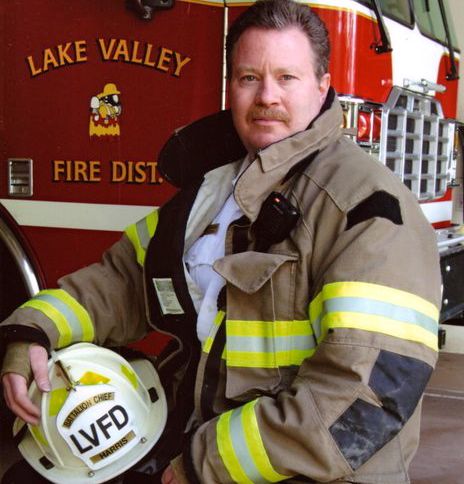
Gareth Harris

Gareth Harris

The JPA operates three staffed and two reserve ambulances out of fire stations strategically located throughout the South Shore. The city of South Lake Tahoe staffs two ambulances and Lake Valley Fire District staffs one ambulance 24 hours a day, 365 days a year. In addition, Lake Valley also cross-staffs a reserve ambulance with engine company personnel that is available whenever the three-staffed ambulances are committed to calls for service. Both fire departments have the depth and ability to recall off duty personnel to staff additional reserve ambulances as needed or for planned high call volume events such as New Year’s Eve or July 4 celebrations.

Since the inception of fire department-based delivery of emergency medical services in 2001, the county of El Dorado has compensated the JPA for providing these services to the citizens and visitors of the South Shore. The level of compensation is the key issue at hand since the JPA has always exceeded all of the performance criteria required by the county. Since implementation of the first contract, the level of compensation by the county has only been enough to provide for half of the staffing required of the three ambulances. The city of South Lake Tahoe and the Lake Valley Fire Protection District have both paid for the other half of the required ambulance staffing and continue to do so daily.

The other significant issue with the insufficient level of compensation by the county to the JPA is the requirement for the JPA to continuously upgrade and replace its capital assets, including four-wheel drive ambulances and medical equipment such as cardiac monitors. The level of compensation is simply not enough to sustain the JPA’s capital replacement needs over the long term. Over the course of the last four years, the JPA has reduced its reserves by purchasing required capital equipment to the point that the reserves are becoming dangerously low.

Both the city of South Lake Tahoe and the Lake Valley Fire Protection District take a significant amount of pride in the exceptional level of care provided to our constituents and visitors. Our fire department-based EMS delivery system has many advantages over other options. These advantages include advanced life support paramedic certified personnel on engine companies, depth and ability to staff up reserve ambulances, and a proven history of 14 years of excellence in the delivery of advanced life support services to the communities we proudly serve.

The JPA is currently governed by a Board of Directors made up of two City Council and two fire district board members. The JPA board of directors has already formally requested that the county of El Dorado increase the compensation to a level that would fully fund the staffing and capital replacement needs of the JPA. What we are asking for is both reasonable and consistent with what the county of El Dorado is currently compensating the JPA that provides EMS services to the West Slope of the county.

The Lake Valley Fire Protection District wants passionately to continue to provide the highest level of emergency medical services to the community we proudly serve. We believe that the current fire service-based partnership is working very well and has done so for the past 14 years. The fire district urges the county of El Dorado to recognize the excellent level of care the JPA provides, and increase the level of compensation to the appropriate level to ensure sustainability for the future of EMS delivery services in the South Shore.

Gareth Harris is fire chief for Lake Valley Fire Protection District.