Snippets about Lake Tahoe

caltrans• Caltrans this week will activate a metering ramp on Highway 50 westbound from El Dorado Hills Boulevard. It will operate during normal commute hours from 6-9am, Monday-Friday.

• Two guys from Portland bought the financially troubled KTHO radio station in South Lake Tahoe, but the station is not giving out their names. The station just released information that Dennis Poarch is the sales and special projects manager.

• Here are the El Dorado-Tahoe and Sierra roadwork schedules from Caltrans for this week.

• Beginning the first week of March and continuing into April, staff from the Nevada Division of Water Resources will be measuring groundwater levels in wells throughout various hydrographic basins in the state. The data collection is part of an ongoing effort to assess hydrologic conditions throughout Nevada.

• Incline Village General Improvement District board meets Feb. 25 at 6pm at the Chateau. Immediately preceding this meeting, trustees will be have a “meet and greet” at which all members of the community are welcome to come and informally chat with the elected officials.


Why it’s hard to punish drivers who kill pedestrians

By Henry Grabar, Salon

What makes it hard to walk in your city?

Is it the quality of sidewalks, buckled by tree roots and submerged in puddles, appearing and vanishing like a disused deer trail? The foreboding urban-renewal landscapes? How about the zoning requirements that set storefronts behind tremendous fields of permanently vacant parking spaces, or ban shops and cafes from residential areas? Is crossing the street a prohibitive inconvenience, a near-death experience? Or is it simply illegal?

Such is the legacy of a century of planning for automobiles. Enshrined in laws and codes, American urban design has made driving easy. As a consequence, it made walking hard.

But design is only half the problem. Less obvious, but no less consequential, was the legal shift through which society absorbed and dismissed the hazards of urban driving, exonerating individual drivers for crashes, even when they killed pedestrians. (In New York City, for example, 95 percent of traffic fatalities do not lead to arrests.)d riding a bicycle) legally vulnerable.

Read the whole story


Passion for skiing is No. 1 lesson at Sugar Bowl Academy

By Ellen Garrison, Sacramento Bee

Sitting around tables in a science classroom, wrestling with chemistry equations, Sugar Bowl Academy students look like your typical high school students – except for the distinctive goggle tans on their faces.

Skiing every day, snow or shine, will do that to you. The private high school, nestled in the Sugar Bowl Village at the base of Donner Summit outside of Truckee, caters to competitive skiers in grades eight through 12, aiming to give them a complete education while they do what they love to do – ski.

Classes, in all the traditional high school subjects such as physics and American literature, are arranged around a rigorous practice schedule on Sugar Bowl’s slopes – for alpine, Nordic and freeride skiers – and a grueling travel schedule to competitions nationally and abroad.

Sugar Bowl Academy is the only school in California to focus its sports program entirely on skiing, though other schools, like North Tahoe High School, offer flexible class schedules to make competing easier for high school athletes. There are about 20 similar ski academies across the U.S. in Colorado, Idaho, Utah and on the East Coast.

Read the whole story


Placer introduces video-teleconferencing for the public

By Rocklin-Roseville Today

The geography of Placer County stretches from the flatlands of western Roseville to the mountains surrounding Lake Tahoe. This presents difficulties for all citizens to participate in local government.

When the Placer County Board of Supervisors meets in Auburn this week, the meeting will feature something that’s never been done before — video teleconferencing for the public.

The pilot effort to take place Feb. 24 will allow Tahoe area residents to remotely participate in the board’s Auburn meeting through video teleconferencing. Members of the public will be able to address the board during public comment and offer their views during public hearings. This pilot will test the possibility of making this a permanent feature of board meetings. All comment and testimony that is offered remotely will become part of the official record.

Read the whole story


Nev. pays for deaths, dentures, fender benders and more

By Kyle Roerink, Las Vegas Sun

What do a lost pair of dentures, damaged windshields and disgruntled inmates have in common?

Lawsuits against the state.

Since 2013, the state paid $5.07 million to claimants alleging they were victims of wrongdoing brought on by the government.

The 379 tort claims are a mishmash of bizarre, grisly and mundane cases with a wide range of payouts: Four wrongful death claims that vary from $375,000 to $2,500. A civil rights violation that cost $920,000. A $976 fender bender caused by a state employee swerving to avoid a cat. An $80,000 payout for a state employee rear-ending a private citizen. A $750 liability for losing a mental health patient’s dentures.

Those are just a snapshot of the cases and liabilities. But the sum of payouts and number of cases are relatively small compared with other states.

Washington paid $48 million in claims in 2014. California paid out more than $123 million annually, according to a 2007 state report.

Read the whole story


Then and now: Memories of the crossing guard

crossing guard-1

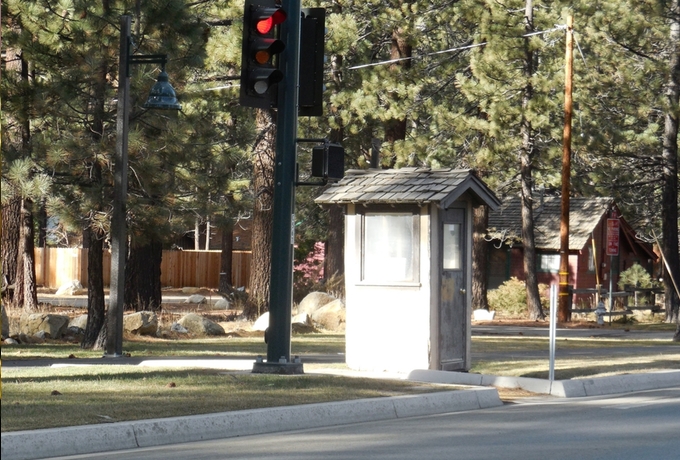
The crossing guard shack in South Lake Tahoe still exists. Photo/Bill Kingman

This photo, above,  shows then and now. Still standing at the crosswalk on Highway 50 at Lyons Avenue is a telephone booth-sized structure with windows, door, and shake roof. It was the weather shelter for Mrs. Rosie the Crossing Guard.

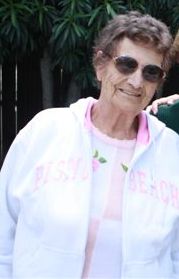
Rosie Borges worked as a crossing guard for the Lake Tahoe Unified School District and city of South Lake Tahoe between 1974 and 1994. Her son, local chiropractor (and Tahoe historian) David Borges, says she was a crossing guard in San Jose from 1958 to 1965 before the family moved to Lake Tahoe.

That crosswalk across Highway 50 served Al Tahoe Elementary School, the high school (which became the middle school), and St. Theresa Church and School. Rosie was very protective of the kids she crossed. They followed the rules implicitly, and she was dedicated to getting a smile out of all of the drivers that stopped in front of her.

Dave Borges tells one folklore story about his mom when a car tried to go through the crosswalk while she was crossing children. She hit the car with her hand-held stop sign, reported the incident to the police and the driver got a ticket. Drivers and students quickly learned not to mess with crossing guard Mrs. Rosie.

Rosie Borges was a fixture as a crossing guard. Photo/ Dave Borges

Rosie Borges was a fixture as a crossing guard. Photo/Dave Borges

One record of note is she had 100 percent success for 28 years. No children were injured when she was performing her duties as a crossing guard.

— Bill Kingman


Winter returns for Carson Pass snowshoe

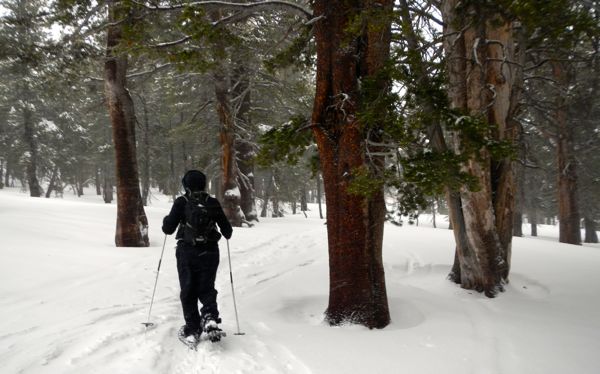
Rosemary Manning makes her way along a snowshoe trail at the Carson Pass. Photos/Kathryn Reed

Rosemary Manning makes her way along a snowshoe trail at the Carson Pass. Photos/Kathryn Reed

By Kathryn Reed

CARSON PASS – Sometimes it’s not about the destination.

At least that was the philosophy we embraced when we didn’t make it to our desired end point. Arriving in a blizzard not knowing exactly where we were going was bound to have that outcome.

But what this trek two weeks ago proved is that exploring the outdoors of the greater Lake Tahoe area is more about the journey and friendship.

Rosemary and I plus our four-legged companions left South Lake Tahoe where there was no sign of nasty weather. By the time we arrived at Carson Pass we were in a different world. Visibility was limited, the snow was coming down horizontally and there was no trailhead sign.

We had been told to park on the right side of Highway 88, just beyond the main parking lot for the trail that leads to Winnemucca Lake, Round Top and other destinations. But what we weren’t told is that the trail required us to walk down the road a bit. While we knew the road to Woods Lake was just down the road, we were under the impression we could get to the trail from where we parked if we just crossed the highway.

We tried. We failed.
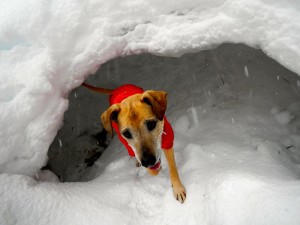
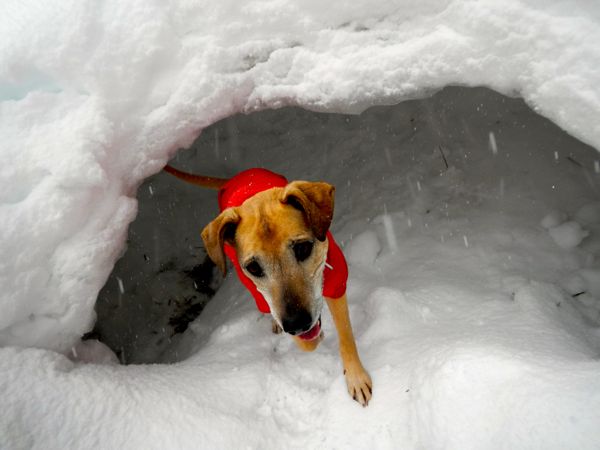
AJ explores a mini snow cave.

AJ explores a mini snow cave.

We started our snowshoe by following those who had been there before us. And we headed to the right, which we at least knew was the correct direction. But it didn’t take long before it was a dead end.

Circling back, we found a path that eventually met up with the main trail out of Carson Pass.

It was eerie and beautiful at the same time. The trees seemed dense compared to a day when the sky is blue and sunlight is coming through. Snow pelting our faces was like a constant exfoliation.

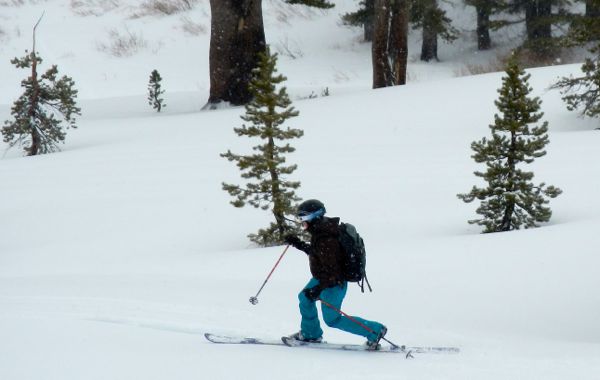
We come to a wide-open space where backcountry skiers are schussing through the fresh snow.

Behind us we see Caples Lake in the distance.
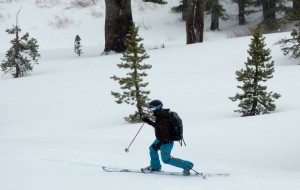
A backcountry skier enjoys freshies.

A backcountry skier enjoys freshies.

We are losing our trail that those ahead of us had made. We don’t see those people or even know if they had been out that morning. Now the wind and snow is coming down in such a way that the imprints from our snowshoes are disappearing.

It’s time to turn around. Even though we are not far from Winnemucca Lake, it didn’t make sense to go forward considering the nasty weather was deteriorating.

By the time we reach the car we are soaked. It’s raining now – and we’re at 8,500 feet. It’s been one of those winters. But what a joy to finally experience winter.


Editorial: With Prop. 47, cities and counties have savings to count, decisions to make

Publisher’s note: This editorial is from the Feb. 18, 2015, Los Angeles Times.

Just over 100 days have passed since California voters adopted Proposition 47, which reduced six specific felonies to misdemeanors; and it will be nine more months before the state quantifies and distributes the first year’s worth of savings it will accumulate by no longer imprisoning so many felons. So, of course, it’s far too early to assess what the initiative has accomplished and what problems, if any, have emerged.

Still, there is enough early information to allow the state Legislative Analyst’s Office to note, as it did Tuesday, that in addition to those expected state savings, California’s 58 counties are already being relieved of spending “several hundred million dollars annually” that they formerly had to allocate for prosecuting, locking up and supervising suspected and convicted felons locally. Proposition 47 backers focused their campaign on the state savings; the local windfall that is currently materializing is a bonus.

So local governments already have spending decisions to make. They can still arrest and jail people for the former felonies. They can also seek effective alternatives to incarceration.

Read the whole story


Virginia City edges Whittell in D-IV thriller

By Reno Gazette-Journal

Brothers Clint and Colt Hess combined for 27 points as the Virginia City boys basketball team defeated Whittell, 37-33, for the second consecutive year in the Division IV Northern Region championship game on Saturday at Spring Creek High School.

For the Warriors, Palmer Chaplin scored 14 points and Quinn Kixmiller added 10.

Both Virginia City and Whittell advanced to next week’s Division IV state tournament in Las Vegas. The teams met in last year’s state-title game, with the Warriors winning.

Read the whole story


2 authors to give talk at LTCC

Novelist Gayle Brandeis and short story writer Dimitri Keriotis will read selections from their works, answer audience questions, and sign copies of their books, which will be available for sale on March 5 at 7pm at Lake Tahoe Community College.

Brandeis is the author of “Fruitflesh: Seeds of Inspiration for Women Who Write”, “The Book of Dead Birds”, which won Barbara Kingsolver’s Bellwether Prize for Fiction of Social Engagement, the sequel “The Book of Live Wires, Self Storage”, and “Delta Girls”. She teaches in the MFA program in creative writing at Antioch University, and is currently distinguished visiting professor/writer in residence at Sierra Nevada College in Incline Village.

Keriotis’ debut collection of short stories, “The Quiet Time”, was released in 2014. Keriotis was an instructor in LTCC’s English Department, and now teaches English at Modesto Junior College and co-coordinates the High Sierra Institute. He and his family live in the Sierra Nevada foothills.

LTCC’s Writers’ Series is committed to providing a cultural outlet for students and the community by hosting free readings, discussions, craft talks and workshops with nationally known, award-winning authors, as well as poetry slams, open mic nights and student readings.