Hackers cut in line for Burning Man tickets

By Oscar Raymundo, Wired

Burning Man has practically gone mainstream. The once-fringe desert camping festival is now cultural fodder for The Simpsons and Taco Bell commercials. Celebrities and CEOs routinely attend. So it’s no surprise that 40,000 Burning Man tickets sold out in less than an hour last Wednesday when they went on sale.

But software engineers in Silicon Valley hacked into the Burning Man ticketing system powered by Ticketfly to cut to the front of the queue. Who needs luck when you have engineering skills and you’re willing to use ‘em for your advantage?

Well, apparently everyone. Burning Man officials, not ones to let cosmic karma pass them by, announced on Friday that they will find and cancel the hacked ticket orders.

“The good news (for us, not them) is that we can track them down, and we’re going to cancel their orders,” according to Megan K. Miller, Burning Man’s director of communications. “Steps are being taken to prevent this from happening again in future sales.”

While 80,000 would-be Burners all over the world waited their turn in a so-called “first come first serve” online queue to purchase tickets, 200 software-savvy engineers discovered a design flaw on the ticket page that allowed them to generate a spot ahead of everyone else in line. 1Jonathan Hart, a software engineer at Idle Games in San Francisco, tweeted that he had somehow navigated Ticketfly’s web servers and “crawled out” with two tickets to Burning Man.

Read the whole story


Snippets about Lake Tahoe


lake tahoe airport • The final phase one report for the Lake Tahoe Airport Master Plan is complete. Go online to read it.

• Diamond Peak is having rail jams every Friday afternoon starting Feb. 27. For more info or to register, go online.

•Placer County this month released this report about economic development incentives for North Lake Tahoe.

• Caltrans is hosting a meeting to discuss the Echo Summit bridge replacement project on this Feb. 26, 6-8pm at Lake Tahoe Airport.

• Clean Tahoe and Heavenly Mountain Resort employees will be cleaning up Lakeview Commons and the surrounding neighborhood on Feb 26 from 8:45-11:45am. RSVP to Jenn Lay at 530.542.5140 or JLay@vailresorts.com to be included in the light lunch.


EDC exploring idea of upping snow removal tax

The El Dorado County Board of Supervisors on Feb. 24 directed staff to look into the possibility of raising the snow removal tax. This would affect people living on the south and west shores in the unincorporated areas of the county.

Today those on the South Shore pay $20 a year, on the West Shore it is $50 per developed parcel. This tax was approved in 1983.

Supervisor Sue Novasel, who represents Lake Tahoe, made the motion Feb. 24 for staff to look into the feasibility of a ballot measure for November 2016 as well as to explore all the funding options.

The money collected from the tax pays for equipment.

“The cost of a motor grader in 1983 was $60,000, today a motor grader is close to $400,000. That $20 you pay on the South Shore has not kept up,” Tom Halverson with the county transportation department told Lake Tahoe News.

Halverson said the county does not have a dollar amount set yet as to what the tax should be increased to.

— Lake Tahoe News staff report


Expedition to Himalaya subject of presentation

On March 4 Alpenglow Sports will present the fourth and final winter installment of the Home Brew Series. Truckee local Dave N. Campbell will present his tale Splitboarding the Chinese Himalaya.

Campbell will share photos from his recent journey along the Silk Road to the Kunlun Mountains of China’s Xinjiang province. Situated just north of the Karakoram Range, he and two partners rode powder at 23,000 feet on Koskulak Peak. Their expedition was featured in the January issue of Backcountry magazine.

The Home Brew Series, presented by Alpenglow Sports and Tahoe Art Haus & Cinema, is designed to showcase local athletes who live regular lives and accomplish extraordinary feats in the mountains. The series is designed to be mellow, free, and community-centric for all ages and abilities.

Tahoe Art Haus is at 475 North Lake Blvd., Tahoe City. The presentation starts at 7pm.


Life sentence for man who killed SLT teen

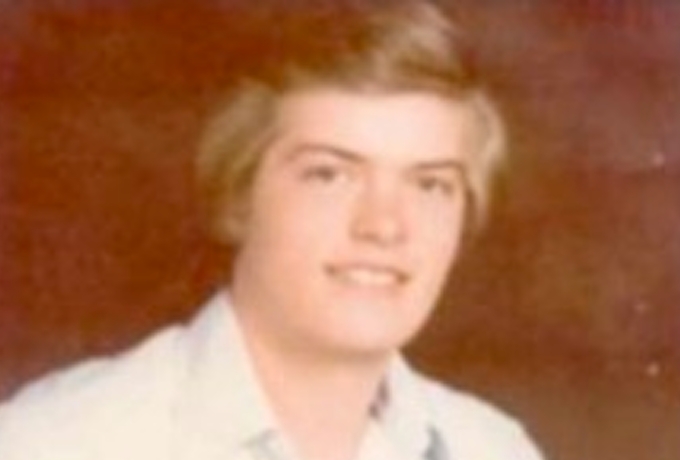
Richard Swanson was killed in 1980 in South Lake Tahoe. Photo/Provided

Richard Swanson was killed in 1980 in South Lake Tahoe. Photo/Provided

Andrew Sanford on Monday was sentenced to life in prison without the possibility of parole for the first-degree murder of a South Lake Tahoe teenager.

Richard Swanson, 16, was killed in 1980 while working at was a Shell Station at the Y. He had been beaten, wrapped in duct tape and left to die in a back room.

El Dorado County Superior Court Judge James Wagoner on Feb. 23 denied Sanford’s request for a new trial and handed down the sentence.

Sanford, 53, was found guilty in April 2014.

Sanford, who was 19 at the time of the murder, had a small criminal record that included auto theft, and breaking and entering.

“As in this case, every family who has lost a loved one to violent crime finds that moment and their loss frozen in time. Nothing can bring their son Richard back, but it is my hope that Richard’s parents and family members may find some peace knowing that the person responsible for their son’s death has finally been held responsible for his actions,” District Attorney Vern Pierson said in a statement.

— Lake Tahoe News staff report


Fitness trackers may help doctors with diagnosis

By Anick Jesdanun, Associated Press

That phone app keeping track of your exercise and meals might keep you out of the hospital one day.

Why give your doctors permission to incorporate data from fitness trackers and health apps into electronic patient records? Well, they might spot signs of an ailment sooner and suggest behavioral changes or medication before you land in the emergency room. They also might be able to monitor how you’re healing from surgery or whether you’re following a treatment regimen.

“Right now we only see our patients for about a 15-minute visit in the office, and it’s a very constricted view,” said Lauren Koniaris, a specialist in pulmonary critical care at Hackensack University Medical Center in New Jersey. “This really globalizes the view of their health status, so that we’re really in contact with them on a much more daily if not hour-to-hour basis. It’s almost like a virtual house call.”

At Hackensack, a handful of patients at risk for heart failure are asked to use a fitness tracker to count steps walked and flights climbed. They are also asked to record what they eat — by photographing the product’s bar code, for instance — using a phone app that has a database containing nutrition information on thousands of food items. Using Apple’s new HealthKit technology, data from the various trackers and apps gets automatically transferred to the Epic MyChart app on the iPhone. From there, the information goes to the hospital’s records system, which also comes from Epic.

Hackensack wants to expand to more patients and start tracking blood pressure and amount of sleep, too. But the hospital first needs to ensure that teams are in place to review the glut of data coming in. More broadly, there’s also a question of whether these trackers and app really improve patient care, and consumer privacy and security issues to address. The University of California, San Francisco, is studying which gadgets are reliable and whether that reliability extends to patients with extreme conditions. Then they have to figure out which data are really meaningful — not just noise.

Many doctors and hospitals see potential. The Mayo Clinic in Rochester, Minnesota, uses Fitbit trackers to monitor hip-replacement patients for a month after surgery. Health workers get data on daily steps and can tell when patients have trouble walking — a hundred or more miles away. The Ochsner Health System in New Orleans is turning to wireless scales and blood-pressure devices to help reduce readmissions for chronic diseases such as heart failure. Noticing a small weight gain, for instance, might reveal fluid buildup resulting from the heart failing to pump normally. Not only can doctors intervene sooner, they can use the data to show how exercise can help lower blood pressure.

“If we’re going to succeed in improving health, we have to get patients more engaged in their care,” said Richard Milani, a cardiologist at Ochsner.

Heart-attack patients have long been asked to weigh themselves, while those with diabetes have had to check glucose levels. Smartphone technology makes all that easier and gets measurements to doctors more regularly and reliably. There’s no forgetting to record a number or transposing digits.

With Apple’s HealthKit tools, disparate gadgets and records systems can work together more easily. Think of HealthKit as a common language, eliminating the need for translators. Beyond sleep and exercise data coming from fitness trackers, doctors can eventually incorporate devices that measure glucose, blood pressure, respiratory rates and blood-oxygen levels. The devices communicate with the iPhone wirelessly or through the headphone or charging port. Google, Samsung and Microsoft have similar ambitions that will expand monitoring to users of Android and Windows phones, though they aren’t as far along. For now, developers must write separate code for each Android or Windows app to integrate.

Gary Wilhelm, 51, who works at Hackensack on payroll and finance technology, joined the hospital’s app test after he suffered a heart attack in October. He appeared animated during a check-up this month as he showed Sarah Timmapuri, his cardiologist, various charts on flights climbed and cholesterol intake. There were a few bad days that Wilhelm blamed on the Super Bowl. Timmapuri instructed Wilhelm to monitor his pulse on his new Fitbit Surge. If it gets to about 155 beats per minute, he’s to end his workout.

“Even if I did not do a single thing with the information, just the patient knowing that I’m reviewing it will already have a positive effect,” Timmapuri said.

Mayo patient Randy Smothers, 62, of Chisago City, Minn., agrees. He said he was in pain after getting his right hip replaced and would have stayed on his couch without the knowledge that someone was checking on him.

“This pedometer they gave me made me walk every day and move on and get going,” he said.

Apps and trackers could ultimately reduce patient visits, though there’s a risk patients would practice self-care.

“It may be an aid or a tool to help me deliver better care, but it is just a tool,” said Robert Wergin, president of the American Academy of Family Physicians. “It shouldn’t substitute for a face-to-face visit.”



Lake Spirit nominations being accepted

Tahoe Regional Planning Agency is accepting nominations for Lake Spirit Awards. The awards honor people making progress protecting Lake Tahoe.

In addition to nominations for exemplary citizens, nominations are also open in the agency representative/environmental scientist category. A North Shore and South Shore winner in each category will be selected.

Nominations for the Lake Spirit Awards may be submitted online through March 30. Award winners will be recognized by the TRPA Governing Board and at the South Tahoe Earth Day.


Markleeville man dies in car crash

A 29-year-old Markleeville man died Sunday in a two-car accident on Highway 88.

The names of the people involved in the accident are not being released pending notification of family.

A 32-year-old woman from Shingle Springs was going west on Highway 88 when her Ford crossed the double yellow lines for unknown reasons, according to officers. Her vehicle collided head-on with a Subaru going in the other direction. That vehicle was driven by a 31-year-old woman from Markleeville.

“The weather and road conditions were not a factor,” California Highway Patrol spokeswoman Ruth Loehr told Lake Tahoe News.

The passenger in the Subaru was pronounced dead at the scene. The drivers sustained minor injuries.

Because the accident is still under investigation it is not known if any charges will be filed.

The accident occurred at 4:55pm Feb. 22 about one mile east of Hope Valley Resort.

— Lake Tahoe News staff report


Photo shows mountain lions roaming Georgetown

By Kathy Park, KCRA

GEORGETOWN — A photo exists showing a pack of mountain lions roaming around the property of a Georgetown resident, near Graybar Mine Road.

The picture was snapped at 2:39am Feb. 19, from Tami Sutton’s game camera, mounted in her front yard to capture images of wildlife.

“People would very rarely ever get a photo of four lions at one time, so this is kind of a unique photo,” Patrick Foy, with the California Department of Fish and Wildlife, said. “A group of four lions is usually a family.”

Foy said it’s likely a mom and her cubs, brought to the area because of their favorite prey: deer.

Read the whole story


Bona Fide Books making plans for 2015

Bona Fide Books will host an art reception for plein air painter Ginny Schankerman on March 6 from 6:30-8:30pm at its shop in Meyers.

The local independent press will also kick off the opening of its print shop and community mercantile, featuring goods made in the print studio. This event is free and open to the public.

Schankerman, who lived in Yosemite National Park for 15 years, finds inspiration in native plants and fungi. When she moved to Tahoe she studied painting at Lake Tahoe Community College, where she increased her skills and confidence, particularly under the tutelage of art department faculty and artist Phyllis Shafer.

Schankerman’s collection, “Have Paints, Will Travel,” will be at Bona Fide Books through March.

Bona Fide Books, now in its sixth year, will also reveal forthcoming titles including follow up to “Permanent Vacation,” “Tahoe Blues,” and the next installment of Tahoe History Comix.

Bona Fide HQ is located at 1069 Magua St., No. 4, behind the Getaway Café in Meyers.

For more information on this or other Bona Fide events, contact publisher Kim Wyatt at editor@bonafidebooks.com, 530.573.1513, or online.