Pain McShlonkey Classic adds events for 2015

The the fifth annual Pain McShlonkey Classic returns to Squaw Valley on March 14. This action packed on-and-off mountain event serves as a fun tribute to legendary skier Shane McConkey where the winner is crowned fastest snowblader on the planet.

Celebrated for his playful spirit, McConkey was the mastermind behind the original Pain McShlonkey Open that debuted in 2003. The event began as a behind-the-scenes late-night race between competitors at the 1998 Winter X Games and in 2010 the event took on new shape attracting top athletes from around the world.

Hosted by the Shane McConkey Foundation, the event has raised more than $186,000 for local nonprofits.

The event kicks off on Saturday morning as 30 of the World’s top winter athletes take on 30 amateurs in an anything-goes Hot Dog Downhill. Later in the morning, competitors will push their snowblade skills to the limits during the new Backwards Snowblade Slalom.

For the full list of events and to register, go online.

Proceeds from the weekend will benefit Make-A-Wish Foundation, the Shane McConkey Eco-Challenge, Tahoe Truckee Unified School District’s environmental education programs and other charities.


Snippets about Lake Tahoe

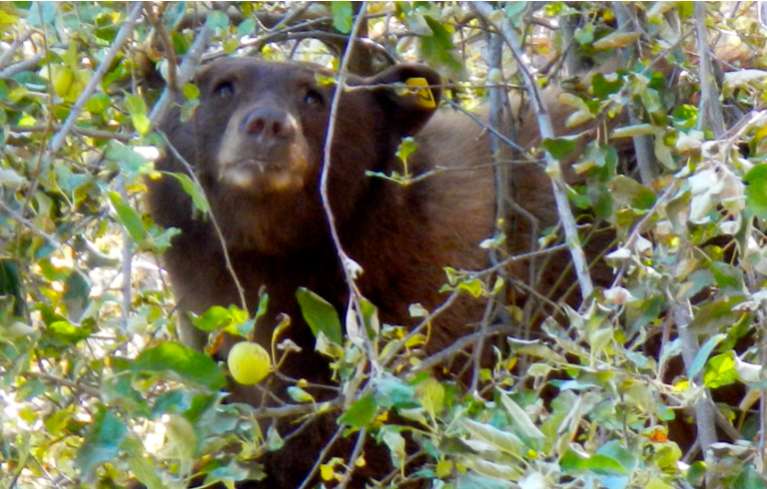
bear• Bear Smart is a program for Incline Village-Crystal Bay businesses to learn how to protect waste from wildlife. For more info, call 775.832.1284 or email wastenot@ivgid.org.

• Diamond Peak is planning to close April 12.

• Tahoe Truckee Unified School District is working on the 2015-16 budget that will require approximately $1.1 million in expenditure cuts, which will come from supplies, professional services such as consultants, retirement attrition, and district office staff reductions.

• Xterra Tahoe City is June 27. For more info about the mountain bike race, go online.

• Here’s a feel good video to get your weekend going:


El Nino too little, too late to help drought

By Associated Press

A long anticipated El Nino has finally arrived. But for drought-struck California, it’s too little, too late, meteorologists say.

The National Weather Service on Thursday proclaimed the phenomenon is now in place. It’s a warming of a certain patch of the central Pacific that changes weather patterns worldwide, associated with flooding in some places, droughts elsewhere, a generally warmer globe, and fewer Atlantic hurricanes. El Ninos are usually so important that economists even track them because of how they affect commodities.

But this is a weak, weird and late version of El Nino, so don’t expect too many places to feel its effects, said Mike Halpert, deputy director of the weather service’s Climate Prediction Center. He said there may be a slight decrease in the number of Atlantic hurricanes this summer, but he also points out that 1992’s devastating Hurricane Andrew occurred during an El Nino summer, so coastal residents shouldn’t let their guard down.

Ever since March 2014, the weather service has been saying an El Nino was just around the corner. But it didn’t quite show up until now. Meteorologists said the key patch of the Pacific was warming but they didn’t see the second technical part of its definition — certain changes in the atmosphere. Halpert said he didn’t know why this El Nino didn’t form as forecast, saying “something just didn’t click this year.”

“What we’ve learned from this event is that our definition is very confusing and we need to work on it,” Halpert said.

Last year, some experts were hoping that El Nino would help the southwestern droughts because moderate-to-strong events bring more winter rain and snow to California — even flooding and mudslides during 1998’s strong El Nino. But this El Nino arrives at the end of California’s rainy season and is quite weak, Halpert said.

“This is not the answer for California,” Halpert said.

The U.S. Southeast may see some above average rainfall, which is typical for an El Nino, Halpert said.

This is the first El Nino since spring of 2010.

Allan Clarke, a physical oceanography professor at Florida State University, said as far he’s concerned, El Nino has been around awhile and the weather service didn’t acknowledge it. But he agrees that this doesn’t look like a strong one.

That fits with the pattern the last 10 years, when El Nino’s flip side, a cooling of the central Pacific called La Nina, has been more common. From 2005 to 2014, there have been twice as many months with a La Nina than with El Nino, weather records show. More than half of the time, the world has been in neither.


‘Fed Up’ to be shown in Truckee

“Fed Up” is a film about the food industry from Katie Couric, Laurie David (Oscar winning producer of “An Inconvenient Truth”) and director Stephanie Soechtig.

It will be shown March 24 in Truckee at the North Tahoe High School auditorium at 5:30pm.

Soup, pizza and salad provided by Food Services will be available in the dining commons at 5pm for $5. Bring your own bowl for the soup.

Following the film, a panel of community experts will answer questions and with the goal of helping to make an easy transition to more healthful eating at home and in schools.


Comedy night to benefit humane society

The second annual Celebrity Comedy Night benefiting the Humane Society of Truckee-Tahoe is March 21.

Tickets are $25. All proceeds benefit the HSTT, which provides care to Truckee and North Lake Tahoe’s homeless pets.

Headliners Rocky LaPorte and Mike Pace will provide an evening of laughs at the Community Arts Center, 10046 Church St., Truckee.

Doors open at 7:45pm, with the two-hour show beginning at 8:30pm. Beer and wine will be available for purchase.

Order tickets by calling 530.587.5948, go online at or stop in at Shampoo Hair & Makeup Studio on SE River Street.

The Humane Society of Truckee-Tahoe has become the driving force of animal rescue and adoption for the Truckee-North Lake Tahoe area. In the last decade it has evolved to a nationally recognized nonprofit organization with six employees and hundreds of dedicated volunteers, offering a variety of services and programs, including adoption days, fostering, public education, pet-assisted therapy, and community spay and neuter programs.


Marriott embraces adventure travelers with GoPro deal

By Charlie Zaharoff, Outdoor

Why did Marriott, a top-three global hotel chain with no particular emphasis on the adventure-travel niche, just partner with GoPro to let guests borrow Hero4 cameras at 18 of their Caribbean and Latin American locations?

“It’s low-hanging fruit,” says Daniel Kelsay, GoPro’s Resort and Camp marketing manager. “Marriott’s guests have always taken videos, and they love to share them, but Marriott could never harness it. It’s basically free marketing.”

As Kelsay says, it’s about social media, or, in other words, free customer-generated advertising. Marriot wants guests to upload images to their Facebook and Instagram accounts using the #TravelBrilliantly handle. No surprise there. Plenty of hotels encourage their guests to upload their photos using specific hashtags. And Marriott’s partnership with a camera company to facilitate that makes sense, too.

Read the whole story


No honeymoon period for LTBMU chief

By Kathryn Reed

Lake Tahoe is no ordinary forest. And Jeff Marsolais wouldn’t have it any other way.

The 40-year-old is now at the helm of the Lake Tahoe Basin Management Unit. As forest supervisor he is responsible for managing the 191,000 acres that surround the lake itself. This encompasses about 80 percent of the land in the basin.

This is small by national forest standards. However, with its encompassing two states, being in the heart of one of the most regulated areas of the country, and the economic-environmental tug-of-war being a constant struggle, he has his work cut out for him. Plus, with the powers that be – at least on the South Shore – on the recreation bandwagon, that will impact the forest system.
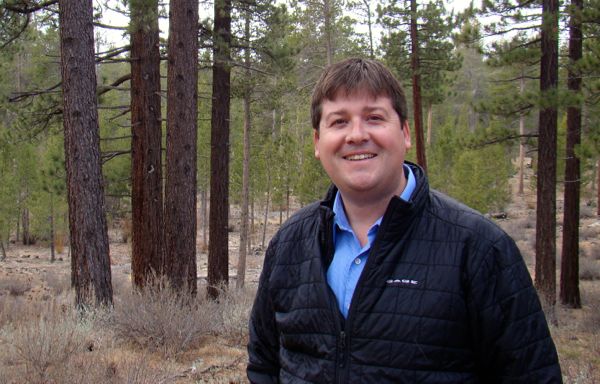
Jeff Marsolais, Lake Tahoe Basin Management Unit forest supervisor, is eager to tackle the issues ahead. Photo/Provided

Jeff Marsolais, Lake Tahoe Basin Management Unit forest supervisor, is eager to tackle the issues ahead. Photo/Provided

Recreation, according to Marsolais, is one of the key issues facing LTBMU.

“It impacts resources and infrastructure as a whole,” he told Lake Tahoe News. “It is one of the most densely used national forests in the nation.”

With 5.7 million visits a year, LTBMU is already overused.

“What does sustainable recreation mean? We need to have that dialogue,” Marsolais said.

Public lands can hold only so many people. Parking then becomes an issue at recreation sites.

“We need to look at ways to protect sensitive resources and provide access,” Marsolais said.

He said staff is working on a conceptual recreation plan for the South Shore.

Having been the assistant forest supervisor since 2011, Marsolais is intimately familiar with the issues concerning the area. He has worked on seven forests since the mid-1990s. Before that he was employed by the Bureau of Land Management. Had he not been chosen to replace Nancy Gibson, who retired in January, Marsolais said he was planning to stay in Tahoe – he’s that committed. (The permanent deputy director for LTBMU has not been named.)

Marsolais spent nine months last year on assignment with another forest, which he said has allowed him to bring a fresh perspective to local issues.

Immediate things Marsolais wants to cross off his to-do list include getting Heavenly Mountain Resort’s Epic Discovery project going, finalizing the Forest Plan, and inserting himself into collaborative discussions about the basin whether they are about fire, cap and trade, or how to fund projects going forward now that the Southern Nevada Public Lands Management Act money is gone.

Collaboration, he said, is critical to get things done. Marsolais was not here for the 2007 Angora Fire when collaboration seemed to be a foreign word to most of the powers that be. That devastating fire that reduced 254 houses to ash eventually brought people together to work on issues for the greater good instead of being obstructionists. That collaboration is getting stronger and something that Marsolais embraces.

Marsolais is also excited to have the science community in the basin.

“We have to listen to the science community even if it doesn’t support the beliefs we have in all cases,” Marsolais said.

He praised the local Forest Service staff for their knowledge – some of whom are the best in their respective fields.

Paying attention to sensitive species and forest health are at the top of his list of concerns.

“We need big strategies to protect the resources,” Marsolais said.

But it’s not all about work for Marsolais. He is not happy to just be sitting behind his desk at headquarters in South Lake Tahoe. He is an avid fisherman. Fly and ocean fishing are his passion. He refused to disclose where he specifically likes to go.

“I go back to the Inyo forest where I came from. There are secret haunts I like to visit,” Marsolais said. The trout he lands is the reason he goes back there year after year.

With his family he likes to go camping and hiking. Downhill and cross country skiing are other activities he enjoys, though doing so has been limited lately because of the conditions. At home, it’s gardening that Marsolais enjoys. But he admits he wishes he had his grandmother’s green thumb because she could grow anything.

For now he is tasked with ensuring the public lands are fertile for everyone — people, animals and flora.

“At the end of the day it is the responsibility of the forest supervisor to look broadly at the issues and concerns to determine where to be personally engaged in the decisions that can make a key difference,” Marsolais said.



Opinion: Research shows white privilege is real

By Ian Ayres, New York Times

The recent reunion show for the 40th anniversary of “Saturday Night Live” re-aired a portion of Eddie Murphy’s 1984 classic “White Like Me” skit, in which he disguised himself to appear Caucasian and quickly learned that “when white people are alone, they give things to each other for free.”

The joke still has relevance. A field experiment about who gets free bus rides in Brisbane, a city on the eastern coast of Australia, shows that even today, whites get special privileges, particularly when other people aren’t around to notice.

As they describe in two working papers, Redzo Mujcic and Paul Frijters, economists at the University of Queensland, trained and assigned 29 young adult testers (from both genders and different ethnic groups) to board public buses in Brisbane and insert an empty fare card into the bus scanner. After the scanner made a loud sound informing the driver that the card did not have enough value, the testers said, “I do not have any money, but I need to get to” a station about 1.2 miles away. (The station varied according to where the testers boarded.)

With more than 1,500 observations, the study uncovered substantial, statistically significant race discrimination. Bus drivers were twice as willing to let white testers ride free as black testers (72 percent versus 36 percent of the time). Bus drivers showed some relative favoritism toward testers who shared their own race, but even black drivers still favored white testers over black testers (allowing free rides 83 percent versus 68 percent of the time).

Read the whole story


Grocery store spending on the decline

By Eliza Barclay, NPR

When admiring such enticing items at the grocery store as an avocado for $1.50, an $8 chocolate bar or fresh wild Alaskan salmon for $20 a pound, you’ve probably experienced sticker shock.

Indeed, retailers and restaurants offer myriad opportunities to blow your food budget in one fell swoop.

But our spending on food — proportional to our income — has actually declined dramatically since 1960, according to the U.S. Department of Agriculture. The average share of per capita income spent on food declined from 17.5 percent in 1960 to 9.6 percent in 2007. (It has since risen slightly, reaching 9.9 percent in 2013.)

Because of the overall rise in income, and the consistent shrinking of food prices adjusted for inflation, we actually have more disposable income than our grandparents did, according to Annette Clauson, an agricultural economist with USDA’s Economic Research Service who helped calculate the data in the chart.

Read the whole story


K’s Kitchen: Restaurant quality mushroom polenta

By Kathryn Reed

Sometimes it amazes me the things I’ve never made. I checked off another one last weekend. Polenta.

Considering it’s just cornmeal, it is pretty amazing restaurants can charge high prices for it. I realize it depends what is on top of it, but still.

And anytime wild mushrooms are part of any dish, the cost of the meal just went up. But the earthiness of these morsels cannot be compared to ordinary button mushrooms that are so bland.

What makes this recipe so outstanding is the complexity of the flavors and the variety of textures. And it looks pretty – so guests may be impressed.

It’s not difficult to make, but there are moving parts. Keep an eye on the polenta as you focus on the mushrooms.

The only drawback is that I can see why people might be averse to eating polenta as a leftover. The consistency is nothing like it is on night No. 1. But I wasn’t going to let any of it go to waste.

Adding more cheese to the polenta will make it creamer – and then less healthy.

mushroom polentaWild Mushroom Polenta (serves 6)

Polenta:

3 C water

1 C stone-ground polenta

2 ounces Parmesan cheese, divided

Bring water to boil. Reduce heat to medium-high. Gradually add polenta, stirring with whisk.

Reduce heat to low and cook for 30 minutes or until thick and creamy. Keep stirring.

Stir in 1 ounce of cheese.

Mushroom concoction:

1 T olive oil

12 ounces wild mushrooms, chopped

6 garlic cloves, minced

1 large red onion, sliced vertically

2 T thyme, chopped and divided

½ C dry white wine

3 T balsamic vinegar

1 C vegetable broth

½ tsp pepper

12 mixed olives, coarsely chopped

1 14.5 ounce can unsalted chickpeas, drained

Heat oil in large skillet. Add mushrooms, garlic, onion and 1 T thyme. Cook for about 8 minute or until lightly browned.

Add wine and vinegar; cook until liquid is reduced by half.

Add broth, pepper, olives and chickpeas. Bring to boil.

Reduce heat to medium and simmer for about 6 minute or until slightly thickened.

Divide polenta evenly into 6 shallow bowls. Top evenly with mushroom mixture. Sprinkle cheese and remaining thyme on top.