Then and now: Savings and loan doesn’t last

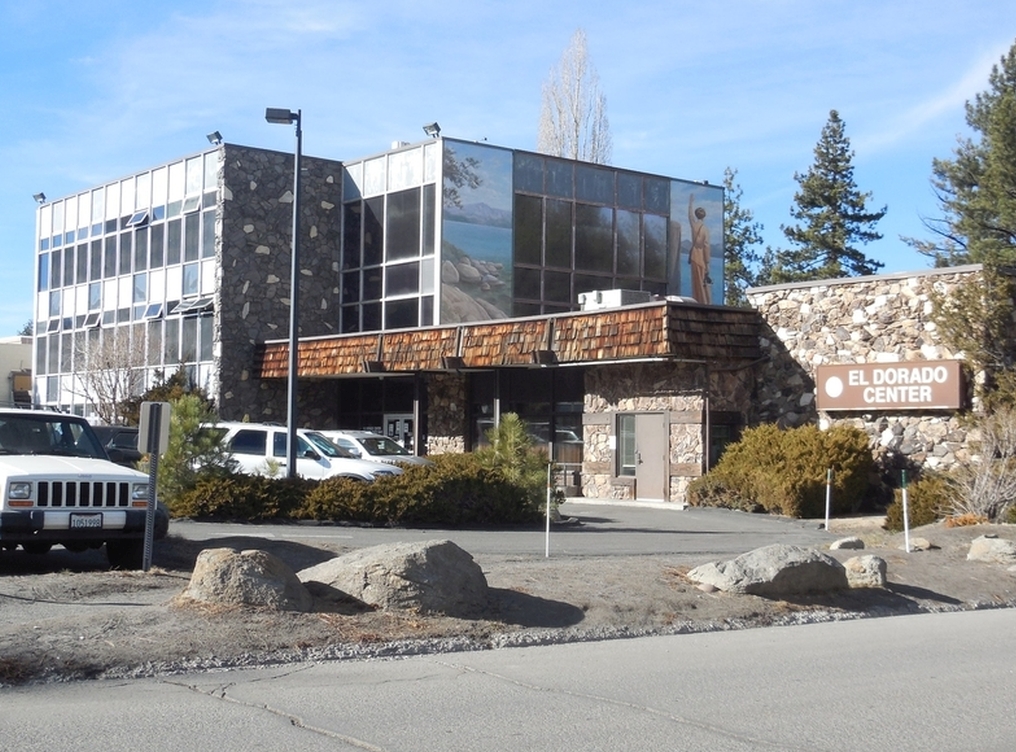
From Day 1 and until now the city has never had a traditional city hall. Photo/Bill Kingman

From Day 1 and until now the city has never had a traditional city hall. Photos/Bill Kingman

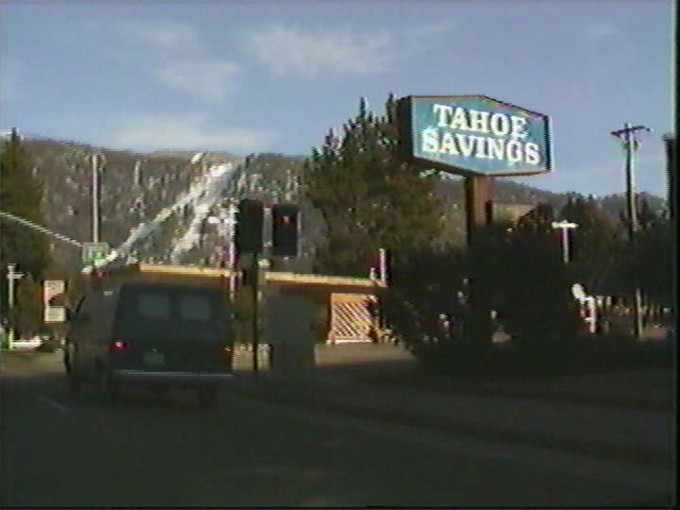
In 1965, the newly-formed city of South Lake Tahoe had its first city council meeting in the Tahoe Savings and Loan building, located on Highway 50 at Takela.

The savings and loan scandal in the 1990s forced the closure of the Tahoe branch.

The savings and loan scandal in the 1990s forced the closure of the Tahoe branch.

Tahoe Savings and Loan ceased operations in 1990. Its time-and-temperature sign on the corner it now gone.

xxxx

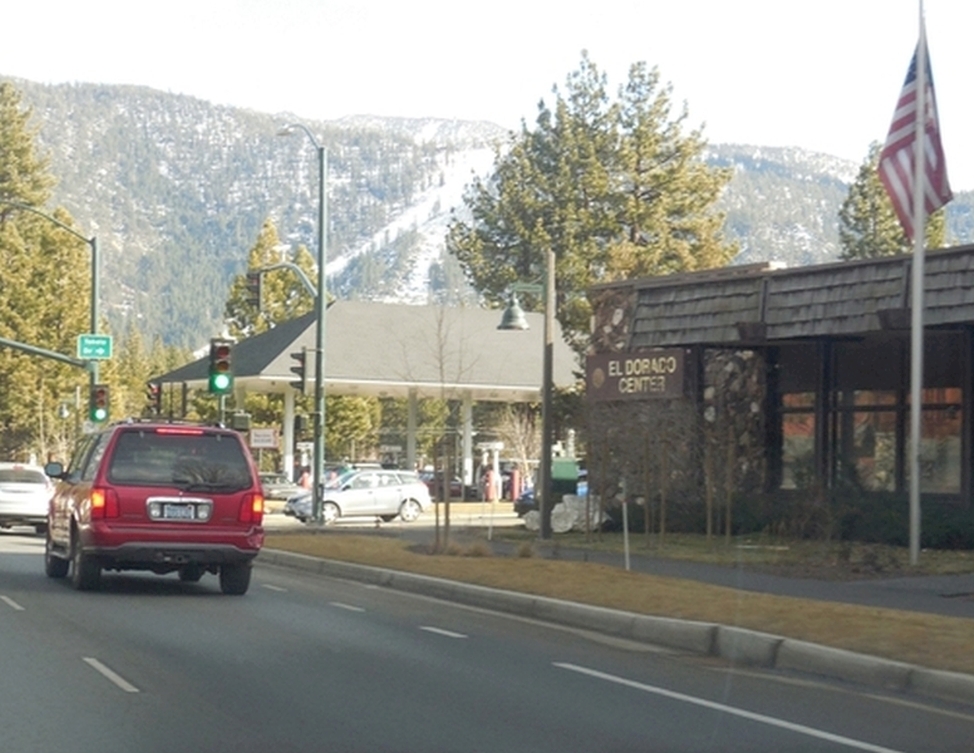
The building has not change much and looks dated.

Today, the El Dorado County offices are in the building.

— Bill Kingman


Hiking adventure proves it’s a dog’s life

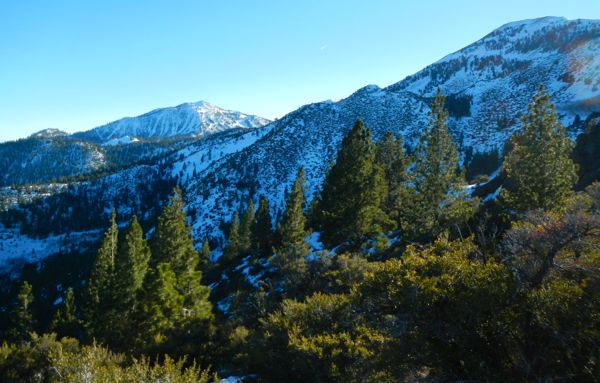
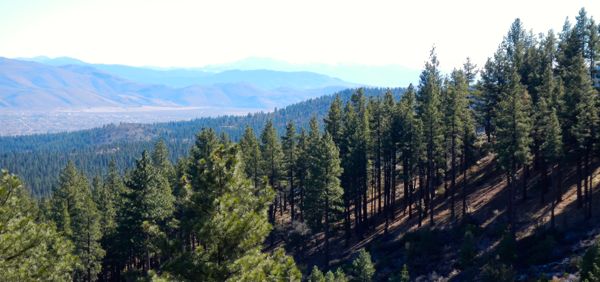
Aj spends her 12th birthday exploring the Mount Rose Wilderness. Photos/Kathryn Reed

Aj spends her 12th birthday exploring the Mount Rose Wilderness. Photos/Kathryn Reed

By Kathryn Reed

RENO – AJ’s birthday hike was no piece of cake.

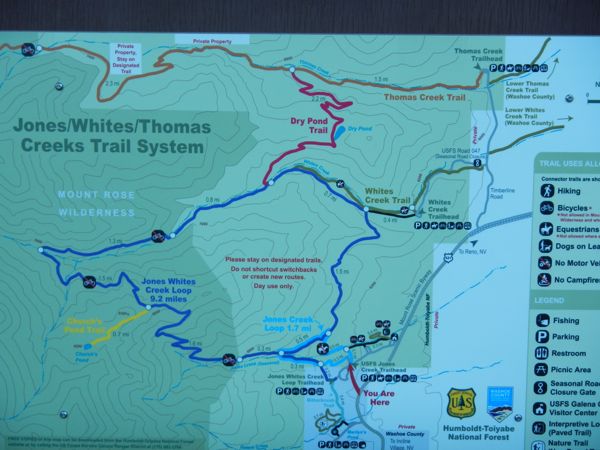
This 12-year-old – that’s 84 in human years – is much sprier than her much younger mommies. As if we needed a reminder. What was a 9.2-mile loop for us had to have been at least 1½ times that amount for the dog. She can be like the Energizer Bunny – she just keeps going and going and going.

This is what she lives for – being in the outdoors, romping in new terrain, sniffing all those delicious scents that never cross my olfactory senses and quenching her thirst from pristine water flowing from higher elevations.

When we first planned this for Feb. 14, snow had not fallen in a while and the U.S. Forest Service said the trail was free of any white stuff. Naturally, it snowed the week we were going. But because it is much lower in elevation we figured we would be OK in just hiking boots. And we were, despite going down on the slick snow a few times. Poles would have been a tremendous help, but they were in the garage.

The Jones-Whites-Thomas creeks trail system could keep us entertained for days.

It doesn't take long for pretty views to unfold.

It doesn’t take long for pretty views to unfold.

This loop has a little bit of everything. We went in a counter clockwise rotation based on the advice of visitor center staff. From the parking lot it is 0.6 miles to the start of the loop.

From there the terrain is similar to being in the Lake Tahoe Basin, but more barren. Plenty of pines loom overhead, but it’s not dense. It doesn’t take long before we are climbing. This provides spectacular views of far off mountains as well as parts of Reno. Behind us the slopes of Mount Rose are all covered in white.

A segment of this trail is open to mountain bikers. All were courteous to let us know they were approaching.

Farther along we come across some downed trees that require scrambling to get over. AJ, showing off her part Greyhound agility skills, leaps across the debris as though it’s a fun obstacle course.

Plenty of water is running in the creeks so AJ didn’t need any bottled water. She even trotted across logs to get to the other side. Her people were a little less confident in their ability to balance.

While we made it across the water without getting wet, there are four stream crossings that in a more typical winter or heavy spring runoff might prove to be a bit more challenging.

As we start a long trek west we know at some point we need to head south to get back to our starting point. But we’re in a canyon and the terrain to our left looks steep. We didn’t really descend that much, did we? Won’t there be some sort of cutoff to get us back without going up?

Mount Rose Ski Area, in the distance, is visible at different points.

Mount Rose Ski Area, in the distance, is visible at different points.

Up we go. And that’s when the snow goes from spotty to consistent. Luckily, others had gone before us. While there had been good trail markers, in the snow we would have had no clue where to go without others first “paving” the way.

At times we punch through to thigh-high snow. It becomes slow going. But it is still so incredibly beautiful that our whining is short-lived.

We make it to the top – again. More views, more picture taking. It’s an easy descent, but by this time we are getting chilled and fatigued. (At one point I was in shirtsleeves.) AJ on the other hand looks like she could keep going, right until she curls up on the blanket in the back of the Jeep.

—–

aj bday hike-3

Getting there: The scenic route from South Lake Tahoe – go east on Highway 50. Turn left on Highway 28 at the top of Spooner Summit. Turn right onto the Mount Rose Highway in Incline Village. There is a sign for the Jones Creek trail system on the left. This is well beyond Mount Rose Ski Resort. The visitor center is on the right; drive a little farther to the trailhead.

The less scenic route from South Lake Tahoe would be to drive to Carson City and then come up Mount Rose Highway from the other side.


Opinion: We’re all becoming independent contractors

By Robert Reich

GM is worth around $60 billion, and has over 200,000 employees. Its front-line workers earn from $19 to $28.50 an hour, with benefits.

Uber is estimated to be worth some $40 billion, and has 850 employees. Uber also has over 163,000 drivers (as of December – the number is expected to double by June), who average $17 an hour in Los Angeles and Washington, D.C., and $23 an hour in San Francisco and New York.

Robert Reich

Robert Reich

But Uber doesn’t count these drivers as employees. Uber says they’re “independent contractors.”

What difference does it make?

For one thing, GM workers don’t have to pay for the machines they use. But Uber drivers pay for their cars – not just buying them but also their maintenance, insurance, gas, oil changes, tires, and cleaning. Subtract these costs and Uber drivers’ hourly pay drops considerably.

For another, GM’s employees get all the nation’s labor protections.

These include Social Security, a 40-hour workweek with time-and-a-half for overtime, worker health and safety, worker’s compensation if injured on the job, family and medical leave, minimum wage, pension protection, unemployment insurance, protection against racial or gender discrimination, and the right to bargain collectively.

Not to forget Obamacare’s mandate of employer-provided healthcare.

Uber workers don’t get any of these things. They’re outside the labor laws.

Uber workers aren’t alone. There are millions like just them, also outside the labor laws — and their ranks are growing. Most aren’t even part of the new Uberized “sharing” economy.

They’re franchisees, consultants, and free lancers.

They’re also construction workers, restaurant workers, truck drivers, office technicians, even workers in hair salons.

What they all have in common is they’re not considered “employees” of the companies they work for. They’re “independent contractors” – which puts all of them outside the labor laws, too.

The rise of “independent contractors” Is the most significant legal trend in the American workforce – contributing directly to low pay, irregular hours, and job insecurity.

What makes them “independent contractors” is the mainly that the companies they work for say they are. So those companies don’t have to pick up the costs of having full-time employees.

But are they really “independent”? Companies can manipulate their hours and expenses to make them seem so.

It’s become a race to the bottom. Once one business cuts costs by making its workers “independent contractors,” every other business in that industry has to do the same – or face shrinking profits and a dwindling share of the market

Some workers prefer to be independent contractors because that way they get paid in cash. Or they like deciding what hours they’ll work.

Mostly, though, they take these jobs because they can’t find better ones. And as the race to the bottom accelerates, they have fewer and fewer alternatives.

Fortunately, there are laws against this. Unfortunately, the laws are way too vague and not well-enforced.

For example, FedEx calls its drivers independent contractors.

Yet FedEx requires them to pay for the FedEx-branded trucks they drive, as well as the FedEx uniforms they wear, and FedEx scanners they use – along with insurance, fuel, tires, oil changes, meals on the road, maintenance, and workers compensation insurance. If they get sick or need a vacation, they have to hire their own replacements. They’re even required to groom themselves according to FedEx standards.

FedEx doesn’t tell its drivers what hours to work, but it tells them what packages to deliver and organizes their workloads to ensure they work between 9.5 and 11 hours every working day.

If this isn’t “employment,” I don’t know what the word means.

In 2005, thousands of FedEx drivers in California sued the company, alleging they were in fact employees and that FedEx owed them the money they shelled out, as well as wages for all the overtime work they put in.

Last summer, a federal appeals court agreed, finding that under California law – which looks at whether a company “controls” how a job is done along with a variety of other criteria to determine the real employment relationship – the FedEx drivers were indeed employees, not independent contractors.

Does that mean Uber drivers in California are also “employees”? That case is being considered right now.

What about FedEx drivers and Uber drivers in other states? Other truck drivers? Construction workers? Hair salon workers? The list goes on.

The law is still up in the air. Which means the race to the bottom is still on.

It’s absurd to wait for the courts to decide all this case-by-case. We need a simpler test for determining who’s an employer and employee.

I suggest this one: Any corporation that accounts for at least 80 percent or more of the pay someone gets, or receives from that worker at least 20 percent of his or her earnings, should be presumed to be that person’s “employer.”

Congress doesn’t have to pass a new law to make this the test of employment. Federal agencies such as the Labor Department and the IRS have the power to do this on their own, through their rule making authority.

They should do so. Now.

Robert Reich, chancellor’s professor of Public Policy at UC Berkeley and senior fellow at the Blum Center for Developing Economies, was secretary of Labor in the Clinton administration.

Tahoe Beach & Ski Club changes management firms

Grand Pacific Resorts has added Tahoe Beach & Ski Club in South Lake Tahoe to its portfolio of managed timeshare resorts.

The resort features 140 condo units spread over six buildings.

David Brown, co-resident of Grand Pacific Resorts, in a statement said, “The addition of Tahoe Beach & Ski Club is an excellent opportunity to expand our already-deep roots in the Lake Tahoe area.”

Grand Pacific manages Red Wolf Lakeside Lodge in Tahoe Vista and Red Wolf Lodge at Squaw Valley.

— Lake Tahoe News staff report


Artist to teach about point of view

Thaleia Georgiades will teach people how to add drama and interest to artworks through changing a person’s point of view.

This event will be part of the Tahoe Art League’s monthly meeting on March 11 at 6pm at the South Lake Tahoe Senior Center. It is free and open to the public.

Georgiades has lived in California for more than 30 years. Her passion is to spend as much time as possible exploring and painting the landscape; especially the Sierra mountain regions. Her home and studio are located just below the crest of the High Sierra. Whenever possible she packs on foot or horseback into the high country to camp, paint, photograph, fish and explore, but she also loves to travel and paint throughout the Western states.

Although she is experienced in many different media she currently works almost exclusively with pastel, which is a dry form of pure pigment (not chalk).


2014 handgun sales set a Calif. record

By Phillip Reese, Sacramento Bee

Dealers sold more than 510,000 handguns in California during 2014, more than double the number sold four years prior, according to new figures from the state Department of Justice.

Handgun sales in 2014 set a new California record, far outpacing the prior high of 433,000 handguns sold in 1993, near the time violent crime peaked in the state.

Read the whole story


Agencies to start controlled burns in basin

The Nevada Division of Forestry and the U.S. Forest Service may conduct prescribed fire operations in several areas around Lake Tahoe beginning March 9.

Operations may take place southwest of Meeks Bay, on Gardner Mountain near South Tahoe High School and off Gardner Street, Luther Pass near Grass Lake, Ski Run Boulevard near Heavenly, near Logan Creek Drive on the East Shore, Slaughterhouse Canyon and Lake Tahoe Nevada State Park north of Spooner Summit. Operations may last through the next several weeks as conditions allow.

Smoke from prescribed fire operations is normal and may continue for several days after an ignition depending on the project size. Agencies coordinate with state and local county air pollution control districts and monitors weather conditions closely prior to prescribed fire ignition.

Before conducting prescribed fire operations, agencies may post road signs around affected areas and make email or phone notifications. The Forest Service updates the local fire information line at 530.543.2600, ext. 6.


STHS putting on ‘A Midsummer Night’s Dream’

The students of South Tahoe High School will present “A Midsummer Night’s Dream” with a Tahoe twist this month.

Under the direction of Nannette Niven, the cast of 20, including Bjorn Hedqvist, Stephanie Hernandez, Zoe Greco, Tyler Martin, Steve Huerta, Zane Brady, Hunter Turney and Jered Stowell, is destined to make people laugh.

Performances are March 13, 14, 20 and 21 at 7pm, and March 15 at 2pm in the high school’s TADA Theatre. Tickets are $15 for adults, $10 for senior citizens and $5 for students under the age of 18 and are available through the ASB office or online.

For anyone interested in learning about the show, a free informative prologue will be given by the English Department prior to the performances in the TADA Screening Room at 6:15pm. All donations will benefit the ALLY club.

A gala fundraiser will precede the March 20 performance from 5:30-7pm. Tickets are $30 for the gala only; $40 for the gala plus a show ticket; $50 for the above plus a bonus gift; and $75 for all this plus a reserved seat in the theater. Only 100 tickets are available for the gala, and may be reserved by contacting sthspaba@gmail.com or pabakelly@hotmail.com.

Appetizers and “mocktails” by the STHS culinary students will be served.


Collect water now to irrigate garden later

By Melinda Myers

Too much or not enough water and never when you need it. That seems to be the long-time plight of gardeners. Add to this extended droughts, flooding and watering bans. What is a gardener to do? Become a water-wise gardener.

Water wise is not just about growing drought tolerant plants or eliminating plantings. It is a holistic approach to managing water to avoid flooding that overwhelms sewer systems, improper watering that wastes water, and poor landscape designs that generate too much work and require too many resources.

Make this the season that you incorporate a few waterwise habits into your gardening. You’ll find it is good for your garden, the environment and your pocketbook. Start with one or more of these strategies this year.

Collecting rain in rain barrels when it is plentiful and storing it until it is needed is an effective way to manage water for the landscape. Melinda has over 30 years of experience as

Rain barrels are an effective way to manage water for the landscape. Photo/Melinda Myers

Select the right plant for the growing conditions. Plants that thrive in normal growing conditions for your area will be healthier, require less care and need less water. Look for drought tolerant plants that require less water once established.

Keep water out of the storm sewers and in the garden instead. Prevent flooding while improving your garden. Adding several inches of compost to the top 8 to 12 inches of soil increases the soil’s ability to absorb and retain water. This means less runoff into the storm sewers and less frequent watering.

Use plants to prevent runoff and conserve water. Plant trees, shrubs, and groundcovers to slow the flow of rainwater, increase the amount of water that stays in your landscape for your plants, and to filter water before it enters the groundwater. Install one or more rain gardens to intercept surface water runoff for use by rain garden plants and to help recharge the groundwater.

Provide plants with a healthy diet. Use a slow release non-leaching organic nitrogen fertilizer like Milorganite (milorganite.com). You’ll encourage slow steady growth, so your plants will require less water and be less prone to insect and disease problems. Plus, the slow release nitrogen encourages healthy growth and does not prevent flowering and fruiting.

Water wisely. Water plants thoroughly and only when needed. Water the soil, not the plant, using a watering wand, drip irrigation or a soaker hose so less water is lost to evaporation. Water early in the morning whenever possible to reduce water loss during the heat of the day and diseases caused by wet foliage at night.

Manage your lawns to reduce water use. Select drought tolerant grass varieties to reduce watering needs. Prepare the soil before seeding or sodding or aerate and spread a thin layer of compost over existing lawns to increase water absorption and reduce runoff. Mow high to encourage deep roots that are more drought tolerant and pest resistant. Allow lawns to go dormant during hot dry weather. If irrigating, water thoroughly when needed, that’s when your footprints remain in the lawn.

Conserve water and reduce time and money spent on plant care. Mulch the soil around trees, shrubs and other plants with several inches of woodchips, shredded leaves, evergreen needles or other organic material. Mulching reduces watering frequency, prevents soil compaction from heavy rainfall thus increasing water absorption. It also adds organic matter to the soil as it decomposes.

Repair leaking faucets, fittings and garden hoses. A slow leak of one drip per second can waste up to nine gallons of water per day.
Look for and use wasted water. Collect the “warming water” typically wasted when preparing baths and showers. Use a five-gallon bucket to collect this fresh water and use it for your containers and gardens. Collect water from your dehumidifier and window air conditioners for use on flowering plants. Do not, however, use this water if environmentally harmful solvents have been used to clean this equipment.

Check with your local municipality if you are considering using gray water. Once you wash clothes, dishes or yourself, water is classed as gray water and most municipalities have guidelines or regulations related to its use.

Harvest rainwater if your municipality allows. The ancient technique of capturing rainwater in jugs, barrels and cisterns has made a comeback. Collecting rain when it is plentiful and storing it until it is needed is one way to manage water for the landscape. But first check local regulations before installing a rain harvesting system. Several states have banned rain harvesting, while others offer rebates or rain barrels at a discount to gardeners.

Gardening expert, TV/radio host, author and columnist Melinda Myers has more than 30 years of horticulture experience and has written more than 20 gardening books.


Snippets about Lake Tahoe

lake tahoe airport• There will be an update on the Lake Tahoe Airport master plan on March 16 from 5:30-7pm at the airport. There will also be an opportunity to discuss the preferred alternatives of the future use of the airport facility.

• The former Romantic Adventures site in South Lake Tahoe is going to be a general merchandise store selling hookah pipes.

• Lake Tahoe South Shore Chamber of Commerce’s Business Expo is March 27 from 4:30-8:30pm at Harrah’s Lake Tahoe. Tickets are $10 in advance and may be purchased online or $15 that day. Children 5 and younger are free.

• There will be a community job fair on the South Shore on March 31 and on the North Shore April 1. Both are from 3-7pm. The first one is at Harrah’s Lake Tahoe, the other at Olympic Village Inn.

• South Lake Tahoe is looking for someone to represent the city on the Advisory Planning Commission of the Tahoe Regional Planning Agency. Applications are due March 11 at 5pm. For more info, call 530.542.6004.