Citizen scientists making a difference in Tahoe

By Kathryn Reed

More data and faster results. That’s what happens when volunteers are used as citizen scientists.

The League to Save Lake Tahoe in the last few years has been embracing this approach involving projects dealing with water quality and lake clarity.

Jesse Patterson, deputy director of the League, on March 18 gave a presentation about the effectiveness of volunteer monitoring as part of Tahoe Talks Spring Brown Bag Lunch Series at Lake Tahoe Community College.

Laminated cards provided by the League help volunteer scientists identify invasive plants. Photo/LTN

Laminated cards provided by the League help volunteer scientists identify invasive and native plants. Photo/LTN

If people don’t know what an agency is doing, then it is hard to recruit more volunteers. And if people don’t know about a problem, they can’t volunteer to help fix it.

Patterson illustrated this point by explaining how beaches in the Lake Tahoe Basin are often littered with trash after July 4. But until the League used numbers to fully illustrate the extent of the problem, people were ho-hum about the issue, and solutions were not sought.

In 2014, from 5 percent of the shoreline, the following were collected July 5:

• 2,260 pounds of trash

• 3,000 cigarette butts

• 1,200 cans

• 800 bottles.

“We identified a significant issue. We need cigarette disposal canisters,” Patterson said. “We hope to get the message out before July 4 so we have a different outcome this year.”

While citizen science or volunteer monitoring has been around for more than a century, it hasn’t always been widely used in the basin. The League only three years ago started the Tahoe Pipe Keepers and two years ago began Eyes on the Lake. Patterson said citizen scientists are important for “gathering quality data to answer questions to make a change as a community.”

It all starts with observing a problem or situation and then asking questions. This evolves into doing research, then setting goals and objectives – figuring out potential outcomes, getting buy-in from others, setting up quality assurances, getting volunteers, sharing results, constantly tweaking things to stay relevant and engaged, and then taking action to solve the original problem. This is the process the League went through in establishing its programs.

With 45 pipe keepers trained, 20 of the more than 100 pipes in the basin being monitored, 1,191 samples collected and analyzed, and more than 1,000 photos-videos taken, Patterson calls the program a success.

On top of that the Desert Research Institute and Tahoe Resource Conservation District have come on as partners. The agencies have looked at the League’s data, compared it to its own and see relevance in what the League is doing – so much so that the League is sharing its findings for the real scientists to incorporate the data into their work.

Patterson said the key to maintaining success and interest for the volunteers is to provide different levels of participation. In the Pipe Keepers case this meant not having everyone have to go out to a drain in the middle of the night in the middle of a downpour. It also means providing tools so volunteers don’t have out-of-pocket expenses, making reporting easy – aka, available online, and always feeding the workers.

—–

Notes:

Future brown bag lunches at Lake Tahoe Community College’s board room:

• April 15, noon-1:30pm – Dealing with Drought: Stewardship Practices at Sierra-at-Tahoe

• May 20, noon-1:30pm – The Bike’s Impact on Tahoe’s Economy

• June 17, noon-1:30pm – Legal Rights and Issues for Pedestrians and Bicyclists

• June 24, noon-1:30pm – Law Enforcement Strategies to Improve Pedestrian and Cyclist Safety.


Letter: STPUD explains rate structure

To the community,

In response to the letter from Mr. (Mark) Allione, the district would like to offer some information.

Based upon the Proposition 218 notice last year, the maximum rate increase over the three-year period shown in the graph that a typical single family residence may experience (6.5 percent for water, 6 percent for sewer), is 20 percent for the combined quarterly bill. This is assuming a three sewer unit home (two bathrooms). Of course, metered customers could see a somewhat higher increase if they increase their consumption.

As part of the district’s annual budget preparation, staff verifies water and sewer rates with other public agencies around the lake and on the West Slope of El Dorado County. This ensures that our comparison figures are accurate. The district continues to be the lowest cost water and sewer service provider in the area.

One issue that was raised repeatedly was second homeowner rates. Under the district’s unmetered, flat rate system, second homeowners were charged the same for water and sewer as a full-time resident. This was based upon the requirement to build the systems with enough capacity to serve the demand when every residence was occupied. In addition, the maximum capacity for the water system was always dictated by fire flow requirements, so fire protection could be in place whether structures were occupied or not. District boards also chose to make needed improvements to the firefighting infrastructure a higher priority than installing water meters due to the threat of forest fires in the basin, and the basin not being in a critically short water area. Now that the state is requiring water meters, the district is installing them on every residence over the next five years.

With meters being installed, the board needed to choose a service charge rate including a base charge and consumptive charge for metered customers. The board chose an 80-20 service charge rate, meaning 80 percent from the base charge covers the fixed costs required to provide the water service before any usage and 20 percent from the consumptive charge covers the costs that vary with the amount of water produced and delivered.

Fixed costs include:

• Capital infrastructure programs of the meters themselves

• All of the firefighting infrastructure

• Replacement of pipe and equipment that degrade based upon the effects of age (corrosion from both the outside and inside)

• Replacement of equipment to meet new regulations such as air quality standards

• Functions of staff for customer service system operation and maintenance.

Varying costs include:

• Chemicals

• Power

• Wearing out of rotating mechanic and electrical equipment.

Although the 80-20 rate structure accurately reflects the fixed and variable cost structure of the district, this split means that as a customer reduces their water consumption, it will only impact up to a maximum reduction of 20 percent compared to the district’s flat rate charge.

Several affects result from this:


• It does not send as strong a water conservation message as a higher percentage on the usage would

• It does not end up costing high users as much as a more even split

• It means that if customers accomplish the 20 percent reduction in water consumed as the state of California has required, the district will not have to impose an additional increase in rates as many other agencies in California are having to do since expenses will decrease equally compared to revenue.

Additional information can be found on our website. A public meeting to discuss the budget and proposed rate increases is also scheduled for May 7 at 6pm at the district headquarters at 1275 Meadow Crest Drive in South Lake Tahoe.

Richard Solbrig, South Tahoe PUD general manager


Calif.’s power solution could be solar

By Puneet Kollipara, Washington Post

Deserts and remote fields are popular spots for building vast arrays of solar panels, which generate dramatically more energy than individual homeowner rooftop installations. These areas are rich in sunlight while offering plenty of clear, flat land to work with. But what if we didn’t always have to go all the way out to these remote and potentially ecologically fragile areas? What if we could simply drive down the street and make use of the buildings and lands in areas we’ve already developed?

A new study suggests that such a strategy could work in a state like California, which is working aggressively to boost its renewable energy use. And it could provide a lot of power. There’s enough space suitable for solar power on or near land that humans occupy in the state to power three to five of today’s Californias, researchers report in Nature Climate Change.

California is a clean energy trailblazer on a number of fronts. It’s a part of a carbon emissions trading program with other Pacific states, and has also set a goal of supplying one-third of its electricity from renewable sources such as solar and wind by 2020, and cutting its carbon dioxide emissions 80 percent by 2050.

Read the whole story


Nev. bill would OK medical marijuana for pets

By Michelle Rindels, AP

CARSON CITY — Pets might soon be able to use pot under a bill introduced Tuesday in the Nevada Legislature.

Democratic state Sen. Tick Segerblom is sponsoring the measure that would allow animal owners to get marijuana for their pet if a veterinarian certifies the animal has an illness that might be alleviated by the drug.

Segerblom said he’s concerned that some animals might have adverse reactions, but “you don’t know until you try,” he said.

Some veterinarians who have given cannabis to sick and dying pets say it has relieved their symptoms, although the substance hasn’t been proven as a painkiller for animals.

Los Angeles veterinarian Doug Kramer told the Associated Press in 2013 that pot helped ease his Siberian husky’s pain during her final weeks, after she had surgery to remove tumors. Kramer said cannabis helped his dog, Nikita, gain weight and live an extra six weeks before she was euthanized.

“I grew tired of euthanizing pets when I wasn’t doing everything I could to make their lives better,” Kramer told the AP. “I felt like I was letting them down.”

The proposal is in its earliest stages and faces several legislative hurdles before it could become law. The pot-for-pets provision of SB372 is part of a larger bill that would overhaul the state’s medical marijuana law, removing penalties for drivers who have marijuana in their blood and requiring training for pot-shop owners.

Segerblom said he added the provision after being approached by a constituent.

State Sen. Mark Manendo, a fellow Democrat and animal rights advocate, said he hadn’t heard of the practice of giving marijuana to animals and is concerned about its safety.

“That gives me pause,” he said. “Alcohol is bad, chocolate is bad for dogs.”

His own dog died in his arms at age 15, and the experience was difficult and emotional, he said.

But “I don’t know if I would’ve given him marijuana,” Manendo said.


Sugar Bowl’s season to end Sunday

Deteriorating snow conditions at the base of the mountain and no snow in the immediate forecast has forced Sugar Bowl to close earlier than normal.

The ski resort’s last day will be March 22. Through Sunday Mt. Lincoln Express, Christmas Tree Express and Nob Hill chairlifts will offer top-to-bottom skiing and riding on 40 trails.

On closing day, there will be Sugar Bowl Pale Ale drink specials at the Belt Room, live music on the Lodge deck with Chi McClean, and 50 percent off most items at Sugar Bowl Ski & Sports.


Calif. drought — worries, conservation increase

By Adam Nagourney, New York Times

LOS ANGELES — The rainy season drove into California in December with wet and windy promise: soaking rain, snow, dark gray skies and a flash of hope that the drought that has scorched this region had run its course. And then came January — with record high temperatures and record low rainfall.

And now, as the end of the official rainy season approaches — this state gets 90 percent of its water from December through April, most of it in December and January — California is facing a punishing fourth year of drought. Temperatures in Southern California soared to record-high levels over the weekend, approaching 100 degrees in some places. Reservoirs are low. Landscapes are parched and blighted with fields of dead or dormant orange trees. And the Sierra Nevada snowpack, which is counted on to provide 30 percent of the state’s water supply as it melts through early summer, is at its second-lowest level on record.

The federal government has warned farmers for the second year in a row that it would not be providing any water from its Central Valley Project reservoir system. Any hope climatologists had that California would be rescued again by a wet El Niño winter weather system is fading with the arrival of spring.

State regulators voted Tuesday to impose a new round of water conservation rules, including sharp restrictions on landscape watering and orders to restaurants not to serve water to customers unless asked. Farmers said they anticipated leaving as much as one million acres fallow, nearly twice the area that went unplanted last year.

Read the whole story


NHP collecting tips for Special Olympics

Several troopers from the Nevada Highway Patrol as well as other employees for the Department of Public Safety will be volunteering their time to raise money for Special Olympics Nevada and California on March 20 from 5-9pm at the Hard Rock Café inside Harveys at Stateline.

These volunteer waiters and waitresses will assist the restaurant staff as they work for “special tips.” As patrons are greeted, each volunteer will leave an envelope with each table for those wishing to make a donation. These tips are in addition to the regular server’s gratuity.

All of the extra tips stay in Northern Nevada and Northern California to pay for the sports training and competition activities for area athletes enrolled in Special Olympics Nevada/California programs.


Tax-related phone scams increasing

The state Board of Equalization is warning Californians about tax-related phone scams.

The BOE has received multiple reports from taxpayers who received phone calls from someone impersonating a local police officer who demanded immediate payment for a tax liability and threatened arrest. The callers’ spoof police department or BOE telephone numbers on caller ID, creating the appearance that a legitimate party is calling.

Taxpayers should never give any personal information or make a payment to anybody making such a call. You will receive a bill (a notice of determination or demand for immediate payment), which means you have a tax or fee amount due by the date indicated. I

If you believe you have received such a call,  call 800.400.7115.


Snippets about Lake Tahoe

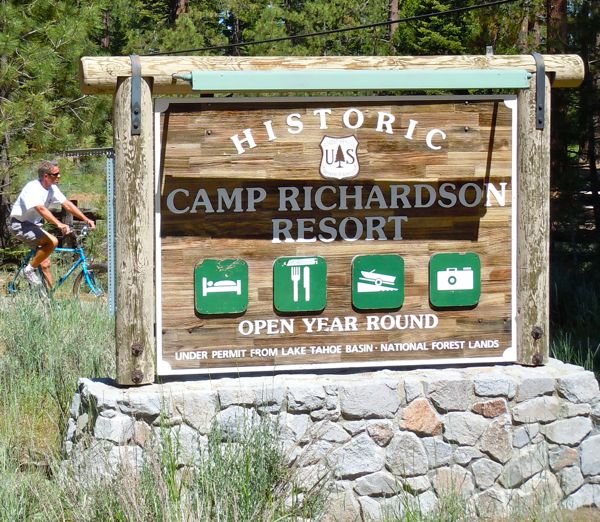
camp rich• Camp Richardson’s Snowshoe Cocktail Races is March 21 at 7pm. Sand or snow the race will go on behind the Beacon restaurant alongside the lake.

• El Dorado County has extended the deadline to apply for the Court House Blue Ribbon Committee to March 20 at 3pm. Here is the application.

• University of Nevada Cooperative Extension’s Living With Fire Program will be honored next week at the national Wildland Urban Interface Conference in Reno with a national Wildfire Mitigation Award for its leadership role in promoting fire adapted communities. The Living With Fire Program was nominated by the Nevada Bureau of Land Management.

• Tahoe Area Sierra Club’s April 2 meeting is about climate change and solutions. The Tahoe Citizens Climate Lobby will present ideas on fighting climate change through legislative action. The Sierra Club will discuss its Beyond Coal Campaign and Liberty Energy’s energy source. Tahoe Solar Designs will also provide alternative ideas on how to produce clean, renewable energy. It starts at 7pm at Unity at the Lake, 1195 Rufus Allen Blvd., South Lake Tahoe. No cost to attend.

• Lake Tahoe Unified School District Superintendent Jim Tarwater will be Rotary Club of South Lake Tahoe’s speaker March 25 at noon at Harrah’s Lake Tahoe. The public is invited.


Trial of ex-LTBMU chief’s accused murderer begins

By Peter Hecht, Sacramento Bee

In 1990, when his father was about to remarry, Andy Harris’ grandmother took him aside and told him there was something he should know about his stepmother-to-be.

Four years earlier, the grandmother told him, Colleen Ann Batten had been tried for murder in the shotgun killing of her first husband, James Batten. It was a sensational murder mystery, played out in 1986 in a Placerville courtroom as a trial headline in the local Mountain Democrat asked the question, “Colleen Batten – murderess or martyr?”

The jury found her not guilty. Andy Harris, now 51 and an attorney in Grass Valley, said he questioned his father, Robert Edward “Bob” Harris, a U.S. Forest Service supervisor, avid baseball umpire, traveler and conservationist. He said his dad had known Colleen as a high school teenager in Oakland and that they had reunited decades later.

Bob Harris told his son that Colleen had a “hard life,” that the shooting of her husband was “unfortunate.” But he said he cherished her and was determined to marry her. “He said, ‘I love her, and I want to provide for her.’ That was basically his response,” Andy Harris said. “That was about as much as he wanted to talk about it.”

Now Colleen Ann Harris – the former Colleen Batten – is facing a second murder trial for the shotgun killing of another husband.

Read the whole story