Ban on coyote hunting contests rejected

By Jeff DeLong, Reno Gazette-Journal

A proposal to ban coyote hunting contests in Nevada was rejected Friday by state wildlife officials.

After hearing from some 50 people for and against the idea, the Nevada Wildlife Commission voted 7-1 to deny a petition sought to end a controversial practice that gives cash or other awards to hunters who kill the most coyotes during so-called “coyote call” events.

Petition supporters decried the contests as “killing for kicks” and said they have no real impact in paring down the coyote population. Hunters and representatives of organized sportsmen groups countered that the hunts are a legally protected sport and do have a significant impact in controlling populations of an animal that regularly kills livestock and pets and sometimes threatens people.

Read the whole story


Oversight lacking of food imported to U.S.

By Katharine Mieszkowski, Reveal

Call it the international food movement: From blueberries to raw sushi, the tide of imported food is rising in the U.S.

Right now, about one-sixth of what Americans eat comes from outside our borders. But in recent years, food imports have grown an average of 10 percent a year, a trend that’s expected to continue. About 90 percent of our seafood, such as shrimp and tilapia fillets, comes from other countries, as well as about half of our fresh fruit. That’s despite the growing popularity of farmers markets and the local food movement.

As what we eat becomes increasingly globalized, federal regulators are scrambling to prevent unsafe products from entering our borders. A new report from the U.S. Government Accountability Office casts doubt on how effective they are at keeping food imports safe.

The stakes are high, because outbreaks of food borne illness can be deadly. In 2012, a listeriosis outbreak linked to ricotta cheese imported from Italy killed four of the 22 Americans it sickened.

Even with food grown within the U.S.’s borders, regulators struggle to prevent and curb outbreaks of food borne illness. Food safety is such a problem that Congress and President Obama are considering whether the now scattered oversight of the nation’s food supply should be consolidated into one agency.

The U.S. Food and Drug Administration has primary responsibility for overseeing the safety of most of what we eat, with notable exceptions such as meat and poultry. But that federal agency examines only about 2 percent of food imports at ports of entry and actually tests even less than that.

So in 2008, the FDA started opening foreign offices to help identify unsafe food, drugs and products before they make their way to the U.S. The agency now has seven of these offices around the world in China, India, Europe and Latin America. The FDA was unable to provide a budget for these foreign offices by press time.

A new report from the GAO said it’s unclear if those offices are making our food safer. That’s because the offices don’t have performance measures to track and evaluate specifically how what they do improves food safety.

“We don’t really know the extent to which the foreign offices are contributing to the safety of imported food,” said J. Alfredo Gomez, a director on the office’s natural resources and environment team.

In one area, the GAO report found that the FDA is clearly falling short. The agency is failing to perform the number of inspections of foreign food facilities that they’re required to do under the Food Safety Modernization Act of 2011. “They’re not following the law as currently laid out,” Gomez said.

The FDA has the authority to refuse entry of food into the United States if its inspectors have not been allowed access to the foreign facilities where it was produced. But without adequate inspections, that threat doesn’t really have teeth.

Plus, the agency has no plans to even try to perform all the inspections that they’re mandated to do, citing budgetary constraints. FDA officials questioned the value of doing all those inspections, too, preferring instead to focus their limited resources on providing technical assistance to the food industry – both domestic and foreign – to comply with new U.S. food regulations.

The GAO report also found that the FDA’s foreign offices are understaffed. Nearly half of the positions in these offices were vacant, with most of the openings in China, where the agency has had trouble getting visas from the Chinese government. The staffing problem in China is so bad that the agency sometimes relies on translators provided by the firms that they’re inspecting, the report found. That could risk compromising the integrity of their findings.

Officials from the FDA’s foreign offices defended their work to the General Accountability Office, citing instances where they’d made “significant contributions to determining the cause of outbreaks that lead to illnesses or deaths in the United States.” For instance, the India office rapidly inspected tuna processing plants in 2012 that were potential sources of a salmonella outbreak that sickened 425 people in the U.S. in 28 different states, including 55 hospitalizations.

The Centers for Disease Control and Prevention estimates that for every documented case of salmonella poisoning, 29 cases may remain unreported, putting the likely toll of that outbreak at more like 12,325 illnesses. Eventually, Moon Marine USA Corp. of Cupertino, California, voluntarily recalled the frozen raw yellowfin tuna from India implicated in the outbreak.

Yet by the time U.S. inspectors reached the seafood company in southern India, the damage had been done, Fair Warning reported in 2014. Inspectors found “water tanks rife with microbiological contamination, rusty carving knives, peeling paint above the work area, unsanitary bathrooms and an outdoor ice machine covered with insects and ‘apparent bird feces.’ ”

The inspectors aren’t supposed to only be reactive, either. They have the ability to inspect these kinds of facilities before outbreaks; any company that wants to ship food to the United States has to agree to be inspected, or the FDA can refuse their food.

In all, Fair Warning found, the FDA rejects about the same number of food imports as it did a decade ago – when imports were less than half the current level.

The General Accountability Office made several recommendations about how the foreign offices could be improved, but it noted that it had made two of those same recommendations in another report in 2010, and the FDA had not complied with them.

A spokesperson for the FDA said the agency had no comment on the GAO report beyond its official response that is included in it. That response says the agency has made significant progress toward meeting the 2010 goals.



Sandoval pushes bills to help vets

By Ray Hagar, Reno Gazette-Journal

When Gov. Brian Sandoval made Caleb Cage his director of military and veterans policy in 2014, he became the first governor in recent memory to have a someone on staff to oversee veterans affairs.

Cage, a West Point graduate and former Army platoon leader in Iraq, was given a formidable task.

“He said, ‘I want Nevada to be the most military and veteran friendly state in the nation, period,’ ” Cage recalled.

The pro-veteran spirit is seen in Sandoval’s aggressive legislative plan for veterans, although it has been foreshadowed at the Legislature by the governor’s $1.1 billion plan of new and extended taxes to fuel his proposed $7.3 billion general-fund budget.

Read the whole story


Be smart when buying used gear

By Joe Jackson, Outdoor

Purchasing used gear makes learning a new, expensive sport like skiing much less cost prohibitive, but it’s easy to waste money on junk.

To take some of the guesswork out of the process, I interviewed Josh Sims, owner of The Gear Fix, an outdoor gear repair and consignment shop in Bend, Ore. Since he bought the shop in 2008, Sims has seen and made thousands of repairs, including resoling more than 1,000 climbing shoes.

Many of those repairs are the direct result of customers buying used gear that was already past its retirement date.

Read the whole story


Kings Beach roadwork to start this month

Work on Highway 28 in Kings Beach will begin in April and continue in May and June.

During July and August, work will shift off of the highway and into the adjacent neighborhood grid. Then in September and October, work will resume on Highway 28.

Barring any major unforeseen delays, it is anticipated that the first phase of the project will be completed this fall.

The plan is for construction crews to work from 7am-5pm.

Crews will begin work just east of Coon Street along the north side of Highway 28 and work toward the Minnow Street parking lot. Concurrently, crews will begin work just west of Bear Street along the north side of Highway 28 and construct improvements to Deer Street. Another crew will begin the remaining underground drainage work near Secline Street. Although crews will be working in three areas at once, two of the crews will be focused on curb, gutter and sidewalk improvements along the shoulder area of Highway 28.

Three parking lots will be constructed as part of the first phase of construction. Two permanent bus shelters which will be constructed to replace the two temporary bus shelters erected last season at the Chevron Station and in front of the Kings Beach State Recreation Area.

Tahoe Public Art received 38 proposals in response to a call to artists for public art at the two new Kings Beach roundabouts. Two juries have selected five finalists.


Calif. drought makes wildfires year-round threat

By Ellen Knickmeyer, AP

Big wildfires have burned almost four times as many California acres as usual so far this winter, a sign of wildfire danger growing higher still as the state moves into its fourth year of drought.

The high fire risk from the drought means the California Department of Forestry and Fire Protection is maintaining its highest level ever of seasonal firefighters straight through the winter, statewide. The department also will go up to peak summertime staffing as soon as early June, four to six weeks earlier than normal, fire chief Ken Pimlott said.

“It’s changing the dynamic, absolutely,” Pimlott said by telephone, referring to the near-statewide drought. “The conditions are absolutely ripe” for a big year for wildfires.

California, with its Mediterranean climate of winter rain and snow and dry summers, normally experiences winter as the offseason for fighting firefighters. A normal year lays down a blanket of snow in the Sierra Nevada that melts through the spring, helping keep grass and shrubs too wet to burn. In a normal year, winter wildfires will burn no more than a dozen acres or so before flickering out, department spokesman Daniel Berlant said.

This year, fires keep burning, due to tinder-dry fuel, Berlant said. In a normal year, large wildfires in areas under his department’s jurisdiction will have burned 800 acres by this time of year. This winter, it’s 3,200 acres, and counting.

Southern California long has had winter wildfires. This year, so has Northern California, including even foggy, forested Humboldt County, which gets more than 4 feet of rain in a non-drought year. “In some of the wettest places in the country, we were having 300-, 400-acre fires,” Pimlott said.

And in Central California, a wildfire burning entirely above what would have been the Sierra Nevada snowline burned 7,000 acres and 40 homes — in early February.

“It pretty much burned the same at 4,000 feet all the way up to 8,000 feet,” said Bennet Milloy, a department firefighter paramedic, and spokesman, who was at the scene of that fire, which broke out Feb. 6 in the eastern Sierras.

At the scene of that winter wildfire, “there was almost no snowpack, just a light dusting of snow,” Milloy recalled. With no grass, given the drought, the wildfire jumped from bush to bush, which were “pre-cured and dried and ready to burn,” Milloy said.

The drought, and a warming climate here, has had firefighters battling larger-than-usual wildfires for years now. Half of the state’s largest wildfires on record occurred since 2000, Berlant said.

At peak staffing later this year, the state forestry department will have more than 300 fire engines stationed around the state. With the drought, the state also has added a fourth person to each fire-engine’s normal three-person crew. The state will bring additional firefighters and aircraft on line as well, Pimlott said.


Incline college skiers score at nationals

Sierra Nevada College skiers brought home a cache of gold and silver from the 37th annual USCSA National Championships at Mount Bachelor in Oregon.

The Incline Village institution has claimed 19 national championships in the last 24years.

More than 178 colleges and 4,700 individual athletes compete in the USCSA’s 200 race events each season. The national event is the showcase event for college ski and snowboard competition in the United States.

In alpine skiing, both the SNC Tahoe women’s and men’s teams won gold overall; the women’s and men’s freeskiing teams each also brought home the overall gold medals. In snowboarding, a newer sport for SNC, the women’s and men’s teams won overall silver medal.

In addition to the overall medals, SNC Tahoe’s 44 snowsport athletes brought home 12 individual bronzes, 13 individual silvers, and 12 individual gold medals from Mt. Bachelor.


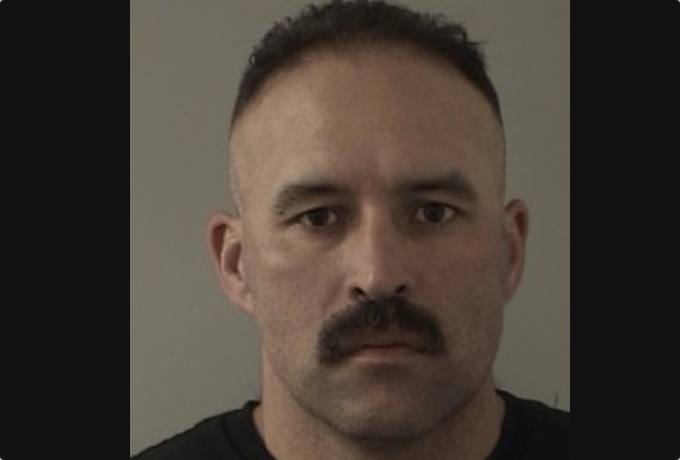
EDSO deputy accused of domestic violence

An El Dorado County sheriff’s deputy was arrested March 19 on felony domestic violence charges.

Shane Humbird

Shane Humbird

Shane Humbird, 36, was taken into custody that day after his colleagues responded to the 4000 block of Oak Leaf Circle in Placerville for a report of domestic violence.

Humbird has been with the department for 10 years. In 2012, he received the silver and bronze life saving award from the department.

He posted the $10,000 bail.

It is not known if he is on paid or unpaid administrative leave.

— Lake Tahoe News staff report


TRPA to fine SLT hotel for illegal tree cutting

By Kathryn Reed

The Landing Resort & Spa got caught illegally cutting down trees after much speculation that such activity had occurred from the onset of renovation at the South Lake Tahoe site.

The Tahoe Regional Planning Agency Governing Board on Thursday is set to approve a settlement agreement that calls for a $40,000 fine and planting of four mature 15- to 20-foot Jeffery pines in the location where the ones that were removed were located.

The staff report for the March 26 meeting says, “The four planted trees shall be inspected after two years for survival and may not be removed without TRPA approval. If any of the trees die within the first two years, a new tree shall be planted and monitored for two years after planting. The four trees shall be planted no later than May 31, 2015.”

TRPA staff in July received a complaint that the South Lake Tahoe hotel had illegally removed the trees. The trees that were removed were 14 to 24 inches around at breast height, according to TRPA. Per TRPA rules, all trees more than 14 inches in diameter must have a permit for removal.

“… TRPA staff found that the previous general manager directed a tree service from out of the area to remove the trees in order to improve the view from the resort. Multiple permits for tree removal have been issued to the Landing over the past few years and TRPA staff therefore believes that the Landing representative did this work with full knowledge of TRPA’s permit requirements,” the staff report says.

In 2013, the year the hotel – which had been the Royal Valhalla – opened, there was speculation that trees had been poisoned at the property so then a permit could be obtained for their removal.

Jim Demetriades, owner of the hotel, is the one being fined. He will have 30 days to pay it after the board approves the agreement. He has already signed the agreement.

—–

Other newsworthy items on the TRPA agenda:

• A briefing on California Pacific Electric Company 625 and 650 Electrical Line Upgrade Project. CalPECO is the parent company of Liberty Utilities, which is seeking to upgrade electric lines on the North Shore and Truckee. No action is expected. This will be heard March 25, no earlier than 1pm when the board meets at the Chateau in Incline Village.

• Expected approval of amending Heavenly Mountain Resort’s master plan to accommodate summer activities like Epic Discovery. To be heard March 26, 9:30am at the Stateline TRPA office.

• Aquatic invasive species update – March 26.

• Boat inspection fee schedule – March 26.


Opinion: Imperative to fight AIS at Tahoe

By Casey Beyer

A newly released scientific study highlights the importance of collaborative work to prevent the introduction of aquatic invasive species at Lake Tahoe, and confirms what many public and private stakeholders have feared: That the invasive quagga mussel, if introduced, could establish in our mountain lake’s clear, iconic waters.

The study by UNR and Desert Research Institute found quagga mussels could survive in Lake Tahoe, particularly in areas with elevated calcium levels from already-established Asian clam populations and in areas of higher algae growth, as found in some near shore parts of the lake.

Casey Beyer

Casey Beyer

There was hope that quagga mussels, which are native to Ukraine, would struggle to survive in Lake Tahoe’s low-calcium waters. However, given the importance of Lake Tahoe’s natural environment and recreational opportunities, the Tahoe Regional Planning Agency and its many partners decided early on to take a conservative approach and proactive steps to keep them and many other aquatic invaders out of the lake’s waters.

The study found that about 80 percent or more of adult quaggas could survive over a 90-day period in Lake Tahoe’s low-calcium waters. Survival increased to more than 90 percent for adult quaggas and 60 percent for juvenile quaggas in water with the increased calcium concentrations found near Asian clam beds in Lake Tahoe’s nearshore – long enough for adults to start reproductive cycles and for juveniles to grow into reproducing adults.

Why are quagga mussels a concern? They are known as prolific breeders and can form sprawling colonies that carpet rocks, lake bottoms, boats, and other structures, littering beaches with shells and causing major environmental, economic, scenic, and recreation impacts.

In 2009, TRPA and 40 public and private stakeholders launched the Lake Tahoe Aquatic Invasive Species Program and mandatory boat inspections to help prevent the introduction of quagga and other aquatic invasive species at Lake Tahoe. Now recognized as a model for the country, the inspection program has overseen the certification and safe launch of nearly 200,000 boats at Lake Tahoe.

Federal funding that has paid for about half of the boat inspection program’s $1.5 million annual cost is running out. TRPA is working to secure state funding from California and Nevada to ensure that this vital program continues, and that inspection fees remain affordable for the thousands of recreational boaters who visit Lake Tahoe each year.

Boat inspections have successfully kept quagga mussels out of Lake Tahoe and remain a top priority for TRPA and its many partners. This new study reemphasizes their value in protecting our lake from aquatic invaders that, if introduced, could potentially spread out of control and forever alter the Jewel of the Sierra.

This study also emphasizes the importance of continued control projects to manage harmful aquatic invasive species in Lake Tahoe, including aquatic weeds such as curlyleaf pondweed and Eurasian watermilfoil, invertebrates such as Asian clams, and warm water game fishes.

The Lake Tahoe Aquatic Invasive Species Program recently completed a pilot research project that used rubber mats to treat five acres of an Asian clam infestation at Emerald Bay. The goal of the project was two-fold: To evaluate the rubber mats’ effectiveness as a way to reduce populations of Asian clams and other aquatic invasive species on a large scale at Lake Tahoe, and to reduce an Asian clam infestation at an iconic and heavily-visited recreation site.

A major priority for TRPA this year is completing a comprehensive control strategy for aquatic invasive species at Lake Tahoe. The goal is to prioritize control projects and guide our future efforts to best use limited funding for maximum possible effect. The strategy will look at what invasive species are the most harmful at Lake Tahoe and where, when, and how they should be treated.

Combatting aquatic invasive species at Lake Tahoe is one of the top priorities for TRPA. The fight will be long and difficult, requiring constant reevaluation to ensure that projects are as effective as possible. Fortunately, many public and private partners are engaged in this fight, and there are many ways people can help.

Boaters can show up to Lake Tahoe with their watercraft “Cleaned, Drained, and Dry,” to expedite the mandatory boat inspection process and help stop the spread of aquatic invaders. People with non-motorized watercraft can become Tahoe Keepers and complete that self-inspection training program to help ensure they are not spreading invasive species. People can also become part of Eyes on the Lake, a volunteer program the League to Save Lake Tahoe launched last year to train people to identify and report any aquatic invasive species they see while they are out recreating to help improve monitoring and control efforts.

Please join us in the fight against aquatic invasive species. Working together we can protect our beloved Lake Tahoe, a national treasure, from the introduction and spread of non-native species that could have devastating impacts.

Casey Beyer is chair of the Tahoe Regional Planning Agency Governing Board.