Education advocates lobby for good neighbor policy

Representatives from the South Shore testified before a Nevada Senate education committee today regarding the good neighbor policy that would allow some students in California and Nevada to cross the state line to attend college at in-state tuition rates.

“This bill would ensure more of our children can obtain an education from an institution of higher education,” Stacy Noyes, a parent who lives in Stateline, told Lake Tahoe News. “It would remove the barriers of the time it takes to travel to WNCC (Western Nevada Community College), the expense of transportation and of course most important reduce the tuition costs. It could be life changing to many to avail themselves of the opportunity to attend LTCC (Lake Tahoe Community College).”

Noyes along with Kelly Krolicki and Kate Krolicki, a senior at Whittell High School, spoke at the March 24 hearing in Carson City.

LTCC President Kindred Murillo and former Trustee Roberta Mason also spoke.

Murillo has been working on this for three years.

“If this doesn’t go this time, I don’t know if it will,” Murillo said at the LTCC board meeting Tuesday night.

She said the focus needs to be on students, not dollars.

State Sen. James Settelmeyer, R-Minden, is the the author of SB414. His counterpart in California, state Sen. Ted Gaines, R-Roseville, has introduced SB605. They mirror each other. The laws would benefit Lake Tahoe Basin students in specific ZIP codes, and involve Lake Tahoe Community College and Western Nevada Community College. This would be a six-year pilot program.

One member of the Nevada Board of Regents spoke Tuesday, saying the bill would negatively impact WNCC. When a committee member asked how so, she had no financial documents to back up the statement.

— Lake Tahoe News staff report


Calif. lawmakers seek access to confidential well logs

By Tom Knudson, Reveal

It’s not a secret that California is facing a groundwater crisis.

But something else is: a vast repository of state records that scientists and water policy specialists say could dramatically improve our understanding of California’s groundwater resources if they were made public.

The records are called well completion reports, or well logs for short. For decades, the California Department of Water Resources has gathered the documents from well drillers and archived them in cardboard boxes in West Sacramento and other locations around the state.

In all other western states, such reports are public and often searchable online. But in California, they are considered confidential under a 64-year-old state law. Many think that should change.

Access to logs could help improve water quality and reveal which parts of California are being pumped the most, experts believe. Laurel Firestone, co-executive director of the Community Water Center, a Visalia-based nonprofit, called the secrecy a huge impediment to understanding the state’s groundwater system.

“It’s almost like when they black out classified information,” Firestone said. “We have no maps of where people are using water, and what people are using water for. It’s hugely important. We work with families that have lost their entire water supply, whose wells are going dry.”

Opening the state’s well log vault is under consideration this spring at the state Capitol, where lawmakers, the governor and state officials are scrambling to find ways to help California cope with a four-year drought that is straining surface and groundwater supplies. Earlier this month, NASA senior water scientist Jay Famiglietti warned that “the state has only about one year of water supply left in its reservoirs, and our strategic backup supply, groundwater, is rapidly disappearing.”

State Sen. Fran Pavley, D-Calabasas – author of two of three historic groundwater laws passed by the Legislature last year – has introduced a new bill to make well logs public. A hearing is scheduled for today.

“After four years of a continuous drought, it is about time we get this information … to better protect California’s precious groundwater,” said Pavley in a statement.

To a nonspecialist, well logs can appear as dry as the drought-parched California earth. To groundwater scientists, they are a treasure trove of information that can help chart the size, shape and thickness of aquifers and determine how water cycles through and between them. That, in turn, can help predict how much pumping aquifers can withstand without being depleted.

The state’s stockpile of well logs has grown to about 800,000 documents over the past six decades. Laid end to end, that is enough paper to circle Lake Tahoe twice.

While the public can’t view those records, the Legislature did create a loophole in 1951 allowing access “to government agencies for use in making studies,” making them accessible to some professionals but not others. The passage has been so narrowly interpreted by the Department of Water Resources that even scientists who work for public universities sometimes can’t gain access.

This is the third time since 2011 that Pavley – chair of the Senate Natural Resources and Water Committee – has sought to make well logs open to the public. Whether she will succeed this year is anyone’s guess. But it is certain the debate will be lively.

A glimpse of the coming drama can be gleaned from letters that have arrived in her office in recent weeks.

East Bay Municipal Utility District, which provides water to more than a million people, wrote to support the bill, saying data in well logs “is central to developing and implementing groundwater management plans.”

But in a state where groundwater is tied to private property rights and farmers pump with no restrictions, opposition remains strong in the agricultural community.

“We believe the well log data is available to those entities that have a genuine need to evaluate and utilize it,” wrote representatives of three agricultural organizations and the California Chamber of Commerce, in a letter opposing the Pavley bill.

“No beneficial purpose could be gained by making this confidential data available to the public,” they added. “We believe this measure will only assist those trolling for lawsuits.”

Several environmental and community action groups wrote in support. “As the physical effects of the drought worsen, from loss of water supplies to increased concentrations of groundwater contaminants, the need for reliable and transparent data … grows,” they said. “The information contained within well completion reports would allow communities to identify new well locations that might yield safe drinking water, a concern affecting thousands across the state.”

The governor’s view is already well known. “California is the only western state that does not provide ready access to well reports,” he wrote in a statement vetoing a 2011 well log access bill he felt was too restrictive. “That should be changed.”


Drugs stolen from Incline Village pharmacy

The Washoe County Sheriff’s Office is searching for a man in connection with an armed robbery at a pharmacy in Incline Village this morning.

At approximately 11:30am March 24 the suspect entered the Village Pharmacy on Tanager Drive and demanded an unspecified amount of pharmaceutical products.

A handgun was reportedly used in the robbery.

The suspect is described as a Hispanic male adult, approximately 6-feet tall and heavy set.

Anyone with any information is asked to call 775.328.3320 or Secret Witness at 775.322.4900.

— Lake Tahoe News staff report


USFS to talk about OHV trails in Tahoe

The U.S. Forest Service Lake Tahoe Basin Management Unit will host an open house to discuss off-highway vehicle use on designated routes within the Lake Tahoe Basin.

The meeting is April 2 from 4-7pm at the forest supervisor’s office at 35 College Drive, South Lake Tahoe.

The open house will provides an opportunity for the public to meet Forest Service OHV, engineering, trails and recreation staff and ask questions regarding the LTBMU Motor Vehicle Use Map and the California Off-Highway Motor Vehicle Recreational Grant application. Local OHV club members will be on hand to discuss membership and volunteer opportunities sponsored by the Forest Service.

For more information, contact Tim Merten at 530.543.2863 or tmerten@fs.fed.us.


Haase family celebrates NCAA tournament run

UAB Coach Jerod Haase cuts down the net after his team won the conference title. Photo/Carol Haase

UAB Coach Jerod Haase cuts down the net after his team won the conference title. Photo/Carol Haase

By Kathryn Reed

UAB won’t make it to the final dance, but that’s OK. The men’s basketball team wasn’t ever expected to win its conference to advance to the NCAA tournament, let alone win a game at that tournament.

It was so unexpected that the coach’s mom had to keep changing her flight – and not just once – and rent a car for a long drive to Louisville.

Carol Haase and her husband El Hug flew out to see Jerod Haase coach UAB in the C-USA tournament. The South Lake Tahoe couple kept extending their trip.

Haase grew up in South Lake Tahoe and as a senior was on South Tahoe High School’s state championship team. He played his first year of college for Cal. The team made it to the NCAA Sweet 16. For a variety of reasons – including his father’s death – Haase transferred to Kansas.

His dream was to always play in the NBA. Multiple fractured wrists prevented that from happening. The boy who first learned to dribble in third grade didn’t have a strong enough wrist to muscle through the pros.

Instead, Haase turned to coaching. Under the guidance of Kansas coach Roy Williams, Haase learned the intricacies of what it takes to be a winning college coach. He was an assistant at Kansas and North Carolina before taking over the head coaching position at UAB three years ago.

This was UAB’s first C-USA tournament title. The Blazers had not been to the NCAA tournament in a decade. They lost March 21 in the third round to UCLA, 92-75.

Carol and Jerod Haase outside the coach's house where neighbors had placed celebratory balloons. Photo/Provided

Carol and Jerod Haase outside the coach’s house where neighbors had placed celebratory balloons. Photo/Provided

Carol Haase didn’t get to see much of her son, but she did tag along on a few interviews.

“The fun thing I got to do with Jerod was go to Fox News and CBS and watch the live interview with the cameras and green room. That was great,” Haase told Lake Tahoe News.

“Jerod was very calm. We didn’t get to see him much. He was more subdued than anything. I could see his mind was going, going, going. We just kind of gave him space.”

It also allowed Haase and Hug to spend more time with their daughter-in-law and three grandchildren.

During the conference tournament family watched the game from behind the bench. For the NCAA tournament they were across the court, but still almost courtside.

Haase said the energy was electrifying. Only one college is at a hotel. Everyone is dressed in their respective college’s clothing. A police escort is the norm. With the band traveling with the team, it added an extra flair. A small red carpet was rolled out wherever the team went.

What Coach Haase’s future holds remains to be seen. He says he wants to return to UAB, but the C-USA Conference may not welcome the school because it has cut other athletic programs. With UAB’s performance at the NCAA tournament, Haase’s stock is even higher, so it’s possible another college is looking for a coach of his caliber.


Snippets about Lake Tahoe

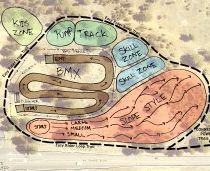
bike• The Bijou Bike Park Association and South Lake Tahoe are seeking input on the Bijou Bike Park design at an April 2, 5:30pm at Bijou Elementary School, 3501 Spruce Ave.

• According to FindTheHome, Alpine County reported zero car thefts in 2013.

• Tahoe Paradise Resort Improvement District’s board is meeting March 26 from 6-8pm at the park in Meyers.

• South Lake Tahoe Police Department SWAT Association is having a Bowl-a-Thon on April 8 from 5-8pm at Tahoe Bowl (1030 Fremont Ave.). All proceeds will be donated to the nonprofit South Lake Tahoe SWAT Association to assist in the purchase of equipment and future training. Cost is $120 for a team of up to six players. Entry fee includes one cheese pizza, pitcher of soda, and one game with shoes. RSVP to Brian Hannink at SWAT@cityofslt.us.

• The April 15 noon-1:30pm Tahoe Talks is titled Dealing with Drought. John Rice, general manager at Sierra-at-Tahoe, is the speaker. The talk is free. It will be at the board room at Lake Tahoe Community College.


Letter: Public should have input into dredging

To the community,

It has come to my attention that the homeowners in the Tahoe Keys area are planning to have their manmade lagoons dredged as early as this week because the drought is causing the water level to inhibit boat access. This isn’t right. The Keys have been an environmental nightmare since their beginnings – the beautiful marsh land was raped by developers and the unnatural keys cause silt to spread into Tahoe every time they are dredged.

Leona Allen

Leona Allen

In addition, everything that is spilled onto the land in the Keys washes into the lake – fertilizer, car and boat oil, detergents, paint, and chemicals of every kind. So now, at a time when Tahoe becomes more sensitive with the drought, the homeowners want to dredge. This is an action that will be a detriment to the entire lake, and will only benefit a few of the boat-owning Tahoe Keys residents.

If you disagree with this, please make yourself heard. Permitting agencies include TRPA, Lahontan, and possibly the city of South Lake Tahoe. Which brings up another point – has the public had the opportunity to comment on this? I certainly would have been the first in line had I known of open meetings.

Tahoe native,

Leona Allen, South Lake Tahoe


Realtor boards oppose Tahoe ridgeline development

By Associated Press

Two leading Realtor boards have come out against future ridgeline development in the Lake Tahoe Basin.

The Incline Village Board of Realtors and the Tahoe Sierra Board of Realtors have adopted a joint policy to protect ridgelines from “obtrusive man-modified structures or features.”

Tracy Saunders, president of the Incline Village board, said the groups want to ensure ridgeline protection is addressed by governmental agencies in all future projects.

While a controversial proposal to build 112 luxury homes in a 112-acre gated community on a ridge overlooking Tahoe brought the matter to the forefront, the policy is not directed at any one project, the boards’ representatives said.

“To date, the board has found it imprudent to become entangled in the fine-grained specifics of a given project proposal,” said John Falk of the Tahoe Sierra board based in Truckee. “Our overarching objective is to shape goals, policies, programs, codes and procedures for the betterment of the community.”

The Martis Valley West Project would have been on forested land now used for backcountry recreation and access to the Tahoe Rim Trail, the Sacramento Bee reported. Instead, its developers agreed in January to cluster all the project’s development within the Martis Valley near Truckee.

Options for the Tahoe property on a Brockway Summit ridge are being analyzed, but no application has been submitted, said Blake Riva, senior partner with project developer Mountainside Partners.

Asked what he thinks of the Realtor boards’ new policy, Riva said, “We are aware of certain organizations making their viewpoints known. We will be following land-use policy as set forth by the governmental agencies. It’s part of the public review process.”


Dredging helps bind together Tahoe marinas

Sand Harbor boat launch is closed. If it does open, it won't be for a full season. Photos/Kathryn Reed

Sand Harbor boat launch is closed. If it does open, it won’t be for a full season. Photos/Kathryn Reed

Updated March 24 7:30pm

By Kathryn Reed

While the lake level is said to be the same across Lake Tahoe, marinas are not allowed to dredge to the same depth. That is one of the discrepancies the Lake Tahoe Marina Association is trying to remedy.

Nor are there any studies to prove a difference between new dredging and maintenance dredging when it comes to lake clarity or other environmental issues. Another topic for LTMA to get involved with.

The association first came about in the early 1990s when four North Shore marinas got together to try to be one voice. The union lasted a couple years. Then two years ago the idea to resurrect the group was floated and this time marinas throughout the basin are part of LTMA.

Pat Bagan, vice president of LTMA, said he believes the change in ownership and younger people will help sustain the association.

One of the biggest issues facing marinas is dredging. The average boat draws about 3½ feet, so the water level needs to be deeper than that. Most tour boats and sailboats need more clearance. The lake is at 6222.83 feet. The Tahoe Regional Planning Agency says marinas can dredge to depths ranging from 6,215 feet to 6,219.3 feet.

Last week Lahontan Regional Water Quality Control Board granted a dredging permit to the Tahoe Keys Marina and amended the permit for the Tahoe Keys Property Owners Association. No one from either entity was available for comment.

It’s estimated to cost more than $2 million to dredge the east channel or marina side, and more than $740,000 for the west or homeowners’ channel. TKPOA is obligated to pay all costs associated with its channel, while the marina dredging bill is split by the marina owners, TKPOA, and the Beach and Harbor Association.

The channel going to the Tahoe Keys Marins has dropped farther since fall 2014. Photo/LTN file

The channel going to the Tahoe Keys Marins has dropped farther since fall 2014. Photo/LTN file

The dredging for the TKPOA channel will start March 25.

“The goal is to be done by May 21. We are forecasting to finish two weeks prior to that, based on weather permitting,” Kirk Wooldridge, TKPOA general manager, told Lake Tahoe News. 

Ski Run Marina has been approved to dredge the mouth of the harbor; work should begin this week.

“There has been discussion of additional dredging in Lake Tahoe to support a channel for the Tahoe Queen tour boat there, but no one has applied for a permit. There is information that would qualify this as maintenance dredging,” Alan Miller with Lahontan told Lake Tahoe News.

Elie Alyeshmerni, who owns Ski Run Marina, told Lake Tahoe News that Aramark – owner of the Queen and the party responsible to dredge the channel – expects to soon apply for a permit.

North Tahoe Marina has a multi-year dredging permit, Tahoe City Marina finished its project, while Homewood Marina, Star Harbor and Fleur de Lac have applied for permits.

Sand Harbor officials don’t even know if the ramp will open this season.

“You have to go about 100 feet out from the bottom of the launch lanes now to gain about 12 inches of additional draft,” Jay Howard, supervisor of Lake Tahoe State Park, told Lake Tahoe News. He oversees Sand Harbor and Cave Rock launches. “The prognosis for Sand Harbor is not good. I think for Sand Harbor to be open we need at least 1½ to 2 feet of water to come off those hillsides above us. That might happen; we might get close to that.”

The problem, though, is the snow depth in the Marlette basin is 22 inches when it should be 5 to 6 feet, Howard said.

Normally Sand Harbor opens in early May. That won’t happen this year.

Cave Rock is open.

“I think the lake will come up enough where at the end of the season we would not expect Cave Rock to be any worse than it is right now,” Howard said.

Bob Hassett, who operates Lakeside, Timber Cove and Camp Richardson marinas, is working on a dredging permit application for Lakeside. He said it would be minor and that work should only take four hours.

Prep work at Ski Run Marina in anticipation of dredging. Photo/LTN

Prep work at Ski Run Marina in anticipation of dredging. Photo/LTN

“We were operating at Timber Cove Marina in 1992 — the last time the water was this low. Although it will require more care, we expect to operate just fine off the end of the pier. Larger boats may be limited and require a shuttle out to them.  We will lose a number of buoys but still expect to have availability,” Hassett told Lake Tahoe News.

Camp Richardson Marina has the longest floating pier on the lake.  A fuel rod will be used to get gas to boaters who are tied up to the floating dock.

“The first two rows of the buoy field will be too shallow to accommodate boats. With those gone, we still expect to have 96 buoys available for seasonal and day use guests,” Hassett said.

The marina association is asking the California Tahoe Conservancy to use money from SB630 to study the differences between new and maintenance dredging. Some of that money is paid to the state from marinas.

Working as a group, marina owners were able to get Lahontan to loosen its requirements for who can test water quality during storms. The state agency will be training marina representatives on March 26.

Alyeshmerni, who is president of LTMA, said the association is also looking to get all marinas certified as a clean marina within the next couple years.

“We want to be good stewards and guardians for the lake,” he said.

Those with certificates are: North Tahoe Marina, Sierra Boat Company, Tahoe City Marina and Sunnyside.

Starting this year the LTMA is going to recognize someone who went above the call of duty. On Thursday, Matt Williamson will be honored.

“He dove under the boat and saw someone who was in an air pocket and pulled them out and they were fine,” Alyeshmerni said.

A boat rented from Ski Run Marina last year capsized. One person was missing, that is when Williamson dove and found the woman.

“We are also trying to let the public know we are all working together. We want the public to enjoy the experience. What we are working toward as an association is to make it as pleasant and fun as possible at Lake Tahoe,” Bagan said.


Opinion: Nev. considers anti-LGBT legislation

By Stephen Peters

The Human Rights Campaign, the nation’s largest LGBT civil rights organization, sounded the alarm on anti-LGBT legislation in Nevada — SB272 in the Senate and AB277 in the Assembly — that threatens jobs, the state economy, and undermines the state’s civil rights laws. The legislation would allow people to use their religion to challenge or opt out of various laws, including state and local laws, that protect LGBT people and other minorities from discrimination.

“This legislation undermines the enforcement of state non-discrimination protections and will expose Nevada business owners to a wave of lawsuits,” said HRC National Field Director Marty Rouse. “It has the potential to cause serious harm to the business climate in the state, putting jobs at risk, and making major corporations think twice about investing in the state. To put it simply, this legislation threatens Nevada’s strong pro-business reputation.”

The legislation will bring harmful and unintended consequences to those who call Nevada home, inviting costly legal challenges and making the Silver State unwelcoming to both residents and visitors. Nearly 500,000 jobs and 29 percent of the state’s employment is a direct result of tourism to Nevada. Jeopardizing the state’s standing as one of the greatest places for people to live and visit, the harm this bill may cause doesn’t end with the LGBT community: an evangelical police officer could feel empowered to refuse to patrol a Jewish street festival; a city clerk could shirk the law and refuse a marriage license to an interracial couple, a divorcee seeking to remarry, or a lesbian couple; an EMT could claim the law is on his side after refusing service to a dying transgender person in the street; and the enforcement of other key sections of state civil rights law could be dramatically undermined.

Major corporations have spoken out strongly against similar bills in other states. In response to one such anti-LGBT bill threatening economic growth and business in Arkansas, both Apple and Wal-Mart spoke out in opposition to precisely this kind of legislation. And Wal-Mart and Apple are not alone. Last year, major multinational corporations including American Airlines, Marriott, PetSmart and many other companies came out against a similar bill in Arizona, concerned about how it would hurt their business and risk millions in economic activity if it became law.

The bill puts all state non-discrimination laws at risk of being undermined. It threatens not just the LGBT community, but women, members of minority faiths and other minority classes.

Stephen Peters works for the Human Rights Campaign.