NDOW investigating injured Tahoe goose

By Kellene Stockwell, KTVN-TV

The Nevada Department of Wildlife says it’s trying to find a way to help a goose that is stuck near Lake Tahoe with an arrow through its body.

Viewer Mark Sarkissian sent us a photo and video of the injured goose near Cave Rock.

He says he first noticed the bird on Sunday afternoon.

Read the whole story


Sides being drawn over SLT vacation rentals

By Jessie Marchesseau

Residential neighborhoods in South Lake Tahoe being used for tourist lodging are beginning to divide the town.

More than 100 people packed the City Council chambers for Tuesday’s vacation home rental workshop, while still more looked and listened in from outside the door. The meeting, originally scheduled for 1½ hours, lasted twice that long, with more than two hours taken up exclusively by public comment.

Dozens of people voiced their opinions on the subject, including residents who do not own vacation rentals, and residents who do, property managers, contractors, real estate agents and business owners.

While there did not appear to be a unanimous opinion on any of the topics, it was generally agreed upon that stricter enforcement was needed. However, there was a divide when it came to who should be fined, the owner or the renter.

City Manager Nancy Kerry   outlines proposed changes to South Lake Tahoe's vacation home rental ordinance. Photo/Jessie Marchesseau

City Manager Nancy Kerry outlines proposed changes to South Lake Tahoe’s vacation home rental ordinance. Photo/Jessie Marchesseau

People weighed in on the proposed amendments and some proposed their own. Many shared experiences as neighbors, owners, renters and managers.

Non-VHR-owning residents voiced the most concerns and complaints with some going so far as to request a moratorium on VHRs altogether. This is not likely to happen though, as City Attorney Tom Watson said such a move would almost guarantee a lawsuit.

In the end, no final decisions were made at the March 24 meeting; however, the City Council received myriad comments and feedback with which to move forward.

“This is to have all sides heard,” Watson said. “Both opinions are important to the community.”

City Manager Nancy Kerry reiterated how residents as well as VHR owners have property rights that must be respected and taken into consideration when creating new ordinances. She said the city is aiming to balance the needs of everyone, not just serve one group. They are considering how any changes will affect real estate values, the tourist economy, the environment, the community, and the quality of life for residents and business owners. Taking all those things into account, Kerry presented the city’s proposed amendments.

According to the city’s research, there are four main issues with VHRs causing a negative impact on the quality of life for local residents: noise, trash, parking and the commercialization of neighborhoods.

Increased enforcement of regulations would include possibly hiring an additional enforcement officer for one year and conducting on-site visits to check for compliance. Increased fines, citations to renters and owners, and the elimination of the first time violation warning in lieu of a fine are all on the table.

Another proposed amendment is to provide incentives for owners to use local property management firms as opposed to doing it themselves through services such as VRBO. This incentive would be in the form of lower permit fees for locally managed properties. The proposed fees for properties not having a local manager would be double those of locally managed properties.

The new fee structure would also be based on occupancy, meaning larger homes would have higher permit fees. The council suggested changing the occupancy limit from two people per bedroom plus four, to just two per bedroom, exempting children under 10. The hope is this will help to reduce both the noise and parking issues often plaguing vacation rentals.

Also addressing the noise issue was the proposal to restrict hot tub use after 10pm as well as any use of outdoor speakers or other noisy equipment or activities. When it comes to parking, the possibility of neighborhood permits was mentioned, but Police Chief Brian Uhler pointed out that it is not possible to limit public parking on public streets. Any enforcement must be limited to illegally parked vehicles.

To help remedy the issue of vacationers leaving trash on the curb for days, the city could require VHRs to have bear boxes. However, there was some concern that this could become unsightly.

The Council will discuss the topic further at the April 7 meeting. The first reading of the new ordinance will likely be April 21.


Haase earns a new deal with significant raise

By Roy S. Johnson, Al.com

UAB basketball coach Jerod Haase, who guided the Blazers to the C-USA tournament championship and into the third round of the NCAA tournament, has been granted a contract extension by the university, sources confirm.

The new deal is for six years and Haase, 40, will earn $1 million annually.

Haase, who graduated from South Tahoe High School, last received an extension in January, which paid him $525,000 annually, plus incentives.

Read the whole story


Customer data may be sold in RadioShack bankruptcy

By Joshua Brustein, BloombergBusiness

The remnants of RadioShack’s retail empire went on the auction block on Monday, giving bidders the first chance to snap up the company’s trademarks, patents, leases—and the names, e-mail addresses, and phone numbers of millions of RadioShack customers.

For RadioShack itself, the stakes are enormous. Bloomberg News reported Tuesday morning that Standard General, a hedge fund that is one of RadioShack’s creditors, has won the auction. Hanging in the balance on Thursday, when a federal bankruptcy court is expected to approve or reject the asset sale, is the continuation of the 94-year-old retailer’s operations. Standard General has said it will try to keep the retail chain operating on a smaller scale.

RadioShack’s customers—even those whose most recent purchase came years ago—could also find themselves sold off in the deal. The company included personal data in its bankruptcy auction as its own asset class. A website maintained by Hilco Streambank, which is serving as an intermediary for RadioShack, says that more than 13 million e-mail addresses and 65 million customer names and physical address files are for sale. Hilco Streambank is careful to note that the bankruptcy court might not approve the deals, and there have already been two legal filings in attempts to block the sale of customer data.

Read the whole story


Letter: Harrah’s-Harveys work at Bread & Broth

To the community,

On March 16, Bread & Broth’s dinner guests got a double treat at the evening’s dinner. In addition to a wonderful meal sponsored by Harrah’s/Harveys HEROs, they were entertained by the musically and multi-instrumentally talented Todd Green. Thanks to the Tahoe Arts Project, Green played a wide range of musical instruments, which was thoroughly enjoyed by the diners throughout the evening event.

B&B was also very fortunate to have HEROs members Darlene Winkelman, John Guastella, Patrick Frega, Randall Sumner and Jacalyn Andrews volunteering to help the evening event go smoothly. With their help, the dinner guests received a warm welcome, heaping bags of food to take home and a hot, nutritious meal.

“It fills my heart with joy to serve those struggling with hunger in our community,” said Winkelman after helping on the serving line.

HEROs, a Harrah’s/Harveys employee based volunteer organization, is a frequent Adopt A Day sponsor and always sends a great volunteer crew. B&B would like to thank both the Caesars Entertainment for their financial donation and the HEROs’ volunteer for donating their personal time to take the opportunity to help others.

Sumner summed up his take on his B&B experience, “I feel great after volunteering at B&B helping those less fortunate than myself. Plus, a great bike ride to St. Theresa Grace Hall = win-win. No brainer”

Carol Gerard, Bread & Broth


Nev. bill would create repeater felony for graffiti crimes

By Associated Press

CARSON CITY — Nevada lawmakers are reviewing a bill creating a felony charge for repeated graffiti offenses.

Republican Assemblyman Lynn Stewart is sponsoring AB 244 which was heard Tuesday morning in the Assembly Judiciary Committee.

The bill would require a person convicted of three graffiti offenses would be guilty of a category C felony which includes a one to five year prison sentence.

Graffiti offenses can range from a misdemeanor to felony based on the amount of damage and where the crime takes place.

Las Vegas police lobbyist A.J. Delap said the bill would mainly target repeat adult offenders who continuously violate the law.

Clark County Public Defender’s Office lobbyist Steve Yeager said the current law sufficiently covers graffiti offenses and worried the bill would harshly affect juveniles.


Road beat: 4Runner keeps improving with age

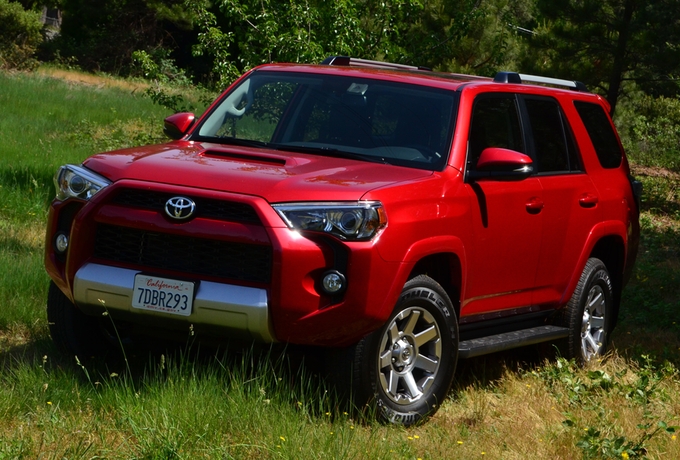
The Toyota 4Runner remains a workhorse. Photos/Larry Weitzman

The Toyota 4Runner remains a workhorse. Photos/Larry Weitzman

By Larry Weitzman

Now in its fifth year of the fifth generation (the 4Runner started production in 1984), the 4Runner continues to be a solid, consistent seller for Toyota, averaging about 50,000 units a year, despite sales being stolen by its similarly sized CUV sibling the Highlander. They are totally different vehicles with no relationship between them and effectively no parts bin sharing.

While the Highlander is a Camry based light duty unibody chassis, the 4Runner remains a real truck based SUV, borrowing heavily from the stout Tacoma truck line with a true body on frame design that is about as bulletproof as an M1A1 Abrams tank. The shape is rugged boxy with a higher belt line giving the 4Runner a chopped look. Squared off wheel wells with blisters and complex head and tail lights add to its statement that the 4Runner means serious business. Most people are impressed by its strong aggressive looks. It is muscular. Coefficient of drag is a relatively low 0.36.

While it may look big, it is a true midsize at 191-inches long riding on a wheelbase of 110 inches. However, it is wide at 76 inches and tall at 6 feet with the roof rack. But with that width comes a cabin with almost 5 feet of shoulder room and a track of over 63 inches, which pays dividends when doing the twisties.
Specifications Price $39,000 to about $42,000 (Trail Premium) Engine 4.0L DOHC 24 valve V-6 270 hp @ 5,600 rpm 278 lbs.-ft. of torque @ 4,400 rpm Transmission Five speed electronically controlled automatic (V-6) Transfer case (switchable locking) Part time shift on the fly with low range (2.566 reduction), SR5 and Trail only Full time single speed with locking center differential (Limited) Configuration Longitudinal mounted front engine/ rear wheel drive, all wheel drive Dimensions Wheelbase 109.8 inches Length 190.7 inches Width 75.8 inches Height 71.5 inches (with roof rack) Ground clearance (4X2/4X4) 9.0/9.6 inches Weight 4,750 (4X4 Trail) pounds GVWR (Trail) 6,300 pounds Track (f/r) 63.2/63.2 inches Steering lock to lock 2.7 turns Turning circle 37.4 feet Fuel capacity 23 gallons Cargo capacity (second row up/folded/third row up) 47.2/89.7/9.0 cubic feet Wheels 17X7.5 inches Tires  P265/70X17 Tow capacity 4,700 pounds  Coefficient of drag 0.36 Performance 0-60 7.78 seconds  50-70 3.98 seconds 50-70 uphill 5.78 seconds  Top speed Who cares? It will cruise effortlessly, quietly and smoothly well above all legal speed limits in the United States. Fuel economy EPA rated 17/21/18 mpg city/highway/combined.  Expect 18-19 mpg in rural country driving and 23.5 mpg on the highway at legal speeds

Specifications
Price $39,000 to about $42,000 (Trail Premium)
Engine
4.0L DOHC 24 valve V-6 270 hp @ 5,600 rpm
278 lbs.-ft. of torque @ 4,400 rpm
Transmission
Five speed electronically controlled automatic (V-6)
Transfer case (switchable locking)
Part time shift on the fly with low range (2.566 reduction), SR5 and Trail only
Full time single speed with locking center differential (Limited)
Configuration
Longitudinal mounted front engine/ rear wheel drive, all wheel drive
Dimensions
Wheelbase 109.8 inches
Length 190.7 inches
Width 75.8 inches
Height 71.5 inches (with roof rack)
Ground clearance (4X2/4X4) 9.0/9.6 inches
Weight 4,750 (4X4 Trail) pounds
GVWR (Trail) 6,300 pounds
Track (f/r) 63.2/63.2 inches
Steering lock to lock 2.7 turns
Turning circle 37.4 feet
Fuel capacity 23 gallons
Cargo capacity (second row up/folded/third row up) 47.2/89.7/9.0 cubic feet
Wheels 17X7.5 inches
Tires P265/70X17
Tow capacity 4,700 pounds
Coefficient of drag 0.36
Performance
0-60 7.78 seconds
50-70 3.98 seconds
50-70 uphill 5.78 seconds
Top speed Who cares? It will cruise effortlessly, quietly and smoothly well above all legal speed limits in the United States.
Fuel economy
EPA rated 17/21/18 mpg city/highway/combined. Expect 18-19 mpg in rural country driving and 23.5 mpg on the highway at legal speeds.

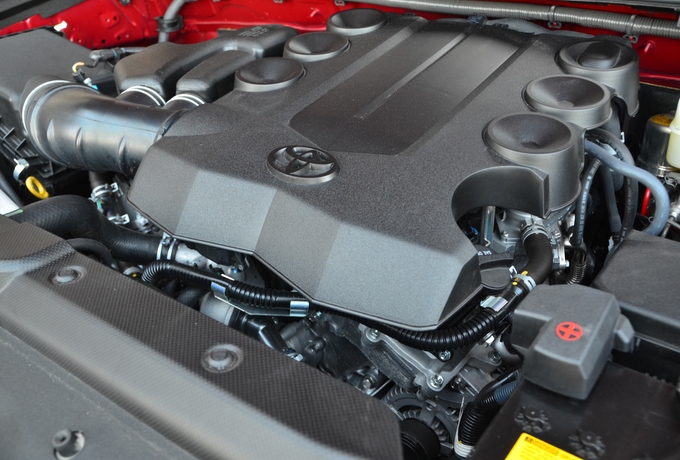
Under the hood is the familiar 4.0L DOHC 24 valve V-6 making 270 hp at a low 5,600 rpm and a stout 278 pounds of twist at 4,400 rpm. It is the only choice, as the 2.7L inline four is no longer offered in a 4 x 2. Good move Toyota as the four banger didn’t get any better fuel economy than the V-6 and it was saddled with a four-speed auto cog swapper. It gave up too much performance for essentially no better fuel economy. The V-6 sends its power to either the rear wheels or four wheels via a five-speed auto tranny. While not a six- or more speeder, the five-speed unit does a great job. A six-speeder wouldn’t make much difference with this engine’s broad torque curve, which is table top flat from 1,800-5,200 rpm.

Temperature during the road test was over 95 degrees, which may have some effect on diminishing performance, which is probably why this 4Runner Trail Premium performed differently than my road test of four years ago of the exact same model. Zero-60 mph times averaged 7.78 seconds. Passing performance was quick as well with a 50-70 run requiring just 3.98 seconds and the same run up a six percent grade slowing that time by almost two seconds to 5.78 seconds. Excellent times for a 4,750-pound vehicle, but slightly off the numbers from 2010 — 7.48, 3.65 and 5.22 seconds. While Temperature can make a difference, the difference in the numbers is insignificant.

However, fuel economy was about the same, if not slightly improved. EPA rates the 4Runner at 17/21/18 mpg city/highway/combined. But the 4Runner did a bit better with an overall average of about 18.5 mpg and at 70 mph on a level highway it returned 23.5 mpg (runs are done two ways to correct for winds and elevation changes). On a 150-mile roundtrip to South Lake Tahoe on Highway 50 with at least half a dozen full-throttle passing runs, the 4Runner averaged 21.4 mpg (17.8 from Rescue to SLT and 25.0 mpg on the return trip). Ten years ago those would be good numbers, but today they are only slightly above average. One saving grace is the 4Runner’s huge 23-gallon fuel tank.

Suspension duties are handled by a stout fully independent double wishbone set up in front and a four link extremely well controlled live or solid axle in the rear. Gas shocks with coils are in all four corners. This Trail Premium had the optional Kinetic Dynamic Suspension System, which used larger stabilizer bars that can disconnect for more axle travel and greater articulation in difficult terrain and rock crawling.

Also helping off road control is the CRAWL system to match terrain with five speed levels which keeps off roading smooth and under total control. In addition it also has a Multi-Terrain system which adjusts wheel slip to match the terrain selected. Also helping is Downhill Assist Control and Hill Start Assist Control, both excellent additions to increase off road safety.

Handling, enhanced by very quick steering, 2.7 turns lock to lock, is very good. When pushed hard in the corners you can feel the wide 265/70 series tires working on the 7.5 x 17 inch alloys changing the direction of a 5,000 pound vehicle. Surprisingly, body roll is controlled. In my prior test I remarked how the VSC intervened too early. The good news is that it must have been recalibrated as it didn’t intervene at all during this test. Thanks, Toyota.

During the Tahoe run I stayed behind a late model Corvette with no problem. He drove with sanity as our speeds rarely exceeded 60 mph.

Ride quality was extremely smooth on the interstate to a muted firm in more difficult road conditions. At no time was it jarring. Only when the engine was pushed hard did engine noise enter the cabin, but in normal driving it is very quiet, no wind, road or engine noise. The engine turns a slow 2,000 rpm at 70 mph. It is a comfortable ride.

Brakes are powerful with vented discs well over a foot in diameter in all four corners. Stops from 40 mph were accomplished in 42 feet under perfect control. All the acronyms are standard along with plenty of airbags including a roll sensing side curtain bag for all rows of seats.

With the Trail Premium upgrade, seats go from cloth to a very good synthetic leather called SofTex that will have you second guessing as to whether it’s leather. They seem more comfortable with excellent support then in my previous go-round. The instrument panel is a joy to use. Yes it has all the bells and whistles but it is very intuitive. Instrumentation is complete and extremely legible and usable as you would expect. Rear seating is huge also meaning cargo room is copious, about 90 cubic feet behind the front seats and almost 50 cubic feet behind the second row. A third row option is available as is a slide out rear table, very convenient for tailgating or loading and unloading.

Pricing for the Trail Premium starts at $38,645 plus $860 for the boat ride from Japan. It also had the optional KDSS for $1,750. Add in running boards, sliding cargo deck and floor mats and you are at $42,175. Everything else is standard including NAV, sunroof, backup camera, the connectivity to talk to the space station and power heated front seats. In 30 years the 4Runner has matured nicely. Maybe they should change the name to “4MostRunner.”

Larry Weitzman has been into cars since he was 5 years old. At 8 he could recite from memory the hp of every car made in the U.S. He has put in thousands of laps on racetracks all over the Western United States.


LTUSD-LTCC seek seamless transition

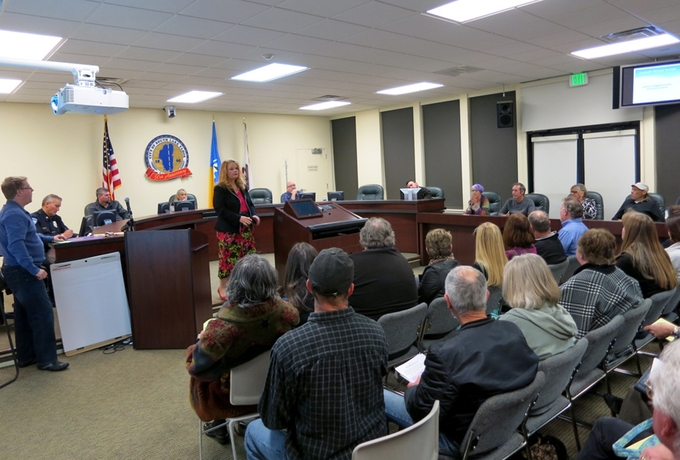
LTUSD and LTCC board members meet March 24 for the second consecutive year. Photo/LTN

LTUSD and LTCC board members meet March 24 for the second consecutive year. Photo/LTN

By Kathryn Reed

Education and life post high school graduation are becoming less distinct transitions in South Lake Tahoe.

Instead of the solid lines between grade levels and physical entities, the powers that be are on a quest to make it a seamless transition. Lake Tahoe Unified and Lake Tahoe Community College are trying to blur the lines between the academic institutions.

This will be accomplished in several ways. Part is through a dual enrollment program that was unveiled Tuesday night to LTUSD and LTCC board members. This was the second joint meeting of the two elected boards.

The goal is to develop a memorandum of understanding that would have a South Tahoe High School teacher teaching a college-level course. The dual enrollment concept has been around since 1974. Today 60 high schools in California participate in dual enrollment.

LTUSD Assistant Superintendent Ivone Larson and LTCC Dean of CTE & Instruction Virginia Boyar jointly presented the idea to the elected officials March 24.

Dual enrollment allows high school students to get a head start on college credits.

Still to be determined is what the cost, if any, of these classes will be for STHS students. No matter what, LTCC will be able to count them as students, which allows the college to get financial reimbursement from the state.

“Dual enrollment offers high school students the opportunity to complete college level courses while still attending high school,” the staff report said. “These college courses can occur at the college, on the high school campus, or online. Courses that are completed through dual enrollment appear on both the students’ high school and college transcripts.”

Up to 30 semester units may be obtained.

Complementing this will be the Get Focused Stay Focused Initiative. This two-year pilot program that ends in December 2016 involves seven community colleges in the greater Sacramento area, including LTCC.

It will start this fall with the incoming freshmen class, with the pilot program ending after the first semester of their sophomore year.

The goal is to get students to think about their future and not just be in the moment. Flexibility is built in so teens can change their minds about what they want to do in the future. It’s not all about having a college degree be the end goal, but instead about having a plan for their lives.

The semester-long class is designed to get students to have realistic discussions regarding the realities of life. It means if their goal is to live in Glenbrook and they want a job in retail, then one of those goals needs to change. They will be taught about economic realities, what to do to achieve dreams, and know that college does not have to be the answer.

“There is a pathway for everyone,” Boyar said.

Students will develop a 10-year education and career plan.

An advisory committee will be put together between LTUSD and LTCC officials to solidify the plan.

What high schools that have the Get Focused Stay Focused Initiative have found is that students are more engaged, not as many kids drop out, and graduation rates increase. Colleges like that students arrive with a plan of study, need fewer remedial courses and are focused on a goal.


Editorial: Restore protections in Voting Rights Act

Publisher’s Note: This editorial is from the March 9, 2015, Los Angeles Times.

In his eloquent speech at the 50th anniversary of the march in Selma, Ala., President Obama did more than salute the men and women who braved “billy clubs and the chastening rod; tear gas and the trampling hoof” to demand the right to vote. He also exhorted Congress to honor their legacy by restoring protections of the Voting Rights Act that the Supreme Court stripped away almost two years ago.

Noting that some 100 members of Congress had come to Selma to commemorate the march, Obama said: “If we want to honor this day, let that hundred go back to Washington and gather four hundred more, and together, pledge to make it their mission to restore that law this year. That’s how we honor those on this bridge.”

Yet, thanks largely to opposition from Republicans, prospects are poor for legislation that would restore a role for the federal government in combating racial discrimination in voting.

Read the whole story


Break for gaming, mining, others in Sandoval tax bill

By Kyle Roerink, Las Vegas Sun

CARSON CITY — Buried in the 130-page tax bill that Gov. Brian Sandoval pitched to lawmakers last week, there’s a safe haven for mining, gaming, insurance and bankers.

The tax, known as the business license fee, is a broad-based framework that would levy new dollars from the state’s 330,000 businesses based on percentages of their gross revenues every fiscal quarter. Section 20, which outlines a series of deductions and exemptions, is what all special interests are looking at in the bill. It cuts new loopholes into law and protects some industries from double taxation. An array of the state’s industries are eligible: mining companies, aircraft manufacturers, gaming operations, insurance companies, hospitals, retailers and others.

Critics of the bill say the deductions and exemptions could lead to a slippery slope of largesse as Sandoval and other lawmakers in support of the tax try to push the bill through the Legislature. In other words: If one industry gets a break, others will come with their hands out.

Read the whole story