Smart luggage new trend in travel industry

By Jane L. Lever, New York Times

It wasn’t long ago that the main selling point of a piece of luggage was its durability — think American Tourister and its rather excitable gorilla.

Not for Kevin Harwood.

Like many travelers today, he is looking for technology to go along with durability. He stumbled across a carry-on bag controlled by smartphone — with a Bluetooth-enabled lock, GPS tracking and a USB port for recharging a device. It has a built-in scale, too.

“I’m a little bit of a geek, always looking for products that extend from my phone, that connect my world and me,” said Harwood, a 30-year-old software developer from Austin, Texas.

Why should luggage be any different?

At the crowdfunding site Indiegogo he was among the first to buy into a start-up called Bluesmart that is developing a connected bag. Harwood has plenty of company. Bluesmart raised more than $2 million from more than 10,000 backers, far surpassing its goal.

Bluesmart, which expects to deliver its first bags in October, is part of what has become a stampede of businesses — both start-up and established — into the nascent connected luggage industry.

Read the whole story


Snippets about Lake Tahoe

barton• Gregory Bergner will retire from Barton Urgent Care & Family Practice on April 14. He has served as Barton’s chief of staff and is one of Barton’s board of directors. In 1981, Bergner opened Tahoe Family Physicians with Brooks Martin and Paul Rork.

• South Lake Tahoe Optimist Club Easter Egg Hunt at Lake Tahoe Community College Parking Lot 1 is April 3 at 10:30am. Parents will not be allowed to enter any designated hunt areas with their child. Bring a basket or sack to hold eggs.

• Heavenly Mountain Resort access is via the gondola or Stagecoach Express. At this time the resort is still planning to close April 19.

• Barton General Surgery is moving to 2158 Jean Ave. in South Lake Tahoe. The surgery office will be closed on April 3 and April 6.

• The Bicycle Advisory Committee of the South Lake Tahoe Recreation Facilities Joint Powers Authority will meet April 3 from 9-11am at Lake Tahoe airport.


Iron deficiency can be a problem for athletes

By Amanda MacMillan, Outside

Endurance athletes are at risk of an iron deficiency. And if you are iron-deficient, a supplement may indeed improve your performance and health. But if your iron levels are normal, or close to normal, taking a pill every day won’t affect much besides your wallet.

Michael Zourdos, assistant professor of exercise science at Florida Atlantic University’s Muscle Physiology Lab and lead author of a new study on this topic, says he’s skeptical of supplements. “But iron deficiency is one of the most common micronutrient deficiencies worldwide,” he says, “and we know that endurance athletes—and runners specifically—are likely candidates for it.”

That’s because the act of running—that repetitive pounding for miles at a time—causes muscle damage and hemolysis, or the destruction of red blood cells. That’s perfectly normal, and necessary to build new muscle. But in extreme cases, like when someone is training for a marathon or an ultra, it can trigger iron loss because most of the body’s iron is stored in red blood cell proteins, called hemoglobin, that are being destroyed.

And runners often don’t get enough iron in their diets, despite the fact that their total caloric intake tends to be higher than the average person’s. “Because they’re so focused on carbs, they eat less total protein and less high-quality protein,” says Zourdos, “which for most people is their main source of iron.”

Read the whole story


K’s Kitchen: Turning spinach into soup

By Kathryn Reed

A creamy soup without any cream. Already it’s healthier than so many others.

I’m not sure I have had a spinach soup before, but in keeping with the spinach kick I’ve be on this year, I figured this would be a new way to ingest this leafy vegetable.

The curry-oil drizzle as well as the mint leaves gives the soup an added punch. It’s still good without the “extras” – which is how I had it as leftovers – but there did seem like something was missing. Plus, the drizzle and mint leaves add to the presentation – always important when being served to guests.

The other great thing about this recipe is that it is easy and relatively quick to fix. It’s also not too heavy. It seems like so many winter soups leave you stuffed. Not this one. It left me satisfied – and wondering why I had never had spinach soup before.

spinach soupCreamy Spinach Chickpea Soup

4½ T canola oil, divided

2 medium shallots, diced

1 T garlic, minced

2 T ginger, minced

2 15-ounce cans chickpeas, drained

5 C vegetable broth

1 tsp kosher salt

6 C packed spinach leaves

1¼ tsp curry powder

1½ T lime juice

2 T small mint leaves

Heat 3 tablespoons of oil in medium pot over medium heat, add shallots. Cook until softened and translucent.

Add garlic and ginger, stirring for 1-2 minutes.

Add chickpeas, broth and salt. Bring to boil. Reduce to simmer and cook until flavors are blended and chickpeas are soft – about 25 minutes.

Add spinach. Cook until partially wilted. Let cool 5 minutes.

Heat remaining oil in small frying pan over medium-low heat. Stir in curry powder and cook until aromatic. Remove from heat.

Use emulsion blender or regular blender to cream soup. Pour into individual bowls.

Just before serving, stir lime juice into curry oil, then drizzle onto soup bowls. Garnish with mint.


Nev. water officials stress conservation

By Anne Knowles

RENO — The fourth consecutive year of drought in and around Lake Tahoe is shaping up to be the worst by far.

Snowpack in the Lake Tahoe Basin is down to 3 percent of normal, said Nevada State Climatologist Doug Boyle, during a presentation on the drought at the UNR on Tuesday.

Nearby basins are faring little better. The Truckee River Basin stands at 14 percent, while the Carson River Basin is at 5 percent and the Walker River Basin, south of Lake Tahoe, is at 21 percent.

Boyle said Nevada has so far received less than 3 inches of precipitation, about 60 percent of normal and a three-year trend.

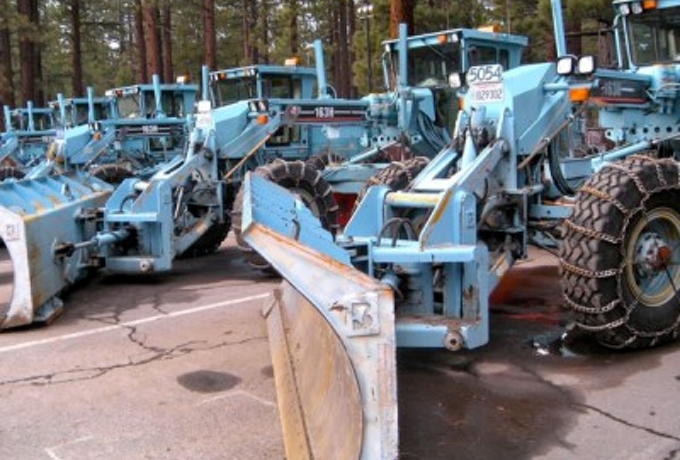
Idle snowplows is becoming the norm as the drought persists. Photo/LTN file

Idle snowplows is becoming the norm as the drought persists. Photo/LTN file

“If you include the year before that, over an entire year of precipitation is missing in many parts of the state,” he said.

Boyle said the forecast through June shows no relief, with higher than average temperatures and, at best, normal precipitation expected.

Separately, Truckee Meadows Water Authority announced it was asking customers to voluntarily cut back water consumption by 10 percent in order for the water purveyor to save and store up to 5,000 acre-feet, or 1.6 billion gallons, of water for next year.

TMWA outlined guidelines for watering lawns, including watering 4-6 minutes three times on assigned watering days.

John Cobourn, water resource specialist with UNR Cooperative Extension, who was part of the drought presentation at UNR, told Lake Tahoe News homeowners should test sprinkler systems for efficiency.

“It’s not uncommon for lawns to get five times the amount of water they need,” said Cobourn.

He said a simple test is to place empty soup cans, about 20 per 1,000 square-foot lawn, and run the sprinkler system to check for volume and consistency.

If the cans capture varying amounts of water, the sprinklers need to be fixed to ensure even application rather than increasing the water overall.

He said to also check the cans for volume. Lawns should be watered three times a week and the total should not exceed 1.5 inches in the summer.

Boyle and Cobourn were joined by about a dozen other water experts from UNR and the Desert Research Institute discussing various programs and efforts to monitor and forecast the ongoing drought and to find better, more efficient ways to use water.

Water for the Seasons, for example, is a four-year program started about six months ago and staffed by UNR, Cooperative Extension and DRI. Funded by the U.S. Department of Agriculture and the National Science Foundation, the program is taking a more holistic approach to water usage.

“How do you integrate data with very specific human behaviors? How do you enhance resiliency?” asked Maureen McCarthy, interim director of Academy for the Environment at UNR.

The program focuses on the Truckee Carson river system, but McCarthy said solutions could be applied to any snowpack-based water system. The program’s staff of 10 is talking to water managers including TMWA, Tahoe Regional Planning Agency, Carson Water Subconservancy District and the Truckee Carson Irrigation District.

Next, the group will work with water rights holders such as the Fallon and Fernley farmers served by TCID.

Eventually, a Stakeholder Advisory Group consisting of managers and rights holders will be formed to come up with ideas to more flexibly use water, such as creating consortiums of water users who share rights.

McCarthy is also executive director of the Tahoe Science Consortium, which is finishing up eight years of research funded by the Southern Nevada Public Land Management Act. That research includes lake clarity, fuels management, air quality, aquatic invasive species and snowpack and snow dynamics. The research is, in part, attempting to address the question on many peoples’ minds.

“What do we do in the basin if this is the new normal?” said McCarthy.


Stateline casinos do better than state

The Super Bowl often makes that month’s gaming numbers in Nevada in the positive. Not so this February.

Losses on the Strip helped bring down the entire state, according to the Nevada Gaming Control Board. Casinos won $916.1 million in February, a drop of 1.08 percent compared to 2014.

Stateline properties, though, fared better. They were up 5.66 percent year-over-year to more than $15.57 million.

— Lake Tahoe News staff report


Road beat: Mazda 3 best in its class

The Mazda 3 has plenty of power. Photos/Larry Weitzman

The Mazda 3 has plenty of power. Photos/Larry Weitzman

By Larry Weitzman

A few months ago the Road Beat had a chance to test the best compact car in current production, the Mazda 3 2.5L hatchback, a virtual econo-rocket that combines excellent performance with phenomenal fuel economy, plus near sports car handling coupled with good ride quality. But that was a fully loaded Mazda 3 that stickered at $500 shy of 30 large. But then again there are Priuses that sticker for well over $30K.

What about the basic Mazda 3, a smaller engine (2.0L), automatic with no upgrades except for a sunroof and a “better” radio, how does it compare? Is it still a standout in its class? The answer again is a resounding yes. First, the Mazda 3 is the best-looking econobox small sedan in the marketplace. Its Takeri derived exterior is simply a cut above all else out there. It is aggressive, clean and edgy. In fact, if you don’t look close, it is difficult to tell the Mazda 6 and the Mazda 3 from one another. Coefficient of drag is a super low 0.26.

Specifications  Price About $19,000 to $30,000 Engine  DOHC, 16 valve inline 2.0L four 155 hp @ 6,000 rpm                                                          150 ft-lb of torque at 5,000 rpm Transmission Six Speed torque converter automatic,  Configuration Transverse mounted front engine/front wheel drive Dimensions Wheelbase 106.3 inches Length 180.3 inches Width 70.7 inches Height 57.3 inches Track (f/r) 61.2/61.4 inches Ground clearance 6.1 inches Weight 2,848 pounds Weight distribution (f/r) 60/40% Fuel capacity 13.2 gallons Cargo capacity 12.4 cubic feet Steering lock to lock 2.57 turns Turning circle (curb to curb) 34.78 feet Turning circle (wall to wall) 37.07 feet Wheels 16X6.5 inch alloys Tires 215/45X18 all season radials Co-efficient of drag (sedan/hatchback) 0.26/0.28 Performance  0-60 mph 7.97seconds 50-70 mph 4.46 seconds 50-70 mph uphill 6.74 seconds Top speed 130 mph electronically limited Fuel economy 30/41/34 mpg city/highway/combined. Expect 35 mpg in rural country driving and 41 mpg or more on a level highway at legal speeds.

Specifications
Price About $19,000 to $30,000
Engine
DOHC, 16 valve inline 2.0L four 155 hp @ 6,000 rpm
150 ft-lb of torque at 5,000 rpm
Transmission
Six Speed torque converter automatic,
Configuration
Transverse mounted front engine/front wheel drive
Dimensions
Wheelbase 106.3 inches
Length 180.3 inches
Width 70.7 inches
Height 57.3 inches
Track (f/r) 61.2/61.4 inches
Ground clearance 6.1 inches
Weight 2,848 pounds
Weight distribution (f/r) 60/40%
Fuel capacity 13.2 gallons
Cargo capacity 12.4 cubic feet
Steering lock to lock 2.57 turns
Turning circle (curb to curb) 34.78 feet
Turning circle (wall to wall) 37.07 feet
Wheels 16X6.5 inch alloys
Tires 215/45X18 all season radials
Co-efficient of drag (sedan/hatchback) 0.26/0.28
Performance
0-60 mph 7.97seconds
50-70 mph 4.46 seconds
50-70 mph uphill 6.74 seconds
Top speed 130 mph electronically limited
Fuel economy 30/41/34 mpg city/highway/combined. Expect 35 mpg in rural country driving and 41 mpg or more on a level highway at legal speeds.

Mazda 3’s ride on a long 106.3 inch wheelbase with a body that extends 180 inches, which is fairly standard for all compacts. It stand a little wider at 71 inches with broad, well defined shoulders but maintains a sleek look with a height of 57 inches, made more remarkable with a ground clearance of 6 inches.

Buried beneath the bonnet is Mazda’s 2.0L SkyActiv inline 4-cylinder engine with all the bells and whistles including direct injection with its remarkably high 13:1 compression. Of course its DOHC valve train and 24 valves create 155 hp at a relatively low 6,000 rpm plus 150 pounds of peak twist at 5,000 rpm. As econoboxes go, this is the most powerful standard engine in its class. It is connected to either a six-speed manual or torque converter automatic.

Performance is again at the top of the class with 0-60 mph elapsed time of 7.97 seconds, the only standard engine compact car that breaks the eight second mark. Passing times are also class leading with 50-70 mph times of 4.46 seconds on level ground and 6.74 seconds up a six percent grade. Times for the 2.5L version of the Mazda 3 are 7.08, 3.914 and 5.74 seconds, respectively.

While the performance benefits of the 2.5L engine are substantial, the fuel economy penalty for that extra moxie is minuscule. The 2.0L is rated again at a class high of 30/41/34 mpg city highway/combined. Overall in real driving conditions it averaged 35 mpg and at a steady 70 mph on a level highway the average for a two-way run was 43.1 mpg. The 200- pound heavier 2.5L engine five door hatchback averaged 33-34 mpg overall and 43.4 mpg at 70 mpg. If you are willing to spend a few bucks more for the extra fun and punch of the 2.5, fuel economy should not be a consideration as they are essentially the same and best in class. With the Mazda 3 with either engine, you get to have your cake, eat it too and still not get fat.

Changing directions in a Mazda 3 is a confidence inspiring experience. If you haven’t heard it before, Mazda is the most raced car in the world and that’s because they change directions so well. Can you say Miata? But the Mazda 3 is also heavily raced because of its inherently excellent handling. MacPherson struts reside up front and a multilink fully independent system holds up the rear. Most other compact cars use a less sophisticated torsion beam in the rear. But it’s all the other creds that make the Mazda 3 so good like a super quick electric rack that goes lock to lock in 2.57 turns. Its wide track of 61 inches is bookended with 16 x 6.5 inch alloys shod with 205/60 rubber, not exactly your everyday low profile track tire. But the reality is a fine handling sporty compact that do the twisties at a brisk pace that will surprise you. As compacts go, Mazda’s crisper handling and feedback is a cut or two above the rest of the class except for maybe a Focus ST (which is a related car).

Ride quality is also sporty. No soft cush here, as the quality as with the other Mazda 3 can be best described as firm supple but slightly less firm then the 2.5L hatchback with the taller 18 inch wheels and lower profile tires. The base 3 is a quieter well controlled ride. On the highway the engine spins a low 2,000 rpm and is inaudible as a compact car can be. Coarse roads will bring out some road noise.

Braking is by four-wheel discs (front rotors are ventilated) that arrested forward progress from 40 mph in 43 feet with excellent control and a strong pedal. Of course ABS and all the other acronyms are standard equipment along with blind spot monitoring, a rear cross check traffic alert system and a rear view camera besides six airbags. Nice. Standard halogen headlights are also excellent. One point of note is to get cruise control you have to upgrade from the base model to the Sport model. The touring sedan as tested here is one grade above the Sport and adds even more standard equipment. Sport also gets a tach and trip computer, so in buying a Mazda 3 buy the Sport model or higher.

Handling is good with this  sporty vehicle.

Handling is good with this sporty vehicle.

Inside are premium cloth seats that are six-way manually adjustable that are quite comfortable. Rear seating area is also good for two, but a pinch for three, sort of like the middle seat on a narrow body airliner. A couple of grips are in the too small tach and the radio systems control. Sticking up at the top of the center stack is a screen that looks like an after though. If that isn’t a bit hokey, then the knob located in front of the center console is. It is just too difficult to use. Whatever happened to a volume knob, tuning knob and buttons for presets and function? What a concept.

A well shaped trunk holds 12.4 cubic feet.

Pricing starts for the Mazda 3 Touring sedan is $20, 645 plus $795 for the boat train from Salamanca, Mexico where it is assembled. Also standard is a five-year 60,000 miles powertrain warranty plus the usual 36/36 bumper to bumper warranty. It is simply the best compact car on the market today having the best performance and highest mileage in the class.

Larry Weitzman has been into cars since he was 5 years old. At 8 he could recite from memory the hp of every car made in the U.S. He has put in thousands of laps on racetracks all over the Western United States.


Ordinance would redefine lodging in SLT

By Kathryn Reed

South Lake Tahoe has an overabundance of lodging units. With 26 percent of the more than 5,000 rooms within the 120 hotels-motels being used for long-term rentals, the city is on a quest to change the rental market landscape.

In doing so, it could help the hotel market so the less desirable rooms are off the market and are not dragging down the average daily rate.

Average daily rate for South Lake Tahoe hotels in fiscal year 2013-14 was $127.65, according to the Lake Tahoe Visitors Authority. Those are the most current statistics. That number has been rising since 2009-10, but is still off the peak of $137.11 in 2008-09.

Occupancy in 2013-14 was at 25 percent. Since 2003-04, occupancy has ranged from 20 to 28 percent. Hotel occupancy in a tourist destination should be double those numbers, according to officials. City officials would like an occupancy rate of 60 to 70 percent.

“As far as single occupancy motels, I think any destination is served well with a mix of property types, but we just have more than we need from a demand perspective. And from a visitor perspective, we think he/she is looking for more amenities than that typical property would be able to provide,” Carol Chaplin, LTVA executive director, told Lake Tahoe News.

The single room occupancy ordinance will essentially legalize long-term rentals, even though city officials say that is not the case.

“We are working with TRPA because these are still in essence short-term housing. They are not intended for long term,” City Manager Nancy Kerry told Lake Tahoe News. “They are transient occupancy.”

The city is calling this change a hybrid model.

Property owners will still get to keep their transient occupancy units, which in the Lake Tahoe Basin are a commodity. The Tahoe Regional Planning Agency decades ago created them as a way to control growth. Mission accomplished. However, the unintended consequence is that these properties have a higher value than they would if left to the free market.

What the ordinance is intended to do is address the quality of life for people in these units. Many people are cooking in them, stressing electrical systems that were not designed for this use, and they don’t have laundry facilities.

Rent at some of these places is $900 a month. People are in them because they can’t save enough for first, last month’s rent and a deposit.

Val McClay, 17, lived in the Elizabeth Lodge with her dad and younger brother when they first arrived to town last year. The room had a mini refrigerator and microwave. It was small, pretty clean and didn’t have laundry.

“The best thing about it was it was a place to live. The worst were the neighbors and the people there were not good. They were loud and disruptive,” McClay told Lake Tahoe News.

Current code does not allow inspections of hotels. The proposed ordinance would allow inspections similar to what is done with multi-family residential housing.

One of the problems is the city doesn’t have many places for short- or long-term rentals. That is how the hotels got into the business of providing residential housing instead of tourist accommodations.

“I think the city is creating an opportunity for people such as myself to provide better quality moderate income housing,” Dave Kurtzman, who owns 20 units that would be affected by the ordinance, told Lake Tahoe News. “I am not sure how I will go about doing it. It will depend on what the regulations are.”

His goal, as well as the city’s, is for tenants to have better accommodations.

It will be up to the property owners if they act more like a traditional motel, where paying transient occupancy tax is required, or if they comply with the ordinance to essentially act as a long-term rental.

Kerry hopes the changes will attract capital investors to the area; as well as better align the supply-demand of tourists-hotels and residents-living quarters.

“Government can create policy to help incentivize change. The ordinance is intended to do that,” Kerry said.

Neither Lake Tahoe South Shore Chamber of Commerce’s board nor its Government Affairs Committee hacw taken an official position on this topic.

“There are numerous perspectives in addition to intended and unintended consequences to be discussed and addressed during the process,” B Gorman, CEO of the chamber, told Lake Tahoe News. “There are questions that need to be answered related to the impacts on lodging such as the direct impact these properties have or could have on lodging rates and property values. There are additional community and societal concerns related to the aesthetic impact these properties currently have on the community versus the potential improvements as well as crime, health and safety issues.”

—–

Notes:

• Single room occupancy ordinance workshop on April 22 at 5pm at South Lake Tahoe Senior Center, 3050 Lake Tahoe Blvd.

• The ordinance should be voted on this spring by the City Council.

• Property owners would have one year from July to become compliant.



Editorial: Treat wildfires like other natural disasters


Publisher’s note: This editorial is from the March 23, 2015, Sacramento Bee.

An out-of-control wildfire is just as much a natural disaster as a hurricane or flood. Just ask Californians who fled for their lives or saw their homes burn down in recent years.

But that’s not how wildfires are handled in the federal budget, and it’s taking money away from worthwhile programs in our national forests and parks.

This has to change.

The U.S. Forest Service, the White House, bipartisan supporters in Congress and conservation groups are on the right track. They’re trying to push through legislation (HR167) so that the costs of fighting the few catastrophic wildfires would be paid from emergency funds, just as when other natural disasters strike. The Forest Service and Interior Department would continue to fund routine firefighting from their regular budgets.

Read the whole story


Pros better prepared to recover from injury than weekend warriors

By Amanda MacMillan, Outdoors

Lindsey Vonn made history this year with her 64th World Cup win — the most ever for a female skier — after spending most of 2014 rehabbing a torn ACL. Even more remarkable: she had not one but two major knee surgeries in the past two years.

Many people who tear their ACLs are told it can take at least a full year, post-surgery, to get 100 percent of their strength and function back. For them, Vonn’s return to the slopes, just 10 months after her second operation, may have seemed a bit hasty.

But compared to other professional athletes who’ve battled similar or equally devastating injuries, a recovery like Vonn’s has become standard, if not leisurely. Take Adrian Peterson, who returned to football just nine months after his own ACL tear in 2012. Or Monster Energy snowboarder Iouri Podladtchikov, who won a bronze medal in Snowboard SuperPipe at last month’s X Games just two months after having surgery for a fracture, torn ligament, and misplaced tendon in his ankle.

So what is it about the pros? Do they recover more quickly because they’re better athletes, or because they get better care? According to John Xerogeanes, chief of sports medicine and professor of orthopedic surgery at Emory University Hospital, it’s usually a bit of both.

When an injury occurs — whether it’s a torn ligament or a broken bone — it’s the muscles and tendons around that injury that are so important for recovery after surgery, says Xerogeanes. And compared to amateur athletes, the pros almost always have an advantage there.

Read the whole story