The real cost of U.S. addiction to cattle

By Simon Worrall, National Geographic

They provide us with beef and milk, the gel coating for pills, soap, ice cream, baseballs, and printing ink. But our dependence on cattle, especially the beef we consume in larger quantities per person than any other country except Argentina and Luxembourg, comes at a cost: industrial feedlots where cattle stand knee-deep in their own feces, pumped full of antibiotics and growth hormones for them; clogged arteries, obesity, and heart attacks for us.

From their home in Seattle, husband-and-wife team Denis Hayes and Gail Boyer Hayes, authors of “Cowed: The Hidden Impact of 93 Million Cows on America’s Health, Economy, Politics, Culture, and Environment”, explain why Julius Caesar feared aurochs; how “ag gag” laws are being used in America to suppress criticism of the meat industry; why a cow called Yvonne became a folk heroine in Germany; and how a ranch in Hawaii offers a sustainable alternative to industrial beef-farming.

Read the whole story


Groundbreaking motorcycle movie to air in Tahoe City

Bruce Brown’s “On Any Sunday: Next Chapter” changed the face of motorcycling in America. It opened up the mainstream’s eyes to a variety of two-wheeled sports that millions are consumed by during their free time, away from the hustle and bustle of the rat race.

Even more so, his film inspired entire generations to get on a motorcycle.

Brown will present the film with a Q& A session on April 25.

Squaw Valley Institute in partnership with the Tahoe Art Haus & Cinema in Tahoe City is putting on this latest installment of the Squaw Valley Institute Movie Night Series. There will be two showings — at 6pm and 8pm.

Tickets will be available at Tahoe Art Haus & Cinema; 530.584.2431


Settlement in Alpine County toxic mine case

Even though over the course of decades more than $100 million has been spent on cleanup activities at an old sulfur mine in Alpine County, a settlement agreement between disagreeing parties was just reached.

In July, at the Lahontan Regional Water Quality Control Board meeting officials said the settlement could happen any day. It took another eight months.

The Leviathan Mine is considered a superfund site, making it one of the most toxic areas based on Environmental Protection Agency standards. As a CERCLA site, there are certain parameters that must be followed. And there is also a certain amount of risk that is allowed. This site will presumably always be toxic, just not to the degree that it is today.

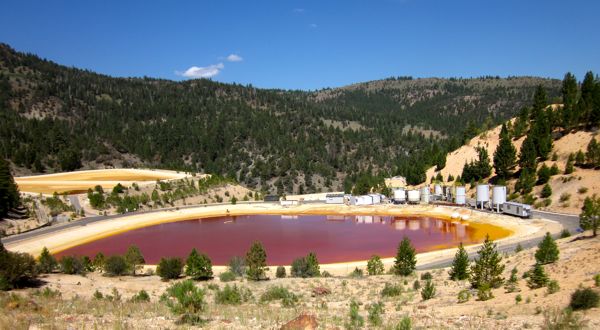
Leviathan holding ponds and treatment system used by Lahontan. Photo/Lahontan Water Board

Leviathan holding ponds and treatment system used by Lahontan. Photo/Lahontan Water Board

It is better than what it was. In 1999, there were no rainbow, brook or brown trout in Lower Leviathan Creek, according to the U.S. Fish & Wildlife Service. In 2013, there were 72 rainbows, 521 brooks and zero browns.

Anaconda Copper Mining Company used the mine from 1951-62. It was sold in 1963 to William Mann, who was Alpine County’s clerk, for $100. Eventually officials discovered acid mine drainage was contaminating Leviathan Creek. There was no way Mann was going to be able to write the checks for the cleanup. California stepped in in 1983 and bought the land.

A lawsuit was filed against Atlantic Richfield Co., which had bought Anaconda. A settlement of just more than $2 million allowed clean up to start. But then the Washoe tribe asked the EPA to get involved because the pollutants were creating a thick layer of orange precipitate along the streambed that ended up in the East Fork of the Carson River. The EPA went after ARCO, and in turn ARCO filed a suit against Lahontan.

It is that second lawsuit that was just settled.

The settlement details what work ARCO and Lahontan will conduct at the site going forward, and lays out the cost-sharing formulas. The settlement also secures long-term funding for a cleanup project that could take decades, if not centuries to complete, according to officials. Lahontan will design and construct the remedy, and ARCO will pay 75 percent of the cost to complete it. ARCO will also pay 70 percent of Lahontan’s expense to operate and maintain the remedy over the long term.

Today, Lahontan and ARCO have separate treatment systems. The settlement allows for just one.

— Lake Tahoe News staff report


Snippets about Lake Tahoe

snow• Warning from Caltrans: Winter driving conditions will return to the Sierra mountains April 5 through April 8. Snow levels are predicted to fall below 4,000 feet, with snow accumulations of up to 6 inches on Donner and Echo summits.

• Vacation home rentals – including a possible moratorium – are on the April 7, 9am South Lake Tahoe City Council agenda. The meeting is at Lake Tahoe Airport.

• Tahoe Parents Nursery School Open House is April 20 from 4:30-7pm at 1100 Lyons Ave., South Lake Tahoe.

• Tahoe Regional Young Professional’s mixer is April 8 from 6-9pm at Himmel Haus in South Lake Tahoe. The group will meet April 22 from 6-9pm at Jason’s Beachside Grille in Kings Beach. Cost is $10 for non-members, free for members.

• Henning Mehrens has been named Barton Health’s doctor of the year. Mehrens specializes in family practice and urgent care. He is the medical director of the Barton Skilled Nursing Facility.


Hard Rock to host music festivals

The third annual Lake Tahoe Reggae Festival opens the BaseJam Summer 2015 Outdoor Concert Series at Hard Rock Lake Tahoe.

The concert series runs from June 27-Labor Day weekend. It starts with the all-day reggae festival includes co-headliners Iration and Matisyahu. Also performing are the Green, Don Carlos, Fortunate Youth, Vokab Kompany and Squarefield Massive.

The inaugural Lake Tahoe Bluegrass Festival is July 11. The initial lineup includes: Greensky Bluegrass, the Del McCoury Band, Jerry Douglas’ Earls of Leicester, David Grisman Sextet and New Monsoon.

Doors for both festivals open at noon, with music starting at 12:30pm. Tickets to each are $45, with a limited number of VIP tickets are available for $90, which include access to a special front-of-stage viewing area, private bars and upgraded restrooms. Children 12 and under are $10 on the day of the show with proof of a full-price adult ticket. All children 6 and younger are free.

Tickets for the reggae festival are available online, and bluegrass tickets may be purchased on this website.

PR Entertainment Inc. is building and operating the temporary outdoor concert amphitheater that holds up to 7,500 people. The outdoor arena offers food concessions, full-service bars and a sponsor/vendor village to purchase retail items.


Big rig overturns in Truckee

Traffic is snarled in Truckee because of a truck accident.

A big rig on Friday afternoon overturned in the roundabout on Highway 89. It is blocking the northbound lane. Expect delays.

No other information was immediately available April 3.

— Lake Tahoe News staff report


Thunderbirds to be at Minden air show

The Air Force Thunderbirds will be performing during the Aviation Round-up on Aug. 22-23 at the Minden Tahoe Airport.

The Thunderbirds squadron is an Air Combat Command unit composed of eight pilots (including six demonstration pilots), four support officers, four civilians and more than 100 enlisted personnel performing in almost 30 job specialties. A Thunderbirds air demonstration is a mix of formation flying and solo routines. The pilots perform approximately 40 maneuvers in a demonstration. The entire show, including
the ground show and air demonstration, lasts about 75 minutes.

Civilian aircraft will also be performing.

For more information, contact Bobbi Thompson at 775.782.9871.


SLT crews set to build bike park for summer use

By Kathryn Reed

By August cyclists may be cruising around Bijou Bike Park.

Bids are out for a professional park designer to be hired. The South Lake Tahoe City Council will likely award the contract in May to the person who will essentially be the construction manager.

It will be city crews doing most of the heavy lifting, with assistance from Bijou Bike Park Association volunteers and local contractors chipping in. It will take the better part of July to complete the park.

This is a change for the city. For the last 10 years most projects have been contracted out. Assistant Public Works Director Jim Marino is helping implement a new philosophy.

“We are trying to phase the street crews into doing more projects,” Marino told Lake Tahoe News. “There are talented operators with unique skills.”

Doing projects in house also saves money. The park, with two pump tracks and a BMX track in the center, will cost a little more than a half million dollars. The money is a mix of funds collected from the nonprofit cycling group, the city and in-kind work.

It will be built near the play area, down from the skate park and bordering the meadow. The future Greenway Bike Path will provide easy access to the park.

It will not impact the disc golf course. However, the par course will be eliminated at least temporarily. In future years the city is looking at replacing it with better, newer equipment around the perimeter of the bike park.

Because the city has access to dirt this has helped keep costs down. Marino said if soil had to be purchased, it would have made the bike park cost prohibitive.

About 800-cubic-yards are sitting at the park ready to be used as the base layer. This came from the Harrison Avenue project. El Dorado County will be able to supply about another 800-cubic-yards from a project it is doing this season. And the city will have access to dirt from this summer’s Sierra Tract work.

Tahoe Regional Planning Agency requires a permit to move dirt, though there are fewer hurdles when it is moved within the basin.

Bike parks are a growing attraction throughout the United States.

“It’s the perfect avenue to teach kids how to mountain bike,” Marino said.

Youngsters – and others – usually don’t like pedaling uphill. That leaves driving or taking a lift as the other options to get to the top in order to ride down. Bike parks eliminate the need to pedal uphill, but still provide the mountain bike experience.

All that dirt is needed to create the paths that have features on which to learn so riders can take those skills onto trails.

It’s not just newbies who use these parks. Parks like this are a way to practice, unwind and for friends to gather. So many mountain biking destinations – which Lake Tahoe is trying to become – have these parks.

Starting seeds indoors speeds up growing process

By Melinda Myers

Get a jump on the growing season by starting your favorite or hard to find plants indoors from seeds. Starting hard to find plants, like many of the heirloom or newly introduced varieties, from seed may be the only way you will be able to add these to your garden. Plus, you’ll be extending the growing season and bringing the fun of gardening indoors.

All you need is a little space, a few supplies and of course seeds to get started. Check the back of your seed packets for planting directions. Most recommend when and how to start seeds indoors as well as any other special care the seedlings will need.

Purchase, recycle or make your own containers from newspaper. Sanitize used pots by dipping them in a one part bleach and nine parts water solution and then rinsing them with clean water.

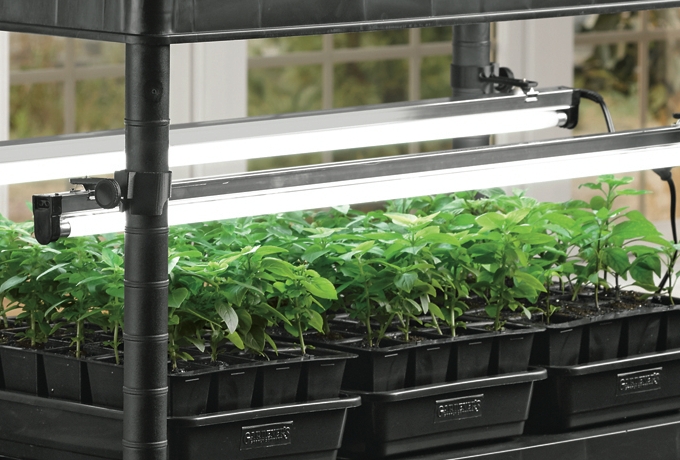
Indoor lights can bring seeds to life. Photo/Gardener’s Supply Company

Indoor lights can bring seeds to life. Photo/Gardener’s Supply Company

Fill the containers with a sterile well-drained potting mix or seed starting mix. Once the containers are filled, plant the seeds according to the seed packet directions.

For most seeds, plant them twice their diameter deep and gently water. Continue to water often enough to keep the soil slightly moist. Extend the time between watering and increase your seed starting success by covering the container with plastic. Or purchase a seed starting kit.

Move your containers to a sunny window as soon as the seedlings emerge from the soil. Turn plants often to encourage even growth. Or increase your success by growing seedlings under artificial lights. You can make your own light system or purchase tabletop, shelf units or easy to assemble light systems. Keep the lights four to six inches above the top of the seedlings for best results. As the seedlings grow, be sure to maintain this distance by simply raising the lights or lowering the containers.

Move overcrowded seedlings to larger containers once they have two sets of true leaves. The first leaves that appear are rather indistinct and are called seed leaves. The next set of leaves look more like the mature plant’s leaves and are called true leaves. Once the next set of true leaves forms, it is time to transplant overcrowded seedlings.

Use a fork or spoon to carefully lift out the seedling. Clusters of seedlings can be dug and carefully teased apart before planting in individual pots. Be careful not to pinch and damage the young tender stems.

Place seedlings in their own clean container filled with moist sterile potting mix. Plant the young plants at the same depth they were growing in the original container.

Thin seedlings started in individual containers as needed. If you planted several seeds in each small container remove all but the healthiest one. Prune the weaker seedlings to ground level, so the remaining seedling can develop into a strong transplant for the garden.

Continue to grow your plants in a sunny window or under artificial lights and water thoroughly and often enough to keep the soil slightly moist.

Soon it will be time to move your homegrown transplants into the garden.

Gardening expert, TV/radio host, author and columnist Melinda Myers has more than 30 years of horticulture experience and has written more than 20 gardening books.


Study: High altitude living-depression linked

By Kristen Moulton, Salt Lake Tribune

The loss of oxygen from living at high altitudes or with chronic health issues can lead to depression.

A study from the University of Utah found that female rats living for a week at simulated high altitudes of 10,000 feet, 20,000 feet and 4,500 feet showed signs of depression. Lake Tahoe is at 6,250 feet. Male rats showed no ill effects.

“The significance of this animal study is that it can isolate hypoxia as a distinct risk factor for depression in those living at altitude (hypobaric hypoxia) or with other chronic hypoxic conditions such as COPD, asthma or smoking, independent of other risk factors,” said Shami Kanekar, a research assistant professor of psychiatry at the university and lead author of the report.

In the study published last month in High Altitude Medicine and Biology online, researchers gauged the animals’ depression based on their persistence during a swim test.

Because rats do not respond to the same psychological and societal pressures as people, the research strengthens the argument that physiological changes from low oxygen can contribute to depression.

Read the whole story