Reid touts Nevada as renewable energy leader

By Andrea Domanick, Las Vegas Sun

U.S. Sen. Harry Reid on Friday praised Nevada’s role as a leader in renewable energy business development and called for bipartisan support toward continuing that progress in the future.

Speaking at a clean energy luncheon at the MGM Grand organized by the Las Vegas Global Economic Alliance, Reid said he was proud of Nevada’s role in both developing renewable energy resources and attracting new businesses to the state.

“Las Vegas is becoming known as the best place in America for innovative businesses and renewable energy development,” Reid said, listing Tesla, Switch, Google, Apple and solar “hall of famers” SolarCity and SolarReserve among the companies that have chosen to do business in Nevada. “These companies are creating real jobs and putting Nevada on the map as a technology and renewable energy leader.”

Read the whole story


K’s Kitchen: Turning asparagus into soup

By Kathryn Reed

While it’s possible in the United States to get nearly any vegetable any time of year, there is no question eating them in their “normal” season without having been shipped from some foreign country makes a huge difference in flavor.

Asparagus is one of those seasonal veggies that come packed with wonderful nutrients and delicious flavor. Not much has to be done to those long stalks to enjoy them. One of my favorite ways to eat asparagus is to steam it and then squeeze fresh lemon juice and drizzle balsamic vinegar on it.

But with winter having returned – at least briefly – soup seemed necessary to stay warm.

I don’t cook with much salt, so I’m sure some people will want to add more. Just keep tasting it as you make it. I didn’t use an egg for leftovers.

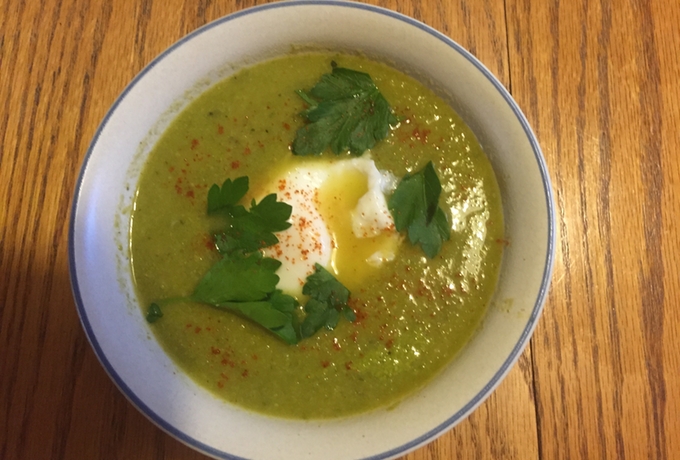
asparagus soupGreen Pea and Asparagus Soup

1½ tsp butter

2 leeks, white part only, trimmed and thinly sliced

4 C vegetable broth

1 tsp chopped fresh thyme

½ tsp kosher salt

¼ tsp black pepper

2 C frozen green peas

1 pound fresh asparagus, trimmed and coarsely chopped

¼ C chopped fresh flat leaf parsley, divided

1 T white vinegar

4 large eggs

2 tsp olive oil

Paprika

Melt butter in large saucepan over medium heat. Add leeks. Stir and cook for about 4 minutes.

Add stock, thyme, salt and pepper. Simmer.

Add peas and asparagus. Cook for 3 minutes.

Add 3½ T of parsley.

Puree mixture in blender or with emulsion blender. Continue to simmer soup.

Fill skillet two-thirds full with water; bring to boil. Reduce heat and add vinegar. Break individual eggs into custard or other small cup. Then gently pour eggs into pan. Cook for three minutes.

Pour soup into bowls.

Remove eggs with slotted spoon and place one into each soup bowl. Drizzle evenly with oil, sprinkle with remaining parsley and paprika.


Shorter stature may pose higher risk of heart disease

By Gina Kolata, New York Times

To the surprise of researchers who had thought the very notion a joke, an international consortium of investigators reported on Wednesday that shorter stature increases the risk of heart disease.

After gathering genetic data from nearly 200,000 men and women worldwide, the investigators found that each extra 2.5 inches of height brings a 13.5 percent reduction in heart disease risk. The relationship is present throughout the range of adult heights.

A person who is five feet tall has a 30 percent greater chance of developing heart disease than someone who is 5 feet 6, said a lead author of the new study, Sir Nilesh Samani, a professor of cardiology at the University of Leicester in England.

Of course, the increased risk pales in comparison to that caused by smoking, which elevates the odds of getting heart disease by 200 to 300 percent.

Read the whole story


Skateboard company teaches local youth

The Boys & Girls Club of Lake Tahoe has partnered with locally owned D.A.F.F.Y skate company to introduce skateboarding to its members.

On April 8 D.A.F.F.Y ran a four-hour workshop teaching the boys and girls how to skateboard.

D.A.F.F.Y’s mission is to empower young people to find fun and enjoyment through skateboarding. For every skateboard sold, D.A.F.F.Y donates a board to a child in need.


Scientists question government’s stance on salt

By Peter Whoriskey, Washington Post

For years, the federal government has advised Americans that they are eating too much salt, and that this excess contributes yearly to the deaths of tens of thousands of people.

But unknown to many shoppers urged to buy foods that are “low sodium” and “low salt,” this longstanding warning has come under assault by scientists who say that typical American salt consumption is without risk.

Moreover, according to studies published in recent years by pillars of the medical community, the low levels of salt recommended by the government might actually be dangerous.

But the debate over dietary salt is among the most contentious in the field of nutrition, and other scientists, including the leadership of the American Heart Association, continue to support the decades-old warning.

Read the whole story


Snippets about Lake Tahoe

caltrans• Here are the El Dorado-Tahoe and Sierra roadwork schedules from Caltrans for the week.

• Base Camp Festival, a day of electronic music, is set for July 25 at Lake Tahoe Golf Course in Meyers. For more info, go online.

• The FNCTN Winter Music Series’ final concert features NURELIX inside the Lake Tahoe Golf Course Clubhouse in Meyers on April 17. Doors will open at 8pm, 4 Piece Puzzle take the stage at 8:30pm and NURELIX at 10pm. Admission is $10.

• A Day of Healing Arts is a daylong food, shopping and wellness event in Tahoe Vista on May 16 from 9am-7:30pm. For more info, go online.

• Sierra Central Credit Union’s newest branch is at 3668 Lake Tahoe Blvd., South Lake Tahoe. •


Valhalla music fest upgrading facilities

"Motherhood Out Loud" is a special fundraiser in May. Photos/Provided

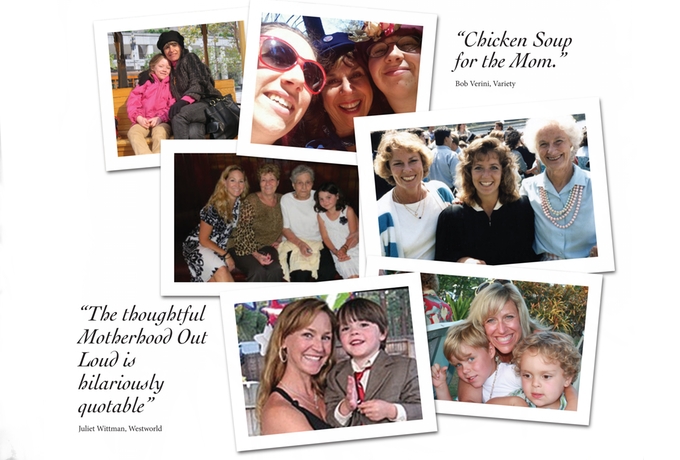
“Motherhood Out Loud” is a special fundraiser in May. Photos/Provided

By Kathryn Reed

Eclectic. That is the word the director of the Valhalla Art, Theatre and Music Festival is using to describe the 2015 season.

Evangeline Elston is returning for her second year as leader of this nearly 40-year-old South Shore tradition.

As with years past, there will be a mix of offerings for a variety of ages.

This season there is also a concerted effort to raise money to upgrade the aging facilities. Events are mostly staged at the Boathouse Theatre or Grand Hall. These are on U.S. Forest Service property just past Camp Richardson on Highway 89. The buildings have been around for decades. Columns around the Grand Hall should be replaced before the season starts.

Quinn DeVeaux and the Blue Beat Revue play July 29.

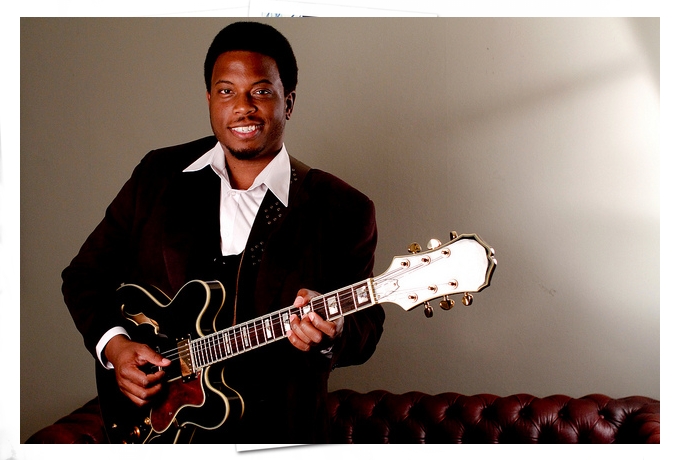
Quinn DeVeaux and the Blue Beat Revue play July 29.

“We have not given enough attention to the boathouse electrical system. We call them lighting ghosts. Sometimes you sit there with the lights dim for theatrical purposes and then every light goes on at once,” Elston told Lake Tahoe News. “It’s quaint, but we’re getting tired of it.”

Upgrading to LED lighting will occur. This will save money and reduce the amount of heat that is generated. Cost estimates are being sought for the desired improvements.

The main fundraiser for this project is a one-night engagement of the play “Motherhood Out Loud”, which sold out a couple years ago. This is the Saturday of Mother’s Day weekend next month.

A smaller fundraiser is April 27 at Lake Tahoe Paint and Sip.

The nonprofit arts group has revamped its website. Tickets can now be bought online, plus there are packages available and ways to donate to the cause.

Scottish fiddler Alasdair Fraser is opening the season on June 17.

“What we are going for this year is eclectic programming,” Elston said.

Her forte is music, so bringing in diverse acts is especially important to Elston. Music will range from jazz to folk to classic to rock. In addition to the midweek shows at the boathouse there will be four free concerts on the Great Lawn on Sundays.

Reaching out to the Hispanic community is a goal of the board that runs the festival. One way to do so is with the Calidanza traditional Mexican folk and contemporary dance troupe on June 27.

Susie Glaze and the Hilonesome Band are at Valhalla on Aug. 5.

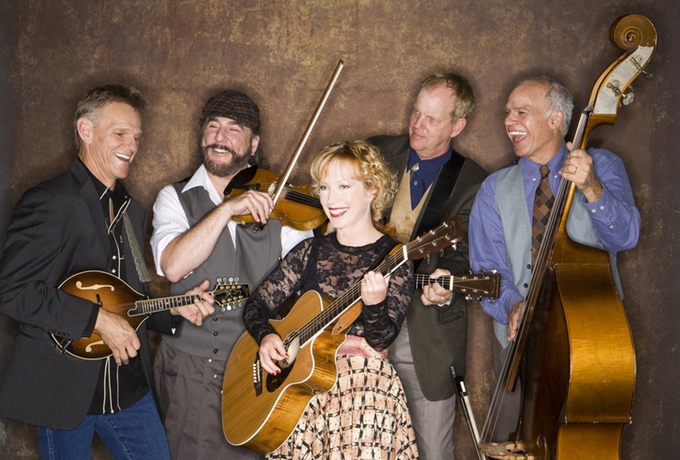
Susie Glaze and the Hilonesome Band play Aug. 5.

While normally the festival puts on two two-week plays, that isn’t the case this year. “On Golden Pond” will have a three-week stint, while the young adult theater’s “Midsummer Nights Dream” will have a four-day run.

“A lot of times what happens with theater is it picks up steam along the way,” Elston said. This is an experiment to see if a three-week show will draw more people in.

Four nights of comedy will return, as will some of the longstanding traditions like the artists in residence program and Great Gatsby Murder Mystery Dinner.

Word Wave in the fall is a major addition to the schedule. Elston described it as a “festival of story rather than a literary festival.”

—–

Notes:

• More information is available online.

• Telephone: 530.541.4975.

• “Motherhood Out Loud” fundraiser is May 9. For tickets, go online.

• April 27 fundraiser at Lake Tahoe Paint and Sip.


Then and now: Changing ski shops

old-sugar house

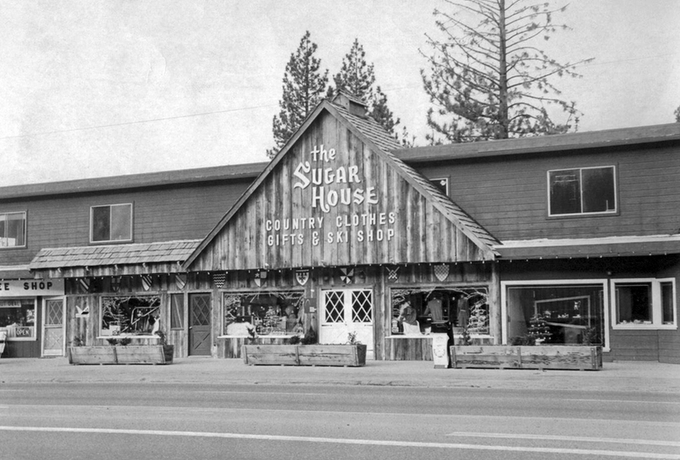
The Sugar House in the mid-1960s. Photo/Private Collection

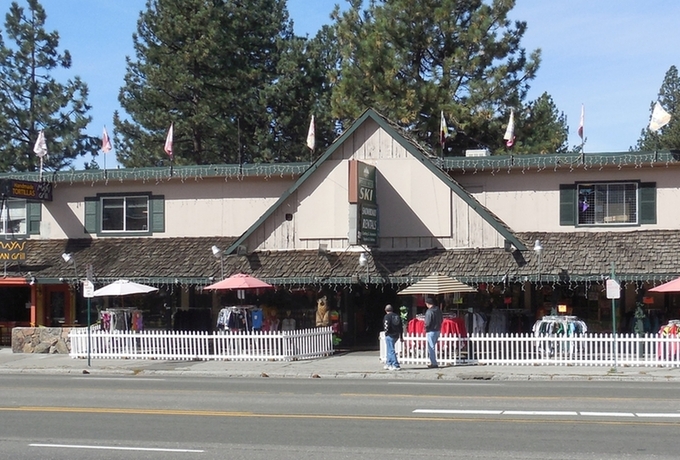
A long time local favorite lasting into the 1990s, Ceddy Sherer’s Sugar House was at the corner of Lake Tahoe Boulevard and LaSalle Street near Stateline. The coffe shop seen at the left in the photo above later became a steakery and until recently was Womack’s Texas-style Barbecue. Today it is Mayas Mexican Grill.

The Powder House ha this an another location.  Photo/Bill Kingman

The Powder House ha this an another location. Photo/Bill Kingman

Now the building houses the Powder House’s main store. The current owners have opened a second Powder House store in the Chateau complex, one block away.

— Bill Kingman


Festivals are more than just the music

By Zocalo

This weekend, tens of thousands – maybe even nearly 100,000 – music fans are rocking out at the Coachella Music and Arts Festival in Indio. With multiple stages going full-blast, festival-goers will face difficult decisions such as: Should I catch the soulful roots-rockers Alabama Shakes or the haunting Swedish singer-songwriter Lykke Li? Should I skip the electro-pop duo Odesza to get a good spot to see the superstar hip-hopper Drake?

And music isn’t the only delight on offer: When festival-goers get tired from dancing or being packed cheek-to-jowl in the crowd, they can eat up hot pots by Kogifood truck master Roy Choi, green gazpacho from “Top Chef’s” Marcel Vigneron, or boozy popsicles from the L.A. restaurant the Church Key. There also will be large, brightly colored sculptures to check out.

If Coachella isn’t your bag, there is a festival somewhere in the country for every interest – classical music at the Spoleto USA Festival in Charleston, S.C.; paintings that come to life at the Pageant of the Masters in Laguna Beach; all the Bard you can consume at the Oregon Shakespeare Festival, just to name a few. In advance of the Zócalo/James Irvine Foundation event, “Do Arts and Music Festivals Matter?”, we asked a panel of experts: What does the popularity of music and arts festivals say about the ways Americans are experiencing art now?

Charlene Villaseñor Black: Seeking transcendence

As a scholar whose work has one foot in the historical past and the other in the contemporary world of Chicana/o art and culture, I am struck by how current music and arts festivals embody a universal need for humans to join together, and a universal desire for transcendent experiences, such as those fostered by listening to music or experiencing the arts.

In the past that I study, the Hispanic world, 1492 to 1800, people transcended their ordinary concerns often through their spiritual practices. They were joined together and carried away by the communal practice of the Catholic liturgy, with its attendant rituals, sights, sounds, and smells. They prayed together, chanted together, or joined in worship together before cult images of beloved holy figures. Similar collective experiences were had at large fairs, at markets known as tianguis, or in the main square called the plaza mayor or zócalo, where people witnessed fireworks, royal entries, priestly processions, penitential parades, or the Inquisition’s public punishment of supposed heretics.

In our current digital age, the revival of music and arts festivals, which have more immediate roots in Woodstock and Grateful Dead concerts, testifies to our desire to connect beyond the digital world, to unite in person with other real humans, as well as our need to do something beside pushing a webpage’s “like” button. We long to participate in and create community — to imagine we belong to a community of like-minded souls, as the scholar Benedict Anderson described one of the key processes involved in nation-building.

It is in this imagining, this coming together, that we truly experience our humanity, in dialogue with others, in their physical presence. We are at our most human when we are with other people.

 Charlene Villaseñor Black is a professor in the departments of art history and Chicana/o Studies at UCLA. While much of her research investigates the politics of religious art and global exchange, Villaseñor Black is also actively engaged in the Chicana/o art scene.

Christi Salamone: A more relatable approach to art

The popularity of the La Quinta Arts Festival — which has had the honor of being ranked by the Art Fair Sourcebook as the number one fine art festival in the nation three years running — speaks to the power of communal feasts for the senses.

Do you recall your first art experience? My guess: In or around fourth grade, you and your classmates were ferried off to a local museum. In my case, this was an imposing marbled edifice containing gilded master works where order (no touching!) and decorum (no talking!) ruled the day. Intimidating!

The natural and informal ambiance of outdoor arts festivals sets the tone for a casual and comfortable shared cultural experience. If you can present people with the opportunity to interact and engage directly with an artwork’s creator, the esoteric becomes tangible and compelling. Often heard at our festival: “How did you find the inspiration to create that?” “How long did that take to make?” “Did you study art in school?” These interactions humanize art, make it approachable and relatable. At our festival, we want to make it easy to view, learn about, and ultimately decide to purchase a piece of art.

Then, to be able to share your newfound knowledge and original art treasure with your friends and family while listening to music, watching a dance performance, and enjoying some food and drink — all the more rewarding.

Christi Salamone is executive director of La Quinta Arts Foundation located in La Quinta,  producers of La Quinta Arts Festival held annually in March. Visit www.LQAF.com to learn about the foundation’s programs and offerings.

Larry Wilson: Sensory pleasures

What could be better than being at a festival of like-minded souls, most of them younger than yourself, but still, rocking the music, art, or literature that you like, too?

Well, perhaps the anticipation of such a ‘palooza, or the nostalgic haze after it. Woodstock – for all its significance as a beacon for flower children in 1969 – required much slogging through rain and mud, as photographs attest. When I went to the Coachella Music and Arts Festival last year with my daughter, there was waiting, hiking, and heat — not to mention the questionable artistic value of performance pieces with giant puppets. And the really loud techno – I thought this is what sonar must sound like to whales.

While there’s nothing quite like singing at the top of your lungs with thousands of other people to make you feel like part of a movement, I believe communal pleasures can be found in smaller gatherings as well. At our LitFest Pasadena, we are in our fourth year of talking books with great writers. (This year’s will be on May 9 in Pasadena’s Playhouse District.) The hallowed Vroman’s Bookstore will help host; panels will take place in the Pasadena Playhouse itself as well as in bars and other shops. There’s a book reading every night in every major city, but the power of a literary festival lies in bringing together many sensory pleasures: 350 people last year showed up to listen to food writer Ruth Reichl talk about her first novel “Delicious”, while drinking really good wine from Everson Royce and tasting fantastic guanciale by Robert Simon, whose career was launched by one of Reichl’s reviews. And when that was over, they could simply walk down the street to another session.

It was an easy-to-like afternoon – and it said everything about why Americans go to arts festivals.

Larry Wilson is public editor and columnist for the Pasadena Star-News and a member of the Los Angeles News Group editorial board. On the side, he is the co-founder and artistic director of LitFest Pasadena, and the author of a chapbook, “Twenty Surf Poems and a Song of Despair.”


Opinion: Coping with year-round fire season

By Robert Westover

There was a time when fire season for Western states meant only certain months out of the year. Not so long ago the U.S. Forest Service considered it primarily a summer problem with a few regions breaking the trend in early spring and late fall.

But climate change, according to most wildland fire experts, has turned fire season into a year-round issue.

What used to slow down fire season was winter — a long and cold time of year with lots of snow that killed off many invasive or destructive pests and filled rivers and reservoirs with ample water to supply the needs of millions living in the West.

Now winter is shorter and has far less snow accumulation in many areas. Case in point is California with near tinderbox conditions of dry wood from a decade long drought that is being recognized as one of the worst in the state’s history — if not the worse. The snowpack this year was so sparse in the Golden State that some scientists from NASA are concerned that the state has literally only one year of water left.

If this dire prediction proves true, California could witness a natural resource disaster no state since the dust bowl years of the Great Depression has ever had to face. However, many other Western states in the coming years may face similar crises of water resource depletion.

To help mitigate the effects of climate change on our forests, the Forest Service is asking that visitors follow all rules to avoid starting uncontrolled fires in our national forests and grasslands. Information about what you can do to help is available online.

The agency is also reducing hazardous fuels across 2 million to 3 million acres per year to help make wildfires easier to control. Additional information is available online.

It will take years to slow and hopefully reverse the effects of climate change on our wildlands, but it’s not impossible — we just all have to pitch in.

Robert Westover works for the U.S. Forest Service.